
The digital marketplace has fundamentally transformed how businesses operate, creating unprecedented opportunities for growth while simultaneously introducing complex operational challenges. Commerce solutions have emerged as critical infrastructure for organizations seeking to manage transactions, customer relationships, and operational workflows efficiently. Whether you're running a small retail operation or managing an enterprise-level distribution network, understanding the capabilities and strategic value of modern commerce solutions is essential for maintaining competitive advantage.
Understanding Modern Commerce Solutions
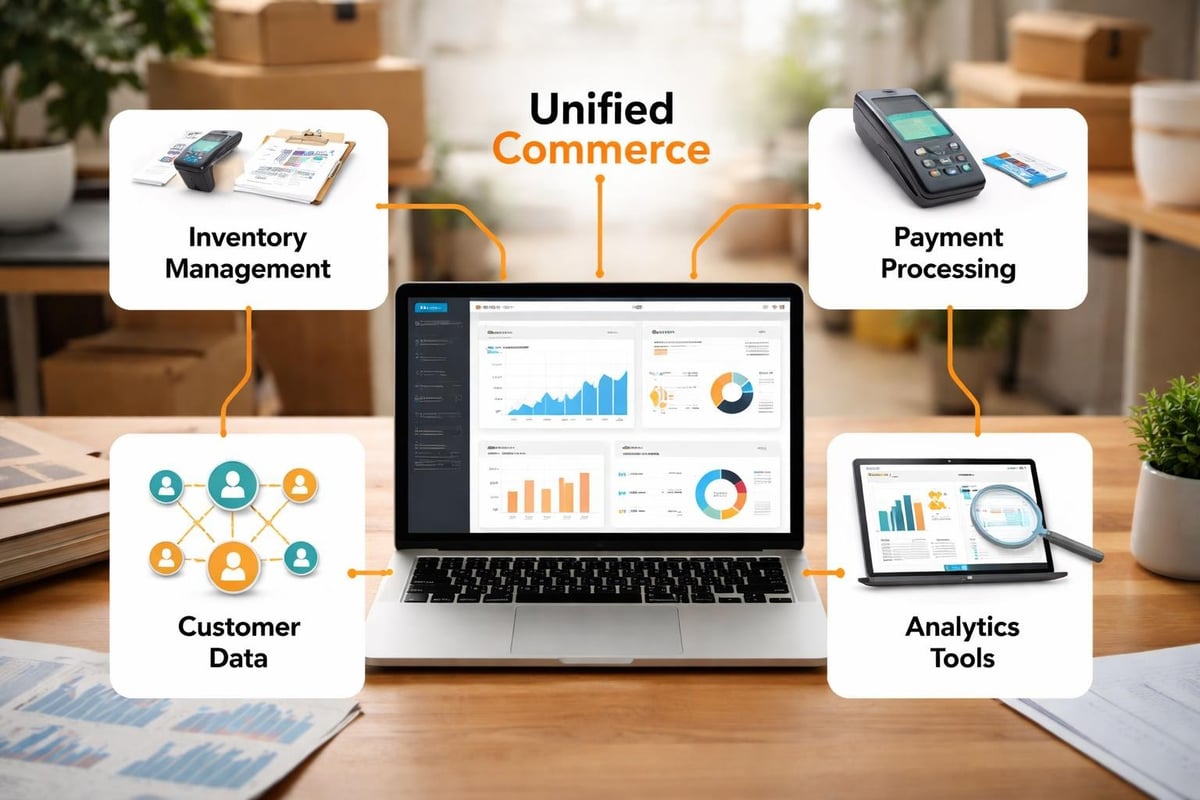
Commerce solutions encompass the integrated systems, platforms, and technologies that enable businesses to conduct transactions, manage customer relationships, and streamline operational processes across multiple channels. These comprehensive platforms extend far beyond simple point-of-sale functionality, incorporating inventory management, customer data analytics, payment processing, order fulfillment, and marketing automation into unified ecosystems.
The evolution of these systems reflects changing consumer expectations and technological capabilities. Today's commerce solutions must support seamless experiences across physical stores, websites, mobile applications, and emerging channels while maintaining consistent data accuracy and real-time synchronization.
Core Components of Effective Commerce Platforms
- Transaction Management Systems: Handle payment processing, order creation, and transaction recording with security and accuracy
- Inventory Control Infrastructure: Track stock levels, manage warehousing, automate reordering, and prevent stockouts or overstocking
- Customer Data Platforms: Centralize customer information, purchase history, preferences, and interaction data across all touchpoints
- Analytics and Reporting Tools: Generate insights from transaction data, customer behavior, and operational metrics to inform strategic decisions
- Integration Capabilities: Connect with third-party services, legacy systems, accounting software, and marketing platforms
- Multi-Channel Management: Coordinate operations across online stores, physical locations, marketplaces, and social commerce platforms
Strategic Implementation Considerations
Selecting and implementing commerce solutions requires careful analysis of business requirements, technical capabilities, and growth objectives. Organizations must evaluate both current operational needs and future scalability requirements to avoid costly platform migrations.
Assessment of Business Requirements
Before exploring specific platforms, conduct a comprehensive audit of your operational workflows, pain points, and strategic goals. Document your transaction volumes, product complexity, customer service requirements, and integration needs. This foundation ensures that your selected solution aligns with actual business demands rather than theoretical capabilities.
Consider your industry-specific requirements as well. Businesses operating in regulated industries may need compliance features, while those with complex product configurations require robust customization capabilities. As research on e-commerce integration demonstrates, structured data and content management significantly impact commerce effectiveness.
Platform Selection Criteria
| Evaluation Factor | Key Considerations | Impact on Operations |
|---|---|---|
| Scalability | Transaction capacity, user growth, geographic expansion | Long-term viability |
| Integration Flexibility | API availability, pre-built connectors, custom development support | System efficiency |
| Customization Options | Configuration capabilities, development framework, extensibility | Competitive differentiation |
| Total Cost of Ownership | Licensing, implementation, maintenance, training, support | Financial sustainability |
| Security Standards | Payment compliance, data protection, access controls | Risk management |
| Vendor Stability | Financial health, market position, product roadmap | Strategic security |
Organizations should prioritize platforms that offer robust API frameworks and development tools, enabling customization as business needs evolve. The ability to extend core functionality through custom modules ensures that commerce solutions can adapt to unique operational requirements.
Building Customer-Centric Commerce Experiences
Successful commerce solutions prioritize customer experience throughout the entire transaction lifecycle. Modern consumers expect personalized interactions, instant access to information, and frictionless purchasing processes regardless of channel or device.
Personalization and Customer Intelligence
Leveraging customer data to deliver relevant product recommendations, targeted promotions, and personalized communications drives both conversion rates and customer lifetime value. Commerce solutions should aggregate behavioral data, purchase history, and demographic information to create comprehensive customer profiles that inform automated marketing workflows.
Advanced platforms incorporate machine learning capabilities that identify patterns in customer behavior, predict future purchases, and optimize pricing strategies. These intelligent systems continuously refine their recommendations based on real-time interactions and outcomes.
The integration of customer relationship management with commerce platforms creates powerful synergies. Brytend CRM enables businesses to manage customer interactions systematically while tracking every touchpoint across the sales journey. This unified approach ensures that customer service teams, sales representatives, and marketing departments operate from consistent, accurate information.

Omnichannel Consistency
Customers interact with brands through multiple touchpoints before completing purchases. Commerce solutions must maintain data consistency and operational continuity across these varied channels, ensuring that inventory availability, pricing, and customer information remain synchronized.
- Unified Inventory Management: Real-time visibility into stock levels across all locations and channels prevents overselling and enables flexible fulfillment options
- Consistent Pricing and Promotions: Automated price synchronization ensures customers receive identical offers regardless of shopping channel
- Cross-Channel Customer Recognition: Persistent customer profiles allow seamless transitions between devices and channels during shopping journeys
- Flexible Fulfillment Options: Support for buy-online-pickup-in-store, ship-from-store, and alternative delivery methods increases convenience
- Centralized Order Management: Single view of all orders regardless of origination channel streamlines processing and customer service
Technical Architecture and Integration Strategies
The technical foundation of commerce solutions determines their flexibility, performance, and long-term viability. Modern architectures emphasize modularity, API-first design, and cloud-native infrastructure to support evolving business requirements.

Microservices and Headless Commerce
Traditional monolithic platforms bundle all functionality into single, tightly coupled systems that limit customization and innovation. Headless commerce architectures decouple the presentation layer from core commerce functionality, enabling organizations to create unique customer experiences while leveraging robust back-end capabilities.
This separation provides significant advantages for businesses requiring custom user interfaces, specialized mobile applications, or integration with emerging channels. Development teams can iterate on customer-facing experiences without modifying core commerce logic, accelerating innovation cycles and reducing technical risk.
Microservices extend this principle further by decomposing commerce functionality into discrete, independently deployable services. Organizations can upgrade, scale, or replace individual components without affecting the entire system, creating resilient architectures that evolve with business needs.
Integration Ecosystem Development
Commerce solutions rarely operate in isolation. Most organizations require connections to accounting systems, warehouse management platforms, marketing automation tools, and numerous specialized applications. Robust integration capabilities separate functional commerce solutions from exceptional ones.
- API-First Design: Well-documented, RESTful APIs enable efficient integration with internal systems and third-party services
- Webhook Support: Event-driven notifications allow external systems to respond immediately to commerce activities
- Middleware Platforms: Integration platforms-as-a-service (iPaaS) simplify connection management and data transformation between systems
- Data Synchronization Protocols: Automated workflows maintain consistency across connected applications without manual intervention
- Error Handling and Monitoring: Comprehensive logging and alerting ensure integration failures receive immediate attention
Organizations implementing commerce solutions should document integration requirements early in the selection process. Understanding which systems require real-time synchronization versus batch updates influences both platform selection and implementation approaches. For businesses with complex service operations, exploring solutions like Brytend’s offerings can provide the customization needed for specialized workflows.
Data Security and Compliance Framework
Commerce solutions process sensitive customer information and financial transactions, making security and compliance non-negotiable requirements. Organizations must implement comprehensive protection measures that address both technical vulnerabilities and regulatory obligations.
Payment Card Industry Compliance
Any business processing credit card transactions must maintain Payment Card Industry Data Security Standard (PCI DSS) compliance. Commerce solutions should support compliance through tokenization, encryption, and secure payment processing workflows that minimize exposure of sensitive cardholder data.
Many modern platforms offer PCI-compliant payment processing through integrated payment gateways, reducing the compliance burden on merchants. However, organizations must still implement appropriate security controls for their entire commerce environment, including access management, network security, and vulnerability management.
Data Protection and Privacy Regulations
Global privacy regulations including GDPR, CCPA, and emerging frameworks require businesses to implement stringent data protection measures. Commerce solutions must support customer rights regarding data access, deletion, and portability while maintaining audit trails of data processing activities.
| Compliance Requirement | Implementation Strategy | System Capability Needed |
|---|---|---|
| Data Access Requests | Customer portal for data export | Automated data aggregation |
| Right to Deletion | Systematic data removal workflows | Cascading delete functions |
| Consent Management | Granular permission controls | Preference center integration |
| Processing Transparency | Detailed privacy notices | Data usage documentation |
| Breach Notification | Incident response procedures | Security monitoring and alerting |
Performance Optimization and Scalability
Commerce solutions must deliver consistent performance during peak demand periods while operating efficiently during normal traffic. Infrastructure design, application architecture, and operational practices all contribute to system performance and reliability.
Infrastructure Scalability Approaches
Cloud-native commerce solutions offer elastic scalability that automatically adjusts resources based on demand. This capability proves particularly valuable for businesses experiencing seasonal traffic variations or rapid growth trajectories.
- Horizontal Scaling: Adding server instances to distribute load across multiple systems during peak periods
- Vertical Scaling: Increasing resource allocation to existing servers for applications requiring single-system performance
- Geographic Distribution: Content delivery networks and regional data centers reduce latency for global customer bases
- Caching Strategies: Intelligent caching of product data, images, and static content accelerates page load times
- Database Optimization: Query optimization, indexing strategies, and read replicas improve data access performance
Monitoring and Performance Analytics
Continuous monitoring of system performance enables proactive identification of bottlenecks before they impact customer experiences. Commerce solutions should provide comprehensive observability through application performance monitoring, infrastructure metrics, and transaction tracing.
According to content and keyword focus research, businesses must leverage analytics data to understand customer behavior and optimize digital experiences. This data-driven approach applies equally to technical performance optimization and content strategy.
Mobile Commerce Capabilities
Mobile devices account for an increasing proportion of commerce transactions, making mobile optimization essential rather than optional. Commerce solutions must deliver exceptional experiences across smartphones and tablets while supporting mobile-specific features.
Responsive Design and Native Applications
Organizations must decide between responsive web experiences, progressive web applications, and native mobile apps based on customer needs and business objectives. Each approach offers distinct advantages and limitations that should align with strategic priorities.
Responsive web designs provide universal compatibility and simplified maintenance but may lack the performance and features of native applications. Progressive web apps bridge this gap by offering app-like experiences through web technologies while maintaining cross-platform compatibility.
Native mobile applications deliver superior performance and deep integration with device capabilities but require separate development efforts for iOS and Android platforms. Businesses with significant mobile transaction volumes often justify this investment through enhanced user experiences and conversion rates.
Mobile-Specific Features
- Location-Based Services: Store locators, proximity notifications, and geographically targeted promotions
- Camera Integration: Barcode scanning for product lookup and mobile payment systems
- Push Notifications: Order updates, promotional messages, and abandoned cart reminders
- Mobile Wallets: Support for Apple Pay, Google Pay, and other contactless payment methods
- Biometric Authentication: Fingerprint and facial recognition for secure, frictionless login
Frequently Asked Questions
What distinguishes enterprise commerce solutions from small business platforms?
Enterprise commerce solutions offer advanced capabilities including multi-site management, complex pricing rules, extensive customization options, dedicated support teams, and infrastructure designed for high transaction volumes. Small business platforms prioritize ease of use, lower costs, and rapid deployment with standardized features suitable for straightforward commerce operations. The distinction primarily relates to scalability, customization flexibility, and operational complexity rather than fundamental commerce capabilities.
How do businesses measure return on investment for commerce solutions?
ROI measurement for commerce solutions incorporates multiple metrics including increased transaction volume, improved conversion rates, reduced operational costs, enhanced customer retention, and decreased manual processing time. Businesses should establish baseline measurements before implementation and track improvements across revenue generation, cost reduction, and operational efficiency. Typical ROI timeframes range from 12 to 24 months depending on implementation complexity and organizational readiness.
Can commerce solutions integrate with existing business systems?
Modern commerce solutions emphasize integration capabilities through APIs, webhooks, and pre-built connectors for common business applications. Most platforms support integration with ERP systems, accounting software, CRM platforms, marketing automation tools, and warehouse management systems. Custom integrations may require development resources but are feasible for nearly any business system. Organizations should evaluate integration requirements during platform selection and allocate appropriate resources for implementation.
What security measures should commerce solutions include?
Comprehensive security for commerce solutions includes PCI DSS compliance for payment processing, encryption for data in transit and at rest, multi-factor authentication, role-based access controls, regular security audits, vulnerability scanning, DDoS protection, and fraud detection capabilities. Additionally, platforms should maintain SOC 2 compliance, implement secure development practices, and provide detailed audit logs of system access and modifications.
How often should businesses upgrade their commerce solutions?
Platform upgrade frequency depends on vendor release cycles, security requirements, and business needs. Security patches should be applied immediately upon availability. Feature updates typically occur quarterly or semi-annually and should be evaluated based on business value versus implementation effort. Major platform migrations generally occur every five to seven years as technology evolves and business requirements change significantly. Regular minor updates prevent technical debt accumulation and maintain security posture.
What customization options do commerce solutions typically offer?
Customization capabilities vary significantly across platforms but generally include configurable workflows, custom fields, personalized user interfaces, branded customer experiences, flexible pricing rules, and extensible functionality through plugins or custom development. API-first platforms enable deep customization through custom applications and integrations. Organizations should assess customization requirements against vendor capabilities during selection to ensure platform flexibility matches business needs.
How do commerce solutions support international expansion?
International commerce capabilities include multi-currency support, localized payment methods, language translation, region-specific tax calculations, international shipping rate management, and compliance with local regulations. Advanced platforms offer market-specific product catalogs, localized content management, and geographic pricing strategies. Businesses planning international expansion should prioritize platforms with robust globalization features and experience supporting multi-market operations to avoid costly migrations as geographic scope expands.
Commerce solutions represent fundamental infrastructure for businesses operating in today's digital marketplace, enabling operational efficiency, customer satisfaction, and sustainable growth through integrated technology platforms. Success requires strategic platform selection, thoughtful implementation, and ongoing optimization aligned with evolving business objectives. Brytend specializes in creating custom software solutions that address unique commerce requirements, providing expertise in system integration, platform development, and ongoing technical support to help businesses build commerce capabilities that drive competitive advantage.