
An inventory management module serves as the backbone of modern supply chain operations, providing businesses with a centralized system to track, manage, and optimize stock levels across multiple locations. As organizations grow and product portfolios expand, manual tracking methods become increasingly inefficient and error-prone. A well-designed inventory management module eliminates these challenges by automating critical processes, delivering real-time visibility into stock movements, and enabling data-driven decision-making that directly impacts profitability and customer satisfaction.
Understanding the Core Functions of an Inventory Management Module
An inventory management module encompasses a comprehensive set of features designed to handle every aspect of stock control. At its foundation, the system tracks product quantities, locations, and movements throughout the entire supply chain. This includes receiving shipments, storing items in designated warehouse locations, fulfilling customer orders, and managing returns or exchanges.
The module integrates with procurement systems to automate reordering processes based on predefined thresholds and demand forecasting algorithms. When stock levels fall below minimum quantities, the system generates purchase orders automatically, ensuring businesses maintain optimal inventory levels without overstocking or experiencing stockouts.
Real-Time Tracking and Visibility
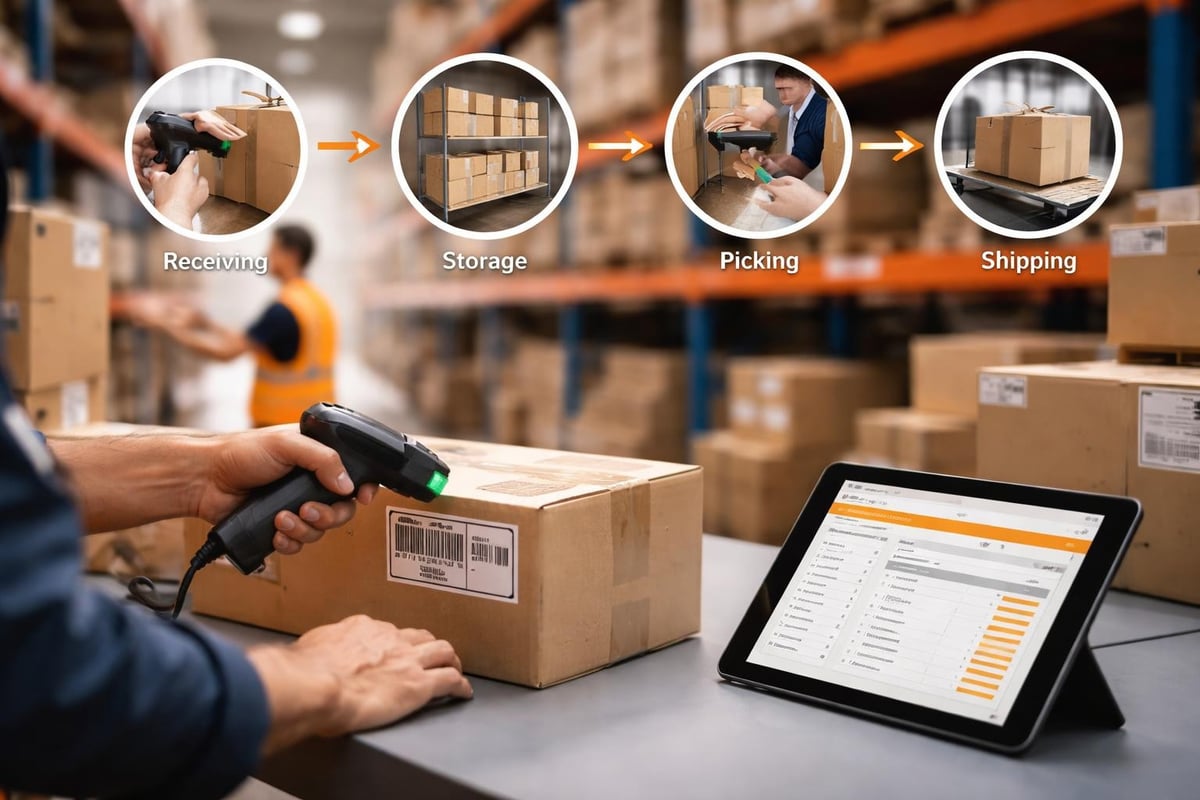
Modern inventory management modules leverage barcode scanning, RFID technology, and mobile applications to capture stock movements in real time. This immediate data capture eliminates the lag between physical inventory changes and system updates, providing accurate information for decision-making.
Warehouse staff can use handheld devices to scan items during receiving, picking, packing, and shipping operations. Each scan updates the central database instantly, creating an audit trail that tracks every product from arrival to departure. This level of visibility enables businesses to identify bottlenecks, optimize workflows, and respond quickly to customer inquiries about product availability.
Key Features That Drive Operational Efficiency
A robust inventory management module includes several critical capabilities that transform raw data into actionable insights. These features work together to create a seamless ecosystem for stock control and optimization.
Multi-Location Management
-
Centralized Control: Organizations operating multiple warehouses, retail stores, or distribution centers need unified visibility across all locations. The inventory management module consolidates data from every facility into a single dashboard, enabling managers to monitor stock levels, transfer products between locations, and optimize inventory distribution based on regional demand patterns.
-
Location-Specific Rules: Different facilities may require unique handling procedures, storage conditions, or fulfillment priorities. The module allows administrators to configure location-specific settings while maintaining overall system consistency.
-
Transfer Management: When products need to move between locations, the system generates transfer orders, updates inventory counts at both facilities, and tracks shipments until confirmation of receipt. This ensures accuracy and prevents discrepancies during inter-facility movements.
Advanced Reporting and Analytics
The analytical capabilities of an inventory management module transform raw data into strategic business intelligence. Comprehensive reporting tools enable organizations to implement best practices for inventory management through data-driven decision-making.
| Report Type | Purpose | Key Metrics |
|---|---|---|
| Stock Valuation | Financial reporting and tax compliance | Total inventory value, cost by category, aging analysis |
| Turnover Analysis | Identify slow-moving and fast-moving products | Turnover ratio, days on hand, velocity by SKU |
| Demand Forecasting | Predict future inventory needs | Historical trends, seasonal patterns, growth projections |
| Accuracy Metrics | Monitor system integrity and process quality | Cycle count variance, shrinkage rates, error percentages |
These reports help businesses identify opportunities for cost reduction, optimize purchasing strategies, and improve overall supply chain performance. Custom dashboards provide executives with high-level summaries while giving operational staff detailed transaction histories and exception reports.
Integration Capabilities and System Architecture
An inventory management module rarely operates in isolation. Its true power emerges through seamless integration with other business systems, creating a unified technology ecosystem that eliminates data silos and manual handoffs.
ERP and Financial System Integration
Connecting the inventory management module with enterprise resource planning (ERP) and accounting systems ensures financial accuracy and compliance. When products arrive at the warehouse, the system automatically posts inventory asset values to the general ledger. Similarly, when items ship to customers, the module triggers cost of goods sold (COGS) entries and updates balance sheet accounts.
This bidirectional data flow eliminates duplicate entry, reduces reconciliation efforts, and provides real-time visibility into inventory carrying costs. Finance teams can access current stock valuations without requesting reports from warehouse managers, while procurement staff can verify budget availability before placing orders.
E-Commerce and Point-of-Sale Synchronization
For businesses selling through multiple channels, inventory synchronization becomes critical to avoid overselling and customer disappointment. The inventory management module acts as the single source of truth, broadcasting stock availability to websites, marketplaces, and retail locations in real time.
When a customer places an online order, the system immediately reserves the quantity, preventing the same item from being promised to another buyer. As case studies on inventory management implementations demonstrate, this synchronization capability significantly reduces fulfillment errors and improves customer satisfaction.

Implementing Best Practices Through Module Configuration
The flexibility of a modern inventory management module allows organizations to encode industry best practices directly into their workflows and business rules. This systematic approach ensures consistent execution regardless of staff turnover or operational complexity.
Lot and Serial Number Tracking
-
Traceability Requirements: Industries such as pharmaceuticals, food and beverage, and electronics require detailed tracking of product batches. The inventory management module assigns unique identifiers to each lot or serial number, maintaining complete genealogy from supplier to end customer.
-
Expiration Management: For perishable goods, the system enforces first-expired-first-out (FEFO) picking rules, automatically directing warehouse staff to select items with the nearest expiration dates. Automated alerts notify managers when products approach their expiration, enabling proactive clearance or disposal.
-
Recall Management: In the event of a product recall, the module can instantly identify all affected inventory, their current locations, and customers who received the items. This rapid response capability minimizes liability and protects brand reputation.
Cycle Counting and Accuracy Verification
Rather than conducting disruptive annual physical inventories, leading organizations implement continuous cycle counting programs. The inventory management module facilitates this approach by generating daily counting tasks based on ABC classification, transaction frequency, or variance history.
High-value or fast-moving items receive more frequent counts, while stable, low-value products are verified less often. The system tracks counting accuracy by employee, identifies systematic discrepancies, and adjusts inventory quantities based on approved count results. This ongoing verification maintains database integrity while minimizing operational disruption.
Cost Control and Financial Optimization
An effective inventory management module directly impacts profitability through several mechanisms that reduce costs and improve asset utilization. Understanding these financial levers helps organizations justify technology investments and measure return on investment.
Carrying Cost Reduction
Inventory represents tied-up capital that could otherwise be deployed for growth initiatives or debt reduction. The module's demand forecasting capabilities help businesses maintain leaner stock levels without risking stockouts. By analyzing historical sales patterns, seasonality, and market trends, the system recommends optimal order quantities that balance holding costs against procurement efficiency.
Many inventory management best practices emphasize the importance of minimizing excess stock while maintaining service levels. The inventory management module provides the visibility and analytical tools necessary to achieve this balance consistently.
Shrinkage Prevention
Inventory shrinkage from theft, damage, or administrative errors can significantly erode profit margins. The module's detailed transaction logging creates accountability at every touchpoint. When discrepancies emerge during cycle counts, managers can review complete audit trails to identify when and where losses occurred.
| Shrinkage Type | Prevention Strategy | Module Capabilities |
|---|---|---|
| Theft | Access controls and movement tracking | User permissions, exception reporting, security logs |
| Damage | Proper handling and storage protocols | Quality checks, rejection workflows, damage documentation |
| Administrative Error | Process standardization and validation | Required fields, barcode verification, approval workflows |
| Vendor Discrepancies | Receiving verification | Three-way matching, quantity reconciliation, supplier scorecards |
The financial impact of reducing shrinkage by even one or two percentage points can be substantial for high-volume operations. The inventory management module provides the tools and visibility necessary to drive continuous improvement in inventory accuracy.
Mobile Accessibility and Workforce Enablement
Modern inventory management modules extend beyond traditional desktop interfaces to embrace mobile technology. Warehouse workers, field service technicians, and remote employees can access critical inventory functions through smartphones and tablets, bringing the power of the system directly to the point of work.
Mobile Receiving and Putaway
When shipments arrive, receiving clerks use mobile devices to scan barcodes, verify quantities against purchase orders, and immediately update inventory records. The system can generate putaway instructions that direct workers to optimal storage locations based on product characteristics, warehouse layout, and retrieval frequency.
This mobile-first approach eliminates paperwork, reduces data entry errors, and accelerates the receiving process. Products become available for sale or production immediately upon putaway confirmation rather than waiting for batch processing or end-of-day updates.
Remote Inventory Visibility
Sales representatives meeting with customers can check real-time stock availability, promise accurate delivery dates, and place orders directly from the field. Service technicians can verify parts availability before scheduling repairs, reducing callbacks and improving first-time fix rates.
The Brytend Service Module exemplifies this mobile-enabled approach by allowing technicians to access serialized inventory, document service activities, and update equipment records from any location. This integration between inventory tracking and service delivery creates a seamless experience that improves operational efficiency and customer satisfaction.
Scalability and Growth Accommodation
As businesses expand their product offerings, enter new markets, or acquire additional facilities, their inventory management module must scale accordingly. Proper system architecture ensures that growth doesn't compromise performance or require costly platform migrations.
Data Volume Management
-
Transaction Processing: High-volume operations may process thousands of inventory transactions daily across multiple locations. The module must handle this load without degradation in response times or data processing delays.
-
Historical Data Retention: Compliance requirements and analytical needs often demand years of transaction history. The system should archive older data efficiently while maintaining accessibility for reporting and audit purposes.
-
User Scalability: As organizations grow, more employees require system access with varying permission levels. The inventory management module should support hundreds or thousands of concurrent users with role-based security that protects sensitive information.
International Operations Support
Global businesses face additional complexity from multiple currencies, languages, tax regimes, and shipping regulations. Advanced inventory management modules accommodate these requirements through configurable localization settings that adapt to regional requirements while maintaining centralized control.
Currency conversion, customs documentation, and international shipping integration enable seamless cross-border inventory movements. The system calculates landed costs including freight, duties, and taxes to provide accurate inventory valuations for international stock.

Technology Considerations and Selection Criteria
Selecting the right inventory management module requires careful evaluation of technical capabilities, vendor stability, and long-term alignment with business objectives. Organizations should consider several factors when assessing options.
Cloud versus On-Premise Deployment
Cloud-based inventory management modules offer rapid deployment, predictable subscription pricing, and automatic updates without IT intervention. These solutions scale easily and provide remote access from any internet-connected device. However, organizations with strict data sovereignty requirements or complex customization needs may prefer on-premise installations that offer greater control over infrastructure and configuration.
Hybrid approaches combine the benefits of both models, maintaining sensitive data on-premise while leveraging cloud services for mobile access and analytics. The optimal deployment model depends on organizational priorities, technical capabilities, and budget constraints.
Customization and Configuration Flexibility
No two businesses operate identically, so inventory management modules must accommodate unique workflows and requirements. Platforms that offer extensive configuration options through user-friendly interfaces enable business users to adapt the system without programming expertise.
For more complex requirements, custom software development provides tailored solutions that align precisely with organizational processes. Custom modules can incorporate industry-specific functionality, integrate with legacy systems, and deliver competitive advantages that off-the-shelf software cannot match.
Frequently Asked Questions
What is the primary purpose of an inventory management module?
An inventory management module serves as a centralized system for tracking, controlling, and optimizing stock levels across an organization. It automates critical processes including receiving, storage, fulfillment, and reordering while providing real-time visibility into inventory quantities, locations, and movements. The module helps businesses reduce carrying costs, prevent stockouts, improve order accuracy, and make data-driven decisions about purchasing and inventory distribution.
How does an inventory management module integrate with existing business systems?
Modern inventory management modules integrate with ERP systems, accounting software, e-commerce platforms, and point-of-sale systems through application programming interfaces (APIs) and standardized data formats. These integrations enable bidirectional data flow, ensuring that inventory updates in one system automatically reflect across all connected platforms. This synchronization eliminates manual data entry, reduces errors, and provides consistent information to all stakeholders regardless of which system they use.
What features should businesses prioritize when selecting an inventory management module?
Essential features include real-time inventory tracking, multi-location support, barcode scanning capabilities, automated reordering, comprehensive reporting, and integration flexibility. Additional considerations include lot and serial number tracking for traceability, mobile accessibility for warehouse workers, demand forecasting tools, and cycle counting support. The specific feature priorities depend on industry requirements, business complexity, and operational challenges the organization needs to address.
How does an inventory management module improve inventory accuracy?
The module improves accuracy through multiple mechanisms including barcode scanning that eliminates manual entry errors, real-time transaction recording that prevents lag between physical movements and system updates, and systematic cycle counting programs that continuously verify database integrity. Detailed audit trails enable quick identification and correction of discrepancies, while user permissions and approval workflows prevent unauthorized changes. Together, these capabilities maintain inventory accuracy above ninety-eight percent in well-managed operations.
Can an inventory management module handle multiple warehouses and retail locations?
Yes, enterprise-grade inventory management modules support unlimited locations with centralized visibility and control. Organizations can monitor stock levels across all facilities from a single dashboard, transfer inventory between locations, and configure location-specific rules for handling and fulfillment. The system tracks inventory in transit between facilities and can optimize distribution based on regional demand patterns, ensuring products are positioned where they will sell most quickly.
What role does an inventory management module play in cost reduction?
The module reduces costs by optimizing stock levels to minimize carrying costs while preventing expensive stockouts. Automated reordering based on demand forecasting eliminates rush orders and premium freight charges. Improved inventory accuracy reduces shrinkage from theft, damage, and administrative errors. Better visibility enables businesses to negotiate favorable terms with suppliers based on accurate usage data and forecast requirements. Many organizations report inventory cost reductions of fifteen to thirty percent after implementing comprehensive inventory management modules.
How long does it typically take to implement an inventory management module?
Implementation timelines vary based on system complexity, organizational size, data migration requirements, and customization needs. Basic cloud-based implementations for small businesses can go live in four to eight weeks, while enterprise deployments across multiple locations may require six to twelve months. Critical factors affecting timeline include data cleansing and migration, integration with existing systems, user training, and phased rollout strategies. Working with experienced implementation partners like Brytend helps ensure projects stay on schedule and deliver expected benefits.
Effective inventory management modules transform how organizations control stock, reduce costs, and serve customers. By implementing the right technology with proper configuration and integration, businesses gain the visibility and control necessary to compete in demanding markets. Brytend specializes in developing custom inventory management solutions tailored to your specific operational requirements, industry regulations, and growth objectives. Contact Brytend today to discuss how a purpose-built inventory management module can drive efficiency and profitability for your organization.


