
Modern businesses face an increasingly complex challenge: managing countless customer interactions across multiple channels while maintaining personalized relationships at scale. CRM tool software has evolved from simple contact databases into comprehensive platforms that unite sales, marketing, customer service, and operational data into a single, actionable system. Whether you're a startup building your first customer base or an established enterprise seeking to optimize existing processes, understanding how to select and implement the right crm tool software can fundamentally transform how your organization operates.
Understanding CRM Tool Software Fundamentals
CRM tool software serves as the central nervous system for customer-facing operations. At its core, this technology captures, organizes, and analyzes every interaction between your business and its customers, prospects, and partners.
The fundamental architecture of crm tool software includes several interconnected components. Contact management forms the foundation, storing detailed profiles including demographic information, communication preferences, purchase history, and engagement patterns. Sales pipeline management tracks opportunities from initial contact through closure, providing visibility into revenue forecasts and bottlenecks. Marketing automation capabilities enable targeted campaigns based on customer behavior and characteristics. Service management tools help support teams resolve issues efficiently while maintaining comprehensive case histories.
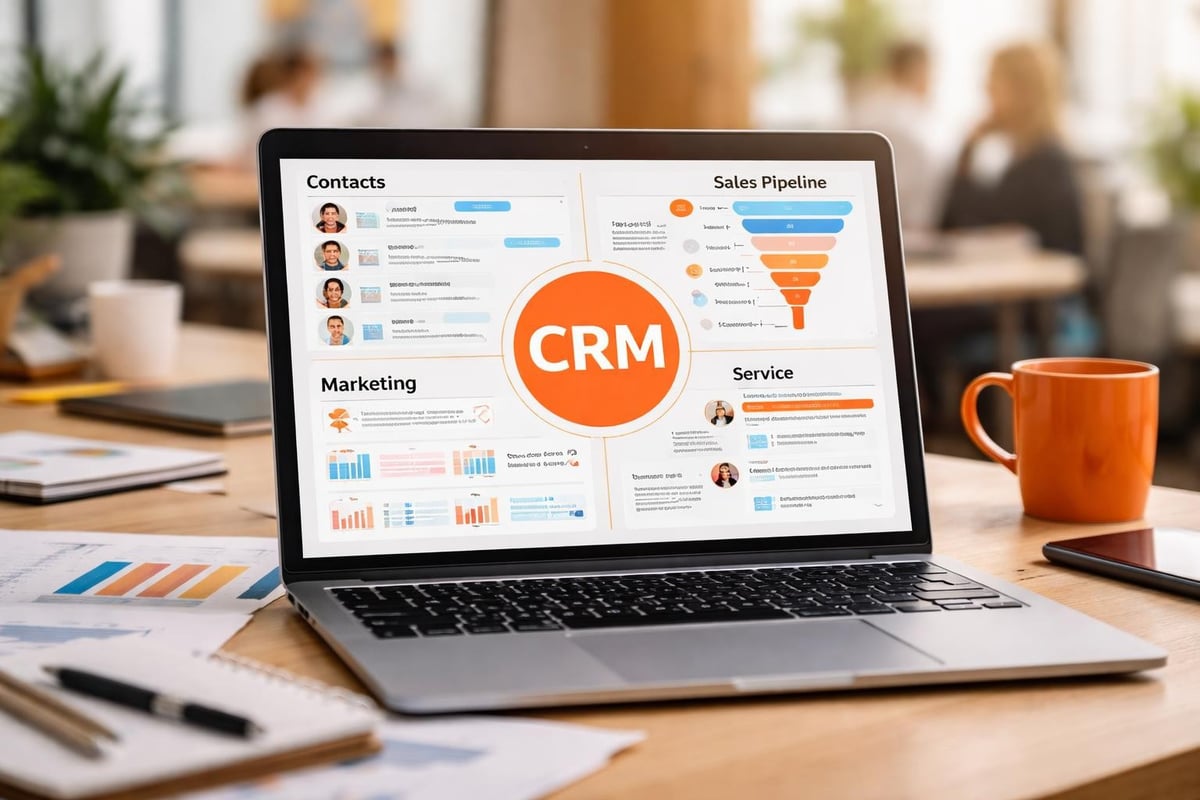
Modern platforms extend far beyond these basics. Advanced analytics transform raw data into actionable insights about customer behavior, campaign performance, and sales effectiveness. Integration capabilities connect your CRM with email systems, accounting software, e-commerce platforms, and industry-specific tools. Mobile applications ensure your team accesses critical information regardless of location. Customization options allow you to tailor workflows, fields, and processes to match your unique business requirements.
The Business Value Proposition
Organizations implementing crm tool software typically experience measurable improvements across multiple dimensions. Sales teams close deals faster by accessing complete customer histories during conversations. Marketing departments achieve higher conversion rates through precise segmentation and personalized messaging. Customer service representatives resolve issues more efficiently with instant access to account details and past interactions.
The financial impact extends beyond revenue growth. Reduced administrative overhead occurs when manual data entry and redundant processes are automated. Improved customer retention delivers compounding returns as acquiring new customers typically costs five to seven times more than retaining existing ones. Enhanced forecasting accuracy enables better resource allocation and strategic planning.
Key Features That Define Effective CRM Tool Software
Selecting the right crm tool software requires understanding which capabilities will deliver the greatest value for your specific situation. Not every business needs every feature, but certain functionalities form the baseline for effective customer relationship management.
Contact and Account Management
-
Centralized customer database: All customer information resides in a single, searchable repository accessible to authorized team members across departments.
-
Relationship mapping: Visual representations of organizational hierarchies, decision-makers, and influencers within target accounts facilitate strategic engagement.
-
Communication history tracking: Complete logs of emails, calls, meetings, and other interactions provide context for every customer conversation.
-
Custom fields and data structures: Flexibility to capture industry-specific or business-unique information ensures the system adapts to your requirements rather than forcing conformity to generic templates.
-
Duplicate detection and merging: Automated identification of redundant records maintains database integrity and prevents confusion.
| Feature | Business Impact | Implementation Priority |
|---|---|---|
| Contact Database | Eliminates information silos | Critical |
| Activity Tracking | Improves follow-up consistency | Critical |
| Custom Fields | Supports unique workflows | High |
| Relationship Mapping | Accelerates enterprise sales | Medium |
| Duplicate Management | Maintains data quality | High |
Sales Pipeline and Opportunity Management
The sales component of crm tool software transforms how teams manage prospects through the buying journey. Visual pipeline representations display opportunities organized by stage, allowing managers to identify deals requiring attention or at risk of stalling. Automated lead scoring applies consistent criteria to prioritize prospects based on engagement level, company characteristics, and behavioral signals.
Deal tracking captures essential details including estimated value, probability of closure, expected close date, and associated products or services. This structured approach enables accurate revenue forecasting and capacity planning. Task automation ensures no prospect falls through the cracks by triggering follow-up reminders, assignment notifications, and escalations based on predefined rules.

Quote and proposal generation integrates pricing, product information, and terms to produce professional documents directly from opportunity records. This streamlines the sales process while ensuring accuracy and brand consistency.
Deployment Models and Technical Considerations
The technical architecture of your crm tool software significantly impacts accessibility, security, total cost of ownership, and scalability. Understanding the implications of different deployment models helps align technology decisions with business requirements and IT capabilities.
Cloud-based (Software-as-a-Service) solutions dominate the current market for compelling reasons. These platforms require no on-premises infrastructure, enabling rapid deployment and reducing IT overhead. Vendors handle maintenance, security updates, and infrastructure scaling automatically. Subscription pricing converts capital expenditure into predictable operational expense. Geographic distribution of data centers ensures reliability and performance regardless of user location.
On-premises deployments maintain relevance for organizations with specific regulatory requirements, integration needs with legacy systems, or preferences for complete data control. These implementations demand greater upfront investment in hardware, software licensing, and IT resources but provide maximum customization flexibility and independence from vendor service continuity.
Hybrid approaches combine elements of both models, typically maintaining sensitive data on-premises while leveraging cloud capabilities for collaboration, mobile access, and scalability. This architecture addresses specific compliance requirements while capturing cloud benefits.
Integration Architecture
No crm tool software operates in isolation. Integration capabilities determine how effectively your CRM becomes part of a cohesive technology ecosystem. The best CRM for startups often emphasize straightforward integration with popular business tools to minimize complexity during rapid growth phases.
Application programming interfaces (APIs) enable bidirectional data flow between your CRM and other systems. Marketing platforms synchronize campaign data and lead information. Accounting software shares invoice, payment, and credit details. E-commerce systems update order history and customer preferences in real-time. Communication tools embed email, telephony, and messaging within the CRM interface.
Pre-built connectors and middleware platforms like Zapier or Make simplify integration without custom development. However, organizations with unique requirements may need custom API integrations developed by experienced developers who understand both the technical specifications and business logic governing data exchange.
Implementation Strategy and Change Management
Technical capabilities matter little if your team doesn't adopt the system effectively. Successful crm tool software implementation requires as much attention to people and processes as to technology configuration. Many organizations underestimate this dimension, leading to underutilization and disappointing return on investment.
Implementation Best Practices
-
Define clear objectives and success metrics: Establish specific, measurable goals the CRM should accomplish before selecting or configuring the system.
-
Map current processes thoroughly: Document existing workflows to identify inefficiencies the new system should address and valuable practices it must preserve.
-
Prioritize data quality over quantity: Clean, accurate data for active customers delivers more value than comprehensive but unreliable information across your entire database.
-
Configure before customizing: Leverage standard features wherever possible before investing in custom development that increases complexity and maintenance requirements.
-
Implement in phases: Start with core functionality for a pilot group, validate the approach, then expand incrementally rather than attempting a complete transformation simultaneously.
-
Invest in comprehensive training: User competence directly correlates with adoption rates and value realization, making training a critical success factor rather than an afterthought.
-
Establish data governance policies: Define standards for data entry, update responsibilities, and quality maintenance to prevent degradation over time.
Successful CRM implementation requires executive sponsorship to drive organizational commitment and address resistance. Champions within each department can facilitate peer-to-peer knowledge transfer more effectively than formal training alone.
Customization and Development Considerations
Standard crm tool software configurations serve many businesses well, but unique processes, industry requirements, or competitive differentiators often demand customization. Understanding the spectrum of customization options helps balance capability needs against complexity and cost.
Configuration-level changes modify system behavior using built-in tools without altering underlying code. Custom fields, workflow automation, report builders, and dashboard designers enable substantial adaptation within the platform's intended framework. These modifications typically preserve upgrade compatibility and require less specialized technical expertise.
Platform development extends functionality through custom code, modules, or applications built on the CRM's development framework. This approach creates completely new capabilities tailored to specific requirements but demands skilled developers familiar with the platform's programming model, APIs, and best practices.
Third-party extensions from marketplace ecosystems provide pre-built solutions for common needs like advanced reporting, industry-specific workflows, or integration with specialized tools. These options deliver functionality faster than custom development while distributing cost across multiple customers.
For businesses requiring highly specialized workflows or integration with proprietary systems, partnering with experienced custom software developers ensures your crm tool software aligns perfectly with operational requirements. The Brytend CRM demonstrates how tailored development can address unique business needs that generic platforms cannot accommodate.

Selecting the Right CRM Tool Software for Your Organization
The CRM market offers hundreds of options spanning simple contact managers to enterprise suites costing millions annually. Navigating this landscape requires a structured evaluation process aligned with your specific situation.
Essential Selection Criteria
| Criterion | Key Questions | Evaluation Approach |
|---|---|---|
| Functional Fit | Does it support our core processes? | Map requirements to features |
| Usability | Will our team actually use it? | Conduct hands-on trials |
| Scalability | Can it grow with our business? | Review upgrade paths and limits |
| Integration | Does it connect with existing tools? | Verify API capabilities and connectors |
| Total Cost | What's the complete financial commitment? | Calculate subscription, implementation, training, and customization costs |
| Vendor Stability | Will they support us long-term? | Research company history and customer base |
Budget constraints significantly influence viable options. Free CRM software provides surprising functionality for small teams with straightforward requirements, though limitations in users, storage, or advanced features eventually necessitate paid plans as organizations grow.
Small businesses benefit from platforms emphasizing ease of use, quick implementation, and affordable pricing over enterprise-grade complexity. CRM solutions designed for small business typically include essential features without overwhelming new users or straining limited budgets.
Enterprise organizations require robust security, advanced customization, comprehensive APIs, and dedicated support. These platforms handle complex organizational structures, international operations, and millions of customer records while maintaining performance and reliability.
Industry-specific solutions incorporate specialized workflows, compliance features, and terminology relevant to particular sectors. Legal firms, healthcare providers, real estate agencies, and other industries benefit from CRMs designed around their unique requirements.
The Rise of No-Code and Open-Source Options
Traditional crm tool software required significant IT involvement for customization and maintenance. No-code platforms are transforming this dynamic, empowering business users to configure workflows, create custom applications, and modify interfaces without programming knowledge. This democratization accelerates implementation and reduces dependency on scarce technical resources.
Open-source CRM platforms offer maximum flexibility and control for organizations with development capabilities. These solutions eliminate licensing fees while providing complete access to underlying code for unlimited customization. However, they require technical expertise for deployment, security hardening, and ongoing maintenance that hosted commercial solutions include.
Advanced Capabilities Driving Competitive Advantage
Leading organizations extract maximum value from crm tool software by leveraging advanced capabilities that transform customer data into strategic advantages.
Artificial Intelligence and Machine Learning
AI-powered features are rapidly evolving from novelty to necessity. Predictive lead scoring analyzes historical patterns to identify prospects most likely to convert, enabling sales teams to prioritize effectively. Automated data entry extracts information from emails and documents to populate CRM fields without manual input. Sentiment analysis evaluates customer communications to identify satisfaction issues before they escalate.
Conversational AI chatbots handle routine inquiries, qualify leads, and schedule appointments autonomously, freeing human representatives for complex situations requiring judgment and empathy. Recommendation engines suggest next-best actions, relevant content, or product combinations based on customer characteristics and behavior patterns.
Advanced Analytics and Business Intelligence
Descriptive analytics answer "what happened" through dashboards visualizing key metrics like conversion rates, sales velocity, and customer acquisition cost. Diagnostic analytics explain "why it happened" by correlating outcomes with activities, campaigns, or external factors. Predictive analytics forecast "what will happen" using statistical models to project future trends, churn risk, or revenue potential.
Custom reporting transforms raw CRM data into insights tailored to specific roles, departments, or strategic questions. Sales managers track individual and team performance against quotas. Marketing directors measure campaign ROI across channels. Executives monitor overall business health through consolidated scorecards.
Mobile Access and Remote Work Enablement
The accelerated shift toward distributed teams makes mobile crm tool software capabilities essential rather than optional. Field sales representatives need instant access to customer information during site visits. Service technicians require work order details and asset histories at customer locations. Executives want performance dashboards available anywhere.
Native mobile applications provide optimized interfaces for smartphones and tablets, enabling efficient data entry and retrieval on smaller screens. Offline functionality ensures access to critical information even without connectivity, synchronizing changes when connection resumes. Location awareness can trigger relevant notifications, log visit activities automatically, or optimize route planning for field teams.
Progressive web applications offer cross-platform compatibility without requiring separate native apps for each operating system. This approach reduces development complexity while delivering mobile-friendly experiences through standard web browsers.
Security, Compliance, and Data Protection
CRM databases contain sensitive customer information making security paramount. Robust crm tool software implements multiple protective layers to prevent unauthorized access, data breaches, and compliance violations.
Role-based access control restricts information visibility and editing permissions based on job function and organizational hierarchy. Encryption protects data both in transit across networks and at rest in storage systems. Audit trails log all access and modifications for forensic analysis and compliance documentation. Multi-factor authentication adds verification steps beyond passwords to confirm user identity.
Regulatory compliance varies by industry and geography. Healthcare organizations must ensure HIPAA compliance for protected health information. Financial services require SOC 2 certification and specific data handling procedures. European operations demand GDPR adherence regarding data subject rights and cross-border transfers. Your crm tool software must support the specific compliance requirements relevant to your business.
Regular security audits, penetration testing, and vendor security certifications provide assurance that protective measures remain effective against evolving threats. Backup and disaster recovery capabilities ensure business continuity if systems fail or data becomes corrupted.
Measuring CRM Success and Continuous Improvement
Implementing crm tool software represents the beginning of a continuous improvement journey rather than a one-time project. Measuring outcomes against objectives identifies opportunities for optimization and demonstrates return on investment.
Key Performance Indicators
-
Adoption rate: Percentage of intended users actively logging in and entering data regularly indicates acceptance and proper training.
-
Data quality score: Accuracy, completeness, and freshness of information determines reliability for decision-making.
-
Sales cycle length: Time from initial contact to closed deal reveals process efficiency and opportunities for acceleration.
-
Customer acquisition cost: Total sales and marketing expense divided by new customers acquired shows efficiency of growth investments.
-
Customer lifetime value: Projected revenue from a customer relationship over its duration justifies acquisition spending and retention programs.
-
Customer satisfaction scores: Direct feedback through surveys or indirect signals like support ticket volume and resolution time measure relationship health.
-
Revenue per user: Total revenue generated divided by CRM users demonstrates team productivity and platform ROI.
Regular review cycles examine these metrics to identify trends, successes, and areas requiring attention. User feedback sessions uncover frustrations, feature requests, and workflow inefficiencies that quantitative metrics might miss. Staying current with platform updates ensures access to new capabilities and security enhancements.
Frequently Asked Questions
What is the primary purpose of CRM tool software?
CRM tool software centralizes all customer information and interactions into a single system, enabling businesses to build stronger relationships, streamline sales processes, improve customer service, and make data-driven decisions. It eliminates information silos by giving every team member access to complete customer histories, communication logs, and account details.
How much does CRM tool software typically cost?
Pricing varies dramatically based on features, user count, and deployment model. Basic cloud solutions start around $10-25 per user monthly for essential contact management. Mid-tier platforms with sales automation and marketing capabilities range from $50-100 per user monthly. Enterprise systems with advanced customization, AI capabilities, and dedicated support can exceed $150-300 per user monthly, plus implementation costs that may reach tens or hundreds of thousands of dollars for large organizations.
How long does CRM implementation typically take?
Implementation timelines depend on organizational size, complexity, customization requirements, and data migration scope. Small businesses using cloud platforms with minimal customization can deploy in 2-6 weeks. Mid-sized companies typically require 2-4 months for proper configuration, data migration, and training. Enterprise implementations spanning multiple departments, geographies, and complex integrations may extend 6-12 months or longer. Phased approaches reduce time to initial value while managing change more effectively.
Can CRM tool software integrate with our existing business applications?
Most modern crm tool software offers extensive integration capabilities through APIs, pre-built connectors, and middleware platforms. Common integrations include email systems, accounting software, marketing automation platforms, e-commerce solutions, and communication tools. Verifying specific integration requirements during vendor evaluation ensures compatibility with your existing technology stack. Custom integrations can address unique needs but require development resources.
What happens to our data if we switch CRM providers?
Reputable CRM vendors provide data export capabilities allowing you to extract your information in standard formats like CSV, XML, or through API access. This enables migration to alternative platforms if needed. However, custom configurations, workflows, and historical reporting may not transfer directly. Planning data migration strategy before initial implementation, maintaining backup copies independent of the CRM, and choosing vendors committed to data portability reduces switching complexity and risk.
Do we need dedicated IT staff to manage CRM tool software?
Requirements vary by platform complexity and deployment model. Cloud-based solutions with intuitive interfaces and minimal customization can be managed by business administrators without deep technical expertise. However, complex implementations with custom development, extensive integrations, or on-premises deployments typically require IT involvement for security configuration, system maintenance, troubleshooting, and user support. Many organizations partner with Brytend for specialized development and ongoing technical support.
How does CRM tool software improve customer retention?
CRM platforms enhance retention through several mechanisms. Complete interaction histories enable personalized service that makes customers feel valued and understood. Automated reminders ensure timely follow-up on commitments and proactive outreach at critical touchpoints. Analytics identify at-risk customers exhibiting declining engagement, enabling intervention before they defect. Service management capabilities resolve issues efficiently, turning potential negative experiences into loyalty-building opportunities. Customer segmentation supports targeted retention campaigns addressing specific needs or concerns.
Selecting and implementing the right crm tool software fundamentally transforms how organizations manage customer relationships, streamline operations, and drive sustainable growth. The most successful deployments align technical capabilities with specific business requirements while prioritizing user adoption through proper training and change management. If your organization needs customized CRM solutions that perfectly match unique workflows and integrate seamlessly with existing systems, Brytend brings deep technical expertise and proven experience developing tailored software that delivers measurable business value.