Startups face unprecedented challenges in today’s competitive technology landscape. Building a unique product that solves real problems while managing limited resources requires strategic decision-making at every turn. Custom software development for startups has emerged as a critical investment that can differentiate your venture from competitors, attract investor attention, and create a foundation for sustainable growth. Unlike generic, off-the-shelf solutions, tailored software aligns precisely with your business model, target audience, and long-term vision.
Why Startups Choose Custom Software Over Ready-Made Solutions
The decision between custom development and pre-built software platforms represents one of the most significant strategic choices early-stage companies make. Ready-made solutions offer quick deployment and lower initial costs, but they come with substantial limitations that can hamper growth.
Custom software development for startups provides complete control over features, user experience, and technical architecture. This control becomes invaluable as your business evolves and market demands shift. Generic platforms force your business processes to conform to their predetermined workflows, while custom solutions adapt to your specific operational needs.
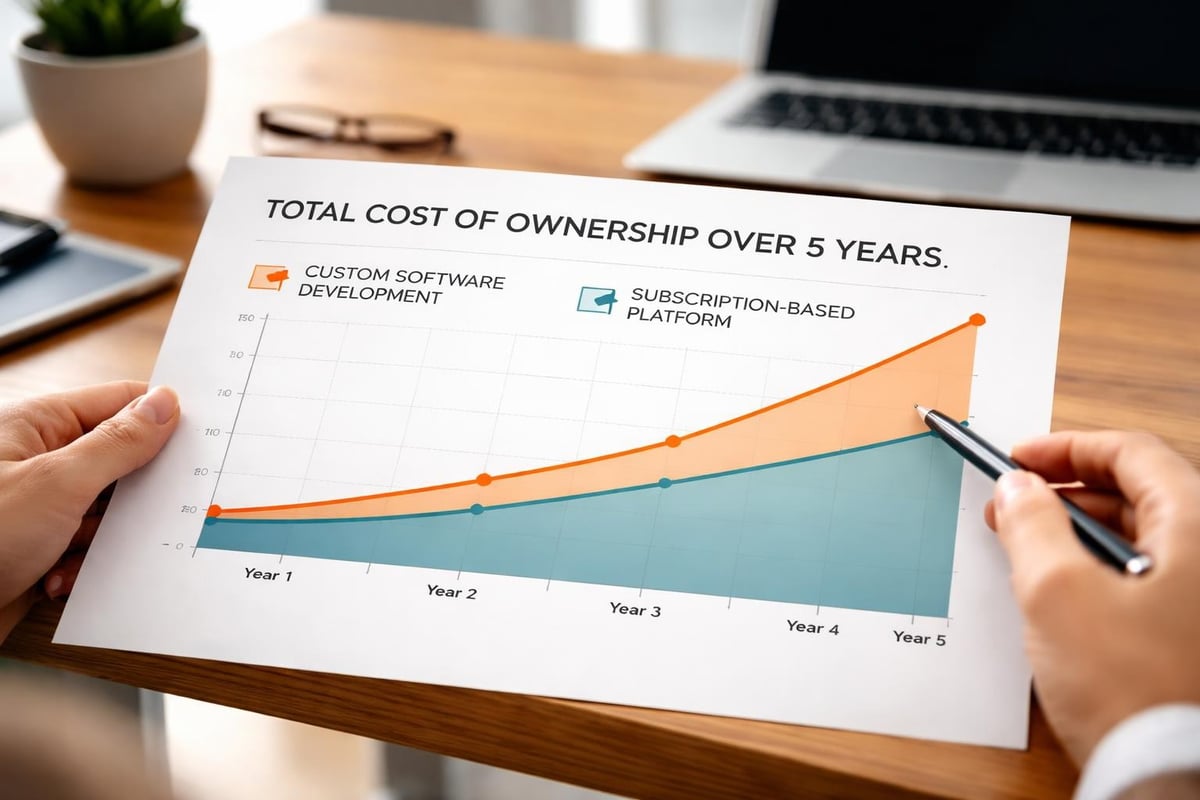
The True Cost of Off-the-Shelf Software
Many founders initially gravitate toward subscription-based platforms to conserve capital. However, custom software often proves more cost-effective over a three to five-year horizon when accounting for:
Monthly subscription fees that scale with user count or transaction volume
Integration costs for connecting multiple third-party tools
Feature limitations requiring expensive add-ons or workarounds
Data migration expenses when eventually outgrowing the platform
Lost revenue from competitive disadvantages and slower innovation cycles
Organizations that invest in tailored development from the outset avoid the expensive and disruptive process of rebuilding their entire technology infrastructure during critical growth phases.
Strategic Advantages That Drive Investor Interest
Venture capitalists and angel investors evaluate startups through multiple lenses, and proprietary technology ranks among their top considerations. Custom software development for startups creates intellectual property that substantially increases company valuation.
Building a Defensible Competitive Moat
Investors seek businesses with sustainable competitive advantages. When your core product relies on generic software available to any competitor, differentiation becomes nearly impossible. Custom development enables you to:
Implement proprietary algorithms that optimize performance beyond industry standards
Create unique user experiences that build brand loyalty and reduce churn
Develop specialized features addressing niche market needs competitors overlook
Establish technical barriers that require significant investment to replicate
Control your technology roadmap without dependency on external vendors
Research on software development practices in startup companies demonstrates that organizations with custom-built core systems achieve higher Series A funding rounds compared to those relying primarily on third-party platforms.
Accelerating Time to Market
Contrary to common assumptions, custom software development for startups can actually accelerate product launches when properly structured. Developing a Minimum Viable Product (MVP) with precisely the features your target market needs eliminates the bloat and complexity inherent in configuring general-purpose software.
|
Development Approach |
Average MVP Timeline |
Initial Feature Set |
Post-Launch Flexibility |
|---|---|---|---|
|
Custom Development |
3-5 months |
Exactly matched to market needs |
Complete control over iterations |
|
Configured Platform |
2-4 months |
Limited to platform capabilities |
Restricted by vendor roadmap |
|
Hybrid Approach |
4-6 months |
Mixed functionality |
Moderate flexibility with constraints |
The key lies in partnering with development teams experienced in agile methodologies and lean startup principles. These teams prioritize core functionality that validates your business hypothesis, deferring secondary features until after market testing.
Choosing the Right Technologies and Architecture
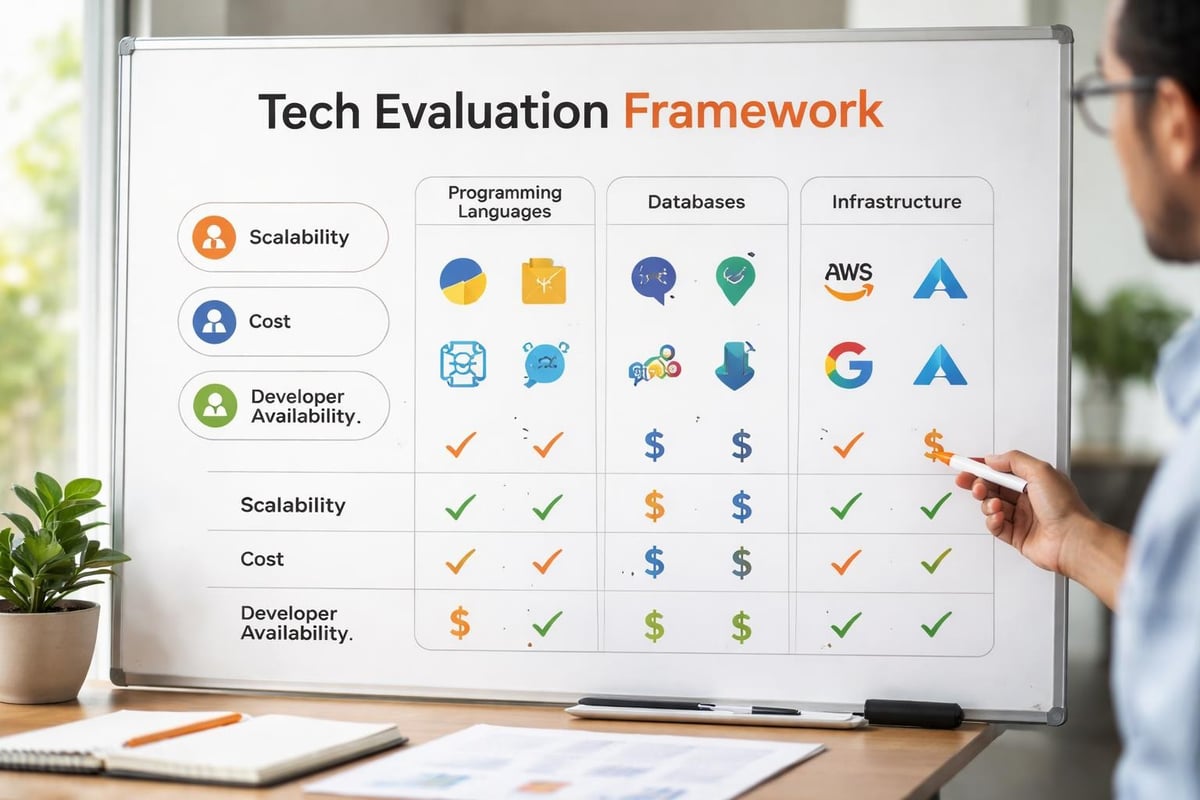
Technology stack selection represents a foundational decision with long-term implications. The frameworks, programming languages, and infrastructure choices made during initial development determine your ability to scale, attract developer talent, and pivot when necessary.
Scalability From Day One
Custom software development for startups must account for exponential growth scenarios. Building on scalable architecture prevents the costly rewrites that plague successful companies trapped in technical debt. Consider these architectural principles:
Microservices design enables independent scaling of high-demand features
Cloud-native development leverages elastic infrastructure that grows with demand
API-first architecture facilitates future integrations and ecosystem expansion
Database optimization ensures performance as data volumes increase exponentially
Cloud platforms like Microsoft Azure, accessible through startup programs, provide the infrastructure needed to support rapid scaling without massive upfront capital investment. These programs often include credits and technical support specifically designed for emerging companies.
Technology Selection Criteria
The right technology stack balances current capabilities with future requirements. Experienced development teams evaluate options based on:
Talent availability in your geographic market and remote hiring pools
Community support providing libraries, frameworks, and troubleshooting resources
Performance characteristics matching your application’s computational demands
Security features protecting sensitive user data and maintaining compliance
Long-term viability ensuring the technology remains relevant as standards evolve
The Development Process Tailored for Startup Success
Effective custom software development for startups follows a structured yet flexible process that accommodates the uncertainty inherent in new ventures. Traditional waterfall methodologies prove too rigid for environments where customer feedback rapidly reshapes product direction.
Discovery and Strategic Planning
The development journey begins with comprehensive discovery sessions that establish a shared vision between founders and technical teams. This phase includes:
Competitive analysis identifying gaps in existing solutions
User research validating assumptions about target customer needs
Technical feasibility assessment confirming the viability of proposed features
Resource planning allocating budget across development phases
Success metrics definition establishing measurable goals for each release
This groundwork prevents the costly mistakes that occur when development begins without clarity about business objectives and user requirements. Specialized development firms often facilitate workshops that align all stakeholders before writing a single line of code.
Agile Development Cycles
Custom software development for startups thrives on iterative cycles that deliver working software every two to three weeks. This approach provides several critical advantages:
Continuous stakeholder feedback ensures the product evolves in the right direction rather than discovering misalignments after months of development. Founders participate in sprint reviews, testing features and providing input that shapes subsequent iterations.
Risk mitigation occurs naturally as technical challenges surface early when solutions remain flexible. Developers can adjust approaches before significant investment in problematic architectures.
Investor demonstrations become possible within weeks rather than months. Showcasing functional software, even in early stages, builds confidence and facilitates funding conversations.
Quality Assurance and Testing Protocols
Startups cannot afford the reputational damage caused by buggy software or security vulnerabilities. Comprehensive testing protocols should include:
|
Testing Type |
Purpose |
Implementation Frequency |
|---|---|---|
|
Unit Testing |
Validate individual components |
Continuous during development |
|
Integration Testing |
Verify system interactions |
End of each sprint |
|
User Acceptance Testing |
Confirm business requirements |
Before each release |
|
Security Testing |
Identify vulnerabilities |
Monthly and before major releases |
|
Performance Testing |
Ensure scalability |
Quarterly and before scaling events |
Automated testing frameworks enable rapid validation without manual intervention, accelerating release cycles while maintaining quality standards.
Building for Future Growth and Pivots
The ability to adapt quickly distinguishes successful startups from those that fade into obscurity. Custom software development for startups must incorporate flexibility that accommodates strategic pivots without requiring complete rebuilds.
Modular Architecture Principles
Well-designed custom software separates concerns into distinct modules that can be modified, replaced, or expanded independently. This architectural approach enables:
Feature experimentation without disrupting core functionality
Third-party integrations that enhance capabilities without custom development
Team scaling allowing parallel work streams without constant conflicts
Technology upgrades migrating individual components to newer frameworks
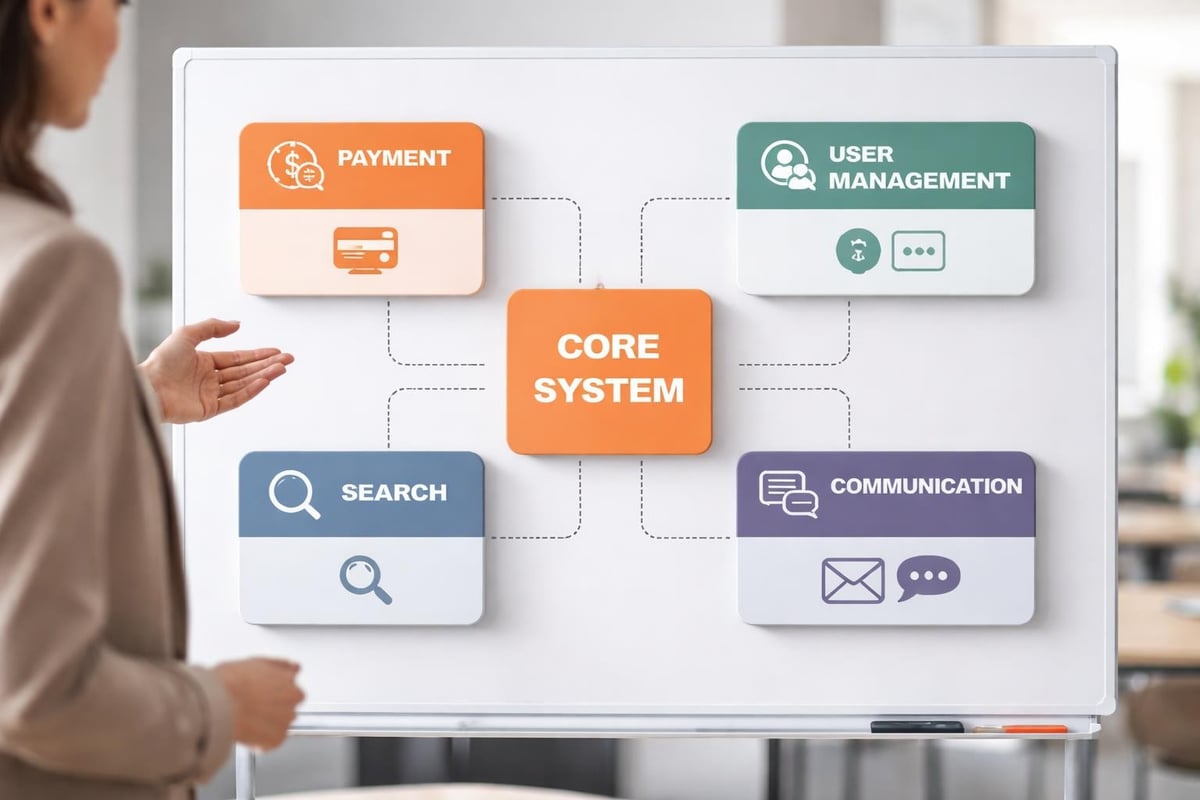
Consider a marketplace platform where payment processing, user authentication, search functionality, and messaging exist as separate services. This structure allows upgrading the search algorithm without touching payment systems or replacing the messaging provider without affecting user management.
Documentation and Knowledge Transfer
Technical debt accumulates rapidly when startups prioritize speed over documentation. However, minimal documentation practices prevent knowledge silos and facilitate team transitions:
Code comments explaining business logic and architectural decisions
API documentation describing endpoints, parameters, and expected responses
Architecture diagrams illustrating system components and data flows
Deployment guides enabling reliable releases in production environments
Troubleshooting playbooks accelerating problem resolution during incidents
These artifacts prove invaluable when onboarding new developers, responding to investor due diligence, or preparing for acquisition discussions.
Alternative Approaches: Low-Code and No-Code Platforms
The emergence of no-code platforms like Unqork has created new options for startups seeking rapid development without traditional programming. These platforms enable business users to build applications through visual interfaces and configuration rather than code.
When Alternative Platforms Make Sense
No-code and low-code solutions serve specific use cases effectively:
Internal tools for operations, administration, and workflow management
Proof of concept development validating ideas before full custom development
Simple CRUD applications managing straightforward data operations
Rapid prototyping creating functional mockups for user testing
However, these platforms face limitations when requirements demand complex business logic, high-performance computing, or deeply customized user experiences. Custom software development for startups building differentiated products typically requires traditional development approaches.
Hybrid Development Strategies
Forward-thinking startups often combine approaches, using no-code platforms for ancillary systems while investing in custom development for core differentiators. This strategy optimizes resource allocation, focusing engineering talent on high-value features while accelerating auxiliary tool deployment.
Post-Launch Support and Continuous Evolution
The development journey extends well beyond initial launch. Successful startups treat software as a living product requiring ongoing maintenance, optimization, and enhancement based on user feedback and market evolution.
Maintenance and Technical Debt Management
Every codebase accumulates technical debt through quick fixes, temporary workarounds, and evolving best practices. Systematic debt management prevents this accumulation from degrading performance or blocking new features:
Regular refactoring sprints improve code quality without adding features
Dependency updates maintain security and access to latest capabilities
Performance monitoring identifies bottlenecks before users experience problems
Security audits protect against emerging vulnerabilities and compliance requirements
Organizations that allocate 15-20% of development capacity to maintenance and optimization maintain healthier codebases that support faster feature development over time.
Gathering and Implementing User Feedback
Custom software development for startups enables rapid response to user feedback in ways impossible with third-party platforms. Establishing systematic feedback collection through:
In-app analytics tracking feature usage and user behavior patterns
Customer interviews understanding pain points and unmet needs
Support ticket analysis identifying recurring issues and confusion points
A/B testing frameworks validating design and feature hypotheses
User advisory boards engaging power users in product direction decisions
This feedback directly informs development priorities, ensuring engineering resources address real user needs rather than assumed requirements. Development processes designed for startups typically build feedback loops into every sprint, creating continuous alignment between product evolution and market demands.
Selecting the Right Development Partner
Most startups lack the resources to build comprehensive in-house development teams during early stages. Selecting an experienced development partner determines whether custom software becomes a competitive advantage or a resource drain.
Essential Partner Qualifications
When evaluating potential development firms, prioritize those demonstrating:
Startup-specific experience understanding unique constraints and priorities
Agile methodology expertise delivering value in short iterations
Technology breadth recommending optimal solutions rather than familiar technologies
Communication clarity explaining technical concepts in business terms
Portfolio evidence showcasing successful startup projects from MVP through scale
Development teams specializing in startup solutions understand the importance of MVP development and rapid market entry, structuring engagements around learning and validation rather than comprehensive feature sets.
Engagement Models and Cost Structures
Development partnerships typically follow one of several engagement models, each with distinct advantages:
|
Model |
Structure |
Best For |
Typical Costs |
|---|---|---|---|
|
Fixed Price |
Predetermined scope and timeline |
Well-defined MVPs with stable requirements |
$50,000-$150,000 for initial MVP |
|
Time and Materials |
Hourly billing with flexible scope |
Exploratory projects with evolving needs |
$100-$200 per hour for experienced developers |
|
Dedicated Team |
Monthly retainer for allocated resources |
Ongoing development and iteration |
$15,000-$40,000 per month depending on team size |
|
Equity Partnership |
Development in exchange for company ownership |
Cash-constrained startups with strong vision |
Varies based on scope and equity percentage |
The optimal model depends on your funding situation, requirement clarity, and desired involvement in daily development decisions. Many successful partnerships begin with fixed-price MVP development, then transition to dedicated teams as the product gains market traction.
Real-World Success Patterns
Understanding how successful startups leveraged custom software development for startups provides actionable insights for planning your own development journey. Companies that achieved significant scale share common patterns in their technical approaches.
Starting Lean, Scaling Smart
Market-leading startups typically launch with focused MVPs addressing core value propositions, then systematically expand capabilities based on validated learning. This approach contrasts sharply with attempting to build comprehensive platforms before testing market fit.
Initial development budgets of $75,000-$150,000 typically support robust MVPs with:
Single primary user workflow addressing the most critical customer need
Manual administration tools avoiding premature automation of unproven processes
Essential integrations only for payment processing and critical third-party services
Basic analytics tracking core engagement and conversion metrics
As products gain traction and funding, development teams expand the platform systematically, maintaining the architectural flexibility established during initial development.
Avoiding Common Pitfalls
Failed startup software projects share recognizable patterns that experienced development partners help clients avoid:
Premature optimization building for scale before achieving product-market fit
Feature bloat attempting to serve every potential customer segment simultaneously
Technology choices based on developer preferences rather than business requirements
Inadequate user testing assuming founder perspectives represent target customers
Neglected security treating compliance and data protection as afterthoughts
Comprehensive approaches to custom software development emphasize starting with scalable architecture while implementing only features that directly support current business objectives, creating the foundation for growth without the overhead of unused capabilities.
Custom software development for startups represents a strategic investment that creates defensible competitive advantages, accelerates market entry with precisely targeted features, and establishes the technical foundation for sustainable scaling. The decision to build custom solutions rather than configure generic platforms positions your venture for long-term success by maintaining complete control over your product roadmap and user experience. Whether you’re validating an initial concept or preparing for rapid growth, Brytend provides the expertise and partnership approach needed to transform your vision into market-ready software that evolves with your business.