
Organizations today operate in increasingly complex environments where coordinating people, processes, and technology requires structured approaches. Management systems provide the foundational framework that transforms scattered activities into coherent, measurable operations. These systems enable businesses to standardize procedures, monitor performance, ensure compliance, and continuously improve across all departments. Whether managing customer relationships, maintaining quality standards, or optimizing resources, effective management systems create the infrastructure for sustainable growth and competitive advantage.
Understanding Management Systems and Their Core Components
A management system encompasses the policies, procedures, processes, and resources an organization uses to achieve specific objectives. These systems establish the rules and methods through which work gets done, ensuring consistency and accountability across teams.
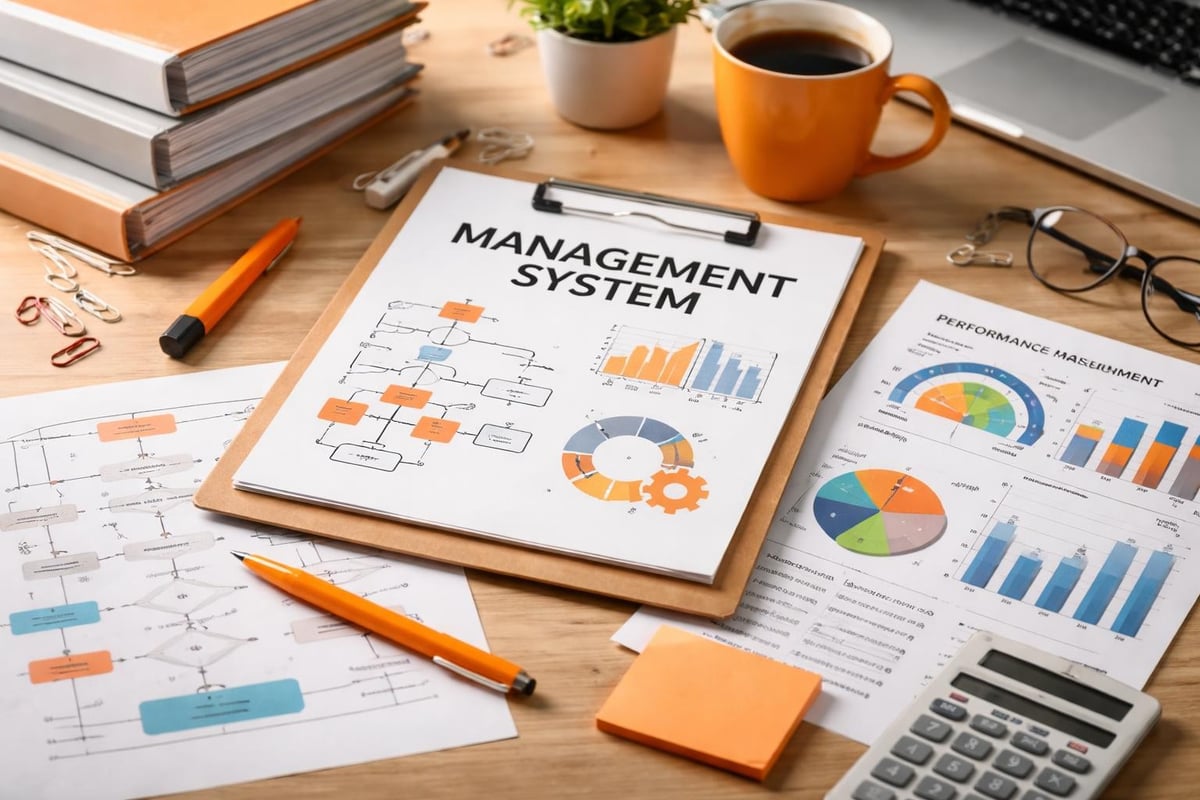
Modern management systems typically include several essential elements that work together. Documentation forms the foundation, capturing processes, responsibilities, and standards in accessible formats. Process mapping defines how activities flow from input to output, identifying dependencies and handoffs. Performance metrics provide visibility into operations, enabling data-driven decisions. Continuous improvement mechanisms ensure the system evolves with changing needs and opportunities.
The integration of these components creates a unified approach to management. Organizations can track performance against objectives, identify bottlenecks, allocate resources effectively, and maintain quality standards consistently.
Different Types of Management Systems Organizations Implement
Organizations employ various specialized management systems depending on their industry, size, and strategic priorities. Quality management systems (QMS) focus on meeting customer expectations and regulatory requirements through documented procedures and audits. Environmental management systems (EMS) address sustainability goals and regulatory compliance related to environmental impact.
Information security management systems (ISMS) protect data assets through risk assessment, access controls, and incident response protocols. Management information systems process data to support decision-making across operational, tactical, and strategic levels.
| System Type | Primary Focus | Key Benefits |
|---|---|---|
| Quality Management | Product/service consistency | Reduced defects, customer satisfaction |
| Information Security | Data protection | Risk mitigation, compliance |
| Environmental | Sustainability | Regulatory compliance, resource efficiency |
| Health & Safety | Worker protection | Reduced incidents, legal compliance |
Each system type addresses specific organizational needs while sharing common principles of planning, execution, monitoring, and improvement. Many organizations integrate multiple systems into unified frameworks to reduce duplication and improve coherence.
Implementing Management Systems for Maximum Impact
Successful implementation requires methodical planning and stakeholder engagement. Organizations must first assess their current state, identifying gaps between existing practices and desired outcomes. This assessment reveals which processes need formalization, what documentation exists, and where performance measurement falls short.
The implementation follows a structured sequence that builds capability progressively:
- Define scope and objectives by determining which departments, processes, and goals the system will address
- Document current processes through interviews, observations, and workflow analysis to establish baselines
- Design target processes that incorporate best practices, eliminate redundancies, and align with strategic goals
- Develop documentation including policies, procedures, work instructions, and forms that guide daily operations
- Train personnel on new processes, their roles, and how to use system tools effectively
- Pilot the system in limited scope to identify issues before full deployment
- Deploy organization-wide with ongoing support and troubleshooting resources
- Monitor and refine through regular audits, feedback collection, and performance analysis
Technology plays an increasingly critical role in modern management systems. Software platforms automate documentation management, workflow routing, data collection, and reporting. These tools reduce manual effort while improving accuracy and accessibility.
Overcoming Common Implementation Challenges
Organizations frequently encounter resistance during implementation as employees adjust to new procedures and expectations. Change management becomes essential, requiring clear communication about benefits, training programs that build confidence, and leadership visibility that demonstrates commitment.
Resource constraints often limit implementation speed and scope. Organizations must balance ambition with available time, budget, and personnel. Phased approaches allow incremental progress without overwhelming teams or budgets.
Documentation overload creates systems that look impressive but prove impractical. Effective systems document what people need to know in formats they can easily access and understand. Simplicity and usability outweigh comprehensiveness that nobody uses.
Integration with existing systems and workflows prevents creating isolated processes. New management systems should connect with established tools, data sources, and workflows rather than requiring duplicate effort.
The Evolution of Management System Theory
Understanding Likert’s management systems provides valuable historical context for modern approaches. Rensis Likert identified four distinct management styles ranging from authoritarian to participative, each with different implications for organizational culture and performance.
System 1 (Exploitative Authoritative) relies on threats and fear with top-down decision-making. System 2 (Benevolent Authoritative) introduces rewards but maintains centralized control. System 3 (Consultative) seeks employee input while retaining final authority at management levels. System 4 (Participative) emphasizes group decision-making and shared responsibility.
Research consistently shows that participative management systems correlate with higher employee satisfaction, better quality outputs, and stronger organizational performance. Modern management systems increasingly incorporate collaborative elements, distributed decision-making, and employee empowerment.
Contemporary frameworks build on these foundations while addressing digital transformation, remote work, and global operations. Management systems now integrate artificial intelligence, real-time analytics, and cloud-based collaboration tools that Likert couldn't have envisioned.

Technology's Role in Modern Management Systems
Digital transformation has fundamentally changed how organizations design and operate management systems. Cloud platforms enable real-time access to policies, procedures, and performance data from any location. This accessibility supports distributed teams and remote work arrangements that define modern business operations.
Automation eliminates repetitive tasks while ensuring consistent execution. Workflow engines route approvals, trigger notifications, and update records without manual intervention. This reduces errors, accelerates processes, and frees personnel for higher-value activities.
Analytics capabilities transform raw data into actionable insights. Dashboard visualizations show performance trends, highlight exceptions, and predict future outcomes. Decision-makers access current information rather than waiting for monthly reports compiled from stale data.
Master data management ensures consistency across systems by establishing single sources of truth for critical information like customer records, product specifications, and supplier details. This consistency improves data quality while reducing reconciliation effort.
Integration capabilities connect management systems with operational tools, creating seamless information flow. CRM platforms, ERP systems, project management tools, and specialized applications exchange data automatically, maintaining synchronization across the technology ecosystem.
For organizations managing equipment, facilities, or assets, specialized solutions help track service histories, schedule maintenance, and ensure compliance. The Brytend Service Module enables companies to register serialized inventory, automate service reminders, and generate certificates that document maintenance activities. This structured approach to service management exemplifies how modern systems combine process discipline with technological enablement.

Selecting the Right Technology for Your Management System
Organizations face numerous options when choosing technology to support management systems. Requirements definition must precede vendor evaluation, clearly identifying must-have capabilities, desired features, and integration needs. This discipline prevents selecting impressive tools that don't match actual requirements.
Scalability ensures systems accommodate growth in users, data volume, and functional complexity. Solutions that work for 50 employees may fail at 500. Cloud-based platforms typically offer better scalability than on-premise installations.
User experience directly impacts adoption and sustained use. Systems with intuitive interfaces, mobile access, and minimal training requirements achieve higher utilization than complex platforms that intimidate users.
Vendor stability and support matter for long-term success. Organizations should evaluate vendor financial health, customer references, support responsiveness, and product roadmaps before committing to platforms they'll depend on for years.
Measuring Management System Effectiveness
Management control systems require robust measurement frameworks to evaluate performance and guide improvements. Organizations must define metrics that align with strategic objectives while remaining practical to collect and analyze.
Leading indicators predict future performance by measuring activities that drive outcomes. Training completion rates, process compliance percentages, and preventive maintenance adherence provide early signals about system health. Lagging indicators measure results like defect rates, customer satisfaction scores, and financial performance that reflect cumulative effectiveness.
Balanced scorecards organize metrics across multiple perspectives-financial, customer, internal process, and learning/growth. This multidimensional view prevents overemphasis on any single aspect while ensuring alignment across organizational objectives.
| Metric Category | Example Measures | Purpose |
|---|---|---|
| Compliance | Audit findings, certification status | Verify adherence to standards |
| Efficiency | Cycle time, resource utilization | Identify process optimization opportunities |
| Quality | Defect rates, customer complaints | Monitor output consistency |
| Innovation | Improvement suggestions, process changes | Assess continuous improvement culture |
Benchmarking compares performance against industry standards, competitors, or internal targets. This context helps organizations understand whether their results represent excellence or mediocrity requiring intervention.
Creating a Culture of Continuous Improvement
Effective management systems embed improvement into daily operations rather than treating it as periodic initiative. Employee empowerment encourages frontline personnel to identify inefficiencies and propose solutions. Those closest to the work often see improvement opportunities invisible to distant managers.
Structured problem-solving methodologies like Plan-Do-Check-Act (PDCA) or Six Sigma DMAIC provide frameworks for investigating issues and implementing solutions systematically. These approaches prevent reactive firefighting in favor of root cause elimination.
Recognition programs reinforce desired behaviors by celebrating successful improvements, innovation, and process excellence. Public acknowledgment motivates continued engagement while signaling organizational priorities.
Regular audits assess system compliance and effectiveness objectively. Internal audits identify gaps before external assessments, while third-party certifications validate system maturity to customers and stakeholders.
Integration Across Organizational Boundaries
Management systems achieve maximum value when they span departmental silos and organizational boundaries. Cross-functional processes like order fulfillment or product development require coordination across sales, operations, finance, and engineering. Systems that optimize individual departments while ignoring handoffs create local efficiency at the expense of overall effectiveness.
Supply chain integration extends management systems to suppliers and partners whose performance directly impacts organizational success. Shared quality standards, collaborative planning, and integrated information systems create visibility and accountability throughout value chains.
Customer integration brings external stakeholders into process design and improvement activities. Customer feedback, usage data, and satisfaction metrics inform system refinement while demonstrating responsiveness to market needs.
For organizations seeking comprehensive customer management capabilities, integrated platforms that connect sales, marketing, and service functions provide unified customer views. Brytend offers custom software solutions that help businesses design and implement management systems tailored to their specific operational requirements and strategic goals.
The shift toward ecosystem thinking recognizes that organizational boundaries blur as companies collaborate with partners, platforms, and communities. Management systems must accommodate these complex relationships while maintaining governance and control.
Frequently Asked Questions
What is the primary purpose of implementing a management system?
Management systems establish structured, repeatable processes that ensure consistent quality, regulatory compliance, and operational efficiency. They transform ad-hoc activities into documented procedures that all personnel follow, creating predictable outcomes and enabling continuous improvement. Organizations implement these systems to reduce variability, improve accountability, and achieve strategic objectives more reliably.
How long does it typically take to implement a management system?
Implementation timelines vary significantly based on organizational size, system scope, and existing process maturity. Small organizations implementing focused systems might complete deployment in three to six months, while large enterprises establishing comprehensive frameworks often require 12 to 24 months. Phased approaches that deliver incremental value tend to succeed more reliably than ambitious all-at-once deployments.
Can small businesses benefit from formal management systems?
Absolutely. Small businesses often benefit disproportionately from management systems because they lack the redundancy larger organizations possess. Documented processes enable delegation, reduce key-person dependencies, and maintain quality as businesses scale. Modern cloud-based tools make sophisticated management systems accessible at price points small businesses can afford, eliminating the historical barrier of expensive infrastructure.
What's the difference between a management system and project management?
Management systems govern ongoing operational processes and organizational functions, establishing how regular work gets done consistently over time. Project management focuses on temporary endeavors with defined beginnings and endings, delivering specific outputs or outcomes. While project management can operate within management systems, the former addresses episodic work while the latter structures continuous operations.
How do management systems relate to ISO certifications?
ISO standards define requirements for specific types of management systems, such as ISO 9001 for quality or ISO 27001 for information security. Organizations can design management systems based on ISO frameworks and seek third-party certification to validate compliance. However, certification remains optional-many organizations implement ISO-based systems for internal benefit without pursuing formal certification and the associated audit requirements.
What role does leadership play in management system success?
Leadership commitment proves essential for successful implementation and sustained operation. Executives must allocate resources, communicate priorities, model expected behaviors, and hold personnel accountable for system compliance. When leadership treats management systems as administrative burdens rather than strategic assets, organizational commitment wanes and systems become hollow documentation exercises rather than operational realities.
How frequently should management systems be reviewed and updated?
Organizations should conduct formal management system reviews at least annually, assessing performance against objectives, evaluating compliance, and identifying improvement opportunities. However, continuous monitoring through audits, metrics, and feedback mechanisms enables ongoing refinement. Major updates typically occur in response to strategic changes, regulatory updates, significant performance gaps, or technology advancements that enable better approaches.
Management systems transform organizational chaos into structured operations that deliver consistent quality, regulatory compliance, and measurable results. By documenting processes, establishing accountability, and enabling continuous improvement, these frameworks position businesses for sustainable growth in competitive markets. Whether you need custom software to support quality management, service tracking, or comprehensive CRM capabilities, Brytend develops tailored solutions that align technology with your operational requirements and strategic vision.