Managing a rental business involves juggling multiple moving parts simultaneously: tracking equipment availability, scheduling maintenance, processing invoices, managing customer relationships, and monitoring financial performance. As rental operations grow, spreadsheets and disconnected software tools quickly become insufficient, leading to errors, inefficiencies, and missed revenue opportunities. This is where a rental ERP becomes essential, offering an integrated platform that connects every aspect of your rental operations into a cohesive system designed specifically for the unique challenges of the rental industry.
Understanding Rental ERP Systems and Their Core Value
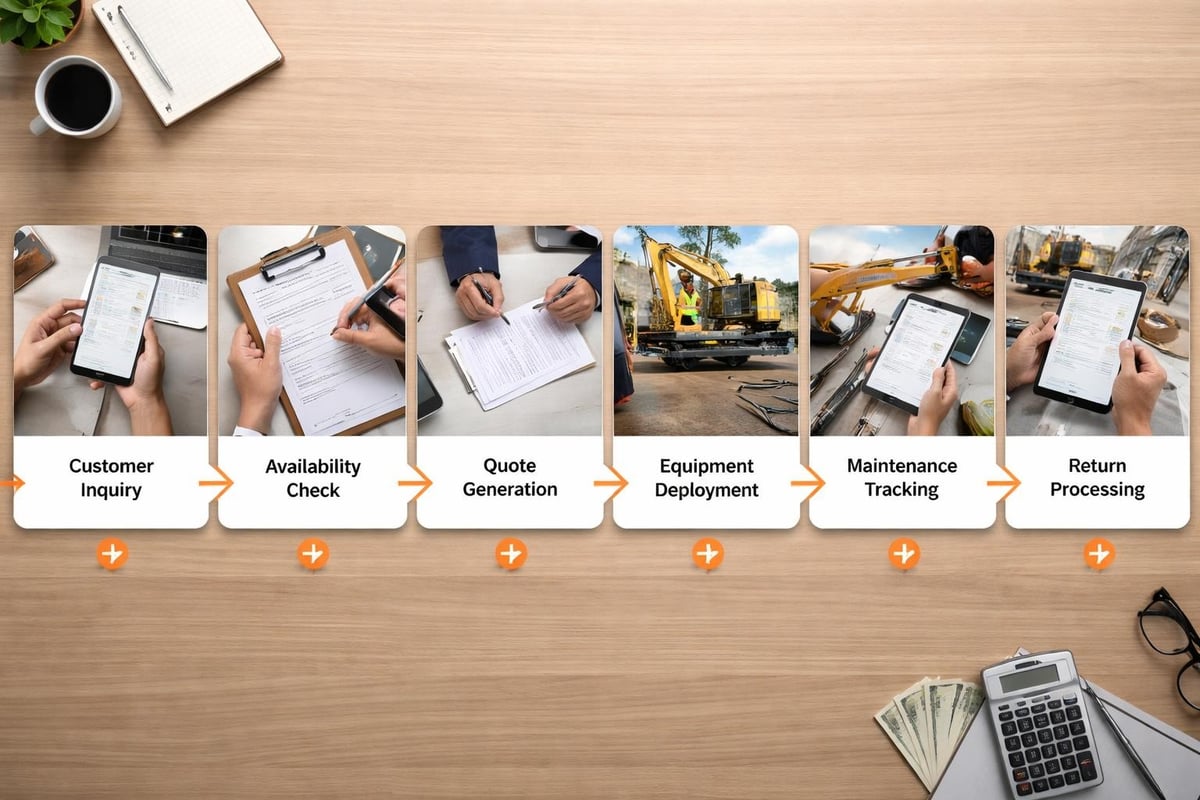
A rental ERP (Enterprise Resource Planning) system is specialized software designed to manage the complete lifecycle of rental operations, from initial customer inquiry through contract creation, asset deployment, maintenance tracking, and final billing. Unlike generic business management tools, these systems address the specific workflows and challenges that rental companies face daily.
The fundamental difference between standard ERP solutions and rental-focused platforms lies in their ability to handle time-based transactions, asset availability tracking, and the complex pricing models common in rental businesses. Essential features in ERP for rental systems include real-time inventory visibility, automated reservation management, and flexible billing capabilities that accommodate hourly, daily, weekly, or monthly rental periods.
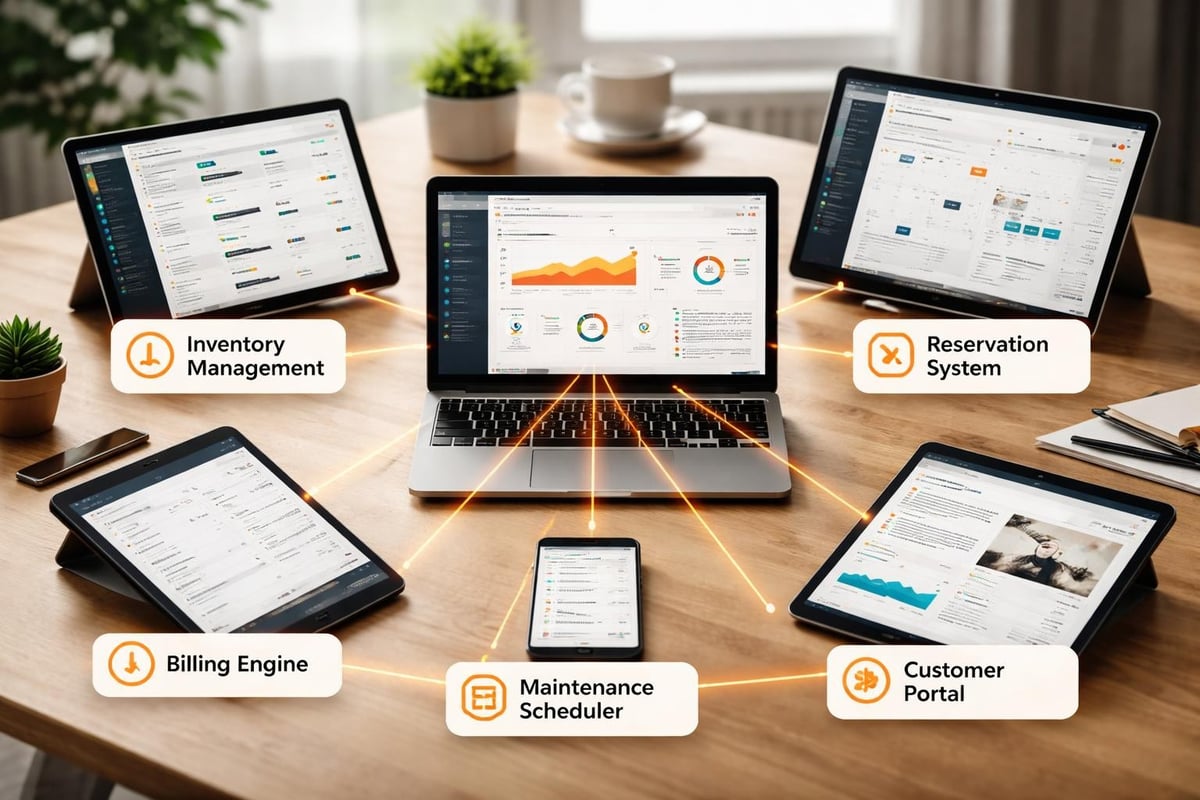
Modern rental ERP platforms provide visibility across your entire operation, enabling managers to make data-driven decisions based on real-time information. This transparency eliminates the guesswork that often plagues rental businesses operating with fragmented systems.
Key Benefits of Implementing Rental ERP Solutions
Operational efficiency represents the most immediate benefit organizations experience after deploying a rental ERP system. By centralizing data and automating routine tasks, businesses reduce the time spent on administrative work while simultaneously decreasing errors associated with manual data entry.
Revenue optimization becomes significantly more achievable when rental companies gain complete visibility into their asset utilization rates. The system tracks which items generate the most revenue, identifies underperforming assets, and highlights opportunities to adjust pricing strategies based on demand patterns. According to case studies from successful implementations, companies often achieve operational and financial excellence within the first year of deployment.
Customer experience improvements flow naturally from streamlined processes. When your team can instantly check availability, generate quotes, process reservations, and answer customer questions without switching between multiple systems, response times improve dramatically. This efficiency translates directly into higher customer satisfaction and increased repeat business.
Financial control strengthens through automated billing, integrated payment processing, and comprehensive reporting capabilities. Rather than reconciling data from multiple sources, finance teams access accurate, up-to-date information about receivables, revenue recognition, and profitability across different rental categories or locations.
Essential Components of Effective Rental ERP Systems
-
Asset and inventory management forms the foundation of any rental ERP platform. The system must track each asset's location, condition, maintenance history, and availability status in real-time. This includes managing serial numbers, depreciation schedules, and lifecycle data for every item in your rental fleet.
-
Reservation and contract management enables your team to create, modify, and track rental agreements efficiently. The system should prevent double-booking, automatically calculate pricing based on duration and quantity, and generate professional contracts with all necessary terms and conditions.
-
Maintenance scheduling and tracking ensures assets remain in optimal condition and meet safety requirements. Automated service reminders, work order generation, and complete maintenance history documentation help prevent equipment failures and extend asset lifecycles.
-
Billing and invoicing automation eliminates manual calculation errors and accelerates cash flow. The system should handle complex pricing structures, including time-based rates, quantity discounts, damage fees, and late return penalties, automatically generating accurate invoices based on actual usage.
-
Customer relationship management capabilities track interaction history, preferences, rental patterns, and communication logs. This information enables personalized service and helps identify opportunities for upselling or cross-selling complementary equipment.
-
Reporting and analytics provide insights into key performance indicators such as utilization rates, revenue per asset, customer profitability, and seasonal trends. These insights drive strategic decisions about fleet expansion, pricing adjustments, and operational improvements.
-
Mobile accessibility allows field teams to check equipment in and out, document condition, capture digital signatures, and update job status from any location. This real-time data synchronization keeps office staff informed and enables faster customer service.
Industry-Specific Applications for Rental ERP
Different rental sectors require specialized functionality within their rental ERP systems. Construction equipment rental companies, for example, need robust features for managing complex machinery, tracking operator certifications, and scheduling preventive maintenance. Construction equipment rental software must handle the unique requirements of large, expensive assets with strict maintenance protocols.
Property and real estate rental businesses benefit from features specifically designed for lease management, tenant screening, and payment processing. Property leasing ERP systems streamline workflows related to unit availability, lease renewals, maintenance requests, and financial reporting across multiple properties.
Event equipment rental operations require capabilities for managing complex order configurations, coordinating delivery logistics, and handling last-minute changes. The system must track individual items within larger packages and manage the unique challenges of time-sensitive deployments.
Party and entertainment rental companies need flexible package pricing, detailed item specifications with photos, and integration with online booking platforms. Their rental ERP must accommodate frequent seasonal fluctuations and manage diverse inventory ranging from tents to audiovisual equipment.
Selecting the Right Rental ERP for Your Business
The decision to implement a rental ERP represents a significant investment in your company's future, making careful selection critical to success. Evaluating new rental ERP software solutions requires thorough assessment of your current processes, pain points, and growth objectives.
Scalability should rank high on your evaluation criteria. Your chosen system must accommodate business growth without requiring a complete replacement in several years. Consider whether the platform can handle additional users, locations, inventory items, and transaction volumes as your operation expands.
Integration capabilities determine how well the rental ERP will connect with your existing tools. Look for platforms offering robust APIs and pre-built connectors for accounting software, payment gateways, e-commerce platforms, and other business applications you currently use.
Customization flexibility varies significantly across different rental ERP solutions. Some platforms offer extensive configuration options that allow you to tailor workflows, fields, and reports to match your specific requirements, while others provide limited customization. Understanding your need for specialized functionality helps narrow your options.
User experience and training requirements directly impact adoption rates and long-term success. Schedule demonstrations with actual users who will operate the system daily, and assess the learning curve realistically. The most feature-rich platform delivers minimal value if your team struggles to use it effectively.
Vendor support and development roadmap indicate the long-term viability of your investment. Investigate the provider's commitment to ongoing development, frequency of updates, quality of customer support, and financial stability. A vendor partnership should extend well beyond initial implementation.
| Evaluation Criteria | Questions to Ask | Why It Matters |
|---|---|---|
| Core Functionality | Does it handle our specific rental types and pricing models? | Ensures the system meets fundamental business needs |
| Implementation Timeline | How long until we're fully operational? | Impacts business disruption and ROI timeline |
| Total Cost of Ownership | What are licensing, implementation, training, and ongoing costs? | Determines actual investment beyond initial purchase |
| Data Migration | How will existing data transfer to the new system? | Affects implementation complexity and data integrity |
| Mobile Capabilities | Can field teams access essential functions offline? | Critical for operations requiring mobile access |
Implementation Strategy for Rental ERP Success
Successful rental ERP implementation requires careful planning and structured execution. Begin by assembling a cross-functional team representing all departments that will interact with the system. This team identifies specific requirements, evaluates vendors, and guides the implementation process.
Data preparation and migration represents one of the most time-consuming aspects of implementation. Clean, accurate data ensures your new system starts with a solid foundation. Dedicate resources to reviewing, standardizing, and organizing existing information about assets, customers, contracts, and financial records before migration begins.
Process documentation and optimization should occur before, not after, implementation. Map your current workflows, identify inefficiencies, and design improved processes that leverage your rental ERP's capabilities. Using ERP software to manage rental and service businesses effectively requires aligning system configuration with optimized workflows rather than simply replicating old habits.
Phased rollout minimizes disruption compared to attempting a complete switch overnight. Consider starting with core functions like inventory management and reservations, then progressively adding billing, maintenance, and advanced features. This approach allows teams to build competence gradually while maintaining business continuity.
Training and change management determine whether users embrace or resist the new system. Develop role-specific training programs that teach employees how the rental ERP improves their daily work. Identify champions within each department who can support colleagues and reinforce best practices.
Advanced Features Driving Modern Rental Operations
The rental ERP landscape continues evolving with technological advancements that create new opportunities for operational excellence. Artificial intelligence and machine learning now power predictive analytics that forecast demand patterns, optimize pricing dynamically, and anticipate maintenance needs before failures occur.
Internet of Things (IoT) integration enables real-time asset tracking through GPS and telematics systems. This connectivity provides precise location data, usage metrics, and condition monitoring that enhance security, improve utilization planning, and enable proactive maintenance scheduling.
Customer self-service portals reduce administrative burden while improving convenience for clients. These platforms allow customers to browse available inventory, check real-time availability, submit rental requests, manage existing reservations, and access billing information without contacting your team directly.
Automated workflow triggers eliminate manual monitoring of routine tasks. The system can automatically send rental reminders, generate overdue notices, schedule preventive maintenance, reorder consumable supplies, and escalate issues requiring management attention based on predefined rules.
Multi-location management becomes increasingly important as rental businesses expand geographically. Modern rental ERP platforms provide centralized visibility across all locations while allowing site-specific customization of pricing, inventory allocation, and operational procedures.
Maximizing ROI from Your Rental ERP Investment
Achieving maximum return from your rental ERP requires ongoing optimization beyond initial implementation. Regular review of system utilization, process adherence, and performance metrics helps identify opportunities for improvement and ensures you leverage all available capabilities.
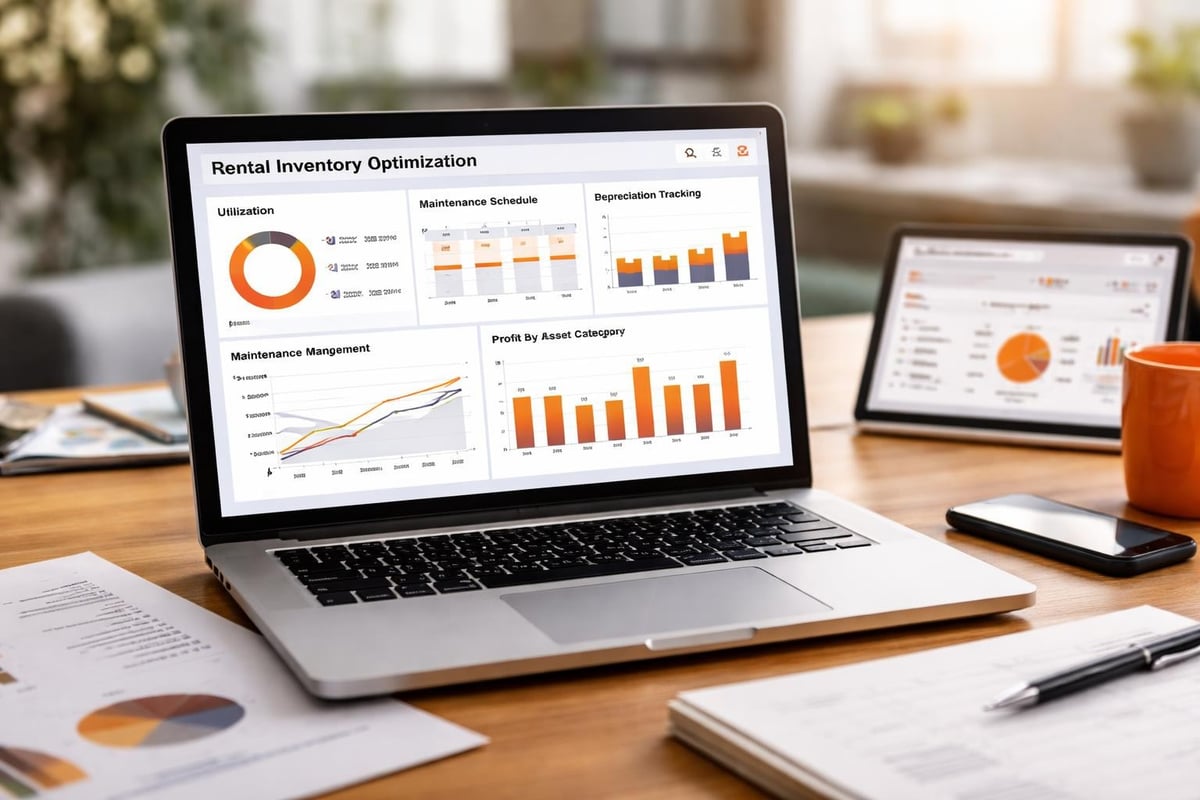
Inventory optimization becomes data-driven when your rental ERP tracks detailed utilization metrics. Analyze which assets generate the highest returns, identify excess inventory tying up capital, and make informed decisions about fleet expansion or reduction based on actual demand patterns rather than intuition.
Pricing strategy refinement benefits from comprehensive data about rental patterns, seasonal fluctuations, and competitive positioning. Your system should provide insights that enable dynamic pricing adjustments maximizing revenue while maintaining competitive advantage.
Customer segmentation and targeting improve marketing effectiveness when your rental ERP reveals which customer types generate the most profitable business. This intelligence guides acquisition efforts, retention programs, and service level differentiation.
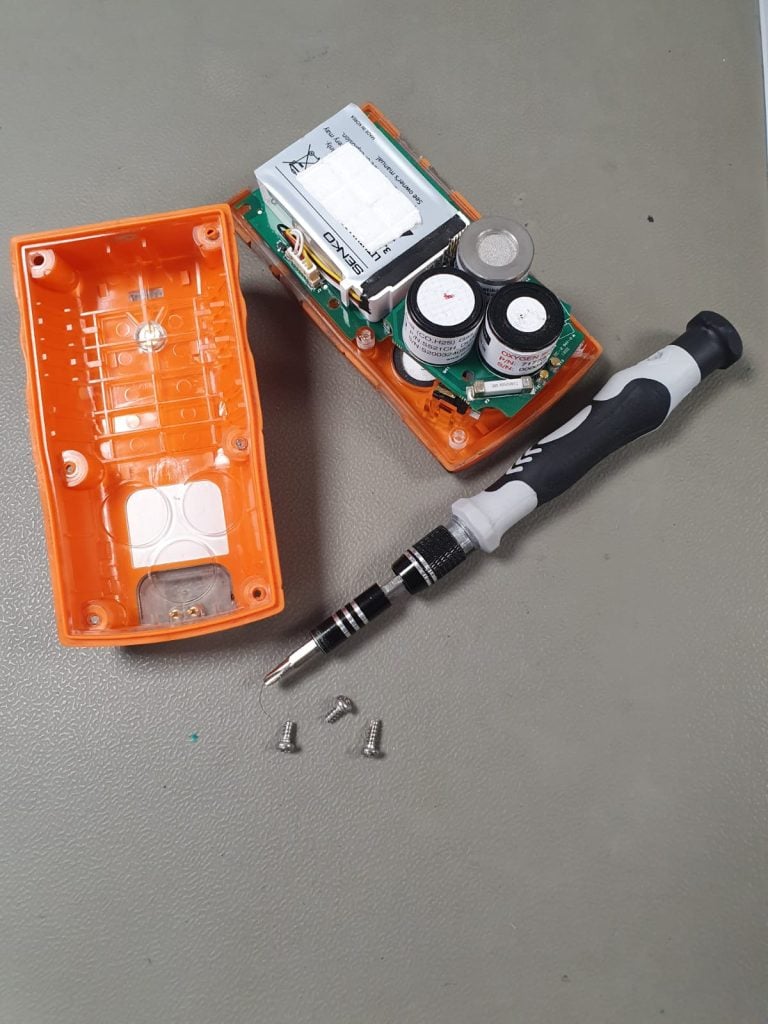
For businesses seeking to enhance their rental operations with sophisticated service tracking capabilities, implementing specialized tools can complement core rental ERP functionality. The Brytend Service Module enables you to register serialized inventory, automate service reminders, and generate comprehensive service certificates, providing complete visibility into your asset lifecycle management.
| Performance Metric | Calculation Method | Target Benchmark |
|---|---|---|
| Asset Utilization Rate | (Rental Days ÷ Available Days) × 100 | 60-75% for most equipment |
| Revenue per Asset | Total Revenue ÷ Number of Assets | Industry-specific, track trends |
| Customer Acquisition Cost | Marketing Expenses ÷ New Customers | Should decrease with CRM insights |
| Average Rental Duration | Total Rental Days ÷ Number of Rentals | Longer often indicates customer satisfaction |
| On-Time Return Rate | On-Time Returns ÷ Total Returns × 100 | Target above 90% |
Addressing Common Rental ERP Implementation Challenges
Organizations implementing rental ERP systems frequently encounter predictable obstacles that can derail success if not anticipated and addressed proactively. Resistance to change tops the list, with employees comfortable with existing processes reluctant to adopt new technologies regardless of potential benefits.
Data quality issues surface during migration, revealing years of inconsistent record-keeping, duplicate entries, and incomplete information. Addressing these problems requires dedicated resources and clear accountability, but clean data foundation justifies the investment through improved system performance.
Integration complexity increases when connecting rental ERP systems with legacy applications, specialized equipment, or third-party platforms. Technical challenges require experienced developers and thorough testing to ensure seamless data flow between systems.
Customization versus standardization presents a persistent dilemma. While every business considers its processes unique, excessive customization increases costs, complicates updates, and reduces the benefits of proven best practices embedded in standard rental ERP functionality. Finding the right balance requires honest assessment of which processes truly require specialized handling.
Vendor dependency concerns arise when selecting cloud-based rental ERP solutions. Understanding service level agreements, data ownership policies, backup procedures, and exit strategies protects your business interests throughout the vendor relationship.
Future Trends Shaping Rental ERP Development
The rental industry faces ongoing transformation driven by technological innovation and changing customer expectations. Understanding emerging trends helps businesses position themselves for future success and make informed decisions about rental ERP capabilities they'll need in coming years.
Sustainability tracking gains importance as environmental considerations influence customer decisions and regulatory requirements. Future rental ERP systems will provide detailed carbon footprint reporting, energy consumption tracking, and lifecycle environmental impact assessment to support corporate sustainability initiatives.
Subscription and membership models are expanding beyond traditional transaction-based rentals. Modern platforms must accommodate hybrid business models combining one-time rentals, ongoing subscriptions, and membership programs with varying access levels and pricing structures.
Blockchain technology promises enhanced security, transparent transaction histories, and simplified multi-party agreements. While still emerging in rental applications, blockchain could revolutionize equipment provenance tracking, automated smart contracts, and decentralized rental marketplaces.
Augmented reality integration will enable customers to visualize equipment in their intended environment before renting, reducing mismatches between expectations and reality. For complex equipment, AR-based training and operational guidance could improve safety and customer satisfaction.
Voice-activated interfaces and conversational AI will streamline routine interactions, allowing staff to check availability, create reservations, and update records through natural language commands rather than navigating multiple screens.
Frequently Asked Questions
What is rental ERP software and how does it differ from general ERP systems?
Rental ERP software is specialized enterprise resource planning technology designed specifically for businesses that rent equipment, properties, or assets. Unlike general ERP systems built for manufacturing or retail, rental ERP platforms handle time-based transactions, asset availability tracking, usage-based billing, maintenance scheduling, and the unique workflows inherent to rental operations. These systems manage the complete rental lifecycle from reservation through return, addressing challenges like preventing double-booking, calculating complex rental pricing structures, and tracking individual asset histories across multiple rental cycles.
How long does it typically take to implement a rental ERP system?
Implementation timelines vary significantly based on business size, complexity, data migration requirements, and customization needs. Small rental operations with straightforward processes might complete implementation in 8-12 weeks, while larger enterprises with multiple locations, extensive inventories, and complex integrations often require 6-12 months for full deployment. Phased implementations that prioritize core functionality first typically show faster initial value realization, with advanced features added progressively. Adequate planning, dedicated internal resources, clean data preparation, and experienced implementation partners significantly accelerate the timeline while reducing risks.
What are the most important features to look for in rental ERP software?
Essential features include real-time inventory and asset tracking, automated reservation management with availability checking, flexible billing engines that handle various rental periods and pricing models, integrated maintenance scheduling, comprehensive customer relationship management, mobile accessibility for field operations, and robust reporting capabilities. Industry-specific functionality matters greatly-construction equipment rental requires different capabilities than property leasing or event equipment rental. The system should also offer scalability to accommodate growth, integration capabilities with existing tools, and user-friendly interfaces that encourage adoption across your organization.
How much does rental ERP software typically cost?
Rental ERP pricing varies widely based on deployment model, user count, feature requirements, and vendor. Cloud-based subscription models typically range from $100-$500 per user monthly, with minimum commitments and implementation fees adding to total costs. On-premise solutions require larger upfront investments for licensing ($10,000-$100,000+) plus infrastructure, implementation, and ongoing maintenance expenses. Total cost of ownership includes licensing, implementation services, data migration, customization, training, ongoing support, and periodic updates. Small businesses might invest $20,000-$50,000 initially, while enterprise implementations often exceed $200,000 when accounting for all components.
Can rental ERP systems integrate with accounting software and other business tools?
Modern rental ERP platforms offer extensive integration capabilities through APIs, pre-built connectors, and middleware solutions. Most systems integrate seamlessly with popular accounting platforms like QuickBooks, Xero, and Sage, ensuring financial data flows automatically between systems without duplicate entry. Additional integrations commonly include payment processors, e-commerce platforms, CRM systems, document management tools, email marketing services, and industry-specific equipment like GPS tracking devices or telematics systems. When evaluating platforms, verify that integrations you need either exist as standard features or can be developed through available APIs and technical documentation.
What challenges should businesses expect when implementing rental ERP?
Common implementation challenges include employee resistance to changing familiar processes, data quality issues requiring cleanup before migration, underestimating time and resources needed for proper implementation, inadequate training leading to poor adoption, and integration complexities with existing systems. Technical challenges may arise during customization or when connecting legacy applications. Managing these obstacles requires executive sponsorship, dedicated project management, realistic timelines with buffer for unexpected issues, comprehensive training programs, and clear communication about benefits and expectations. Organizations that treat implementation as a business transformation project rather than just technology installation achieve significantly better outcomes.
How does rental ERP software improve customer experience?
Rental ERP systems enhance customer experience through faster response times, accurate availability information, professional documentation, flexible self-service options, and consistent service quality. When staff access complete customer histories and preferences instantly, they provide personalized service and proactive recommendations. Automated communication keeps customers informed about reservation confirmations, delivery schedules, upcoming returns, and billing details without requiring manual outreach. Self-service portals allow customers to browse inventory, check availability, submit requests, and manage existing rentals on their schedule. Streamlined processes reduce errors, prevent double-bookings, and ensure equipment arrives as promised, building trust and encouraging repeat business.
Implementing a rental ERP system represents a transformative step toward operational excellence, enabling businesses to manage complexity efficiently while scaling for growth. The right platform centralizes your operations, automates routine tasks, and provides the insights needed to make strategic decisions that drive profitability. If you're ready to explore how custom software solutions can address your specific rental business challenges, Brytend offers experienced developers who specialize in creating tailored systems that align perfectly with your unique workflows and objectives. Our team provides ongoing support to ensure your technology investment delivers lasting value as your business evolves.

