A rental system serves as the operational backbone for businesses that lease equipment, vehicles, properties, or other assets to customers. Whether you're managing construction equipment, party supplies, vehicles, or residential properties, implementing a comprehensive rental system transforms how you track availability, process transactions, and maintain customer relationships. In 2026, businesses face increasing pressure to digitize their operations, and rental management stands as a critical area where technology delivers measurable returns through improved efficiency, reduced errors, and enhanced customer experiences.
Understanding the Core Components of a Rental System
A complete rental system encompasses several interconnected modules that work together to automate and streamline rental operations. At its foundation, the system must track inventory in real-time, showing what's available, what's currently rented, and what requires maintenance or repair.
Inventory Management and Asset Tracking
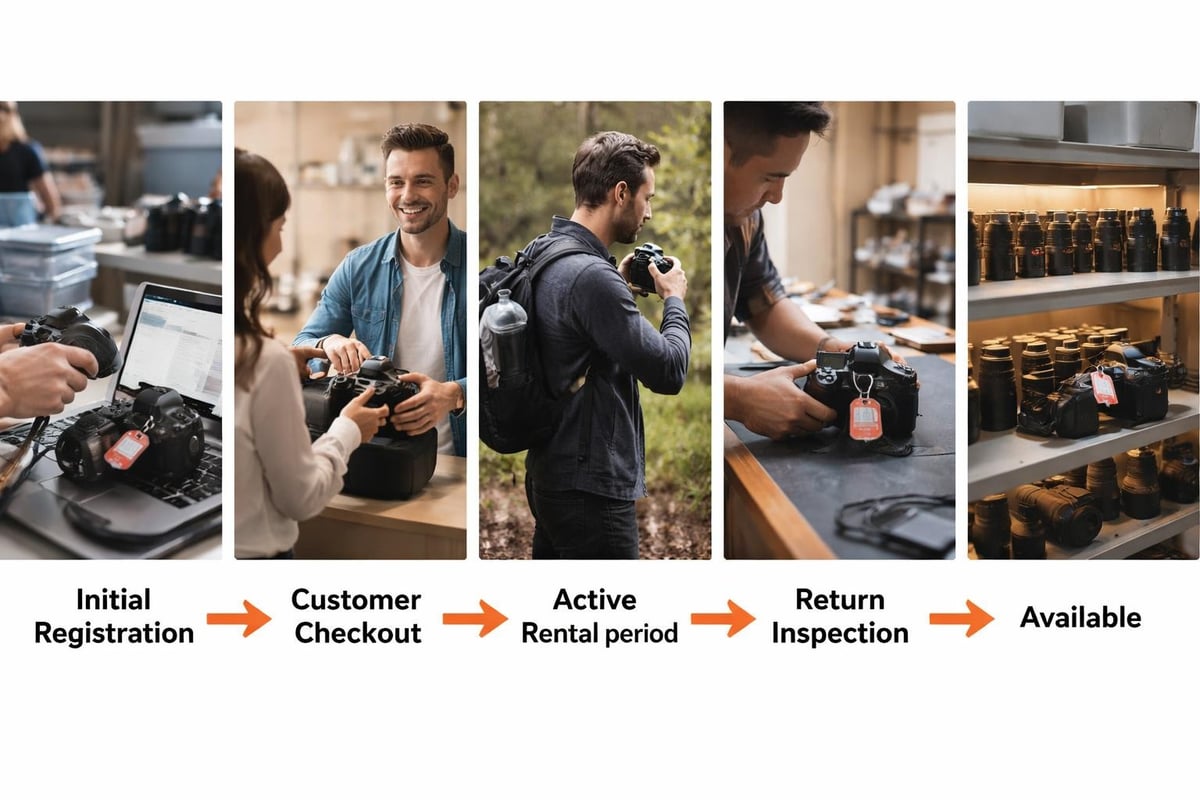
Inventory tracking represents the heart of any rental system. Each asset needs a unique identifier-whether through barcodes, RFID tags, or serial numbers-that allows staff to locate items instantly and monitor their status throughout the rental lifecycle. According to best practices for tracking rental equipment, maintaining a centralized database prevents double-bookings and ensures accurate availability information.
- Serialized asset registration: Every item receives a unique code linking to its complete history, specifications, and condition reports
- Real-time availability updates: The system automatically adjusts inventory status when items are checked out or returned
- Location tracking: Multi-location businesses can see exactly where each asset is stored or deployed
- Condition monitoring: Staff can document wear, damage, or maintenance needs immediately upon return
Effective inventory management also requires setting appropriate stock levels based on demand patterns. Businesses should analyze rental frequency data to determine optimal quantities for each asset category, avoiding both shortages during peak periods and excess inventory that ties up capital unnecessarily.
Customer Relationship Management Integration
Customer data management extends far beyond basic contact information in a modern rental system. The system should maintain complete rental histories, payment records, credit status, and communication logs for each customer account. This comprehensive view enables personalized service and informed decision-making when approving rentals or extending credit terms.
The integration between inventory and customer management creates powerful automation opportunities. When a customer requests a specific item, the rental system can immediately confirm availability, generate a quote, create a reservation, and send confirmation emails-all without manual intervention.
Operational Workflows That Drive Efficiency
Rental operations involve repeating processes that benefit enormously from standardization and automation. A well-designed rental system guides staff through consistent workflows while capturing data that improves future operations.
Reservation and Checkout Processes
The reservation workflow begins when a customer expresses interest in renting an asset. The rental system should allow staff to search available inventory by category, specifications, or availability dates. Once the customer selects their items, the system creates a reservation that temporarily holds the equipment.
During checkout, staff verify customer identification, confirm reservation details, inspect equipment condition, and collect required deposits or payments. The rental system generates contracts with all necessary terms, liability waivers, and rental agreements. Rental management guidance emphasizes the importance of maintaining thorough documentation for compliance and dispute resolution.
- Automated contract generation: Templates populate with customer data, rental items, rates, and terms
- Digital signature capture: Customers sign agreements electronically, eliminating paper processing
- Payment processing: Integrated payment systems handle deposits, rental fees, and damage waivers
- Equipment inspection checklists: Staff document pre-rental condition with photos and notes
Return Processing and Quality Control
Return processing requires equal attention to detail. Staff must inspect returned items against the checkout condition report, identify any damage beyond normal wear, and assess cleaning or repair needs. The rental system should support this inspection workflow with guided checklists and photo documentation.
| Return Inspection Element | System Function | Business Impact |
|---|---|---|
| Condition assessment | Photo upload and damage notes | Documents customer responsibility |
| Cleaning requirements | Auto-schedule cleaning tasks | Ensures items return to rental pool quickly |
| Maintenance needs | Trigger work orders | Prevents renting damaged equipment |
| Inventory status update | Real-time availability changes | Maximizes utilization rates |
After inspection, the system automatically updates inventory status. Items in good condition return immediately to available status. Equipment requiring cleaning moves to a separate queue with estimated turnaround times. Damaged items trigger maintenance workflows and become unavailable until repairs complete.
Financial Management and Pricing Strategies
Revenue optimization in rental businesses requires sophisticated pricing capabilities within the rental system. Static pricing tables no longer suffice in competitive markets where demand fluctuates seasonally and customers expect customized quotes.
Dynamic Pricing and Rate Management
Modern rental systems support multiple pricing dimensions including asset category, rental duration, customer type, and seasonal demand. The system should calculate rates automatically based on these factors while allowing manual overrides when justified.
- Tiered duration pricing: Daily, weekly, and monthly rates with automatic discounts for longer rentals
- Customer-specific pricing: Contract rates for frequent customers or bulk rental agreements
- Seasonal adjustments: Higher rates during peak demand periods, promotional pricing during slow seasons
- Add-on services: Delivery fees, damage waivers, training charges, and accessory rentals
The financial module tracks all transactions, maintains account balances, processes payments, and manages collections. Integration with accounting systems eliminates duplicate data entry and ensures financial records remain synchronized with operational activity.

Revenue Recognition and Reporting
Rental businesses face unique accounting challenges related to revenue recognition across rental periods. The rental system must track when revenue is earned versus when payment is received, especially for long-term rentals spanning multiple accounting periods.
Industry performance standards provide benchmarks for key metrics including utilization rates, revenue per asset, and maintenance costs. A comprehensive rental system generates reports showing these critical indicators, enabling management to identify trends and make data-driven decisions.
Maintenance Management and Asset Lifecycle
Equipment reliability directly impacts customer satisfaction and rental revenue. A rental system must incorporate maintenance scheduling, work order management, and service history tracking to maximize asset uptime and longevity.
Preventive Maintenance Scheduling
Rather than waiting for equipment failures, successful rental businesses implement preventive maintenance based on usage hours, rental cycles, or calendar intervals. The rental system should track usage metrics and automatically generate maintenance reminders when thresholds are reached.
The Brytend Service Module offers a complete and structured way to manage all service-related activities. It helps you track equipment, schedule maintenance, and document work with accuracy and ease. By giving each asset a unique identity, you can monitor its full lifecycle-service history, condition, warranty details, and upcoming tasks through the Brytend Service Module.

Maintenance workflows within the rental system guide technicians through required procedures, capture parts used, record labor hours, and document completion. This detailed service history proves invaluable when deciding whether to repair or retire aging equipment.
- Usage-based triggers: Maintenance scheduled after specific rental hours or cycles
- Calendar-based reminders: Annual inspections, certifications, or regulatory compliance checks
- Work order routing: Assignments to appropriate technicians based on skills and availability
- Parts inventory integration: Automatic parts requests when maintenance is scheduled
- Service certification: Generate compliance documentation for equipment requiring regulatory approvals
Lifecycle Cost Analysis
The rental system accumulates cost data throughout each asset's lifecycle, including purchase price, financing costs, maintenance expenses, insurance, storage, and depreciation. This comprehensive cost tracking enables accurate profitability analysis at the individual asset level.
Management can identify which equipment categories deliver the best returns and which consistently underperform. These insights inform future purchasing decisions and help optimize the rental fleet composition. Equipment management best practices emphasize the importance of regular performance reviews to maintain a profitable equipment mix.
Technology Integration and Mobile Capabilities
Rental operations increasingly occur outside the traditional office environment. Delivery drivers, field technicians, and warehouse staff all need system access from mobile devices to update equipment status, complete inspections, and process transactions.
Mobile Applications for Field Operations
Mobile apps extend rental system functionality to smartphones and tablets, enabling staff to work efficiently regardless of location. Delivery personnel can photograph equipment at delivery, collect customer signatures on tablets, and update rental status instantly. Warehouse staff can scan barcodes to process returns without returning to a desktop computer.
The mobile interface should mirror core desktop functions while optimizing for smaller screens and touch interaction. Offline capability ensures staff can work without internet connectivity, with data synchronizing once connection resumes.
| Mobile Function | Business Value | Implementation Consideration |
|---|---|---|
| Barcode scanning | Fast, accurate inventory updates | Camera quality requirements |
| Photo documentation | Visual proof of condition | Storage capacity planning |
| Digital signatures | Paperless contracts | Legal validity in jurisdiction |
| Offline operation | Work anywhere | Data sync protocols |
| GPS tracking | Delivery verification | Privacy policies |
Integration with Other Business Systems
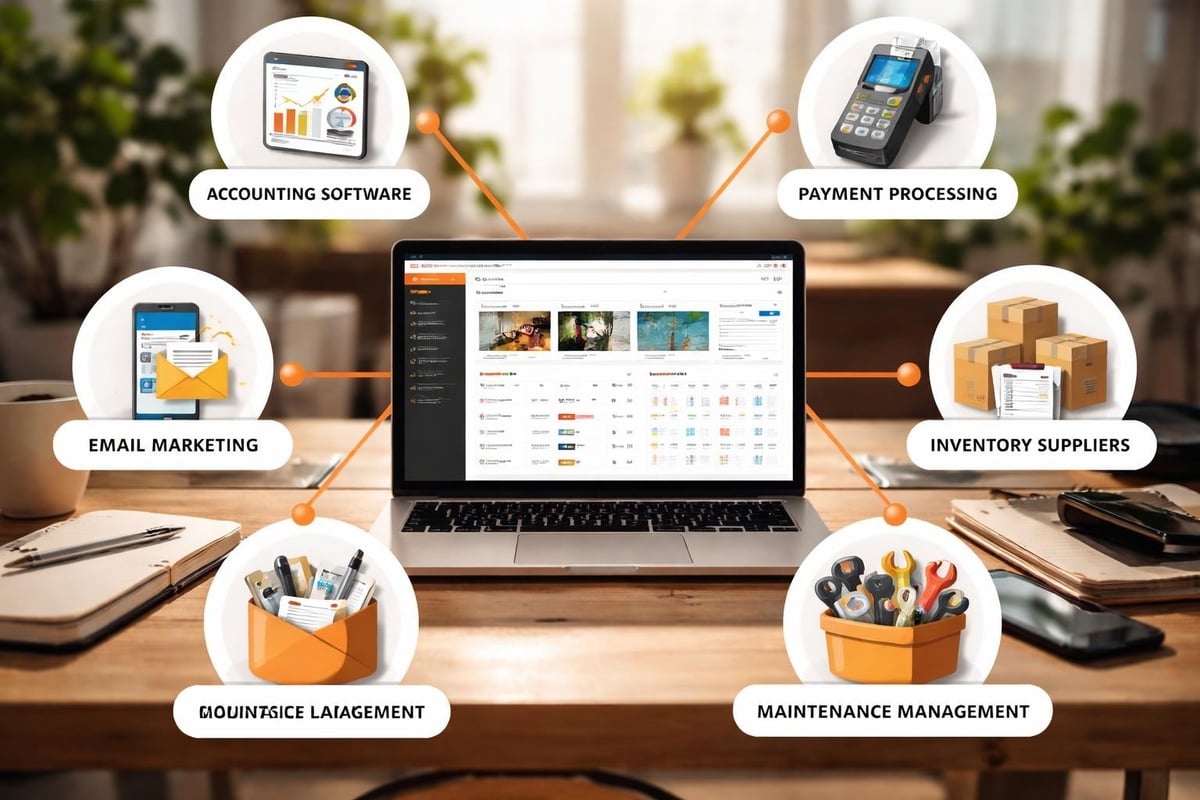
A rental system rarely operates in isolation. Integration with accounting software, payment processors, marketing platforms, and communication tools creates a cohesive technology ecosystem that eliminates data silos and manual transfers.
API-based integrations enable real-time data flow between systems. When a rental contract completes in the rental system, the financial transaction automatically posts to accounting software. Customer contact information synchronizes with email marketing platforms for targeted campaigns. Payment processing happens seamlessly within the rental workflow without switching applications.
Compliance and Documentation Requirements
Rental businesses operate under various regulatory frameworks depending on their industry and location. Construction equipment rentals face safety certification requirements. Vehicle rentals must comply with insurance and driver verification standards. Property rentals involve extensive landlord-tenant regulations.
Record Retention and Audit Trails
The rental system must maintain detailed audit trails showing who accessed what information and when changes occurred. This documentation proves essential during disputes, insurance claims, or regulatory audits. Blockchain-based documentation systems represent emerging approaches to creating tamper-proof rental records while addressing privacy concerns.
Retention policies should align with legal requirements, automatically archiving older records while keeping them accessible if needed. The system should support granular permission controls, ensuring staff only access information relevant to their roles.
- Transaction logging: Complete history of reservations, modifications, cancellations, and payments
- Document versioning: Track changes to contracts, agreements, and terms over time
- User activity monitoring: Who accessed customer data, when, and what actions they performed
- Automated backups: Regular data protection against loss or corruption
- Privacy compliance: Tools to handle data subject requests under regulations like GDPR
Industry-Specific Standards
Different rental sectors have established their own standards and best practices. The Association of Car Rental Industry Systems Standards created standardized classification codes that facilitate interoperability between rental companies and reservation systems. Similar standards exist in equipment rental, property management, and other specialized niches.
A flexible rental system accommodates these industry-specific requirements through configurable fields, custom workflows, and specialized reporting. Rather than forcing businesses to adapt to rigid software, modern platforms mold themselves to match industry practices.
Frequently Asked Questions
What features are essential in a rental system for small businesses?
Small businesses need core inventory tracking, customer management, contract generation, and payment processing. The system should be affordable, easy to learn, and scalable as the business grows. Cloud-based solutions offer the best value by eliminating server costs and providing automatic updates.
How does a rental system improve customer experience?
Customers benefit from faster checkout processes, accurate availability information, online reservation capabilities, and transparent pricing. The system enables personalized service by providing staff instant access to rental history and preferences. Automated reminders about upcoming returns and maintenance reduce customer inconvenience.
Can a rental system handle multiple locations?
Modern rental systems support multi-location operations with centralized inventory visibility and location-specific workflows. Customers can reserve items at one location and return them to another. Management gains consolidated reporting across all locations while maintaining individual location accountability.
What integration capabilities should I look for?
Priority integrations include accounting software for financial synchronization, payment processors for transaction handling, email platforms for customer communication, and mobile apps for field operations. API availability ensures you can connect additional tools as your needs evolve.
How long does it take to implement a rental system?
Implementation timelines vary based on business complexity, data migration requirements, and customization needs. Simple deployments might complete in weeks, while enterprise implementations with extensive integrations can take several months. Proper planning, staff training, and phased rollouts ensure successful adoption.
What security measures protect rental business data?
Look for systems with encrypted data transmission, secure cloud hosting, regular security audits, role-based access controls, and automatic backups. Compliance certifications relevant to your industry provide additional assurance. Multi-factor authentication prevents unauthorized access even if passwords are compromised.
How does mobile access benefit rental operations?
Mobile capabilities enable field staff to process transactions, update equipment status, capture signatures, and photograph condition reports anywhere. Delivery personnel can confirm drop-offs and pickups in real-time. Technicians can access maintenance histories and update work orders without returning to the office, significantly reducing administrative overhead.
Implementing a comprehensive rental system transforms operational efficiency while providing the data visibility needed for strategic decision-making. The right platform automates routine tasks, reduces errors, and enables your team to focus on delivering exceptional customer service. If you're ready to build a custom rental system tailored to your specific business requirements, Brytend brings the technical expertise and industry knowledge to create a solution that grows with your business.