
The transformation from traditional software licensing to service-based delivery represents one of the most significant shifts in technology business models over the past two decades. This software to service transition has fundamentally changed how organizations develop, deploy, and monetize their applications. Companies that once sold boxed products or perpetual licenses now offer continuous value through subscription models, cloud hosting, and ongoing support. Understanding this evolution is essential for businesses seeking to remain competitive in an increasingly service-oriented marketplace.
Understanding the Software to Service Model
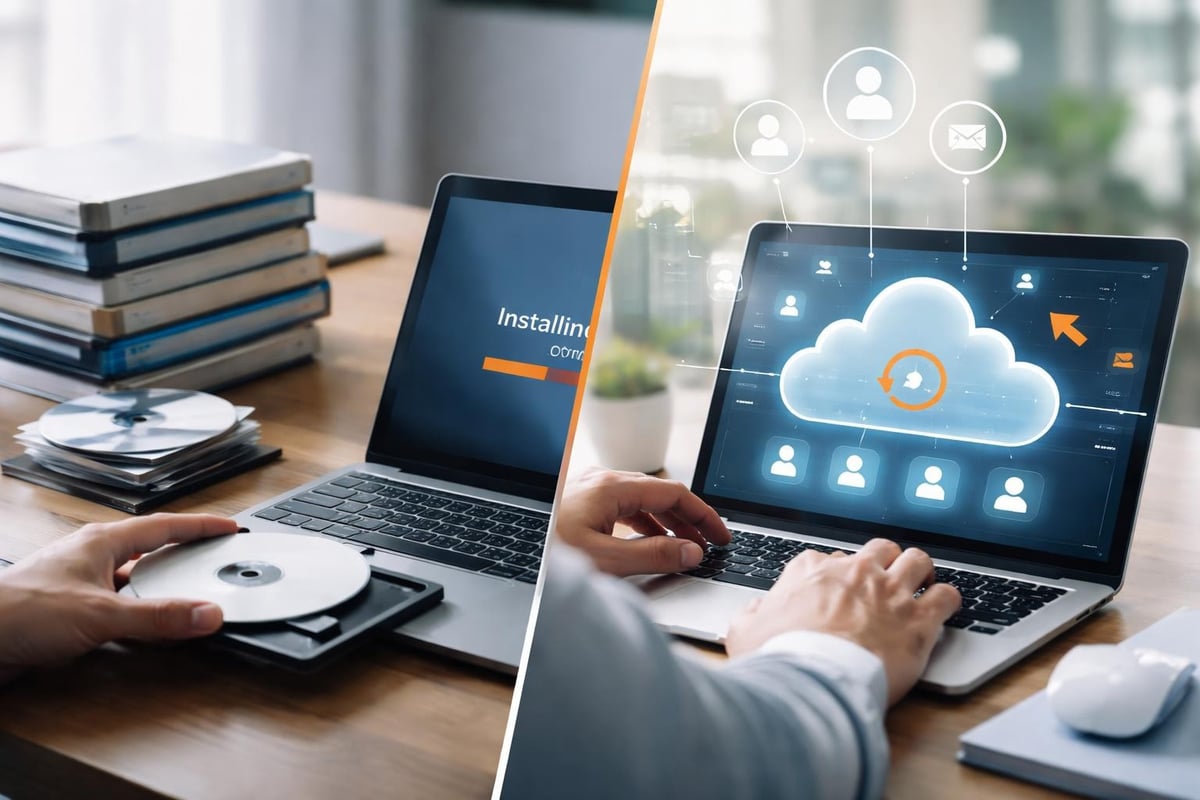
The Software as a Service (SaaS) model emerged as a response to the limitations of traditional software distribution. Rather than purchasing and installing applications on local infrastructure, customers access software through web browsers or lightweight clients. The vendor maintains the application, manages updates, and ensures security, while users pay recurring fees based on usage or seat count.
This software to service approach differs fundamentally from conventional licensing in several key ways. Traditional software required significant upfront capital expenditure, complex installation processes, and dedicated IT resources for maintenance. Service models shift these responsibilities to the provider, converting capital expenses into predictable operational costs.
Core Characteristics of Service-Based Software
Modern software to service platforms share several defining features that distinguish them from legacy applications:
-
Multi-tenancy architecture allows a single instance of the application to serve multiple customers simultaneously while maintaining data isolation and security.
-
Automatic updates ensure all users access the latest features and security patches without manual intervention or compatibility concerns.
-
Elastic scalability enables resources to expand or contract based on demand, eliminating the need for capacity planning and hardware provisioning.
-
Usage-based pricing aligns costs with actual consumption, making sophisticated software accessible to organizations of all sizes.
-
API-first design facilitates integration with other services and supports the creation of extended ecosystems around the core platform.
-
Built-in analytics provide insights into user behavior, system performance, and business outcomes without requiring separate monitoring tools.
Strategic Benefits of Software to Service Transformation
Organizations that successfully execute the software to service transition unlock numerous strategic advantages. The shift impacts not only revenue models but also customer relationships, product development, and competitive positioning.
Predictable Revenue Streams
Subscription-based pricing creates consistent, recurring revenue that improves financial forecasting and business valuation. Unlike one-time license sales that create lumpy revenue patterns, service models generate steady income that compounds as the customer base grows. This predictability enables more confident investment in product development and market expansion.
Deeper Customer Relationships
The software to service model transforms vendors from product sellers into long-term partners. Continuous engagement through regular updates, support interactions, and feature releases creates multiple touchpoints for relationship building. Customer success becomes a primary focus, as retention directly impacts revenue in ways that perpetual licensing never demanded.
| Traditional Software | Software to Service |
|---|---|
| One-time transaction | Ongoing relationship |
| Implementation focus | Success focus |
| Annual upgrade cycles | Continuous delivery |
| Feature-based competition | Outcome-based value |
| Reactive support | Proactive engagement |
Accelerated Innovation Cycles
Service delivery enables rapid iteration and experimentation. Development teams can deploy updates multiple times per day, test new features with subset populations, and gather immediate feedback. This service-oriented architecture approach dramatically reduces the time between concept and customer value delivery.
Technical Implementation of Software to Service
Transitioning from packaged software to service delivery requires fundamental changes to architecture, infrastructure, and development processes. Organizations must rebuild applications to support multi-tenancy, design for scalability, and embrace continuous deployment practices.
Architecture Considerations
Successful software to service platforms typically employ microservices architecture, breaking monolithic applications into loosely coupled components. Each service handles a specific business capability and communicates through well-defined APIs. This approach enables independent scaling, deployment, and development of different system components.
-
Data isolation strategies ensure customer information remains separate even when sharing underlying infrastructure, using schema separation, database partitioning, or complete database isolation based on security and performance requirements.
-
State management requires careful planning, as traditional applications often relied on local storage and session persistence that don't translate well to distributed, cloud-native environments.
-
Authentication and authorization systems must handle single sign-on, multi-factor authentication, and granular permission controls across diverse customer configurations and integration scenarios.
-
Monitoring and observability become critical when managing services for hundreds or thousands of customers, requiring sophisticated logging, tracing, and alerting capabilities.
-
Disaster recovery and business continuity planning must account for the responsibility of maintaining customer operations, implementing redundancy, backup strategies, and failover mechanisms.
At Brytend, teams work with clients to architect cloud-native solutions that embrace these principles from the ground up. The Brytend Service Module demonstrates how service-based thinking can transform asset management by tracking equipment lifecycles, automating maintenance schedules, and generating comprehensive service documentation through a centralized, accessible platform.

Infrastructure and Operations
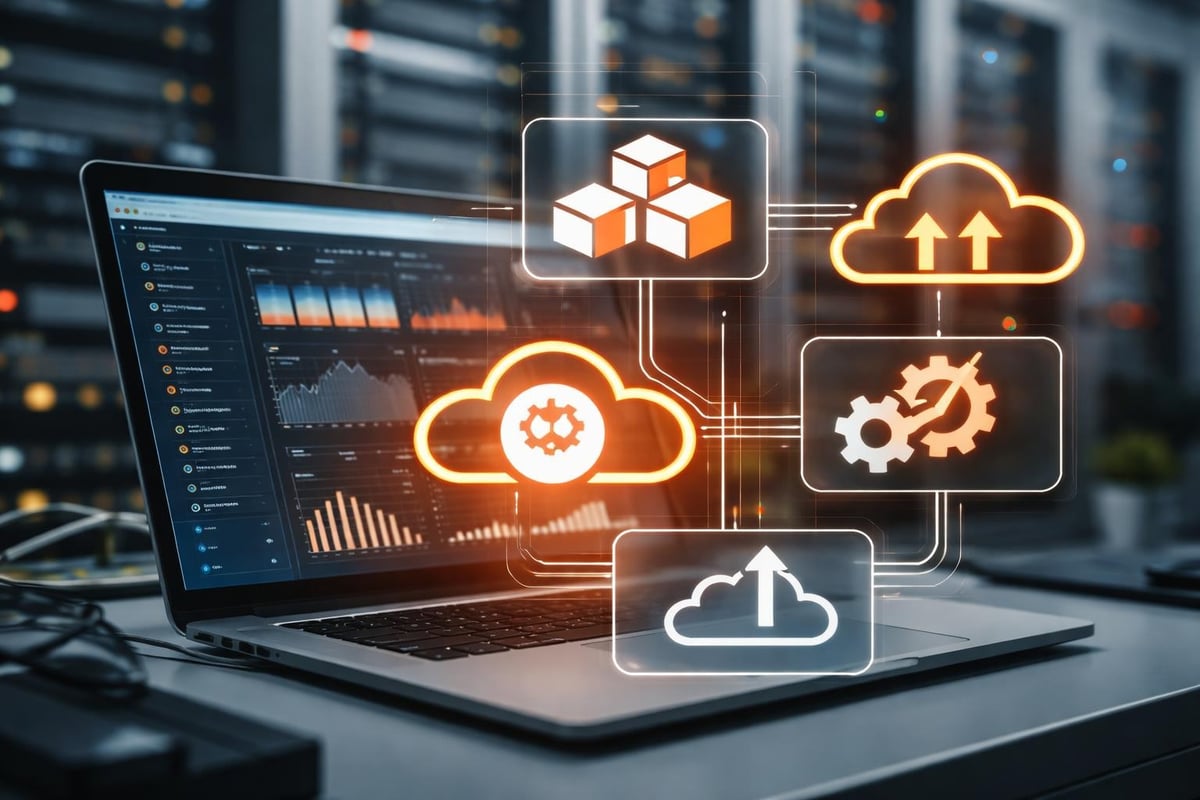
The software to service model demands robust infrastructure capable of handling variable loads, geographic distribution, and continuous availability. Cloud platforms provide the foundation for this infrastructure through managed services, global networks, and consumption-based pricing.
Containerization technologies enable consistent deployment across development, testing, and production environments. Orchestration platforms automate container management, handling scaling, health monitoring, and resource allocation. These tools allow small teams to manage infrastructure complexity that would have required large operations departments in traditional software delivery models.
Pricing and Business Model Evolution
The software to service transition necessitates fundamental rethinking of pricing strategy. Traditional per-seat or per-server licensing doesn't align with the value delivery and cost structures of service-based software. Organizations must design pricing models that reflect customer value, competitive positioning, and operational economics.
Pricing Structure Options
Service-based pricing typically falls into several categories, each with distinct advantages and challenges:
-
Usage-based pricing charges customers according to their actual consumption, whether measured in API calls, data processed, transactions completed, or active users. This approach scales naturally with customer growth but creates revenue variability.
-
Tiered subscription models offer different feature sets at fixed price points, simplifying purchasing decisions and creating upgrade paths as customer needs evolve.
-
Per-user pricing remains popular for collaboration and productivity tools, providing straightforward budgeting and natural expansion revenue as teams grow.
-
Value-based pricing ties costs to business outcomes or metrics that matter to customers, aligning vendor success with customer success but requiring sophisticated measurement capabilities.
-
Hybrid approaches combine multiple pricing dimensions to balance predictability, fairness, and revenue optimization across diverse customer segments.
Research on pricing structures in SaaS operations reveals the complexity of designing monetization strategies that maximize lifetime value while minimizing acquisition friction and churn risk.
Customer Success and Retention Strategy
Unlike traditional software sales where the relationship often ended after implementation, software to service businesses depend on continuous customer satisfaction. Retention becomes the primary driver of growth, as recurring revenue compounds over time and acquisition costs amortize across longer customer lifecycles.
Onboarding Excellence
The initial customer experience sets the tone for the entire relationship. Effective onboarding programs reduce time-to-value, demonstrate quick wins, and build confidence in the platform's capabilities. Self-service resources, guided tours, and proactive support during early adoption phases significantly impact long-term retention.
Health Monitoring and Intervention
Service providers must continuously monitor customer engagement signals to identify at-risk accounts before they churn. Login frequency, feature adoption, support ticket patterns, and usage trends provide early warning systems for customer success teams to intervene proactively.
| Health Indicator | Green Signal | Yellow Warning | Red Alert |
|---|---|---|---|
| Login frequency | Daily | Weekly | Monthly or less |
| Feature adoption | Expanding | Stable | Declining |
| Support tickets | Occasional | Increasing | Critical issues |
| Usage trends | Growing | Flat | Decreasing |
| Renewal engagement | 90+ days early | 30-60 days | Last minute |
Continuous Value Delivery
The software to service model creates opportunities for ongoing value demonstration through regular feature releases, educational content, and success stories. Customer newsletters, webinars, and user communities reinforce the relationship and showcase platform capabilities that may be underutilized.
Migration Strategy for Existing Software Products
Organizations with established software products face unique challenges when executing the software to service transition. Existing customers expect continued support for perpetual licenses while new customers demand modern delivery models. Balancing these competing needs requires careful planning and execution.
Dual-Track Approach
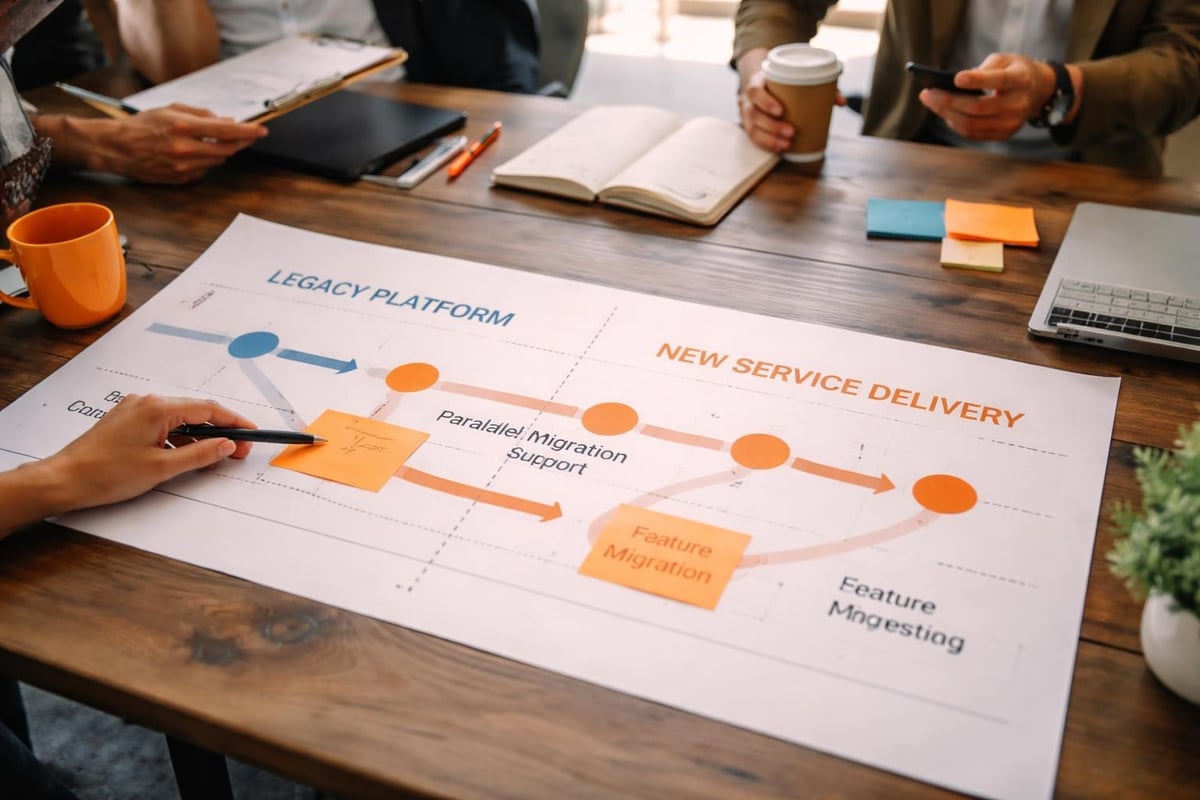
Many successful transitions maintain parallel offerings during a migration period. The legacy product continues receiving maintenance and critical updates while development resources shift toward the service platform. This approach allows existing customers to migrate on their timeline while enabling immediate focus on service-based acquisition.
-
Communication transparency helps customers understand the strategic direction without feeling abandoned or pressured into premature migration decisions.
-
Migration incentives such as discounted subscription rates, free transition services, or enhanced features can accelerate the shift from legacy to service platforms.
-
Data portability ensures customers can move their information from installed software to cloud services without loss or corruption, reducing migration anxiety.
-
Feature parity planning identifies which legacy capabilities must be available in the service platform before customers will consider switching.
-
Sunset timelines provide clear expectations about how long legacy products will receive support, helping customers plan their transitions appropriately.
Development Process Transformation
The software to service model fundamentally changes how development teams operate. Annual or quarterly release cycles give way to continuous delivery. Waterfall planning yields to agile iteration. Feature completeness becomes less important than rapid value delivery and customer feedback incorporation.
Continuous Integration and Deployment
Modern service platforms deploy code changes multiple times daily through automated pipelines. Comprehensive testing, gradual rollouts, and quick rollback capabilities enable this velocity without sacrificing quality or stability. Service-oriented approaches emphasize automation and monitoring to maintain reliability while increasing deployment frequency.
Feature Flag Management
The ability to enable or disable features for specific customer segments, regions, or individual accounts provides tremendous flexibility. Development teams can test new capabilities with beta customers, gradually roll out changes, or customize experiences without maintaining separate code branches.
Customer-Driven Roadmaps
Direct access to usage analytics, support trends, and customer feedback enables data-informed product decisions. Service providers can see which features drive engagement, where users struggle, and what capabilities would deliver the most value. This visibility transforms product management from speculation to science.
Security and Compliance in Service Delivery
Taking responsibility for customer data and operations elevates security and compliance requirements beyond those of traditional software. Service providers must implement robust controls, maintain certifications, and demonstrate continuous compliance with evolving regulations.
Shared Responsibility Model
Understanding what constitutes software as a service includes recognizing the division of security responsibilities between provider and customer. The platform vendor handles infrastructure security, application security, and operational controls. Customers remain responsible for access management, data classification, and usage policies within their accounts.
-
Infrastructure hardening includes network isolation, encryption at rest and in transit, regular vulnerability scanning, and prompt patching of identified issues.
-
Access controls implement principle of least privilege, role-based permissions, and audit logging for all system actions.
-
Compliance frameworks such as SOC 2, ISO 27001, GDPR, HIPAA, or industry-specific regulations require ongoing investment in controls, documentation, and third-party validation.
-
Incident response procedures ensure rapid detection, containment, and remediation of security events while maintaining customer communication and regulatory reporting obligations.
-
Data residency options accommodate customer requirements for geographic data storage, particularly important for organizations subject to data sovereignty regulations.
Competitive Differentiation in Service Markets
As software to service models proliferate across every category, standing out requires more than feature parity. Organizations must identify unique value propositions that resonate with target customers and defend against commoditization pressures.
Vertical Specialization
Deep industry expertise enables service providers to offer pre-configured workflows, industry-specific terminology, and regulatory compliance features that horizontal platforms cannot match. This specialization commands premium pricing and creates switching costs through domain knowledge embedded in the platform.
Integration Ecosystem
Comprehensive API coverage and pre-built connectors to complementary services reduce implementation friction and expand use cases. Platforms that serve as central hubs within technology stacks become more valuable and difficult to replace than standalone point solutions.
User Experience Excellence
Intuitive interfaces, thoughtful workflows, and delightful interactions differentiate commoditized functionality. Users prefer platforms that make complex tasks simple over feature-rich applications that overwhelm with options.
| Differentiation Strategy | Competitive Advantage | Implementation Challenge |
|---|---|---|
| Vertical specialization | Premium pricing, lower churn | Narrower addressable market |
| Integration breadth | Network effects, switching costs | Maintenance overhead |
| User experience | Word-of-mouth growth | Subjective, hard to protect |
| Performance optimization | Usage expansion, efficiency gains | Ongoing investment required |
| Support quality | Customer loyalty, referrals | Scaling challenges |
Measuring Success in Software to Service Business
Traditional software metrics like license sales and upgrade rates give way to new indicators that reflect the economics and dynamics of service delivery. Organizations must track both financial and operational measures to understand business health and identify improvement opportunities.
Financial Metrics
Monthly Recurring Revenue (MRR) and Annual Recurring Revenue (ARR) form the foundation of service business measurement. These figures indicate the predictable revenue base and enable trend analysis. Customer Acquisition Cost (CAC) and Customer Lifetime Value (LTV) reveal whether growth economics are sustainable or require adjustment.
Operational Metrics
Daily Active Users (DAU) and Monthly Active Users (MAU) demonstrate engagement levels and help identify usage patterns. Feature adoption rates show whether development investments deliver value that customers recognize and utilize. Time-to-value measures how quickly new customers achieve their first meaningful outcome with the platform.
-
Net Revenue Retention tracks revenue expansion from existing customers through upsells, cross-sells, and usage growth, offset by downgrades and churn.
-
Gross Revenue Retention measures pure retention excluding expansion, indicating whether the platform delivers sustained value or experiences natural decay.
-
Churn rate at both customer and revenue levels reveals satisfaction trends and identifies cohorts that may require different approaches.
-
Expansion revenue quantifies growth from existing customers, often the most efficient revenue source once acquisition costs are recovered.
-
Sales efficiency ratios compare revenue growth to sales and marketing spending, indicating whether customer acquisition strategies scale profitably.
Frequently Asked Questions
What is the primary difference between software to service and traditional software?
The software to service model delivers applications through cloud-based access with subscription pricing, automatic updates, and vendor-managed infrastructure. Traditional software requires local installation, perpetual licensing, and customer-managed maintenance. Service models shift responsibility and costs from customer to provider while enabling continuous improvement and support.
How long does transitioning from software to service typically take?
The timeline varies significantly based on application complexity, architecture decisions, and resource availability. Simple applications might transition in 6-12 months, while complex enterprise platforms often require 18-36 months. Organizations must account for architecture redesign, multi-tenancy implementation, infrastructure setup, customer migration, and parallel support periods.
What are the biggest challenges in software to service transformation?
Technical challenges include architecting for multi-tenancy, implementing scalable infrastructure, and establishing continuous deployment pipelines. Business challenges involve pricing model development, sales process changes, and customer migration management. Cultural challenges require shifting from project-based to continuous delivery mindset and prioritizing retention over acquisition.
How should pricing change when moving to software to service?
Pricing must reflect the ongoing value delivery and operational costs of service models rather than development costs of packaged software. Most organizations adopt subscription-based approaches with usage tiers, per-user pricing, or consumption-based models. Successful pricing balances customer affordability, competitive positioning, and unit economics while enabling expansion revenue as usage grows.
What security concerns arise with software to service delivery?
Service providers assume responsibility for infrastructure security, application security, data protection, and compliance maintenance. This includes encryption, access controls, vulnerability management, incident response, and regulatory adherence. Organizations must implement robust security programs, obtain relevant certifications, and clearly communicate the shared responsibility model to customers.
Can existing software customers continue using installed versions?
Many organizations maintain parallel offerings during transition periods, supporting legacy installations while developing service platforms. The duration of this dual support depends on customer base size, contractual obligations, and strategic priorities. Clear sunset timelines and migration incentives help customers plan their transitions while enabling vendor focus on service platform development.
What technical skills are needed for software to service development?
Teams require expertise in cloud platforms, containerization, microservices architecture, API design, and DevOps practices. Additional skills include distributed systems design, multi-tenant architecture, monitoring and observability tools, security best practices, and continuous integration/deployment pipelines. These capabilities differ significantly from traditional software development, often requiring training or new hiring.
The software to service transformation represents a fundamental shift in how organizations deliver value to customers through technology. By embracing service-based models, companies unlock recurring revenue, deeper customer relationships, and accelerated innovation while meeting modern expectations for accessibility and continuous improvement. Whether you're transitioning an existing product or building a new platform from scratch, Brytend brings the technical expertise and strategic guidance to navigate this transformation successfully, creating custom solutions that align with your business goals and position you for long-term growth in the service economy.