
Modern organizations depend on technology infrastructure to operate efficiently, yet many struggle to maintain accurate records of their IT assets. From workstations and servers to mobile devices and software licenses, the challenge of tracking these resources continues to grow more complex. Asset tracking IT solutions address this challenge by providing visibility into what technology an organization owns, where it's located, who's using it, and when it requires maintenance or replacement.
Understanding Asset Tracking IT Systems
Asset tracking IT refers to the systematic process of monitoring and managing an organization's technology-related resources throughout their entire lifecycle. This encompasses physical hardware like computers, servers, networking equipment, and mobile devices, as well as digital assets such as software licenses, cloud subscriptions, and digital certifications.
The foundation of effective asset tracking IT begins with creating a comprehensive inventory. Organizations must first identify every technology asset within their infrastructure, assign unique identifiers, and document essential details including purchase date, warranty information, assigned user, and physical location. This initial cataloging process establishes the baseline for ongoing management and decision-making.
Key Components of Asset Tracking IT
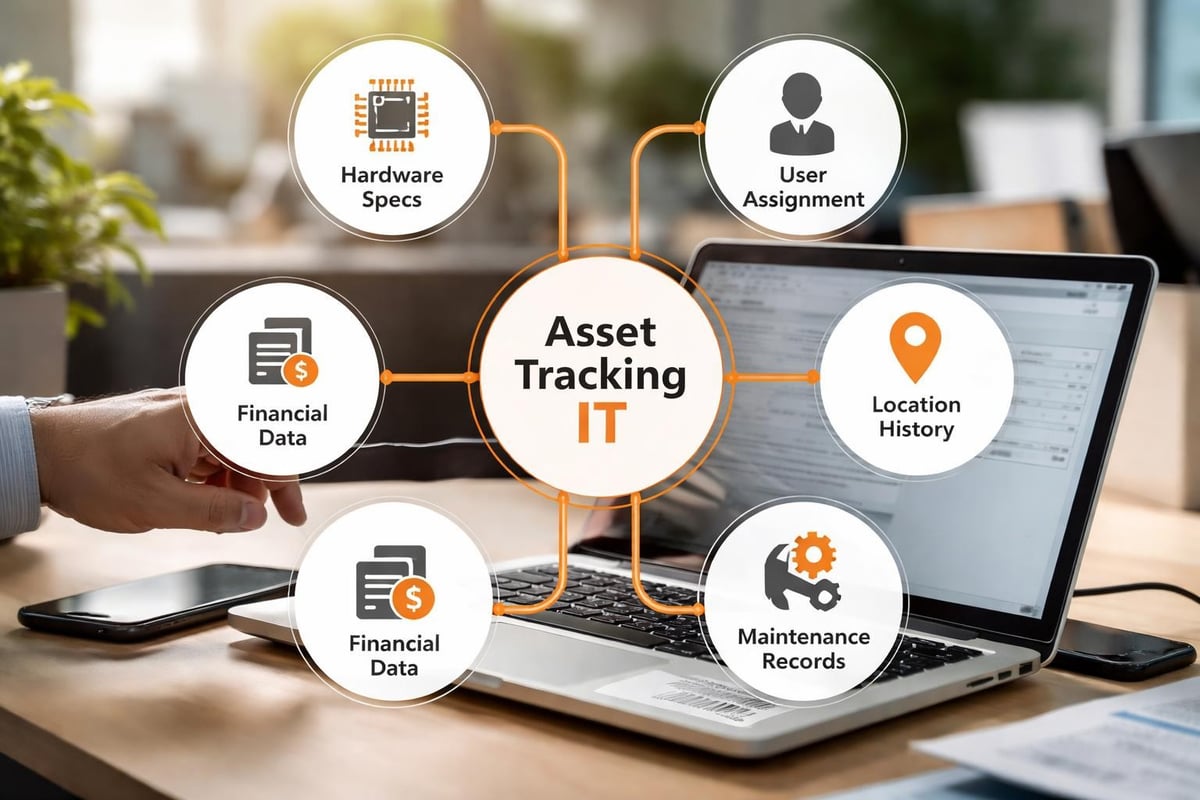
Modern asset tracking IT systems incorporate several critical elements that work together to provide complete visibility. Asset identification uses barcodes, QR codes, or RFID tags to uniquely identify each item in the inventory. Location tracking monitors where assets are physically situated, whether in offices, data centers, or remote work environments. Lifecycle management tracks assets from procurement through deployment, maintenance, and eventual disposal.
User assignment records which employees or departments are responsible for specific assets, creating accountability and simplifying audits. Maintenance scheduling ensures regular servicing and updates occur on time, preventing unexpected failures. Compliance tracking documents software licenses, security patches, and regulatory requirements to avoid legal and financial risks.

Benefits of Implementing Asset Tracking IT
Organizations that implement robust asset tracking IT systems experience measurable improvements across multiple operational areas. Cost reduction emerges as one of the most significant advantages, with companies identifying underutilized assets, eliminating redundant purchases, and negotiating better vendor contracts based on accurate usage data.
Security improvements represent another critical benefit. When organizations maintain real-time visibility into their technology assets, they can quickly identify unauthorized devices, ensure security patches are applied consistently, and respond faster to potential breaches. Best practices for IT asset tracking emphasize the security advantages of maintaining accurate asset records.
Operational Efficiency Gains
Asset tracking IT dramatically reduces the time IT teams spend searching for equipment, verifying licenses, or responding to basic inventory questions. Instead of manually checking spreadsheets or physically walking through facilities, staff can instantly access current information through centralized dashboards.
- Faster incident response: When equipment fails, IT teams immediately know the device's warranty status, service history, and available replacements
- Streamlined audits: Compliance audits that previously required weeks of preparation can be completed in days with automated reporting
- Better capacity planning: Historical data reveals usage patterns and replacement cycles, enabling more accurate budget forecasting
- Reduced downtime: Proactive maintenance alerts prevent unexpected failures that disrupt business operations
- Improved asset utilization: Organizations can reassign underutilized equipment rather than purchasing new devices
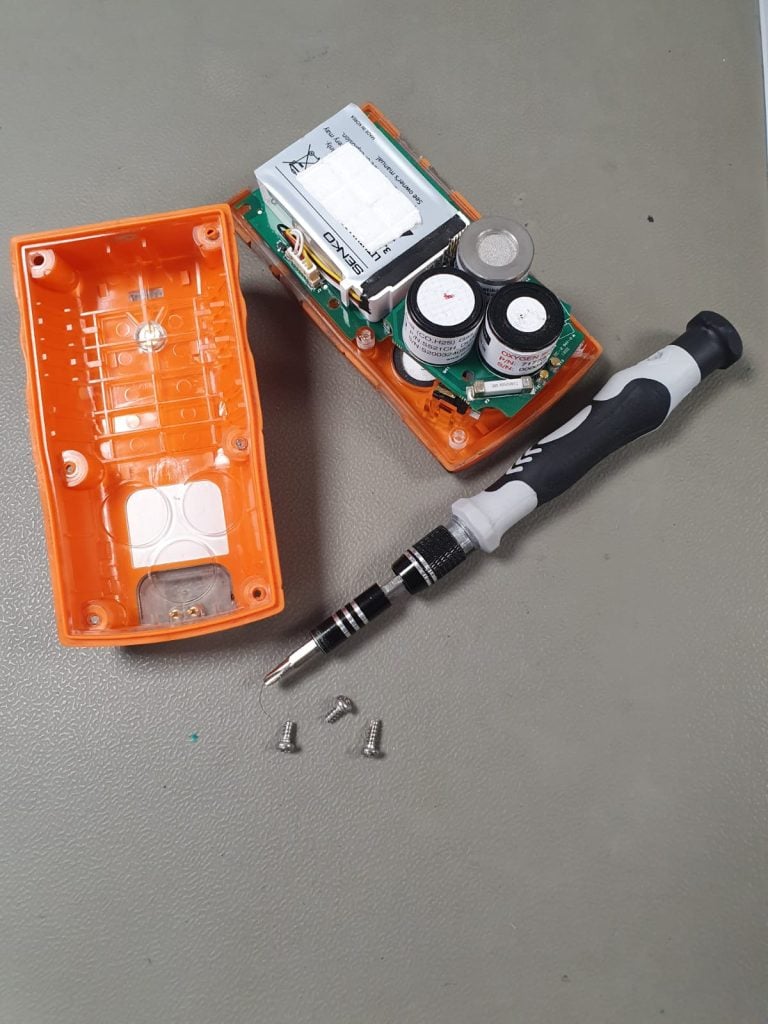
The Brytend Service Module offers a complete and structured way to manage all service-related activities for IT assets. It helps you track equipment, schedule maintenance, and document work with accuracy and ease, providing the visibility needed for effective asset tracking IT implementation.
Building an Effective Asset Tracking IT Strategy
Successful asset tracking IT implementation requires careful planning and a structured approach. Organizations should begin by defining clear objectives that align with business goals. Are you primarily focused on cost reduction, compliance, security, or operational efficiency? Different priorities will shape your selection of tools and processes.
Establishing Asset Classification Systems
Not all technology assets require the same level of tracking detail. High-value servers and specialized equipment warrant comprehensive monitoring, while standard peripherals may need only basic inventory records. Organizations should establish classification tiers that determine tracking requirements.
| Asset Tier | Value Range | Tracking Level | Update Frequency |
|---|---|---|---|
| Critical | $5,000+ | Comprehensive | Real-time |
| Standard | $500-$4,999 | Moderate | Weekly |
| Basic | Under $500 | Minimal | Monthly |
| Consumable | Varies | Aggregate | As needed |
This tiered approach ensures resources are allocated efficiently, with the most attention directed toward assets that pose the greatest financial or operational risk. IT asset management best practices recommend this strategic prioritization for optimal results.
Data Fields and Information Architecture
Determining which data to capture for each asset represents a critical decision in asset tracking IT. Standard fields typically include asset ID, description, manufacturer, model, serial number, purchase date, cost, warranty expiration, location, and assigned user. Many organizations also track custom fields specific to their industry or operational needs.
The challenge lies in balancing comprehensive data collection against practical usability. Capturing too much information creates maintenance burden and reduces data quality as fields go unfilled. Capturing too little information limits the system's usefulness for decision-making. Organizations should identify the minimum viable dataset that supports their core objectives, then expand selectively based on demonstrated need.
Technology Solutions for Asset Tracking IT
The market offers diverse technology options for implementing asset tracking IT systems, ranging from simple spreadsheet-based approaches to sophisticated enterprise platforms with IoT integration. Selection criteria should consider organization size, budget constraints, technical capabilities, integration requirements, and scalability needs.
Software Platforms and Tools
Dedicated asset management software provides purpose-built functionality for tracking IT resources. These platforms typically include barcode scanning, automated discovery of network-connected devices, integration with procurement systems, and reporting dashboards. Cloud-based solutions offer accessibility advantages, while on-premises deployments may better serve organizations with strict data residency requirements.
Custom software development offers tailored solutions that align precisely with unique business processes and requirements. Brytend specializes in creating these customized systems that integrate seamlessly with existing infrastructure and workflows.
Hardware Identification Technologies
Physical identification methods form the foundation of accurate asset tracking IT. Barcode labels provide cost-effective identification suitable for most IT assets, requiring only smartphones or dedicated scanners to read. QR codes offer enhanced data capacity and can encode URLs linking to detailed asset information or service portals.
RFID tags enable automated scanning of multiple assets simultaneously without line-of-sight requirements, though they require more substantial initial investment in readers and infrastructure. Organizations implementing fixed asset tracking often combine multiple identification technologies based on asset types and tracking requirements.
- Evaluate environmental factors: Consider temperature, moisture, and physical wear when selecting label materials
- Standardize placement locations: Consistent label positioning simplifies scanning and visual verification
- Test durability: Pilot test labels in actual operating conditions before organization-wide deployment
- Plan for replacement cycles: Establish procedures for replacing damaged or missing labels
- Document encoding standards: Maintain clear documentation of barcode formats and data structures
Integration with Broader IT Management
Asset tracking IT delivers maximum value when integrated with related IT management processes and systems. Service desk integration connects asset records with support tickets, enabling technicians to view equipment history when resolving issues. Procurement system integration automatically updates asset records when new equipment arrives, eliminating manual data entry.
Configuration management databases (CMDB) link asset tracking IT data with information about software configurations, network relationships, and service dependencies. This holistic view enables better change management, impact analysis, and problem resolution.
Automation Opportunities
Modern asset tracking IT systems leverage automation to reduce manual effort and improve data accuracy. Automated discovery tools scan networks to identify connected devices, comparing findings against inventory records to flag discrepancies. License harvesting software automatically detects installed applications and matches them against available licenses, identifying optimization opportunities.
Maintenance scheduling automation generates work orders based on time intervals, usage metrics, or manufacturer recommendations. Depreciation calculations automatically update asset values based on accounting rules and purchase dates. Disposal workflows trigger approval processes and data sanitization procedures when assets reach end-of-life.
These automated processes ensure asset tracking IT data remains current without requiring constant manual intervention. Team-centric IT asset management emphasizes automation as essential for maintaining accurate records at scale.
Mobile Workforce Considerations
The shift toward remote and hybrid work models has transformed asset tracking IT requirements. Organizations must now monitor technology assets distributed across home offices, coworking spaces, and multiple geographic locations. Traditional approaches that assumed centralized office environments no longer suffice.
Remote Asset Management Strategies
Mobile device management (MDM) platforms extend asset tracking IT capabilities to smartphones, tablets, and laptops regardless of location. These systems enforce security policies, track device status, and enable remote wiping if devices are lost or stolen. Integration between MDM solutions and broader asset tracking systems provides unified visibility across all technology resources.
| Challenge | Traditional Approach | Modern Solution |
|---|---|---|
| Physical audits | Annual office walkthroughs | Self-service verification apps |
| Equipment distribution | In-office pickup | Direct shipping with digital receipts |
| Maintenance coordination | Centralized IT desk | Remote diagnostics and mail-in service |
| Asset recovery | Office collection | Prepaid return shipping labels |
Organizations must also adapt asset tracking IT processes for temporary remote work arrangements. When employees take equipment home temporarily, systems should track these movements while distinguishing them from permanent reassignments. Return reminders and automated notifications help ensure borrowed equipment comes back when no longer needed.
Data Analytics and Reporting
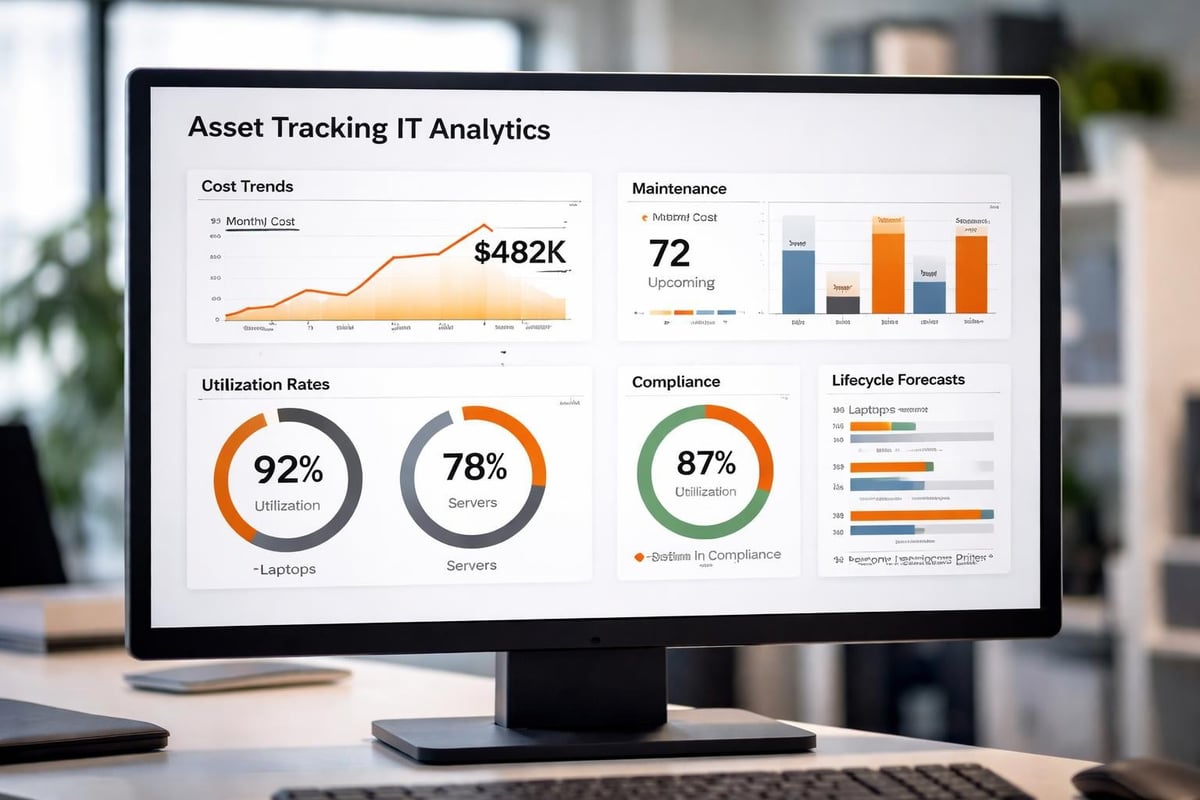
The true power of asset tracking IT emerges through analytics that transform raw inventory data into actionable insights. Organizations should establish regular reporting cadences that deliver relevant information to different stakeholders-executives need high-level cost trends, while IT managers require detailed utilization metrics.
Key Performance Indicators
Effective asset tracking IT systems measure performance across multiple dimensions. Asset utilization rates reveal the percentage of owned equipment actively deployed and in use. Mean time between failures (MTBF) indicates reliability across different manufacturers or asset categories. Total cost of ownership (TCO) captures not just purchase price but ongoing maintenance, support, and operational costs.
License compliance rates measure the ratio of installed software instances against purchased licenses, identifying both shortfalls that create legal risk and excess licenses representing wasted spending. Asset turnover velocity tracks how quickly retired equipment is replaced, impacting both costs and user productivity.
- Set baseline measurements: Establish starting point metrics before implementing changes
- Define target benchmarks: Research industry standards and set realistic improvement goals
- Monitor trends over time: Focus on directional improvement rather than single-point measurements
- Segment by asset type: Different equipment categories have different performance expectations
- Share results transparently: Regular reporting builds support for asset tracking IT initiatives
Security and Compliance Implications
Asset tracking IT plays a crucial role in organizational security and regulatory compliance. Accurate asset inventories enable quick identification of which systems are affected by newly discovered vulnerabilities, allowing faster patch deployment. When security incidents occur, detailed asset records help determine which data may have been exposed and which users require notification.
Regulatory Requirements
Various regulations impose specific asset tracking IT requirements. Financial regulations like Sarbanes-Oxley require accurate records of systems processing financial data. Healthcare regulations such as HIPAA mandate tracking of devices that access protected health information. Data privacy laws like GDPR require organizations to know where personal data is stored and processed.
Government contractors face particularly stringent requirements, with frameworks like NIST 800-171 requiring detailed asset inventories as part of comprehensive cybersecurity programs. Organizations operating in these regulated environments must ensure their asset tracking IT systems capture all required data points and generate compliant audit reports.
Common Implementation Challenges
Organizations frequently encounter obstacles when implementing asset tracking IT systems. Incomplete initial inventories create ongoing data quality problems, as missing assets make it difficult to distinguish between truly undocumented items and simple omissions. Investing adequate time in the baseline inventory process pays dividends throughout the system's lifetime.
User resistance represents another common challenge, particularly when asset tracking IT processes add steps to familiar workflows. Employees may view asset check-in/check-out procedures as bureaucratic overhead rather than valuable controls. Successful implementations emphasize benefits like faster equipment replacement and reduced support delays that directly impact users.
Change Management Best Practices
Effective change management addresses the human factors that determine asset tracking IT success. Executive sponsorship signals organizational commitment and provides resources needed for proper implementation. Clear communication explains why the system matters and how it benefits different stakeholder groups. Phased rollouts allow organizations to learn from early implementations before expanding scope.
Training programs ensure users understand both technical procedures and underlying principles. When employees comprehend why accurate asset tracking IT matters, they're more likely to follow processes consistently. Feedback mechanisms create opportunities for users to report problems and suggest improvements, fostering ongoing engagement.
Frequently Asked Questions
What is the difference between asset tracking IT and general asset management?
Asset tracking IT specifically focuses on technology resources like computers, servers, software licenses, and networking equipment, while general asset management encompasses all organizational assets including furniture, vehicles, and facilities. Asset tracking IT requires specialized knowledge of technology lifecycles, software licensing, and IT-specific compliance requirements.
How often should we conduct physical audits of our IT assets?
Best practice recommends annual comprehensive audits for most organizations, with quarterly spot-checks of high-value or critical assets. Organizations in highly regulated industries may require more frequent audits, while smaller companies with stable environments might extend cycles to 18 months. The key is balancing audit costs against the risk of inventory discrepancies.
Can asset tracking IT systems work for organizations with multiple locations?
Yes, modern cloud-based asset tracking IT platforms are specifically designed to manage assets across multiple locations, including international operations. These systems provide location-based reporting, support different currencies and depreciation rules, and enable local staff to update records while maintaining centralized visibility for management.
What's the typical ROI timeline for implementing asset tracking IT?
Most organizations begin seeing measurable returns within 6-12 months through reduced duplicate purchases, optimized software licensing, and faster asset recovery. Full ROI, including reduced audit costs and improved compliance posture, typically materializes within 18-24 months. The exact timeline depends on initial inventory accuracy, asset volume, and implementation quality.
How do we handle asset tracking IT for leased equipment?
Leased assets should be tracked separately from owned equipment, with additional fields capturing lessor information, lease terms, return dates, and buyout provisions. Many organizations use status codes or separate databases to distinguish leased assets, ensuring they're returned on schedule and avoiding unnecessary lease extensions.
What happens to asset tracking IT data when equipment is disposed of?
Asset records should be archived rather than deleted when equipment is retired, maintaining historical data for compliance and trend analysis. Records should note disposal date, method (recycling, resale, donation), and data sanitization procedures performed. This audit trail demonstrates responsible asset lifecycle management and supports environmental reporting.
Should we track software assets differently from hardware assets?
While both should be managed within the same overall system, software assets require different data fields and processes. Software tracking emphasizes license counts, version numbers, subscription renewal dates, and compliance status. Hardware tracking focuses on physical location, condition, and maintenance schedules. Unified platforms that accommodate both types while respecting their differences deliver optimal results.
You Might Also Be Interested in These Articles
- Brytend Service and Maintenance Solutions
- Custom Survey and Form Creation Tools
- Brytend Homepage – Custom Software Development
- Explore All Brytend Resources
- WatchGas Solutions by Brytend
Effective asset tracking IT transforms technology management from reactive firefighting to proactive strategy, delivering cost savings, security improvements, and operational efficiency. Success requires thoughtful planning, appropriate technology selection, and ongoing commitment to data quality. Brytend brings extensive experience in developing custom asset tracking IT solutions tailored to your specific requirements, integrating seamlessly with existing systems while supporting long-term growth. Contact our team to discuss how we can help you gain complete visibility and control over your technology assets.