
The healthcare industry faces unique challenges that off-the-shelf software often fails to address. From strict regulatory compliance to complex patient data management and interoperability requirements, healthcare organizations need solutions built specifically for their workflows. Custom healthcare software development offers the flexibility to create systems that align perfectly with clinical processes, administrative needs, and patient care goals while ensuring security and regulatory adherence.
Understanding the Strategic Value of Custom Healthcare Software
Healthcare organizations operate in an environment where one-size-fits-all solutions rarely work. Custom healthcare software development enables medical facilities, clinics, hospitals, and healthcare providers to build platforms that address their specific operational requirements. Unlike generic software packages, custom solutions integrate seamlessly with existing systems, support unique workflows, and scale as organizations grow.
The advantages of custom healthcare software development extend beyond mere functionality. These tailored systems provide competitive advantages through improved patient outcomes, streamlined operations, and enhanced data security. Organizations can incorporate specific features that matter most to their practice, whether that's telemedicine capabilities, specialized patient portals, or advanced analytics dashboards.
Compliance and Security Requirements
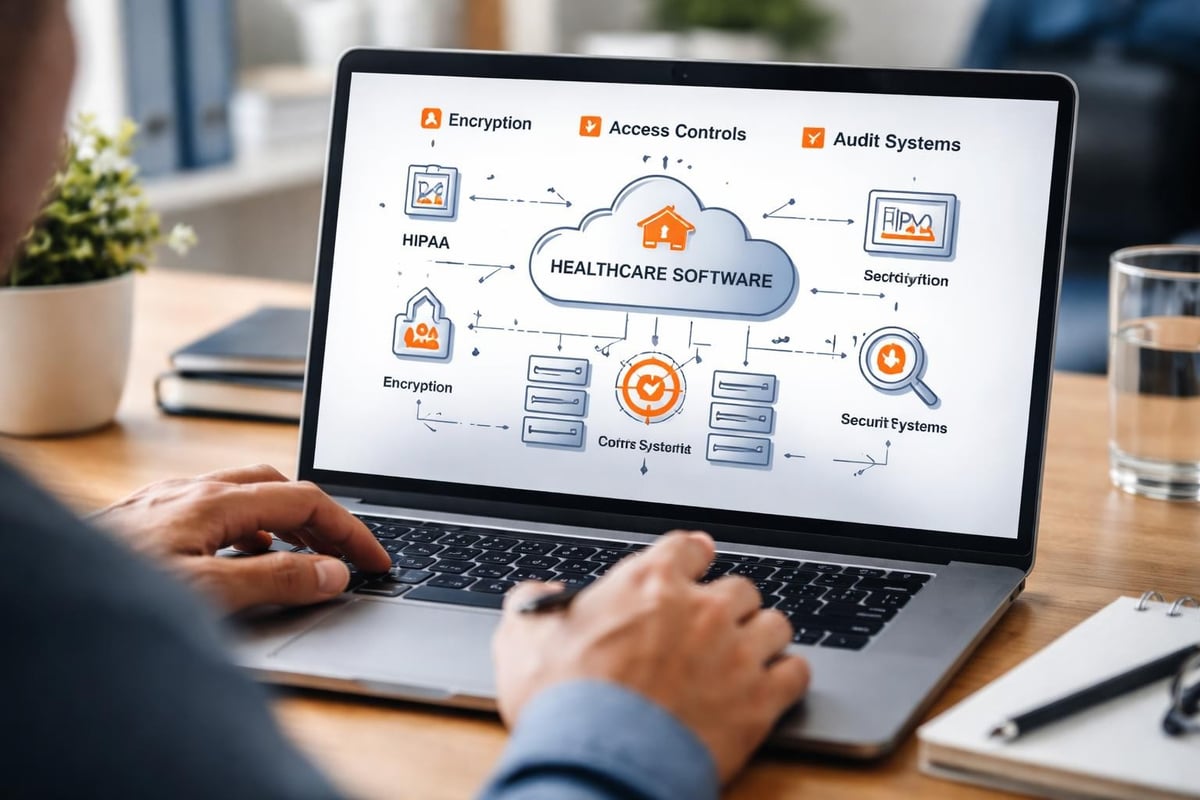
Healthcare software must meet stringent regulatory standards including HIPAA, HITECH, and GDPR depending on geographic location. Custom development allows teams to build compliance directly into the architecture rather than retrofitting existing platforms.
- Data encryption protocols can be implemented at every layer of the application
- Access controls can be customized to match organizational hierarchies and roles
- Audit trails can be designed to capture specific events required by regulatory bodies
- Privacy settings can reflect the exact requirements of different patient populations
- Backup and disaster recovery systems can align with healthcare continuity standards
Security vulnerabilities in healthcare systems pose significant risks to patient privacy and organizational reputation. Custom healthcare software development teams can conduct thorough security assessments specific to the planned features and integrations, ensuring vulnerabilities are identified and addressed before deployment.
Core Components of Healthcare Software Systems
Modern healthcare applications require multiple integrated components working together seamlessly. Understanding these elements helps organizations plan comprehensive custom healthcare software development projects that address all operational needs.
Electronic Health Records and Patient Management
EHR systems form the backbone of most healthcare software platforms. Custom development allows organizations to structure patient data exactly how clinical teams need to access it. Fields can be added or modified to capture specialty-specific information, templates can reflect actual clinical workflows, and interfaces can be designed for the devices staff actually use.
| Feature Category | Custom Solution Benefits | Generic Software Limitations |
|---|---|---|
| Data Structure | Flexible schemas matching specialty needs | Fixed fields requiring workarounds |
| User Interface | Designed for actual workflows | Generic layouts needing adaptation |
| Integration | Direct connection to existing systems | Limited API or expensive middleware |
| Reporting | Metrics that matter to your organization | Standard reports requiring manual compilation |
| Scalability | Architecture built for growth | Performance issues as data grows |
Patient portals integrated with custom EHR systems provide secure access to medical records, appointment scheduling, prescription refills, and direct messaging with care teams. These portals can be designed to match the technical literacy of patient populations and support multiple languages when needed.
Clinical Decision Support and Analytics
Healthcare providers increasingly rely on data-driven insights to improve patient outcomes. Custom healthcare software development enables the creation of clinical decision support systems tailored to specific medical specialties or treatment protocols. These systems can analyze patient data in real-time, alerting clinicians to potential drug interactions, suggesting evidence-based treatment options, or identifying patients who need preventive interventions.
Analytics capabilities in custom healthcare software go beyond basic reporting. Organizations can build predictive models for readmission risk, resource utilization forecasting, or population health management specific to their patient demographics and service areas.
Integration with Healthcare Ecosystems
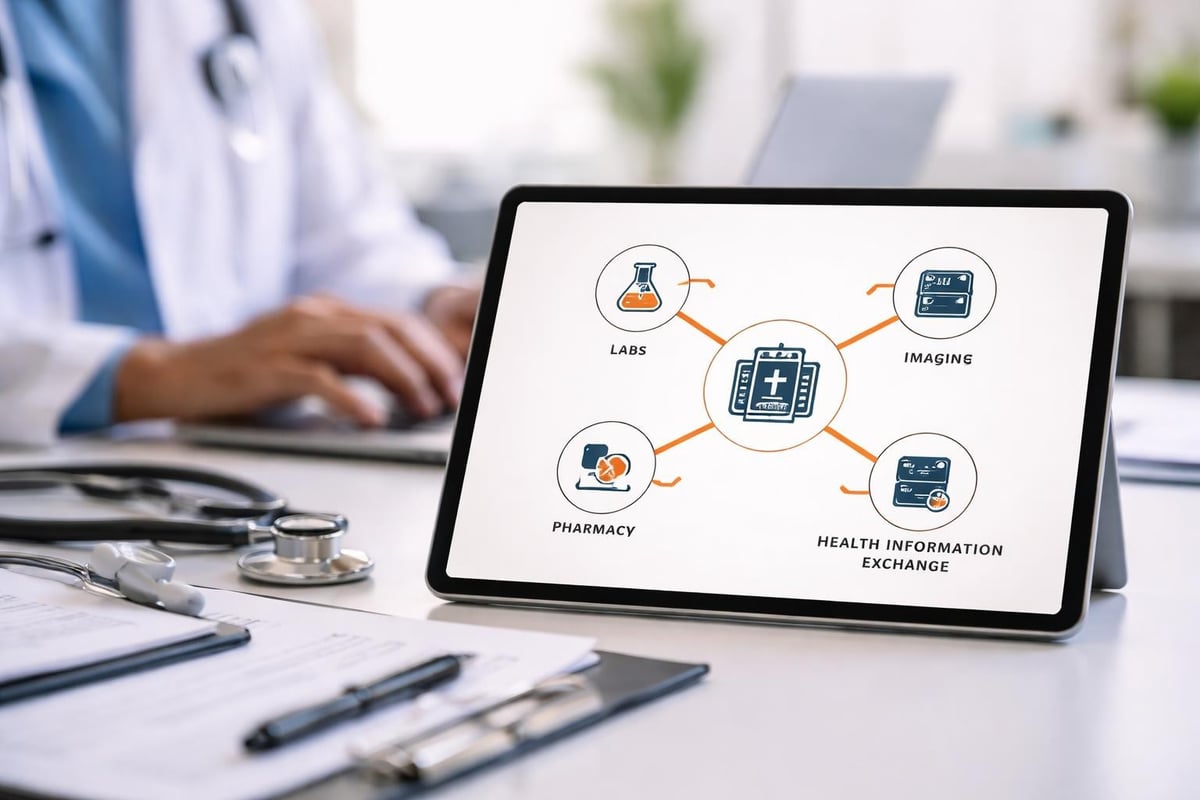
No healthcare software operates in isolation. Custom solutions must connect with laboratory systems, imaging platforms, pharmacy networks, insurance verification services, and health information exchanges. Research on blockchain technology in healthcare demonstrates emerging approaches to secure data sharing across these complex networks.
Interoperability Standards
Healthcare interoperability relies on standards like HL7, FHIR, and DICOM. Custom healthcare software development projects should incorporate these standards from the beginning, ensuring systems can exchange information with other healthcare entities. FHIR (Fast Healthcare Interoperability Resources) has become particularly important for modern applications, offering RESTful APIs that simplify integration.
- HL7 v2 messages enable communication with legacy hospital systems
- FHIR resources provide structured data exchange for modern applications
- DICOM protocols handle medical imaging transfer and storage
- X12 transactions support insurance claims and eligibility verification
- CDA documents enable standardized clinical document exchange
Custom development teams can build translation layers that convert data between different standards, ensuring seamless communication even when connected systems use different protocols. This flexibility proves invaluable when integrating with multiple external partners.
Development Methodologies for Healthcare Software
Building healthcare software requires specialized approaches that balance innovation with risk management. Agile methodologies work well for custom healthcare software development when adapted to include rigorous testing, documentation, and validation cycles required in medical settings.
Requirements Gathering and Stakeholder Engagement
Successful healthcare software projects begin with comprehensive requirements gathering involving all stakeholder groups. Clinical staff, administrative personnel, IT teams, and compliance officers each bring essential perspectives. Custom development allows organizations to prioritize features based on their specific patient populations and service delivery models.
Engaging end users throughout the development process ensures the final product actually improves workflows rather than creating new friction points. Physicians, nurses, and administrative staff should participate in design reviews, prototype testing, and user acceptance testing before full deployment.
Managing patient data responsibly requires careful attention to data documentation and transparency, which becomes particularly important when building custom datasets for analytics and machine learning applications.
Testing and Validation Protocols
Healthcare software demands more rigorous testing than most applications due to the potential impact on patient safety. Custom healthcare software development projects should include:
- Unit testing for individual components and functions
- Integration testing to verify system interoperability
- Performance testing under realistic load conditions
- Security testing including penetration testing and vulnerability scanning
- Usability testing with actual clinical staff
- Regulatory compliance validation against applicable standards
- Disaster recovery and failover testing
Each testing phase should be documented thoroughly, creating an audit trail that demonstrates due diligence in software validation. This documentation becomes essential during regulatory audits or certification processes.
Technology Stack Considerations
Selecting the right technologies for custom healthcare software development involves balancing current capabilities with long-term maintainability. Healthcare systems often remain in use for many years, so architectural decisions have lasting implications.
Frontend Technologies
Modern healthcare applications require responsive interfaces that work across devices. Physicians might access the system from workstations in clinical settings, tablets during rounds, or smartphones when on call. Web technologies like React, Angular, or Vue.js enable cross-platform development with consistent user experiences.
Native mobile applications may be necessary for features requiring device-specific capabilities like biometric authentication, camera access for document scanning, or offline functionality. Custom development teams can create hybrid strategies, using progressive web apps for most features while building native components where needed.
Backend Architecture and Database Design
Healthcare applications generate and store vast amounts of sensitive data. Backend architecture must support secure, compliant data storage while enabling fast retrieval and complex queries. Modern cloud platforms offer HIPAA-compliant hosting options with built-in security features, automated backups, and scalability.
| Database Approach | Best Use Cases | Considerations |
|---|---|---|
| Relational (PostgreSQL, MySQL) | Structured EHR data, transactional systems | ACID compliance, complex queries |
| Document (MongoDB, Couchbase) | Flexible clinical data, imaging metadata | Schema flexibility, horizontal scaling |
| Graph (Neo4j) | Care coordination, relationship mapping | Complex relationship queries |
| Time-series (InfluxDB) | Monitoring data, IoT devices | High-frequency data ingestion |
Many custom healthcare software development projects use polyglot persistence, selecting the database type that best fits each data category. Patient demographics might live in a relational database while clinical notes reside in a document store and real-time monitoring data flows into a time-series database.
Maintenance and Evolution of Healthcare Software
Launching custom healthcare software marks the beginning rather than the end of the development journey. Healthcare regulations change, medical knowledge advances, and organizational needs evolve. Successful projects include ongoing maintenance, security updates, and feature enhancements.
Regulatory Updates and Compliance Maintenance
Healthcare regulations undergo regular updates that require software modifications. The specialized requirements for HIPAA and FHIR compliance demand ongoing attention from development teams familiar with healthcare standards. Custom solutions built with modular architectures can adapt more easily to regulatory changes without requiring complete system overhauls.
Organizations should budget for regular compliance audits, security assessments, and penetration testing. These proactive measures identify vulnerabilities before they become breaches and demonstrate commitment to data protection.
For organizations looking to extend their healthcare software capabilities, a robust Customer Relationship Management (CRM) system can enhance patient engagement and streamline communication workflows. Integrating CRM functionality with clinical systems enables coordinated care and improved patient satisfaction.

User Training and Change Management
Even the most well-designed custom healthcare software requires thoughtful implementation. Clinical staff accustomed to existing workflows need time and support to adapt to new systems. Comprehensive training programs should address different learning styles, offering hands-on practice environments, video tutorials, quick reference guides, and ongoing support channels.
Change management extends beyond initial training. As organizations add new features or modify workflows, staff need updates and refreshers. Building a culture of continuous improvement encourages users to provide feedback that drives meaningful enhancements.
Cost Considerations and ROI
Custom healthcare software development requires significant upfront investment compared to licensing off-the-shelf products. However, the costs and benefits of custom solutions often deliver superior long-term value through improved efficiency, reduced errors, and better patient outcomes.
Budget Planning Components
- Discovery and requirements analysis to define project scope
- Design work including UX research and interface prototyping
- Development costs for frontend, backend, and integration work
- Quality assurance and testing across multiple scenarios
- Deployment and migration from existing systems
- Training and change management support
- Ongoing maintenance and enhancement budgets
Organizations should view custom healthcare software development as a multi-year investment rather than a one-time expense. Total cost of ownership includes not just initial development but also hosting, support, updates, and eventual modernization.
Measuring Return on Investment
Healthcare software ROI manifests in multiple ways beyond direct cost savings. Improved clinical workflows reduce time spent on documentation, allowing providers to see more patients or spend more time on complex cases. Fewer errors reduce liability risk and improve patient safety. Better data access enables proactive interventions that prevent costly complications.
| ROI Category | Measurement Approach | Typical Impact Timeline |
|---|---|---|
| Operational Efficiency | Time per patient encounter | 3-6 months |
| Error Reduction | Medication errors, documentation mistakes | 6-12 months |
| Revenue Cycle | Days in accounts receivable | 3-9 months |
| Patient Satisfaction | NPS scores, retention rates | 6-12 months |
| Compliance | Audit findings, violation incidents | Ongoing |
Quantifying these benefits requires establishing baseline metrics before implementation and tracking changes over time. Organizations that measure systematically can demonstrate value to stakeholders and justify continued investment in system enhancements.
Choosing Development Partners
Selecting the right team for custom healthcare software development profoundly impacts project success. Guidance on choosing healthcare software providers emphasizes the importance of healthcare-specific experience, technical expertise, and cultural fit.
Essential Qualifications and Experience
Healthcare software development requires specialized knowledge that generic software firms may lack. Look for teams with:
- Demonstrated experience building HIPAA-compliant applications
- Understanding of healthcare interoperability standards like HL7 and FHIR
- Familiarity with clinical workflows and medical terminology
- Portfolio of successful healthcare projects with verifiable references
- Security expertise including encryption, access controls, and audit logging
- Quality assurance processes appropriate for medical software
- Ongoing support capabilities for long-term partnerships
Interview references thoroughly, asking specific questions about how the development team handled challenges, met deadlines, and supported systems after launch. The healthcare sector demands reliability and responsiveness that not all software teams can deliver.
Communication and Collaboration
Healthcare projects involve numerous stakeholders with different priorities and technical backgrounds. Development partners must communicate effectively with clinical staff, administrators, IT personnel, and executives. Teams that facilitate collaboration through regular demos, clear documentation, and accessible project management create better outcomes than those working in isolation.
Cultural alignment matters as much as technical capability. Healthcare organizations value partners who understand the mission-critical nature of their work and the serious consequences of failures. Development teams should demonstrate commitment to quality, transparency about challenges, and proactive problem-solving.

Emerging Trends in Healthcare Software
The healthcare technology landscape continues to evolve rapidly. Organizations planning custom healthcare software development should consider how emerging trends might influence their long-term needs and architectural decisions.
Artificial Intelligence and Machine Learning
AI-powered features increasingly appear in healthcare applications, from diagnostic support to administrative automation. Custom development enables organizations to build AI capabilities tailored to their specific data and use cases. Predictive models can identify patients at risk for readmission, natural language processing can extract insights from clinical notes, and computer vision can analyze medical images.
Implementing AI responsibly requires attention to bias, transparency, and validation. Healthcare AI systems should augment rather than replace clinical judgment, providing decision support while keeping providers in control.
Telemedicine and Remote Monitoring
The expansion of telehealth creates new requirements for healthcare software. Video consultation capabilities, remote patient monitoring integrations, and asynchronous communication tools have become essential features. Custom healthcare software development projects can build telemedicine functionality that integrates seamlessly with existing EHR systems and clinical workflows.
Remote monitoring devices generate continuous streams of patient data that must be ingested, analyzed, and presented to care teams. Custom platforms can implement intelligent filtering that alerts clinicians to meaningful changes while avoiding alarm fatigue from routine fluctuations.
Patient Engagement and Experience
Modern healthcare emphasizes patient engagement as a driver of better outcomes. Custom software can create patient experiences that reflect organizational values and care models. From appointment scheduling that minimizes wait times to educational content tailored to specific conditions, every touchpoint can be optimized for patient needs.
- Secure messaging systems that facilitate direct communication with care teams
- Mobile apps that support medication adherence and lifestyle modifications
- Patient portals offering transparent access to medical records and test results
- Appointment reminders through preferred communication channels
- Educational resources matched to health literacy levels
- Family access features for caregivers supporting elderly or pediatric patients
- Multilingual support for diverse patient populations
Patient-generated data from wearables, apps, and home monitoring devices creates opportunities for more holistic care. Custom healthcare software development enables integration of these data streams into clinical workflows where they can inform treatment decisions.
Frequently Asked Questions
What makes custom healthcare software development different from other software projects?
Custom healthcare software development requires specialized expertise in regulatory compliance, particularly HIPAA and HITECH standards, along with deep understanding of clinical workflows and medical data standards. Unlike general business software, healthcare applications handle sensitive patient information requiring robust security measures, audit trails, and privacy controls. Development teams must be familiar with healthcare interoperability standards like HL7 and FHIR to ensure systems can exchange data with other healthcare entities. The stakes are higher in healthcare software since errors can directly impact patient safety, demanding more rigorous testing and validation processes than typical software projects.
How long does it typically take to develop custom healthcare software?
Timeline varies significantly based on project scope and complexity. A basic patient portal might take three to six months, while a comprehensive EHR system could require twelve to eighteen months or more. The discovery and requirements phase alone often spans four to eight weeks as teams work with stakeholders to understand workflows and define features. Development proceeds iteratively, with regular releases allowing organizations to begin realizing value before the entire system is complete. Integration with existing systems, data migration, and thorough testing add time but are essential for successful deployment. Organizations should plan for phased rollouts rather than expecting complete systems to launch all at once.
Can custom healthcare software integrate with our existing systems?
Integration capabilities are actually a primary advantage of custom healthcare software development. Custom solutions can be built specifically to connect with your existing EHR, laboratory information systems, radiology platforms, billing systems, and other healthcare applications. Development teams create integration layers using standard healthcare protocols like HL7, FHIR, and DICOM to exchange data seamlessly. Custom development allows organizations to build exactly the integrations they need rather than being limited to pre-built connectors available in commercial software. However, integration complexity depends on the openness of existing systems and the quality of their APIs or data exchange capabilities.
What are the ongoing costs after initial development?
Custom healthcare software requires ongoing investment beyond initial development. Hosting costs for cloud infrastructure typically run monthly based on usage and data storage needs. Maintenance includes security patches, bug fixes, and updates to maintain compatibility with operating systems and third-party services. Regulatory changes may require modifications to maintain compliance. Organizations should budget for feature enhancements as user needs evolve and new technologies emerge. Support costs cover help desk services, user training, and technical troubleshooting. A general guideline suggests allocating fifteen to twenty percent of initial development costs annually for ongoing maintenance and support, though actual needs vary by system complexity.
How do we ensure our custom healthcare software remains HIPAA compliant?
HIPAA compliance requires attention throughout the development lifecycle and ongoing maintenance. Development teams should conduct risk assessments identifying potential vulnerabilities in the system architecture. Technical safeguards include encryption of data at rest and in transit, role-based access controls, audit logging of all access to protected health information, and automatic session timeouts. Administrative procedures document policies for data handling, user access provisioning, and incident response. Business associate agreements with development partners, hosting providers, and third-party services establish shared responsibility for compliance. Regular security audits, penetration testing, and vulnerability assessments identify issues before they become breaches. Staff training ensures users understand their compliance responsibilities when using the system.
Should we build a web application, mobile app, or both?
Most healthcare organizations benefit from responsive web applications accessible across devices rather than separate mobile and desktop products. Modern web technologies enable applications that adapt to screen sizes from smartphones to large monitors while maintaining a single codebase. This approach reduces development and maintenance costs while ensuring feature parity across devices. Native mobile apps become worthwhile when specific device capabilities are needed, such as biometric authentication, camera access for document scanning, push notifications for critical alerts, or offline functionality for areas with unreliable connectivity. Many successful healthcare software projects use progressive web apps for most features while developing native mobile components only for specific use cases requiring device integration.
How do we measure success of our custom healthcare software investment?
Success metrics should align with the specific goals driving your software development. Common measurements include time savings in clinical workflows measured through time-and-motion studies before and after implementation. Error reduction can be tracked through medication errors, documentation mistakes, or duplicate testing. Financial metrics might include reduced claim denials, faster payment cycles, or decreased transcription costs. Patient satisfaction improvements can be measured through surveys, portal adoption rates, and patient retention. Clinical outcomes such as readmission rates, preventable complications, or adherence to evidence-based protocols demonstrate care quality improvements. Establish baseline measurements before implementation and track changes over defined periods, typically quarterly for the first year and then annually for long-term trending.
Custom healthcare software development offers healthcare organizations the opportunity to build solutions precisely matched to their clinical workflows, patient populations, and operational requirements. By investing in tailored systems that integrate seamlessly with existing infrastructure while maintaining strict security and compliance standards, organizations position themselves for improved patient outcomes and operational excellence. Brytend specializes in creating custom software solutions that address the unique challenges healthcare organizations face, delivering expertise across web and mobile development, cloud computing, and system integration with ongoing support to ensure your healthcare software continues delivering value as your needs evolve.


