
Modern businesses face increasingly complex operational challenges that demand sophisticated technical solutions. Enterprise software development services provide organizations with custom-built platforms designed to streamline workflows, enhance productivity, and drive measurable business outcomes. These services encompass everything from initial consultation and architecture planning to deployment and ongoing maintenance, ensuring that software solutions align perfectly with strategic objectives.
Understanding Enterprise Software Development Services
Enterprise software development services represent a comprehensive approach to building large-scale applications that serve entire organizations. Unlike off-the-shelf solutions, these custom platforms address specific business requirements, integrate seamlessly with existing systems, and scale alongside company growth.
The foundation of successful enterprise software development services begins with deep business analysis. Development teams invest substantial time understanding organizational processes, pain points, and strategic goals before writing a single line of code. This discovery phase ensures that technical decisions align with business priorities and that the final product delivers genuine value.
Key characteristics that distinguish enterprise solutions include:
- Scalability to handle thousands of concurrent users
- Robust security frameworks protecting sensitive data
- Integration capabilities with legacy systems and third-party platforms
- Comprehensive audit trails and compliance features
- Advanced reporting and analytics functionality
- Multi-level user permissions and role-based access control
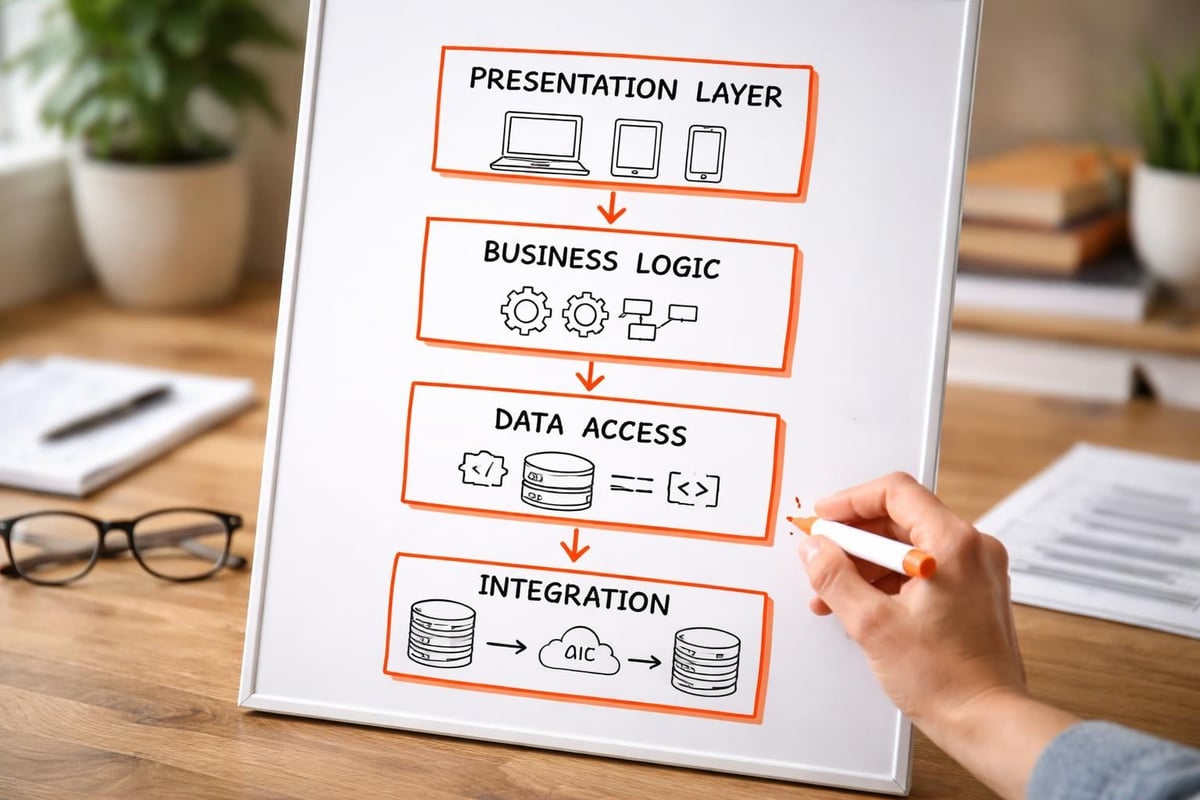
Core Components of Enterprise Development Services
Requirements Analysis and Strategic Planning
Effective enterprise software development services start with exhaustive requirements gathering. This phase involves stakeholder interviews, workflow analysis, and detailed documentation of functional and non-functional requirements. Development teams collaborate with business leaders, department heads, and end-users to capture the complete picture of organizational needs.
Strategic planning extends beyond immediate requirements to anticipate future growth and technological evolution. Thorough requirements gathering and Agile methodologies form the cornerstone of successful enterprise projects, ensuring that solutions remain relevant and adaptable over time.
Technical architects design system blueprints that balance performance, maintainability, and cost-effectiveness. These architectural decisions impact every subsequent phase of development, making this planning stage critical for long-term success.
Architecture and Technology Selection
Choosing the right architectural pattern fundamentally shapes how enterprise software performs and evolves. Modern enterprise software development services typically leverage either microservices or modular monolithic architectures, depending on organizational requirements and team capabilities.
| Architecture Type | Best For | Key Advantages | Considerations |
|---|---|---|---|
| Microservices | Large, complex systems | Independent scaling, technology flexibility | Increased operational complexity |
| Modular Monolithic | Mid-sized enterprises | Simpler deployment, easier debugging | Tighter coupling between components |
| Event-Driven | Real-time data processing | Responsive, asynchronous operations | Requires robust message infrastructure |
Microservices architecture offers significant advantages for organizations requiring independent service deployment and team autonomy. However, this approach demands sophisticated DevOps practices and infrastructure management capabilities.
Technology stack selection involves evaluating programming languages, frameworks, databases, and cloud platforms. Enterprise software development services providers assess factors like developer availability, community support, performance benchmarks, and licensing costs when recommending technologies.
Development Methodologies and Best Practices
Agile Implementation for Enterprise Projects
Agile methodologies have transformed how enterprise software development services teams approach large-scale projects. Rather than spending months on specifications before development begins, Agile frameworks enable iterative progress with regular feedback cycles and course corrections.
Sprint planning sessions break massive projects into manageable increments, typically two to four weeks in duration. Each sprint delivers working software that stakeholders can review and validate, ensuring alignment throughout the development lifecycle.
Implementing Agile methodologies and Scrum frameworks accelerates development cycles and improves collaboration between technical teams and business stakeholders. Daily stand-ups, sprint retrospectives, and continuous integration practices keep projects on track while maintaining flexibility to adapt to changing requirements.
Quality Assurance and Testing Standards
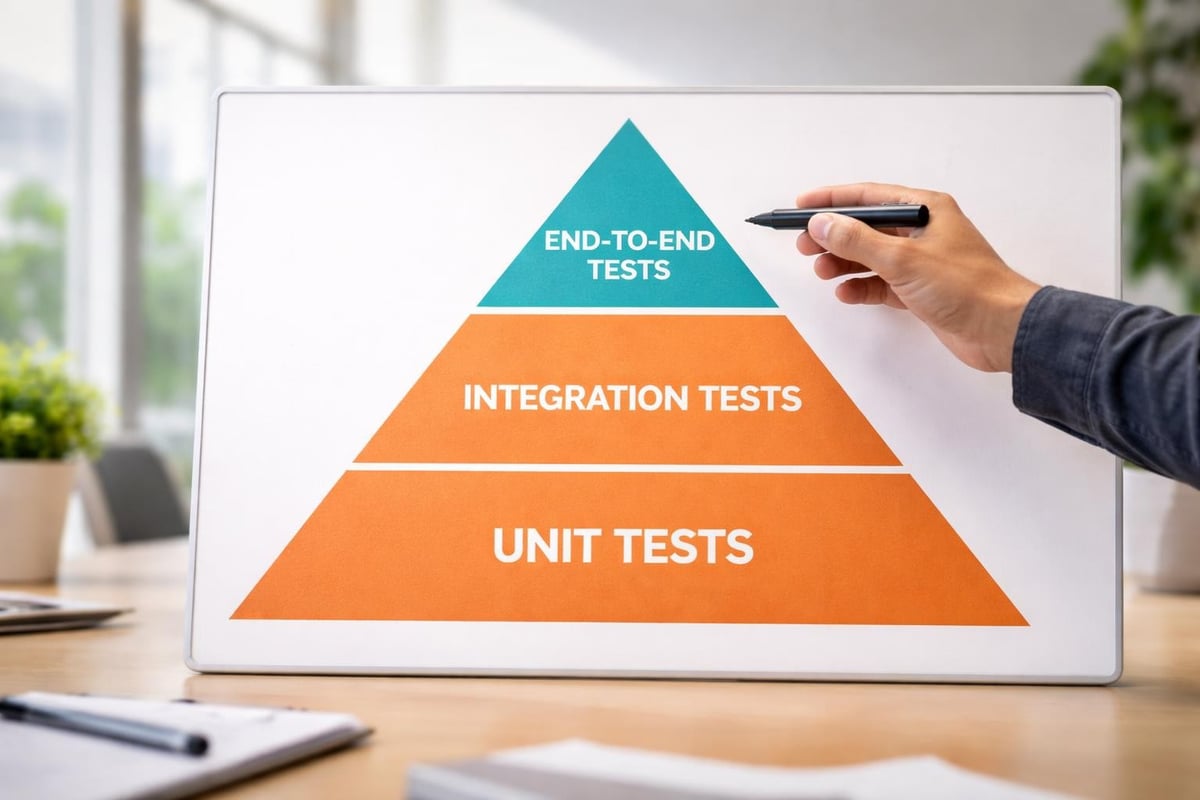
Enterprise software development services must incorporate rigorous testing protocols to ensure reliability and performance. Comprehensive testing strategies include multiple layers of validation:
- Unit testing for individual components and functions
- Integration testing for system interactions
- Performance testing under various load conditions
- Security testing to identify vulnerabilities
- User acceptance testing with actual end-users
- Regression testing to prevent feature degradation
Automated testing frameworks accelerate quality assurance while improving consistency. Continuous integration pipelines run test suites automatically with each code commit, catching issues immediately rather than during later development stages. Test-driven development and automated testing practices significantly reduce defect rates and maintenance costs over the software lifecycle.
Security and Compliance Considerations
Enterprise software development services must prioritize security from initial design through ongoing maintenance. Security-by-design principles embed protection mechanisms at every architectural layer rather than treating security as an afterthought.
Essential security measures include:
- Encryption for data at rest and in transit
- Multi-factor authentication and strong password policies
- Regular security audits and penetration testing
- Principle of least privilege for system access
- Comprehensive logging and monitoring systems
- Incident response and disaster recovery planning
- Regular security patches and dependency updates
Compliance requirements vary by industry and geography. Healthcare organizations must adhere to HIPAA regulations, financial institutions face strict data protection mandates, and companies handling European customer data must comply with GDPR provisions. Enterprise software development services teams build compliance requirements directly into application architecture rather than attempting to retrofit compliance later.
Integration and Legacy System Modernization
Connecting Disparate Systems
Modern enterprises operate complex technology ecosystems with dozens of specialized applications. Enterprise software development services must seamlessly integrate new solutions with existing systems, creating unified workflows without requiring wholesale replacement of functional legacy platforms.
API-first design approaches facilitate integration by exposing well-documented interfaces that other systems can consume. RESTful APIs, GraphQL endpoints, and event-driven architectures enable real-time data synchronization across organizational platforms.
Enterprise service buses (ESBs) and integration platforms provide middleware capabilities that translate between different data formats, protocols, and business logic rules. These integration layers reduce point-to-point connections that become unmanageable as systems proliferate.
Modernization Strategies
Legacy system modernization represents a significant component of enterprise software development services. Organizations struggle with outdated platforms that lack modern capabilities yet contain critical business logic accumulated over decades.
Modernization approaches range from complete rewrites to gradual migration strategies. The strangler fig pattern progressively replaces legacy functionality with new microservices while maintaining operational continuity. This incremental approach minimizes risk while delivering tangible improvements throughout the transition.
Strategic governance and vendor vetting ensure that modernization initiatives align with broader digital transformation goals and technology roadmaps. Successful modernization requires careful change management to maintain user adoption and business continuity.
Cloud Infrastructure and Deployment
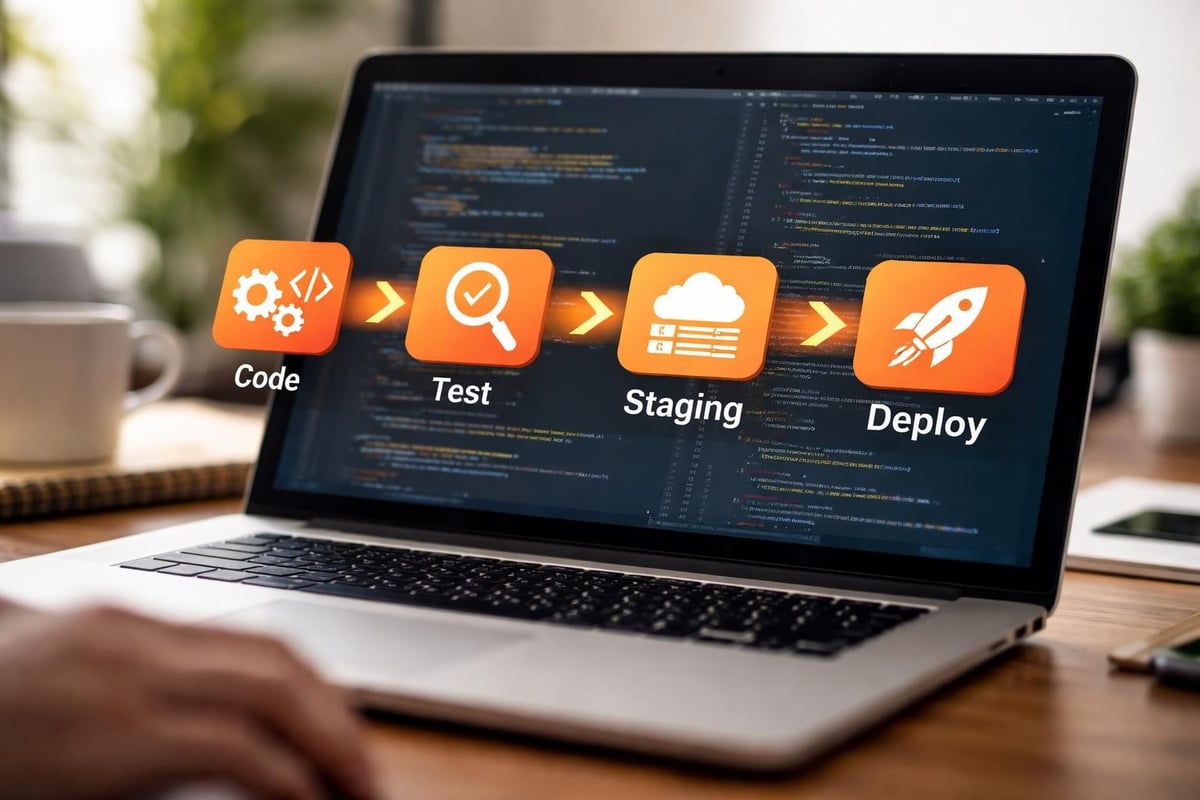
Cloud platforms have fundamentally changed enterprise software development services delivery models. Infrastructure-as-a-Service (IaaS), Platform-as-a-Service (PaaS), and Software-as-a-Service (SaaS) offerings provide scalability and flexibility impossible with traditional on-premises deployments.
Container orchestration platforms like Kubernetes enable consistent deployment across development, testing, and production environments. DevOps practices automate infrastructure provisioning, application deployment, and environment configuration through infrastructure-as-code principles.
| Deployment Model | Control Level | Management Responsibility | Best Use Case |
|---|---|---|---|
| On-Premises | Complete | Internal IT team | Strict data sovereignty requirements |
| Private Cloud | High | Shared responsibility | Regulated industries with cloud benefits |
| Public Cloud | Moderate | Cloud provider manages infrastructure | Rapid scaling and global distribution |
| Hybrid Cloud | Variable | Split between internal and external | Gradual cloud migration strategies |
Cloud migration benefits include cost optimization through elastic resource allocation, improved disaster recovery capabilities, and access to managed services that accelerate development. However, organizations must carefully evaluate data residency requirements, compliance constraints, and vendor lock-in risks.
Custom Development vs. Commercial Solutions
Enterprise software development services become necessary when commercial off-the-shelf (COTS) solutions fail to address specific organizational requirements. This decision involves careful cost-benefit analysis and strategic alignment.
Commercial solutions work well when:
- Industry-standard processes match product capabilities
- Customization needs remain minimal
- Vendor roadmap aligns with business direction
- Integration requirements are straightforward
- Implementation timelines are constrained
Custom development makes sense when:
- Unique business processes provide competitive advantage
- Existing solutions require extensive customization
- Integration complexity exceeds COTS flexibility
- Long-term total cost of ownership favors custom development
- Intellectual property and data control are paramount
Many organizations adopt hybrid approaches, leveraging commercial platforms for commodity functions while building custom solutions for differentiating capabilities. This strategy optimizes development resources while maintaining competitive advantages through proprietary software.
Maintenance and Continuous Improvement
Enterprise software development services extend far beyond initial deployment. Ongoing maintenance, monitoring, and enhancement ensure that solutions continue delivering value as business needs evolve and technology landscapes shift.
Proactive monitoring identifies performance degradation, security vulnerabilities, and usage patterns that inform optimization priorities. Application performance management (APM) tools provide real-time insights into system health, user experience metrics, and infrastructure utilization.
Regular maintenance activities include dependency updates, security patches, database optimization, and technical debt reduction. Continuous improvement practices and DevOps integration create feedback loops that systematically enhance software quality and capabilities.
Organizations that successfully manage service-oriented operations require robust tools for tracking assets, scheduling maintenance, and documenting service activities. For businesses seeking comprehensive service management capabilities, Brytend Service Module provides structured approaches to equipment tracking, automated reminders, and service certification generation.

Feature enhancement requests emerge continuously from user feedback and changing business requirements. Development teams maintain product backlogs that prioritize enhancements based on business impact, technical feasibility, and strategic alignment. Quarterly release cycles deliver new capabilities while maintaining system stability.
Team Structure and Resource Planning
Successful enterprise software development services require multidisciplinary teams with complementary expertise. Project complexity determines team composition, but typical structures include solution architects, backend developers, frontend specialists, database administrators, DevOps engineers, QA analysts, and project managers.
Distributed team models have become increasingly common, leveraging global talent pools while managing across time zones and cultural contexts. Remote collaboration tools, clear communication protocols, and overlapping working hours facilitate effective distributed development.
Optimal team scaling follows these principles:
- Start with core team covering essential disciplines
- Add specialists as complexity demands specific expertise
- Maintain consistent team membership for knowledge continuity
- Balance senior and junior developers for mentorship
- Include dedicated DevOps resources for infrastructure automation
- Ensure adequate QA coverage throughout development lifecycle
- Involve security specialists from project inception
Staff augmentation models allow organizations to supplement internal teams with external expertise for specific initiatives or technology domains. This flexible approach addresses skill gaps without long-term hiring commitments.
Measuring Success and ROI
Enterprise software development services investments require clear success metrics and return-on-investment calculations. Organizations must establish baseline measurements before implementation and track improvements across multiple dimensions.
Key performance indicators include:
- Process efficiency gains (time savings per transaction)
- Error reduction rates and quality improvements
- User adoption and satisfaction scores
- System uptime and reliability metrics
- Cost savings from automation or consolidation
- Revenue impact from new capabilities
- Time-to-market improvements for business initiatives
Financial analysis encompasses both hard savings (reduced labor costs, eliminated license fees) and soft benefits (improved decision-making, enhanced customer satisfaction). Total cost of ownership calculations factor in development costs, infrastructure expenses, ongoing maintenance, and training investments.
Business case development should project benefits over multi-year horizons, acknowledging that enterprise software development services typically require 12-24 months before delivering full value. Phased implementations demonstrate incremental wins that build stakeholder confidence and justify continued investment.
Vendor Selection and Partnership Considerations
Choosing the right enterprise software development services partner significantly impacts project outcomes. Organizations should evaluate potential partners across technical capabilities, industry experience, cultural fit, and delivery track record.
Request for Proposal (RFP) processes formalize vendor evaluation, though they risk becoming checkbox exercises rather than meaningful assessments. Effective vendor selection involves technical interviews, reference checks, code sample reviews, and proof-of-concept engagements that validate claimed expertise.
Comprehensive vendor vetting and technology assessment protect organizations from partnership failures that derail projects and waste resources. Due diligence should examine financial stability, employee retention rates, intellectual property policies, and conflict resolution procedures.
Partnership models range from fixed-price contracts to time-and-materials arrangements and dedicated team engagements. Each model involves different risk profiles and management overhead. Fixed-price agreements shift risk to vendors but reduce flexibility, while time-and-materials models provide adaptability at the cost of budget predictability.
Frequently Asked Questions
What distinguishes enterprise software development services from standard software development?
Enterprise software development services address large-scale organizational needs with solutions supporting hundreds or thousands of users, integrating with complex existing systems, meeting strict security and compliance requirements, and scaling to handle growing data volumes and user bases. Standard software development typically focuses on smaller applications with simpler requirements and fewer integration touchpoints.
How long does typical enterprise software development take?
Enterprise software development services projects typically require 6-24 months depending on scope, complexity, and organizational readiness. Simple departmental solutions may deploy within six months, while comprehensive enterprise platforms replacing multiple legacy systems often span 18-24 months. Agile methodologies deliver working software incrementally throughout this timeline rather than waiting until project completion.
What budget should organizations allocate for enterprise software development?
Enterprise software development services investments range from $100,000 for focused departmental applications to several million dollars for comprehensive enterprise platforms. Budget considerations include development costs, infrastructure expenses, licenses, ongoing maintenance (typically 15-20% of initial development annually), training, and change management. Organizations should plan for 3-5 year total cost of ownership rather than focusing solely on initial development expenses.
Should we build in-house or outsource enterprise software development?
This decision depends on internal technical capabilities, project complexity, timeline constraints, and strategic importance. Organizations with strong development teams and domain-specific requirements often benefit from in-house development, while those lacking specialized expertise or facing aggressive timelines achieve better results through enterprise software development services partners. Hybrid approaches leveraging internal teams for core business logic and external partners for specialized components often provide optimal outcomes.
How do we ensure enterprise software remains maintainable long-term?
Long-term maintainability requires comprehensive documentation, automated testing coverage, modular architecture, coding standards enforcement, and knowledge transfer protocols. Enterprise software development services teams should deliver technical documentation, user manuals, architecture diagrams, and API references. Regular code reviews, continuous integration practices, and technical debt management prevent deterioration over time. Establishing internal capability through training and shadowing arrangements reduces dependency on external partners.
What security measures are essential for enterprise software?
Essential security measures include encryption for data in transit and at rest, multi-factor authentication, role-based access control, regular security audits, penetration testing, comprehensive logging, intrusion detection systems, and incident response procedures. Security prioritization from project inception prevents costly retrofitting and reduces vulnerability exposure. Compliance requirements for specific industries demand additional controls around data handling, audit trails, and access governance.
How do we measure success of enterprise software initiatives?
Success measurement combines quantitative metrics (processing time reductions, error rate decreases, cost savings, user adoption rates, system uptime) with qualitative assessments (user satisfaction, strategic capability enablement, competitive positioning). Establish baseline measurements before implementation and track improvements quarterly. Enterprise software development services deliver maximum value when organizations define clear success criteria during planning phases and maintain consistent measurement throughout deployment and operation.
Enterprise software development services transform how organizations operate by delivering custom solutions that align perfectly with strategic objectives and operational requirements. Success demands careful planning, experienced development teams, proven methodologies, and commitment to ongoing improvement. Brytend specializes in creating tailored software solutions that address your specific business challenges, offering expertise across web and mobile development, cloud infrastructure, and comprehensive ongoing support to ensure your enterprise systems deliver lasting value.