
Industrial safety has evolved dramatically over the past decade, and gas detection software now stands at the forefront of this transformation. Modern facilities managing hazardous environments require more than standalone sensors-they need integrated software platforms that collect, analyze, and act on gas detection data in real time. This technology has become essential for protecting workers, maintaining regulatory compliance, and preventing catastrophic incidents across oil and gas, chemical manufacturing, wastewater treatment, and countless other industries.
Understanding Gas Detection Software Fundamentals
Gas detection software serves as the central nervous system for industrial safety monitoring. These platforms connect to physical gas detectors deployed throughout a facility, gathering continuous readings on combustible gases, toxic substances, and oxygen levels. The software doesn’t just display numbers-it interprets data, recognizes patterns, and triggers appropriate responses when dangerous conditions emerge.
The architecture typically includes three layers: sensor networks that capture raw data, middleware that processes and normalizes information from diverse detector models, and user-facing applications that present actionable insights. Smart sensors for gas detection have become increasingly sophisticated, enabling more granular data collection and faster response times.
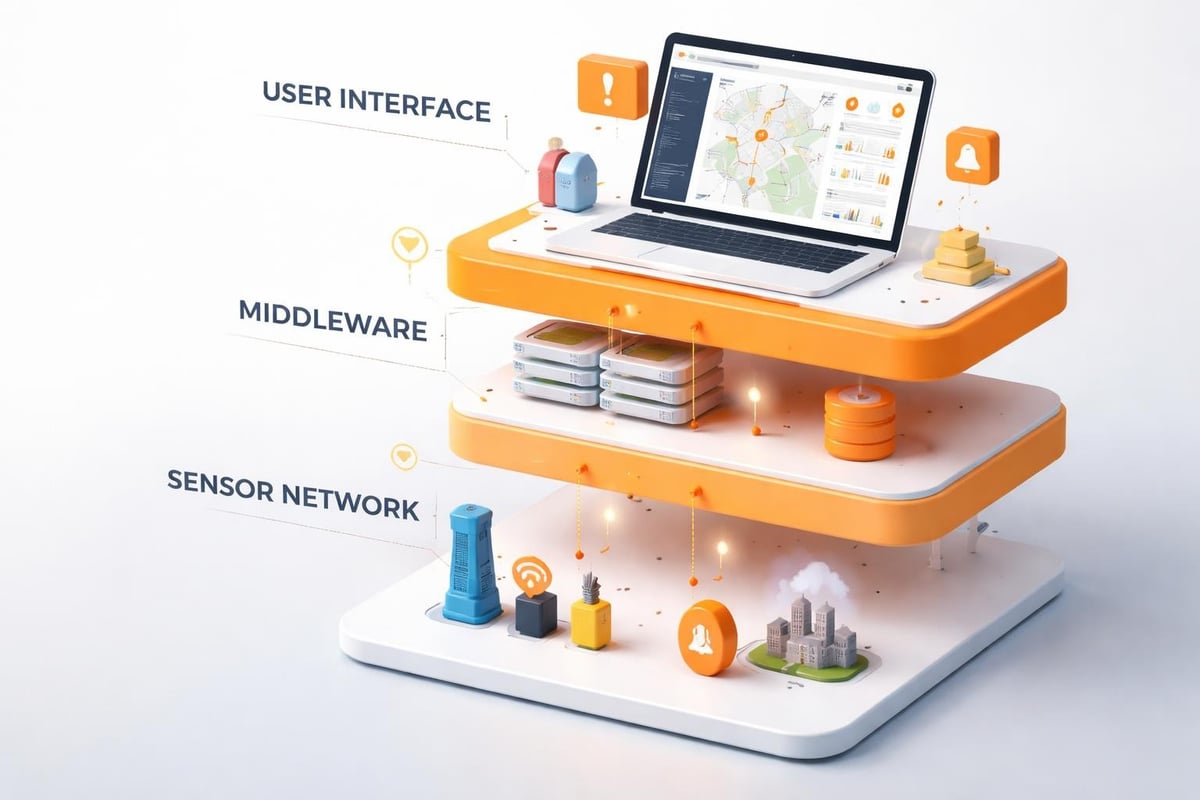
Modern gas detection software integrates with broader safety management systems, environmental monitoring platforms, and enterprise resource planning solutions. This connectivity enables organizations to correlate gas detection events with operational activities, weather conditions, maintenance schedules, and workforce locations. The result is a comprehensive safety intelligence platform rather than an isolated monitoring tool.
Core Capabilities and Features
1. Real-Time Monitoring and Visualization
The foundation of any gas detection software is its ability to display current conditions across all monitored locations. Dashboard interfaces show live readings, historical trends, and sensor health status. Color-coded maps provide instant visual confirmation that all areas remain within safe parameters.
2. Intelligent Alerting Systems
Advanced platforms don’t simply sound alarms when thresholds are breached. They apply contextual rules to distinguish between genuine hazards and temporary anomalies, reducing false positives that lead to alert fatigue. Escalation protocols ensure the right people receive notifications through appropriate channels-whether mobile push notifications, SMS, email, or direct integration with emergency response systems.
3. Compliance Documentation
Regulatory bodies require detailed records of gas detection activities. Software platforms automatically generate audit trails documenting sensor calibration dates, bump test results, alarm events, and corrective actions taken. These digital records eliminate manual logbooks and provide tamper-proof evidence of compliance with standards like ISA 84.00.07.
4. Predictive Maintenance Scheduling
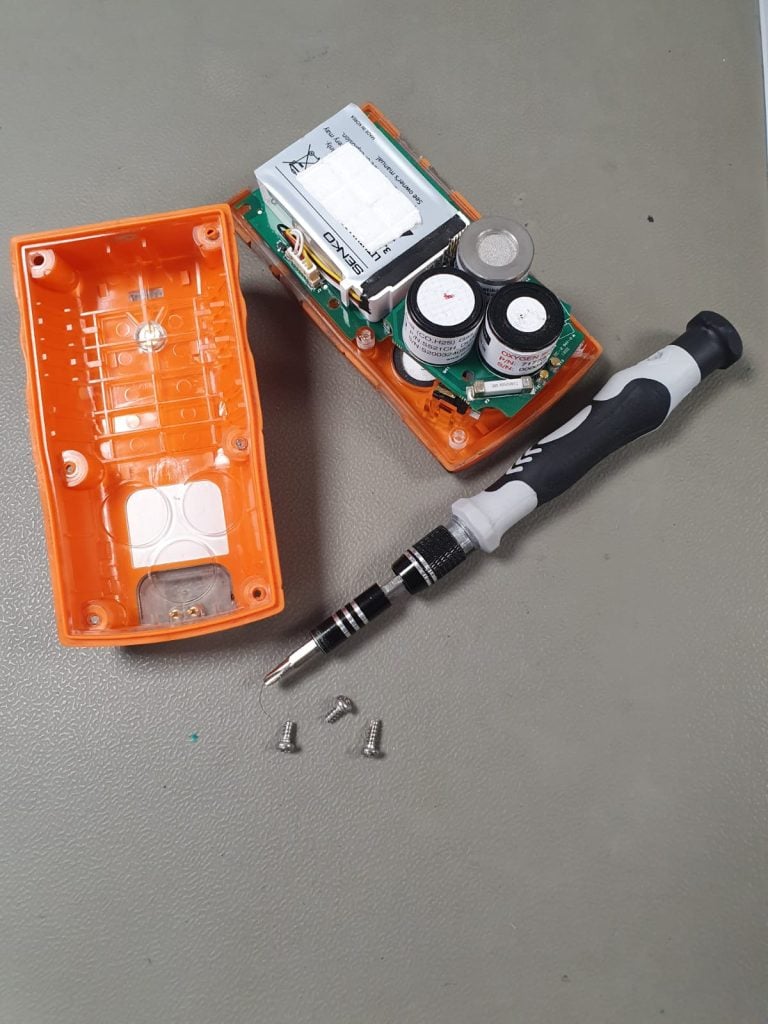
By tracking sensor performance metrics, gas detection software identifies devices approaching end-of-life or requiring calibration before failures occur. Automated maintenance scheduling prevents gaps in coverage and optimizes technician workflows. The Brytend Service Module provides an excellent framework for managing serialized gas detection equipment, automating service reminders, and maintaining complete service histories for each sensor across your facility.
5. Data Analytics and Reporting
Historical data analysis reveals patterns invisible in day-to-day monitoring. Software platforms identify which locations experience frequent elevated readings, correlate gas levels with specific operational activities, and calculate aggregate exposure metrics. Custom report builders allow safety managers to create documentation tailored to internal stakeholders and external auditors.
| Feature Category | Basic Systems | Advanced Platforms |
|---|---|---|
| Live Monitoring | Single-site dashboards | Multi-site with GIS mapping |
| Alert Delivery | Email only | Multi-channel with escalation |
| Data Storage | 30-90 days | Unlimited cloud storage |
| Integration | Standalone | ERP, CMMS, BMS connectivity |
| Analytics | Standard reports | Predictive insights with AI |
| Mobile Access | Limited | Full-featured apps |
Implementation Considerations for Industrial Environments
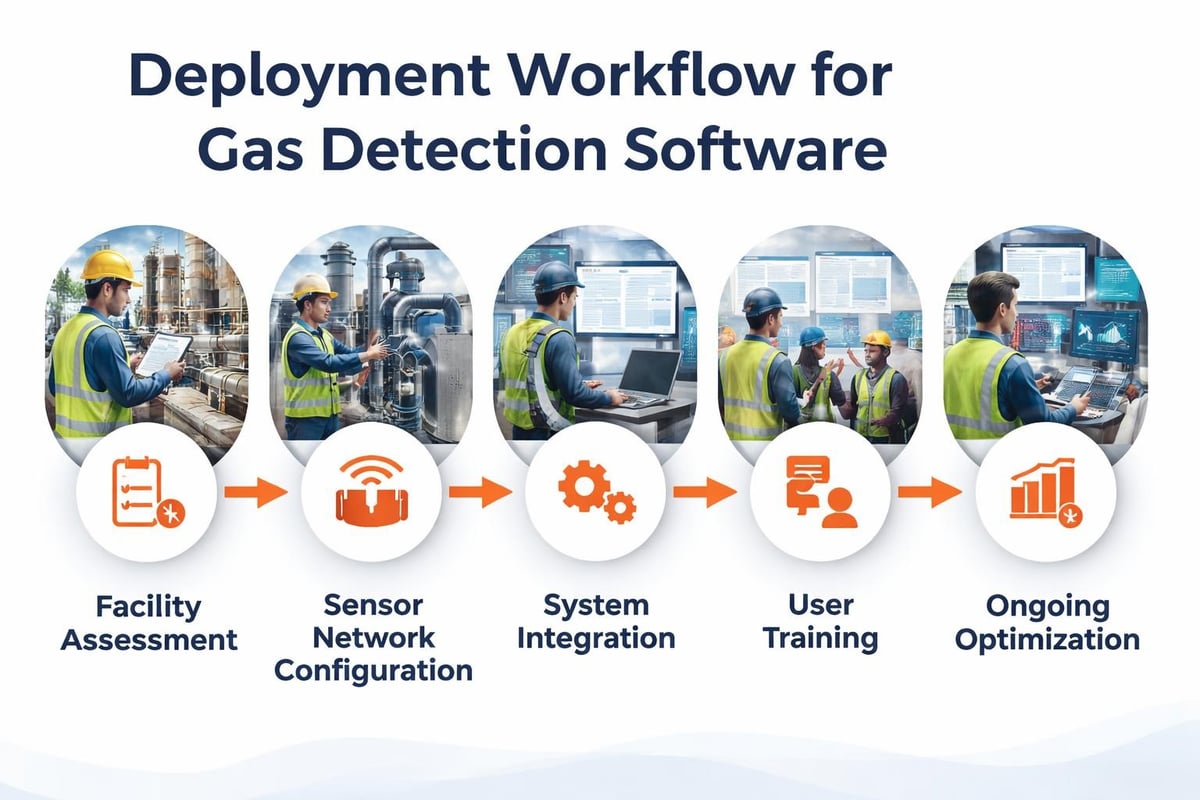
Deploying gas detection software requires careful planning to ensure the system delivers maximum value. The selection process should begin with a thorough assessment of your facility’s unique requirements, including the types of gases monitored, the number and distribution of sensors, and the specific regulatory standards applicable to your industry.
1. System Architecture Decisions
Organizations must choose between cloud-based platforms, on-premises installations, or hybrid approaches. Cloud solutions offer scalability, automatic updates, and accessibility from any location, while on-premises systems provide greater control over data security and network dependencies. Connected gas detection devices have fundamentally changed the landscape, making cloud connectivity increasingly practical even in remote industrial settings.
2. Integration with Existing Infrastructure
Modern facilities already operate numerous software systems-building management platforms, industrial control systems, safety management databases, and workforce tracking tools. Effective gas detection software must integrate seamlessly with these existing platforms rather than creating another information silo. APIs, standard protocols like Modbus and BACnet, and middleware solutions enable this connectivity.
3. User Training and Adoption
The most sophisticated software delivers no value if personnel don’t understand how to use it effectively. Implementation plans should include comprehensive training for different user groups: safety managers who configure rules and analyze trends, operators who monitor daily conditions, maintenance technicians who service equipment, and emergency responders who act on alerts.
4. Scalability Planning
Facilities evolve over time, adding new production areas, changing processes, or expanding to additional sites. The gas detection software architecture should accommodate growth without requiring complete replacement. Modular platforms that allow incremental expansion provide better long-term value than rigid systems designed for current needs only.
Advanced Technologies Reshaping Gas Detection Software
The field of gas detection continues to advance rapidly, with emerging technologies enhancing both hardware capabilities and software intelligence. Understanding these developments helps organizations make forward-looking investment decisions.
Artificial intelligence and machine learning algorithms now power predictive capabilities that were impossible just a few years ago. These systems learn normal patterns for each monitored location, detecting subtle deviations that might indicate equipment malfunctions, process anomalies, or emerging hazards. Research into ultrasound-based gas detection demonstrates how new sensor technologies will provide software platforms with richer data streams for analysis.
Computer vision integration allows gas detection software to incorporate visual information alongside chemical sensor data. Infrared open-path detectors generate spatial maps of gas concentrations, which software platforms can overlay on facility layouts to visualize dispersion patterns. This spatial intelligence supports more effective emergency response and process optimization.
Environmental monitoring has expanded beyond individual facility boundaries. Studies like the dual frequency comb spectrometer deployment for regional trace gas source attribution show how large-scale monitoring networks can identify emission sources across entire industrial complexes or geographic regions. Software platforms designed to aggregate data from distributed monitoring networks enable collaborative safety management across multiple operators.
| Technology | Application in Gas Detection Software | Maturity Level |
|---|---|---|
| AI/Machine Learning | Pattern recognition, predictive alerts | Widely deployed |
| Computer Vision | Spatial concentration mapping | Emerging |
| IoT Connectivity | Wireless sensor networks | Mature |
| Digital Twins | Virtual facility modeling | Growing adoption |
| Blockchain | Tamper-proof compliance records | Experimental |
| Edge Computing | Local processing for faster response | Increasingly common |
Customization and Vertical-Specific Solutions
Different industries face unique gas detection challenges that require tailored software approaches. Generic platforms may provide core functionality, but specialized solutions deliver significantly greater value by addressing industry-specific workflows, regulations, and risks.
1. Oil and Gas Exploration and Production
Remote wellsites and offshore platforms demand gas detection software that operates reliably with intermittent connectivity. Platforms designed for this sector include offline data buffering, satellite communication support, and integration with drilling management systems. Research applying deep learning to remotely sensed imagery for oil and gas infrastructure detection illustrates how software can provide broader situational awareness beyond individual sensor readings.
2. Chemical Manufacturing
Complex chemical facilities monitor dozens of different substances, each with distinct hazard profiles and regulatory requirements. Specialized gas detection software for this sector includes comprehensive chemical libraries, reaction-specific monitoring protocols, and integration with process control systems to enable automatic shutdowns when dangerous conditions develop.
3. Wastewater Treatment
Confined spaces in wastewater facilities present severe hazards from hydrogen sulfide, methane, and oxygen depletion. Software platforms for this industry emphasize permit-required confined space management, worker tracking integration, and correlation with ventilation system status.
4. Food and Beverage Production
Refrigeration systems using ammonia require specialized gas detection approaches. Software solutions for this sector focus on early leak detection to prevent product contamination, coordination with HVAC systems, and integration with food safety management platforms.
Custom software development enables organizations to implement gas detection platforms perfectly aligned with their specific operational requirements. Brytend specializes in creating tailored software solutions that integrate gas detection capabilities with broader operational systems, ensuring seamless workflows and maximum return on safety technology investments.
Data Management and Security Considerations
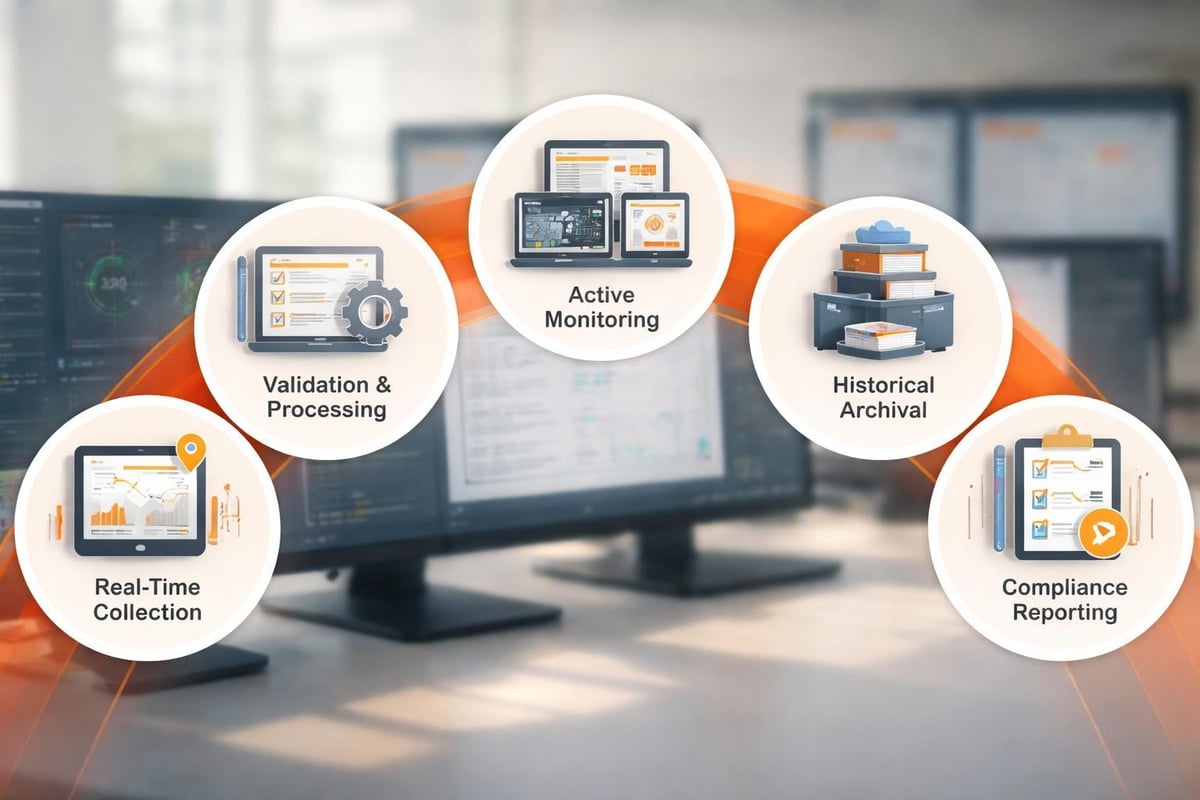
Gas detection software handles sensitive operational information that requires robust data management practices. The volume of data generated by continuous monitoring can be substantial-a facility with 100 sensors recording readings every minute generates over five million data points monthly.
1. Storage Architecture
Time-series databases optimized for sensor data provide efficient storage and rapid retrieval of historical information. Cloud storage offers virtually unlimited capacity, but organizations must consider data sovereignty requirements and ensure compliance with regulations governing where sensitive operational data can reside. Hybrid approaches that store recent data locally while archiving historical records to the cloud balance performance with cost efficiency.
2. Cybersecurity Protection
Gas detection systems increasingly connect to broader networks, creating potential attack vectors for malicious actors. Software platforms must implement defense-in-depth strategies including network segmentation, encrypted communications, multi-factor authentication, and regular security audits. Compliance with standards like EN 50291 for electrical safety extends to cybersecurity considerations in connected gas detection systems.
3. Data Retention Policies
Regulatory requirements typically mandate retention of gas detection records for specific periods-often five to seven years. Software platforms should automate retention management, archiving older data while maintaining easy retrieval for audits. Organizations must also consider the evidentiary value of gas detection data in incident investigations and potential litigation.
4. Privacy and Access Control
While gas detection data itself rarely contains personal information, integrated systems that correlate gas readings with worker locations or identity raise privacy considerations. Role-based access controls ensure personnel see only the information necessary for their responsibilities, while audit logs track who accesses sensitive data.
Return on Investment and Business Value
Justifying investment in advanced gas detection software requires demonstrating tangible business value beyond regulatory compliance. Organizations that implement comprehensive platforms typically realize benefits across multiple dimensions.
Insurance premiums often decrease when insurers recognize the risk reduction from sophisticated monitoring systems. Documentation of robust safety programs, captured automatically by gas detection software, provides concrete evidence supporting premium negotiations. Some organizations report insurance savings exceeding 10% of their total annual premiums.
Incident prevention delivers the most significant financial impact. Even a single prevented gas release can save millions in direct costs (emergency response, cleanup, equipment damage) and indirect costs (production downtime, regulatory penalties, reputation damage). The statistical reduction in incident frequency and severity pays for software investments many times over.
Operational efficiency improvements emerge from the insights provided by comprehensive data analysis. Identifying process inefficiencies that cause unnecessary gas generation, optimizing ventilation system operation based on actual conditions rather than worst-case assumptions, and reducing false alarms that trigger costly production shutdowns all contribute to bottom-line benefits.
Workforce productivity increases when safety systems operate reliably. Workers who trust their gas detection systems focus on productive tasks rather than worrying about undetected hazards. Simplified compliance documentation reduces the administrative burden on safety personnel, allowing them to focus on proactive hazard management rather than paperwork.
Frequently Asked Questions
1. What is the difference between gas detection software and gas detector devices?
Gas detector devices are the physical sensors that measure gas concentrations in the environment. They contain sensing elements that react to specific gases and generate electrical signals proportional to concentration levels. Gas detection software is the digital platform that connects to these devices, collects their data, analyzes readings, manages alerts, generates reports, and integrates with other safety systems. Think of the detectors as the eyes and nose of your safety system, while the software serves as the brain that interprets sensory input and coordinates appropriate responses.
2. Can gas detection software work with detectors from multiple manufacturers?
Modern gas detection software platforms are designed to support multi-vendor environments. They use standard industrial protocols and custom integration adapters to communicate with detectors from different manufacturers. However, the level of integration varies-basic platforms may only collect readings and alarms, while advanced systems can access detailed diagnostics, configure sensor parameters remotely, and manage calibration schedules across all connected devices regardless of manufacturer. When selecting software, confirm compatibility with your specific detector models and verify which features work across all devices versus manufacturer-specific capabilities.
3. How does cloud-based gas detection software handle internet connectivity interruptions?
Robust cloud-based platforms implement local data buffering to continue collecting and storing sensor readings during connectivity interruptions. Edge computing devices or local gateways cache data and maintain critical monitoring functions even when cloud connectivity is unavailable. When connection resumes, buffered data automatically synchronizes to the cloud platform. Critical alarms can be configured to trigger local responses (sirens, shutdowns, notifications to on-site personnel) that don’t depend on cloud connectivity, ensuring safety isn’t compromised during outages.
4. What types of reports can gas detection software generate?
Comprehensive platforms offer multiple report categories including compliance reports documenting sensor calibration history and alarm events for regulatory submissions, incident reports detailing the timeline and sensor readings during gas release events, trend analysis reports showing historical patterns across locations and time periods, maintenance reports tracking sensor performance and service activities, exposure reports calculating worker exposure to specific gases over time, and executive dashboards summarizing key safety metrics. Advanced systems include custom report builders allowing users to create tailored reports for specific stakeholder needs.
5. How long does it typically take to implement gas detection software?
Implementation timelines vary significantly based on system complexity, facility size, and integration requirements. A basic deployment connecting to existing sensors at a single facility might require four to eight weeks including planning, configuration, testing, and training. Complex multi-site implementations with extensive system integrations, custom development, and comprehensive training programs may span three to six months. Cloud-based solutions generally deploy faster than on-premises installations. Phased implementations that start with core monitoring capabilities and add advanced features incrementally can deliver value more quickly while spreading costs and change management over longer periods.
6. What ongoing costs should organizations budget for gas detection software?
Beyond initial licensing or purchase costs, organizations should budget for annual software maintenance and support fees, typically 15-20% of initial licensing costs. Cloud-based platforms include hosting infrastructure in subscription fees, while on-premises systems require budgeting for server hardware, storage expansion, and IT support. Training costs recur as new personnel join or software capabilities expand. Integration maintenance ensures continued compatibility as connected systems receive updates. Organizations should also budget for periodic system optimization and configuration updates as operational requirements evolve.
7. Can gas detection software integrate with emergency response protocols?
Advanced gas detection software serves as a central component of comprehensive emergency response systems. Integration capabilities include automatic notification to emergency response teams with incident details and affected locations, coordination with building management systems to activate ventilation or close dampers, triggering of visual and audible alarms in affected areas, provision of real-time gas concentration data to emergency responders via mobile devices, integration with evacuation management systems to guide personnel away from affected zones, and automatic documentation of response activities for post-incident analysis. These integrations transform gas detection software from a monitoring tool into an active participant in emergency response.
Gas detection software has become an indispensable component of industrial safety programs, transforming how organizations monitor hazardous environments, protect workers, and maintain regulatory compliance. The platforms available in 2026 offer unprecedented capabilities for real-time monitoring, predictive analytics, and integrated emergency response. If you’re looking to implement a custom gas detection solution tailored to your facility’s unique requirements, Brytend brings deep expertise in developing software platforms that integrate seamlessly with your operational systems and deliver measurable safety improvements. Our team of experienced developers specializes in creating solutions that address your specific challenges while providing the scalability and flexibility to evolve with your organization’s needs.