
Management tracking represents one of the most critical capabilities that separates successful organizations from those that struggle to meet their objectives. Whether you oversee a small team or manage an enterprise-level operation, the ability to monitor progress, measure performance, and make data-driven decisions determines your competitive advantage. In today's fast-paced business environment, implementing robust management tracking systems has become essential for maintaining visibility across all operational areas.
Understanding Management Tracking Fundamentals
Management tracking encompasses the systematic collection, analysis, and reporting of data related to business operations, team performance, project progress, and resource utilization. This practice enables leaders to maintain real-time visibility into their organization's activities while identifying opportunities for improvement.
At its core, management tracking serves multiple purposes. It provides accountability by documenting who does what and when. It facilitates communication by creating shared understanding across teams. It supports decision-making by surfacing relevant data at the right time. Most importantly, it transforms abstract goals into measurable outcomes that drive continuous improvement.
The Evolution of Tracking Systems
Traditional management tracking relied heavily on manual processes-spreadsheets, status meetings, and paper reports. These methods consumed significant time and often produced outdated information by the time stakeholders received it.
Modern approaches leverage technology to automate data collection and generate insights in real time. Digital platforms now integrate multiple data sources, providing comprehensive dashboards that update continuously. This evolution has fundamentally changed how managers interact with operational data, shifting from reactive reporting to proactive optimization.
The transition to digital management tracking has also democratized access to information. Teams at all levels can now view relevant metrics without waiting for formal reports, fostering a culture of transparency and shared responsibility.
Key Components of Effective Management Tracking
Implementing management tracking requires attention to several interconnected elements that work together to create a cohesive system.
Data Collection Infrastructure
- Automated Data Capture: Systems that collect information without manual intervention reduce errors and save time
- Multiple Input Channels: Integration points for time tracking, project management, financial systems, and operational tools
- Standardized Formats: Consistent data structures that enable comparison and aggregation across different sources
- Real-Time Synchronization: Immediate updates that reflect current conditions rather than historical snapshots
Building robust data collection infrastructure ensures that your management tracking foundation remains reliable and scalable as your organization grows.
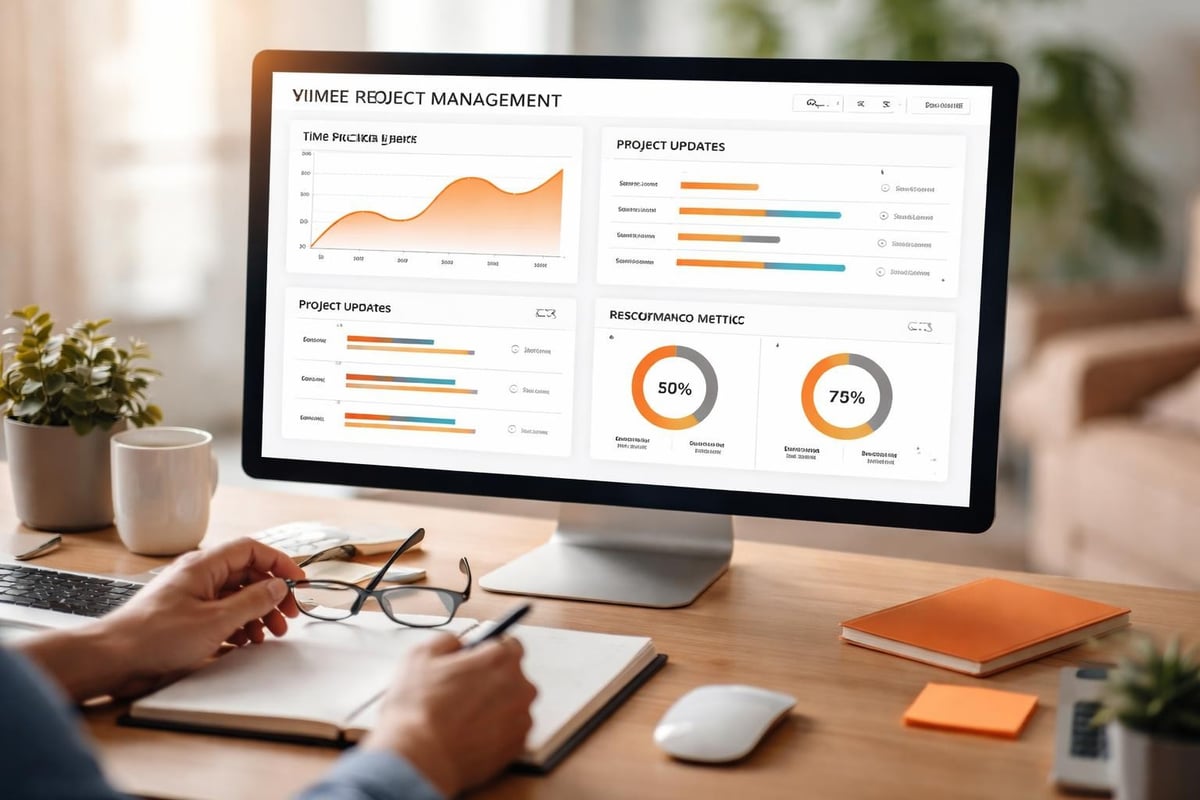
Measurement Frameworks
Effective management tracking depends on selecting the right metrics to monitor. Different organizational functions require distinct measurement approaches.
| Function | Primary Metrics | Secondary Indicators |
|---|---|---|
| Project Management | Timeline adherence, budget variance | Resource utilization, scope changes |
| Team Performance | Task completion rate, quality scores | Collaboration frequency, skill development |
| Resource Allocation | Utilization percentage, cost per unit | Availability forecasting, bottleneck identification |
| Strategic Initiatives | Milestone achievement, ROI | Stakeholder satisfaction, risk exposure |
Organizations implementing resource tracking in project management benefit from understanding how different metrics interact and influence overall performance.
Reporting and Visualization
- Executive Dashboards: High-level overviews showing critical metrics and trend indicators
- Operational Reports: Detailed breakdowns of specific activities, resources, or projects
- Exception Alerts: Automated notifications when metrics deviate from expected ranges
- Trend Analysis: Historical comparisons that reveal patterns and predict future performance
The most effective tracking systems balance detail with accessibility, ensuring stakeholders receive appropriate information for their decision-making needs.
Implementation Strategies for Management Tracking
Deploying management tracking capabilities requires thoughtful planning and execution. Organizations that rush implementation often encounter resistance or produce systems that fail to deliver expected value.
Phased Rollout Approach
- Assessment Phase: Evaluate current tracking capabilities, identify gaps, and define requirements
- Pilot Program: Test tracking systems with a limited scope before full deployment
- Feedback Integration: Gather user input and refine processes based on real-world experience
- Scaled Deployment: Expand to additional teams or functions after validation
- Continuous Improvement: Establish review cycles to optimize tracking approaches over time
This methodology reduces risk while building organizational buy-in. Teams appreciate gradual introduction that allows them to adapt rather than overwhelming changes imposed without preparation.
Technology Selection Criteria
Choosing the right tools for management tracking significantly impacts adoption and effectiveness. Consider these factors when evaluating options:
Integration capabilities determine whether new systems can connect with existing tools. Disconnected platforms create data silos that undermine tracking effectiveness.
Customization flexibility allows adaptation to specific workflows and terminology. Generic solutions often require workarounds that reduce efficiency.
User experience design affects adoption rates dramatically. Intuitive interfaces encourage regular use, while complicated systems face resistance regardless of their capabilities.
Scalability considerations ensure systems grow alongside your organization. Solutions that work for ten users may collapse under the demands of hundreds.
For organizations managing customer interactions alongside operational metrics, implementing comprehensive systems like Brytend CRM can centralize tracking across multiple business dimensions. A unified platform that handles customer relationships, project progress, and team activities eliminates the fragmentation that plagues many organizations.

Building a Tracking Culture
- Leadership Modeling: Executives who actively use tracking data demonstrate its importance
- Transparency Standards: Clear policies about what gets tracked and who can access information
- Training Programs: Comprehensive education ensuring all team members understand both how and why
- Recognition Systems: Acknowledging teams and individuals who effectively use tracking to improve outcomes
- Feedback Loops: Regular opportunities for users to suggest improvements or report issues
Cultural adoption often determines success or failure more than technical implementation quality. Organizations that invest in helping people understand the value of management tracking achieve far better results than those that simply deploy software.

Best Practices for Management Tracking Excellence
Organizations achieving exceptional results with management tracking consistently apply specific principles that maximize value while minimizing overhead.
Focus on Actionable Metrics
Tracking data without clear action pathways wastes resources and creates confusion. Every metric in your management tracking system should answer specific questions and inform particular decisions.
Before adding any measurement to your tracking framework, ask: "What will we do differently based on this information?" Metrics that fail this test clutter dashboards without adding value.
Following time-tracking best practices helps teams maintain accurate records while avoiding the perception of surveillance. Transparency about why tracking matters builds trust and improves data quality.
Balance Detail with Usability
- Hierarchical Information Architecture: Summary views with drill-down capability for deeper investigation
- Role-Based Displays: Customized dashboards showing relevant information for each user's responsibilities
- Progressive Disclosure: Revealing complexity only when needed rather than overwhelming with all possibilities
- Guided Analysis: Built-in intelligence that highlights unusual patterns or important trends
Effective management tracking provides exactly the right amount of information at exactly the right time, avoiding both information overload and insufficient detail.
Establish Review Rhythms
| Review Type | Frequency | Participants | Focus Areas |
|---|---|---|---|
| Daily Standup | Daily | Team members | Immediate obstacles, today's priorities |
| Weekly Status | Weekly | Team leads, managers | Progress against plans, resource needs |
| Monthly Review | Monthly | Department heads | Trend analysis, strategic adjustments |
| Quarterly Assessment | Quarterly | Executive leadership | Goal achievement, major initiative performance |
Regular review cycles ensure tracking data translates into organizational learning and improvement. The practice of tracking team progress effectively requires discipline in examining data and acting on insights.
Maintain Data Integrity
- Validation Rules: Automated checks that prevent obviously incorrect entries
- Audit Trails: Records showing who entered or modified information and when
- Regular Reconciliation: Periodic comparisons between tracking systems and source records
- Quality Metrics: Monitoring data completeness, accuracy, and timeliness
- Correction Protocols: Clear processes for identifying and fixing data issues
Poor data quality undermines even the most sophisticated tracking systems. Organizations must invest in maintaining accuracy and completeness to ensure reliable insights.
Advanced Management Tracking Techniques
Organizations mastering basic tracking capabilities can explore sophisticated approaches that deliver additional value.
Predictive Analytics
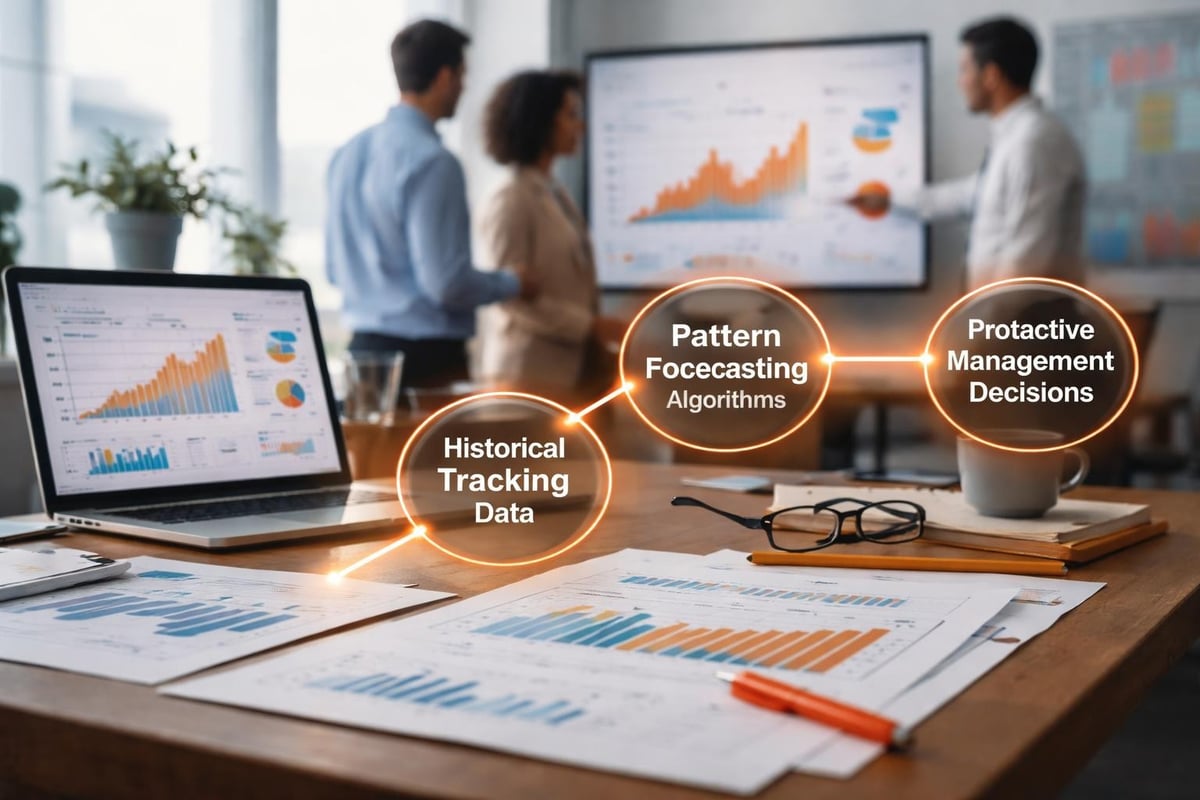
Rather than simply reporting what happened, advanced management tracking systems forecast future performance based on historical patterns. These capabilities help managers anticipate problems before they occur and capitalize on emerging opportunities.
Machine learning algorithms can analyze tracking data to identify leading indicators that predict outcomes. For example, specific patterns in team communication frequency might correlate with project delays, allowing intervention before schedules slip.
Cross-Functional Integration
The most powerful insights often emerge from connecting data across organizational boundaries. When management tracking systems integrate information from sales, operations, finance, and customer service, leaders gain holistic understanding impossible from isolated views.
This integration enables questions like: "How do delivery delays affect customer satisfaction and renewal rates?" or "Which project types generate the highest profitability relative to resource consumption?" Connecting the dots across functions reveals cause-and-effect relationships that drive strategic decisions.
Implementing management reporting best practices ensures that cross-functional data integration produces clear, actionable insights rather than confusing complexity.
Automated Optimization
- Resource Reallocation Recommendations: Algorithms suggesting how to redistribute capacity based on priorities and availability
- Schedule Optimization: Automated adjustment of timelines to account for dependencies and constraints
- Risk Flagging: Systems that identify concerning patterns and escalate for human review
- Performance Benchmarking: Automatic comparison against historical performance or industry standards
These capabilities transform management tracking from a monitoring tool into an active participant in operational improvement.
Overcoming Common Management Tracking Challenges
Even well-designed tracking systems encounter obstacles that reduce effectiveness. Recognizing these challenges enables proactive solutions.
Resistance to Monitoring
Team members sometimes perceive tracking as surveillance rather than support. This perspective damages morale and produces incomplete or inaccurate data as people minimize their exposure.
Solution approaches include:
- Emphasize Benefits: Clearly communicate how tracking helps teams succeed, not just holds them accountable
- Collaborative Design: Involve team members in deciding what to track and how to use the information
- Privacy Protections: Establish and enforce policies about data access and usage
- Positive Reinforcement: Use tracking data to celebrate successes, not just identify failures
Organizations practicing evidence-based management demonstrate how systematic tracking produces better decisions that benefit everyone.
Data Overload
Modern systems can track virtually everything, tempting organizations to measure excessively. Too many metrics create confusion and dilute focus from what truly matters.
Effective management tracking requires disciplined prioritization, concentrating on metrics that directly support strategic objectives. Regularly pruning unnecessary measurements keeps systems focused and usable.
Maintenance Burden
Tracking systems require ongoing care to remain accurate and relevant. As organizations evolve, tracking frameworks must adapt to reflect new priorities, processes, and structures.
- Designated Ownership: Assign clear responsibility for system maintenance and improvement
- Regular Audits: Scheduled reviews of metrics, processes, and tool effectiveness
- Change Management: Structured approaches for updating tracking as business needs shift
- Documentation Standards: Clear records of what gets tracked, why, and how
Organizations that treat management tracking as a living system rather than a one-time implementation achieve sustained value over years.
Measuring Management Tracking ROI
Investing in management tracking capabilities requires resources-software costs, implementation time, training expenses, and ongoing maintenance. Justifying these investments demands demonstrating tangible returns.
Quantifiable Benefits
| Benefit Category | Measurement Approach | Typical Impact Range |
|---|---|---|
| Time Savings | Hours recovered from manual reporting | 15-30% reduction |
| Project Success Rate | Percentage of projects meeting goals | 20-40% improvement |
| Resource Utilization | Productive hours vs. available capacity | 10-25% increase |
| Decision Speed | Time from question to informed choice | 40-60% faster |
These metrics provide concrete evidence of management tracking value, supporting continued investment and expansion.
Qualitative Improvements
Beyond numbers, effective tracking produces cultural and strategic benefits:
Enhanced transparency builds trust and reduces political maneuvering as objective data replaces subjective opinions. Improved accountability clarifies expectations and makes everyone's contributions visible. Faster learning occurs when teams can quickly identify what works and what doesn't. Better strategic alignment emerges when everyone can see how their work connects to organizational goals.
Following guidance from performance management leaders helps organizations measure what truly matters rather than what's simply easy to count.
Frequently Asked Questions
What exactly is management tracking?
Management tracking is the systematic process of collecting, monitoring, and analyzing data related to business operations, team performance, project progress, and resource utilization. It enables leaders to maintain visibility into organizational activities, measure performance against goals, identify improvement opportunities, and make informed decisions based on real-time information rather than assumptions or outdated reports.
How does management tracking differ from project management?
While project management focuses specifically on planning and executing individual projects, management tracking encompasses broader organizational monitoring across multiple projects, teams, functions, and strategic initiatives. Management tracking provides the measurement and reporting infrastructure that supports project management activities along with other operational areas like resource allocation, team performance, customer relationships, and strategic goal achievement.
What are the essential features of a management tracking system?
Essential features include automated data collection from multiple sources, customizable dashboards and reports, real-time synchronization, role-based access controls, alert and notification capabilities, historical trend analysis, integration with existing business tools, mobile accessibility, audit trails for data changes, and scalability to accommodate organizational growth. The best systems balance comprehensive functionality with intuitive user experience.
How can small businesses benefit from management tracking?
Small businesses gain proportionally greater benefits from management tracking because they typically have fewer resources to waste and limited margin for error. Tracking helps small organizations maximize productivity from limited staff, identify profitable activities versus resource drains, make data-driven decisions without large analytics teams, demonstrate accountability to stakeholders and investors, and scale operations efficiently as they grow without losing visibility.
What metrics should organizations prioritize in management tracking?
Priority metrics depend on organizational goals but typically include project timeline adherence, budget variance, resource utilization rates, team productivity measures, quality indicators, customer satisfaction scores, and strategic initiative progress. The key is selecting metrics that directly inform decisions and drive actions rather than tracking data simply because it's available. Each metric should answer specific business questions and support particular choices.
How do you overcome employee resistance to tracking systems?
Overcoming resistance requires transparent communication about tracking purposes, involving team members in system design decisions, emphasizing how tracking helps employees succeed rather than catching failures, establishing clear policies about data privacy and usage, demonstrating leadership commitment by actively using tracking data, providing comprehensive training and support, celebrating successes identified through tracking, and creating feedback channels where employees can suggest improvements or raise concerns.
What's the typical implementation timeline for management tracking systems?
Implementation timelines vary based on organizational size, system complexity, and integration requirements, but most deployments follow a three to six month path from initial assessment through full rollout. This includes one to two months for requirements gathering and tool selection, one to two months for configuration and pilot testing, and one to two months for scaled deployment and refinement. Rushing implementation typically produces poor adoption, while overly extended timelines lose momentum and stakeholder engagement.
Effective management tracking transforms how organizations operate by replacing guesswork with evidence, assumptions with data, and reactive responses with proactive optimization. The practices outlined in this guide provide a roadmap for building tracking capabilities that deliver sustained competitive advantage. If you're ready to implement customized management tracking solutions tailored to your specific operational needs, Brytend specializes in developing software systems that integrate seamlessly with your existing processes while providing the flexibility to evolve alongside your business. Our experienced development team can help you design, build, and deploy tracking infrastructure that drives measurable improvements across your organization.