
Patient satisfaction surveys have become essential tools for healthcare organizations seeking to understand and improve the quality of care they deliver. These structured feedback mechanisms capture patient experiences, perceptions, and opinions about every aspect of their healthcare journey-from appointment scheduling to discharge procedures. In today's value-based care environment, where reimbursement increasingly depends on patient outcomes and satisfaction metrics, these surveys provide critical data that drives organizational improvement and clinical excellence. Healthcare facilities that effectively implement patient satisfaction surveys gain valuable insights into their strengths and weaknesses, enabling them to make informed decisions about resource allocation, staff training, and process improvements.
Understanding the Evolution of Patient Satisfaction Surveys
The healthcare industry has witnessed a significant transformation in how patient feedback is collected and utilized over the past two decades. Initially, patient satisfaction surveys were informal, sporadic tools used primarily for internal quality improvement initiatives. Today, they represent standardized, scientifically validated instruments that influence hospital rankings, reimbursement rates, and public perception.
The Consumer Assessment of Healthcare Providers and Systems (CAHPS) surveys revolutionized this landscape by introducing nationally standardized measures that allow for meaningful comparisons across facilities. These instruments assess patients' experiences rather than merely their satisfaction levels, creating a more nuanced understanding of healthcare delivery quality.
The Shift from Satisfaction to Experience
Modern patient satisfaction surveys focus on measurable experiences rather than subjective opinions. This distinction matters because experience-based questions yield more actionable data. Instead of asking "Were you satisfied with your nurse?" contemporary surveys ask "How often did nurses explain things in a way you could understand?" This concrete, frequency-based approach provides clearer guidance for improvement initiatives.
Healthcare organizations now recognize that patient experience directly correlates with clinical outcomes, safety metrics, and adherence to treatment protocols. Research consistently demonstrates that patients who report positive experiences are more likely to follow medical advice, attend follow-up appointments, and maintain medication regimens.
Key Components of Effective Patient Satisfaction Surveys
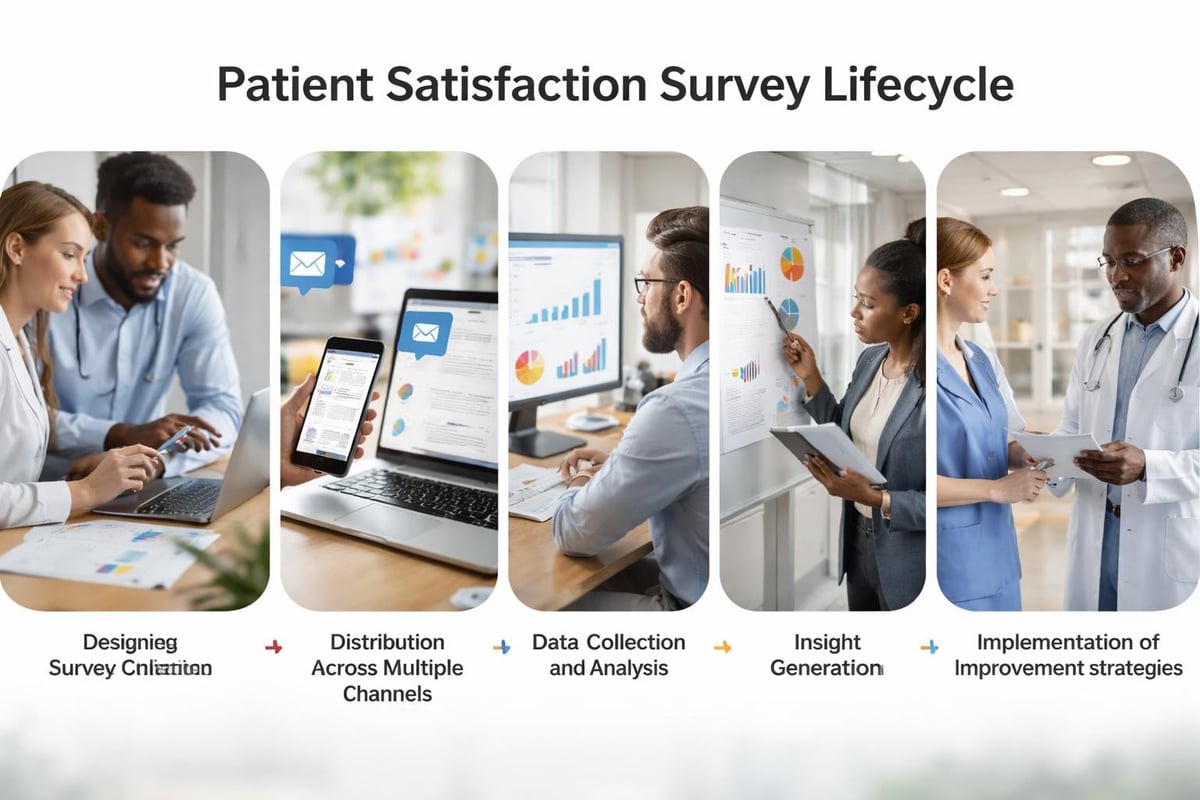
Developing patient satisfaction surveys that generate meaningful insights requires careful attention to survey design, question formulation, and distribution methodology. Well-constructed surveys balance comprehensiveness with brevity, ensuring high completion rates while capturing essential information.
Essential Survey Dimensions
-
Access to care measures evaluate how easily patients can schedule appointments, reach providers, and obtain urgent assistance when needed.
-
Communication quality assesses whether healthcare providers listen carefully, explain information clearly, and show respect for patient concerns and preferences.
-
Physical environment questions examine cleanliness, comfort, noise levels, and overall facility atmosphere during the patient's visit or stay.
-
Care coordination explores how well different providers communicate with each other and whether patients receive consistent information across touchpoints.
-
Discharge planning and follow-up care sections determine if patients understand post-discharge instructions and feel prepared to manage their recovery.
-
Overall satisfaction ratings provide summary metrics that reflect the patient's holistic impression of their healthcare experience.
-
Likelihood to recommend questions, typically measured on a 0-10 scale, serve as powerful indicators of patient loyalty and advocacy.
| Survey Dimension | What It Measures | Why It Matters |
|---|---|---|
| Access to Care | Appointment availability, wait times | Directly impacts patient engagement |
| Provider Communication | Clarity, respect, listening skills | Strong predictor of adherence |
| Facility Environment | Cleanliness, comfort, safety | Influences healing and recovery |
| Care Coordination | Information consistency, transitions | Reduces errors and readmissions |
| Discharge Preparedness | Understanding of instructions | Critical for recovery success |
Implementation Strategies for Healthcare Organizations
Successfully deploying patient satisfaction surveys requires comprehensive planning and robust technological infrastructure. Healthcare organizations must consider timing, delivery methods, response rate optimization, and data management capabilities when designing their survey programs.
The Hospital Consumer Assessment of Healthcare Providers and Systems (HCAHPS) survey demonstrates best practices in standardized implementation. This nationally mandated survey uses specific protocols for timing, sample selection, and administration to ensure reliability and comparability.
Digital Distribution Methods
Modern patient satisfaction surveys leverage multiple distribution channels to maximize response rates and reach diverse patient populations. Email surveys offer cost-effectiveness and rapid deployment, though they may skew toward younger, more tech-savvy demographics. Text message surveys achieve higher response rates due to mobile device ubiquity and the convenience of immediate feedback.
Web-based portals integrated with electronic health records allow patients to complete surveys seamlessly within existing patient engagement platforms. This integration eliminates duplicate data entry and enables correlation between survey responses and clinical data points. Interactive voice response systems serve populations with limited digital access, ensuring inclusivity across age groups and technological comfort levels.
Brytend's custom software solutions can create integrated survey platforms that connect directly with existing healthcare systems, streamlining data collection while maintaining compliance with privacy regulations. The Brytend Survey Module enables healthcare organizations to design fully customized forms that reflect specific workflows, terminology, and data-collection requirements, whether conducting patient experience surveys, clinical assessments, or quality audits.

Timing Considerations
Survey timing significantly influences both response rates and data quality. Post-discharge surveys typically achieve optimal results when distributed between three and seven days after the healthcare encounter. This window allows patients sufficient time to reflect on their experience while maintaining clear memory of specific interactions and events.
Real-time surveys administered via tablets during or immediately after appointments capture immediate impressions but may miss important aspects of the complete care journey. Follow-up surveys conducted weeks after discharge provide insights into recovery progress and long-term satisfaction but suffer from lower response rates and potential recall bias.
Analyzing and Acting on Survey Data
Collecting patient satisfaction surveys represents only the first step in a continuous improvement cycle. The true value emerges when organizations systematically analyze responses, identify patterns, and implement targeted interventions based on findings. Advanced analytics transform raw survey data into actionable intelligence that drives organizational change.
Data Segmentation and Trend Analysis
Sophisticated analysis breaks down aggregate satisfaction scores by department, provider, time period, and patient demographics. This granular approach reveals specific areas requiring attention rather than painting all services with the same broad brush. For instance, an organization might discover that surgical patients rate pain management highly while medical patients express concerns about communication during medication changes.
-
Provider-level analysis identifies individual practitioners or teams requiring additional training or recognition for excellence in patient communication and care delivery.
-
Time-based trending reveals whether improvement initiatives produce measurable results and helps organizations understand seasonal variations in satisfaction metrics.
-
Demographic segmentation ensures equitable care delivery across patient populations and identifies potential disparities requiring targeted intervention strategies.
-
Correlation analysis connects satisfaction metrics with clinical outcomes, readmission rates, and other quality indicators to demonstrate the business case for experience improvements.
-
Text analytics applied to open-ended comments extract themes and sentiments that numerical ratings alone cannot capture, providing rich qualitative context.

Challenges and Criticisms in Patient Satisfaction Measurement
Despite widespread adoption, patient satisfaction surveys face legitimate criticisms and implementation challenges that healthcare organizations must acknowledge and address. Research examining the impact of patient satisfaction ratings on physicians suggests that under certain circumstances, these surveys may promote job dissatisfaction and inappropriate clinical care when providers face pressure to achieve high scores.
The American Academy of Emergency Medicine’s position statement on patient satisfaction surveys emphasizes the importance of proper implementation and interpretation, particularly in settings where clinical necessity may conflict with patient preferences. Emergency physicians sometimes face difficult choices between providing desired care and following evidence-based protocols.
Response Bias and Representativeness
Survey responses typically skew toward patients with extremely positive or negative experiences, creating potential bias in aggregate metrics. Patients with neutral experiences often decline to participate, resulting in polarized data that may not accurately represent the full patient population. Additionally, factors unrelated to care quality-such as illness severity, insurance coverage stress, or parking difficulties-can influence satisfaction ratings.
Cultural and linguistic barriers present another challenge. Standardized surveys may not resonate equally across diverse patient populations, and translation alone cannot always capture culturally specific concepts of satisfactory care. Organizations serving multicultural communities must invest in culturally adapted instruments that maintain psychometric validity while respecting cultural nuances.
Technology Solutions for Survey Management
Custom software development plays a crucial role in modern patient satisfaction survey programs, enabling automation, integration, and sophisticated analysis that manual processes cannot achieve. Healthcare organizations increasingly rely on purpose-built platforms that handle the complete survey lifecycle from design through reporting.
Integration with Health Information Systems
Effective survey platforms connect seamlessly with electronic health records, patient relationship management systems, and business intelligence tools. This integration enables automatic patient identification, appropriate survey selection based on encounter type, and correlation of satisfaction data with clinical outcomes and operational metrics.
API-based architectures allow survey platforms to receive real-time discharge notifications, automatically triggering survey distribution according to predefined rules and timing protocols. Responses flow back into centralized data warehouses where analysts combine satisfaction metrics with financial, clinical, and operational data for comprehensive performance assessment.
Custom development ensures survey platforms meet specific organizational requirements while maintaining compliance with healthcare privacy regulations. Organizations can implement role-based access controls, audit trails, and data encryption that satisfy HIPAA requirements while supporting collaborative improvement initiatives across departments.
Best Practices for Maximizing Survey Impact
Healthcare organizations that derive maximum value from patient satisfaction surveys follow specific practices that enhance response quality, data reliability, and organizational learning. These evidence-based approaches transform surveys from compliance exercises into powerful improvement engines.
Creating a Culture of Feedback
-
Leadership commitment demonstrates that patient feedback drives strategic decisions and resource allocation rather than serving merely as a reporting requirement for external stakeholders.
-
Staff engagement ensures frontline caregivers understand survey methodology, receive regular feedback on results, and participate actively in designing and implementing improvement initiatives.
-
Transparency in sharing results builds trust with both staff and patients, showing that organizations take feedback seriously and commit to continuous improvement.
-
Closing the loop with respondents acknowledges their input and communicates specific actions taken in response to their suggestions, reinforcing the value of participation.
-
Balanced scorecards integrate satisfaction metrics with clinical quality, safety, and financial indicators, preventing overemphasis on satisfaction at the expense of other critical dimensions.
-
Provider-level feedback delivers actionable insights to individual practitioners in constructive, development-focused formats rather than punitive performance evaluations.
-
Rapid-cycle improvement applies feedback quickly through small tests of change, demonstrating responsiveness and building momentum for larger transformation initiatives.
| Best Practice | Implementation Approach | Expected Outcome |
|---|---|---|
| Staff Training | Regular sessions on communication, empathy | Improved interaction quality |
| Quick Wins | Address simple complaints immediately | Demonstrated responsiveness |
| Data Visualization | Dashboards accessible to all staff | Increased awareness and ownership |
| Patient Advisors | Include patients in improvement teams | Solutions aligned with needs |
| Benchmarking | Compare against similar organizations | Context for performance assessment |
Emerging Trends in Patient Feedback Collection
The landscape of patient satisfaction surveys continues to evolve as technology advances and healthcare delivery models transform. Organizations that stay ahead of these trends position themselves to gather richer insights while reducing survey burden on patients and staff.
Research on large language model-based analysis of online patient reviews demonstrates how artificial intelligence can extract meaningful patterns from unstructured feedback, mapping patient-perceived physician traits and their correlation with satisfaction. These advanced analytics complement traditional surveys by analyzing spontaneous feedback from social media, review sites, and patient portals.
Real-Time Feedback Mechanisms
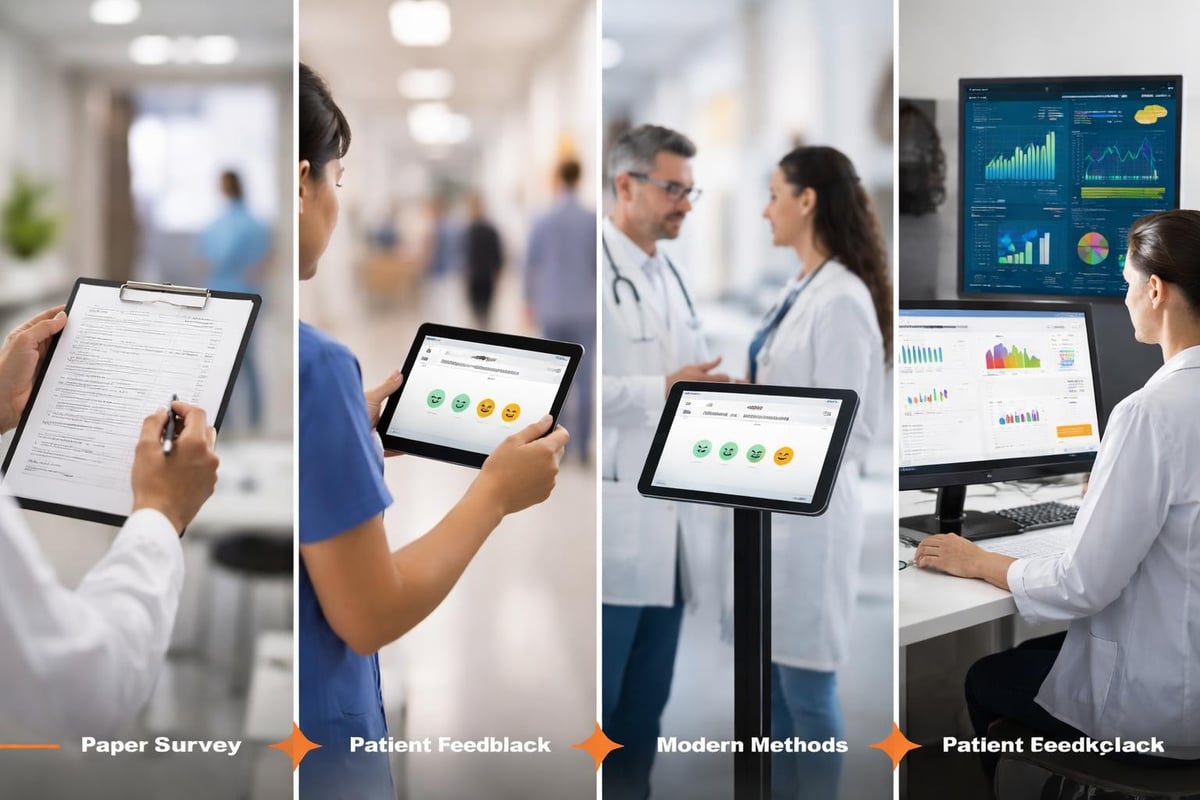
Point-of-service tablets and kiosks capture immediate impressions while experiences remain fresh in patients' minds. These systems ask focused questions about specific encounters-the registration process, a particular provider interaction, or facility amenities-rather than attempting comprehensive assessment of the entire care episode.
Continuous listening approaches replace periodic surveys with ongoing feedback collection through multiple touchpoints. Patients might receive brief check-in questions via text during longer hospital stays, rate specific interactions through portal messages, and complete comprehensive surveys only after discharge. This distributed approach reduces survey fatigue while providing more granular temporal data.
Predictive analytics identify patients at risk of negative experiences before they complete surveys, enabling proactive intervention. Machine learning models analyze patterns in partial survey responses, clinical data, and operational metrics to flag potential satisfaction issues while corrective action remains possible.
Regulatory and Reimbursement Implications
Patient satisfaction surveys carry significant financial consequences for healthcare organizations through their influence on reimbursement, accreditation, and public reporting. The Agency for Healthcare Research and Quality’s CAHPS resources provide comprehensive guidance on using these surveys to meet regulatory requirements while driving genuine quality improvement.
Value-based purchasing programs tie hospital payments to performance on patient experience metrics derived from standardized surveys. Organizations scoring below specified thresholds face financial penalties, while high performers receive bonus payments. This structure creates powerful incentives for systematic attention to patient satisfaction alongside clinical quality and safety measures.
Public reporting of survey results on websites like Hospital Compare influences patient choice and institutional reputation. Prospective patients increasingly consult satisfaction scores when selecting providers, making these metrics important competitive differentiators in market-based healthcare systems. Organizations must balance the imperative to achieve high scores with the need to maintain clinical integrity and avoid inappropriate care.
Frequently Asked Questions
What is the primary purpose of patient satisfaction surveys in healthcare?
Patient satisfaction surveys serve multiple purposes including measuring patient experience quality, identifying improvement opportunities, meeting regulatory requirements, and informing value-based reimbursement calculations. They provide systematic feedback that helps healthcare organizations understand how patients perceive their care and where enhancements are needed to optimize outcomes and experiences.
How do patient satisfaction surveys differ from patient experience surveys?
Patient satisfaction surveys measure subjective feelings about care quality, while patient experience surveys assess specific, observable aspects of care delivery such as communication frequency and responsiveness. Experience surveys focus on "what happened" during care encounters rather than how patients felt about those events, providing more actionable data for improvement initiatives.
What response rate should healthcare organizations expect from patient satisfaction surveys?
Response rates vary significantly based on distribution method, patient population, and survey length. Email surveys typically achieve 15-25% response rates, while text message surveys may reach 30-40%. Post-discharge phone surveys often exceed 50% when conducted by trained interviewers. Organizations should establish baseline rates and monitor trends rather than focusing solely on absolute numbers.
How can healthcare providers improve patient satisfaction survey scores?
Improving scores requires addressing underlying care quality issues rather than manipulating survey administration. Effective strategies include enhancing provider communication training, reducing wait times, improving discharge education, addressing environmental concerns, and creating systematic processes for following up on patient concerns. Sustainable improvement comes from genuine care enhancement, not survey gaming.
Are patient satisfaction surveys required by law for all healthcare facilities?
Specific survey requirements vary by facility type and payer participation. Hospitals participating in Medicare's Inpatient Prospective Payment System must conduct HCAHPS surveys and report results publicly. Other settings may have voluntary or payer-specific requirements. Organizations should consult regulatory guidance applicable to their specific circumstances and accreditation status.
How should healthcare organizations handle negative patient satisfaction survey feedback?
Negative feedback requires systematic root cause analysis to identify underlying issues. Organizations should categorize complaints by theme, investigate specific incidents when details allow, and implement corrective actions targeting identified problems. Individual provider feedback should be delivered constructively with support for improvement. Patterns of negative feedback may indicate system-level issues requiring broader intervention.
Can patient satisfaction survey data predict clinical outcomes or healthcare quality?
Research examining the association between patient satisfaction surveys and quality of care shows complex relationships between satisfaction and clinical outcomes. While positive correlations exist in areas like communication and adherence, satisfaction alone does not comprehensively measure quality. Organizations should view satisfaction as one component of a balanced quality measurement system that includes clinical outcomes, safety metrics, and process measures.
You Might Also Be Interested in These Articles
- Healthcare Software Development Best Practices
- Building Custom Survey Platforms for Healthcare Organizations
- Data Analytics Solutions for Healthcare Quality Improvement
- HIPAA-Compliant Software Development Guidelines
- Patient Engagement Technology Trends in 2026
Patient satisfaction surveys provide healthcare organizations with essential insights for improving care delivery, meeting regulatory requirements, and enhancing patient outcomes. Implementing effective survey programs requires careful attention to instrument design, distribution methodology, data analysis, and action planning. When you need custom software solutions to streamline your patient feedback collection, integrate survey data with existing systems, or build sophisticated analytics capabilities, Brytend brings deep technical expertise in healthcare software development to create platforms that meet your specific needs while ensuring compliance and scalability.