
The intersection of software development and project management represents one of the most critical success factors for modern businesses seeking custom software solutions. Organizations investing in software projects need more than talented developers-they require structured approaches that align technical execution with business objectives, timelines, and budgets. Understanding how these two disciplines work together enables companies to transform their digital initiatives from risky ventures into predictable, value-driven outcomes that serve their specific needs and goals.
The Foundation of Software Development and Project Management
Software development and project management are complementary disciplines that must work in harmony to deliver successful outcomes. While software development focuses on the technical aspects of building applications, project management provides the framework for planning, executing, and controlling these efforts.
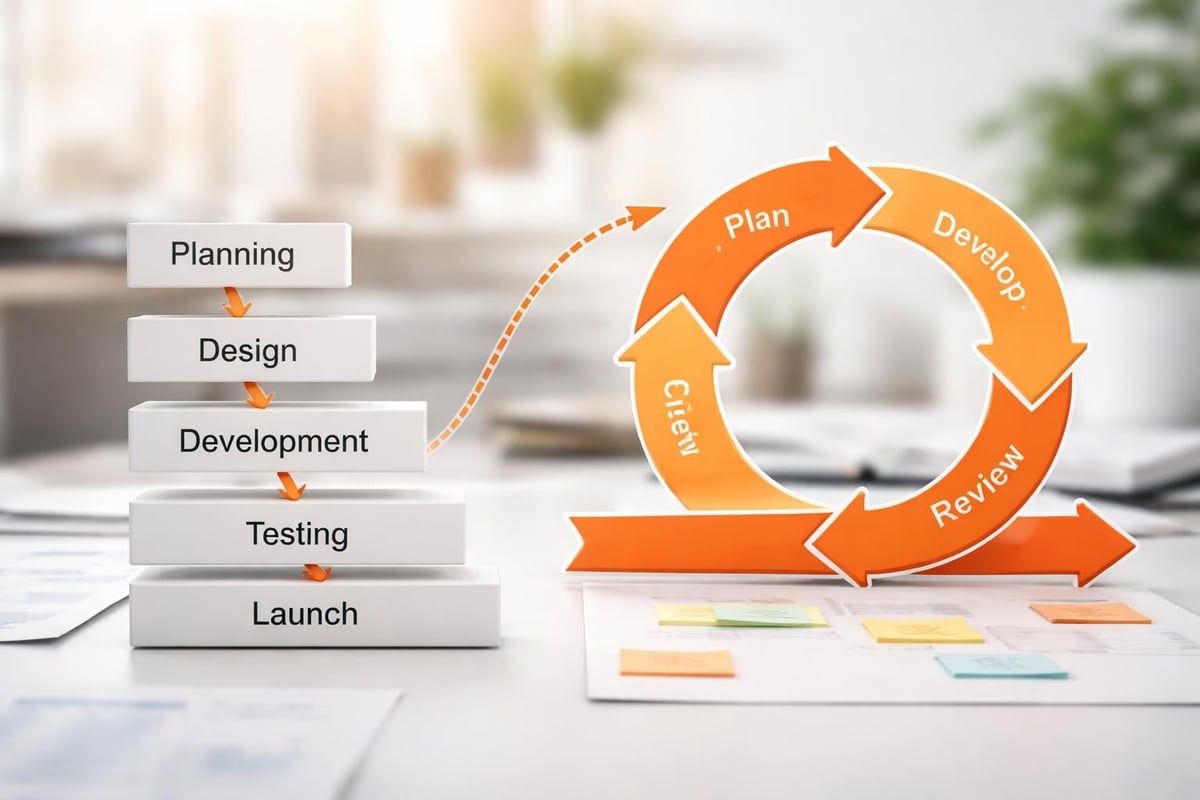
The relationship between these two areas has evolved significantly over the past two decades. Traditional waterfall approaches treated software development as a linear process, but modern methodologies recognize the iterative, collaborative nature of creating custom software solutions. This evolution has fundamentally changed how teams approach planning, resource allocation, and stakeholder communication.
Understanding Core Methodologies
Different projects require different approaches to software development and project management. Selecting the right methodology depends on project complexity, team size, client involvement, and timeline constraints.
-
Scrum Framework: This agile project management approach organizes work into time-boxed iterations called sprints, typically lasting two to four weeks. Cross-functional teams collaborate daily, with regular review and retrospective meetings ensuring continuous improvement.
-
Kanban System: Visual workflow management helps teams balance work in progress while maintaining steady delivery velocity. Cards move through columns representing different stages, providing transparency into bottlenecks and capacity constraints.
-
Feature-Driven Development: The FDD methodology breaks projects into small, client-valued features that can be designed and built within two weeks. This approach emphasizes domain object modeling and feature ownership.
-
Dynamic Systems Development Method: DSDM provides an agile framework focusing on full project lifecycle management, from feasibility and foundations through implementation and deployment.
-
Hybrid Approaches: Many organizations combine elements from multiple methodologies, creating customized frameworks that address their specific operational requirements and constraints.
The choice of methodology significantly impacts how teams structure their work, communicate progress, and manage changing requirements throughout the development lifecycle.
Planning and Initiation Phases
Successful software development and project management begins long before writing the first line of code. The planning phase establishes the foundation for everything that follows, determining project scope, resource needs, and success criteria.
Requirements Gathering and Analysis
-
Stakeholder Interviews: Direct conversations with decision-makers, end users, and technical staff reveal both explicit requirements and hidden needs that may not surface through written documentation.
-
Business Process Mapping: Understanding current workflows helps identify automation opportunities, integration points, and areas where custom software can deliver maximum value.
-
Technical Feasibility Assessment: Evaluating architectural options, technology stack choices, and infrastructure requirements ensures the proposed solution aligns with organizational capabilities and constraints.
-
Risk Identification: Early recognition of potential obstacles-technical challenges, resource limitations, third-party dependencies-enables proactive mitigation strategies.
-
Success Metrics Definition: Clear, measurable criteria for project completion prevent scope creep and provide objective benchmarks for evaluating progress.
According to industry best practices, well-defined project goals and comprehensive initial planning reduce the likelihood of costly mid-project pivots and deadline extensions.
Resource Allocation and Team Structure
| Role | Primary Responsibilities | Key Skills |
|---|---|---|
| Project Manager | Timeline management, stakeholder communication, risk mitigation | Leadership, organization, problem-solving |
| Technical Lead | Architecture decisions, code quality, technical mentorship | Deep technical expertise, strategic thinking |
| Developers | Feature implementation, testing, documentation | Programming languages, frameworks, tools |
| Quality Assurance | Test planning, bug identification, validation | Attention to detail, analytical thinking |
| Business Analyst | Requirements translation, user story creation | Domain knowledge, communication |
Building the right team structure ensures clear accountability while maintaining the flexibility needed to adapt as project requirements evolve.
Execution and Development Strategies
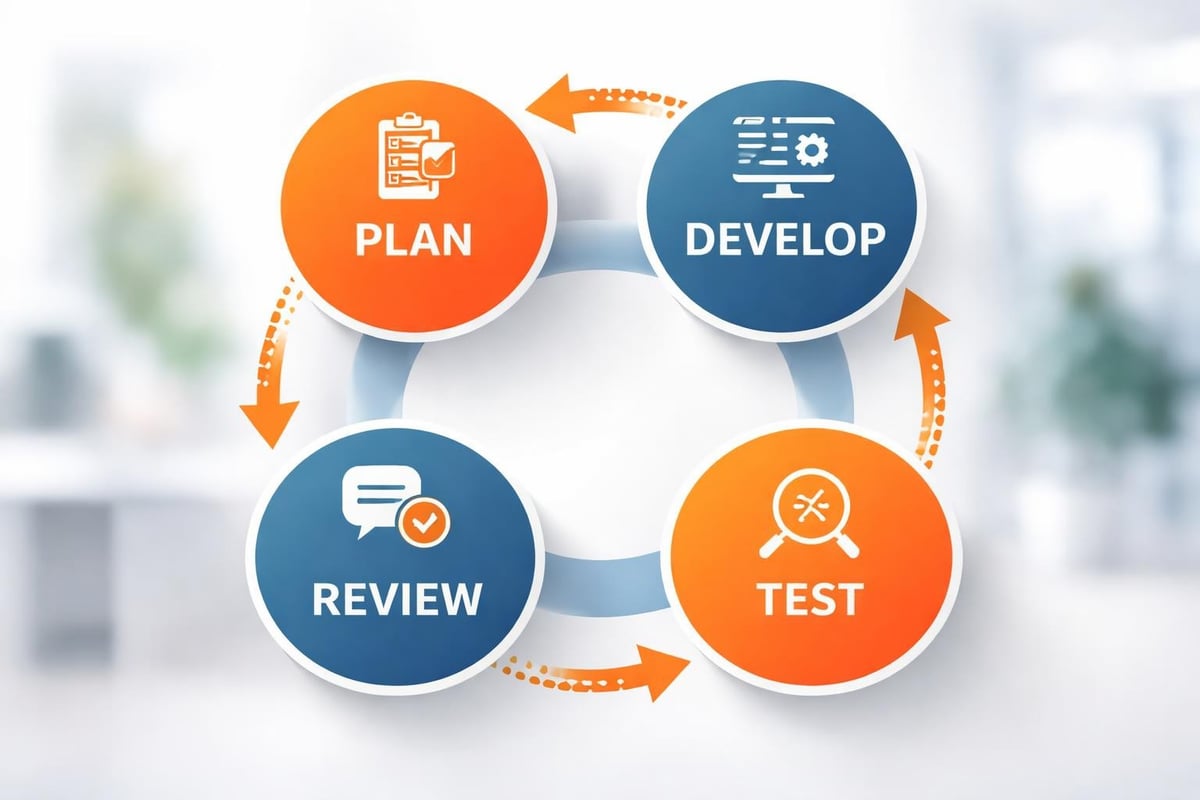
The execution phase transforms plans into working software through disciplined development practices and continuous communication. Software development and project management converge most visibly during this stage, where technical work meets organizational oversight.
Agile Sprint Planning and Execution
-
Sprint Planning Sessions: Teams select user stories from the backlog, breaking them into tasks and estimating effort required for completion within the sprint timeframe.
-
Daily Stand-ups: Brief synchronization meetings keep everyone aligned on progress, obstacles, and priorities without consuming excessive time.
-
Development Work: Developers write code, conduct peer reviews, and integrate changes into shared repositories using version control systems.
-
Continuous Integration: Automated build and test processes validate that new code integrates properly with existing functionality, catching defects early.
-
Sprint Reviews: Demonstrating completed work to stakeholders gathers feedback while showcasing tangible progress toward project goals.
This iterative approach, as outlined in effective project management practices, enables teams to adjust course based on real-world learning rather than following rigid predetermined paths.
Quality Assurance Integration
Quality cannot be an afterthought in software development and project management. Modern approaches embed testing throughout the development process rather than treating it as a separate phase.
The V-Model approach illustrates how each development stage corresponds to specific testing activities. Unit tests validate individual components, integration tests verify system interactions, and acceptance tests confirm business requirements are met.
-
Test-Driven Development: Writing tests before implementation code ensures functionality meets specifications while building a comprehensive regression test suite.
-
Automated Testing Frameworks: Continuous execution of test suites provides immediate feedback when changes introduce defects or break existing functionality.
-
Manual Testing Protocols: Exploratory testing by human QA professionals identifies usability issues and edge cases that automated tests might miss.
-
Performance Testing: Load testing, stress testing, and scalability assessments verify the software performs adequately under expected and extreme conditions.
-
Security Audits: Regular vulnerability scanning and penetration testing protect against common attack vectors and data breaches.
Communication and Stakeholder Management
Effective software development and project management requires transparent, consistent communication across all organizational levels. Technical teams, business stakeholders, and end users each need different information delivered through appropriate channels.
Reporting and Progress Tracking
| Metric Type | Purpose | Frequency | Audience |
|---|---|---|---|
| Velocity Charts | Sprint completion rates | Weekly | Development team |
| Burndown Graphs | Remaining work visualization | Daily | Project manager, team |
| Feature Completion | Delivered functionality | Sprint end | Stakeholders |
| Budget Tracking | Financial status | Monthly | Leadership, finance |
| Risk Register | Issue status and mitigation | Weekly | All parties |
These metrics provide visibility without creating excessive administrative overhead. Dashboard tools aggregate data from development platforms, presenting real-time status information that stakeholders can access on demand.
Managing Changing Requirements
-
Change Request Process: Formal procedures for evaluating, approving, and incorporating mid-project modifications prevent uncontrolled scope expansion.
-
Impact Analysis: Assessing how proposed changes affect timelines, budgets, and dependencies enables informed decision-making about acceptance.
-
Prioritization Frameworks: Techniques like MoSCoW (Must have, Should have, Could have, Won't have) help teams focus on highest-value features when resources are constrained.
-
Backlog Refinement: Regular grooming sessions keep the product backlog current, well-estimated, and prioritized according to evolving business needs.
-
Stakeholder Alignment: Ensuring all parties understand trade-offs between scope, schedule, and resources prevents conflicts and unrealistic expectations.
Expert project management guidance emphasizes that embracing change management practices distinguishes successful projects from those that struggle despite technical competence.
Technical Debt and Maintenance Considerations
Software development and project management extends beyond initial delivery. Long-term success requires planning for ongoing maintenance, updates, and technical debt management.
Understanding Technical Debt
Technical debt accumulates when teams choose expedient solutions over optimal ones to meet deadlines or budget constraints. Like financial debt, it requires eventual repayment through refactoring efforts.
-
Intentional Debt: Conscious decisions to defer optimization for strategic reasons, documented and scheduled for future resolution.
-
Unintentional Debt: Suboptimal code resulting from knowledge gaps, time pressure, or changing requirements that weren't anticipated.
-
Environmental Debt: Outdated dependencies, deprecated frameworks, or infrastructure components requiring modernization.
-
Documentation Debt: Missing or outdated technical documentation that complicates maintenance and knowledge transfer.
-
Test Debt: Insufficient test coverage leaving portions of the codebase vulnerable to regression defects.

Managing service activities and maintenance schedules becomes easier with structured systems. The Brytend Service Module helps teams track software components, schedule regular maintenance tasks, and document service history for all assets in their technology portfolio.
Ongoing Support Strategies
| Support Type | Description | Typical Response Time |
|---|---|---|
| Critical Issues | System down, data loss, security breaches | 1-4 hours |
| High Priority | Major functionality impaired | 8-24 hours |
| Medium Priority | Minor feature problems, workarounds available | 2-5 business days |
| Low Priority | Enhancement requests, cosmetic issues | Scheduled maintenance |
Establishing clear service level agreements prevents confusion about expectations while ensuring resources are allocated appropriately across support requests.
Risk Management and Mitigation
Every software development and project management initiative faces potential obstacles that could derail success. Proactive risk management identifies threats early and implements strategies to minimize their impact.
Common Project Risks
-
Scope Creep: Gradual expansion of requirements beyond original agreements consumes resources without corresponding budget increases.
-
Resource Constraints: Key personnel becoming unavailable due to illness, resignation, or competing priorities creates knowledge gaps and delays.
-
Technology Challenges: Unanticipated technical limitations, integration difficulties, or performance issues requiring architectural changes.
-
Third-Party Dependencies: External services, APIs, or libraries experiencing outages, deprecations, or functionality changes.
-
Stakeholder Misalignment: Divergent expectations or priorities among decision-makers causing conflicting requirements and approval delays.
Mitigation Approaches
-
Regular Risk Reviews: Periodic assessment sessions identify emerging threats before they materialize into actual problems.
-
Contingency Planning: Developing backup approaches for high-probability risks enables rapid response when issues occur.
-
Buffer Allocation: Building schedule and budget reserves provides flexibility to absorb unexpected challenges without catastrophic impact.
-
Knowledge Sharing: Cross-training team members and maintaining comprehensive documentation reduces vulnerability to individual departures.
-
Vendor Evaluation: Thorough assessment of third-party providers, including reliability history and alternative options, prevents single points of failure.
Tools and Technology Integration
Modern software development and project management relies on integrated toolchains that streamline workflows and enhance collaboration. Selecting appropriate platforms significantly impacts team productivity and project visibility.
Essential Tool Categories
-
Project Management Platforms: Systems like Jira, Azure DevOps, or Linear track user stories, tasks, and sprint progress while providing reporting capabilities.
-
Version Control Systems: Git-based repositories enable parallel development, code review workflows, and complete change history tracking.
-
Continuous Integration/Deployment: Automated build pipelines test code changes and deploy approved updates to staging and production environments.
-
Communication Tools: Slack, Microsoft Teams, or similar platforms facilitate real-time discussion and reduce email dependency.
-
Documentation Repositories: Wiki systems or knowledge bases maintain technical specifications, architecture decisions, and operational procedures.
Integration between these tools eliminates manual data transfer and provides unified views of project status across different functional areas. Resources like Brytend’s implementation guides can help teams configure tool ecosystems that match their specific workflows.
Team Dynamics and Collaboration
Technical excellence alone doesn't guarantee successful software development and project management. High-performing teams cultivate psychological safety, clear communication norms, and shared accountability.
Building Effective Teams
| Factor | Impact | Development Approach |
|---|---|---|
| Psychological Safety | Innovation, honest feedback | Encourage questions, reward learning from failures |
| Clear Roles | Reduced confusion, faster decisions | Document responsibilities, minimize overlap |
| Shared Vision | Aligned priorities, motivated effort | Regular goal communication, celebrate milestones |
| Skill Diversity | Comprehensive solutions, peer learning | Mixed experience levels, cross-functional pairing |
| Trust | Reduced oversight, autonomous work | Consistent delivery, transparent communication |
Remote and distributed teams face additional challenges requiring intentional effort to maintain cohesion. Video calls, virtual social events, and asynchronous communication protocols help bridge geographic separation.
Conflict Resolution
-
Direct Communication: Addressing disagreements promptly and professionally prevents small issues from escalating into major problems.
-
Data-Driven Discussions: Focusing on objective metrics and requirements rather than personal preferences depersonalizes debates.
-
Escalation Procedures: Clear paths for resolving deadlocks ensure decisions don't stall when team consensus proves impossible.
-
Retrospective Learning: Post-conflict analysis identifies root causes and process improvements to prevent recurrence.
-
Mediator Involvement: Project managers or senior leaders can facilitate resolution when direct negotiations reach impasses.
Measuring Success and Continuous Improvement
Software development and project management requires ongoing evaluation and refinement. Teams that regularly assess their performance identify opportunities for optimization and innovation.
Key Performance Indicators
-
Delivery Predictability: Percentage of sprints or milestones completed as planned demonstrates estimation accuracy and execution reliability.
-
Defect Density: Number of bugs per feature or code module indicates quality levels and testing effectiveness.
-
Customer Satisfaction: Survey scores and feedback from end users reveal whether delivered software meets actual needs.
-
Team Velocity: Story points or features completed per sprint shows productivity trends and capacity for future planning.
-
Budget Variance: Difference between projected and actual costs identifies areas where estimation processes need improvement.
Retrospective Practices
-
Regular Cadence: Scheduled retrospectives after each sprint or milestone create consistent improvement opportunities.
-
Structured Formats: Using frameworks like Start-Stop-Continue or Mad-Sad-Glad ensures comprehensive coverage of different aspects.
-
Action Items: Converting insights into specific, assigned improvement tasks with deadlines prevents retrospectives from becoming complaint sessions.
-
Follow-Through: Reviewing previous retrospective actions in subsequent meetings demonstrates leadership commitment to continuous improvement.
-
Psychological Safety: Creating environments where team members can share honest feedback without fear of repercussion yields actionable insights.
Comprehensive documentation of lessons learned builds institutional knowledge that benefits future projects. Systems like Brytend’s collaborative platforms enable teams to capture and share insights across organizational boundaries.
Frequently Asked Questions
What is the difference between software development and project management?
Software development focuses on the technical process of designing, coding, testing, and maintaining applications. Project management provides the organizational framework for planning, executing, and controlling development efforts, including resource allocation, timeline management, and stakeholder communication. Both disciplines must work together for successful software projects.
Which methodology works best for custom software development projects?
The optimal methodology depends on project characteristics. Agile approaches like Scrum work well for projects with evolving requirements and active client involvement. Feature-driven development suits larger teams building complex systems. Hybrid methodologies combining agile development with structured planning often provide the best balance for custom software projects requiring flexibility and predictability.
How do you prevent scope creep in software projects?
Preventing scope creep requires formal change management processes, clear initial requirements documentation, regular stakeholder communication, and disciplined prioritization frameworks. Implementing approval workflows for new feature requests ensures changes are evaluated for impact on timeline and budget before acceptance. Maintaining a well-organized backlog helps distinguish essential features from nice-to-have additions.
What role does testing play in software development and project management?
Testing serves as both a quality assurance mechanism and a validation tool confirming software meets requirements. Modern approaches integrate testing throughout development rather than treating it as a final phase. Automated test suites provide rapid feedback on code changes, while manual testing identifies usability issues. Testing activities should be planned, estimated, and tracked as integral project components.
How do you manage distributed software development teams effectively?
Managing distributed teams requires intentional communication practices, appropriate collaboration tools, and clear documentation standards. Regular video conferences maintain personal connections, while asynchronous communication through project management platforms enables productivity across time zones. Documentation becomes even more critical when team members cannot have hallway conversations to clarify questions.
What are the most important metrics for tracking software project health?
Critical metrics include velocity (work completed per sprint), burndown rates (remaining work over time), defect density (bugs per feature), budget variance (actual vs. planned spending), and stakeholder satisfaction scores. Different audiences need different metrics-executives focus on budget and timeline, while technical teams track velocity and quality indicators. Dashboard tools should present relevant information to each stakeholder group.
How do you balance technical debt with feature development?
Balancing technical debt requires allocating a percentage of each sprint to refactoring and improvement work rather than only building new features. Many teams dedicate fifteen to twenty percent of capacity to debt reduction. Tracking debt as visible backlog items ensures it receives attention during planning. Critical debt affecting security or performance should take priority over low-value feature requests.
You Might Also Be Interested in These Articles
- Brytend Sitemap Index
- Brytend Page Directory
- WatchGas Solutions
- Brytend Service Module
- Brytend Survey Solutions
Successful software development and project management requires balancing technical excellence with organizational discipline, adapting methodologies to specific project needs while maintaining clear communication across all stakeholders. Whether you're building web applications, mobile solutions, or cloud-based systems, custom software projects demand experienced teams who understand both the development craft and project delivery framework. Brytend combines deep technical expertise with proven project management practices to deliver custom software solutions that align with your specific business goals, providing ongoing support to ensure long-term success.