
Modern businesses face unprecedented pressure to deliver products faster, maintain accurate inventory, and operate efficiently across multiple channels. Warehouse systems have emerged as the technological backbone that enables organizations to meet these demands while controlling costs and maintaining competitive advantage. These sophisticated platforms coordinate everything from receiving and putaway to picking, packing, and shipping, transforming warehouses from simple storage facilities into strategic assets that drive customer satisfaction and profitability.
Understanding Warehouse Systems Architecture
Warehouse systems represent a category of software solutions designed to manage and optimize the flow of goods through distribution facilities. At their core, these platforms provide real-time visibility into inventory locations, quantities, and movement, enabling businesses to make informed decisions about resource allocation and operational priorities.
The architecture of modern warehouse systems typically consists of several integrated layers that work together seamlessly. The database layer stores all transactional data, inventory records, and configuration settings. The business logic layer processes rules for receiving, storage optimization, order allocation, and picking strategies. The presentation layer provides user interfaces for warehouse staff, managers, and integration points for other enterprise systems.
Key architectural components include:
- Inventory management engine that tracks stock levels, locations, and attributes
- Order management functionality that processes customer demands and allocates inventory
- Labor management tools that schedule tasks and measure productivity
- Integration interfaces that connect with ERP, transportation, and e-commerce platforms
- Reporting and analytics capabilities that provide operational insights
- Mobile device support for real-time data capture and task execution
Understanding this architecture helps organizations evaluate different warehouse systems and determine which features align with their specific operational requirements. The warehouse management systems landscape includes solutions ranging from basic inventory tracking to advanced automation platforms with artificial intelligence capabilities.

Critical Features That Drive Operational Excellence
Selecting the right warehouse systems requires careful evaluation of features that directly impact operational performance. Different organizations prioritize different capabilities based on their industry, product characteristics, and service level commitments.
Receiving and putaway optimization represents the first critical touchpoint where warehouse systems add value. Advanced platforms suggest optimal storage locations based on product velocity, dimensions, weight, and compatibility rules. This intelligent putaway reduces travel time during picking operations and maximizes space utilization throughout the facility.
Picking strategy support distinguishes basic warehouse systems from sophisticated platforms. Leading solutions offer multiple picking methodologies including discrete picking for individual orders, batch picking for multiple orders simultaneously, zone picking where workers handle specific areas, and wave picking that groups orders by common characteristics. The system dynamically selects the most efficient method based on order profiles and resource availability.
Inventory Accuracy and Control
Maintaining inventory accuracy directly impacts customer satisfaction and operational costs. Modern warehouse systems employ several mechanisms to ensure data integrity:
- Cycle counting programs that systematically verify inventory without full physical counts
- Real-time transaction processing that updates inventory instantly as movements occur
- Lot and serial number tracking for products requiring traceability
- Expiration date management to ensure proper stock rotation
- Quality status controls that segregate damaged or hold inventory
Organizations implementing robust warehouse systems typically achieve inventory accuracy rates exceeding 99%, compared to 85-90% accuracy in facilities using manual processes or basic software.
| Feature Category | Basic Systems | Advanced Systems | Strategic Impact |
|---|---|---|---|
| Receiving | Manual entry | Mobile scanning | 70% faster processing |
| Putaway | Fixed locations | Dynamic slotting | 30% space savings |
| Picking | Paper lists | Optimized routing | 40% productivity gain |
| Inventory Control | Periodic counts | Continuous verification | 99%+ accuracy |
| Integration | Manual data transfer | Real-time APIs | Eliminated delays |
The integration of AI and machine learning into warehouse systems represents the next evolution in operational intelligence. These technologies analyze historical patterns to predict demand, optimize labor scheduling, and identify process improvements that human managers might overlook.
Implementation Strategy and Change Management
Successfully deploying warehouse systems requires more than software configuration. Organizations must approach implementation as a business transformation initiative that encompasses process redesign, data migration, staff training, and ongoing optimization.
Pre-implementation planning establishes the foundation for success. This phase involves documenting current processes, identifying pain points, defining success metrics, and aligning stakeholder expectations. Many organizations underestimate this planning phase, leading to extended timelines and compromised results.
Phased Deployment Approach
- Discovery and design where teams map existing workflows and design future-state processes
- System configuration that translates business requirements into software settings
- Data preparation including cleansing inventory records and validating master data
- Testing cycles that verify system behavior under various scenarios
- Training programs that prepare staff for new tools and procedures
- Go-live execution following a carefully orchestrated cutover plan
- Stabilization support addressing issues and fine-tuning configurations

Organizations face a critical decision regarding deployment scope. Some choose a "big bang" approach that implements all functionality simultaneously across the entire facility. Others prefer phased rollouts that begin with specific processes or warehouse zones, gradually expanding scope as teams gain proficiency and confidence.
Change management often determines whether warehouse systems deliver their promised value. Workers who have followed the same routines for years may resist new procedures, particularly when those procedures involve unfamiliar technology. Effective change management programs address concerns proactively, celebrate early wins, and provide ongoing support as teams adapt to new ways of working.
The Brytend team has developed expertise in guiding organizations through these complex transformations, ensuring that custom warehouse systems align perfectly with operational realities. Brytend's approach combines technical excellence with practical change management strategies that drive user adoption and sustainable results. Solutions like the Brytend Service Module demonstrate how purpose-built software can address specific operational challenges while maintaining the flexibility to evolve as business needs change.

Integration Ecosystems and Data Synchronization
Warehouse systems rarely operate in isolation. They exist within broader technology ecosystems that include enterprise resource planning (ERP) platforms, transportation management systems, e-commerce platforms, customer relationship management tools, and third-party logistics provider networks.
Integration architecture determines how effectively these systems share information and coordinate activities. Modern approaches favor real-time, bidirectional integration using application programming interfaces (APIs) that enable immediate data synchronization. Legacy approaches relying on batch file transfers create delays and increase the risk of data inconsistencies.
Common Integration Points
- ERP systems that supply sales orders, purchase orders, and inventory policies
- E-commerce platforms that generate customer orders and expect shipment confirmations
- Transportation management that coordinates carrier selection and freight optimization
- Labor management that captures productivity metrics and calculates incentive compensation
- Quality management that documents inspection results and nonconformance events
- Financial systems that require accurate inventory valuations and transaction records
Understanding warehouse execution systems versus traditional warehouse management platforms helps clarify integration requirements. Execution systems focus on real-time orchestration of equipment and labor, while management systems emphasize inventory control and order fulfillment workflows.
Organizations must also consider warehouse control systems when automation equipment such as conveyors, sorters, or automated storage and retrieval systems form part of the operation. These control layers manage the physical equipment while coordinating with higher-level warehouse systems that make strategic decisions about inventory allocation and order processing.
The Supply Chain Digest warehouse management resources provide valuable insights into integration best practices and common pitfalls that organizations encounter when connecting warehouse systems with their broader technology infrastructure.
Performance Metrics and Continuous Improvement
Implementing warehouse systems creates opportunities to measure and improve operational performance with unprecedented precision. The key lies in selecting metrics that drive desired behaviors and align with strategic business objectives.
Operational metrics track day-to-day performance across core warehouse functions:
| Metric | Calculation | Target Range | Strategic Value |
|---|---|---|---|
| Orders per Hour | Orders shipped ÷ labor hours | 25-40 (varies) | Labor productivity |
| Order Accuracy | Perfect orders ÷ total orders × 100 | 99.5%+ | Customer satisfaction |
| Inventory Turns | Annual COGS ÷ average inventory | 8-12 (varies) | Capital efficiency |
| Space Utilization | Used cubic feet ÷ available cubic feet × 100 | 85-90% | Facility optimization |
| On-Time Shipment | Orders shipped on-time ÷ total orders × 100 | 98%+ | Service reliability |
Beyond these fundamental metrics, sophisticated warehouse systems enable analysis of trends, patterns, and correlations that reveal improvement opportunities. Which products frequently experience stockouts? Which picking zones create bottlenecks? How does order profile variation affect labor requirements?
Continuous improvement programs leverage these insights to drive incremental gains over time. Leading organizations establish regular review cycles where managers examine performance data, identify root causes of issues, test potential solutions, and measure results. This disciplined approach transforms warehouse systems from static tools into dynamic platforms that constantly evolve with changing business needs.
- Establish baseline performance before implementing changes
- Identify specific improvement targets based on data analysis
- Design and test interventions using scientific problem-solving methods
- Implement successful changes across the broader operation
- Monitor results to ensure sustainable improvement
- Share learnings across teams and facilities
- Repeat the cycle to drive ongoing excellence
Organizations can explore comprehensive comparisons of top warehouse management systems to understand how different platforms support these analytical capabilities and improvement processes.
Scalability Considerations for Growing Operations
Businesses evolve, and warehouse systems must adapt to changing requirements without requiring complete replacement. Scalability encompasses several dimensions including transaction volume, facility expansion, product complexity, and integration breadth.
Transaction volume scalability ensures that warehouse systems maintain performance as order quantities increase. This requires robust database architecture, efficient query optimization, and infrastructure that can scale horizontally by adding servers rather than requiring more powerful individual machines.
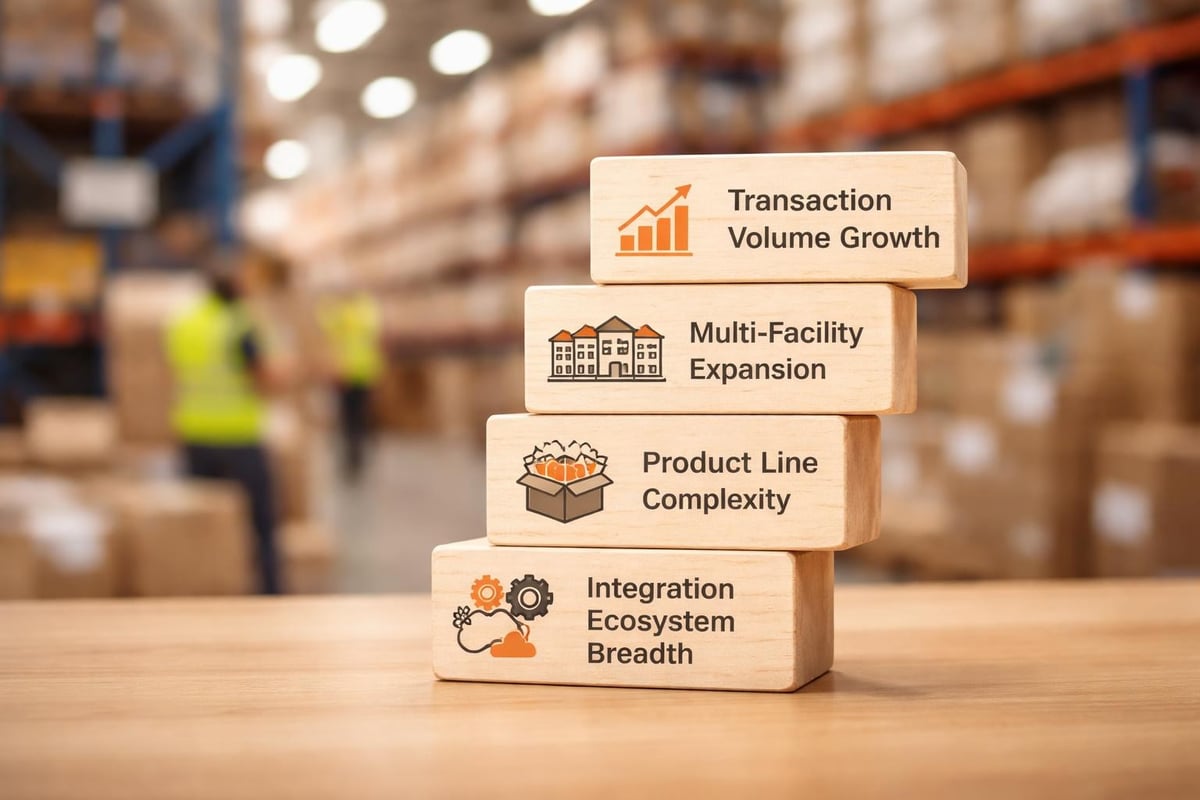
Multi-facility support becomes critical as organizations open additional distribution centers or acquire companies with existing operations. Advanced warehouse systems provide centralized visibility across locations while allowing local customization of processes and configurations. This balance between standardization and flexibility challenges many platforms.
Technology Architecture Decisions
Modern warehouse systems typically deploy using one of several architectural approaches:
- On-premises installations where software runs on company-owned servers within the facility
- Private cloud hosting that provides remote access while maintaining dedicated infrastructure
- Public cloud software-as-a-service that offers rapid deployment and automatic updates
- Hybrid models combining on-premises critical functions with cloud-based analytics
Each approach presents trade-offs regarding control, customization, cost structure, and upgrade flexibility. Organizations must evaluate these options considering their technical capabilities, security requirements, and strategic priorities.
The foundational concepts of warehouse management systems provide context for understanding how these platforms have evolved and where the industry continues to innovate. From simple inventory tracking tools to sophisticated artificial intelligence platforms, warehouse systems have transformed dramatically over the past two decades.
Customization Versus Configuration
Organizations frequently struggle with decisions about when to configure standard warehouse systems functionality versus developing custom extensions. This balance significantly impacts implementation timelines, ongoing maintenance costs, and future upgrade paths.
Configuration involves using built-in settings, rules, and parameters to adapt standard software features to specific business requirements. Modern warehouse systems offer extensive configuration options covering picking strategies, inventory policies, user permissions, report formats, and workflow automation.
Customization requires software development to create functionality that doesn't exist in the standard product. This might include specialized algorithms, industry-specific features, unique integrations, or proprietary business logic that provides competitive advantage.
| Consideration | Configuration Approach | Customization Approach |
|---|---|---|
| Implementation Time | 2-4 months typical | 4-12 months typical |
| Ongoing Costs | Lower maintenance | Higher maintenance |
| Upgrade Impact | Minimal disruption | Potential conflicts |
| Competitive Advantage | Limited differentiation | Unique capabilities |
| Technical Risk | Lower complexity | Higher complexity |
When standard warehouse systems cannot accommodate critical business requirements, custom software development becomes necessary. Organizations should partner with experienced development teams who understand both warehouse operations and software engineering best practices.
Brytend specializes in creating custom software solutions that address unique operational challenges while maintaining integration with standard enterprise platforms. This approach delivers the benefits of tailored functionality without the limitations of trying to force-fit business processes into inflexible packaged software. Exploring comprehensive service offerings reveals additional capabilities that complement warehouse systems implementations.
Security and Compliance Requirements
Warehouse systems manage sensitive business data including inventory values, customer information, proprietary processes, and strategic planning details. Protecting this information requires multiple layers of security controls.
Access control mechanisms ensure that users can only view and modify data appropriate for their roles. Warehouse supervisors require different permissions than receiving clerks or inventory analysts. Advanced warehouse systems implement role-based access control with granular permissions covering specific functions, data elements, and operational areas.
- Authentication systems that verify user identities through passwords, biometrics, or multi-factor methods
- Authorization rules that determine which functions each user can access
- Audit logging that records all system activities for compliance and investigation
- Data encryption protecting information both in transit and at rest
- Network security preventing unauthorized access to system infrastructure
- Backup and recovery procedures ensuring business continuity
- Compliance frameworks addressing industry regulations and standards
Industries such as pharmaceuticals, medical devices, and food processing face specific regulatory requirements that warehouse systems must support. These include FDA 21 CFR Part 11 validation, lot traceability, temperature monitoring, and expiration date management.
Organizations operating in multiple countries must navigate varying privacy regulations including GDPR in Europe, CCPA in California, and emerging frameworks in other jurisdictions. Warehouse systems that process personal data require careful configuration to ensure compliance with these evolving requirements.
Vendor Selection and Partnership Dynamics
Choosing warehouse systems involves evaluating not just software capabilities but also the vendor's viability, support quality, development roadmap, and partnership approach. This relationship typically extends many years, making vendor selection a strategic decision with long-term implications.
Evaluation criteria should extend beyond feature checklists to encompass factors that determine long-term success:
- Industry experience demonstrating understanding of specific operational challenges
- Reference customers providing candid feedback about implementation and support
- Financial stability ensuring the vendor will remain viable throughout the relationship
- Development roadmap aligning with your strategic technology direction
- Support infrastructure providing responsive assistance when issues arise
- Implementation methodology offering structured approaches that mitigate risk
- Total cost of ownership encompassing license fees, implementation, training, and ongoing costs
Organizations should also consider whether they prefer working with established enterprise software vendors offering comprehensive suites or specialized warehouse systems providers focusing exclusively on distribution operations. Each approach presents advantages depending on existing technology infrastructure and integration requirements.
For businesses with truly unique requirements that standard warehouse systems cannot address, custom development offers an alternative path. Understanding local implementation resources helps organizations identify development partners with relevant expertise and geographic proximity.
Frequently Asked Questions
What is the difference between warehouse systems and inventory management software?
Warehouse systems manage the physical movement and storage of products within distribution facilities, including receiving, putaway, picking, packing, and shipping processes. Inventory management software focuses primarily on tracking stock levels, replenishment, and valuation across locations. While warehouse systems include inventory management functionality, they provide much broader operational capabilities specifically designed for warehouse environments. Many businesses start with basic inventory management and graduate to comprehensive warehouse systems as their operations become more complex.
How long does it typically take to implement warehouse systems?
Implementation timelines vary significantly based on operational complexity, facility size, integration requirements, and customization needs. Small operations with straightforward processes might complete implementation in two to three months. Medium-sized facilities typically require four to six months. Large, complex operations with extensive customization and multiple integrations often need eight to twelve months or longer. Phased implementations can extend over even longer periods but reduce risk by allowing gradual adoption.
What return on investment can organizations expect from warehouse systems?
ROI varies dramatically based on starting conditions and implementation quality, but well-executed projects typically achieve payback within one to three years. Common benefits include twenty to forty percent improvement in labor productivity, thirty to fifty percent reduction in inventory carrying costs through better accuracy and space utilization, ninety-five to ninety-nine percent improvement in order accuracy, and twenty to thirty percent reduction in fulfillment cycle times. Organizations should develop detailed business cases specific to their situations rather than relying on generic industry averages.
Can warehouse systems integrate with existing ERP platforms?
Modern warehouse systems offer robust integration capabilities with major ERP platforms including SAP, Oracle, Microsoft Dynamics, and others. These integrations typically synchronize sales orders, purchase orders, inventory balances, shipment confirmations, and financial transactions. Integration approaches range from real-time APIs providing immediate data exchange to scheduled batch transfers occurring at regular intervals. Organizations should verify specific integration capabilities during vendor evaluation and plan adequate time for integration development and testing during implementation.
What training do warehouse staff need to use warehouse systems effectively?
Training requirements depend on system complexity and user roles, but most implementations include multiple training components. End users typically need eight to sixteen hours covering basic navigation, transaction processing, and mobile device operation. Power users and supervisors require twenty to forty hours including advanced features, reporting, and troubleshooting. System administrators need comprehensive technical training spanning fifty to one hundred hours covering configuration, security, and maintenance. Ongoing refresher training and new hire onboarding programs ensure sustained proficiency.
How do warehouse systems support omnichannel fulfillment strategies?
Advanced warehouse systems enable omnichannel fulfillment by providing real-time inventory visibility across all sales channels, intelligently allocating inventory based on channel priorities and customer service levels, supporting diverse fulfillment methods including ship-from-store and buy-online-pickup-in-store, managing returns from multiple channels, and integrating with e-commerce platforms for seamless order processing. These capabilities ensure that customers receive consistent service regardless of how they choose to shop and where their orders originate.
What ongoing costs should organizations budget for warehouse systems?
Beyond initial implementation expenses, organizations should budget for annual software maintenance fees typically ranging from fifteen to twenty-five percent of license costs, hosting infrastructure whether on-premises servers or cloud subscriptions, technical support staff or external consultants for system administration, periodic upgrades and enhancements as business needs evolve, ongoing training for new employees and system updates, integration maintenance as connected systems change, and performance optimization as operational volumes grow. Total cost of ownership over five years often ranges from two to four times the initial software license cost.
Warehouse systems have evolved from basic inventory tracking tools into sophisticated platforms that drive competitive advantage through operational excellence. Selecting the right approach requires careful evaluation of business requirements, technology options, and implementation strategies that align with organizational capabilities and growth trajectories. Whether configuring standard software or developing custom solutions, success depends on treating warehouse systems as strategic business investments rather than tactical IT projects. Brytend brings deep expertise in creating custom software solutions that address unique operational challenges while maintaining integration with enterprise platforms, helping organizations build warehouse systems that deliver sustained value and adapt as business needs evolve.