Computer programs have become the invisible infrastructure that supports nearly every business operation, yet most organizations fail to recognize the full extent of their dependency until something breaks. The gap between what software promises and what it actually delivers in production environments represents one of the most significant hidden costs in modern business. Understanding this gap and the risks associated with poorly implemented computer programs can mean the difference between competitive advantage and operational chaos.
The Real Cost of Outdated Computer Programs
Organizations often underestimate the financial impact of running legacy computer programs long past their useful life. The direct costs appear manageable at first-a few workarounds here, some manual data entry there. However, the cumulative effect of these inefficiencies compounds over time, creating a burden that silently drains resources across every department.
Technical debt accumulates when businesses delay necessary updates or continue using computer programs that no longer align with current operational needs. Each workaround becomes a permanent fixture in daily workflows. Employees develop elaborate manual processes to compensate for software limitations, and these processes become institutionalized knowledge that new team members must learn and perpetuate.
The opportunity cost of maintaining outdated systems extends far beyond the IT department. Sales teams waste hours manually entering data into multiple systems because legacy computer programs cannot communicate with modern tools. Customer service representatives struggle with fragmented information scattered across incompatible platforms, leading to longer resolution times and decreased satisfaction. Marketing departments find themselves constrained by rigid systems that cannot adapt to new campaign requirements or integrate with contemporary analytics tools.

Security Vulnerabilities That Nobody Discusses
The security landscape for computer programs has evolved dramatically, yet many organizations continue operating with outdated security assumptions. The problem extends beyond obvious threats like data breaches and ransomware attacks. Subtle vulnerabilities embedded in aging codebases create exposure points that remain invisible until exploitation occurs.
Legacy computer programs built during earlier security paradigms often lack the architectural foundations necessary for modern threat protection. Authentication mechanisms that seemed adequate a decade ago now represent critical weaknesses. Data encryption standards have evolved, but retrofitting encryption into systems designed without it proves prohibitively expensive or technically impossible without complete rewrites.
Third-party dependencies represent another layer of risk that organizations frequently overlook. Modern computer programs rely on libraries, frameworks, and components developed by external parties. When these dependencies stop receiving security updates, the entire application inherits their vulnerabilities. Tracking these dependencies manually becomes unmanageable as complexity grows, and automated tools only help if someone takes responsibility for monitoring them consistently.
Compliance requirements continue expanding across industries, and computer programs that met regulatory standards five years ago may no longer satisfy current mandates. Healthcare organizations face HIPAA requirements that evolve with technology. Financial institutions must navigate increasingly complex data protection regulations. Manufacturing companies deal with industry-specific compliance frameworks that demand detailed audit trails and access controls that older systems cannot provide.
The National Center for Biotechnology Information provides valuable insights into software licensing and source code distribution, which becomes critical when evaluating the legal and technical aspects of computer programs in regulated environments.
Integration Failures and Data Silos
Organizations typically accumulate computer programs over time rather than implementing cohesive technology strategies. Acquisitions bring new systems into the fold. Different departments select tools that meet their immediate needs without considering enterprise-wide implications. The result is a fragmented landscape where data lives in isolated silos, and integration exists only through manual intervention or fragile point-to-point connections.
The Hidden Labor Tax
Every manual data transfer between systems represents a tax on productivity. An employee who spends twenty minutes daily copying information from one program to another loses over eighty hours annually to this single task. Multiply this across dozens of employees and various processes, and the labor cost becomes staggering. Yet these costs rarely appear in budget analyses because they disperse across departments and blend into normal operations.
Data entry errors compound the problem. Human accuracy degrades with repetitive tasks, and even careful employees make mistakes when manually transferring information between computer programs. These errors propagate through systems, affecting reports, decisions, and customer interactions. Correcting errors consumes additional time, and some mistakes remain undetected until they cause serious consequences.
| Integration Challenge | Immediate Impact | Long-term Consequence |
|---|---|---|
| Manual data transfer | Lost productivity hours | Accumulated labor costs exceeding new system investment |
| Inconsistent data formats | Errors in reporting | Flawed strategic decisions based on incorrect information |
| Delayed synchronization | Outdated information | Customer service failures and missed opportunities |
| Lack of real-time visibility | Reactive decision-making | Inability to compete with more agile organizations |
The LIS Academy explores how software serves as primary sources in modern research and business operations, highlighting why reliable data flow between computer programs matters more than many organizations realize.
Customization Versus Configuration Traps
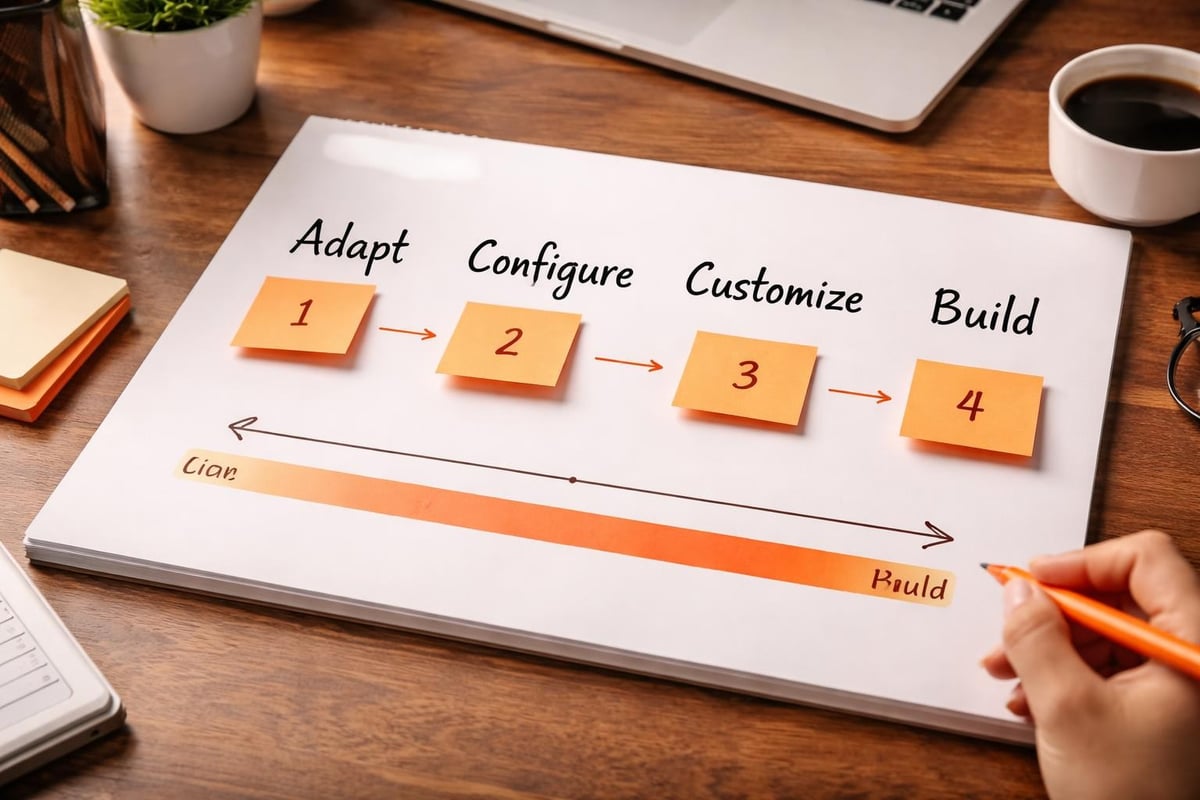
Off-the-shelf computer programs promise quick implementation and lower upfront costs, making them attractive to organizations seeking rapid solutions. However, the gap between generic functionality and specific business requirements often proves wider than anticipated. Companies face a choice between adapting their processes to fit the software or customizing the software to match their workflows.
Heavy customization transforms standard computer programs into unique variants that become expensive to maintain and difficult to upgrade. Each customization must be preserved during updates, requiring extensive testing and often custom development work. Vendors may not support heavily modified versions, leaving organizations dependent on internal resources or specialized consultants who charge premium rates.
Configuration options in modern computer programs provide flexibility without the maintenance burden of true customization, but many organizations lack the expertise to leverage these capabilities effectively. Settings remain at defaults not because they represent optimal choices but because no one knows how to adjust them properly. Documentation explains what settings do but not why organizations might choose specific configurations for particular business scenarios.
The configuration knowledge gap creates dependency on consultants or internal experts who become irreplaceable. When these individuals leave, their understanding of why the system works as it does disappears with them. New team members struggle to modify configurations without understanding the reasoning behind original choices, leading to hesitation that prevents necessary adjustments or reckless changes that break carefully balanced systems.
The Illusion of Low-Code Solutions
Low-code and no-code platforms have emerged as attractive alternatives to traditional computer programs, promising to democratize software development and reduce dependence on technical specialists. These platforms enable business users to create applications through visual interfaces rather than writing code, theoretically accelerating development and reducing costs.
The reality proves more nuanced. Simple applications work well on low-code platforms, but complexity quickly reveals limitations. Performance degrades as data volumes grow. Integration with external systems requires technical knowledge that business users lack. Governance becomes problematic when multiple citizen developers create overlapping solutions without central coordination.
Organizations often discover that low-code computer programs create new forms of technical debt. The applications work initially but become difficult to modify as requirements evolve. Business users who built the original solutions move to different roles, and their successors cannot understand or maintain what they created. The promised independence from IT becomes a new dependency on platform vendors whose roadmaps may not align with organizational needs.
Scaling low-code solutions across the enterprise introduces challenges that vendors rarely discuss during sales processes. Licensing costs escalate as user counts increase. Platform limitations force workarounds that undermine the simplicity that made low-code attractive initially. Organizations find themselves trapped between inadequate low-code solutions and the expensive prospect of rebuilding on traditional platforms.
Vendor Lock-In and Exit Strategies
Selecting computer programs involves more than evaluating current features and pricing. The long-term relationship with vendors creates dependencies that constrain future options and expose organizations to risks they may not recognize until changing direction becomes necessary.
Proprietary data formats trap information inside specific computer programs, making migration to alternative solutions technically challenging and expensive. Vendors understand this dynamic and sometimes deliberately design systems to increase switching costs. Export capabilities exist but produce data structures that require significant transformation before alternative programs can use them effectively.
Cloud-based computer programs introduce additional lock-in dimensions. Data volumes grow over time, and extracting terabytes of information from cloud platforms can take weeks or months. Network transfer costs can reach thousands of dollars. Organizations that assumed they could easily move to different providers discover that extraction represents only the first step in a complex, risky migration process.
Service dependencies extend beyond the core application. Organizations build processes around specific vendor capabilities, train employees on particular interfaces, and integrate other systems using vendor-specific APIs. These investments create organizational inertia that persists even after the original business case for the software disappears.
Understanding authoritative sources becomes critical when evaluating the reliability and trustworthiness of vendors and their computer programs, particularly in regulated industries where vendor stability directly affects compliance posture.
Performance Degradation Nobody Notices
Computer programs rarely fail catastrophically. Instead, they degrade gradually, and users adapt to slower response times, longer processing cycles, and increasing delays. This normalization of poor performance costs organizations productivity and revenue while remaining invisible in traditional metrics.
Database bloat represents a common cause of gradual performance decline. Computer programs accumulate data over years, and many systems lack effective archiving strategies. Queries that ran quickly with thousands of records slow noticeably with millions. Reports that generated overnight now run well into the following day. Batch processes that completed during maintenance windows begin interfering with business hours.
Memory leaks and resource consumption issues compound over time in computer programs that run continuously. Applications that perform adequately immediately after restart grow sluggish after days or weeks of operation. Organizations develop restart schedules as workarounds rather than addressing underlying problems, accepting downtime as the price of continued operation.
Network dependencies that seemed inconsequential during implementation become bottlenecks as usage grows. Computer programs designed for on-premises deployment often perform poorly when accessed remotely. Cloud migrations reveal latency sensitivities that never appeared during local area network testing. Geographic distribution of users creates performance disparities that affect productivity and user satisfaction differently across locations.
Mobile and Remote Access Challenges
The shift toward remote work has exposed critical weaknesses in computer programs designed for office environments. Applications that functioned adequately when accessed from corporate networks struggle when employees connect from home, coffee shops, or client sites. Security models built around network perimeter defense fail when the perimeter dissolves.
Many computer programs offer nominal mobile access through responsive web interfaces or companion apps, but these solutions often provide limited functionality compared to desktop versions. Employees attempting to work from tablets or smartphones discover they can view information but cannot perform critical tasks. This forces reliance on laptop computers and VPN connections, undermining the flexibility that mobile access promises.
Synchronization issues plague computer programs that attempt to support offline usage. Conflict resolution mechanisms work poorly when multiple users modify the same data while disconnected. Version control becomes manual and error-prone. Users lose work when synchronization fails, and IT departments spend hours reconstructing data from backups or transaction logs.
Bandwidth assumptions built into traditional computer programs create problems for remote users with limited connectivity. Applications designed to transfer large files or stream high-resolution media become unusable over residential internet connections. Video conferencing features that work flawlessly in offices consume excessive bandwidth and degrade performance of other applications when accessed remotely.

Maintenance and Support Realities
Organizations budget for initial software acquisition and implementation but systematically underestimate ongoing maintenance and support costs. Computer programs require continuous attention to remain secure, functional, and aligned with evolving business needs. Deferred maintenance accumulates like interest on debt, eventually demanding payment with premium penalties.
Update cycles create recurring disruption that organizations must absorb. Testing updates before deployment requires environments that mirror production, personnel with time to execute test plans, and processes for rolling back failed updates. Many organizations skip thorough testing due to resource constraints, accepting the risk of production failures rather than investing in proper change management.
Support costs vary dramatically based on organizational capabilities. Companies with strong internal technical teams can resolve many issues independently. Organizations lacking these capabilities depend heavily on vendor support or consultants, paying premium rates for assistance with routine problems. Response times stretch during critical incidents, and escalation procedures often prove inadequate when business-critical systems fail.
Documentation for computer programs ranges from comprehensive to practically nonexistent. Even good documentation becomes outdated as software evolves through updates and customizations. Organizations that fail to maintain their own documentation find institutional knowledge concentrated in individuals who become single points of failure. When these people leave, critical understanding disappears.
When evaluating computer programs, understanding authoritative sources in legal contexts helps organizations assess vendor reliability and support commitments, particularly regarding long-term maintenance obligations.
Custom Development Considerations
Building custom computer programs addresses limitations of commercial software but introduces different risks and challenges. Organizations often underestimate the complexity of software development and the long-term commitment required to maintain custom solutions successfully.
Requirements gathering failures doom custom development projects before coding begins. Business stakeholders struggle to articulate needs precisely, and developers interpret vague requirements through their own assumptions. Gaps between what users requested and what developers understood emerge only during testing or after deployment, requiring expensive rework cycles.
Project scope creep transforms manageable custom development initiatives into sprawling efforts that consume budgets and timelines. Initial requirements expand as stakeholders recognize possibilities they had not previously considered. Features deemed essential multiply, and the minimum viable product becomes increasingly elaborate. Development teams struggle to manage changing expectations while maintaining progress toward delivery dates.
Quality assurance in custom computer programs requires discipline that many organizations lack. Automated testing frameworks demand upfront investment that seems expensive compared to manual testing, yet manual approaches cannot keep pace with the complexity of modern applications. Technical debt accumulates when teams skip testing to meet deadlines, creating fragile systems that break unpredictably.
Successful custom software development demands more than just the initial build. Organizations need ongoing development capabilities to address bugs, implement enhancements, and adapt to changing business requirements. Companies that view custom computer programs as one-time projects rather than continuous investments set themselves up for failure when support needs exceed available resources.
Organizations exploring custom solutions benefit from understanding how to evaluate information sources when selecting development partners and technology stacks that will serve their long-term needs.
Training and Adoption Failures
Computer programs deliver value only when people use them effectively. Organizations invest heavily in software acquisition and implementation while treating training as an afterthought, then wonder why adoption rates disappoint and productivity gains fail to materialize.
One-time training sessions during implementation provide insufficient preparation for sustained usage. Employees learn basic concepts but lack the depth of understanding necessary to leverage advanced features or troubleshoot common problems. Without reinforcement, knowledge fades rapidly, and users revert to familiar but inefficient workflows.
User resistance stems from multiple sources that training alone cannot address. Change fatigue affects organizations that implement new computer programs frequently, and employees develop cynicism about the latest system that promises to solve all problems. Poorly designed interfaces frustrate users who must navigate unintuitive workflows to accomplish routine tasks. Performance problems mentioned earlier erode confidence and create the perception that new systems represent downgrades rather than improvements.
Power users and champions can accelerate adoption by helping colleagues overcome obstacles and demonstrating effective usage patterns. However, organizations frequently fail to identify, empower, or reward these individuals. The informal support network that develops around successful computer programs emerges organically rather than through deliberate cultivation, and companies miss opportunities to amplify positive influence.
Ongoing training programs must adapt as computer programs evolve through updates and as organizational usage patterns mature. Initial training focuses on basic operations, but users need progressive skill development to maintain productivity as they encounter more complex scenarios. Training programs that remain static while software changes create knowledge gaps that undermine effectiveness.
Building Sustainable Software Strategies
Moving beyond reactive problem-solving requires organizations to develop intentional strategies for selecting, implementing, and managing computer programs throughout their lifecycle. This strategic approach considers total cost of ownership, long-term support requirements, and alignment with business objectives rather than focusing narrowly on initial price and feature lists.
Total cost of ownership calculations should include often-overlooked expenses such as data migration from existing systems, integration with other applications, ongoing maintenance and support, training and change management, and future upgrade costs. Organizations that evaluate computer programs based solely on licensing fees make decisions on incomplete information that leads to budget surprises later.
Vendor evaluation extends beyond product demonstrations and reference calls. Financial stability matters because computer programs represent multi-year commitments, and vendor bankruptcy can leave organizations with unsupported software. Development roadmaps reveal whether vendor priorities align with organizational needs. Support quality and responsiveness affect how quickly problems get resolved when issues inevitably arise.
Internal capability development reduces dependence on vendors and consultants while building organizational resilience. Companies need personnel who understand their computer programs deeply enough to configure systems, troubleshoot problems, and make informed decisions about customizations and integrations. Relying entirely on external expertise creates vulnerability and increases long-term costs.
Governance frameworks establish clear ownership for technology decisions and ongoing management. Without governance, different departments select incompatible computer programs that create integration nightmares. Standards for security, data management, and user access prevent fragmentation while allowing appropriate flexibility. Regular reviews ensure systems continue meeting business needs and identify candidates for replacement before they become critical risks.
The reference sources for computer science provide valuable frameworks for evaluating technologies and building sustainable software strategies that serve organizations over the long term.
Measuring Software Value Beyond Features
Organizations typically evaluate computer programs based on feature checklists without considering how those features translate into business outcomes. A program with extensive functionality delivers no value if users cannot access relevant features easily or if performance problems prevent effective usage.
Productivity metrics should track actual time savings rather than theoretical capabilities. How much faster can employees complete common tasks using new computer programs compared to previous methods? Time studies before and after implementation reveal whether promised efficiency gains materialize in practice. These measurements often expose training gaps or workflow design problems that prevent users from achieving potential productivity improvements.
Error rates and quality improvements represent another dimension of software value that transcends feature lists. Computer programs that reduce data entry errors, enforce business rules consistently, or prevent common mistakes deliver measurable benefits even if they lack impressive feature counts. Tracking error rates before and after implementation quantifies these quality improvements.
User satisfaction metrics indicate whether computer programs meet real needs or merely check boxes on requirements documents. Regular surveys, usage analytics, and feedback sessions reveal pain points that might not be obvious from feature adoption statistics. High satisfaction correlates with sustained usage and maximum value realization, while low satisfaction signals problems that will eventually undermine the investment.
Business outcome alignment ensures computer programs contribute to strategic objectives rather than simply automating existing processes. Revenue growth, customer retention, operational efficiency, and other key performance indicators should show measurable improvement attributable to software investments. Programs that fail to move these needles consume resources without delivering commensurate value.
Organizations implementing customer relationship management systems need tools that track interactions, manage pipelines, and provide visibility into customer lifecycles. Brytend CRM offers features designed to help businesses manage customer relationships effectively while avoiding the common pitfalls that plague generic solutions.
Frequently Asked Questions
How long should organizations expect computer programs to remain viable before replacement becomes necessary?
The useful lifespan of computer programs varies significantly based on industry, technology stack, and business needs, but planning for replacement every five to seven years provides a realistic framework for most business applications. Mission-critical systems may require refresh cycles as short as three years in rapidly evolving industries, while stable back-office applications might serve effectively for a decade or more. However, the calendar age matters less than whether the program continues meeting security requirements, supporting current business processes efficiently, and integrating properly with other systems. Organizations should establish regular assessment cycles to evaluate whether existing computer programs still serve their intended purpose or whether accumulated limitations justify replacement regardless of age.
What are the most commonly overlooked costs when budgeting for new computer programs?
Data migration from legacy systems consistently ranks among the most underestimated expenses, often consuming double or triple the budget allocated during initial planning. Integration with existing applications requires ongoing maintenance as both systems evolve, creating perpetual costs that many organizations fail to anticipate. Training extends beyond initial implementation, requiring refresher courses, onboarding for new employees, and advanced skill development for power users. Customization maintenance becomes expensive when organizations heavily modify standard programs, as each vendor update requires testing and potential rework of customizations. Hidden infrastructure costs such as increased storage, bandwidth, backup systems, and disaster recovery capabilities frequently surprise organizations after deployment.
How can organizations avoid vendor lock-in when selecting computer programs?
Prioritizing open standards and well-documented APIs ensures that data and integrations remain portable across different platforms rather than trapping information in proprietary formats. Negotiating data portability clauses in contracts establishes clear rights and vendor obligations for extracting information in usable formats if migration becomes necessary. Building abstraction layers between core business logic and specific software implementations allows organizations to swap underlying programs without rewriting entire systems. Maintaining comprehensive documentation of configurations, customizations, and integrations creates institutional knowledge that reduces dependency on vendor support. Regular export and validation of critical data in vendor-neutral formats ensures that migration options remain viable rather than becoming theoretically possible but practically infeasible due to data complexity or volume.
What security practices should organizations implement for computer programs beyond vendor-provided features?
Layer security controls rather than relying solely on application-level protections, including network segmentation that limits exposure, identity and access management systems that enforce principle of least privilege, and encryption for data at rest and in transit. Establish comprehensive logging and monitoring that detects unusual access patterns, failed authentication attempts, and data exfiltration indicators that built-in program features might miss. Implement regular security assessments including vulnerability scanning, penetration testing, and code review for custom components that complement vendor security updates. Maintain detailed inventories of all program components including third-party libraries and dependencies, with processes for tracking and applying security patches promptly. Develop incident response procedures specifically tailored to computer program compromises, including containment strategies, forensic investigation protocols, and recovery processes.
How should organizations balance between commercial off-the-shelf and custom-developed computer programs?
Commercial programs work best for standardized business functions where industry best practices apply and competitive differentiation does not depend on unique workflows, such as accounting, payroll, or basic inventory management. Custom development becomes appropriate when competitive advantage depends on proprietary processes, integration requirements exceed what standard programs support feasibly, or specific compliance needs demand capabilities unavailable in commercial offerings. Hybrid approaches often deliver optimal results, leveraging commercial programs for commodity functions while building custom components for differentiating capabilities. Organizations should honestly assess whether their processes truly require customization or whether they resist adapting to industry-standard workflows due to organizational inertia rather than legitimate business requirements. The decision framework should weight total cost of ownership over five-year horizons rather than comparing initial acquisition costs alone.
What governance structure works best for managing computer programs across an organization?
Effective governance balances central oversight with operational flexibility through tiered decision rights that assign different authority levels based on impact scope and cost thresholds. Enterprise architecture committees should review major acquisitions and establish technical standards that ensure interoperability while allowing departments to select appropriate tools within those guidelines. Regular portfolio reviews identify redundant capabilities, unsupported systems, and integration gaps that create risk or inefficiency. Clear ownership assignment prevents situations where multiple stakeholders claim authority over decisions while no one accepts accountability for outcomes. Metrics and reporting that track spending, usage, security posture, and business value delivered create visibility necessary for informed decisions. Governance processes must remain lightweight enough to avoid becoming obstacles that encourage shadow IT while providing sufficient control to prevent fragmentation.
How can organizations recover from poor computer program implementations without complete replacement?
Systematic diagnosis identifies whether problems stem from inadequate training, poor configuration, missing integrations, or fundamental product limitations, as different root causes demand different remediation strategies. Focused remediation addresses specific pain points through targeted training programs, configuration optimization, or selective customization rather than attempting comprehensive overhauls that rarely succeed. Phased improvements allow organizations to validate that changes deliver expected benefits before investing in additional modifications, preventing escalation of commitment to failing approaches. Sometimes partial replacement proves more practical than full system overhaul, migrating specific modules or departments to alternative solutions while maintaining other components that function adequately. Organizations should establish objective success criteria before beginning remediation efforts and commit to replacement if improvement targets remain unmet after reasonable investment, avoiding indefinite investment in fundamentally unsuitable programs.
Computer programs represent significant investments that shape organizational capability for years after initial deployment, yet many companies approach selection and implementation with insufficient attention to long-term implications and hidden costs. The risks of security vulnerabilities, integration failures, vendor lock-in, and performance degradation compound over time when organizations fail to address them proactively. Building sustainable software strategies requires looking beyond feature lists and initial pricing to consider total cost of ownership, ongoing support requirements, and alignment with business objectives. Brytend specializes in creating custom software solutions that address your specific operational needs while avoiding the common pitfalls that plague generic implementations, offering ongoing support and maintenance to ensure your technology investments deliver lasting value.