
The software development industry operates on trust, expertise, and long-term relationships. Every inquiry that comes through your website, every email from a potential client, and every referral represents an opportunity that could transform into a six-figure contract or a years-long partnership. Yet many software development firms treat these opportunities with surprisingly casual approaches, relying on spreadsheets, memory, and manual follow-up processes that introduce risk at every stage. The difference between a thriving custom development firm and one struggling to maintain consistent revenue often comes down to how systematically they manage and nurture leads from first contact through signed contract.
The Hidden Costs of Informal Lead Management
Software development projects require substantial discovery phases, detailed scoping conversations, and careful alignment between client expectations and technical capabilities. When you rely on informal systems to track these conversations, you expose your business to preventable losses that compound over time.
Consider the common scenario where a potential client reaches out with a project inquiry. The initial conversation happens over email, notes get jotted down in a personal notebook, and a follow-up reminder gets added to someone’s calendar. Two weeks later, that reminder triggers, but the context around the conversation has faded. What specific pain points did the prospect mention? Which competitor were they evaluating? What was their timeline and budget range? Without systematic capture of this information, every follow-up conversation starts from a weakened position.
The financial impact extends beyond lost individual opportunities. When you cannot accurately track where leads originate, you continue investing in marketing channels that deliver poor-quality prospects while under-investing in channels that bring qualified opportunities. A manufacturing firm might be your ideal client profile, but without data showing that trade show conversations convert at three times the rate of cold LinkedIn outreach, you allocate resources based on intuition rather than evidence.

Qualification Frameworks That Reduce Wasted Discovery Time
Discovery calls represent significant time investment for software development teams. A senior developer or technical architect spending two hours on a discovery call with an unqualified prospect carries real opportunity cost. That same time could have been spent with a prospect who has budget, authority, need, and timeline alignment.
Traditional qualification frameworks provide structure for identifying which opportunities deserve substantial time investment. The BANT framework evaluates Budget, Authority, Need, and Timeline, creating a systematic filter that separates serious prospects from those in early research phases. For custom software development, this means asking direct questions during initial conversations about allocated budget ranges, decision-making processes, specific business problems requiring solutions, and realistic implementation timelines.
However, relying on human memory to consistently apply these frameworks introduces variability and error. One sales team member might thoroughly qualify opportunities while another skips directly to technical discussions, creating inconsistent pipeline quality. Lead qualification methods require standardization across your entire team to function effectively. Without structured systems enforcing qualification criteria, your pipeline fills with opportunities that look promising but lack fundamental requirements for successful conversion.
The consequences manifest in proposal-stage failures. You invest hours creating detailed technical proposals, architectural diagrams, and cost breakdowns for prospects who were never actually qualified buyers. They were gathering information for internal teams, building competitive intelligence for negotiations with other vendors, or exploring solutions they lacked budget to implement. Each of these scenarios represents wasted technical resources that could have been deployed on qualified opportunities or billable client work.
The Compliance and Relationship Risks of Manual Tracking
Custom software development often involves handling sensitive business information during sales processes. Prospects share confidential details about their operations, competitive challenges, and strategic initiatives. When these conversations exist only in individual email accounts and personal notebooks, you create data security vulnerabilities and compliance risks.
Consider the scenario where a team member leaves your company. If they managed all prospect relationships through their personal email account and maintained notes in their own system, their departure creates immediate knowledge loss. Ongoing conversations with qualified prospects stall or disappear entirely. The prospects themselves receive inconsistent communication or no follow-up at all, damaging your professional reputation in ways that extend beyond the individual lost opportunity.
For firms working with regulated industries like healthcare, finance, or government, informal lead management introduces documentation risks. SAP’s lead qualification documentation emphasizes systematic approaches that create audit trails and consistent data capture. When you cannot demonstrate how you qualified opportunities, captured requirements, or documented prospect communications, you fail basic due diligence standards that enterprise clients expect from their software development partners.
The relationship dimension carries equal weight. Modern buyers expect personalized experiences that acknowledge their specific context and previous interactions. When a prospect has three separate conversations with three different team members who each ask the same basic questions because information was not centrally recorded, you signal organizational dysfunction. This impression contradicts the systematic, professional approach prospects expect from firms they are trusting with mission-critical software development.
Automation as Risk Mitigation Strategy
The repetitive aspects of lead management create opportunities for automation that simultaneously reduce human error and free technical talent for higher-value activities. Email sequences that trigger based on specific prospect actions ensure consistent follow-up without relying on individual memory or discipline. Automated lead scoring that evaluates prospect behavior against qualification criteria surfaces the most promising opportunities before they grow cold.
Many development firms resist automation, viewing it as impersonal or inappropriate for high-touch consultative sales processes. This perspective misses the distinction between automating repetitive administrative tasks versus automating relationship-building itself. B2B lead generation strategies emphasize using automation for consistency while preserving human interaction for strategic conversations.
For instance, when a prospect downloads a technical whitepaper from your website, an automated system can immediately send a relevant case study, add them to a nurture sequence, and create a task for a sales team member to reach out within 24 hours. Without automation, that prospect download might sit unnoticed in analytics for days or weeks, allowing their interest to cool and competitors to engage first. The automation does not replace human relationship-building but rather ensures it happens at the optimal moment with the right context.
The data aggregation benefits of automated systems compound over time. Every interaction, every email open, every website visit creates behavioral data that informs qualification and prioritization. Manual tracking cannot capture this granularity at scale. A prospect who visits your pricing page three times, downloads two case studies, and spends 15 minutes reviewing your technology stack page demonstrates dramatically higher intent than one who simply filled out a contact form. Automated systems surface these behavioral signals, allowing your team to prioritize outreach based on evidence rather than gut feeling.
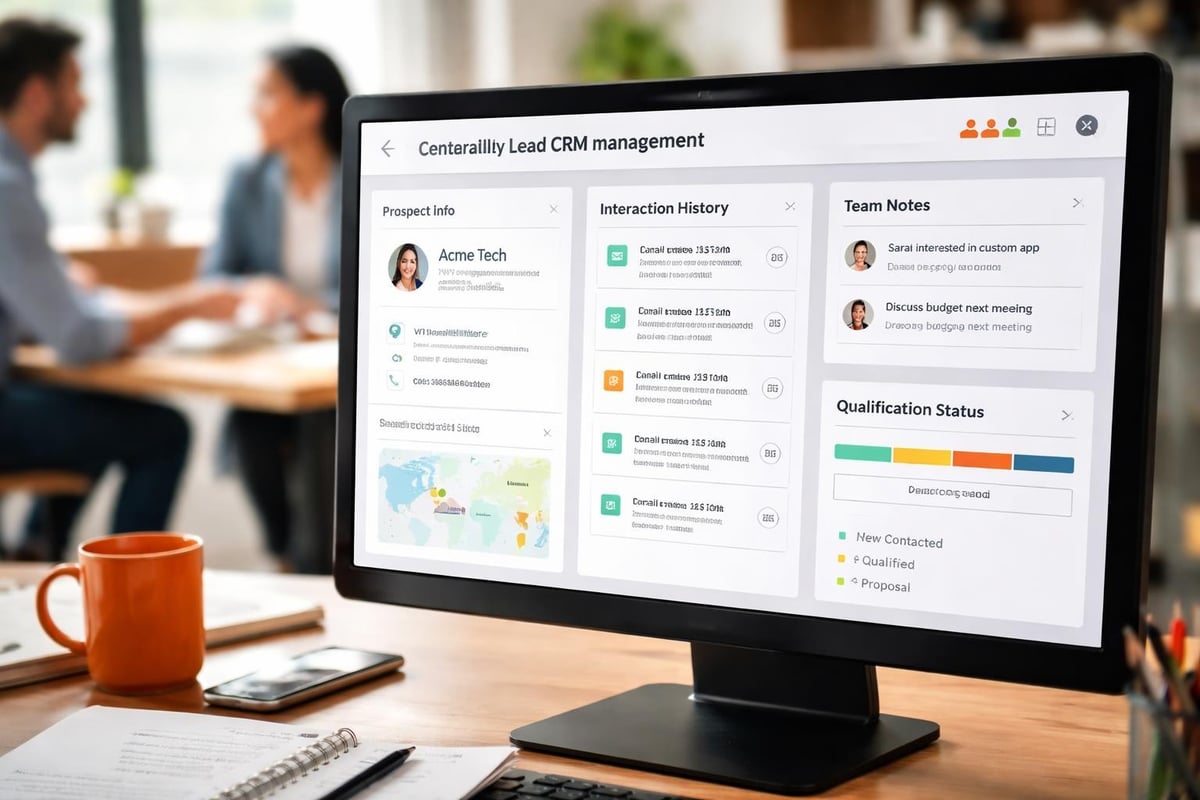
Brytend CRM provides software development firms with the systematic lead management infrastructure needed to capture every opportunity, maintain relationship context, and reduce the manual overhead that creates risk and inefficiency. With customizable qualification frameworks, automated follow-up sequences, and centralized data capture, your team can focus on technical conversations while the CRM system handles the administrative burden of tracking and nurturing prospects through your pipeline.

Converting Qualified Leads Through Structured Processes
Once a lead meets qualification criteria, the conversion process requires careful orchestration across discovery, scoping, proposal development, and negotiation phases. Each of these stages presents opportunities for breakdown when managed informally. Discovery calls that are not properly documented lead to proposals that miss critical requirements. Scoping conversations that happen across multiple disconnected channels create confusion about what was actually agreed upon. Proposal documents that live in individual team member folders rather than centralized systems become inaccessible when urgent revisions are needed.
The stakes escalate as opportunities progress through your pipeline. Early-stage conversations might represent exploratory discussions, but by the time you reach proposal stage, you have invested significant technical resources in understanding requirements, architecting solutions, and estimating timelines. Losing opportunities at this late stage because of process failures represents the most expensive form of waste in custom software sales cycles.
| Pipeline Stage | Primary Risk Without Structure | Impact on Conversion |
|---|---|---|
| Initial Inquiry | Delayed or missed follow-up | 40-60% opportunity loss |
| Discovery Call | Incomplete qualification, poor notes | Wasted technical time |
| Technical Scoping | Requirements misalignment | Proposal rejection |
| Proposal Delivery | Missing decision-maker context | Extended sales cycles |
| Negotiation | Lost conversation history | Failed deal terms |
Structured processes create consistency that prospects interpret as professionalism and competence. When every qualified lead receives the same thorough discovery process, the same detailed scoping methodology, and the same professional proposal format, you demonstrate the systematic approach that prospects want to see in their software development partner. This consistency extends beyond making good impressions; it reduces the variability that causes project failures after contracts are signed.
Lead generation fundamentals emphasize the connection between lead quality and customer lifetime value. The prospects who receive systematic, professional treatment during sales processes become the clients who trust your recommendations, accept your methodologies, and engage in long-term partnerships. Conversely, leads that are poorly qualified or managed through inconsistent processes often become problematic clients even when they do convert, carrying unrealistic expectations set during chaotic sales cycles.
The Compounding Effect of Pipeline Visibility
Revenue forecasting in custom software development presents unique challenges. Project timelines extend across months or years, deal values vary dramatically based on scope, and conversion rates fluctuate based on market conditions and competitive dynamics. Without clear visibility into your pipeline at every stage, you cannot accurately predict future revenue or make informed decisions about capacity planning and hiring.
The consequences of poor visibility extend throughout your organization. Your technical team cannot plan resource allocation when they do not know which projects are likely to close and when. Your finance team struggles with cash flow planning when revenue timing remains uncertain. Your leadership team cannot make strategic decisions about growth investments, geographic expansion, or service line additions without reliable pipeline data.
Manual tracking compounds these visibility problems. Spreadsheets become outdated the moment someone forgets to update them after a prospect conversation. Email threads contain critical context that never gets transferred to shared systems. Individual team members maintain optimistic or pessimistic biases about opportunity likelihood that skew aggregate forecasts. The result is a perpetual fog around your actual business trajectory.
Centralized systems that capture real-time updates create the foundation for accurate forecasting. When every team member updates opportunity status, qualification scores, and expected close dates in a shared system, leadership gains the visibility needed for sound decision-making. Business frameworks for lead qualification emphasize establishing clear benchmarks and criteria that create consistent pipeline evaluation across different team members and time periods.

The analytics derived from structured pipeline data reveal patterns that informal tracking cannot surface. You might discover that opportunities sourced from existing client referrals convert at twice the rate of cold outreach but take 30% longer to close. Or that prospects who engage with technical content before speaking with sales convert at higher rates regardless of company size. These insights allow you to refine your lead generation approach based on evidence rather than assumptions, continuously improving the efficiency of your entire revenue engine.
Multi-Touch Attribution in Complex Sales Cycles
Custom software sales cycles rarely follow linear paths from initial contact to signed contract. A prospect might discover your firm through a conference presentation, visit your website weeks later after seeing a LinkedIn post, download a case study, attend a webinar, and finally reach out through a referral from a mutual connection. Understanding which of these touchpoints actually influenced their decision becomes impossible without systematic tracking across channels and time periods.
The attribution challenge directly impacts marketing investment decisions. When you cannot identify which activities generate qualified leads, you allocate budget based on incomplete information. You might invest heavily in paid advertising that generates high website traffic but few qualified opportunities, while underinvesting in conference sponsorships that create fewer total leads but substantially higher conversion rates among those leads.
This visibility gap widens as your marketing activities expand across multiple channels. Content marketing, email campaigns, social media engagement, event sponsorships, partnership programs, and direct outreach each play roles in lead generation. Without systems that track how prospects interact with these different touchpoints over time, you operate with a fragmented understanding of what actually drives pipeline growth.
The solution requires tracking every interaction with every lead across all channels, creating a complete interaction history that reveals true attribution patterns. This granular tracking answers critical questions about marketing effectiveness: Which content assets influence prospects during evaluation stages? How many touchpoints typically occur before qualified leads book discovery calls? Which channels generate leads that convert fastest versus those that require longer nurture periods?
For software development firms working with broader business systems, integrating lead tracking with project delivery and client success data creates even deeper insights. You can trace connections between the characteristics of inbound leads and the ultimate success of the client relationships they become. Leads that required longer nurture periods might become your most loyal long-term clients, while fast-closing opportunities might have higher churn rates. These insights refine not just your lead generation but your entire go-to-market strategy.
Scaling Beyond Founder-Led Sales
Many custom software firms begin with founder-led sales, where the technical founder manages all client relationships and business development. This approach works at small scale but creates a growth ceiling when a single individual becomes the bottleneck for all new business. Scaling beyond founder-led sales requires systematizing the knowledge, processes, and relationship management that previously existed only in the founder’s head.
The transition exposes every informal process and undocumented practice. New sales team members cannot replicate founder success when they lack access to the context, history, and relationship intelligence the founder accumulated over years. They make qualification mistakes, miss follow-up opportunities, and struggle to articulate value propositions that the founder communicated intuitively based on deep market understanding.
Structured systems create the infrastructure for scaling by externalizing knowledge and enforcing consistent processes. New team members can review complete interaction histories with prospects, understand how previous similar opportunities were successfully closed, and follow proven qualification and scoping methodologies. The institutional knowledge that previously resided in one person’s experience becomes accessible to the entire team through systematic capture and documentation.
Lead qualification best practices emphasize defining ideal customer profiles and clear benchmarks that create consistency across different people evaluating opportunities. When these criteria exist only as informal guidelines, each person interprets and applies them differently. When they are built into systematic processes with required fields and scoring mechanisms, everyone evaluates leads using the same standards.
The cultural shift accompanying this systematization often creates resistance. Founders accustomed to informal relationship management may view structured processes as bureaucratic overhead. Sales team members might resist documentation requirements that take time away from prospect conversations. Overcoming this resistance requires demonstrating the risks of informal approaches and the concrete benefits of systematic alternatives. The time invested in proper documentation prevents far larger time waste from duplicated efforts, lost opportunities, and inefficient resource allocation.
Nurturing Leads Across Extended Timelines
Enterprise software development projects often involve evaluation cycles spanning six to eighteen months from initial inquiry to contract signing. During these extended timelines, prospects go through budget allocation processes, internal approval workflows, competitive evaluations, and requirement refinement. Maintaining consistent engagement throughout these long cycles without becoming annoying or losing top-of-mind awareness requires careful orchestration.
Manual nurturing across these timelines fails reliably. The prospect who was enthusiastic during an initial discovery call but needed to wait for next fiscal year budget approval gets forgotten during the intervening months. By the time their budget becomes available, they have engaged with competitors who maintained consistent contact, or their project priorities have shifted, or the key champion has moved to a different role.
Automated nurture sequences tailored to different prospect profiles and stages create consistent engagement without requiring constant manual attention. A prospect in early research phase receives educational content about best practices and methodology. A prospect in active evaluation phase receives case studies from similar clients and technical architecture examples. A prospect awaiting budget approval receives periodic check-ins that maintain relationship warmth without applying inappropriate sales pressure.
The key is matching nurture intensity and content to actual prospect stage and behavior. Wikipedia’s overview of lead generation discusses lead scoring approaches that inform nurture strategies. A prospect who downloads three technical whitepapers and attends a webinar demonstrates higher engagement than one who simply fills out a contact form once. The high-engagement prospect deserves more intensive follow-up and faster response times when they take additional actions.
For firms exploring technology solutions to support these processes, the integration between nurture automation and qualification tracking becomes critical. When a nurtured lead reaches certain engagement thresholds or takes specific actions indicating readiness to move forward, the system should automatically notify sales team members and adjust the prospect’s priority level. This seamless handoff between automated nurturing and human engagement ensures opportunities receive attention at optimal moments without falling through cracks during transitions.
Frequently Asked Questions
How do you balance qualification rigor with relationship building during early conversations?
The tension between thorough qualification and maintaining conversational rapport requires strategic sequencing of questions rather than choosing one approach over the other. Begin conversations with open-ended questions about business challenges and strategic goals that naturally surface budget, timeline, and authority information through context rather than interrogation. Prospects who feel heard and understood provide qualification information more readily than those who feel they are being evaluated through a checklist. The skill lies in listening for qualification signals within natural business conversations rather than conducting separate relationship-building and qualification activities.
What happens to lead quality when you expand lead generation efforts across multiple channels?
Channel expansion typically decreases average lead quality while increasing total volume, creating a mathematical trade-off that requires careful management. Content marketing generates higher volumes of early-stage leads who require extensive nurturing, while targeted outreach to ideal customer profiles generates fewer but more qualified opportunities. The solution is not choosing single channels but rather implementing qualification systems robust enough to handle varying quality levels across sources. Track conversion rates by channel over complete sales cycles rather than just initial response rates to understand true channel effectiveness beyond surface-level metrics.
How can you prevent qualified leads from stalling in your pipeline indefinitely?
Pipeline stagnation typically indicates either incorrect qualification in earlier stages or lack of clear next steps and accountability for moving opportunities forward. Implement maximum stage duration rules that automatically flag opportunities remaining in specific stages beyond reasonable timeframes for your typical sales cycle. A discovery call that occurred three months ago with no subsequent movement likely represents either a lost opportunity that was never properly disqualified or a prospect requiring different nurture approaches than active pipeline management. Regular pipeline reviews focused on stalled opportunities force explicit decisions about re-qualification or removal rather than allowing indefinite optimistic forecasting.
What role should technical team members play in lead qualification and nurturing?
Technical credibility often serves as the primary differentiator in custom software sales, making early technical team involvement valuable for establishing expertise and building prospect confidence. However, technical team time represents your most constrained and expensive resource, making indiscriminate technical involvement in unqualified opportunities extremely costly. The solution is tiered engagement where sales team members handle initial qualification and business-level discovery, involving technical resources only after opportunities meet specific qualification criteria and reach stages requiring architectural discussions or technical proof points. This approach respects both the value of technical credibility and the opportunity cost of technical time.
How do you maintain lead data quality when multiple team members interact with the same prospects?
Data quality degradation with multiple contributors represents one of the most common and damaging failures in lead management systems. Establish clear ownership rules for each opportunity with a single point person responsible for maintaining complete and current information regardless of which team members have prospect conversations. Implement required fields and standardized value lists that prevent inconsistent data entry while allowing narrative notes for context and nuance. Regular data quality audits that identify and correct incomplete records, duplicate entries, and outdated information prevent the gradual decline that makes systems unreliable over time.
What metrics actually predict lead conversion beyond surface-level engagement signals?
Engagement metrics like email opens and website visits provide behavioral signals but often correlate poorly with actual conversion likelihood compared to qualification-based metrics. The strongest predictive metrics typically combine behavioral signals with explicit qualification criteria: budget range confirmed, decision timeline specified, decision-making process mapped, incumbent solution identified, and success criteria defined. A prospect with lower engagement scores but explicit qualification across these dimensions converts more reliably than a highly engaged prospect who has not provided fundamental qualification information. Build scoring models that weight qualification criteria more heavily than behavioral engagement while using behavior to inform timing and prioritization.
How do you handle leads that request detailed proposals before providing adequate qualification information?
Prospect requests for proposals before qualification creates a testing moment that reveals their seriousness and your professional standards. Politely explaining that creating accurate proposals requires understanding specific requirements, constraints, and success criteria positions you as a consultative partner rather than a commodity vendor competing on price. Prospects genuinely interested in solving business problems accept this reasoning and engage in proper discovery. Those seeking quick price comparisons or using your expertise to educate internal teams without serious vendor consideration typically disengage at this stage, saving you the substantial cost of creating proposals for unqualified opportunities. This approach filters prospects while strengthening positioning with serious buyers.
Managing leads systematically transforms from administrative overhead into strategic advantage when you recognize the risks and missed opportunities created by informal approaches. The difference between software development firms that scale predictably and those that struggle with feast-or-famine revenue cycles often traces directly to how seriously they treat lead management infrastructure. Brytend builds custom software solutions that address your specific operational challenges, including systems for managing client relationships, tracking opportunities, and automating the repetitive processes that currently consume your team’s time while introducing unnecessary risk. Whether you need a comprehensive platform or targeted solutions for specific workflow pain points, experienced developers can create tools that fit your actual processes rather than forcing you into rigid pre-built frameworks.


