Most of the money companies lose on equipment doesn’t go on dramatic failures. It goes on assets slowly wearing down while everyone assumes they are under control. Equipment breaks down unexpectedly, warranties expire unused, and compliance audits reveal gaps that could have been prevented months earlier. The difference between companies that thrive and those that struggle often comes down to how they approach asset service management. This discipline determines whether your organization operates with confidence or constantly reacts to problems that should never have occurred.
The Hidden Price of Reactive Asset Service Management
Most organizations think they have asset service management under control until something breaks. A critical piece of equipment stops working during peak production hours, and suddenly everyone realizes that nobody scheduled preventive maintenance for the past six months. The real cost isn’t just the repair bill. Every hour of downtime cascades through operations, affecting customer commitments, staff productivity, and revenue targets that won’t be recovered.
Manual tracking looks like control until someone actually checks. Spreadsheets scattered across departments contain conflicting information about service dates, warranty periods, and maintenance responsibilities. When you need to know the service history of a specific asset, you discover that three different people have three different versions of the truth. This fragmentation leads to duplicate work, missed service windows, and assets that fail prematurely because nobody had accurate information about their condition.
Meanwhile, compliance risk keeps growing in the background. Regulatory requirements for equipment maintenance, safety inspections, and service documentation continue to grow more stringent across industries. When an audit happens, organizations scramble to reconstruct service records from emails, paper files, and institutional memory. The penalties for inadequate documentation can be severe, but the reputational damage from compliance failures often costs even more than the fines themselves.

Service Scheduling Failures That Compound Over Time
A missed service interval is more than an admin slip. Each delayed maintenance appointment accelerates wear patterns that would have been manageable with timely intervention. A lubrication service skipped by two weeks might seem inconsequential, but that neglect compounds with every subsequent delay until a component fails completely. The replacement cost and associated downtime far exceed what the original preventive service would have required.
Calendar reminders fall short because they carry no context. Someone receives a notification that Asset 47 needs service next week, but they have no visibility into what type of service, who performed the last one, what parts might be needed, or whether the asset is currently deployed in a critical application. This information gap leads to postponed maintenance, rushed service work, or complete oversights when the reminder gets buried under more urgent demands.
Resource planning becomes guesswork without centralized service visibility. Your maintenance team might be understaffed during periods when multiple assets coincidentally need attention, while sitting idle during other weeks. Without the ability to visualize upcoming service requirements across your entire asset portfolio, you cannot allocate technicians efficiently or negotiate better rates with service providers through batched appointments. Organizations following best practices for enterprise asset management emphasize proactive scheduling, yet many still operate reactively.
Documentation Gaps That Create Operational Blindness
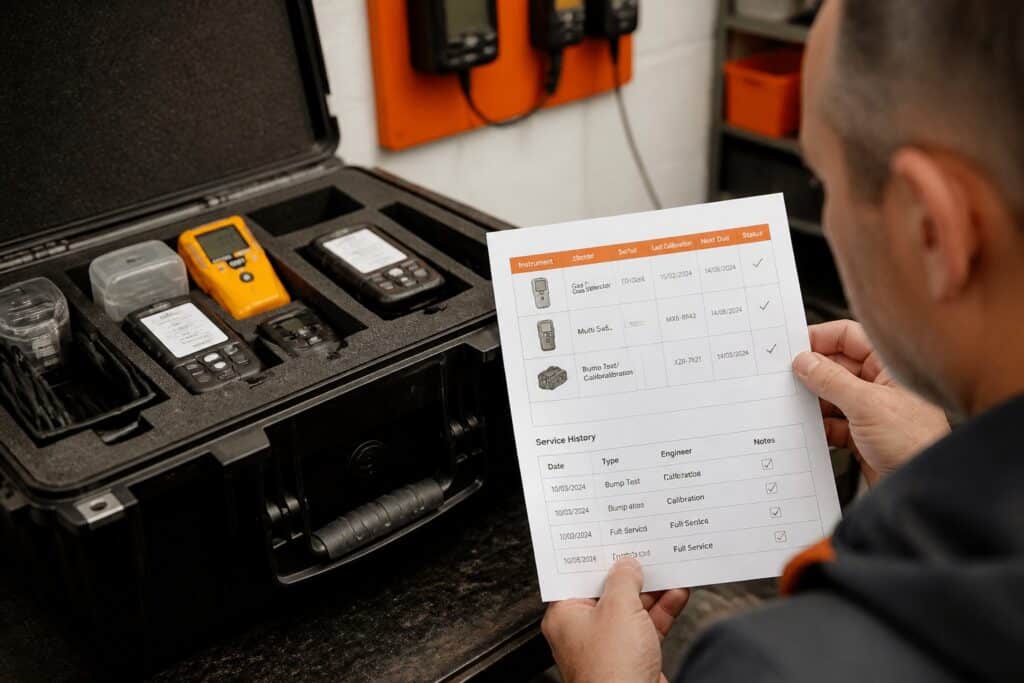
Service records spread across different systems are as good as missing when you need them. A technician arrives to repair equipment but has no access to previous service notes, recurring issues, or parts that were recently replaced. They waste time diagnosing problems that have documented solutions, or they repeat unsuccessful approaches that colleagues already attempted. This inefficiency drives up service costs while extending downtime.
Warranty claims get rejected because organizations cannot produce required service documentation. Equipment manufacturers often stipulate specific maintenance intervals and procedures to maintain warranty coverage. When an expensive component fails and you file a claim, the manufacturer requests proof that you followed their service schedule. If you cannot provide timestamped, detailed service records, you absorb costs that should have been covered.
When service knowledge lives in people’s heads instead of a shared system, it disappears fast. An experienced technician who knows the quirks of every critical asset eventually retires or changes roles. Their successor inherits equipment without understanding its history, previous modifications, or the subtle warning signs that precede failures. This knowledge gap extends learning curves and increases the likelihood of preventable problems.
Inventory Mismanagement and Parts Availability Issues
Organizations frequently discover they lack necessary parts only after equipment breaks down. Without systems that connect service schedules to parts inventory, you cannot anticipate which components will be needed when. Rush orders for critical parts come with premium pricing and extended lead times that prolong downtime. Meanwhile, your warehouse might hold obsolete parts for assets that were decommissioned years ago because nobody updated the inventory system.
In many companies, serialized asset tracking exists on paper only, even though it matters a great deal. Generic records that treat identical equipment as interchangeable miss critical details. One unit might have undergone a field modification that affects service requirements, while another has a known defect that requires monitoring. Without individual tracking, you cannot apply different maintenance protocols or accurately forecast when specific units will need replacement.
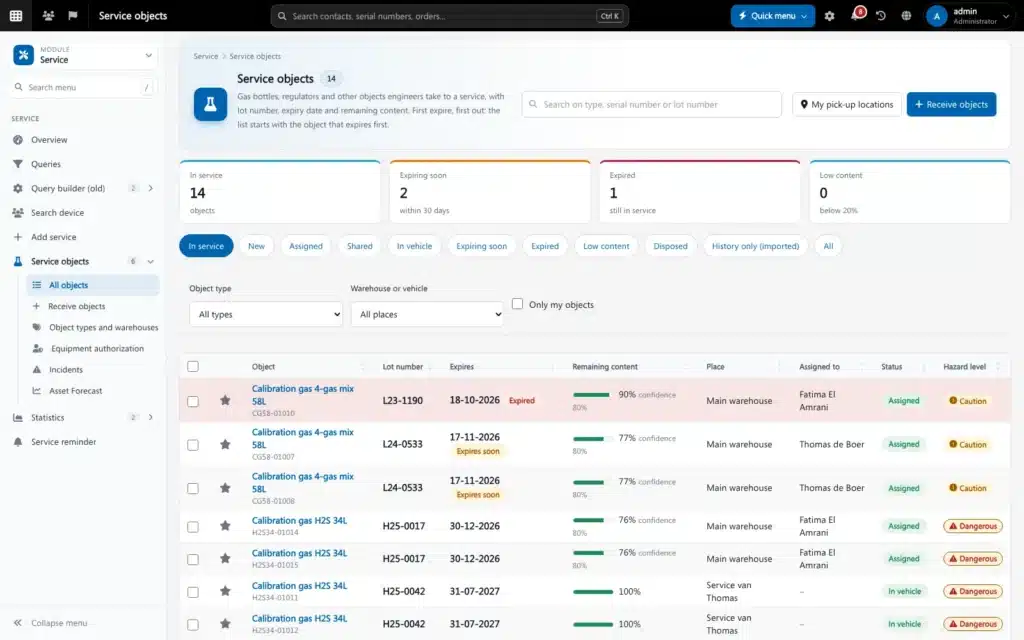
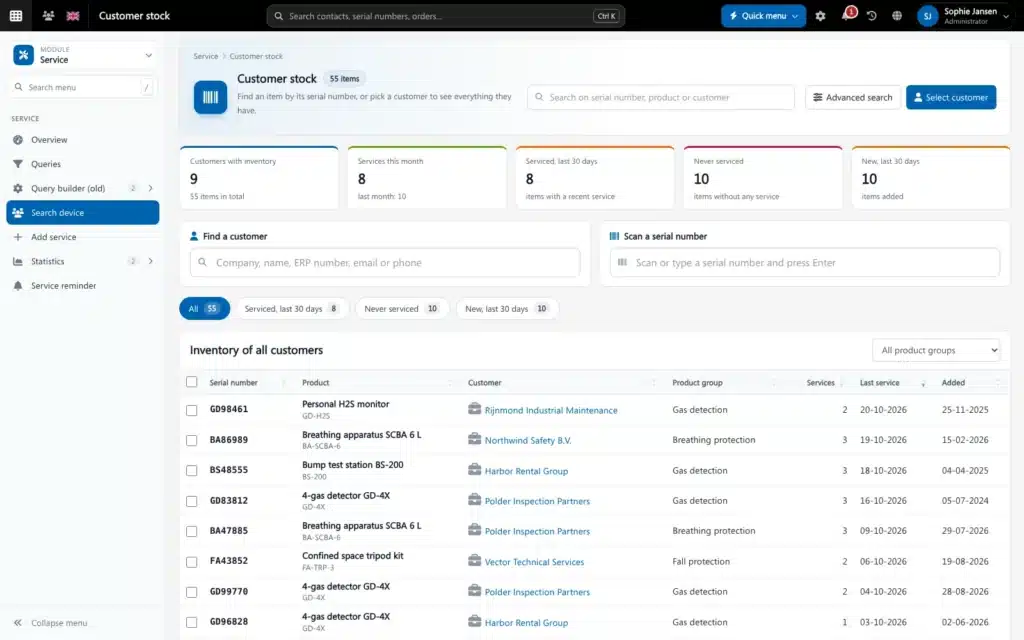
The Brytend Service Module addresses these challenges by allowing organizations to register serialized inventory, add custom services, automate service reminders, and generate service certificates. When each asset carries its unique identity and complete service history, maintenance teams can make informed decisions based on actual conditions rather than assumptions. This structured approach eliminates the gaps between what you think you know about your assets and what is actually happening in the field.

Cost Escalation Through Reactive Purchasing Decisions
Emergency purchases eat budget that planning would have saved. When equipment fails unexpectedly, you pay whatever the market demands for immediate replacement or repair. Negotiating leverage disappears when operations are halted and every hour costs money. Suppliers recognize urgency and price accordingly, knowing you have limited alternatives. These crisis-driven purchases typically cost thirty to fifty percent more than planned acquisitions would have required.
Total cost of ownership calculations become impossible without comprehensive service data. Asset service management should inform decisions about whether to repair, upgrade, or replace equipment. But making that determination requires knowing the complete history of maintenance expenses, downtime incidents, and performance degradation. Organizations lacking this visibility either retire assets prematurely or continue nursing equipment past the point where replacement would be more economical.
Budget forecasting turns into educated guessing when historical service data remains scattered and incomplete. Finance teams ask operations to project maintenance spending for the coming year, but operations cannot provide reliable estimates without understanding service patterns, failure rates, and lifecycle stages across the asset portfolio. The resulting budgets either fall short during critical periods or allocate resources inefficiently to areas that don’t need them. Guidance on IT asset management best practices emphasizes the financial implications of poor asset visibility.

Compliance Vulnerabilities and Audit Risks
Regulators increasingly want documented proof that assets were maintained and serviced properly. Industries from healthcare to manufacturing face requirements that equipment undergoes regular inspections, calibrations, and safety checks. When auditors request evidence, organizations scrambling through incomplete records face citations, fines, and operational restrictions until they demonstrate compliance. The financial penalties sting, but the operational disruptions while resolving compliance issues often cause greater damage.
Insurance coverage can be voided by inadequate asset service management. Commercial policies for equipment-intensive operations typically include provisions requiring regular maintenance and inspections. If an insured asset causes damage or injury, the insurance company will investigate whether you maintained it properly. Gaps in service documentation give insurers grounds to deny claims, leaving organizations exposed to liabilities that could have been covered.
More safety incidents trace back to missed maintenance than companies tend to admit. Equipment that receives proper service rarely fails in ways that endanger workers. But when maintenance gets deferred, components wear beyond safe operating parameters. A hydraulic line that should have been replaced three months ago finally ruptures, or a safety interlock that needed calibration fails to engage. The human cost of these failures cannot be measured only in workers’ compensation claims and legal settlements.
Standards outlined by organizations like IBM regarding asset lifecycle management stress that compliance must be built into processes rather than treated as a periodic exercise. Yet many companies still approach compliance as something to address when audits approach rather than as an ongoing discipline embedded in daily operations.
17 questions · 3 minutes
Is Brytend right for your business?
Answer 17 quick questions. See how Brytend solves each problem, and finish with your own Brytend plan.
Question 1 of 17 · Microsoft 365 and CRM
Want to keep Outlook for email, tasks, notes and calendar, without copying anything by hand?
Keep working the way you already do. Brytend does the filing for you.
Brytend solves this
Your Microsoft 365 tenant, synced into one CRM
Brytend connects to your Office 365 tenant and syncs email, notes, calendar and SharePoint into the CRM, so every customer conversation sits in one place.
- Email, calendar, notes and SharePoint in one CRM
- Outlook add-in to file mail with one click
- Sales activity shows who talks to which customer
Modules
- Copy-pasting emails
- Calendars out of sync
- Files in five places
- Microsoft 365
- Outlook
- SharePoint
Question 2 of 17 · Quote to cash
Are you still typing quotes in Word and retyping them as invoices?
Every retype is another chance for a wrong price or a missed order.
Brytend solves this
From quote to cash in one flow
Build a quote from your price list, turn it into an order with one click and invoice it without retyping a thing. Finance shows what is open, overdue and paid.
- Quotes, orders and invoices from one record
- E-invoicing with Peppol and bank payments
- Open and overdue amounts at a glance
Modules
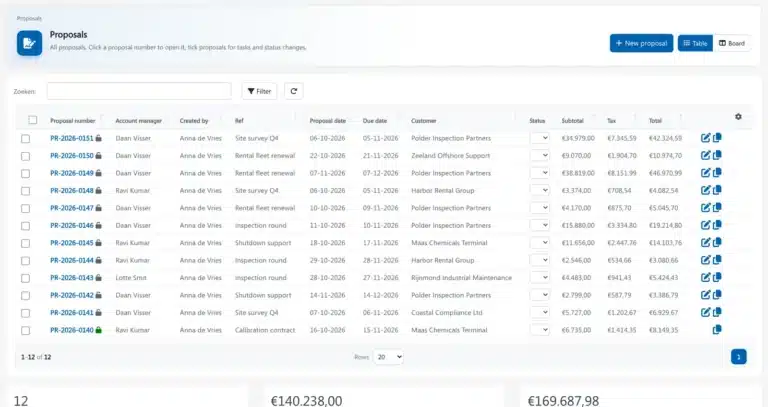
- Word templates
- Double data entry
- Invoices sent late
- Peppol e-invoicing
- Bank payments
Question 3 of 17 · Finance
Do you only see your cash position when the accountant sends the numbers?
By then it is too late to act on late payers or rising costs.
Brytend solves this
Live finance, linked to every invoice
Finance shows cash, open items and results as they happen, with bank transactions and VAT next to the invoices they belong to.
- Cash, open and overdue items, live
- Bank transactions matched to invoices
- VAT overview ready for your return
Modules
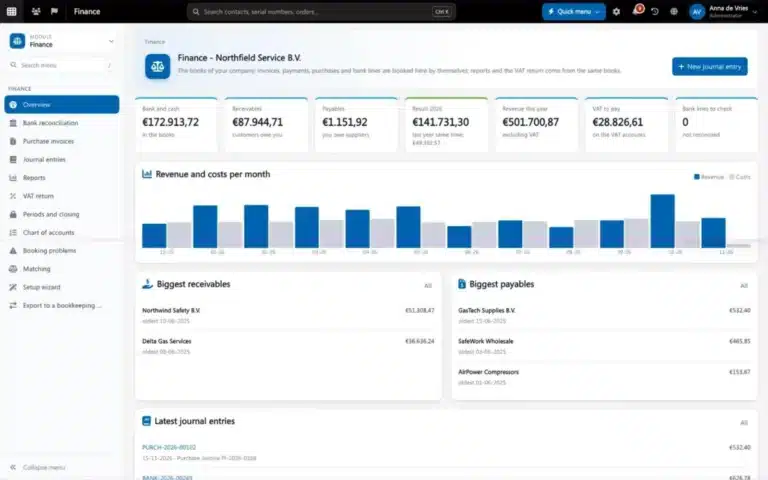
- Numbers a month late
- Bank in another tool
- VAT stress
- Bank payments
- Peppol e-invoicing
Question 4 of 17 · Service and inspections
Do you still register customer devices in Excel or your own Access database?
Serial numbers, service dates and certificates deserve better than a spreadsheet.
Brytend solves this
Every customer device, its history and its next service date
The Service module keeps the installed base per customer: serial numbers, inspections, calibrations and certificates. Plan visits, report on site and never miss a due date.
- Installed base per customer, with full history
- Inspections and certificates from the field
- Due dates planned automatically
Modules
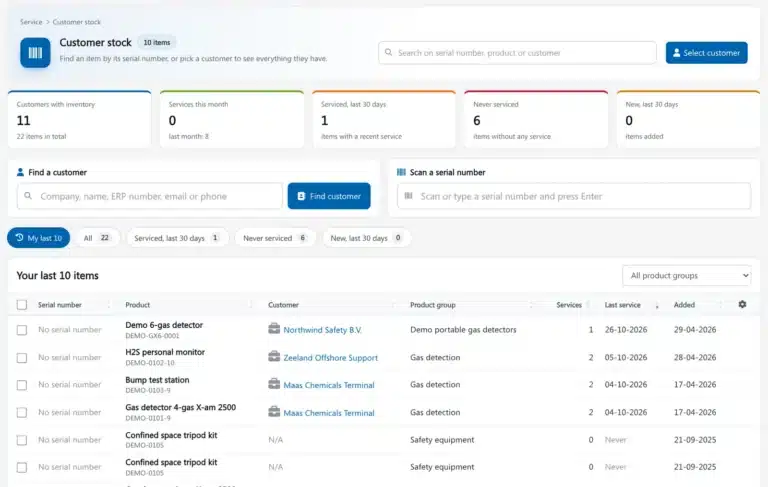
- Excel sheets
- Home-made Access database
- Missed service dates
Question 5 of 17 · Gas testing and cylinders
Are gas test requests and clearances still done on paper or by phone?
A lost permit or an untested space is a safety risk you cannot afford.
Brytend solves this
Gas tests and cylinders, safe and on record
Request a gas test, let the tester record the readings on the phone and issue the clearance in one flow. Gas cylinder tracking shows where every cylinder is and when it is due.
- Test requests and clearances in one flow
- Readings recorded on the phone
- Every gas cylinder tracked by location
Modules
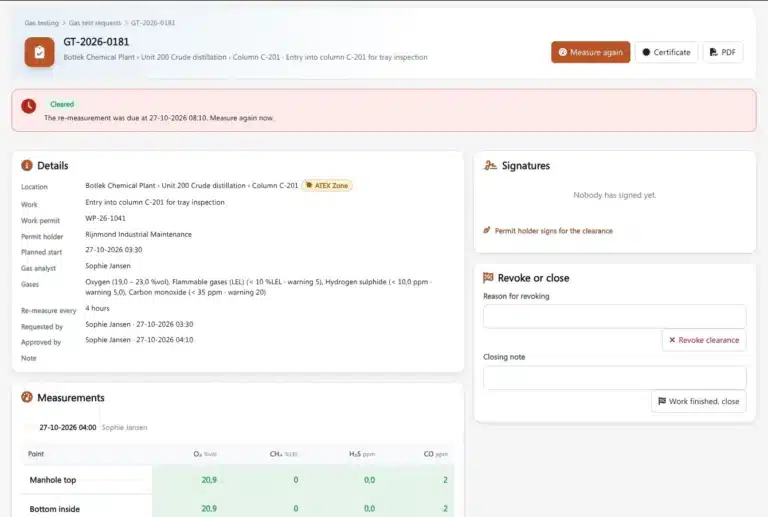
- Paper permits
- Requests by phone
- Cylinders gone missing
Question 6 of 17 · Rental
Do you plan rental equipment on a whiteboard and hope nothing is double-booked?
Double bookings and missed returns cost money and customers.
Brytend solves this
Rental planning that never double-books
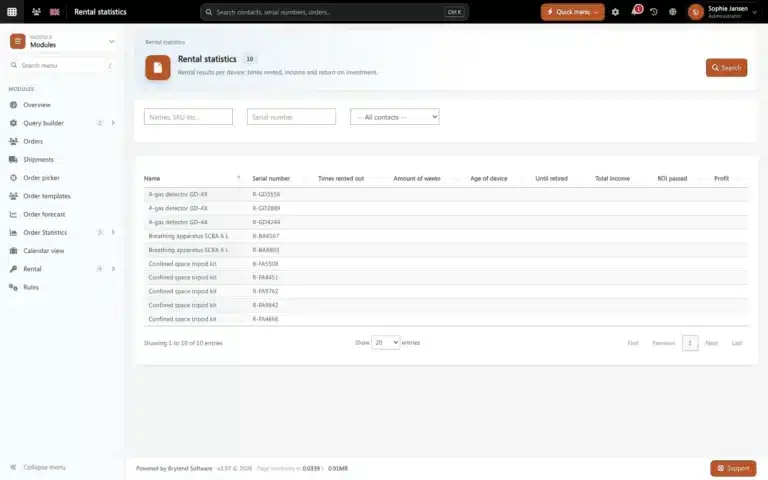
See which equipment is available, reserved or out, book it in a few clicks and invoice the rental period automatically.
- Availability per item at a glance
- Bookings, pick-up and returns
- Rental invoices without retyping
Modules
- Whiteboard planning
- Double bookings
- Late returns
Question 7 of 17 · Loan out
Do you lend demo units or replacement devices and lose track of who has them?
Loan units that never come back are pure loss.
Brytend solves this
A loan desk that knows where every unit is
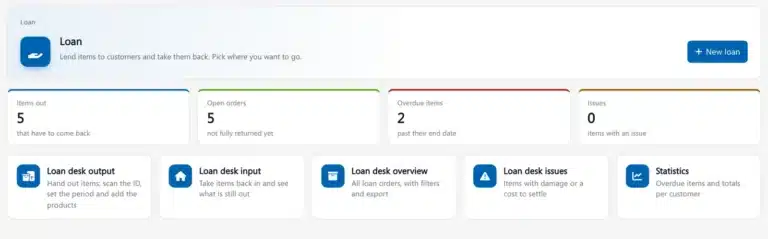
Lend out demo units, replacement devices and tools with a return date. The loan desk is part of the Rental and loans module: it reminds you before a loan is due and shows what is still out.
- Every loan with customer and return date
- Reminders before the due date
- Overview of everything that is still out
- Who has it?
- No return date
- Lost loan units
Question 8 of 17 · After sales
Do you only hear that a customer is unhappy when they leave?
Feedback after every job keeps customers coming back.
Brytend solves this
Feedback and follow-up after every job
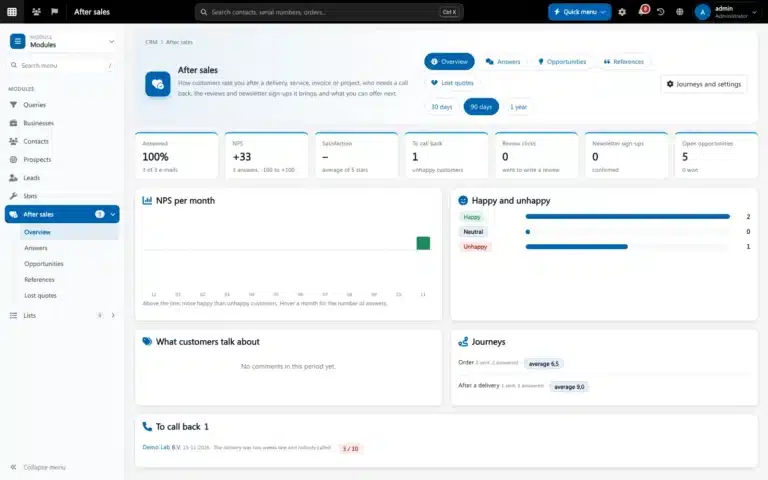
After sales sends a short survey after each delivery or service job, tracks NPS and turns follow-ups into tasks for your team.
- NPS and feedback after each job
- Follow-ups as tasks
- Spot unhappy customers early
Modules
- No feedback
- Silent churn
- Missed upsell
Question 9 of 17 · Stock and warehouse
Are you never quite sure what is on the shelf until someone counts it?
Stock-outs and surprise counts cost you sales and time.
Brytend solves this
Live stock across every warehouse
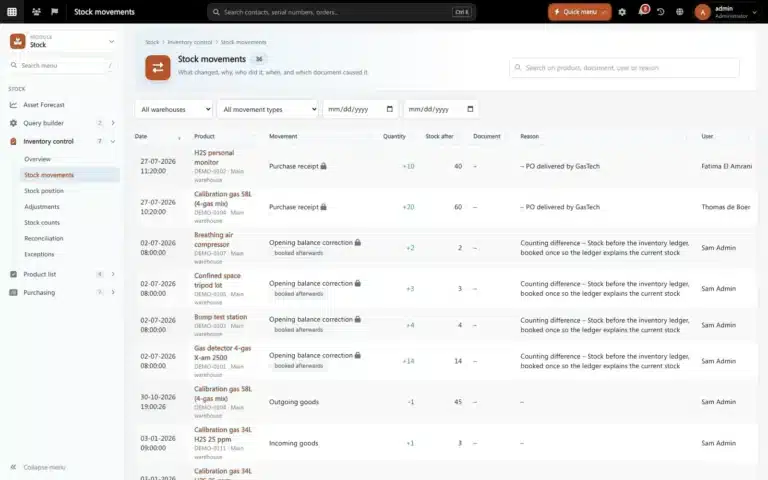
See stock, value and movements per warehouse in real time. Count with your phone and move stock between locations.
- Stock and value per warehouse, live
- Counts and stock movements on your phone
- Reorder before you run out
Modules
- Counting on paper
- Stock-outs
- Unknown stock value
Question 10 of 17 · Logistics
Are deliveries and shipments planned with spreadsheets and phone calls?
Every call to ask where something is costs time on both sides.
Brytend solves this
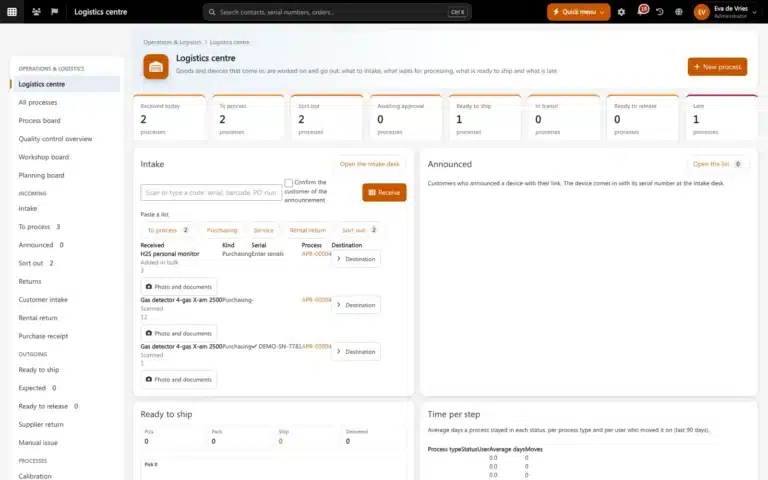
Operations and logistics in one control centre
Plan intake, processing and shipments in one logistics centre, with carriers connected and status visible to your team.
- Intake, process and shipment steps
- Shipping carriers connected
- Live status for every order
Modules
- Spreadsheet planning
- Where is my order?
- Manual labels
Question 11 of 17 · Quality and compliance
Are your procedures spread over folders, and is every audit a scramble?
An old version in circulation is an auditor's favourite finding.
Brytend solves this
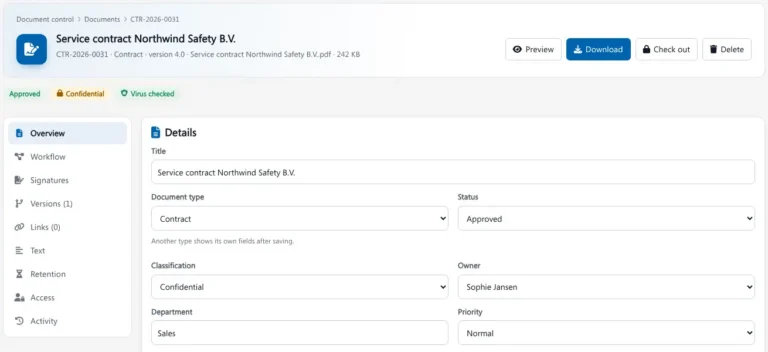
Controlled documents, ready for any audit
Document control gives every procedure one current version, an approval workflow and a full audit trail, with role-based access to who can see and sign what.
- Versions and approval workflows
- Full audit trail on every change
- Role-based access and two-factor sign-in
Modules
- Outdated versions
- Approvals by email
- Audit stress
Question 12 of 17 · Projects and tasks
Do your projects live in spreadsheets while to-dos get lost in email?
When nobody sees the whole plan, deadlines slip quietly.
Brytend solves this
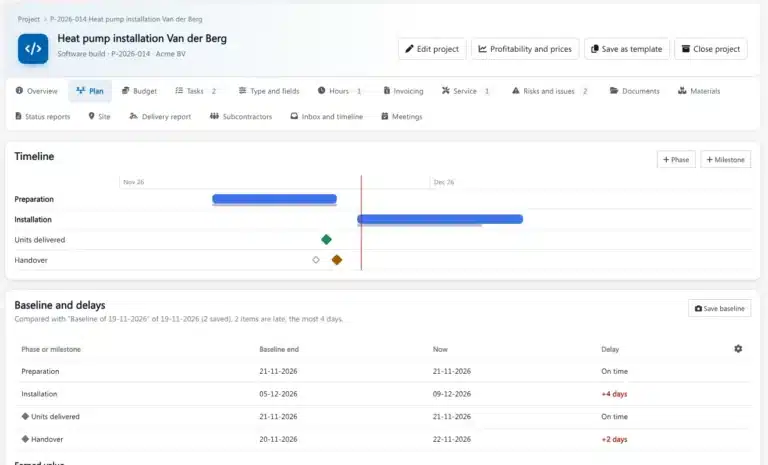
Plans, tasks and deadlines everyone can see
Plan projects on a timeline, assign tasks to people and see what is due today. Everything links back to the customer, quote or service job it belongs to.
- Project plans with milestones
- Tasks with owners and due dates
- Linked to customers, orders and jobs
Modules
- Spreadsheet plans
- Lost to-dos
- Missed deadlines
Question 13 of 17 · HR and intranet
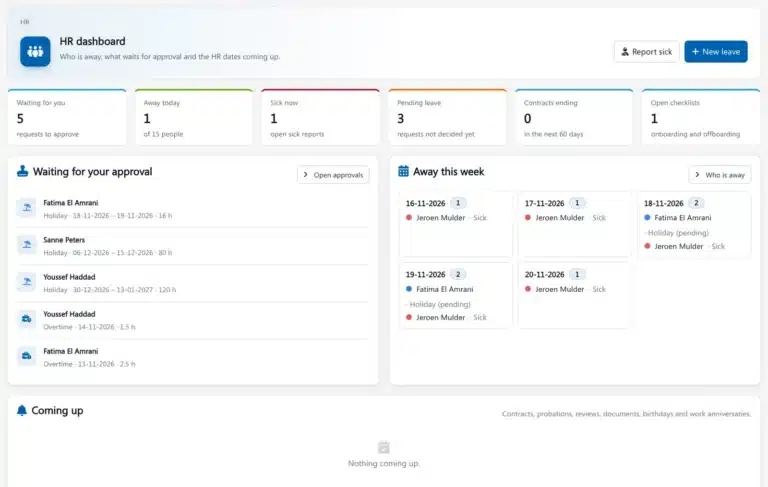
Are leave requests sent by email, and does company news get lost in the inbox?
HR admin should not eat up your week.
- Leave by email
- Absence in a spreadsheet
- News nobody reads
Question 14 of 17 · Academy
Do you track training and certificates in spreadsheets?
An expired certificate shows up at the worst moment: during an audit or on site.
Brytend solves this
Courses, attendance and certificates in one Academy
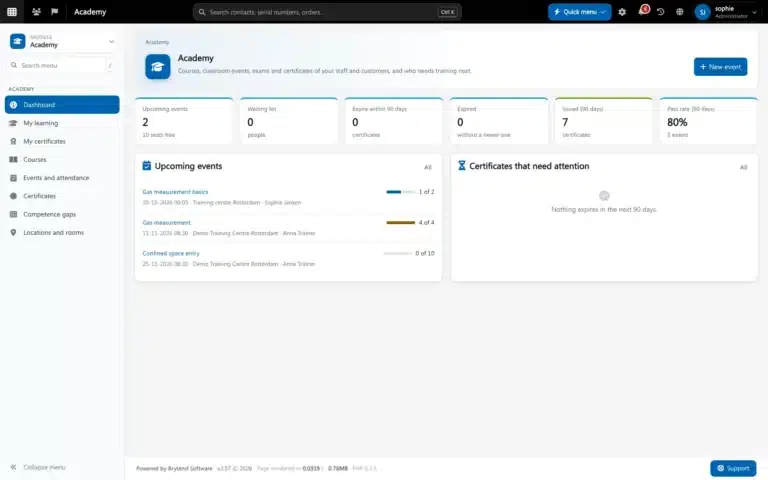
Academy runs online and classroom courses, records attendance and issues certificates, with a reminder before one expires.
- Online and classroom courses
- Attendance and results recorded
- Certificates with expiry reminders
Modules
- Expired certificates
- Training by email
- No attendance record
Question 15 of 17 · Help desk and support
Do customer questions get lost in a shared inbox?
Slow answers are the fastest way to lose a customer.
Brytend solves this
Every question answered, and answered once
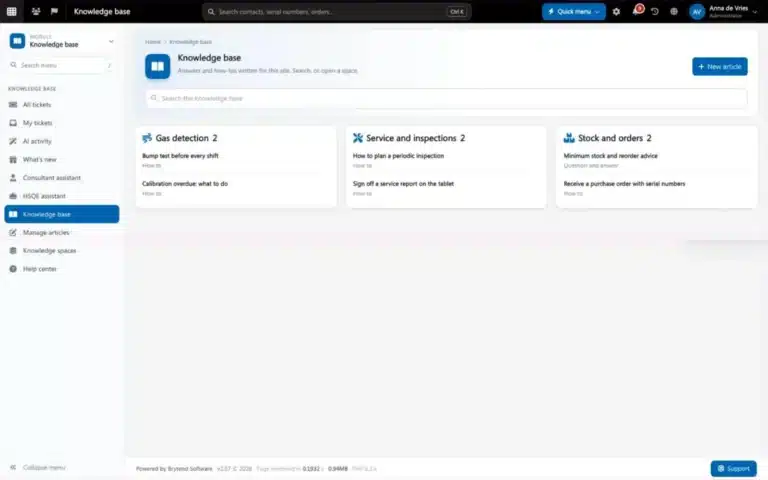
Help desk turns emails into tickets with an owner and a deadline. Support intelligence builds a knowledge base from solved tickets, so your team finds the answer faster next time.
- Tickets with owners, priorities and history
- Knowledge base built from solved tickets
- Brytend AI helps find the right answer
Modules
- Shared inbox chaos
- No ticket history
- Same question, again
- Brytend AI
Question 16 of 17 · Platform
Looking for an online tool that is safe and always available on your phone, tablet and PC?
GDPR at the core, AI driven, with a native app, and an ISO certified SaaS solution.
Brytend solves this
One secure platform, on every screen
Brytend is an ISO 9001 and ISO 27001 certified SaaS platform with GDPR built in from day one. Work in the browser on any device or in the native mobile app, with Brytend AI in every module.
- ISO 9001 and ISO 27001 certified
- GDPR at the core, with two-factor sign-in
- Native app plus any browser, on any device
Modules

- Data stuck on one PC
- No access on the road
- GDPR worries
- GDPR
- iPhone & iPad
- Android
- Brytend AI
Question 17 of 17 · Growth
Do you want Brytend to start finding new customers for you?
Let the Growth module search, enrich and score prospects while you focus on selling.
Brytend solves this
Growth Intelligence finds and warms up prospects
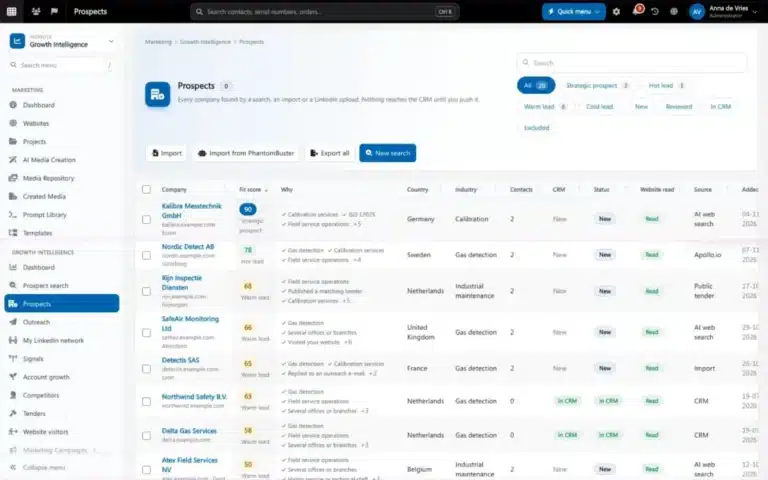
Connect LinkedIn, pull in leads from PhantomBuster and let Brytend AI enrich and score every company. Marketing then follows up with campaigns and surveys.
- Find contacts on LinkedIn from inside Brytend
- Import PhantomBuster leads straight into prospect lists
- AI scoring, campaigns and surveys to follow up
Modules
- Cold lists
- Searching LinkedIn by hand
- Leads without follow-up
- PhantomBuster
- Brytend AI
- MailerLite
Your Brytend
Brytend is a strong fit for you
One platform for everything you said yes to. Try it with your own data, or let us show you around in 30 minutes.
No credit card. Demo slots on weekdays 09:00-11:00 and 14:00-16:00.
 17 of 17 areas · 30 modules
- Microsoft 365 and CRM
- Quote to cash
- Finance
- Service and inspections
- Gas testing and cylinders
- Rental
- Loan out
- After sales
- Stock and warehouse
- Logistics
- Quality and compliance
- Projects and tasks
- HR and intranet
- Academy
- Help desk and support
- Platform
- Growth
Performance Degradation That Erodes Competitive Advantage
Equipment that isn’t serviced properly slowly loses efficiency, even while it keeps running. A manufacturing line running at ninety-two percent of design capacity might not seem problematic until you calculate the annual production shortfall. Multiply that gap across multiple assets and suddenly you understand why competitors with identical equipment achieve better throughput. The difference lies in asset service management practices that maintain peak performance versus approaches that accept gradual decline as normal.
Energy consumption increases when equipment operates outside optimal parameters. Motors running with worn bearings draw more power, HVAC systems with dirty filters work harder to achieve the same results, and hydraulic systems with contaminated fluid waste energy through friction and heat. These inefficiencies accumulate into substantial utility costs that proper maintenance would prevent. Organizations focused on sustainability and cost reduction often overlook this connection between service discipline and energy performance.
Quality problems emerge from equipment that drifts out of specification. Manufacturing tolerances tighten across industries, but the equipment producing those precise results needs regular calibration and adjustment. When service intervals slip, output quality degrades subtly at first, then noticeably. By the time quality control catches the issue, you may have produced significant quantities of substandard product. The cost of scrap, rework, and potential customer returns dwarfs what proactive service would have required. Resources like ServiceNow’s implementation guidance highlight how asset management directly impacts operational quality.
Integration Failures Across Business Systems
Asset service management can’t work on its own, yet many companies run it as a separate activity. Maintenance schedules need to coordinate with production planning, parts inventory, vendor management, and financial systems. When these connections don’t exist, you encounter situations where maintenance wants to service equipment during a critical production run, or purchase orders for service parts get delayed because finance didn’t anticipate the expenditure.
Data silos block the analysis you need to improve. Your maintenance system knows when assets were serviced, your ERP system tracks costs, your production system measures output, and your quality system records defects. But if these systems cannot share information, you cannot identify correlations between maintenance practices and business outcomes. The insights that would optimize service intervals, predict failures, or justify equipment upgrades remain locked away in disconnected databases.
Without mobile access, technicians in the field work blind. Service work increasingly happens at remote locations, customer sites, or distributed facilities. Technicians who cannot access asset histories, service procedures, or documentation while on location rely on memory and improvisation. They cannot update service records in real time, leading to delayed or incomplete documentation. When service providers work on your assets, the information gap widens further because external technicians typically have no access to your systems at all.
Custom software solutions from experienced developers can bridge these gaps by creating integrated platforms tailored to specific operational requirements. Rather than forcing workflows into generic software limitations, Brytend builds systems that reflect how organizations actually operate while establishing the data connections that enable informed decisions.
Vendor Relationship Management Blind Spots
Service providers are often judged on gut feeling instead of data. You might believe a particular vendor delivers excellent service, but without data on response times, first-time fix rates, or cost trends, that impression could be incorrect. Poor vendor performance costs money through extended downtime, repeat visits, and inflated invoicing. But identifying underperforming vendors requires systematic tracking that many organizations lack.
Service contracts get handled only when something goes wrong, instead of being managed deliberately. Many assets come with service contracts or warranties that include specific terms about response times, parts coverage, and labor rates. These agreements often contain provisions that benefit the customer, but only if you invoke them properly. Without systems that track contract terms alongside asset records, you miss opportunities to hold vendors accountable or to make informed renewal decisions.
When service data is scattered, you can’t see where fewer vendors would do the job. You might use twelve different service providers across your asset portfolio when three could handle everything more efficiently. Volume commitments with fewer vendors typically yield better pricing and service priority. But identifying consolidation opportunities requires visibility into who services what equipment, at what cost, and with what results. Insights from SolarWinds on ITSM asset management emphasize vendor relationships as a critical component of effective asset management.
Risk Accumulation Through Inadequate Asset Visibility
Shadow IT and untracked assets create security and compliance vulnerabilities that organizations discover only when problems emerge. Departments acquire equipment outside standard procurement processes, deploy it without proper documentation, and operate it without oversight. When these assets fail, require service, or create problems, central management has no records and no ability to respond effectively. The proliferation of untracked assets undermines every attempt at comprehensive asset service management.
You can’t plan replacements if you can’t see which assets are nearing the end of their life. Equipment doesn’t announce that it will fail in six months, but analysis of service frequency, repair costs, and performance trends can predict when replacement becomes economical. Organizations lacking this analytical capability get surprised by failures that should have been anticipated, forcing reactive decisions about critical equipment at the worst possible moments.
Equipment that sits idle is capital that could be working elsewhere. Many organizations own equipment that sits idle while other departments rent or purchase similar capabilities. Without centralized visibility into what assets exist, where they are located, and how intensively they are used, these inefficiencies persist. The opportunity cost of capital locked up in underutilized assets compounds year after year.
Technology Evolution and Digital Transformation
Asset service management today needs things spreadsheets and paper can’t do. IoT sensors monitor equipment conditions in real time, predictive analytics forecast failures before they occur, and mobile applications enable field technicians to access and update information instantly. Organizations still relying on manual processes cannot leverage these technologies because the foundational data infrastructure doesn’t exist.
Machine learning applications in asset management depend on comprehensive historical data. Algorithms that predict optimal service intervals or identify early failure patterns need years of detailed service records, performance metrics, and failure data. Companies that spent years tracking assets manually discover their records are too incomplete or inconsistent to support advanced analytics. The competitive advantage that technology should provide remains out of reach because the groundwork was never established.
Digital transformation projects often stall when they run into gaps in asset management. Leaders envision smart factories, connected facilities, or predictive operations, but these visions require knowing what assets you have, their current condition, and their service history. Transformation projects that assume this information exists often discover months into implementation that basic asset data is missing or unreliable. The entire initiative must pause while teams retroactively build the asset foundation that should have already existed.
Building Sustainable Asset Service Management Practices
Effective asset service management starts with complete asset inventories that capture every relevant detail. Each asset needs a unique identifier, location tracking, specification documentation, and linkages to related equipment or systems. This groundwork is tedious, but everything else depends on it. Organizations that skip this step in favor of partial implementations discover they cannot scale effectively when their portfolio grows.
Standardized service procedures ensure consistency even as personnel change. Documenting exactly how each type of asset should be serviced, what inspections are required, and what criteria determine pass or fail creates institutional knowledge that survives turnover. Technicians working from standardized procedures deliver more reliable results and capture more useful data during service activities.
To keep improving, measure what matters and act on what you find. Track metrics like mean time between failures, service costs per asset type, schedule compliance rates, and downtime incidents. Review these metrics regularly to identify trends, outliers, and opportunities for optimization. Asset service management matures through this cycle of measurement, analysis, and refinement rather than through one-time fixes or sporadic attention.
Frequently Asked Questions
What is the difference between asset management and asset service management?
Asset management encompasses the complete lifecycle of physical assets from acquisition through disposal, including financial tracking, utilization optimization, and strategic planning. Asset service management specifically focuses on the maintenance, repair, inspection, and upkeep activities that keep assets operational throughout their useful life. While asset management answers questions about what assets you own and their financial value, asset service management addresses how to maintain them properly and prevent failures. Both disciplines overlap significantly, but service management emphasizes the operational activities that preserve asset performance and extend useful life.
How do you calculate the return on investment for implementing structured asset service management?
Calculate ROI by comparing current costs against projected improvements across multiple categories. Measure existing expenses for emergency repairs, unplanned downtime, overtime labor, expedited parts shipping, warranty claims rejected due to documentation gaps, and regulatory fines. Then estimate reductions in each category based on proactive maintenance, improved scheduling, better parts planning, and compliance documentation. Include soft benefits like reduced safety incidents, improved equipment performance, and extended asset lifespans. Most organizations discover that reducing unplanned downtime by twenty percent alone justifies the investment, with additional savings from the other categories providing substantial additional returns within the first year.
What information should be tracked for each individual asset in a service management system?
Comprehensive asset records include identification details like serial numbers, model information, and location assignments. Service history must capture every maintenance activity with dates, technician names, work performed, parts replaced, and observations about asset condition. Track warranty information including coverage periods, terms, and claim procedures. Document specifications, operating parameters, and performance baselines. Maintain links to user manuals, service procedures, and safety documentation. Record total cost of ownership data including acquisition cost, accumulated maintenance expenses, and utilization metrics. Include custom fields relevant to specific industries like calibration certificates, compliance inspection results, or environmental monitoring data.
How frequently should different types of assets undergo preventive service?
Service intervals depend on manufacturer recommendations, regulatory requirements, operational intensity, and historical performance data. Critical assets supporting production or safety typically need more frequent attention than backup equipment or administrative tools. Start with manufacturer-specified intervals, then adjust based on actual operating conditions and failure patterns observed in your environment. Assets operating in harsh conditions, running continuously, or supporting critical functions may need service twice as often as manufacturer baselines suggest. Conversely, lightly used assets in controlled environments might extend intervals safely. The key is tracking actual performance to optimize intervals rather than blindly following generic schedules that may not match your specific circumstances.
What are the most common mistakes organizations make when implementing asset service management programs?
Many organizations focus exclusively on technology selection while neglecting process design and change management. They purchase sophisticated software but continue following the same dysfunctional workflows that caused problems previously. Another frequent mistake involves attempting to track everything immediately rather than starting with critical assets and expanding systematically. Organizations also underestimate the effort required for initial data collection, leading to incomplete implementations that undermine confidence in the system. Failing to assign clear ownership for data accuracy and process compliance allows the system to degrade over time as people revert to old habits. Finally, treating implementation as a one-time project rather than an ongoing discipline prevents the continuous improvement necessary for long-term success.
How can small organizations with limited resources implement effective asset service management?
Start by identifying your twenty percent of assets that create eighty percent of operational risk or cost. Implement rigorous tracking and maintenance for these critical assets first, proving value before expanding scope. Use existing tools creatively rather than waiting for perfect solutions. Simple databases or even well-structured spreadsheets with clear ownership and update protocols outperform sophisticated software that nobody maintains. Establish minimal viable processes that people will actually follow rather than comprehensive procedures that seem overwhelming. Build service management into existing workflows instead of creating parallel processes that compete for attention. Consider cloud-based solutions that eliminate infrastructure requirements and provide scalability as needs grow without requiring major reinvestment.
What role does asset service management play in sustainability and environmental responsibility?
Proper maintenance significantly extends asset useful life, reducing the environmental impact of manufacturing replacements and disposing of failed equipment. Well-maintained assets operate more efficiently, consuming less energy and producing fewer emissions than equipment running outside optimal parameters. Service activities provide opportunities to upgrade components with more efficient alternatives during routine maintenance rather than waiting for complete replacement. Comprehensive service records support circular economy initiatives by documenting asset condition accurately, enabling resale, redeployment, or refurbishment rather than premature disposal. Organizations can track environmental metrics like energy consumption, fluid leaks, or emissions alongside traditional maintenance data to identify assets with disproportionate environmental impact and prioritize improvements accordingly.
Asset service management separates organizations that control their operations from those constantly reacting to preventable failures. The cost of inadequate practices compounds through missed maintenance, compliance violations, and equipment failures that cascade into operational disruptions. Brytend develops custom software solutions that transform fragmented asset information into integrated systems supporting proactive decisions. Our team understands that effective asset service management requires technology tailored to your specific workflows, equipment types, and operational requirements rather than forcing your processes into generic software constraints.
Maintaining lifts and escalators? See how Brytend works as elevator maintenance software.