A PPE inspection checklist lists what to check on each type of personal protective equipment, how often, and what makes an item unfit for use. It turns a vague rule like “inspect PPE regularly” into concrete steps for harnesses, helmets, gloves, respirators, eye protection and hearing protection. The checklist only works if every result is recorded against the item it belongs to, so that you can prove, item by item, that the equipment your people wore was safe on the day they wore it.
TL;DR:
- Every item gets a quick pre-use check by the wearer; critical items also get a periodic check by a competent person
- Fall protection needs a detailed examination at least every 12 months; insulating gloves are electrically retested every 6 months
- Use a checklist per equipment type with clear reject criteria, not one generic form
- Give every critical item a unique ID so results, repairs and expiry dates stay with that item
- Remove failed items from use at once and record why
Why Does PPE Need to Be Inspected?
PPE is the last line of protection. When it fails, there is usually nothing left between the worker and the hazard. Most PPE also wears out in ways that are not obvious: webbing loses strength under UV light, helmet shells become brittle, glove rubber develops pinholes and respirator valves stiffen.
Regulators expect employers to make sure PPE is in good condition. In the US, OSHA 1910.132 states that defective or damaged PPE shall not be used. In the EU, the PPE Regulation (EU) 2016/425 covers the products, while national workplace rules require employers to maintain them according to the manufacturer’s instructions. In practice, both lead to the same thing: a routine of inspections with records.
What Are the Levels of PPE Inspection?
| Level | When | Who | Depth |
|---|---|---|---|
| Pre-use check | Before each use | The wearer | Visual and tactile check, a few minutes |
| Periodic or detailed inspection | At fixed intervals, often every 6 or 12 months | Competent person | Full check against the manufacturer’s criteria, recorded |
| Interim inspection | In harsh conditions or after an incident | Competent person | As detailed inspection, triggered by use or event |
| Test or service | As specified, for example every 6 months for insulating gloves | Test lab or authorised service | Measured test, certificate |
Not every item needs all four levels. Disposable earplugs only need a pre-use check. A full-body harness needs all of them.
What Should a PPE Inspection Checklist Include per Equipment Type?
Fall protection: harnesses, lanyards and self-retracting lifelines
- Webbing: cuts, fraying, burns, chemical damage, hardening, discoloration from UV.
- Stitching: broken, pulled or worn stitches, especially at load-bearing points.
- Hardware: D-rings, buckles and snap hooks free of cracks, deformation and corrosion; gates close and lock.
- Fall indicators: not deployed. A deployed indicator means the item has arrested a fall and must be withdrawn.
- Labels: readable, with serial number and date of manufacture.
- Self-retracting lifelines: line retracts fully, brake locks, housing undamaged.
In Europe, EN 365 requires a periodic examination of fall protection at least every 12 months by a competent person, with the result recorded on an equipment record. ANSI Z359 rules in the US set similar requirements.
Head protection
- Shell: no cracks, dents, deep scratches, chalky surface or signs of heat.
- Suspension: straps and clips intact, no cracking.
- Age: within the manufacturer’s service life, counted from the date stamped in the shell.
- Impact: any helmet that has taken a significant blow is replaced, even if it looks fine.
Hand protection
- General gloves: holes, tears, worn palms, stiffness, contamination.
- Chemical gloves: inflate or roll to find pinholes; check against breakthrough time for the chemicals used.
- Electrical insulating gloves: air test before each use; electrical retest every 6 months (OSHA 1910.137), with the test date marked.
Eye and face protection
- Lenses clear, no scratches that blur vision, no cracks.
- Frames, side shields and headbands intact; face shields properly attached.
Hearing protection
- Ear muff cushions soft and sealed, headband tension fine.
- Reusable earplugs clean and flexible; disposable plugs used once.
Respiratory protection
- Facepiece, straps and valves intact; filters within shelf life and the right type for the hazard.
- Powered respirators: battery, airflow alarm and hoses checked.
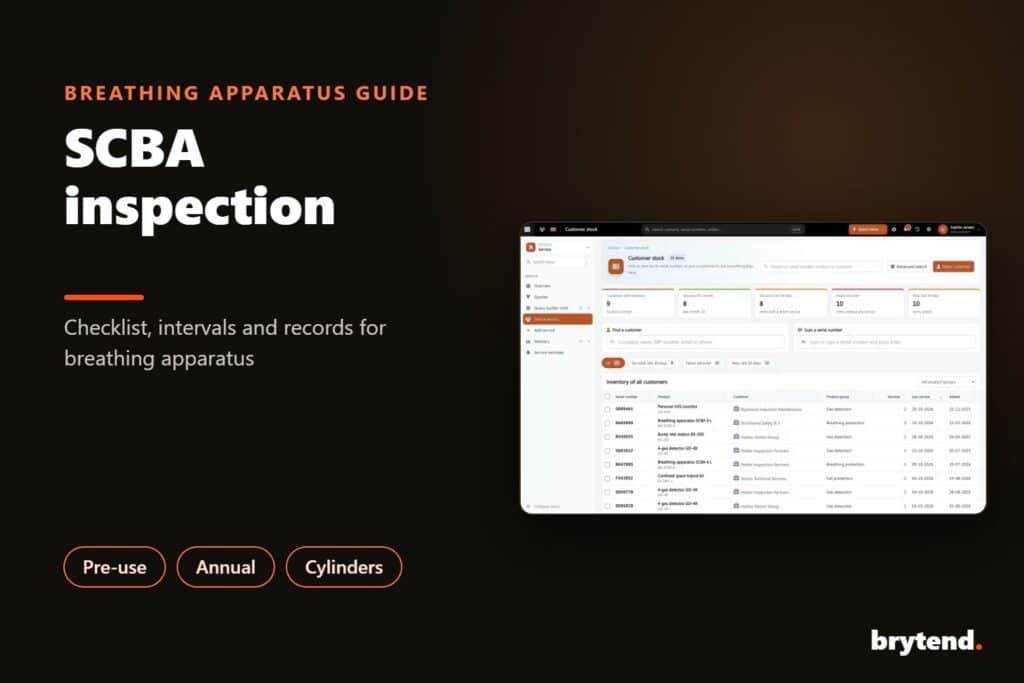
- Breathing apparatus: follow the full checklist in our SCBA inspection guide.
Gas detectors worn as PPE
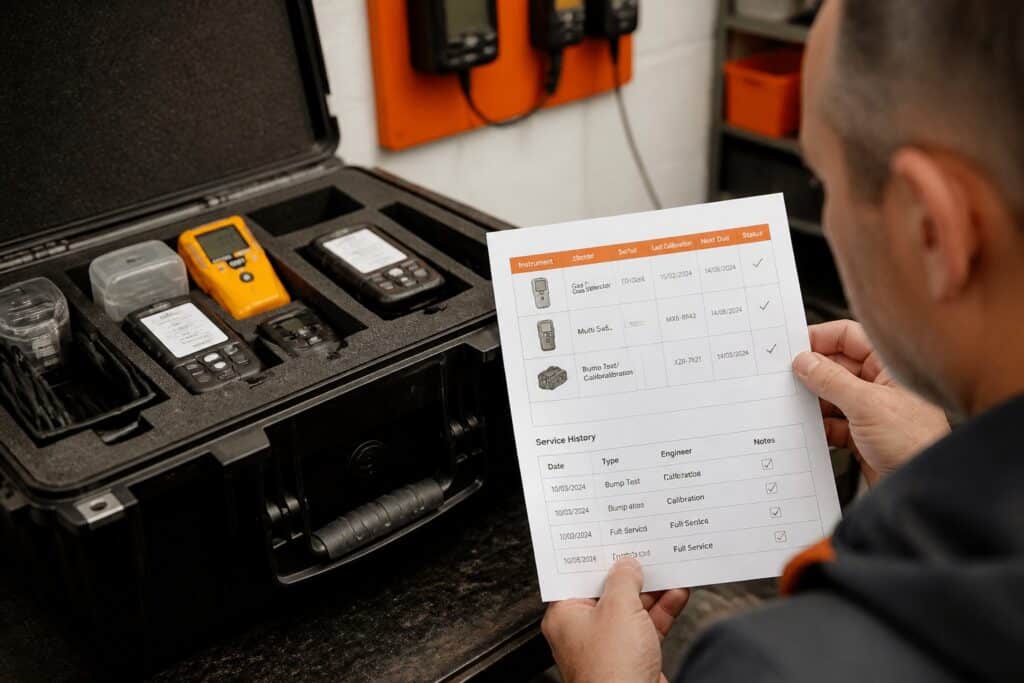
Personal gas detectors protect the wearer as much as a respirator does. They need a bump test before use and periodic calibration, recorded per serial number.
How Often Should PPE Be Inspected?
| Equipment | Pre-use | Periodic |
|---|---|---|
| Full-body harness, lanyards | Every use | At least every 12 months (EN 365), more often in harsh use |
| Self-retracting lifeline | Every use | Per manufacturer, often 12 months, with service |
| Safety helmet | Every use | Replace at end of service life or after impact |
| Electrical insulating gloves | Every use (air test) | Electrical retest every 6 months |
| Respirators (emergency use) | Every use | At least monthly (OSHA 1910.134) |
| SCBA | Every use | Monthly when stored, annual bench test |
| Portable gas detector | Bump test before use | Calibration per manufacturer |
These are common intervals, not a replacement for the manufacturer’s instructions or your own risk assessment. Where the two differ, the stricter one wins.
How Do You Record PPE Inspections?
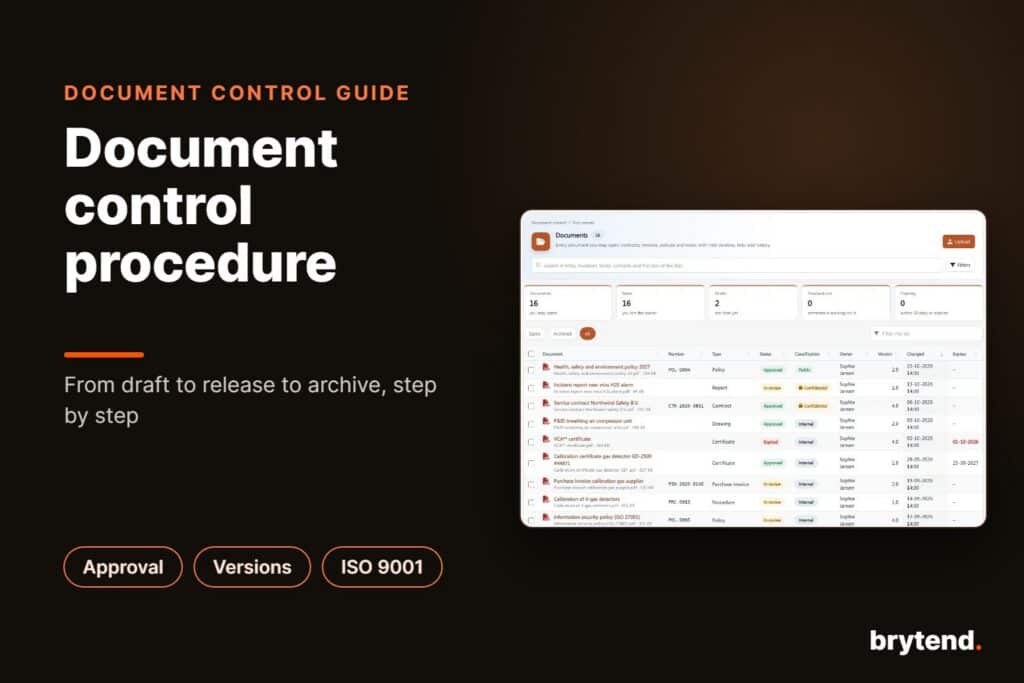
A record that holds up in an audit or after an incident shows which item was checked, by whom, when, against which checklist, with what result, and what happened to items that failed. A few practical rules:
- Give every critical item a unique ID. Harnesses, lanyards, lifelines, insulating gloves and respirators each get their own serial number or label. A QR code label lets the inspector open the right record with a phone.
- Link each item to a person or location. Issued to whom, kept in which store, at which site.
- Use the checklist for that type. A harness check and a glove check have different questions and different reject criteria.
- Store dates that matter. Date of manufacture, first use, last inspection, next inspection, end of life.
- Record the outcome as a status. In use, quarantined, repaired, withdrawn. A withdrawn item should be destroyed or clearly marked so it cannot come back into use.
- Keep inspector competence on file. The person doing periodic checks must be competent for that equipment; keep their training records with the inspection records.
Spreadsheet or PPE Management Software?
A spreadsheet can hold a PPE register for a small team. It struggles once there are hundreds of items across several sites, or when a service company inspects PPE for many customers. The usual problems are missed due dates, copies of the sheet that disagree, and no proof of who changed what.
| Spreadsheet | PPE management software | |
|---|---|---|
| Due dates | Manual, easy to miss | Calculated, with reminders |
| Checklist per type | Separate forms, often paper | Built in, on phone or tablet |
| History per item | Scattered over tabs and files | One record per serial number |
| Failed items | Relies on someone updating the sheet | Status changes at once, item blocked |
| Certificates | Made by hand | Generated and emailed |
| Audit trail | Weak | Who, what and when logged |
Good PPE inspection software works the same way for every equipment type: register the item, attach the checklist for its product group, plan the next check, and produce a certificate. That is also how service companies handle other safety equipment such as gas detectors and breathing apparatus, so one system can cover all of it. See our guide to inspection management software for what to compare.
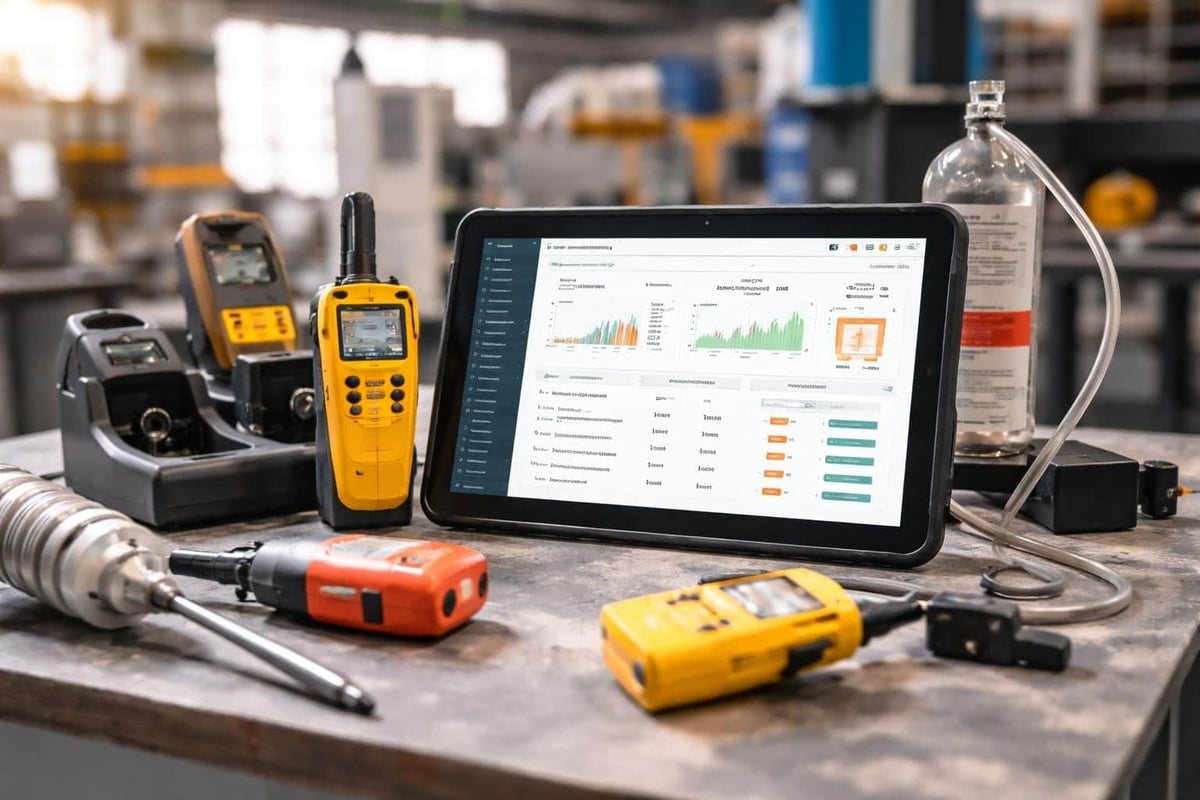
In Brytend, PPE is registered per serial number in the Service and Inspections module, with a service protocol and certificate layout per product group, linked to the customer, site and person who uses it. The next inspection date follows from the last one, and health and safety teams can see the status of all equipment in one overview. For the wider health and safety picture, read our guide to EHS software.
What Are Common PPE Inspection Mistakes?
- One generic form for all PPE. It leads to ticked boxes that do not match the item in hand.
- No unique ID on items. Without an ID, “harness inspected” cannot be tied to the harness that was worn.
- Ignoring age. Helmets and harnesses expire even when unused.
- Keeping failed items in the store. Quarantined items that are not clearly marked find their way back into use.
- Inspections by people without the right training. Periodic checks need a competent person, and the competence must be on record.
Frequently Asked Questions About PPE Inspection
What is a PPE inspection checklist?
A PPE inspection checklist is a list of checks for a specific type of protective equipment, with clear criteria for when an item must be taken out of use. It is used for pre-use checks by the wearer and for periodic inspections by a competent person, and each result is recorded against the item.
How often should PPE be inspected?
All PPE should be checked by the wearer before each use. Critical items also need periodic inspections: fall protection at least every 12 months under EN 365, insulating gloves an electrical retest every 6 months, and emergency respirators at least monthly.
Who can carry out a periodic PPE inspection?
Periodic inspections should be done by a competent person: someone trained to inspect that type of equipment, often with training from the manufacturer. Their competence should be documented alongside the inspection records.
What makes PPE fail an inspection?
Typical reasons are cuts, burns or chemical damage to webbing and fabric, cracks in helmets or visors, damaged or corroded hardware, deployed fall indicators, holes in gloves, and items past their service life. Any of these means the item is withdrawn from use.
How long should PPE inspection records be kept?
Keep records at least for the life of the item and as long as local law or your insurer requires after it is withdrawn. Records of fall protection and respiratory equipment are often kept for several years because they may be needed after an incident.
Does every PPE item need a serial number?
Disposable items such as earplugs do not. Critical, reusable items such as harnesses, lanyards, lifelines, insulating gloves and respirators should each have a unique ID, so every inspection can be traced to the exact item.
What is PPE inspection software?
PPE inspection software registers each item, holds a checklist per equipment type, plans the next inspection, blocks failed items and produces certificates. It replaces paper forms and spreadsheets and gives one history per item for audits.
A PPE inspection checklist protects people only when it is specific per equipment type and every result is tied to the item that was checked. Give critical items an ID, let due dates drive the work and make failed items impossible to use by accident. Want one place for PPE, breathing apparatus and gas detectors? Visit Brytend and start a free 90-day trial.