The difference between preventive and predictive maintenance is when the work is done. Preventive maintenance follows a fixed schedule, based on time or usage, such as servicing a compressor every 12 months or replacing a filter every 500 hours, whether the part needs it or not. Predictive maintenance uses data about the actual condition of the equipment, such as vibration, temperature, test results or failure history, to predict when it will need attention, and schedules the work just before that point. Preventive maintenance is simpler and works for most equipment; predictive maintenance saves cost on critical or expensive assets but needs data and tools.
TL;DR:
- Preventive maintenance is planned by calendar or usage; predictive maintenance is planned by measured condition or forecast
- Preventive is easy to start and to audit, but replaces parts that still had life left
- Predictive needs sensors or good service history and analysis, but avoids both early replacement and surprise failures
- Many safety-critical instruments must keep fixed legal or manufacturer intervals, even when you also predict
- AI helps most by forecasting from data you already have: test results, failure history, usage and due dates
Predictive maintenance is maintenance planned on the predicted condition of an asset; preventive maintenance is maintenance planned on a fixed interval.
What Is Preventive Maintenance?
Preventive maintenance (PM) means doing planned work on equipment at fixed intervals to reduce the chance of failure. The interval can be based on time (every month, every year) or on usage (every 1,000 operating hours, every 10,000 cycles). Typical tasks are inspections, cleaning, lubrication, replacing wear parts, calibration and functional tests.
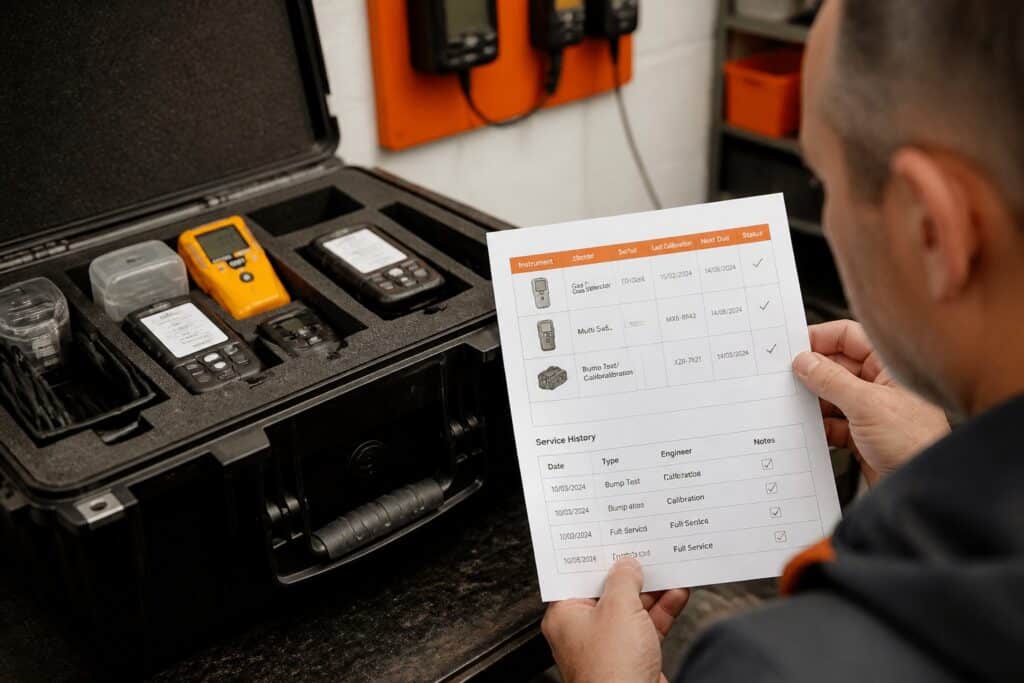
The interval usually comes from the manufacturer, a standard or a law. Gas detectors, breathing apparatus, fire extinguishers, lifting equipment and medical devices all have required inspection or calibration intervals. For this kind of equipment preventive maintenance is not optional.
Advantages: simple to plan, easy to explain to customers and auditors, and much better than waiting for breakdowns. Disadvantages: parts are replaced while they still have life left, and failures between two services still happen.
What Is Predictive Maintenance?
Predictive maintenance (PdM) uses data to estimate when equipment is likely to fail or drift out of tolerance, and plans the work just before that moment. The data can come from sensors (vibration, temperature, oil analysis, current), from inspections and test results, or from the service history of similar equipment. You can read a broader overview of predictive maintenance techniques.
Examples in daily practice:
- A pump’s vibration level rises week by week, so the bearing is replaced before it seizes
- A gas detector sensor needs more correction at every calibration, so it is replaced at the next visit instead of failing a bump test on site
- A fleet of rental compressors shows that units over a certain age fail twice as often in winter, so they get an extra check in October
Advantages: fewer unexpected failures, parts used closer to their real life, better planning of technicians and stock. Disadvantages: needs data, some analysis and often an investment in sensors or software.
What Is the Difference Between Preventive and Predictive Maintenance?
| Preventive maintenance | Predictive maintenance | |
|---|---|---|
| Trigger | Fixed time or usage interval | Measured condition or forecast |
| Data needed | Asset list and intervals | Condition data, test results, history |
| Start-up cost | Low | Medium to high |
| Parts usage | Some parts replaced too early | Parts replaced closer to end of life |
| Unplanned failures | Reduced | Reduced further |
| Planning | Predictable months ahead | Shorter notice, but fewer emergencies |
| Compliance | Matches legal and manufacturer intervals | Must still respect required intervals |
| Best for | Most equipment, regulated instruments | Critical, expensive or high-volume assets |
The two are not opposites. Reactive maintenance (fix it when it breaks) is the real opposite. Preventive and predictive are two levels of planned maintenance, and most mature service organisations use both.
Which Is More Cost-Effective?
It depends on what a failure costs. For a cheap item that is easy to replace, even reactive maintenance can be the cheapest choice. For a regulated safety instrument, preventive maintenance at the required interval is the baseline you cannot go below. Predictive maintenance pays off where a failure is expensive, dangerous or disruptive, and where the data to predict it is available or cheap to collect.
A practical way to decide per asset type:
- Low cost of failure: reactive or simple preventive maintenance
- Required by law or manufacturer: preventive at the required interval, plus predictive insights to catch problems between visits
- High cost of failure and condition can be measured: predictive maintenance on top of a basic preventive plan
How Do You Move From Preventive to Predictive Maintenance?
1. Get the asset register right
You cannot predict anything about equipment you cannot identify. Every asset needs a unique ID, type, location, customer and service history. QR codes or serial numbers on the equipment help technicians log work against the right asset.
2. Record results, not just “done”
A preventive job that only says “service done” teaches you nothing. Record measured values, found defects, parts replaced and calibration corrections. That history is the raw material for prediction.
3. Start with the assets that hurt most
Pick the equipment types with the most failures, the highest repair cost or the biggest customer impact. Look at their history for patterns: age, usage, season, customer site, model.
4. Add forecasts and thresholds
Turn patterns into rules and forecasts: replace a sensor when its correction exceeds a threshold, add a check before winter for older units, forecast next quarter’s service volume so you can plan people and parts.
5. Keep the preventive base
Do not drop required intervals because a model says the equipment is fine. Use predictions to add or advance work, not to skip legally required inspections.
Where Does AI Fit in Predictive Maintenance?
AI is often presented as sensors plus machine learning, but most service companies get more value from something simpler: using the data they already have. Every inspection, calibration, test result, repair and stock movement is a data point. AI and forecasting models can turn that into practical answers:
- Which assets are due or overdue in the next 30 days, per customer and region
- Which instruments drift faster than others of the same type
- How many service jobs to expect next month, so you can plan technicians
- Which parts and consumables you will need, so stock is ready before the work
- Which customers have equipment at risk, so sales can offer replacement in time
The point is not the algorithm. The point is getting the right job planned before the failure, with the right person and the right parts.
How Does Brytend Support Preventive and Predictive Maintenance?
The Brytend Service Module handles the preventive side: every asset with its service, inspection and calibration intervals, due dates per customer, work orders for technicians and certificates after the job. Results are recorded per asset, so the history builds up automatically.
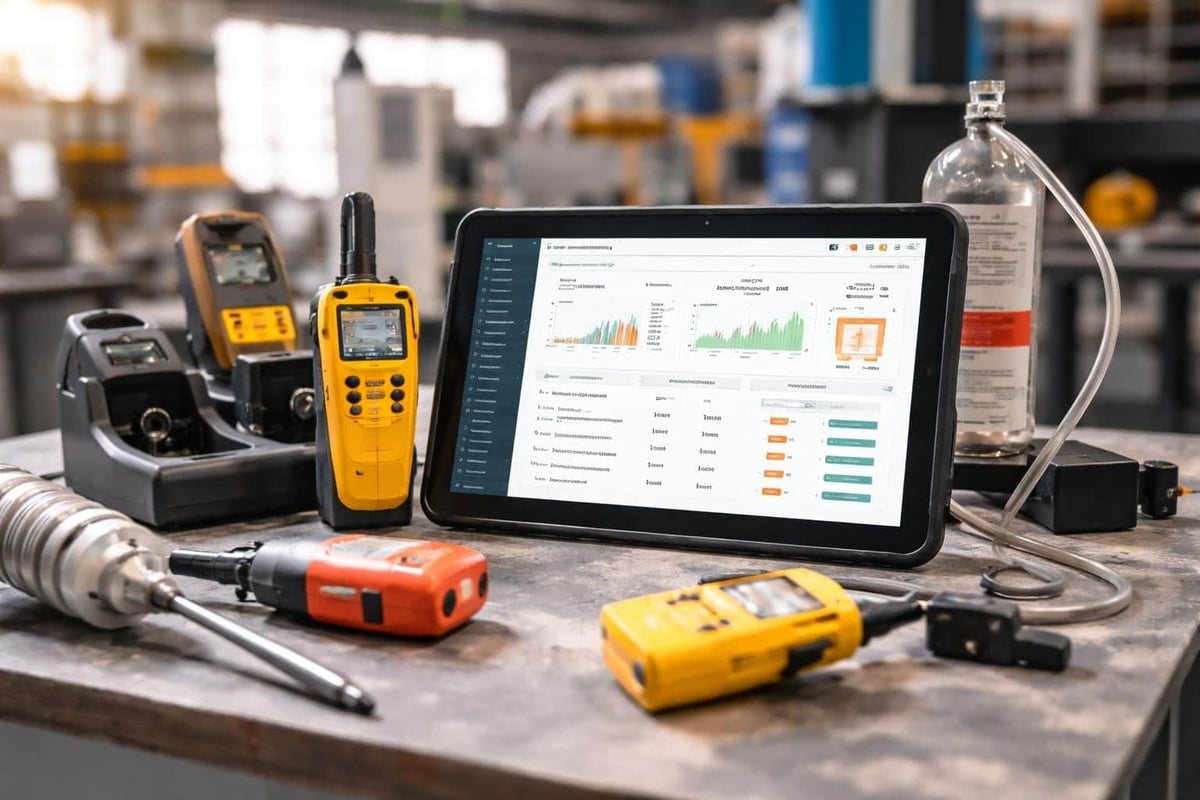
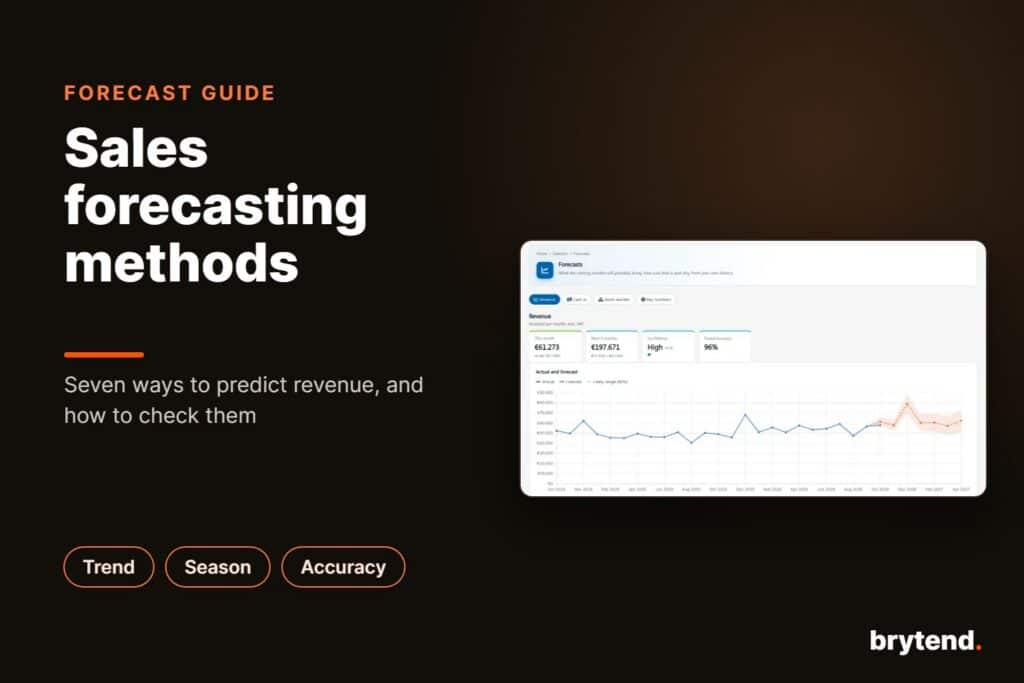
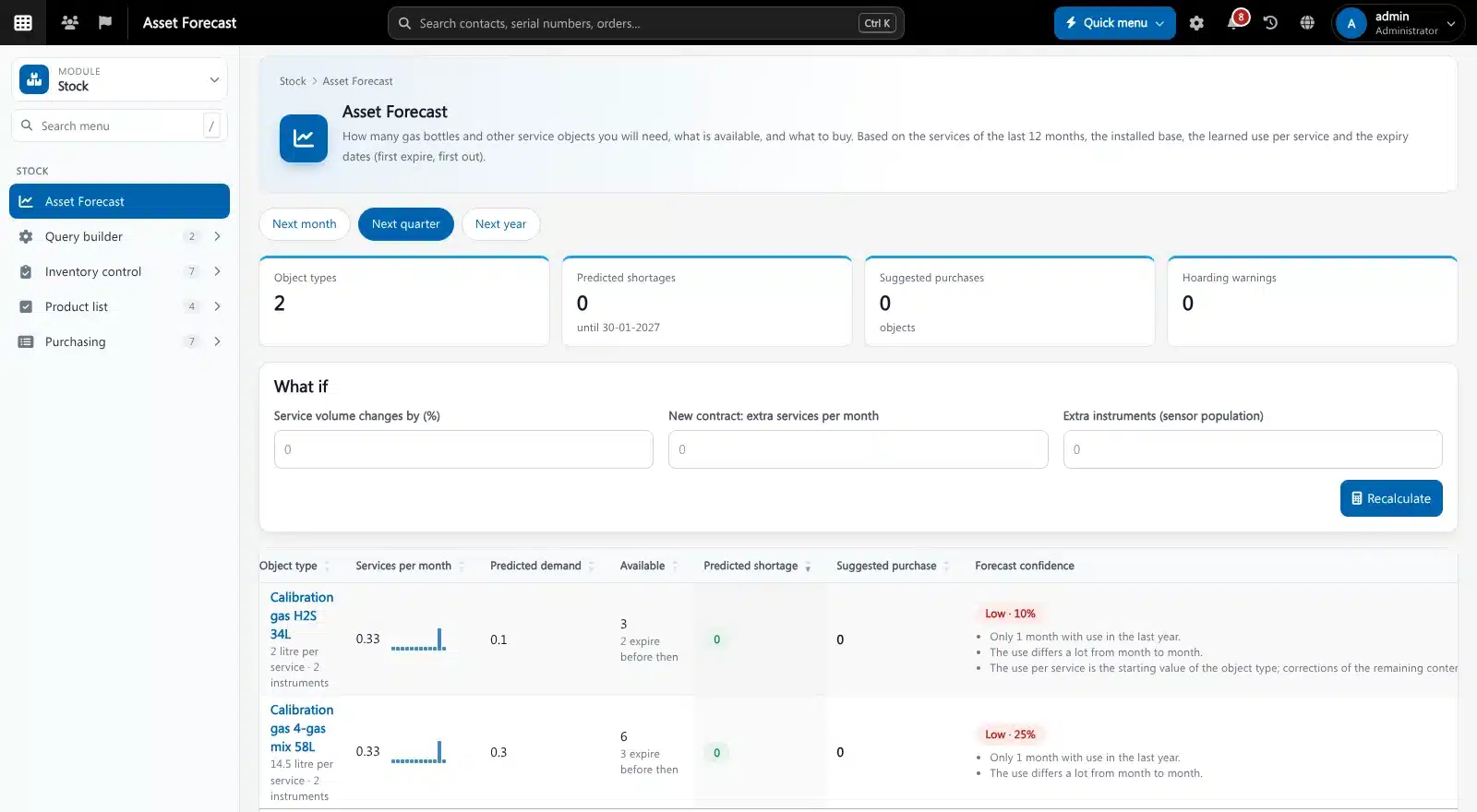
On top of that, Brytend AI works across the same data. Users ask questions in plain language, such as “which calibrations are due in the next 30 days?”, and get answers from their own records. The shared forecast engine predicts stock, gas cylinders, due dates and service volume, each with a range and the reasons behind it, and the AI can create follow-up tasks with one click.
For background on the rest of the maintenance process, see the guides on maintenance management systems, work order management and calibration management, and how Brytend AI connects to your data.
Frequently Asked Questions About Preventive and Predictive Maintenance
What is the difference between preventive and predictive maintenance?
Preventive maintenance is done at fixed time or usage intervals, whether the equipment needs it or not. Predictive maintenance is planned on the measured or forecast condition of the equipment, so work is done just before it is needed.
Is predictive maintenance better than preventive maintenance?
Predictive maintenance reduces unplanned failures and early part replacement, but it needs data and tools. For most equipment a solid preventive plan is the right base, with predictive maintenance added for critical or expensive assets.
What are examples of preventive maintenance?
Examples are an annual service of a compressor, a six-monthly calibration of a gas detector, replacing filters every 500 operating hours and a yearly inspection of lifting equipment.
What are examples of predictive maintenance?
Examples are replacing a bearing when vibration rises, replacing a gas sensor when its calibration correction keeps growing, and adding an extra check before winter for equipment that fails more often in cold weather.
Can predictive maintenance replace required inspections?
No. Legal and manufacturer inspection and calibration intervals still apply. Predictions should be used to add or advance work, not to skip required inspections.
How does AI help with predictive maintenance?
AI helps by finding patterns in service history, test results and usage, and by forecasting due dates, service volume and parts demand. It also lets users ask questions about their equipment data in plain language.
What software supports preventive and predictive maintenance?
Maintenance and service software with an asset register, intervals, work orders, recorded results and forecasting supports both. Brytend combines its Service Module with AI and a shared forecast engine for stock, cylinders, due dates and service volume.
Preventive maintenance keeps equipment safe and compliant on a fixed schedule. Predictive maintenance adds foresight, so work happens just before it is needed instead of too early or too late. For most service companies the best path is a solid preventive base, complete results per asset, and forecasts that turn that history into better planning. Brytend combines service planning, asset history and AI forecasts in one platform. Try it free for 90 days.