

TL;DR:
- A maintenance management system schedules preventive tasks, tracks work orders, and maintains asset histories in a centralized platform
- Core functions include work order creation, inventory control, technician assignment, downtime tracking, and compliance documentation
- Implementation requires asset inventory, workflow mapping, technician training, and integration with existing enterprise systems
- Best practices include standardized naming conventions, mobile access, automated scheduling, and regular performance audits
- Modern systems reduce equipment downtime by 15-25% and extend asset lifespan through predictive analytics and real-time monitoring
A maintenance management system is a software platform that schedules, tracks, and documents all maintenance activities across physical assets, equipment, and facilities. Organizations use these systems to transition from reactive repairs to planned preventive maintenance, reducing unplanned downtime and extending equipment lifespan. Manufacturing plants, healthcare facilities, fleet operators, and commercial property managers rely on maintenance management systems to coordinate technician workflows, manage spare parts inventory, ensure regulatory compliance, and analyze maintenance costs across thousands of assets.
What Is a Maintenance Management System
A maintenance management system centralizes all maintenance data, work requests, and asset information in a single database accessible to maintenance teams, operators, and management. The system tracks each asset's identification number, location, specifications, maintenance history, warranty status, and service schedules. When equipment requires service, the system generates a work order containing task descriptions, required parts, assigned technicians, priority levels, and completion deadlines.
Core components include asset registers, work order modules, preventive maintenance schedulers, inventory management, and reporting dashboards. The asset register stores serialized equipment with manufacturer details, installation dates, operational parameters, and linked documentation such as manuals and compliance certificates. Work order modules manage the complete lifecycle from request creation through assignment, execution, parts usage, time tracking, and closeout documentation.

CMMS vs MMS Terminology
The terms Computerized Maintenance Management System (CMMS) and Maintenance Management System (MMS) are functionally identical in 2026. CMMS emerged when organizations first digitized paper-based maintenance logs, emphasizing the "computerized" aspect. Modern usage treats both terms as synonyms, though enterprise vendors increasingly prefer the simpler MMS designation. Both describe software that manages maintenance planning, execution, and analysis.
Organizations also encounter Enterprise Asset Management (EAM) systems, which extend maintenance management to include procurement, project management, and financial integration. EAM suits large industrial operations with complex capital assets, while MMS focuses specifically on maintenance workflows. Small to mid-sized operations typically implement MMS for targeted maintenance optimization before expanding to full EAM capabilities.
How Does a Maintenance Management System Work
A maintenance management system operates through interconnected modules that automate maintenance workflows from planning through execution and analysis. The process begins when operators, sensors, or time-based triggers generate maintenance requests. The system evaluates request priority, checks technician availability, verifies parts inventory, and creates work orders with complete task specifications.
Preventive maintenance runs on predefined schedules based on calendar intervals, runtime hours, production cycles, or condition thresholds. The system automatically generates work orders 7-14 days before scheduled service dates, assigns qualified technicians, and reserves required parts from inventory. Technicians access work orders via mobile devices, view asset histories, reference procedures, record time and materials, attach photos, and mark tasks complete with digital signatures.
Work Order Lifecycle Steps
- Request creation: Operators submit requests through web forms, mobile apps, or automated sensor alerts containing asset ID, location, problem description, and urgency level
- Prioritization and approval: Supervisors review requests, assign priority codes (emergency, urgent, routine), approve resource allocation, and set target completion dates
- Planning and scheduling: Planners determine required parts, tools, permits, and labor hours, then schedule work during optimal production windows
- Assignment and dispatch: System assigns work orders to qualified technicians based on skill sets, current workload, and geographic proximity
- Execution and documentation: Technicians complete tasks, record actual time and materials used, document findings, and capture asset condition data
- Review and closeout: Supervisors verify completion quality, update asset records, process costs to accounting systems, and close work orders
- Analysis and improvement: Managers review completion rates, cost trends, recurring failures, and technician productivity to optimize future maintenance
The system maintains a complete audit trail of all actions, timestamps, user IDs, and status changes. This documentation supports compliance audits, warranty claims, and root cause analysis of equipment failures.
Why Implement a Maintenance Management System
Organizations implement maintenance management systems to reduce unplanned downtime, control maintenance costs, and extend asset operational life. Reactive maintenance costs 3-4 times more than planned preventive work due to emergency parts procurement, overtime labor, production losses, and secondary equipment damage. A properly configured system shifts 70-80% of maintenance activities from reactive to preventive modes.
Compliance requirements drive implementation in regulated industries including healthcare, food processing, pharmaceuticals, and aviation. These sectors must document all maintenance activities, calibrations, inspections, and parts replacements to satisfy regulatory audits. Maintenance management systems provide structured compliance workflows with automatic documentation, digital signatures, and tamper-proof audit trails that meet FDA, OSHA, and industry-specific standards.
Quantifiable Benefits
| Metric | Improvement Range | Measurement Method |
|---|---|---|
| Equipment downtime | 15-25% reduction | Compare unplanned downtime hours year-over-year |
| Maintenance costs | 10-18% decrease | Total maintenance spending per asset or production unit |
| Asset lifespan | 20-30% extension | Track retirement age of major equipment categories |
| Work order completion | 85-95% on-time rate | Percentage of preventive maintenance completed by due date |
| Parts inventory costs | 12-20% reduction | Measure inventory turns and obsolete stock value |
| Labor productivity | 25-35% increase | Completed work orders per technician hour |
Data accuracy determines benefit realization. Organizations that maintain complete asset records, update work orders in real-time, and conduct regular data audits achieve results at the high end of improvement ranges. Poor data quality, incomplete work order closeouts, and inconsistent use patterns limit returns to single-digit percentages.

What Are the Core Functions of a Maintenance Management System
Asset management functions track every physical item requiring maintenance, from $500 air compressors to $5 million production lines. Each asset receives a unique identifier, hierarchical classification (facility > system > equipment > component), physical location, and operational specifications. The system links assets to maintenance schedules, parts lists, documentation libraries, and historical work records. Serialized inventory tracking assigns individual serial numbers to movable equipment, enabling precise service history regardless of location changes.
Work order management controls the complete maintenance workflow. Technicians cannot close work orders without completing mandatory fields including actual labor hours, parts consumed, failure codes, and corrective actions taken. The system enforces workflow rules such as supervisor approval for high-value parts, safety permits for confined space entry, and quality verification for critical equipment. Automated notifications alert stakeholders when work orders exceed target completion dates or when costs surpass approved budgets.
Preventive Maintenance Scheduling
Preventive maintenance (PM) scheduling automatically generates recurring work orders based on multiple trigger types:
- Calendar-based: Monthly inspections, quarterly calibrations, annual certifications
- Meter-based: Every 500 operating hours, 10,000 production cycles, 5,000 miles driven
- Condition-based: When vibration exceeds thresholds, temperature trends upward, or sensor readings indicate wear
- Seasonal: HVAC system changeovers, irrigation system winterization, emergency generator testing
The system tracks multiple PM schedules per asset, generates work orders automatically, and reschedules based on completion dates rather than due dates to prevent schedule drift. Organizations typically implement 15-25 PM tasks per critical asset annually, balancing maintenance effectiveness against labor resource constraints.
Inventory and Parts Management
Inventory modules track spare parts quantities, storage locations, reorder points, and usage costs. When technicians issue parts to work orders, the system automatically decrements inventory counts, posts costs to the work order, and triggers purchase requests when quantities fall below minimum thresholds. Parts catalogs link specific components to compatible equipment models, preventing incorrect part selection and reducing emergency procurement.
Storeroom management includes bin locations, lot tracking for serialized components, expiration dates for time-sensitive materials, and barcode scanning for issue transactions. Integration with procurement systems creates purchase orders directly from the maintenance management system, maintaining a complete parts lifecycle from requisition through receipt, storage, issue, and cost allocation.
How to Implement a Maintenance Management System
Implementation begins with a complete physical asset inventory. Teams walk facilities with mobile devices, recording equipment tags, locations, manufacturers, models, serial numbers, and installation dates. This inventory establishes the asset register foundation. Organizations typically discover 15-30% more assets than shown in existing records, particularly small equipment, safety systems, and building components.
Workflow mapping documents current maintenance processes including request submission, approval chains, planning procedures, scheduling rules, and completion verification. This analysis identifies inefficiencies, bottlenecks, and gaps that the new system should address. Stakeholders from operations, maintenance, procurement, and finance must validate workflow designs before configuration begins.
Implementation Steps in Detail
- Define system objectives and success metrics: Set specific targets for downtime reduction, PM completion rates, inventory turns, and cost savings with quarterly measurement intervals
- Catalog all physical assets: Record equipment identifiers, specifications, locations, criticality ratings, and current condition assessments in standardized formats
- Establish asset hierarchies and classifications: Group assets by facility, department, system type, and maintenance responsibility to enable filtered reporting and workflow routing
- Document maintenance procedures: Convert paper-based PM instructions, safety protocols, and troubleshooting guides to digital checklists accessible via mobile devices
- Configure preventive maintenance schedules: Build PM templates with task lists, frequencies, estimated durations, required skills, and parts lists for each asset category
- Import spare parts inventory: Load current stock quantities, storage locations, unit costs, preferred vendors, and lead times with links to compatible equipment
- Train maintenance staff and operators: Conduct role-based training covering work order creation, mobile app usage, parts transactions, and data entry standards
- Execute parallel operation period: Run new system alongside existing processes for 30-60 days, comparing outputs and refining configurations before full cutover
- Monitor adoption and data quality: Audit work order completion rates, data entry accuracy, and user login frequencies weekly during the first quarter
- Optimize based on performance data: Adjust PM frequencies, rebalance technician workloads, and refine reporting dashboards using actual system data
Implementation timelines range from 90 days for small facilities with basic requirements to 12-18 months for multi-site industrial operations with complex integrations. Organizations achieve faster deployment by limiting initial scope to critical assets and core workflows, then expanding functionality in subsequent phases.
Step-by-step implementation process for maintenance management systems: asset inventory, workflow mapping, system configuration, PM schedule creation, parts catalog setup, user training, parallel operation, and performance optimization
What Challenges Affect Maintenance Management System Success
Data quality issues undermine system effectiveness more than any technical limitation. Incomplete asset records, inconsistent naming conventions, missing equipment specifications, and outdated parts information create duplicate entries, incorrect work orders, and unreliable reports. Organizations must establish data governance policies defining required fields, standardized terminology, update responsibilities, and audit procedures. Dedicating resources to initial data cleanup and ongoing data stewardship determines long-term system value.
User adoption resistance emerges when technicians perceive the system as administrative burden rather than productivity tool. Common complaints include excessive data entry requirements, cumbersome mobile interfaces, slow system response times, and reports that don't match workflow needs. Successful implementations focus on user benefits including faster parts lookup, mobile access to equipment histories, automated schedule optimization, and elimination of duplicate data entry. Executive support, regular feedback sessions, and continuous training maintain adoption momentum.
Integration Complexity
Modern maintenance management systems must exchange data with enterprise resource planning (ERP) platforms, building automation systems, industrial IoT sensors, procurement applications, and accounting software. Each integration requires data mapping, authentication protocols, error handling, and ongoing synchronization management. Organizations often underestimate integration effort, which can consume 40-50% of implementation budgets for complex environments.
Common integration challenges include:
- Real-time sensor data: Processing high-frequency equipment readings to trigger condition-based maintenance without overwhelming the system
- ERP synchronization: Maintaining consistent asset masters, cost centers, and general ledger accounts across both platforms
- Procurement workflows: Automating purchase requisitions, matching receipts to parts requests, and updating inventory quantities
- Mobile device management: Ensuring field technicians can access work orders, update status, and attach photos in low-connectivity environments
- Legacy system retirement: Migrating historical maintenance data while maintaining continuity of asset service records
Phased integration approaches prove more successful than attempting simultaneous connections to all external systems. Organizations prioritize critical integrations like ERP asset synchronization and parts procurement, then add sensor feeds and advanced analytics capabilities in later phases.
How to Optimize Maintenance Management System Performance
Regular preventive maintenance schedule reviews prevent PM task proliferation that wastes technician time without improving reliability. Organizations should analyze PM compliance rates, time-to-failure data, and equipment condition trends quarterly to identify over-maintained assets. Maintenance scheduling best practices recommend eliminating PM tasks that show no correlation with failure prevention and adjusting frequencies based on actual wear patterns rather than manufacturer recommendations alone.
Mobile capabilities dramatically improve technician productivity by eliminating office trips to retrieve work orders, look up parts, or update job status. Technicians equipped with tablets or smartphones complete 20-30% more work orders daily compared to paper-based workflows. Mobile apps should provide offline access to work orders and asset histories, barcode scanning for parts transactions, photo capture for condition documentation, and digital signature for completion verification.
Performance Optimization Best Practices
Standardize naming conventions: Use consistent terminology for asset types, failure modes, corrective actions, and parts descriptions to enable meaningful trend analysis across all facilities.
Implement automated notifications: Configure alerts for overdue work orders, approaching PM due dates, low inventory levels, and equipment exceeding performance thresholds.
Establish data quality audits: Review random work order samples weekly for completion accuracy, verify asset locations monthly, and reconcile parts inventory quarterly.
Measure leading indicators: Track PM schedule compliance, mean time to repair, backlog age, and emergency work percentage rather than just lagging cost metrics.
Enable operator-initiated requests: Deploy QR codes on equipment that link to mobile request forms, reducing response time and capturing failure symptoms while fresh.
Conduct failure analysis: Review repetitive failures monthly to identify root causes requiring design changes, improved procedures, or enhanced training rather than repeated repairs.
| Optimization Area | Target Metric | Monitoring Frequency |
|---|---|---|
| PM completion rate | >90% on-time | Weekly |
| Emergency work orders | <15% of total | Monthly |
| Parts stockouts | <5% of requests | Weekly |
| Work order backlog | <30 days average age | Daily |
| Technician utilization | 70-75% wrench time | Weekly |
| Mean time to repair | Asset-specific targets | Monthly |
Organizations that invest in continuous optimization through regular metric reviews, user feedback sessions, and process refinement achieve sustained performance improvements. Those treating the system as a static implementation see benefits plateau within 12-18 months.
What Technical Features Support Modern Maintenance Management
Cloud-based deployment eliminates on-premise server requirements, reduces IT overhead, and enables automatic software updates. Cloud platforms provide secure access from any internet-connected device, automatic data backups, and elastic capacity that scales with organizational growth. Small to mid-sized organizations particularly benefit from cloud economics, avoiding capital expenditures for servers and database licensing while accessing enterprise-grade functionality through subscription pricing.
Predictive analytics capabilities analyze historical failure patterns, operating conditions, and sensor data to forecast equipment failures before they occur. Machine learning algorithms identify subtle correlations between operating parameters and failure modes that manual analysis would miss. Predictive models enable condition-based maintenance that services equipment based on actual wear rather than fixed schedules, optimizing maintenance timing and resource allocation.
Mobile and IoT Integration
Modern systems provide native mobile applications for iOS and Android devices rather than mobile-responsive web interfaces. Native apps offer superior performance, offline functionality, camera integration, GPS location tagging, and push notifications. Technicians scan equipment QR codes to instantly access maintenance histories, view linked procedures, record meter readings, and attach condition photos without returning to desktop workstations.
Industrial IoT sensor integration transforms maintenance from time-based to condition-based strategies. Vibration sensors on rotating equipment, temperature probes in electrical panels, pressure transducers in hydraulic systems, and runtime meters on production assets feed continuous data streams into the maintenance management system. The platform applies threshold rules to automatically generate work orders when sensors detect abnormal conditions, enabling intervention before catastrophic failures occur.
Customization and Workflow Automation
Workflow automation best practices recommend automating routine administrative tasks to maximize technician productive time. Examples include automatic work order assignment based on technician skills and geographic zones, scheduled report distribution to stakeholders, escalation notifications for aging work orders, and automated parts replenishment orders when inventory falls below reorder points.
Custom field capabilities allow organizations to capture industry-specific data beyond standard maintenance metrics. Healthcare facilities track infection control protocols, food processors document sanitation procedures, fleet operators record DOT compliance items, and manufacturers capture quality control measurements. The system stores this specialized data within asset and work order records, making it searchable and reportable alongside standard maintenance information.
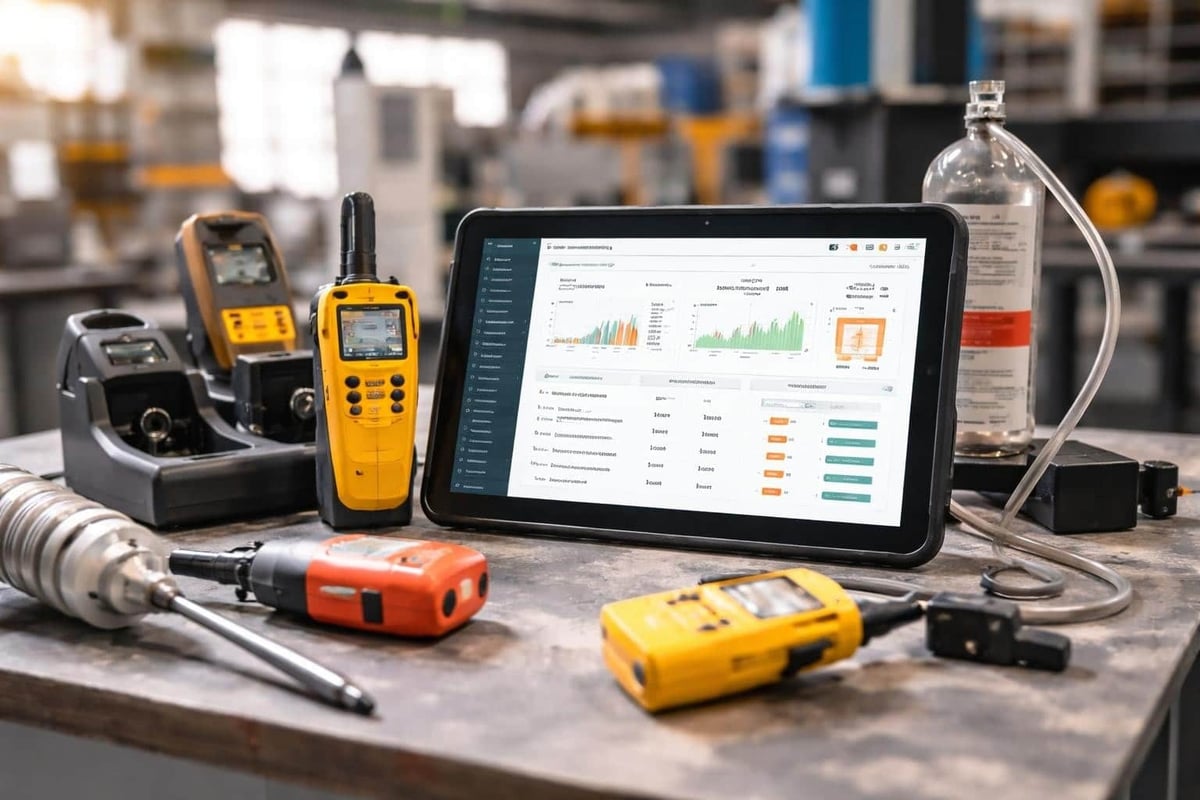
The Brytend Service Module provides exactly this level of customization for organizations requiring specialized service workflows. By enabling registration of serialized inventory, custom service definitions, automated service reminders, and certificate generation, it supports organizations that need to track detailed equipment lifecycles beyond basic maintenance tasks. This approach ensures that service documentation, warranty management, and compliance requirements integrate seamlessly with daily maintenance operations.
Common Implementation Mistakes to Avoid
Attempting to automate existing inefficient processes wastes implementation effort and perpetuates poor practices. Organizations must redesign maintenance workflows before system configuration, eliminating unnecessary approval steps, redundant data entry, and workarounds developed to compensate for previous system limitations. Process improvement should precede automation, not follow it.
Insufficient initial training creates long-term adoption problems that persist for years. Users require role-specific training covering their daily workflows, not generic system overviews. Maintenance technicians need hands-on mobile app practice, planners require scheduling and parts management instruction, supervisors must learn reporting and analytics, and operators benefit from focused training on request submission. Single training sessions prove inadequate; organizations should plan refresher courses quarterly during the first year.
Neglecting data migration quality results in duplicate assets, incorrect maintenance histories, and lost institutional knowledge. Importing data directly from legacy systems without cleanup perpetuates errors. Organizations should dedicate 3-6 weeks to data cleansing activities including duplicate elimination, field standardization, missing information research, and validation against physical asset tags before migration.
Underestimating change management requirements leads to resistance, workarounds, and partial adoption. Successful implementations include executive sponsorship, clear communication of benefits, user involvement in configuration decisions, recognition of early adopters, and patience with the learning curve. Technology deployment succeeds or fails based on people factors more than technical capabilities.
Failing to establish data governance allows data quality to degrade over time. Organizations must define who can create assets, who approves work orders, who updates costs, and who maintains parts catalogs. Without clear ownership and accountability, databases become cluttered with inactive assets, duplicate parts, and unclosed work orders that undermine reporting accuracy.
Case Example: Manufacturing Plant Implementation
A mid-sized automotive components manufacturer with 450 production assets implemented a maintenance management system to reduce unplanned downtime affecting delivery performance. The facility operated with paper work orders, Excel-based PM schedules, and manual parts tracking across three shifts. Implementation took 120 days from project kickoff to full deployment.
The team cataloged 450 production assets plus 280 facility assets including HVAC, compressed air, and electrical distribution equipment. They converted 85 paper-based PM procedures to digital checklists with embedded photos and decision trees. Preventive maintenance schedules ranged from daily operator inspections to annual major overhauls, totaling 2,400 scheduled PM tasks annually.
Results measured at 12 months post-implementation showed:
- Unplanned downtime decreased 22% from baseline
- PM schedule compliance improved from 67% to 91%
- Emergency work orders dropped from 28% to 14% of total maintenance activities
- Parts inventory value reduced 16% through elimination of obsolete stock and improved reorder point management
- Maintenance cost per production unit decreased 12%
- Mean time to repair improved 18% through better parts availability and access to historical troubleshooting data
The organization attributed success to comprehensive technician training, executive support for adoption, weekly data quality audits during the first six months, and phased implementation that started with critical production lines before expanding to the full facility.
Manual vs Automated Maintenance Comparison
| Aspect | Manual/Paper-Based | Automated System |
|---|---|---|
| Work order creation | Phone calls, paper forms, verbal requests | Web portal, mobile app, automated sensor triggers |
| Parts tracking | Spreadsheets, visual inspection, manual counts | Real-time inventory with automatic reorder points |
| PM scheduling | Calendar reminders, Excel lists, memory | Automatic generation based on multiple trigger types |
| Asset histories | Paper files, tribal knowledge, scattered records | Complete digital records linked to serialized assets |
| Reporting | Manual data compilation, outdated when completed | Real-time dashboards with drill-down capabilities |
| Compliance documentation | Filing cabinets, difficult audit retrieval | Digital signatures, audit trails, instant report generation |
| Cost tracking | Manual spreadsheet entry, allocation estimates | Automatic labor and parts cost posting to work orders |
| Technician efficiency | Office trips for paperwork, phone tag, delays | Mobile access, instant updates, optimized routing |
Organizations transitioning from manual processes typically experience 3-6 month adjustment periods where productivity temporarily decreases as users learn new workflows. Productivity then accelerates beyond pre-implementation levels as automation eliminates administrative tasks and improves information accessibility.
Maintenance management systems transform reactive maintenance cultures into planned, data-driven operations that reduce costs and extend asset life. Implementation success depends on data quality, user adoption, continuous optimization, and integration with operational workflows. Brytend develops custom software solutions that integrate maintenance management capabilities with your existing enterprise systems, workflows, and specialized requirements. Our team builds tailored platforms that capture your unique maintenance processes while providing the scalability and mobile access modern operations demand.