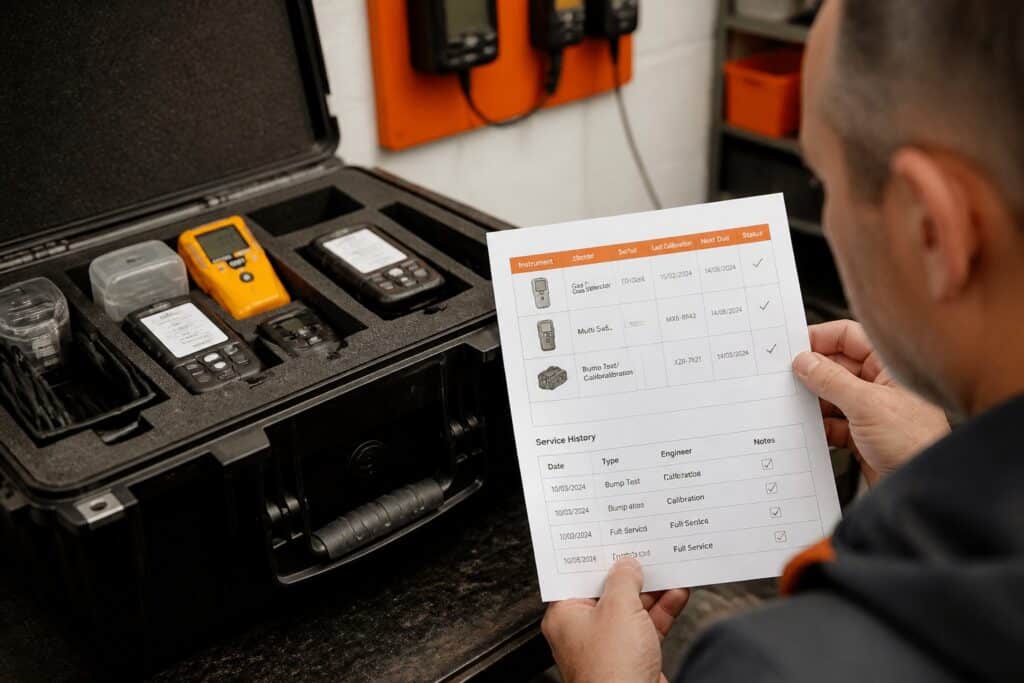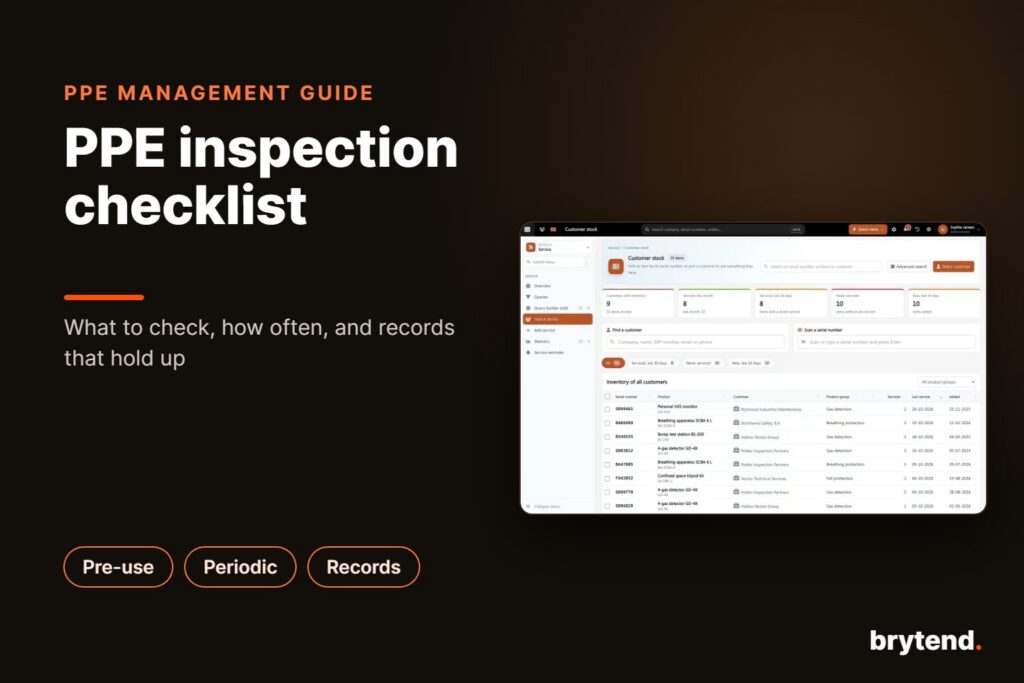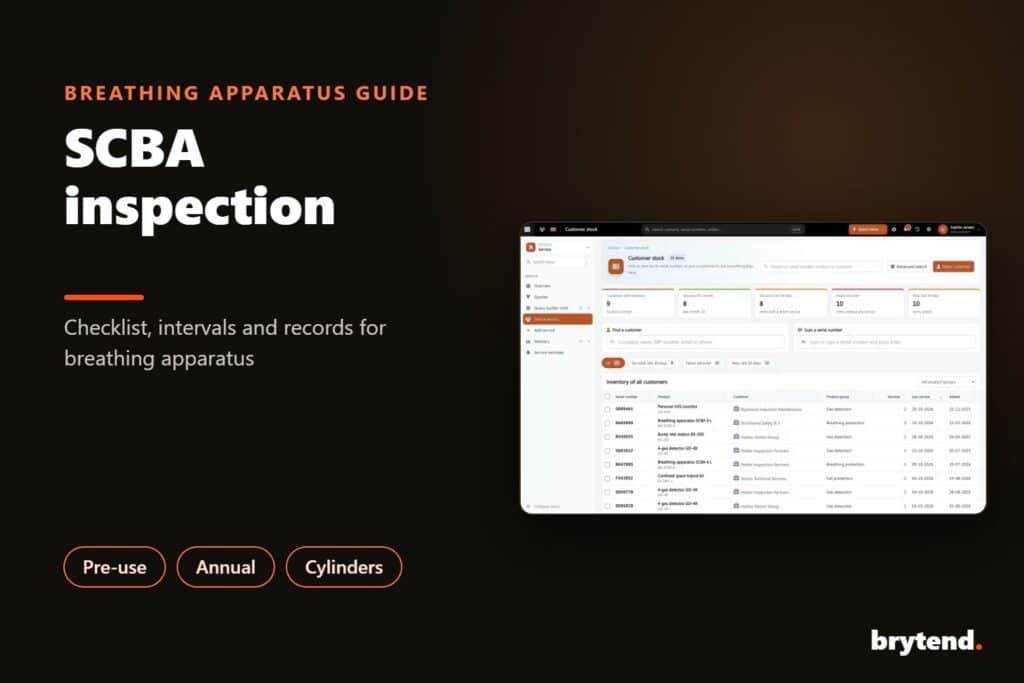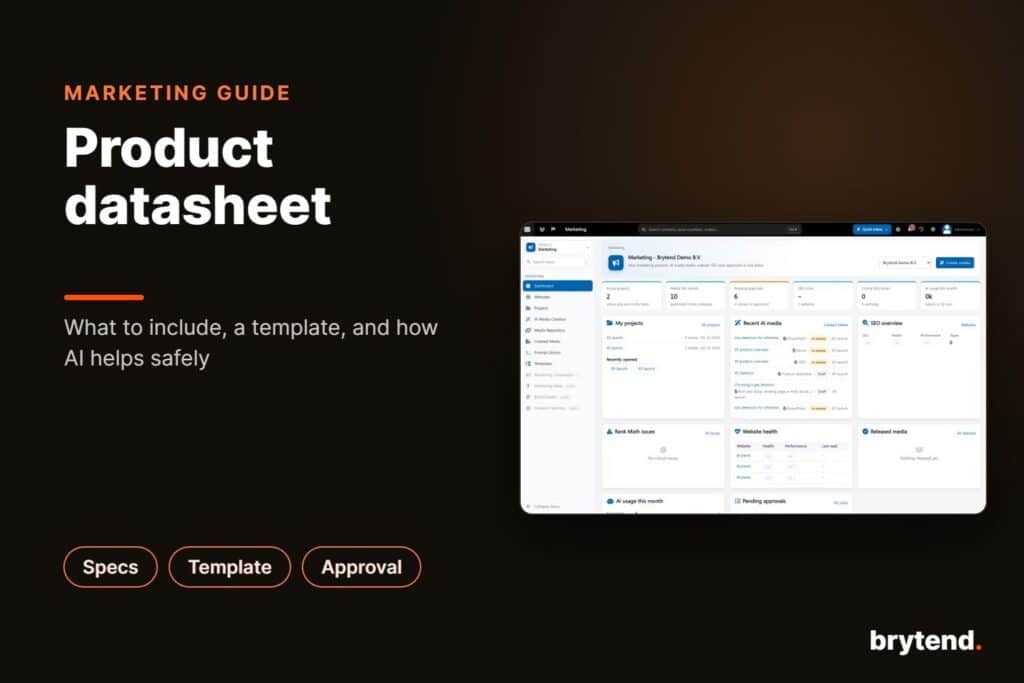
A SaaS platform is cloud-hosted software that a vendor runs and updates, and that customers access through a browser or app on a subscription. For a gas detection supplier or calibration lab, it replaces locally installed programs and spreadsheets with one shared system for customers, devices, service history and compliance records.
Software as a service (SaaS) is a delivery model in which the vendor hosts the application, the infrastructure and the data layer, and the customer pays a recurring fee for access. A SaaS platform extends that model by combining several modules, such as customer records, inventory, service and invoicing, on shared data.
What is a SaaS platform and how does it work?
A SaaS platform runs on the vendor's servers, serves many customers from one codebase, and is reached over the internet. The vendor handles hosting, patching, backups and version upgrades, so the customer does not install or maintain anything locally.
Most platforms share these technical traits:
- Multi-tenant architecture: many customers use the same application, with each customer's data logically separated.
- Subscription billing: access is paid monthly or yearly, often by user count, module or usage.
- Web and mobile access: technicians can open records in a workshop, at a customer site or in a calibration lab.
- Central updates: new features and security fixes reach every customer without a reinstall.
- APIs and integrations: the platform exchanges data with accounting, e-invoicing and other business tools.
The difference from traditional software is ownership of operations. With installed software, the company runs servers, applies patches and restores backups. With SaaS, those tasks move to the vendor, and the contract and the service level agreement define what the vendor must deliver.
What are examples of SaaS applications?
Common SaaS applications include customer relationship management systems, accounting tools, project trackers, email suites and file storage. Salesforce for CRM, Jira for issue tracking, Microsoft 365 for office work and Adobe Creative Cloud for design are widely used examples.
Consumer services blur the line. Netflix is a subscription streaming service delivered over the internet, but it sells content to viewers rather than a business tool, so it is usually described as a consumer subscription service rather than a SaaS platform. Uber and Amazon follow the same logic: Uber is a marketplace and Amazon is a retailer, although Amazon also sells SaaS-style products through its cloud division. The test is simple: SaaS is software that a business subscribes to in order to perform its own work.
For a service company, the useful categories are:
- Service and maintenance management: equipment registers, service schedules, certificates.
- Inventory and warehouse control: stock levels, serial numbers, batch tracking.
- CRM and after-sales: customer records, contracts, reminders.
- Compliance and document control: calibration records, audit trails, controlled documents.
- Invoicing: invoices built from completed work.
What does a SaaS platform cost?
SaaS pricing falls into a few models, and the model matters as much as the list price because it determines how cost grows with your business.
| Pricing model | How it is charged | Cost behavior |
|---|---|---|
| Per user | Fixed fee per named or concurrent user | Grows with headcount |
| Tiered | Fixed plans with feature or volume limits | Steps up when you cross a tier |
| Flat rate | One price for the full product | Predictable regardless of use |
| Usage-based | Charged on consumption, such as records or API calls | Varies month to month |
| Freemium | Free entry plan, paid upgrades | Free until limits are reached |
Spending is rising across the market. Zylo’s 2025 SaaS Management Index reports that average SaaS spending per employee has grown sharply in recent years. The same index found that 66.5% of IT leaders surveyed had experienced unexpected SaaS charges tied to consumption-based or AI pricing models.
For a calibration lab or service company, the practical lesson is to ask how the price changes when you add technicians, instruments, customers or documents. A platform priced on each of these separately can cost far more at scale than the entry quote suggests. Brytend publishes its pricing so the cost structure can be checked before a trial.

What are the benefits and risks of using a SaaS platform?
The main benefits are lower upfront cost, faster rollout, scalability and access from any location. The main risks are security, data ownership, vendor lock-in and integration gaps.
Benefits
- No servers to buy or maintain, and no installation on workshop machines.
- New users and modules can be added without a new project.
- Field technicians see the same data as the office.
- The vendor ships fixes and improvements continuously.
Risks and how to check them
- Security: confirm certifications and hosting location. Brytend is ISO 9001 and ISO 27001 certified, with EU hosting, and customer data stays the customer's.
- Data ownership: confirm in writing that you can export all records, including calibration history, in a usable format.
- Lock-in: check export formats and contract exit terms before signing.
- Integration: check for an open API and ready connectors to accounting and e-invoicing.
- Sprawl: organizations often run many SaaS applications, and every extra tool is another place where customer and device data can be duplicated or go out of date.
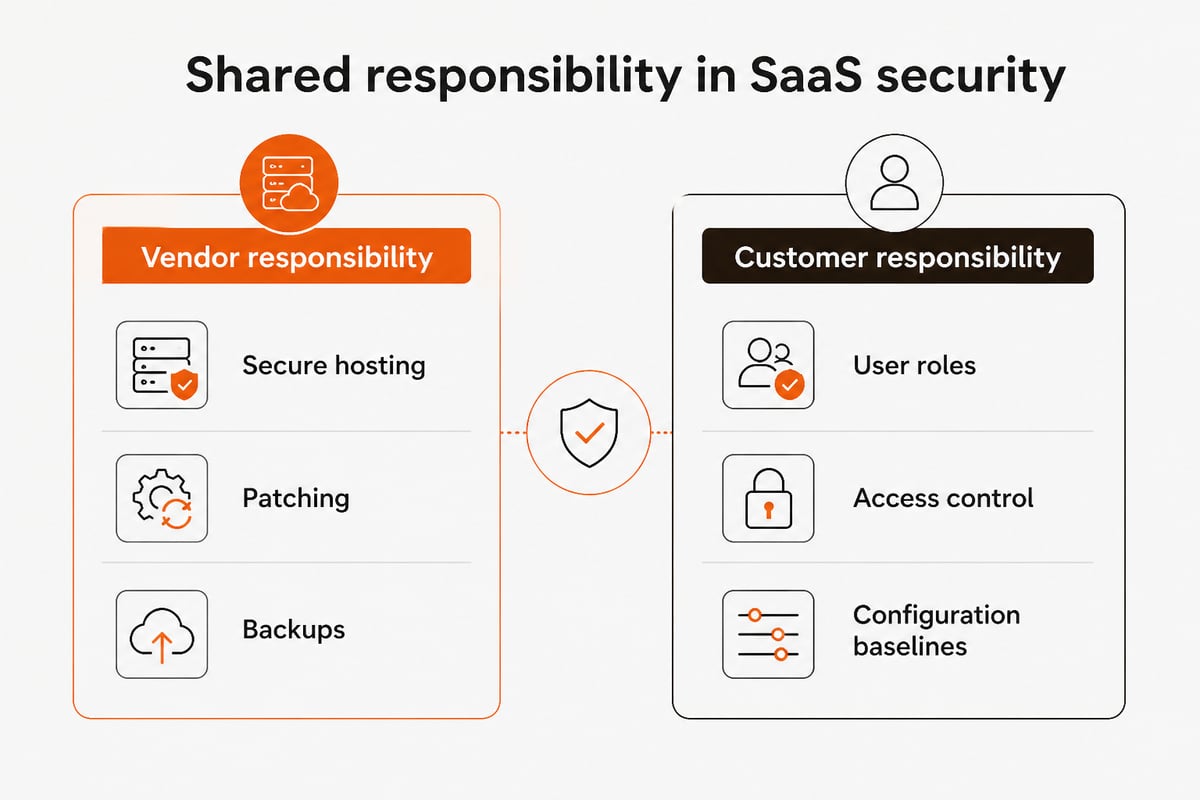
Security responsibility is shared. The vendor secures the platform, but the customer still controls user access, roles and configuration. The U.S. Cybersecurity and Infrastructure Security Agency makes this explicit in Binding Operational Directive 25-01, which requires covered federal agencies to apply secure configuration baselines to specified SaaS products and monitor compliance continuously. Private companies are not bound by it, but the principle applies: a SaaS tool is only as safe as its configuration. Microsoft’s security best practices overview is a useful reference for access control and data protection settings.
How does a SaaS platform support gas detection service and calibration work?
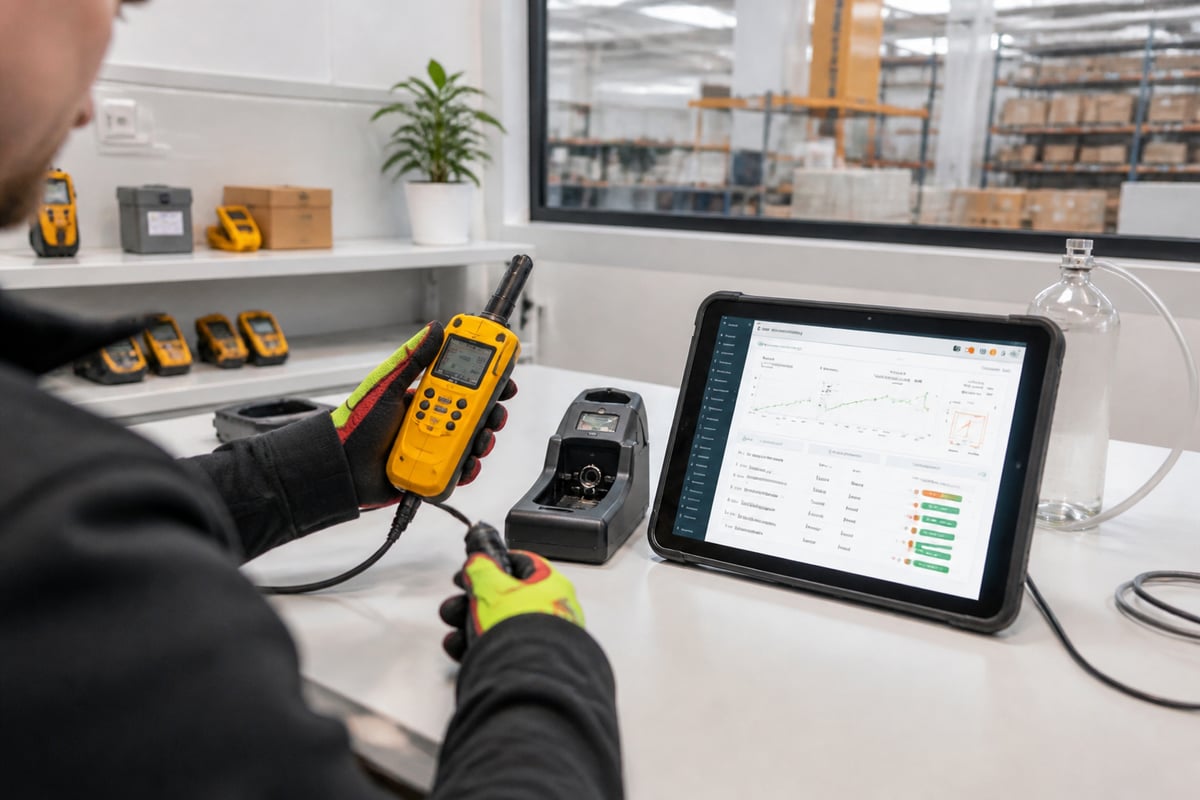
A SaaS platform supports service and calibration work by linking every instrument to a customer, a service history and a set of documents, so a certificate or audit record can be produced without searching through files.
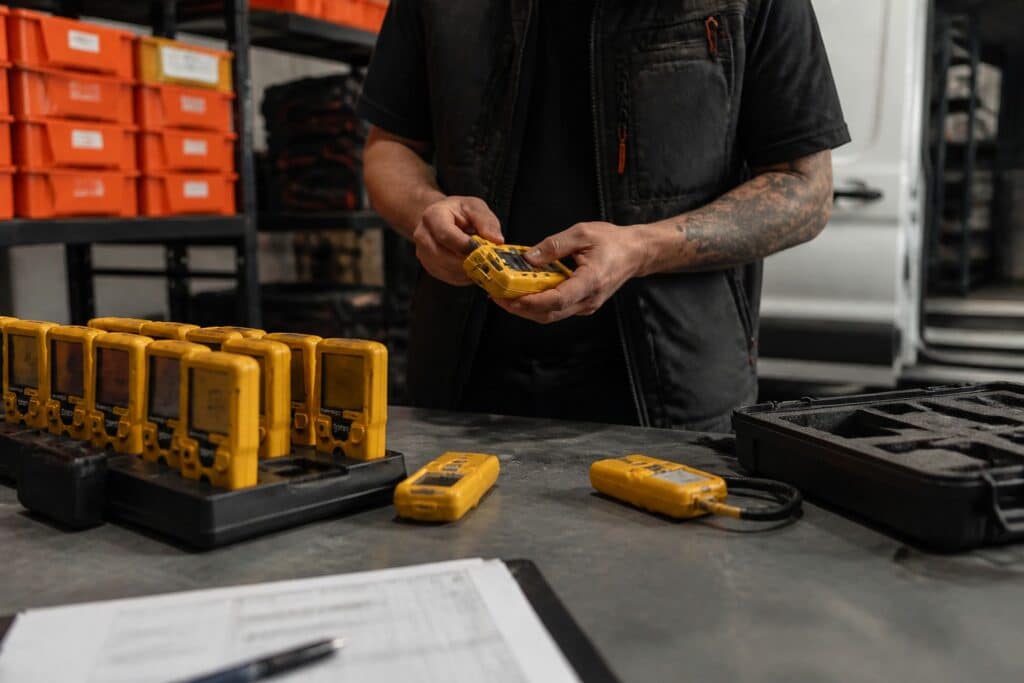
Gas detection suppliers and calibration labs service equipment that customers rely on for safety, and customers and auditors expect proof that each unit was tested against defined limits. The records that matter include:
- Serial number, model and owner of each instrument
- Calibration and bump test results with date, technician and reference gas details
- Service history, repairs and replaced parts
- Due dates and reminders for the next service
- Signed service certificates and supporting documents
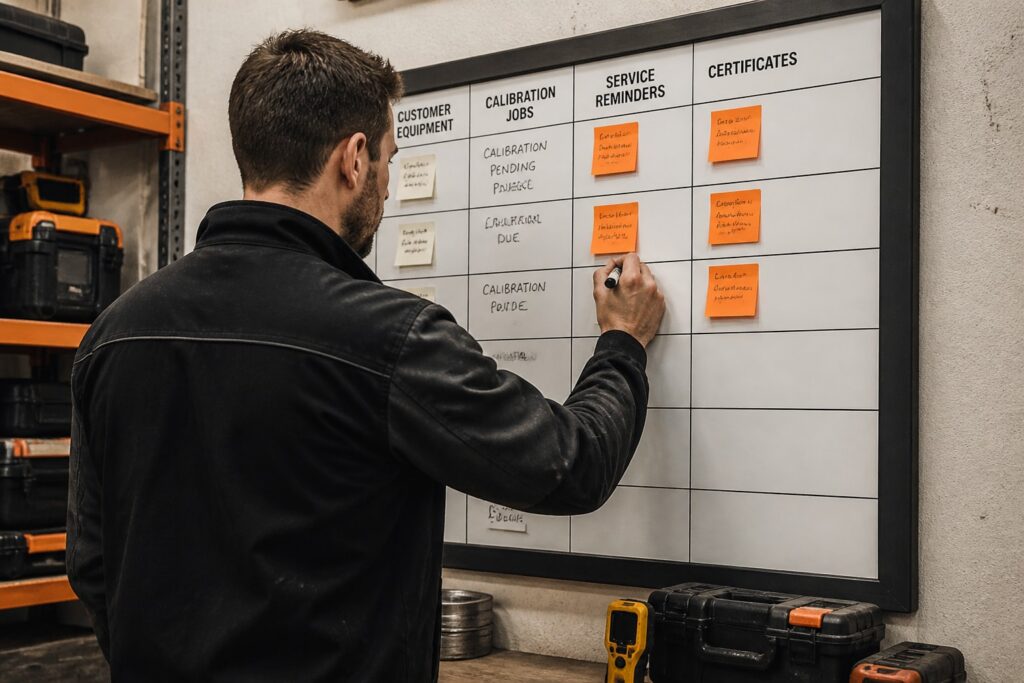
When these live in separate spreadsheets, inboxes and paper forms, gaps appear, and a missing record can mean a failed audit or a customer who cannot show compliance. A single platform keeps customers, devices, documents and data shared across every module, which is the approach behind Brytend's business system.
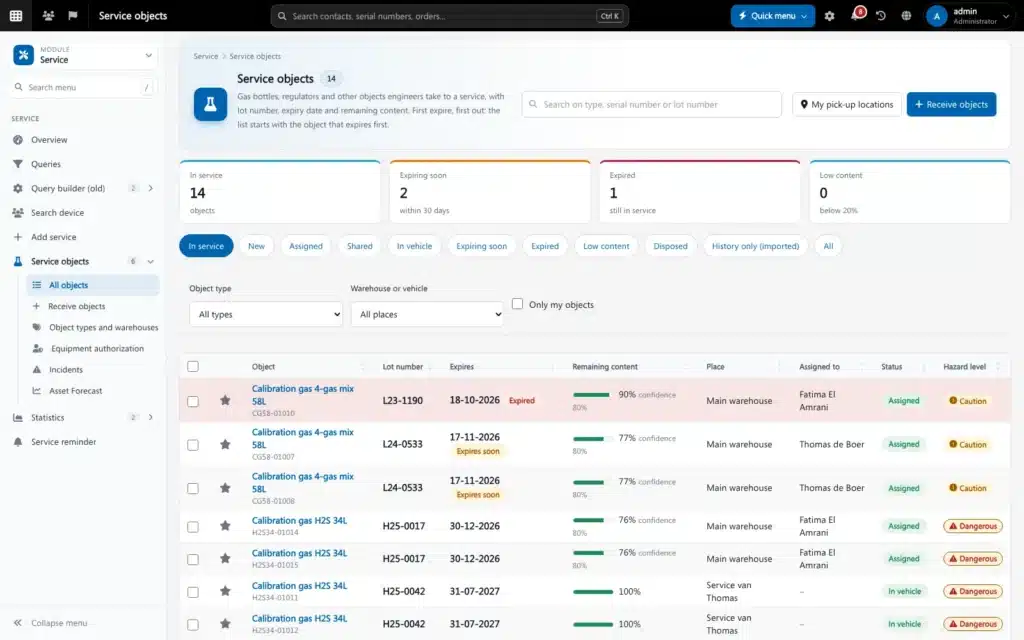
The Brytend Service Module registers serialized inventory, lets you add custom services, automates service reminders and generates service certificates. Each asset gets a unique identity, so its full lifecycle, including service history, condition, warranty details and upcoming tasks, can be followed from one record.
Related Brytend pages cover the specific workflows: calibration management software, gas testing software, SCBA inspection and certification management software.
What does an equipment service workflow look like on a SaaS platform?
A service workflow on a SaaS platform follows the instrument from intake to certificate and invoice, with each step recorded against the asset.
Hypothetical example: a service company receives a batch of portable gas detectors for annual calibration.
- Register the intake. Each detector is matched to its serial number and the customer record. Any new unit is added as a serialized asset.
- Create the service order. The calibration service is attached to each asset, with the technician and due date.
- Run the tests. Results are entered against the limits you define. A unit is cleared only when the readings meet those limits.
- Record parts and stock. If a sensor is replaced, the stock movement is logged with a reason, a user and a source document. Corrections above a set limit need approval.
- Generate the certificate. The service certificate is created from the recorded results and stored on the asset.
- Invoice from registered work. The invoice is built from the work already logged, and Brytend is ready for Peppol BIS Billing 3.0 e-invoicing.
- Schedule the next service. A reminder is set so the customer is contacted before the next due date.
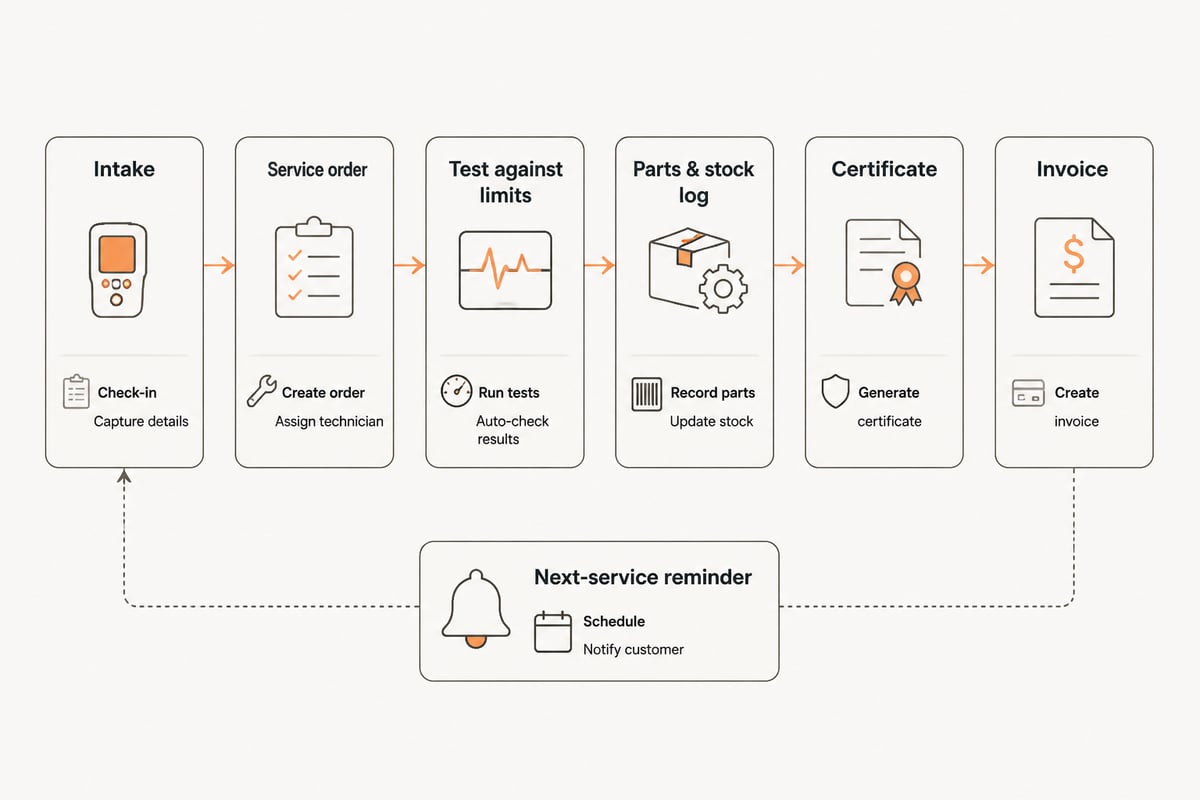
Because each step writes to the same record, an auditor or customer asking about one instrument gets its full history in one place. The stock trail matters as much as the test result: recording the reason, user and source document for every change is what makes the records defensible. Brytend's inventory control and service documentation system pages describe how these records connect.
How do you choose a SaaS platform for a service company?
Choose a platform by testing it against your actual records, workflows and audit requirements rather than a feature list. Work through these checks in order:
- List your records. Write down every document and data point an auditor or customer asks for, from calibration results to certificates.
- Map your workflows. Include intake, testing, parts, certification, invoicing and reminders, and note where data is currently re-typed.
- Check security and hosting. Look for recognized certifications such as ISO 27001, the hosting location, role-based access and an audit trail.
- Test data export. Confirm you can retrieve all history, not just current records.
- Review integrations. Check connections to accounting, e-invoicing and any measurement equipment you use.
- Model the cost. Calculate the price at your expected number of users, assets and documents in two or three years.
- Run a pilot. Load a real batch of instruments and take them through the full workflow before committing.
If standard software does not fit a specialized process, a custom or extended build can close the gap. Brytend's enterprise software development services cover that route.
Reviews can also help as a signal. Customer reviews can help as a signal, but a pilot with your own data remains the stronger test.
FAQ
Is a CRM a SaaS platform?
A CRM is a SaaS platform when the vendor hosts it and customers subscribe to access it, which describes most modern CRMs. A CRM installed on your own servers and maintained by your own staff is not SaaS.
What is the difference between SaaS and a SaaS platform?
SaaS describes the delivery model, and a SaaS platform is a product built on that model, usually with several connected modules and an API. A single-purpose subscription tool is SaaS, while a platform combines functions on shared data.
Can a SaaS platform replace spreadsheets for calibration records?
Yes, if it stores each instrument, result and certificate against a unique asset record with an audit trail. The test is whether you can pull a full instrument history for an auditor without opening a spreadsheet.
Start by listing the records your customers and auditors ask for and checking which of them live outside your main system today. Brytend builds service, calibration, asset and compliance software for equipment service companies, including the Brytend Service Module for serialized assets, reminders and certificates. If you want to see it with your own instruments and workflows, Brytend offers a way to start a free trial and test it on real service records.