A bump test on a gas detector is a short functional check where you expose the sensors to a known concentration of test gas that is higher than the alarm set points, to prove that gas reaches the sensors and that the audible, visual and vibrating alarms go off. A bump test does not measure accuracy and does not adjust the instrument; that is the job of a calibration check or a full calibration. Most manufacturers and safety bodies recommend a bump test before each day’s use, and every result should be recorded against the detector’s serial number.
TL;DR:
- A bump test proves that a gas detector responds and alarms; it does not prove the readings are accurate
- A calibration check compares the reading with a known gas concentration, and a full calibration adjusts the sensor when the reading is out of tolerance
- The common guidance, based on the ISEA position and the OSHA bulletin on calibrating and testing direct-reading portable gas monitors, is a bump test or calibration check before each day’s use, following the manufacturer’s instructions
- A failed bump test means the detector is taken out of service until it passes a full calibration or is repaired
- Records per detector (date, gas, cylinder lot, result, operator) are what auditors and customers ask for, and software makes them complete
A bump test gas detector check, also called a functional test or challenge test, is a qualitative pass or fail test of the sensors and alarms of a portable or fixed gas detector.
What Is a Bump Test on a Gas Detector?
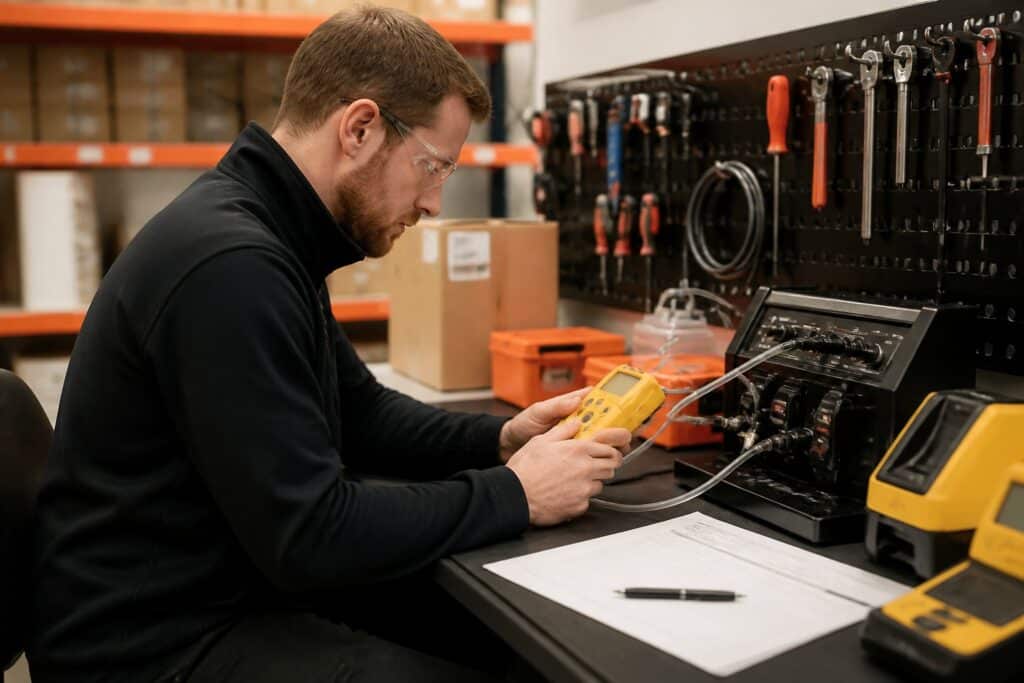
A bump test is the quickest way to confirm that a gas detector will warn the person wearing it. The technician or user applies test gas to the sensors for a short time, usually through a cap, hose or docking station, and checks that each sensor responds and that every alarm type activates. If the detector reacts, it passes. If one sensor does not respond or an alarm does not trigger, it fails.
Sensors can lose sensitivity without any visible sign. Electrochemical sensors age, catalytic bead sensors can be poisoned by silicones or lead compounds, and filters can clog with dust or water. A detector that has been dropped, left in a hot vehicle or exposed to a high gas concentration can look perfectly normal on the display and still fail to alarm. The bump test catches these failures before the detector goes into a confined space, a tank or a process area.
A bump test verifies three things:
- Gas path: test gas reaches the sensors through the inlet, filter and (for pumped models) the pump and sample line
- Sensor response: each sensor reacts to the gas it is meant to detect
- Alarms: the audible, visual and vibration alarms all activate at the set points
Because the test gas concentration is above the alarm levels, the detector should go into alarm within seconds. The exact concentrations, exposure time and response criteria come from the manufacturer’s manual, so every bump test procedure starts there.
What Is the Difference Between a Bump Test and Calibration?
A bump test checks that the detector responds. A calibration check and a full calibration check whether it responds correctly. The three are often mixed up, which leads to detectors that have passed a bump test but read 30% low in a real leak.
| Check | What it proves | Adjusts the detector? | Typical frequency |
|---|---|---|---|
| Bump test | Gas reaches the sensors and the alarms activate | No | Before each day’s use |
| Calibration check | The reading is within the manufacturer’s tolerance of a known concentration (often around ±10 to 20%) | No | Before use or at a set interval, depending on the manufacturer |
| Full calibration | The sensor is adjusted so the reading matches the known concentration | Yes | At the manufacturer’s interval, and after every failed check |
Many docking stations can run either a bump test or a calibration check automatically and store the result. Without a docking station the same steps are done by hand with a regulator, tubing and a cylinder of certified test gas. For a deeper look at the full calibration side, including intervals and certificates, see Brytend’s guide to calibration management software.
How Often Should You Bump Test a Gas Detector?
The widely used guidance is a bump test or calibration check before each day’s use, in line with the manufacturer’s instructions. This comes from the position statement of the International Safety Equipment Association (ISEA), which the OSHA bulletin on portable gas monitors incorporates. The OSHA bulletin is advisory and is not a regulation, but auditors, insurers and many customer sites treat it as the expected practice.
In Europe, the standards for the selection, use and maintenance of gas detectors, such as EN 60079-29-2 for flammable gases and EN 45544-4 for toxic gases, also expect regular functional checks, with the interval set by risk and by the manufacturer. In practice most companies apply daily bump testing to portable detectors and set a documented interval for fixed systems.
Bump test more often, or immediately, when:
- The detector was dropped, knocked or submerged
- It was exposed to a gas concentration above its measuring range
- It was exposed to known sensor poisons such as silicones, solvents or lead compounds
- Readings look unstable, or the detector shows a sensor fault
- A sensor or filter was replaced
- The detector comes back from rental, repair or another site
Some manufacturers allow the bump test interval to be extended when a detector has a long record of passed tests and operates in a stable environment. That decision needs documented evidence, which is only possible when every result is logged. The portable gas detection service guide covers how bump testing fits into a full service programme with maintenance and calibration.
How Do You Perform a Bump Test on a Gas Detector?
The exact steps differ by brand and model, but every bump test gas detector procedure follows the same basic order. Always use the manufacturer’s manual for gas concentrations, flow rates and exposure times.
Step 1: Prepare the detector and the test gas
Switch the detector on in clean air and let it complete its start-up self-test. Check the battery level, the display and the sensor filters. Confirm that the test gas cylinder matches the sensors in the detector, that the concentration is above the alarm set points and that the cylinder has not passed its expiry date. Use certified gas with a certificate of analysis, and note the cylinder lot number.
Step 2: Zero in fresh air if required
Some procedures require a fresh air zero before the bump test. Only do this in air you know is clean, never inside a building where gas may be present, or the detector will be zeroed against a contaminated baseline.
Step 3: Apply the test gas
Fit the calibration cap or connect the docking station, open the regulator at the flow rate given by the manufacturer and apply the gas for the stated time. For pumped detectors, apply the gas through the full sample line so the test also covers the pump and tubing.
Step 4: Check the response and the alarms
Watch every sensor reading rise and confirm that the audible, visual and vibration alarms activate. A sensor that responds slowly or does not reach the expected level is a warning sign even if the alarm does trigger.
Step 5: Clear the gas and record the result
Remove the gas, let the readings return to zero, clear the alarms and record the result. A pass means the detector can be used. A fail means it is tagged, taken out of service and sent for a full calibration or repair before anyone uses it again.
Common bump test mistakes:
- Expired or wrong test gas: gives a false pass or false fail and voids the record
- Breathing on the sensor or using a lighter: not a controlled concentration, so not a valid bump test
- Testing in contaminated air: the zero and the response are both wrong
- Skipping the pump and sample line: a blocked hose is a real failure that a cap-only test misses
- No record: a test that is not documented cannot be shown to an auditor or customer
What Should a Bump Test Record Contain?
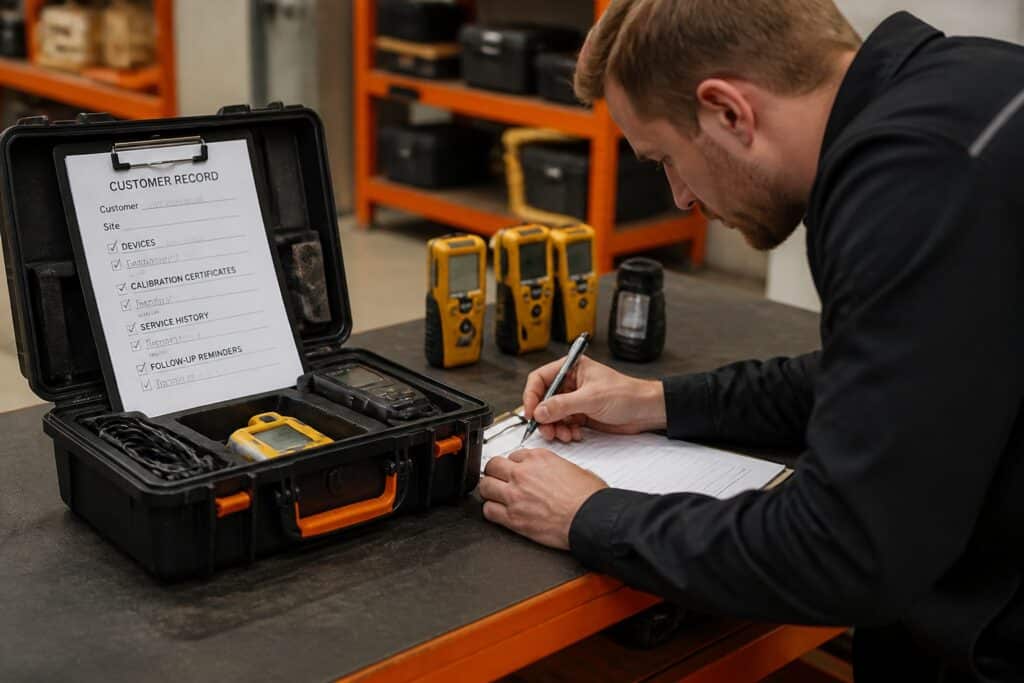
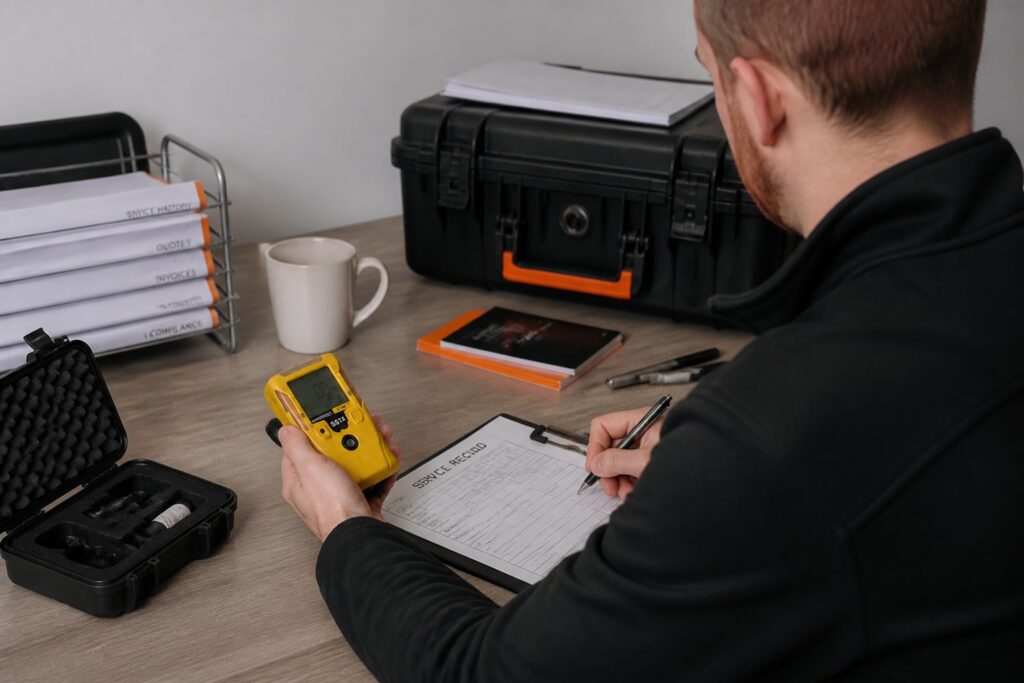
A bump test record is the proof that a detector was fit for use on a given day. When an incident is investigated, the first question is often whether the detector was tested and by whom. Paper log sheets in a van or a spreadsheet on one laptop are easy to lose, hard to search and impossible to share with customers in real time.
Each bump test record should include:
- Detector identity: serial number, model and asset or QR tag
- Date and time of the test
- Test gas: gas mixture, concentration, cylinder lot number and expiry date
- Result per sensor: pass or fail, and the peak reading if available
- Alarm check: audible, visual and vibration confirmed
- Operator: the person or docking station that ran the test
- Action on fail: taken out of service, sent for calibration, repaired or replaced
- Location or customer: where the detector is used or who it belongs to
Docking stations store these results, but the data usually stays in the manufacturer’s own software, separated from the calibration certificates, repair history and customer records. Service companies that look after detectors from several brands end up with one database per brand. A single register for every detector, whatever the brand, is what makes the history usable. Gas detection service software brings bump tests, calibrations and certificates together per detector.
How Does Software Help Manage Bump Tests and Gas Detector Compliance?
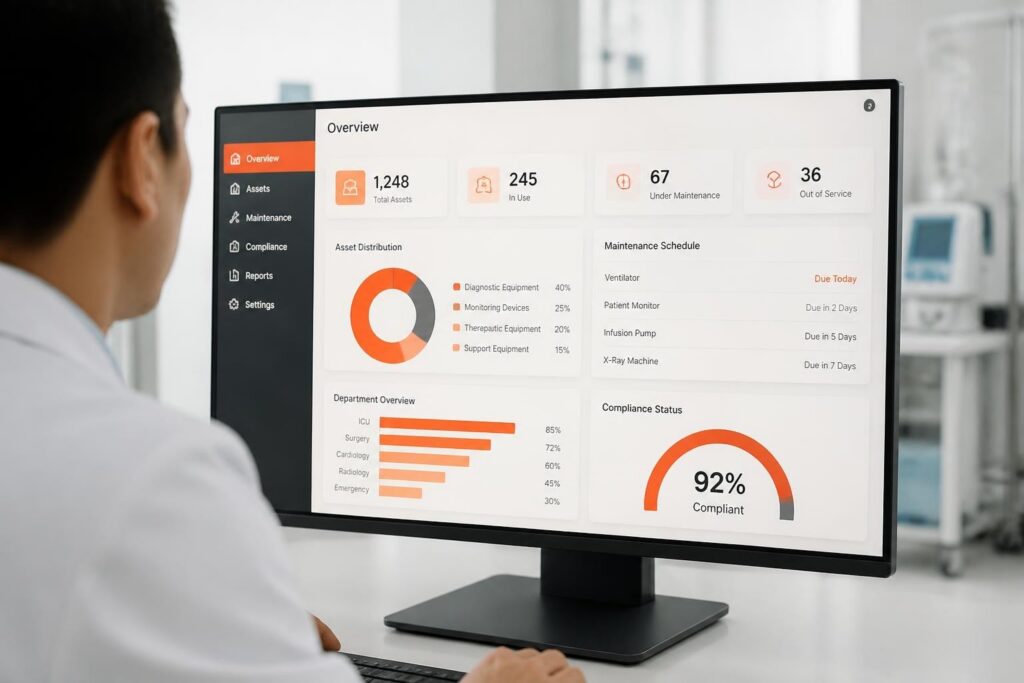
Software turns bump testing from a daily habit that depends on memory into a controlled process with reminders, blocks and proof. The value grows with the size of the fleet: a site with ten detectors can manage on paper, a service company with thousands of detectors across many customers cannot.
What good bump test software does:
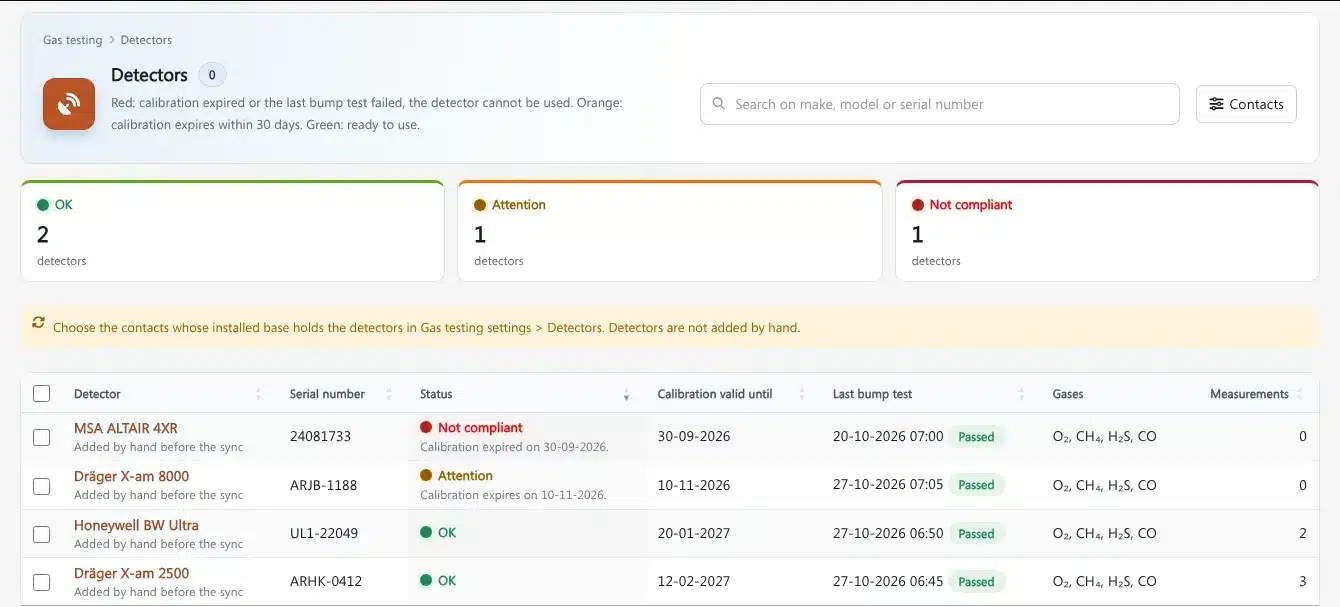
- Due status per detector: shows which detectors are due, overdue or blocked after a failed test
- Fast logging: scan the detector’s QR code or barcode and record the result on a phone or tablet, also offline in the field
- Automatic follow-up: a failed bump test creates a calibration or repair work order straight away
- Test gas control: links each test to the cylinder lot and warns when test gas is close to expiry
- Customer access: customers see the status and certificates of their own detectors in a portal
- Audit trail: every result, change and user action is stored and can be exported for audits
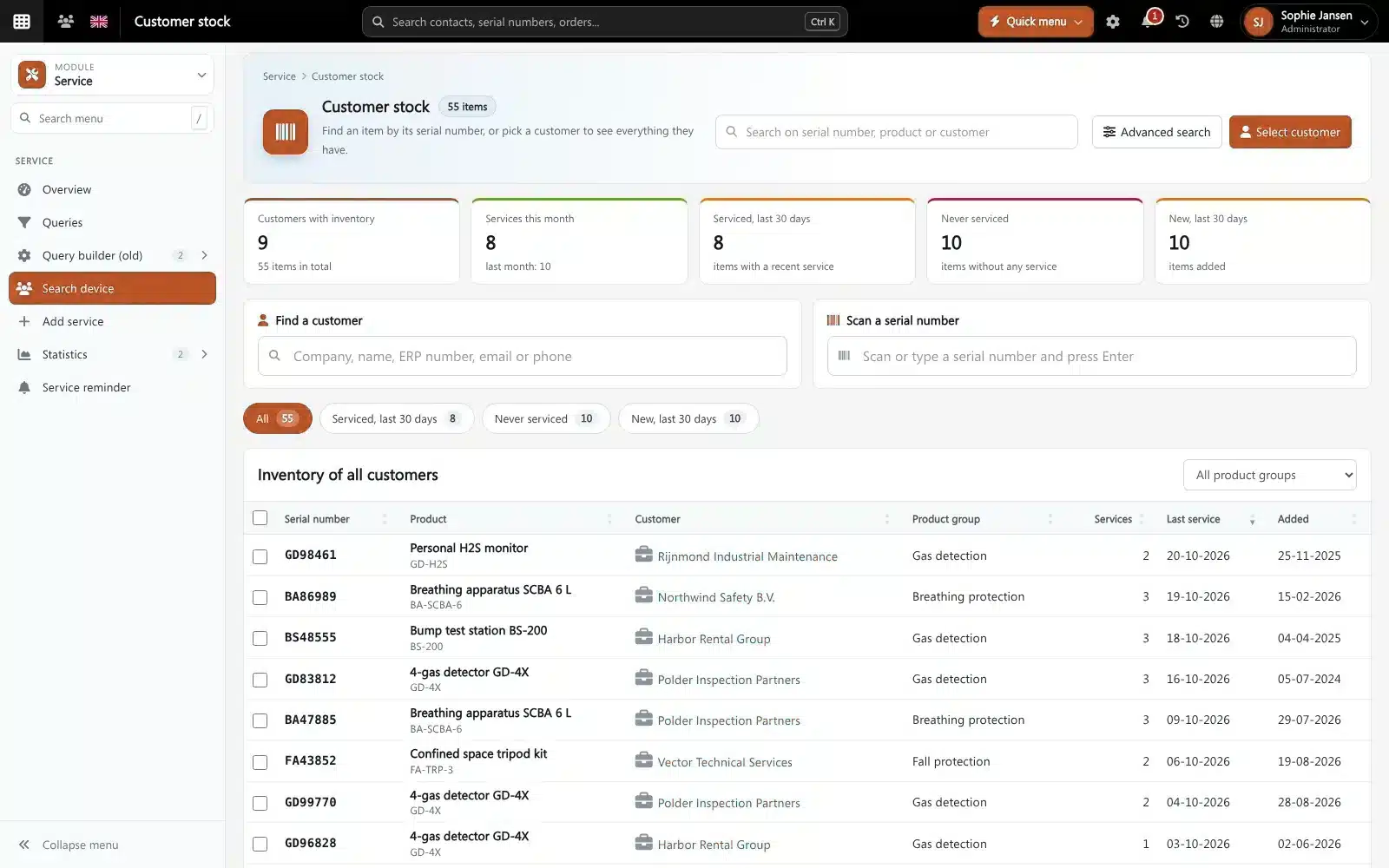
The Brytend Service Module is built for companies that service gas detectors, SCBA and other safety equipment. It keeps one record per detector with bump tests, calibrations, repairs and certificates, and plans the next due date automatically.
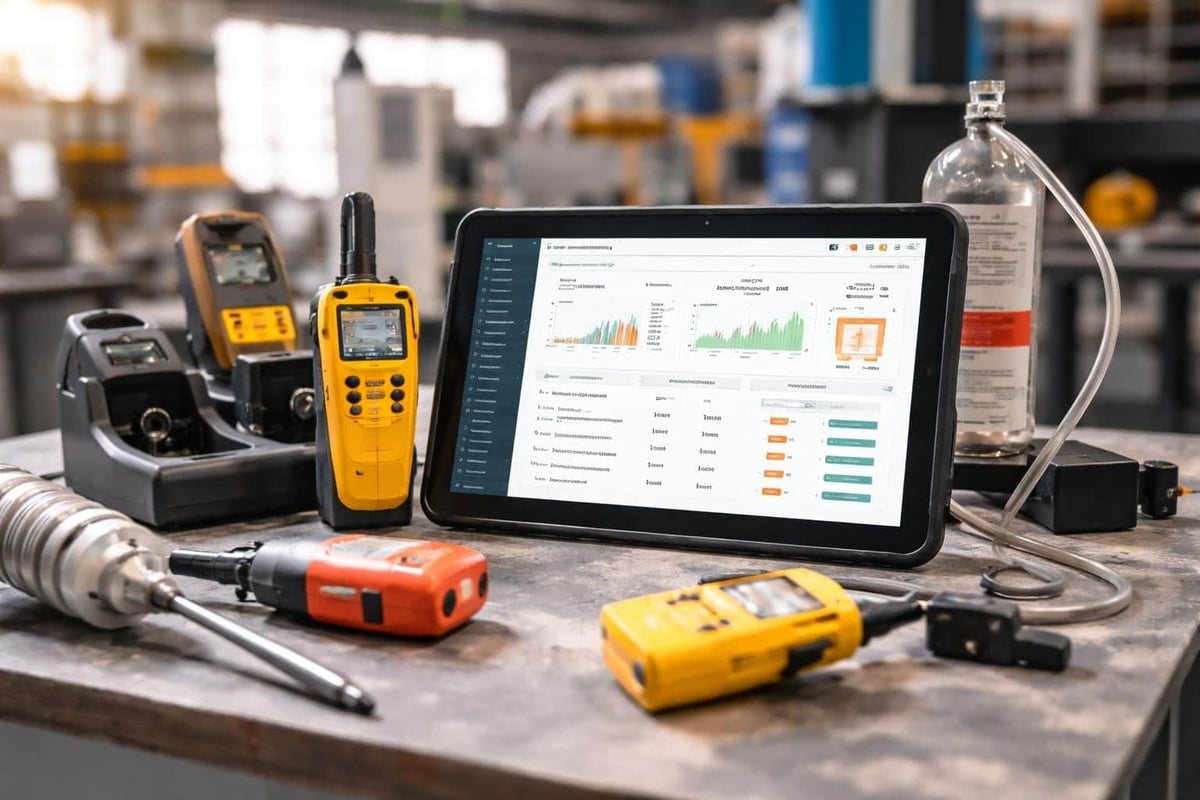
Tagging each detector with a QR code makes the scan-and-log step take seconds instead of minutes. The guide to QR code asset tracking explains how to label equipment and link scans to service records. For sites that also issue gas test permits before work starts, gas testing software connects the atmosphere test to the permit and the detector used.
What Happens When a Gas Detector Fails a Bump Test?
A failed bump test means the detector must not be used. The standard response is to take it out of service, tag it and run a full calibration. If it passes the calibration and then a new bump test, it can go back into use. If it fails calibration, the sensor, filter or pump needs repair or replacement.
Typical causes of a failed bump test:
- Sensor at end of life: electrochemical sensors typically last two to three years, depending on type and exposure
- Blocked or wet filter: dust, water or oil on the inlet stops the gas reaching the sensor
- Poisoned catalytic sensor: silicones, sulphur compounds or lead reduce sensitivity to flammable gases
- Pump or tubing fault: leaks or kinks in pumped detectors
- Test setup fault: wrong gas, empty cylinder, wrong flow rate or poorly fitted cap
Rule out the test setup first, because a retest with fresh gas and a correct cap often solves a false fail. If the detector fails again, do not keep retesting it until it passes; send it for calibration. Tracking failures per model and per sensor type also shows patterns, such as a batch of sensors failing early or one customer site with a poisoning problem, which helps service teams plan sensor stock and advise customers.
How Should Service Companies Organise Bump Testing for Customers?
For gas detection service companies, bump testing sits between the customer’s daily routine and the service company’s calibration work. Customers often run the daily bump tests themselves, while the service company does calibrations, repairs and sensor replacements. The gap between the two is where records get lost.
A workable model looks like this:
- Register every detector with serial number, sensor configuration and owner
- Agree who runs bump tests (customer, service company or docking station) and how results are shared
- Import docking station results or let customers log tests in a portal or app
- Create calibration or repair jobs automatically after a failed test
- Issue certificates after each calibration and make them available to the customer
- Report monthly on tests done, failures and overdue detectors per customer
This model also works for fixed gas detection systems, where functional tests are done at a set interval by a technician instead of daily by the user. The key is the same: one record per detector, every test logged and a clear action for every failure.
Frequently Asked Questions About Bump Testing Gas Detectors
What is a bump test on a gas detector?
A bump test is a short functional check where the sensors of a gas detector are exposed to a known concentration of test gas above the alarm set points. It proves that gas reaches the sensors and that the audible, visual and vibration alarms activate. It does not measure or adjust accuracy.
How often should you bump test a gas detector?
The common guidance, based on the ISEA position statement and the OSHA bulletin on portable gas monitors, is a bump test or calibration check before each day’s use, following the manufacturer’s instructions. Test again straight away after a drop, a sensor change, exposure to high gas levels or sensor poisons.
What is the difference between a bump test and a calibration?
A bump test only checks that the detector responds and alarms. A calibration check compares the reading with a known gas concentration, and a full calibration adjusts the sensor so the reading is accurate again. A detector can pass a bump test and still read too low, which is why both are needed.
What gas do you use for a bump test?
Use certified test gas that matches the sensors in the detector, at a concentration above the alarm set points, for example a four-gas mixture of methane, oxygen, carbon monoxide and hydrogen sulphide for a standard four-gas monitor. The cylinder must be within its expiry date and come with a certificate of analysis.
What should you do when a gas detector fails a bump test?
Take the detector out of service and tag it. First rule out the test setup (expired gas, empty cylinder, wrong flow or a loose cap) and retest once. If it fails again, send it for a full calibration; if it fails calibration, the sensor, filter or pump needs repair or replacement.
What should a bump test record include?
A complete record holds the detector serial number, date and time, test gas and cylinder lot, the result per sensor, the alarm check, who or which docking station ran the test, and the action taken after a failure. Auditors and customers use these records as proof that a detector was fit for use.
Can software manage bump tests for many gas detectors?
Yes. Gas detection service software such as the Brytend Service Module keeps one record per detector, shows which detectors are due or blocked, lets users log tests by scanning a QR code, and creates a calibration job automatically after a failed bump test.
A bump test is the simplest safety check a gas detector gets, and the one that matters most on the day of use. It proves that the sensors respond and the alarms work, while calibration proves the readings are accurate. Daily bump testing, certified test gas, clear actions after a failure and complete records per detector together keep people safe and audits short. If you service or manage gas detectors and want bump tests, calibrations and certificates in one place, Brytend builds service software that tracks every detector, every test and every certificate, for your own team and for your customers.