A LOLER inspection is the thorough examination of lifting equipment that UK employers must arrange under the Lifting Operations and Lifting Equipment Regulations 1998 (LOLER). A competent person examines cranes, hoists, lifts, forklifts and lifting accessories at fixed intervals, usually every 6 or 12 months, records any defects and issues a written report. Equipment that fails may not be used until it is repaired, and serious defects must be reported to the enforcing authority.
TL;DR:
- LOLER applies to lifting equipment and lifting accessories used at work in the UK
- Thorough examinations: every 6 months for lifting accessories and equipment that lifts people, every 12 months for other lifting equipment, or per a written scheme
- Also required after installation and after exceptional circumstances such as damage
- A competent person carries out the examination and writes a report with the required content
- Regular in-house inspections between examinations are also needed where the risk calls for them
A LOLER inspection is the legally required, documented examination that proves lifting equipment is safe to keep using.
What Is a LOLER Inspection?
LOLER is a set of UK regulations that took effect in 1998. It requires lifting equipment to be strong and stable enough for its use, marked with its safe working load, positioned and installed safely, used in planned and supervised lifting operations, and thoroughly examined at set intervals. The Health and Safety Executive explains the duties in its guide LOLER: Lifting Operations and Lifting Equipment Regulations.
When people talk about a LOLER inspection, they usually mean the thorough examination: a systematic, detailed check by a competent person, sometimes supported by tests, to find defects that are or could become dangerous. The regulations also mention inspections, which are the more frequent checks done between thorough examinations, often by trained staff on site, where the conditions of use could cause the equipment to deteriorate.
What Equipment Needs a LOLER Inspection?
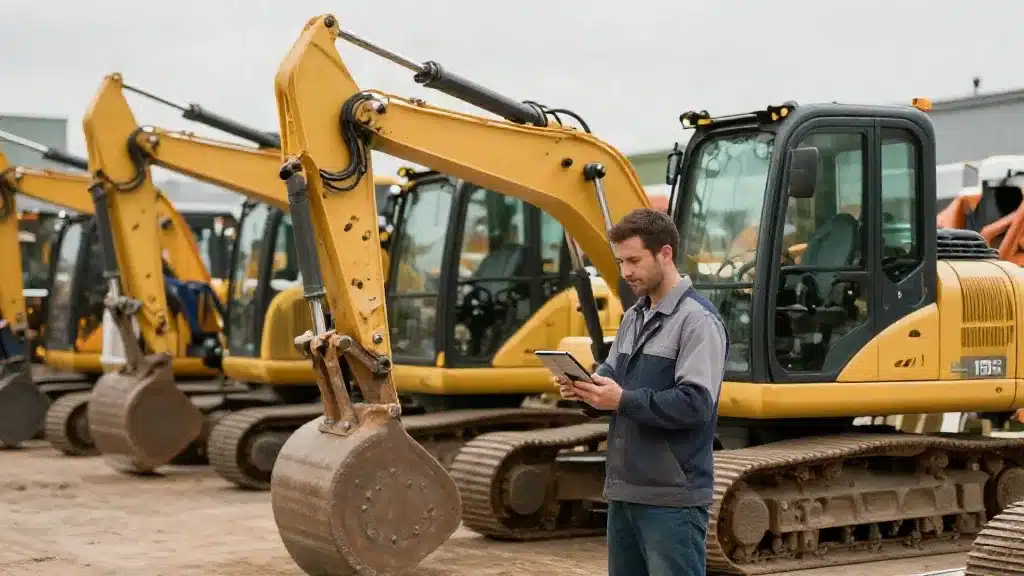
LOLER covers any equipment used at work for lifting or lowering loads, and the accessories used to attach the load. Typical examples:
- Lifting machines: overhead and mobile cranes, hoists, chain blocks, winches, forklifts, telehandlers and MEWPs
- Lifts and platforms: passenger and goods lifts in workplaces, vehicle lifts, scissor lifts and dock levellers
- Equipment that lifts people: MEWPs, man-riding baskets and patient hoists in care settings
- Lifting accessories: slings, chains, shackles, eyebolts, hooks, spreader beams and lifting clamps
Equipment that is hired, borrowed or brought on site by a contractor is covered too. The employer who uses it must make sure there is a valid report of its last thorough examination.
How Often Is a LOLER Inspection Required?
| Equipment | Maximum interval between thorough examinations |
|---|---|
| Lifting accessories (slings, shackles, chains, eyebolts) | 6 months |
| Equipment used to lift people (MEWPs, passenger lifts, patient hoists) | 6 months |
| All other lifting equipment (cranes, forklifts, hoists, vehicle lifts) | 12 months |
| Any equipment with a written scheme of examination | As set in the scheme by a competent person |
| New or newly installed equipment | Before first use, where safety depends on the installation |
| After exceptional circumstances (damage, modification, long disuse) | Before it is used again |
A written scheme of examination lets a competent person set intervals based on how the equipment is actually used. A hoist used daily on a building site may need examining more often; one used a few times a year in a clean workshop may not. Whatever the interval, the next due date has to be known and met.
What Does a LOLER Inspection Checklist Include?
The exact checks depend on the equipment and the examiner’s judgement, but most thorough examinations follow the same order.
Step 1: Identify the equipment
Confirm the unique ID, make, model and serial number, the safe working load markings and that the item matches the register.
Step 2: Review the history
Look at the previous report, the defects found last time, repairs since then and any in-house inspection records.
Step 3: Examine the structure and components
Check for wear, cracks, deformation and corrosion on load-bearing parts: hooks and latches, chains and wire ropes, slings, pins, welds, brakes, limit switches and controls.
Step 4: Test where needed
Carry out functional tests and, where the examiner decides it is necessary, load tests or non-destructive testing.
Step 5: Decide and record
Record the result, any defects with a deadline for repair, and the date of the next examination. Remove dangerous items from use straight away.
What Must a LOLER Report Contain?
Schedule 1 of LOLER lists what the report of a thorough examination must include. In summary:
- Who: the name and address of the employer or duty holder, and of the person who did the examination
- What: enough detail to identify the equipment, including the date of manufacture where known, and its safe working load
- When and why: the date of the examination and whether it was after installation, within an interval, under a written scheme or after exceptional circumstances
- Result: whether the equipment is safe to operate, any defects that are or could become dangerous, the repairs needed and by when
- Next: the latest date for the next thorough examination, and details of any tests carried out
The report must be written and sent to the duty holder as soon as practicable, and within 28 days. If a defect poses an existing or imminent risk of serious injury, the examiner also sends a copy to the enforcing authority.
Who Can Carry Out a LOLER Thorough Examination?
LOLER requires a competent person: someone with the practical and theoretical knowledge and experience of the equipment to find defects and judge how serious they are. They must be independent and impartial enough to make objective decisions, which is why many companies use specialist inspection firms or insurance engineers. The HSE guide Lifting equipment at work (INDG290) explains the duties in plain language.
How Do Inspection Firms and Hire Companies Manage LOLER?
An inspection firm or a lifting equipment hire company may track tens of thousands of items, many of them small, similar and easy to mix up. Paper reports and spreadsheets break down fast at that scale. The firms that do it well follow the same pattern.
One register with unique IDs
Every item has a unique ID, tag or QR code, with its type, safe working load, owner, site and documents. A scan on site opens the right record, see QR code asset tracking.
Due dates calculated per item
Six- and twelve-monthly intervals, or the intervals from a written scheme, set the next due date for each item automatically. A list per customer and month shows what is due, and inspection management software sends reminders before anything lapses.
Reports issued on the spot
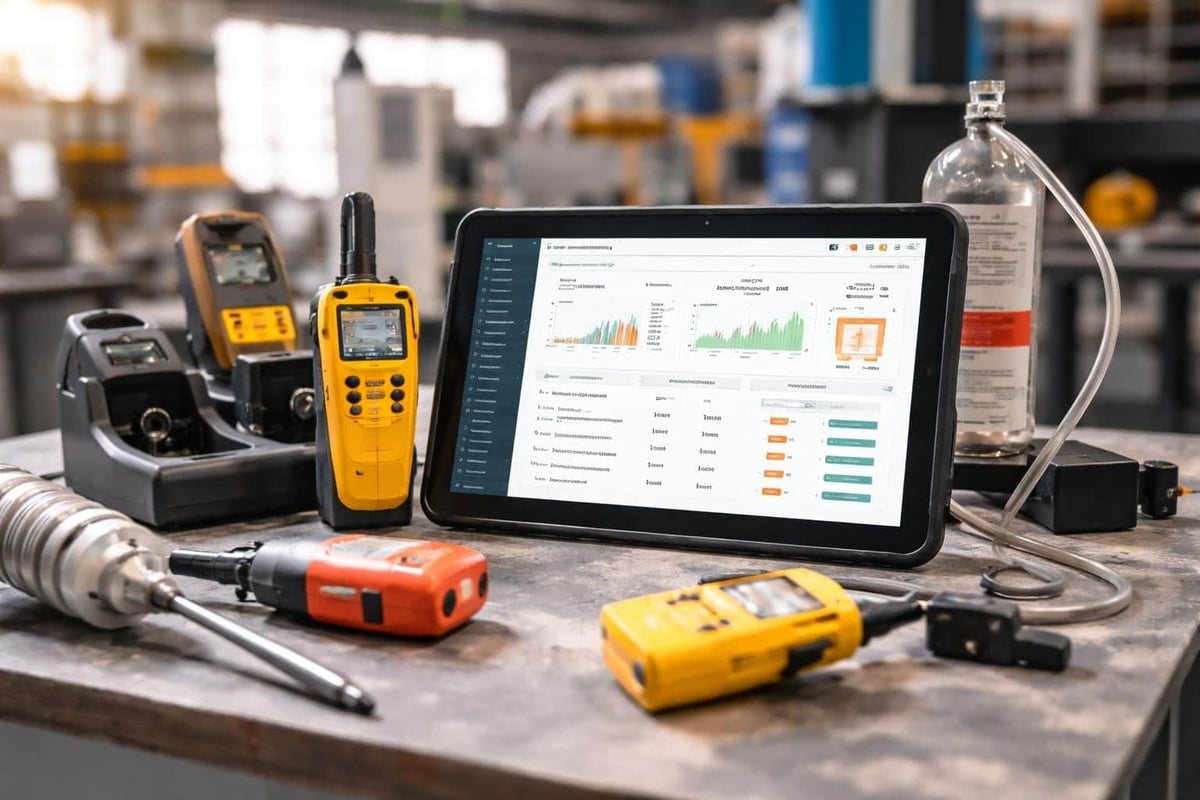
The examiner fills in a digital form on a tablet, adds photos of defects and issues the report before leaving the site, instead of typing certificates in the evening.
Defects that lead to action
A failed item becomes a repair or replacement quote straight away, and the item is blocked from hire or use until it passes again.
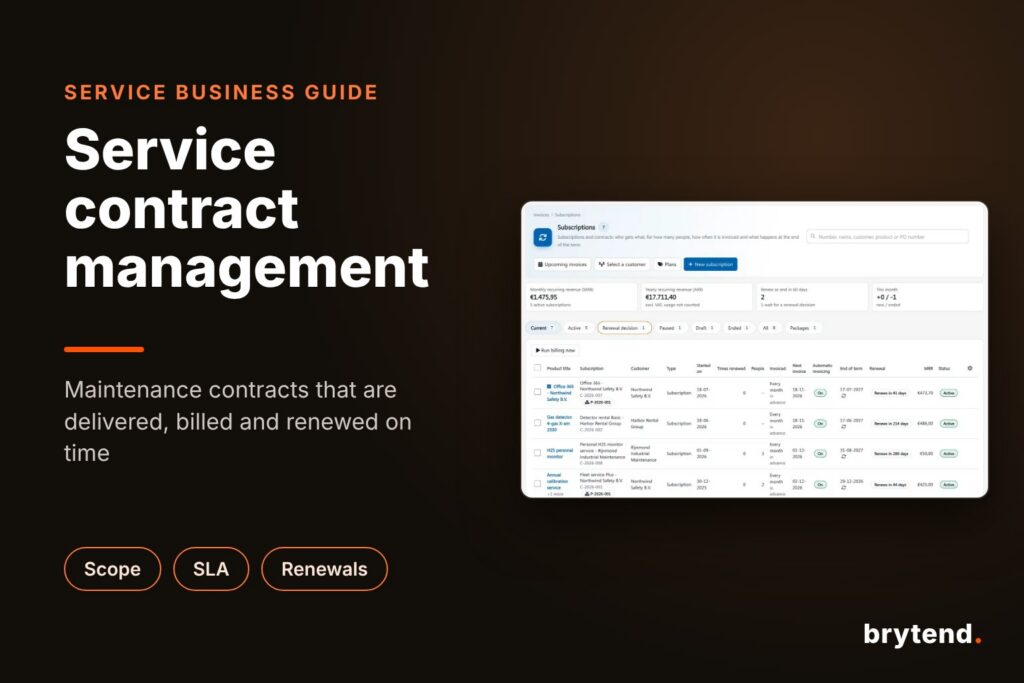
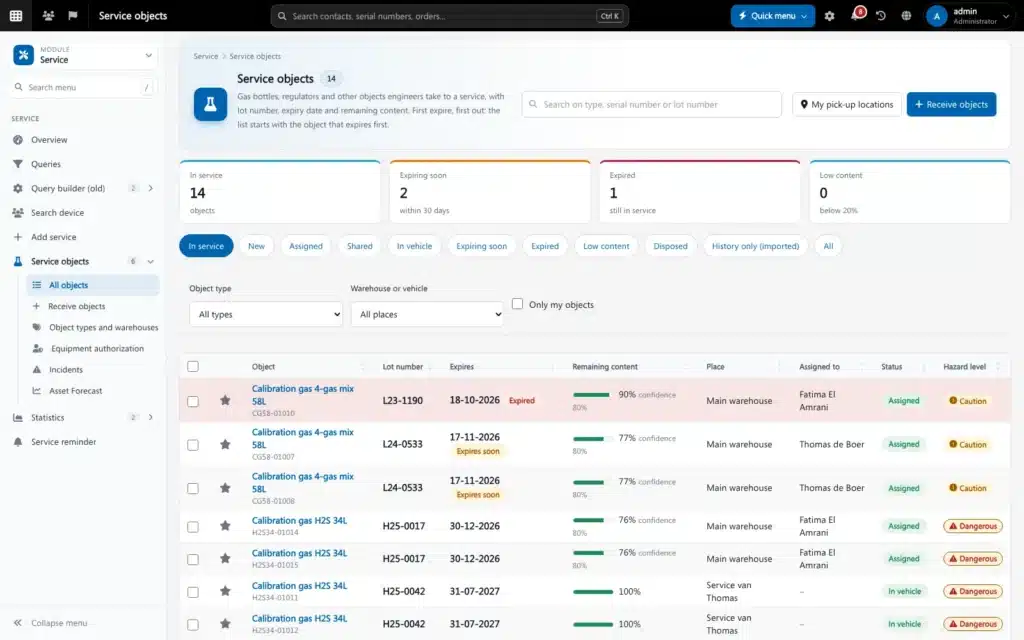
Brytend is lifting equipment inspection software for inspection firms, hire companies and owners of large fleets. Every sling, shackle, hoist and crane is registered per customer and site with its unique ID, safe working load, examinations, defects and certificates. You build the thorough examination form with your own checks, the next due date is set automatically, certificates are generated on the spot, and failed items turn into quotes. Hire companies use the same records in Brytend Rental, so equipment that is due or has failed cannot go out.
What Are Common LOLER Mistakes?
- Forgetting the accessories: slings and shackles need examining every 6 months, not 12
- Hired equipment without a valid report: always ask for the latest report before use
- No examination after damage: exceptional circumstances trigger an examination, whatever the due date
- Defects noted but not acted on: the report lists a repair deadline, and someone has to own it
- Reports that cannot be found: an inspector, insurer or customer may ask for them at any time
- Treating LOLER as a once-a-year task: pre-use checks and in-house inspections catch most problems first
Frequently Asked Questions About LOLER Inspections
What is a LOLER inspection?
A LOLER inspection is the thorough examination of lifting equipment required by the Lifting Operations and Lifting Equipment Regulations 1998 in the UK. A competent person examines the equipment at set intervals to find defects that could make it unsafe, and records the result in a written report. In everyday use, people also call the regular in-house checks between examinations LOLER inspections.
How often is a LOLER inspection required?
Under LOLER, lifting accessories and equipment used to lift people must be thoroughly examined at least every 6 months, and other lifting equipment at least every 12 months. A written scheme of examination drawn up by a competent person can set different intervals. Equipment also needs an examination after installation and after exceptional circumstances, such as damage or a long period out of use.
Who can carry out a LOLER thorough examination?
A competent person with the practical and theoretical knowledge and experience of the equipment, who is independent and impartial enough to make objective decisions. This is often an engineer from an insurance company or a specialist inspection firm. Companies can use their own staff if they meet these conditions and are not the people who maintain the equipment they examine.
What equipment does LOLER cover?
LOLER covers lifting equipment used at work and the accessories used with it, including cranes, hoists, forklifts, passenger and goods lifts in workplaces, vehicle lifts, MEWPs, telehandlers, patient hoists, and lifting accessories such as slings, shackles, eyebolts, chains and lifting beams. It applies to equipment owned, hired or used by employers and the self-employed.
What happens if lifting equipment fails a LOLER inspection?
If the competent person finds a defect that is or could become dangerous, they must tell the duty holder immediately and the equipment must not be used until it is fixed. If the defect poses an existing or imminent risk of serious injury, the examiner must also send a copy of the report to the enforcing authority, such as the HSE.
How long must LOLER records be kept?
Reports of thorough examinations must be kept available for inspection. In general, a report must be kept until the next report is made or for two years, whichever is later. The report from the first examination of new equipment, or after installation, must be kept for as long as the equipment is in use.
What is the difference between LOLER and PUWER?
PUWER (the Provision and Use of Work Equipment Regulations 1998) covers all work equipment and requires it to be suitable, maintained and inspected. LOLER adds specific rules for lifting equipment and lifting operations, including planning lifts and thorough examinations. Lifting equipment must meet both.
A LOLER inspection is simple in principle: examine lifting equipment at the right interval, record the result and act on defects. The difficulty is doing it for thousands of items across many sites without missing a date or losing a report. If you inspect, hire out or maintain lifting equipment and want every item, examination and certificate in one place, Brytend lets you try it free for 90 days.