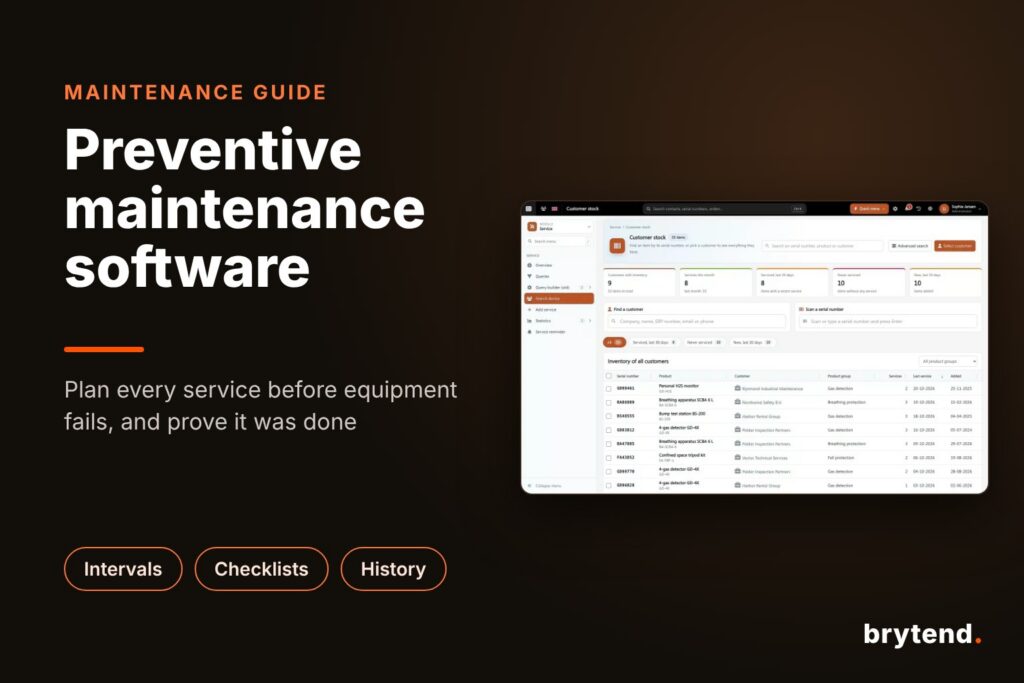
An industrial preventive maintenance checklist is the list of planned checks and tasks that keeps machines and plant equipment running, grouped by how often they are done: daily, weekly, monthly, quarterly and yearly. It covers lubrication, belts and chains, bearings, hydraulics, pneumatics, electrical systems, safety devices and cleaning. Operators handle the quick daily checks, technicians the deeper work, and every task is recorded against the machine so you can prove it was done and see what keeps failing.
TL;DR:
- Group tasks by interval and by who does them: operators daily, technicians weekly to yearly
- Base the checklist on the manufacturer’s manual, then adjust with your own failure history
- Record readings, not just ticks: temperature, amps, pressures and vibration show trends
- Turn checklist intervals into scheduled work orders so nothing depends on memory
- Measure the effect with downtime, MTBF and the share of planned work
An industrial preventive maintenance checklist turns “we should look at that machine sometime” into a fixed, recorded routine.
Why Use a Preventive Maintenance Checklist in Industry?
Unplanned downtime is usually far more expensive than planned maintenance. A failed bearing stops a line, a leaking hydraulic hose creates a safety risk, and a missed lubrication point shortens the life of a gearbox. Most of these failures give early signs, such as heat, noise, vibration or a small leak, that a regular check would have caught.
A checklist makes those checks routine and consistent across shifts and technicians. It also gives you data: if the same machine fails between checks, the interval or the task list needs to change. Our guide to preventive vs predictive maintenance explains where data-driven maintenance adds value on top.
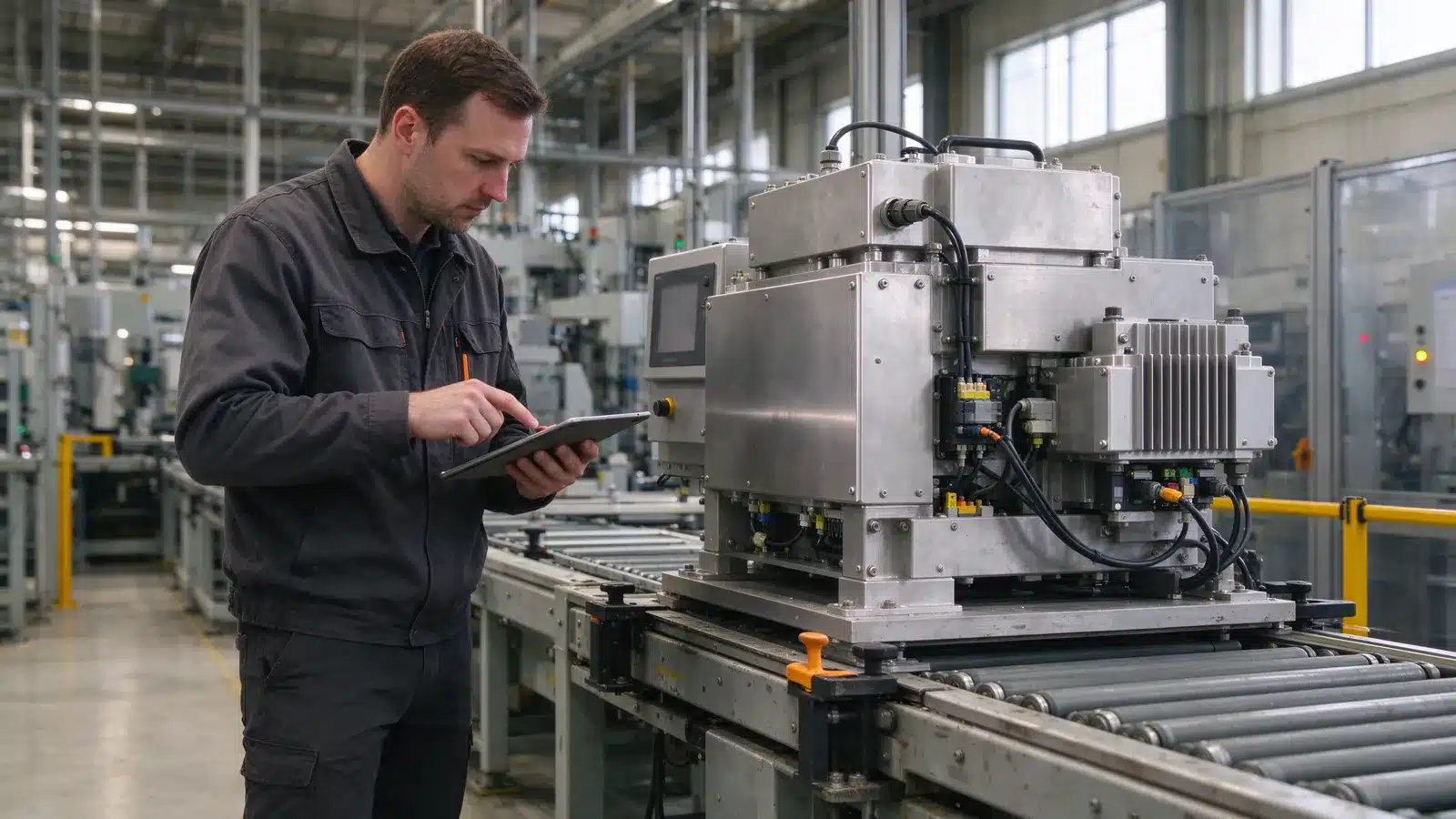
Industrial Preventive Maintenance Checklist by Interval
Use this table as a starting template, and adjust each line to the machine’s manual and your running hours.
| Interval | Who | Typical tasks |
|---|---|---|
| Daily | Operator | Check for leaks, noise and vibration; check oil and coolant levels; clean chips and dust; test emergency stops and guards; check air pressure |
| Weekly | Operator or technician | Lubricate points per the lubrication chart; check belt and chain tension; drain air filter bowls; inspect hoses and cables for wear |
| Monthly | Technician | Inspect bearings for heat and noise; check hydraulic oil condition and filters; check motor amps; tighten loose fasteners; test safety interlocks |
| Quarterly | Technician | Change filters; check alignment of couplings and drives; inspect electrical cabinets and connections; calibrate key gauges and sensors |
| Yearly | Technician or specialist | Change hydraulic and gear oil; thermographic scan of electrical panels; full safety inspection; replace wear parts per manual; review intervals from the year’s data |
Checklist by System
Mechanical
- Bearings: temperature, noise, play and lubrication
- Belts and chains: tension, wear, alignment and lubrication
- Gearboxes: oil level and condition, leaks, noise
- Couplings and shafts: alignment and wear
- Fasteners and mounts: loose bolts, cracked welds, worn anti-vibration mounts
Hydraulic and pneumatic
- Oil level, temperature and condition; filter indicators
- Hoses and fittings: leaks, cracks, abrasion and expiry dates
- Pressure settings and gauges within limits
- Compressed air: drain water traps, check lubricators and leaks
Electrical
- Motors: current draw against nameplate, temperature, cooling fans clean
- Cabinets: clean, closed, no signs of overheating; terminals tight
- Cables and plugs: damage, strain relief, correct routing
- Sensors and limit switches: clean and working
Safety
- Emergency stops and pull cords tested
- Guards and interlocks in place and working
- Warning labels and signs readable
- Lockout points available and marked
How Do You Build a Preventive Maintenance Checklist for Your Plant?
Step 1: List your assets
Create one record per machine with its make, model, serial number, location and criticality. Start with the machines whose failure stops production.
Step 2: Collect the tasks
Take the maintenance schedule from each manual and add tasks from your breakdown history and the experience of operators and technicians.
Step 3: Set intervals and owners
Assign each task an interval, by calendar or running hours, and an owner. Keep operator checks short enough to finish at the start of a shift.
Step 4: Define what is recorded
For each task, decide what proves it was done: a tick, a reading, a photo or a signature. Readings are worth the effort, because they show trends.
Step 5: Schedule and review
Turn the intervals into scheduled jobs and work orders, and review the checklist every year using the failures and findings it produced.
From Paper Checklist to Maintenance Software
Paper checklists on a clipboard work until you need to answer “when was this bearing last greased?” or “which tasks are overdue?”. Maintenance software keeps the checklist, the schedule and the history together. Preventive maintenance software creates the jobs from the intervals, technicians fill in the checklist on a phone, and every reading is saved against the machine.
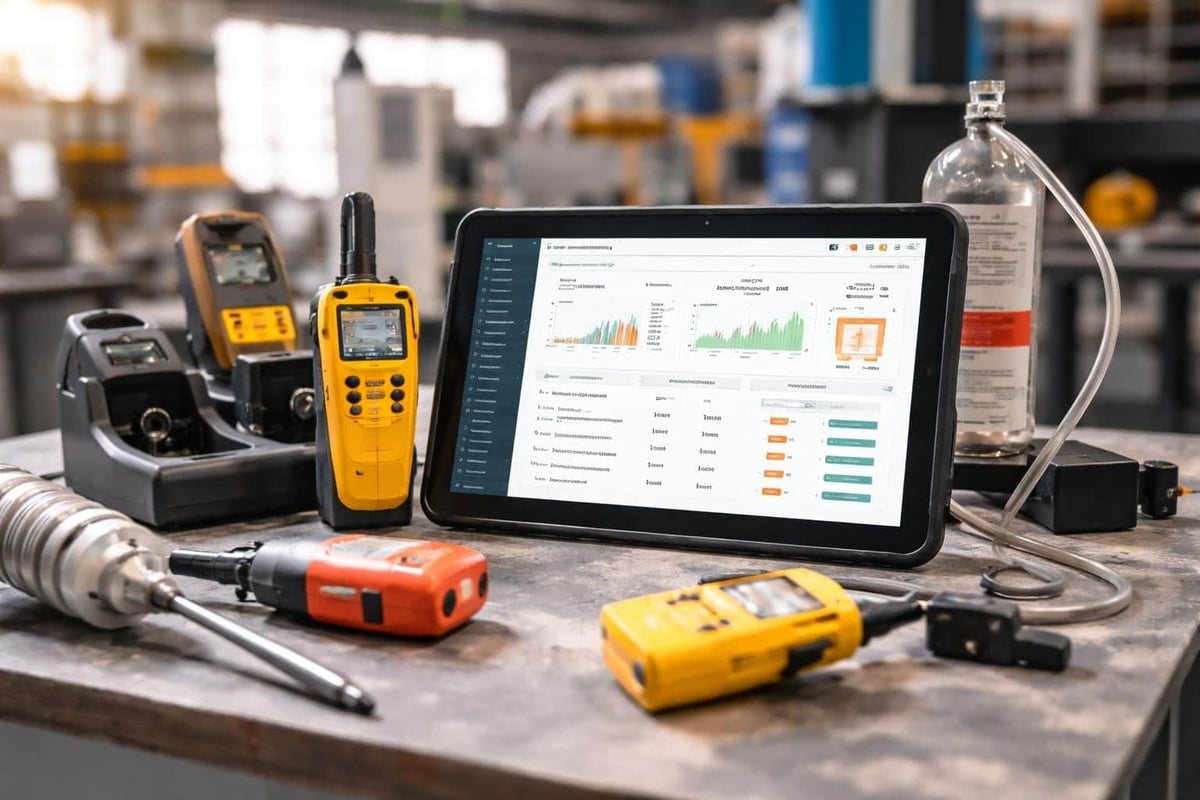
In Brytend, every machine is a registered asset with its own maintenance plan, checklist forms, documents and history in the Service and Inspections module. Service reminders show what is due, technicians record readings and photos in the mobile app, spare parts come from stock, and the next due date is set automatically. Equipment manufacturers and service companies use the same system to maintain machines at their customers’ sites.
What Are Common Preventive Maintenance Mistakes?
- Copying the manual without adjusting: your running hours and environment differ from the manufacturer’s assumptions
- Ticks without readings: a tick says the check was done, a reading says what was found
- Overloaded operator checklists: a 40-point daily list gets skipped
- Findings without follow-up: every defect needs a repair job and an owner
- Never reviewing the list: intervals should change when the data says so
Frequently Asked Questions About Industrial Preventive Maintenance
What is an industrial preventive maintenance checklist?
An industrial preventive maintenance checklist lists the planned checks and tasks for machines and plant equipment, grouped by interval: daily, weekly, monthly, quarterly and yearly. It covers lubrication, belts and chains, bearings, hydraulics, pneumatics, electrical parts, safety devices and cleaning, and records who did what and when.
What are the main types of industrial maintenance?
The main types are reactive maintenance (fix after failure), preventive maintenance (planned by time or usage), condition-based maintenance (triggered by measurements such as vibration or temperature) and predictive maintenance (using data to forecast failure). Most plants use preventive maintenance as the base and add condition-based checks on critical machines.
How do you create a preventive maintenance checklist for a machine?
Start with the manufacturer’s manual and list every task with its interval. Add tasks from your own breakdown history, group them by daily, weekly, monthly and yearly, assign who does them (operator or technician) and define what is recorded, such as readings, photos or a pass or fail.
Who should do daily equipment checks?
Daily checks, such as looking for leaks, listening for noise, checking oil levels and testing emergency stops, are usually done by the machine operator. Technical tasks, such as replacing bearings, adjusting drives and electrical inspections, are done by maintenance technicians.
How often should industrial equipment be maintained?
Follow the manufacturer’s intervals and adjust them to your running hours and environment. Heavily used machines in dusty, hot or wet conditions need shorter intervals. Many plants plan by running hours or production cycles as well as by calendar dates.
What is the difference between a checklist and a work order?
A checklist is the list of checks for an asset. A work order is the job that tells someone to carry out that checklist on a specific date, and records the result, time and parts used. Maintenance software creates the work orders from the checklist intervals.
How do you measure if preventive maintenance works?
Track unplanned downtime, mean time between failures (MTBF), the share of planned versus reactive work, and the percentage of preventive tasks done on time. Rising MTBF and falling reactive work show that the checklist is catching problems early.
An industrial preventive maintenance checklist is only as good as its routine: the right tasks, at the right interval, recorded every time. Start with your critical machines, record readings, and let the results tell you where to tighten or relax the schedule. If you want every machine, checklist, reading and work order in one system, Brytend lets you try it free for 90 days.