A fire equipment inspection checklist covers every piece of fire safety equipment in a building and how often it must be checked: fire extinguishers, fire alarm systems, sprinklers, hose reels, emergency lighting, fire doors and signage. Each item has its own checks and interval, from a weekly alarm test to a yearly service by a competent contractor, and every check is recorded. This guide gives you a complete checklist per equipment type and shows how fire safety companies keep track of it all.
TL;DR:
- Extinguishers: monthly visual check, yearly service
- Fire alarm: regular call point or panel test, full device testing over the year
- Sprinklers: gauge and valve checks from weekly to quarterly, yearly inspection
- Emergency lighting: monthly short test, yearly full-duration test
- Fire doors, hose reels and signs: regular visual checks and a yearly inspection
- Record everything per item and site: date, result, faults, action and who checked it
A fire equipment inspection checklist is the schedule and record that proves a building’s fire safety equipment will work when it is needed.
Which Rules Apply to Fire Equipment Inspections?
The checks are similar everywhere, but the codes differ per country. In the US, the main references are NFPA 10 for extinguishers, NFPA 25 for sprinklers and water-based systems, NFPA 72 for fire alarms and NFPA 101 for emergency lighting. In the UK, the building’s responsible person must keep fire safety equipment maintained under the Regulatory Reform (Fire Safety) Order 2005, and the work usually follows British Standards such as BS 5839-1 for alarms, BS 5266-1 for emergency lighting and BS 5306-3 for extinguishers. Always check the code that your fire authority enforces.
Fire Extinguishers
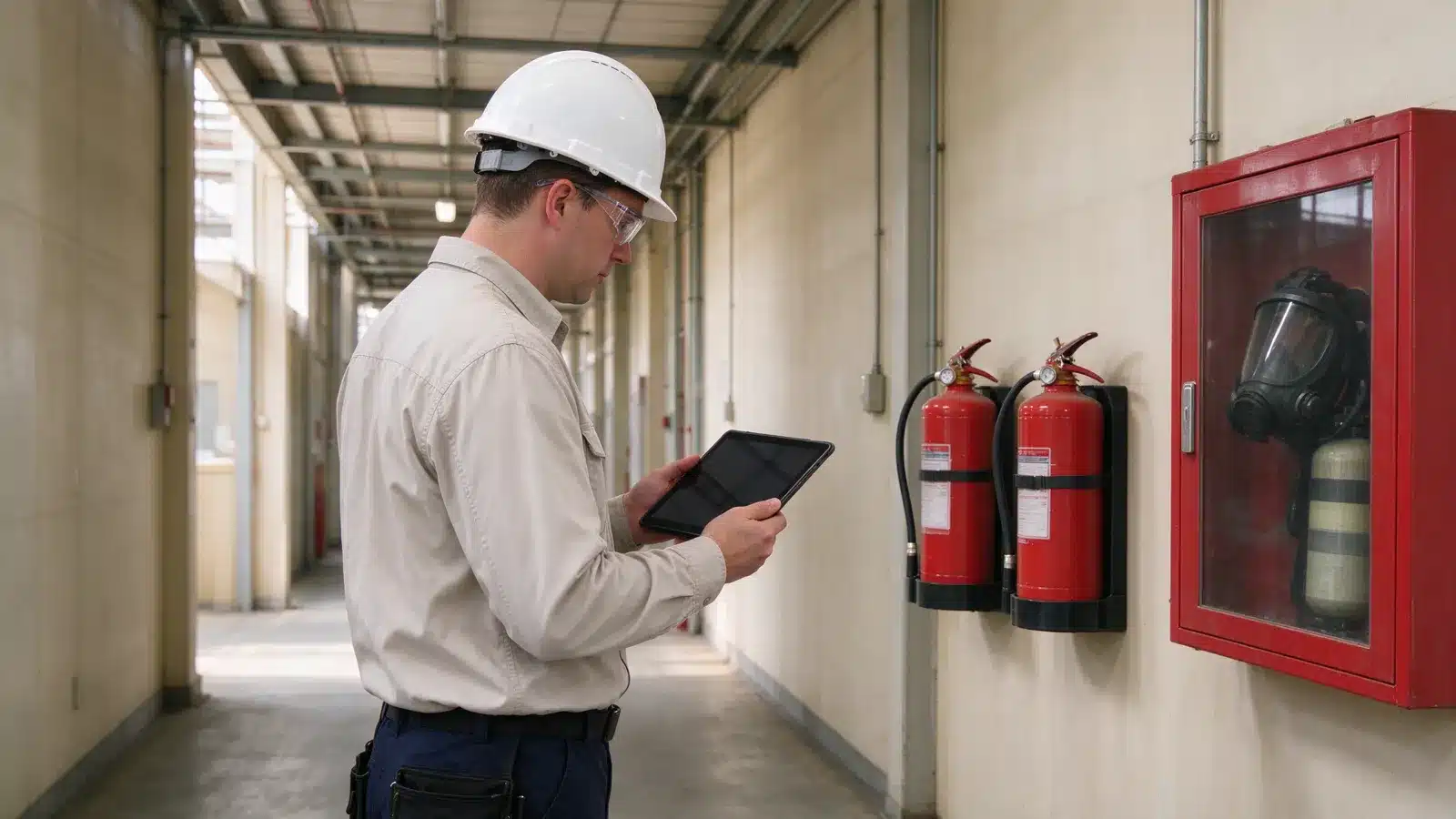
- In its designated place, visible, mounted correctly and not blocked
- Pressure gauge in the green zone; weight correct on CO2 units
- Safety pin and tamper seal intact
- No damage, corrosion, leaks or blocked hose or nozzle
- Instructions legible and facing outward
- Service label or tag in date; yearly service and longer-term tests on time
The full monthly routine, the annual service and the 6- and 12-year rules are in our guide to fire extinguisher inspection.
Fire Alarm System
- Control panel: no fault or disablement indications, correct time, log reviewed
- Weekly or regular test: operate a different manual call point each time and confirm the alarm sounds
- Power supplies: mains and standby batteries checked, battery date and condition recorded
- Detectors: clean, undamaged and unobstructed; each one tested over the year
- Sounders and beacons: audible and visible in all areas
- Remote monitoring: signal received by the alarm receiving centre
- Changes: new walls, room use or furniture that affect detector coverage
Sprinkler Systems
- Control valves open and secured, with their position recorded
- Water supply and system pressure gauges within normal range
- Alarm valves and flow switches tested at the required interval
- Sprinkler heads free of paint, damage, corrosion and obstructions (keep the clearance below heads)
- Spare heads and the sprinkler wrench available
- Pumps run-tested where the system has fire pumps
Emergency Lighting
- Monthly: short functional test of every luminaire and exit sign by simulating a mains failure
- Yearly: full-duration test, typically 3 hours in the UK under BS 5266 or 90 minutes under NFPA 101
- Lamps, diffusers and signs clean and undamaged
- Charging indicators lit; failed batteries or lamps replaced
Hose Reels, Fire Doors and Signs
- Hose reels: accessible, hose undamaged, valve operates, water flows
- Fire doors: close fully by themselves, seals and hinges intact, not wedged open, gaps within limits
- Escape routes: clear of obstructions, exits open easily
- Signs and plans: exit signs and fire action notices visible and up to date
- Fire blankets: in place and in date
Fire Equipment Inspection Frequency at a Glance
| Equipment | Frequent check (site staff) | Periodic service (competent contractor) |
|---|---|---|
| Fire extinguishers | Monthly visual check | Yearly service, plus internal and pressure tests at longer intervals |
| Fire alarm system | Weekly call point test (UK practice) | Periodic inspection and testing, all devices covered over the year |
| Sprinkler system | Weekly to monthly gauge and valve checks | Quarterly and yearly inspections and tests |
| Emergency lighting | Monthly short test | Yearly full-duration test |
| Fire doors | Regular visual check | Periodic detailed inspection |
| Hose reels | Regular visual check | Yearly service |
These are common intervals; the code that applies to the building and the system design decide the exact schedule.
How Do Fire Safety Companies Manage Inspections Across Sites?
A fire safety contractor may look after thousands of items across hundreds of sites. The checks are routine; the challenge is the volume and the proof. The companies that run it well work like this:
A register per site
Every item, from an extinguisher to an alarm panel, is registered with its type, location, serial number and dates. A QR code on the item opens its record, see QR code asset tracking.
Due dates drive the planning
Each equipment type has its own intervals, so the next due date per item is calculated automatically. Planners see which sites are due next month and plan visits per site, as inspection management software does.
One checklist per equipment type
The technician gets the right checklist for each item, records results, readings and photos, and the customer receives one report for the whole site.
Faults become work
A failed item becomes a repair or replacement quote, and the history shows when it was fixed.
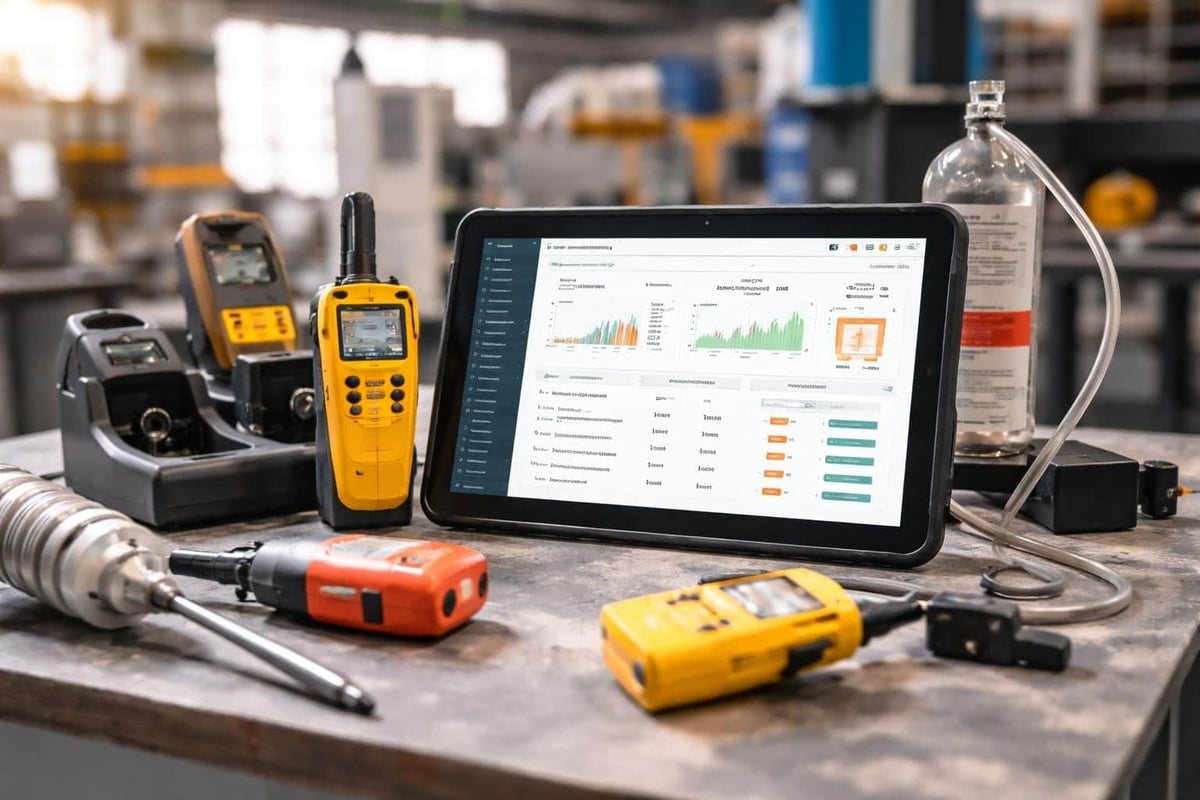
Brytend is fire inspection software for fire and safety companies. Every extinguisher, alarm device, emergency light and piece of breathing apparatus is registered per customer and site in the Service and Inspections module, with its own inspection form, due dates and history. Technicians use the mobile app, the site report is generated from your own template, and Academy shows which technicians are qualified for each type of equipment.
What Are Common Fire Equipment Inspection Mistakes?
- Only checking extinguishers: alarms, emergency lights and fire doors fail more quietly
- Testing the same call point every week: rotate them so every one gets tested
- No full-duration emergency lighting test: a light can pass the monthly test with a battery that lasts only minutes
- Fire doors wedged open: a common finding that defeats the whole system
- Records that cannot be found: after a fire, the logbook is one of the first things investigators ask for
Frequently Asked Questions About Fire Equipment Inspections
What is a fire equipment inspection checklist?
A fire equipment inspection checklist lists the checks for every type of fire safety equipment in a building: extinguishers, fire alarm systems, sprinklers, hose reels, emergency lighting, fire doors and signs. It sets how often each item is checked, by whom, and what must be recorded.
How often should fire equipment be inspected?
It depends on the equipment and the code you work under. Typical intervals are monthly visual checks of extinguishers and emergency lights, weekly or monthly fire alarm tests, periodic sprinkler checks from weekly to yearly, and a full annual service by a competent contractor. Local codes such as NFPA in the US or British Standards in the UK set the exact rules.
Who can inspect fire equipment?
Simple visual checks, such as weekly alarm tests or monthly extinguisher checks, can be done by trained staff on site. Annual servicing, testing of alarm systems and sprinklers, and maintenance of extinguishers must be done by a competent, usually certified, fire safety contractor.
What does a fire alarm inspection include?
A fire alarm inspection checks the control panel, power supplies and batteries, detectors, call points, sounders and beacons, and the link to the monitoring centre. Under common codes, a call point or test switch is tested regularly, and every detector and device is tested over the course of a year.
How do you test emergency lighting?
Emergency lighting gets a short functional test, often monthly, by switching off the normal supply and checking every light comes on. Once a year it gets a full-duration test, usually three hours in the UK or 90 minutes under NFPA 101 in the US, to prove the batteries last.
What records are needed for fire equipment inspections?
Keep a log or register with the date, the equipment checked, the result, any faults and the action taken, and who did the check. Fire authorities, insurers and auditors ask for these records, and many codes require them to be kept for a set period.
Can fire equipment inspections be done digitally?
Yes. Many fire safety companies label each item with a QR code, record checks on a phone or tablet and generate the report automatically. A digital register also shows which items are due next month across all customer sites.
Fire safety equipment only proves itself on the day of a fire. A complete fire equipment inspection checklist, worked through on time and recorded per item, is how you know it will work on that day. If you inspect fire equipment for your customers and want every item, site, checklist and report in one place, Brytend lets you try it free for 90 days.