A forklift maintenance checklist has two parts: a daily pre-use check by the operator and planned maintenance by a technician. The daily check covers tyres, forks, mast and chains, leaks, fluid levels, battery or fuel, and a test of the horn, lights, brakes, steering and hydraulic controls. Planned maintenance follows the manufacturer’s schedule, usually every few hundred operating hours. A truck that fails a safety check is taken out of service until it is repaired, and every check is recorded.
TL;DR:
- Daily (or every shift): operator pre-use check, visual and operational
- Planned maintenance: typically every 200 to 250 hours, per the manufacturer
- UK: a LOLER thorough examination at least every 12 months
- Safety defects take the truck out of service until fixed
- Record every check per truck, so defects and missed checks are visible
A forklift maintenance checklist is how you keep a heavy, fast and busy machine safe on a site full of people.
Daily Forklift Pre-Use Checklist
In the US, OSHA 1910.178 requires trucks to be examined before being placed in service, at least daily. This checklist covers the usual points.
Visual checks (engine off)
- Tyres and wheels: wear, cuts, pressure on pneumatic tyres, loose wheel nuts
- Forks: cracks, bends, wear at the heel, locking pins in place
- Mast and chains: damage, wear, even tension, lubrication
- Overhead guard and load backrest: secure and undamaged
- Leaks: hydraulic oil, engine oil, coolant, fuel or battery electrolyte under the truck
- Data plate and labels: readable, matching any attachment fitted
Fluids and power
- Engine oil, coolant and hydraulic oil levels
- Electric trucks: battery charge, cables and connectors, electrolyte level where applicable
- LPG trucks: cylinder secure, no smell of gas, hose and connection undamaged
Operational checks (engine on)
- Horn, lights, beacon and reversing alarm
- Service brake and parking brake
- Steering: smooth, no excessive play
- Hydraulic controls: lift, lower, tilt and side shift work smoothly, no drifting
- Seat belt and seat switch
- Gauges and warning lights
Forklift Planned Maintenance Checklist
Planned maintenance is usually scheduled by operating hours. A typical service includes:
| System | Typical checks |
|---|---|
| Engine or drive motor | Oil and filter (IC trucks), air filter, belts, cooling system, motor brushes and connections (electric) |
| Hydraulics | Oil level and condition, filters, hoses, cylinders for leaks and drift |
| Mast and chains | Chain stretch and lubrication, rollers, mast channels, lift brackets |
| Brakes and steering | Brake wear and adjustment, steering linkage and axle |
| Electrical | Battery condition and cables, lights, alarms, contactors |
| Tyres and forks | Wear limits, fork heel thickness, fork straightness |
| Safety devices | Seat belt, operator presence system, overhead guard, load backrest |
Forklift Inspections in the UK: PUWER and LOLER
In the UK, forklifts fall under PUWER, which requires work equipment to be maintained, and LOLER, because they are lifting equipment. LOLER requires a thorough examination by a competent person at least every 12 months, or every 6 months if the truck lifts people or has attachments used as lifting accessories, unless a written scheme of examination sets other intervals. Our LOLER inspection guide explains what the examination and report must include.
How Often Should a Forklift Be Serviced?
- Every shift or day: operator pre-use check
- Every 200 to 250 hours (common): planned maintenance service
- Every 1,000 to 2,000 hours (common): larger service with fluid and filter changes
- Yearly (UK): LOLER thorough examination
The manufacturer’s schedule, the hour meter and the operating conditions decide the exact intervals.
How Do Forklift Dealers and Fleet Owners Track Maintenance?
A forklift dealer or rental company may service hundreds of trucks at many customers; a large warehouse may run dozens of its own. Paper check booklets on each truck make it hard to see which trucks were skipped or which defects are still open. Digital tracking solves that:
- Each truck has a record with serial number, model, hour meter, customer or site and documents
- Operators scan a QR code and complete the daily checklist on a phone
- A failed check creates a repair job and flags the truck as out of service
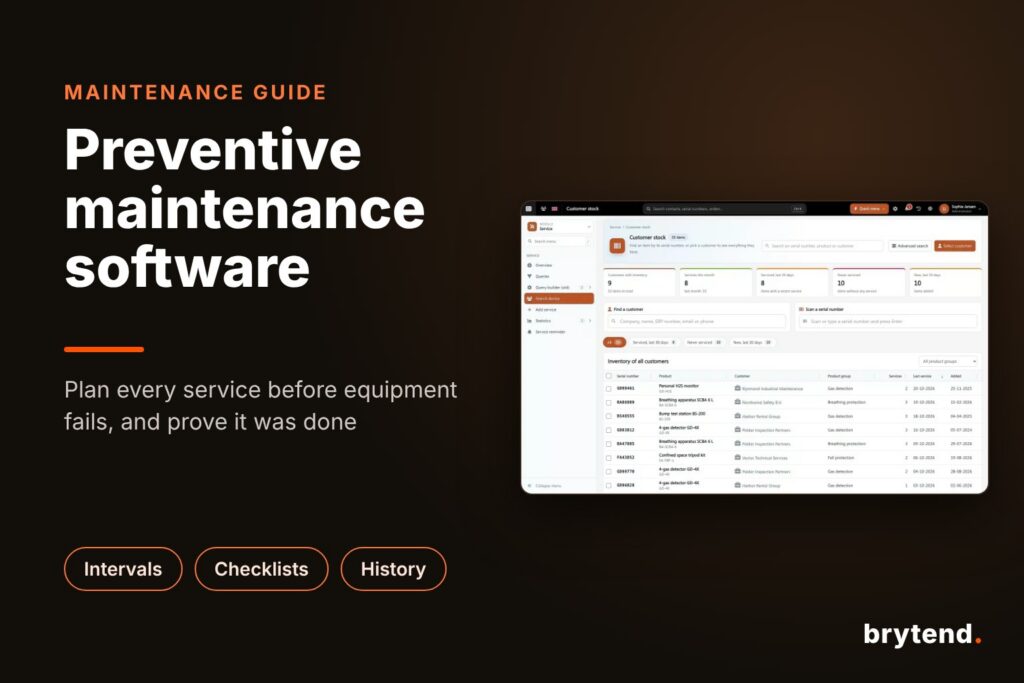
- Planned services are scheduled from hours and dates, as preventive maintenance software does
- Rental trucks get a check every time they go out and come back, see rental software
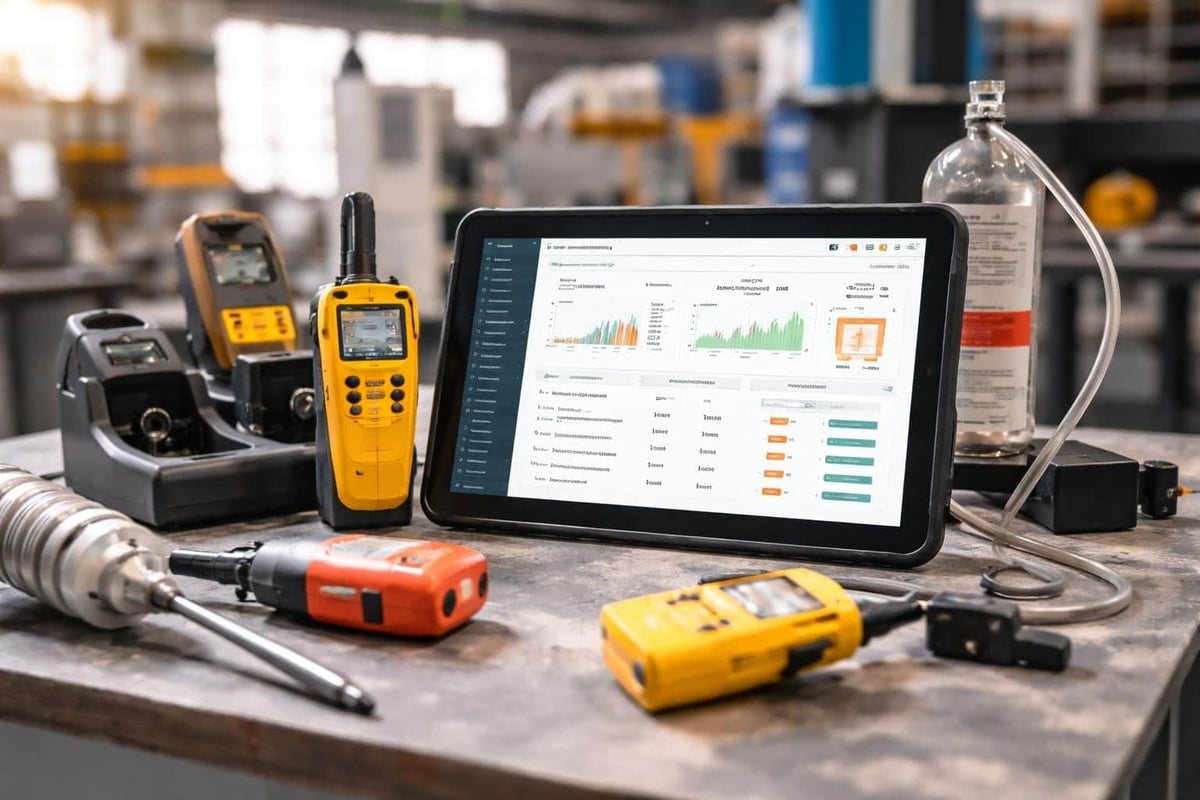
In Brytend, every forklift is a registered asset with its checklists, hour readings, services, thorough examinations and documents in the Service and Inspections module. Operators and technicians use the mobile app, defects become work orders, and dealers who also rent out trucks manage hires, returns and damage in Brytend Rental on the same records.
What Are Common Forklift Maintenance Mistakes?
- Ticking the daily check without looking: random spot checks keep it honest
- Using a truck with a known defect: a defect that affects safety means out of service
- Ignoring fork wear: worn heels and bent forks reduce capacity
- Attachments not on the data plate: an attachment changes the truck’s rated capacity
- No hour-based planning: a truck used on three shifts needs service far sooner than one used part time
Frequently Asked Questions About Forklift Maintenance
What is on a daily forklift checklist?
A daily forklift checklist covers a visual walk-around (tyres, forks, mast, chains, overhead guard, leaks), fluid levels, the battery or fuel, and an operational test of the horn, lights, brakes, parking brake, steering, hydraulic controls, seat belt and warning devices. Any defect that affects safety takes the truck out of service.
Is a daily forklift inspection required by law?
In the US, OSHA 29 CFR 1910.178(q)(7) requires industrial trucks to be examined before being placed in service, at least daily, and after each shift when used around the clock. Defects that affect safe operation must be fixed before use. In the UK, PUWER requires work equipment to be maintained, and pre-use checks are the accepted way to do it.
How often does a forklift need servicing?
Many manufacturers recommend planned maintenance every 200 to 250 operating hours or every few months, whichever comes first, with bigger services at longer intervals. Trucks in heavy or dusty use need shorter intervals. The manufacturer’s schedule and the hour meter decide.
Does a forklift need a LOLER thorough examination?
In the UK, yes. A forklift is lifting equipment, so it needs a thorough examination by a competent person at least every 12 months, or every 6 months if it is used to lift people or its attachments are lifting accessories, unless a written scheme sets other intervals.
Who can do forklift maintenance?
Operators do the daily pre-use check. Planned maintenance, repairs and thorough examinations are done by trained technicians or a forklift service provider. Repairs to brakes, steering, mast and hydraulics should only be done by qualified people.
What happens if a forklift fails its daily check?
If a defect affects safe operation, the truck must be taken out of service, tagged and reported, and not used until it is repaired. Minor findings are recorded and passed to maintenance. The record shows who found the defect and when it was fixed.
How do you keep forklift checklists?
Many sites still use paper booklets on the truck. Digital checklists on a phone or tablet are easier to audit: each check is saved with the truck ID, time and operator, defects create a repair job, and managers see which trucks were not checked.
A forklift maintenance checklist protects operators, pedestrians and loads. The daily check takes minutes, planned maintenance keeps the truck reliable, and records prove both were done. If you service, rent out or operate forklifts and want every truck, checklist and service in one place, Brytend lets you try it free for 90 days.