An AED maintenance checklist makes sure an automated external defibrillator is ready to use at any moment. It covers the status indicator, the expiry dates of the pads and battery, the condition of the device and cabinet, the rescue kit, and signage and access. Most organisations check the status indicator weekly or monthly, do a full check every month, replace pads and batteries before they expire, and restore the AED to service after every use.
TL;DR:
- Check the status indicator regularly, often weekly or monthly
- Monthly: device, pads, battery, rescue kit, cabinet and signage
- Replace pads and batteries before their expiry dates, and pads after every use
- Follow the manufacturer’s instructions and safety notices
- Keep a log per AED: location, serial number, checks and expiry dates
An AED maintenance checklist turns a device on the wall into a device that will work when someone collapses.
Why Is AED Maintenance Important?
An AED is used rarely but must work immediately. The most common reasons an AED is not ready are simple: expired pads, a depleted battery, a device that failed its self-test without anyone noticing, or an AED that was used and never restocked. A short, regular check finds all of these.
Regulators and manufacturers stress the same point. The US FDA advises owners to maintain AEDs according to the manufacturer’s instructions, and organisations such as resuscitation councils publish guidance on placing and maintaining public-access AEDs.
AED Maintenance Checklist
Status and device
- Status indicator shows ready (per the manual), no alarm or chirp
- Device clean, undamaged, no cracks or signs of moisture
- Correct model and serial number recorded
- Any open manufacturer safety notice or software update handled
Pads and battery
- Adult pads present, sealed and within the expiry date
- Paediatric pads or key present where required
- Battery installed, not expired, charge indicator OK
- Spare pads available where the site requires them
Rescue kit
- Gloves, razor, trauma scissors, face shield or pocket mask, towel or wipes
- All items sealed and in date
Cabinet, signage and access
- Cabinet accessible, unlocked or with the code known, alarm working if fitted
- Heated cabinet working for outdoor AEDs in cold weather
- AED signs visible from the approach routes
- Location registered with the local emergency service or AED network where available
Record
- Date, name, result and any action taken
- Next due dates for pads and battery
How Often Should You Check an AED?
| Check | Common interval |
|---|---|
| Status indicator | Weekly or monthly, per the manufacturer or your policy |
| Full checklist (pads, battery, kit, cabinet) | Monthly |
| Pads replacement | Before the expiry date and after every use |
| Battery replacement | Before the expiry date or when the indicator says so |
| After use | Immediately: new pads, restock kit, check status, record |
| Service by a specialist | Per manufacturer, and after any fault or safety notice |
What Should You Do After an AED Is Used?
- Replace the used pads with new, in-date pads
- Check the battery and the status indicator
- Restock the rescue kit
- Download or hand over event data if your procedures or the emergency services require it
- Clean the device according to the manual
- Record the use and return the AED to its location
How Do Organisations With Many AEDs Keep Track?
Hospitals, councils, schools, sports clubs and companies with many sites may own dozens or hundreds of AEDs. Medical equipment service companies look after AEDs for many customers. The challenge is the expiry dates: every AED has pads and a battery that expire on different dates.
- Register every AED with its location, model, serial number and the expiry dates of pads and battery
- Put a QR code on each cabinet so the monthly check is recorded on a phone
- Send reminders before pads and batteries expire, and plan replacement visits
- Keep the full history, including uses, faults and manufacturer notices
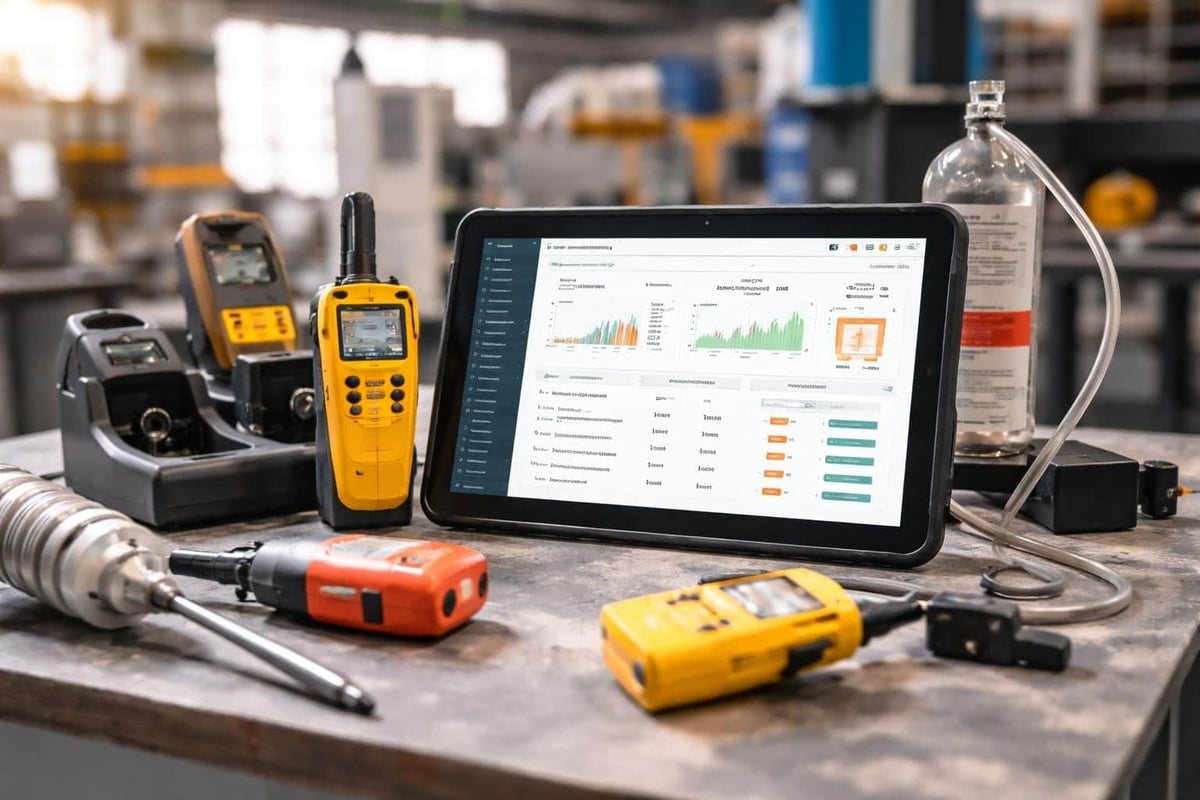
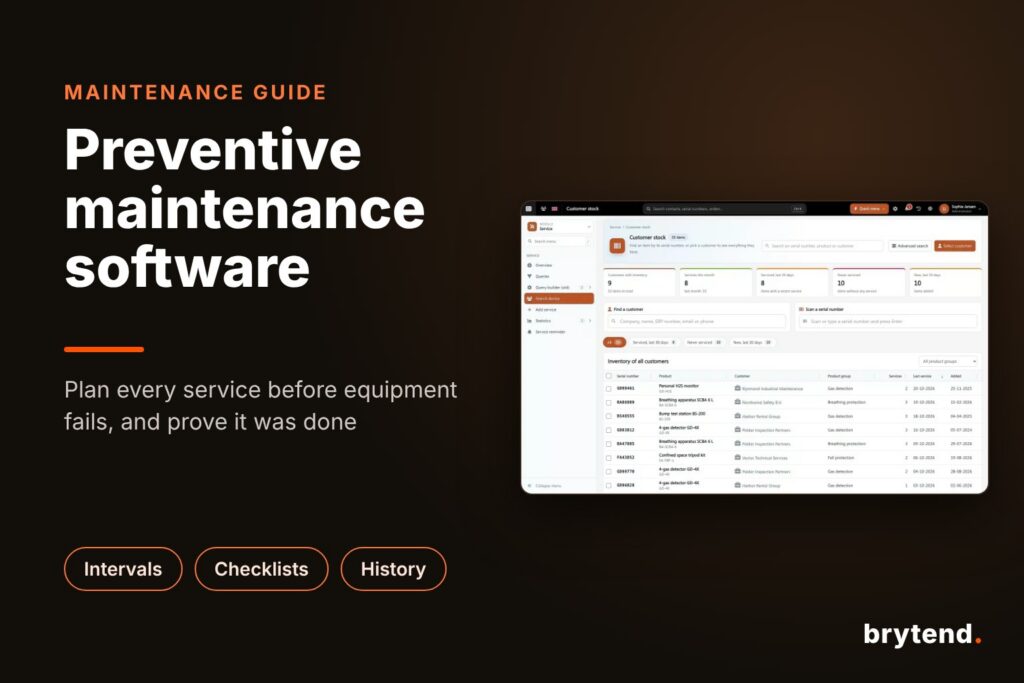
Brytend is used by medical equipment service companies to manage devices like AEDs at their customers’ sites. Every device is registered with its location, serial number, consumables and expiry dates in the Service and Inspections module. Checks are done on the mobile app, reminders show what expires soon, and replacement pads and batteries come from stock. See also our guide to medical equipment maintenance.
What Are Common AED Maintenance Mistakes?
- Not looking at the status indicator: a failed self-test can go unnoticed for months
- Expired pads: the most common finding during AED checks
- Not restocking after use: the next person finds an AED without pads
- Locked or hidden cabinets: seconds count, and the AED must be easy to find and open
- No central register: nobody knows how many AEDs there are or when their parts expire
What Does Automated External Defibrillator Maintenance Involve?
Automated external defibrillator maintenance is more than the monthly checklist. AED defibrillator maintenance covers three levels: the owner’s routine checks, the replacement of consumables, and service by a qualified technician or the manufacturer.
| Level | Who | What |
|---|---|---|
| Routine checks | AED coordinator or trained staff | Status indicator, pads, battery, rescue kit, cabinet and signage |
| Consumables | AED coordinator or service company | Replace pads and battery before expiry and after use |
| Technical service | Qualified technician or manufacturer | Software updates, safety notices, functional and electrical safety tests, repairs |
In hospitals, defibrillators are high-risk equipment and are maintained by clinical engineering as part of the planned maintenance program. Outside hospitals, owners often hand defibrillator maintenance to a service company that tracks every device and expiry date for them.
Frequently Asked Questions About AED Maintenance
What should an AED maintenance checklist include?
An AED maintenance checklist covers the status indicator, the expiry dates of pads and battery, the condition of the device and its cabinet, the rescue kit (gloves, razor, scissors, face shield, towel), signage and access, and a record of each check. After every use, pads are replaced and the device is checked and returned to service.
How often should an AED be checked?
Many organisations check the status indicator weekly or monthly and do a full check monthly, following the manufacturer’s instructions. Pads and batteries have expiry dates and must be replaced before they expire. A check is also needed after every use and after a software or safety notice from the manufacturer.
How long do AED pads and batteries last?
Pads typically last about 2 to 5 years and batteries about 2 to 5 years, depending on the model and manufacturer. The exact dates are printed on the pads and battery. Pads must also be replaced after each use, because they are single-use.
What does the AED status indicator show?
Most AEDs run regular self-tests and show the result with a light, symbol or display. A green tick or flashing green light usually means ready; a red light, a cross or a chirping sound means the device needs attention. The manual explains the exact signals.
Who is responsible for AED maintenance?
The owner of the AED, such as the employer, school, gym or building manager, is responsible. Many appoint an AED coordinator who does the checks and keeps the log. Some use a service company that tracks expiry dates and replaces pads and batteries.
What do you do after an AED has been used?
Replace the used pads, check the battery level and the device’s status, restock the rescue kit, download or report the event data if required, and record the use. The AED is not ready for the next emergency until this is done.
Can AED checks be tracked digitally?
Yes. A digital register lists every AED with its location, serial number and the expiry dates of pads and batteries. Monthly checks are recorded on a phone by scanning a QR code on the cabinet, and reminders go out before anything expires.
What does AED defibrillator maintenance include?
AED defibrillator maintenance includes routine checks of the status indicator, pads, battery, rescue kit and cabinet; replacing pads and batteries before they expire and after use; and technical service by a qualified technician or the manufacturer, such as software updates, safety notices, tests and repairs.
AED maintenance takes a few minutes a month, but it decides whether the device works when a life depends on it. Check the status indicator, track pad and battery expiry dates, restock after every use and keep a record. If you manage AEDs or other medical devices for your customers and want every device, check and expiry date in one place, Brytend lets you try it free for 90 days.