Clinical engineering is the hospital function that manages medical technology. A clinical engineering department keeps an inventory of every medical device, plans and records maintenance and safety tests, repairs faults, acts on recalls and safety notices, and advises on buying and replacing equipment. Its goal is simple: every device is safe, works and is available when a patient needs it.
TL;DR:
- Clinical engineering manages medical devices across their whole life
- Core work: inventory, planned maintenance, repairs, recalls and incoming inspection
- Maintenance is planned by risk: life-support equipment comes first
- Records prove compliance to auditors, regulators and accreditation bodies
- Most departments run on a CMMS with a mobile app for technicians
What Is Clinical Engineering?
Clinical engineering applies engineering and management skills to the technology used in patient care. The American College of Clinical Engineering (ACCE) describes a clinical engineer as a professional who supports and advances patient care by applying engineering and management skills to healthcare technology.
In a hospital, that work is done by a team that may be called clinical engineering, biomedical engineering, biomed, medical technology or medical physics and clinical engineering. The team is a mix of clinical engineers, biomedical equipment technicians (BMETs) and sometimes specialists for imaging, dialysis or laboratory equipment.
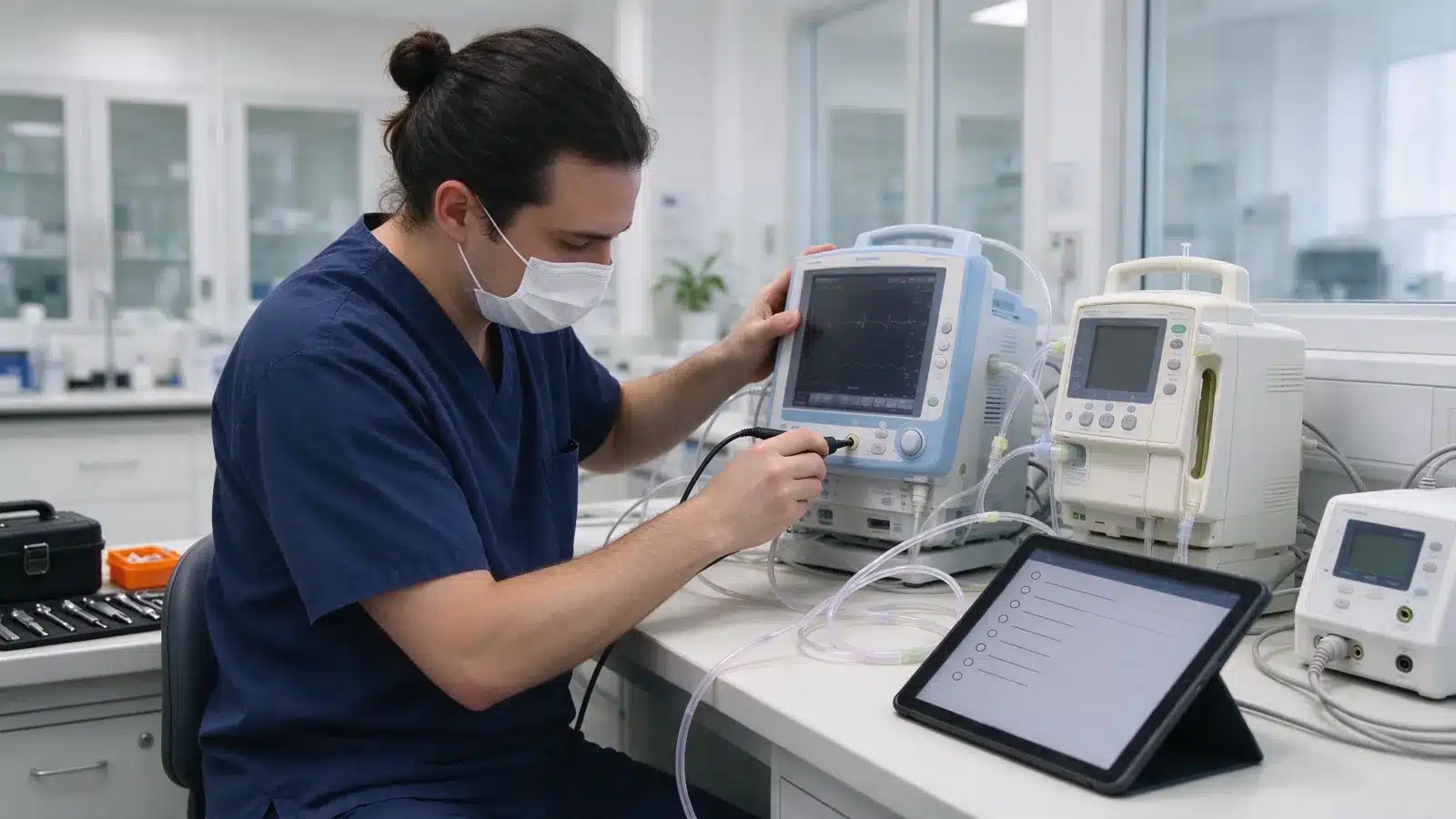
What Does a Clinical Engineering Department Do?
| Task | What it means in practice |
|---|---|
| Equipment inventory | A record of every device: type, model, serial number, location, owner, risk class and status |
| Planned maintenance | Preventive maintenance, performance checks and electrical safety tests on a schedule |
| Corrective maintenance | Repairing devices reported faulty by wards, with a work order for each job |
| Incoming inspection | Checking and registering new or loaned equipment before first use |
| Recalls and safety notices | Finding affected devices and recording the action taken |
| Vendor and contract management | Managing service contracts with manufacturers and service companies |
| Replacement planning | Advising which devices to replace, based on age, cost of repair and support status |
| Training and advice | Supporting clinical staff on safe use and on choosing new equipment |
How Does Clinical Engineering Plan Maintenance?
Hospitals own thousands of devices, so not every device gets the same attention. Most departments plan maintenance by risk:
- High-risk equipment such as ventilators, defibrillators, anaesthesia machines and infusion pumps gets the strictest schedule. In US hospitals accredited by the Joint Commission, planned maintenance on high-risk equipment must be done on time, every time.
- Medium-risk equipment follows the manufacturer’s intervals or an interval the department can justify.
- Low-risk equipment may be checked less often, or only when it fails, if the risk assessment allows it.
Each planned job records what was done, the measurements, the test equipment used and the result. That record is what an auditor asks for. For practical maintenance strategies, see our guide to medical equipment maintenance, and for calibration records see medical equipment calibration.
How Does Clinical Engineering Handle Recalls and Safety Notices?
Manufacturers and regulators regularly publish field safety notices and recalls. The department has to answer one question fast: which of our devices are affected, where are they, and what have we done about it? With a good inventory this takes minutes; with spreadsheets it can take days.
- Match the notice to models and serial numbers in the inventory
- Locate the affected devices and take them out of use if needed
- Do the corrective action (update, part swap, label, return)
- Record the action per device and close the notice
Which Rules and Standards Apply?
The rules depend on where the hospital is:
- United States: the Joint Commission environment of care standards and CMS conditions of participation set what must be in a medical equipment management program, including an inventory and maintenance on time.
- United Kingdom: the MHRA guidance on managing medical devices describes how organisations should buy, maintain and record their devices.
- Europe: national rules and agreements on the safe use of medical technology, plus standards such as IEC 62353 for safety tests after repair and during maintenance.
In every case the common thread is the same: a complete inventory, risk-based maintenance, trained staff and records that prove it.
What Tools Does a Clinical Engineering Department Need?
Most departments outgrow spreadsheets quickly. The typical toolset is a CMMS or service management system with:
- An equipment register with risk class, location and full service history
- Planned maintenance schedules that create work orders automatically
- Work orders for repairs, with time, parts and test results
- Calibration and test equipment records
- Recall and safety notice tracking per device
- Contracts with manufacturers and service companies
- A mobile app so technicians record work at the device, with a QR code or barcode on each device
- Reports for audits: planned maintenance completion, overdue work, failures per model
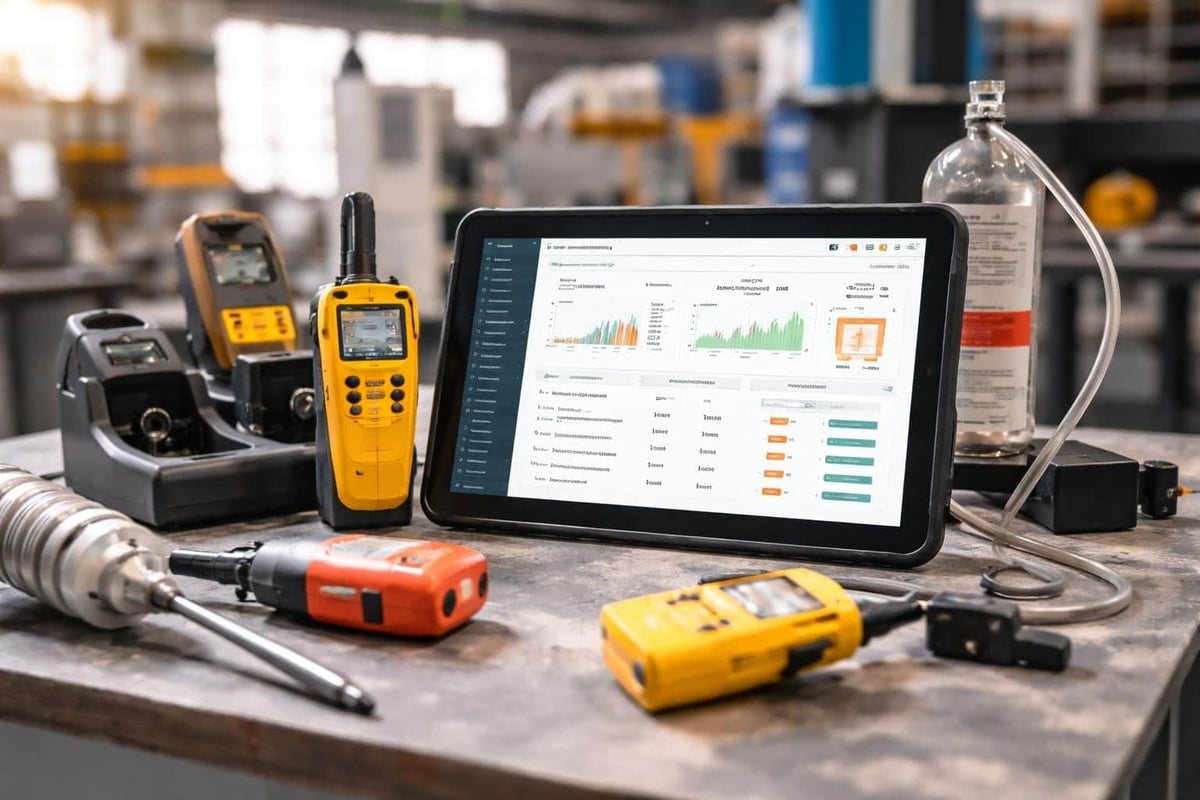
Brytend is service and maintenance software used by medical equipment service companies and technical teams. Devices are registered with serial numbers, locations and service history in the Service and Inspections module, planned work becomes work orders, technicians record checks on the mobile app, and spare parts come from stock. For an overview of software for hospital equipment, see healthcare asset management software.
What Are Common Problems in Clinical Engineering?
- Incomplete inventory: devices bought by wards or on loan never reach the register
- Devices that cannot be found: planned maintenance is overdue because the device moved
- Paper records: test results are hard to find during an audit
- Slow recall response: nobody can say quickly which serial numbers are affected
- No data on failures: replacement decisions are based on opinion instead of repair history
Frequently Asked Questions About Clinical Engineering
What is clinical engineering?
Clinical engineering is the part of engineering that manages medical technology in healthcare. Clinical engineers and biomedical technicians make sure medical devices are safe, available and used correctly: they keep the equipment inventory, plan and do maintenance, repair faults, handle recalls and advise on buying and replacing equipment.
What is clinical engineering in a hospital?
In a hospital, clinical engineering is usually a department (also called biomedical engineering, biomed or medical technology) that looks after all medical devices, from infusion pumps and monitors to ventilators and imaging support. It works with clinical staff, purchasing, IT and facilities.
What is the difference between clinical engineering and biomedical engineering?
Biomedical engineering is the wider field that designs and researches medical devices. Clinical engineering applies that knowledge inside healthcare: it manages, maintains and supports the devices that hospitals already use. In daily language many hospitals use both names for the same department.
What does a clinical engineering department do every day?
A typical day includes planned maintenance and safety tests, repairing devices that were reported faulty, incoming inspections of new equipment, checking recall and safety notices, answering questions from wards, and keeping records up to date for audits.
Which standards does clinical engineering work with?
It depends on the country. Common references are the manufacturer’s instructions, IEC 62353 for electrical safety tests, the Joint Commission and CMS rules in the US, MHRA guidance on managing medical devices in the UK, and national agreements on safe use of medical technology in other European countries.
What is the difference between clinical engineering and healthcare technology management?
Healthcare technology management (HTM) is the term AAMI and many US hospitals use for the whole field of managing medical technology. Clinical engineering is often the name of the team that does this work. In practice the two terms largely overlap.
What software does a clinical engineering department use?
Most departments use a CMMS or service management system that holds the equipment inventory, plans maintenance, records work orders, tracks parts and contracts, and produces compliance reports. A mobile app lets technicians record work at the device.
Clinical engineering keeps medical technology safe and available. The work comes down to a complete inventory, risk-based maintenance, fast action on recalls and records that prove every check. If your team services medical equipment and wants every device, work order and test result in one place, Brytend lets you try it free for 90 days.