Gas detector calibration is the adjustment of a gas detector against a certified reference gas, so its readings are accurate. A technician or docking station first sets the zero point in clean air, then applies calibration gas of a known concentration and adjusts each sensor to match. The result is recorded on a calibration certificate with the date, the gas used, the readings and the next due date. Calibration is done at fixed intervals, usually every 6 or 12 months depending on the manufacturer, and again after a failed bump test, a sensor change or a drop.
TL;DR:
- Calibration sets accuracy; a bump test only proves the detector responds
- Two steps: zero in clean air, then span with certified calibration gas
- Interval: per manufacturer, often 6 or 12 months, plus after failures, drops and sensor changes
- Use in-date, traceable calibration gas and the right flow rate
- Keep a certificate per detector, and track due dates across the whole fleet
Gas detector calibration is what turns a detector that beeps into a detector you can trust to measure correctly.
Why Do Gas Detectors Need Calibration?
Gas sensors change over time. Electrochemical sensors for toxic gases and oxygen slowly lose sensitivity, and catalytic sensors for flammable gases can be poisoned by silicones, lead compounds or high concentrations of hydrogen sulphide. This slow change is called sensor drift. A detector that drifts reads too low, and a reading that is too low is the dangerous kind.
Calibration corrects drift. It also reveals sensors that can no longer be adjusted into tolerance and need replacing. The standards for gas detection, such as IEC 60079-29-2 for flammable gas detectors and EN 45544-4 for toxic gas detectors, require detectors to be maintained and checked as the manufacturer specifies.
Calibration vs Bump Test: What Is the Difference?
| Bump test | Calibration | |
|---|---|---|
| Purpose | Proves sensors respond and alarms work | Adjusts readings to a known concentration |
| Gas | Test gas above the alarm level | Certified calibration gas |
| Adjusts the detector? | No | Yes |
| Typical frequency | Before each day’s use | Every 6 or 12 months, or per manufacturer |
| Result | Pass or fail | Calibrated detector and certificate |
Both are needed. Our guide to the bump test for gas detectors explains the daily check in detail.
How Often Should You Calibrate a Gas Detector?
The manufacturer’s manual is the starting point. In practice:
- Portable detectors: often every 6 months, some every 12 months, and some sites calibrate monthly or more often under harsh conditions
- Fixed gas detection systems: usually every 6 or 12 months by a service engineer, see fixed gas detection
- Always extra: after a failed bump test, a sensor replacement, a drop, exposure to a high concentration or a long period of storage
How Is a Gas Detector Calibrated? Step by Step
Step 1: Prepare
Check the detector for damage, clean or replace the filters and charge the battery. Check that the calibration gas cylinder is in date and that the regulator and tubing match the detector.
Step 2: Zero calibration
In clean air, or with zero air from a cylinder, set every sensor to zero and the oxygen sensor to 20.9%.
Step 3: Span calibration
Apply the calibration gas at the specified flow rate through the calibration cap or docking station. Wait for the readings to stabilise and let the detector adjust each sensor to the gas concentration on the cylinder.
Step 4: Check and record
Record the readings before and after, the gas lot number and the result. A sensor that cannot reach the required value fails and needs replacing.
Step 5: Bump test and certificate
Run a bump test to confirm the alarms, then issue the calibration certificate with the next due date.
Docking Station or Calibration Service?
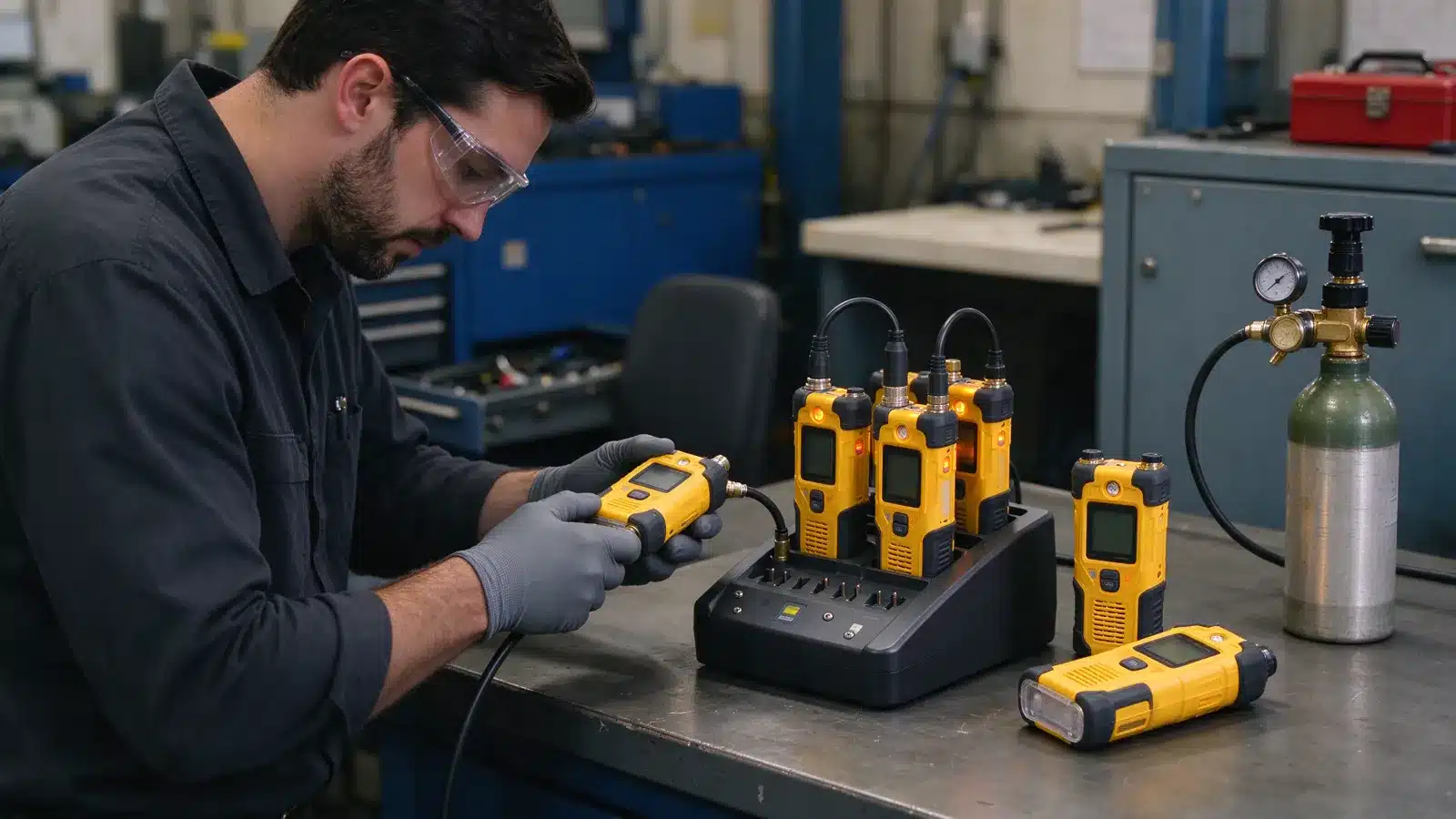
- Docking station: automatic bump tests and calibrations with a log per detector. Good for companies with many detectors used daily
- Manual calibration in house: needs trained staff, gas, regulators and good record keeping
- Gas detector calibration service: a service company calibrates, replaces sensors, checks pumps and filters and issues certificates, often with loan units during the work
How Do Service Companies Track Gas Detector Calibrations?
A gas detection service company may calibrate thousands of detectors for hundreds of customers, each with its own interval, sensors and certificates. Spreadsheets break down quickly. What works:
- One record per detector: serial number, model, sensors and their install dates, customer and user
- Due dates per detector: the next calibration and sensor replacement, with reminders to the customer
- Digital certificates: generated from the calibration results and sent automatically
- Loan detectors: issued while a detector is in for calibration, and tracked until they come back
- Manufacturer data: calibration and bump results from portals or docking stations linked to the detector’s record
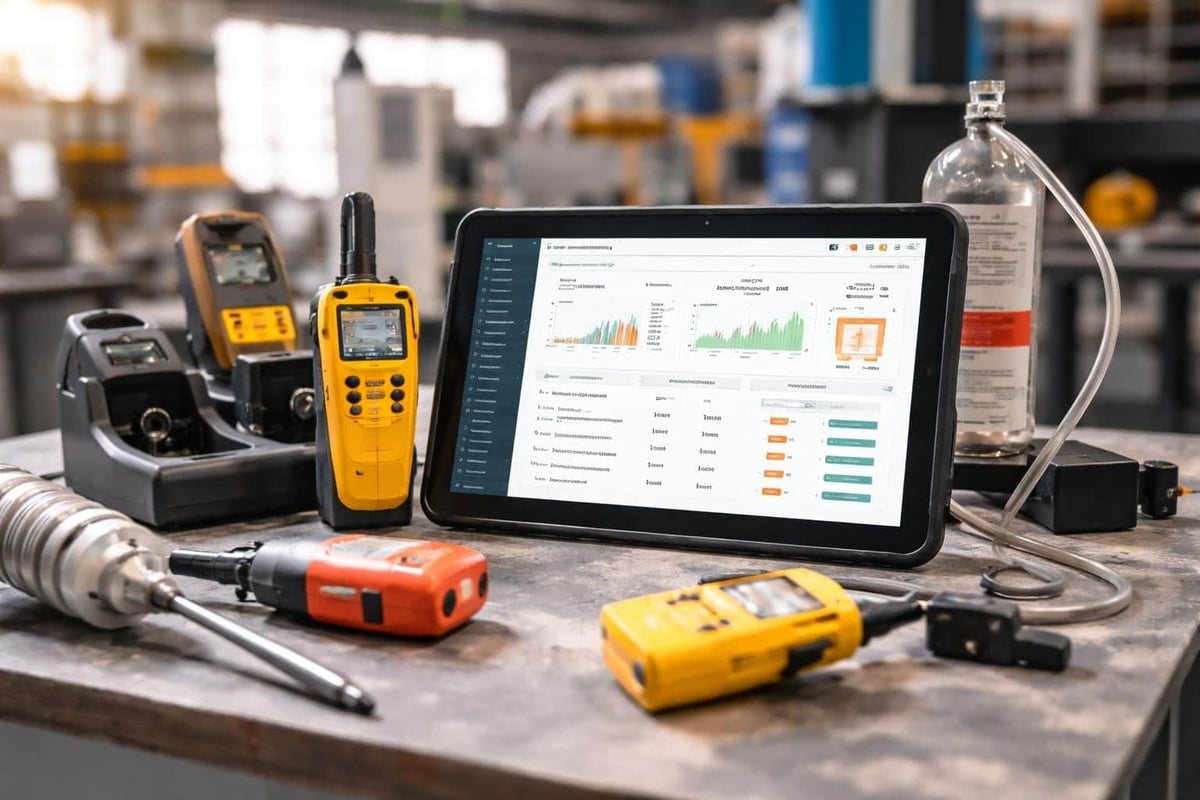
Brytend is gas detection service software built with gas detection companies. Every detector is registered per customer with its sensors, calibrations, bump tests and certificates in the Service and Inspections module. Service reminders show what is due, certificates are generated from your own template, loan and rental detectors run through Brytend Rental, and the WatchGas RTR integration brings live detector data into the same record.
What Are Common Gas Detector Calibration Mistakes?
- Expired calibration gas: reactive gases such as H2S have a limited shelf life
- Wrong flow rate or regulator: a pumped detector and a diffusion detector need different setups
- Zeroing in contaminated air: the detector learns the wrong baseline
- Calibrating instead of replacing: a sensor at the end of its life passes today and drifts again quickly
- No record: a calibration without a certificate cannot be proven to an auditor
Frequently Asked Questions About Gas Detector Calibration
What is gas detector calibration?
Gas detector calibration is the process of adjusting a gas detector so its readings match a reference gas of known concentration. It has two steps: a zero calibration in clean air and a span calibration with certified calibration gas. The result is recorded on a calibration certificate.
How often should a gas detector be calibrated?
Follow the manufacturer’s instructions. Many portable detectors are calibrated every 6 or 12 months, and some manufacturers or sites require monthly or more frequent calibration. A detector must also be calibrated after a failed bump test, a sensor replacement, a drop or exposure to a high gas concentration.
What is the difference between a bump test and a calibration?
A bump test briefly exposes the detector to gas above its alarm level to prove the sensors respond and the alarms work. A calibration adjusts the readings to match a known gas concentration. A bump test checks function; a calibration sets accuracy.
What gas is used to calibrate a gas detector?
Calibration uses a certified gas mixture with known concentrations of the target gases, for example a four-gas mix of methane (as %LEL), oxygen, carbon monoxide and hydrogen sulphide in nitrogen. The cylinder must be in date and traceable to a certified standard, and the regulator flow must match the manufacturer’s requirement.
Can I calibrate a gas detector myself?
Yes, if you have the right calibration gas, regulator and adapter, or a docking station, and you follow the manufacturer’s procedure. Many companies still use a service provider for periodic calibration, because the technician also checks pumps, filters and sensor condition and issues a certificate.
What is on a gas detector calibration certificate?
A calibration certificate shows the detector’s model and serial number, the date, the sensors calibrated, the calibration gas concentrations and lot number, the readings before and after adjustment, the pass or fail result, the next due date and who did the work.
Why does a gas detector fail calibration?
Common causes are an expired or poisoned sensor, a blocked filter or inlet, a weak pump, expired calibration gas or the wrong flow rate. Electrochemical sensors wear out over time, often after 2 to 3 years, and catalytic sensors can be poisoned by substances such as silicones.
Gas detector calibration is short work with big consequences: a detector that reads too low gives a false sense of safety. Calibrate on the manufacturer’s interval, bump test every day, use in-date gas and keep a certificate for every detector. If you service gas detectors for your customers and want every detector, calibration, certificate and loan unit in one place, Brytend lets you try it free for 90 days.