An HVAC maintenance checklist is the list of checks a technician works through on every heating, ventilation and air conditioning unit during a planned service. For cooling, the AC maintenance checklist covers the filter, coils, condensate drain, refrigerant, electrical parts, fans and controls. For heating it adds the burner or heat pump, heat exchanger, flue and safety controls. Following the same checklist on every visit keeps systems efficient, prevents breakdowns and gives the customer proof of what was done.
TL;DR:
- Filters: check every 1 to 3 months, replace when dirty
- Coils, drains and fans: clean and inspect at least once a year, before the cooling season
- Refrigerant, electrical and safety checks: by a qualified technician, with readings recorded
- Commercial units: usually quarterly or twice a year, with heating and cooling sections
- Record every reading per unit, so you can see trends and plan the next visit automatically
An HVAC maintenance checklist turns a service visit into a repeatable, recorded inspection of every part that affects comfort, efficiency and safety.
Why Use an HVAC Maintenance Checklist?
An air conditioner with a clogged filter, dirty coils or a low refrigerant charge keeps running, but it uses more energy, cools less and wears faster. Most HVAC breakdowns start as small problems that a regular service would have caught: a blocked condensate line, a weak capacitor, a worn belt.
A checklist makes sure every technician checks the same points in the same order, also on a busy summer day. It also gives the customer a clear report, and it gives the service company readings it can compare from one visit to the next.

AC Maintenance Checklist: Cooling Season
Use this AC maintenance checklist before the cooling season starts, and on commercial units at every planned visit.
Indoor unit
- Air filter: check, clean or replace. Note the filter size and type for the next visit
- Evaporator coil: inspect for dirt and ice, clean if needed
- Condensate pan and drain: clear the drain line, check the pan for rust and leaks, test the float switch
- Blower: check the wheel for dirt, the motor for noise and the belt for wear and tension
- Ductwork and grilles: check visible ducts for leaks and loose joints, and grilles for blockages
Outdoor unit
- Condenser coil: clean the fins, straighten bent fins, remove leaves and debris
- Clearance: at least the manufacturer’s minimum free space around the unit
- Fan motor and blade: check for noise, play and damage; lubricate where the motor has oil ports
- Base and mounts: check that the unit is level and the anti-vibration mounts are intact
Refrigerant and electrical
- Refrigerant pressures: measure suction and discharge pressures, superheat and subcooling, and compare with the manufacturer’s data
- Leak check: inspect joints and valves; log the result where the law requires leak checks
- Electrical connections: tighten terminals, check for burnt contacts
- Capacitors and contactor: measure capacitance, check contactor wear
- Motor current: measure compressor and fan amps against the nameplate
Controls and performance
- Thermostat: check settings, calibration and batteries
- Temperature split: measure supply and return air temperature and record the difference
- Safety controls: test high and low pressure switches where accessible
- Final run test: run a full cycle and listen for unusual noise or vibration
HVAC Maintenance Checklist: Heating Season
Before the heating season, add these checks for furnaces, boilers and heat pumps:
- Burner and ignition: clean and inspect, check the flame
- Heat exchanger: inspect for cracks and corrosion
- Flue and venting: check for blockages, leaks and correct draft
- Combustion analysis: measure CO, CO2 and efficiency on gas or oil appliances
- Safety controls: test limit switches, flame sensors and pressure switches
- Heat pump defrost: check the defrost cycle and the reversing valve
- Carbon monoxide detectors: test detectors near gas-fired equipment
Commercial HVAC Maintenance Checklist
Commercial systems run more hours and serve more people, so the checklist goes further and visits are more frequent, often quarterly.
| Task | Monthly | Quarterly | Twice a year | Yearly |
|---|---|---|---|---|
| Check and replace filters | ✓ | ✓ | ||
| Check belts and pulleys | ✓ | |||
| Clean condensate drains and pans | ✓ | |||
| Clean coils | ✓ | |||
| Refrigerant pressures and leak check | ✓ | |||
| Electrical connections, motors and amps | ✓ | |||
| Economiser and damper operation | ✓ | |||
| Combustion analysis and heat exchanger | ✓ | |||
| Controls, BMS points and sensor calibration | ✓ |
Refrigerant leak checks may also be a legal requirement. In the EU, the F-gas Regulation (EU) 2024/573 sets leak check intervals based on the refrigerant charge in CO2 equivalent and requires records of each check. In the US, the EPA Section 608 rules cover refrigerant handling and leak repair.
How Often Should HVAC Systems Be Serviced?
- Homes: once a year for cooling and once for heating, ideally before each season
- Offices and shops: twice a year to quarterly
- Critical sites (hospitals, data rooms, labs): monthly to quarterly, with more checks on controls and redundancy
- Filters: every 1 to 3 months everywhere, more often in dusty or busy places
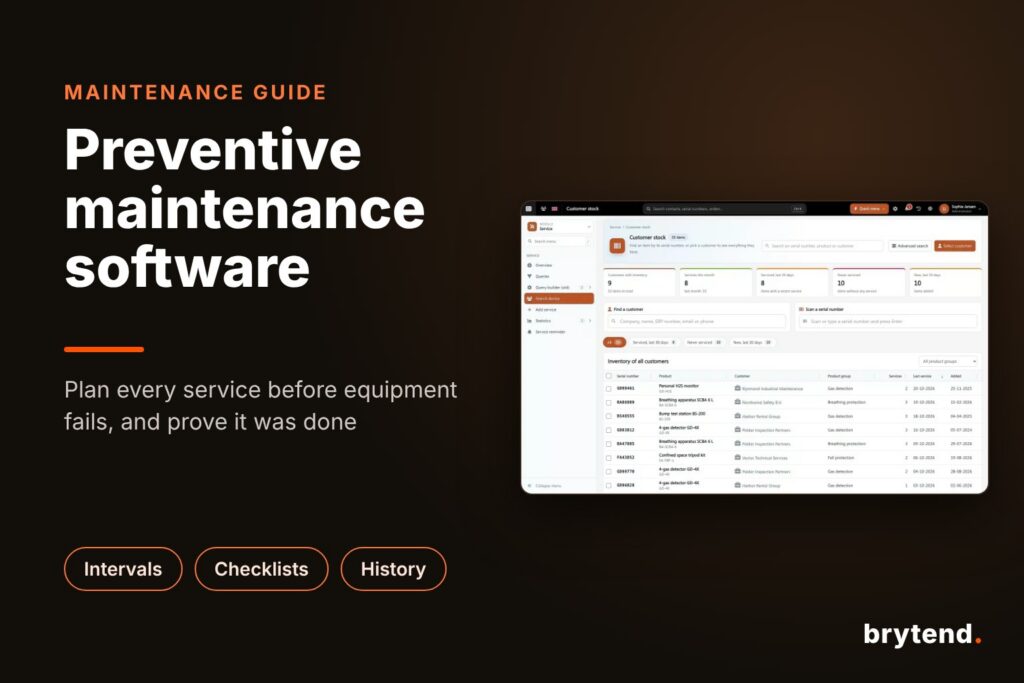
The right interval depends on running hours, the environment and the manufacturer’s recommendations. Planned intervals are the heart of preventive maintenance software, which turns them into scheduled visits.
From Paper Checklist to Digital HVAC Service Report
A paper checklist works for one unit. An HVAC company with hundreds of maintenance contracts needs more: the history of every unit, readings it can compare, reports that go to the customer the same day and visits planned from due dates.
One record per unit
Register each unit with its make, model, serial number, refrigerant type and charge, location and customer. A QR code on the unit opens its record on site.
The checklist on a phone
The technician opens the job, works through the cooling or heating checklist, enters pressures, temperatures and amps, adds photos and gets a signature. Digital service forms keep every technician on the same checklist.
Reports, quotes and the next visit
When the job is closed, the customer receives the report, a failed part becomes a repair quote, and the next visit is planned from the contract.
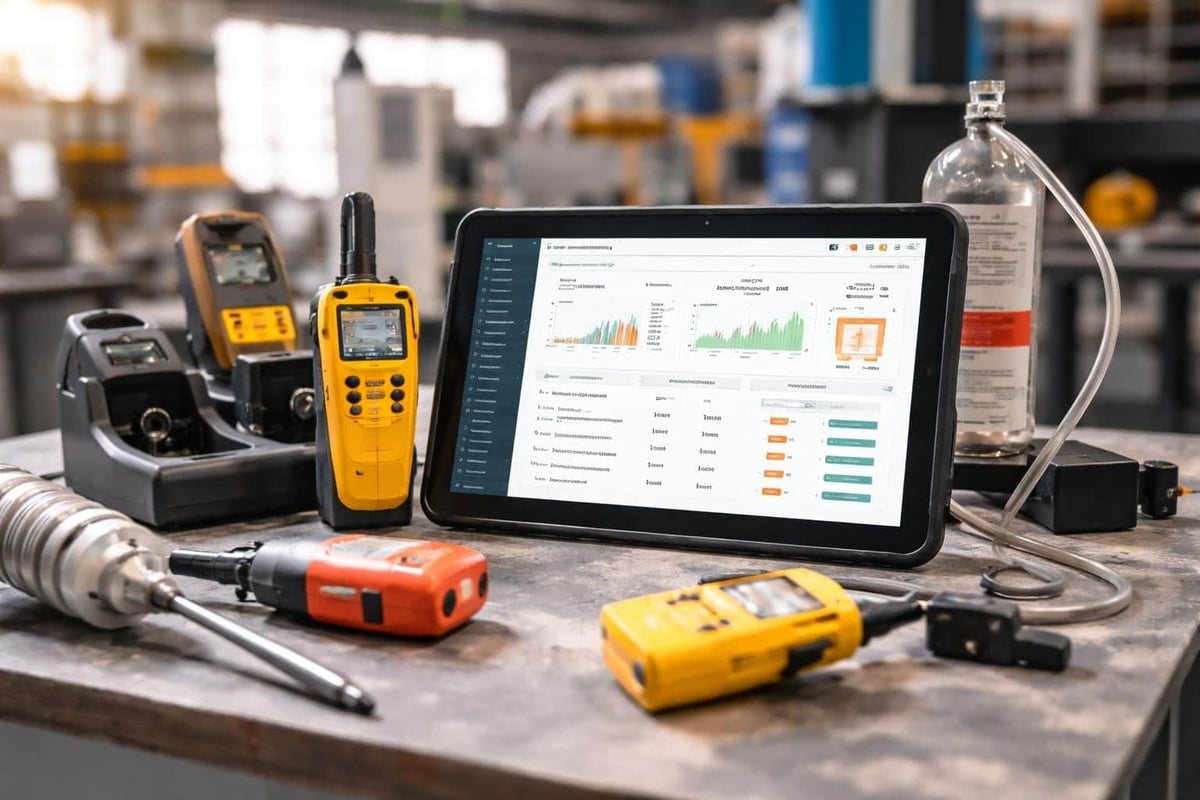
Brytend is HVAC field service management software for installers and maintenance companies. Every unit is registered per customer and site, with its refrigerant, readings and full service history in the Service and Inspections module. You build your own AC and heating checklists, technicians fill them in on the mobile app, and the next due date is set automatically. Maintenance contracts plan the visits, and finished work goes straight to the invoice.
What Are Common HVAC Maintenance Mistakes?
- Only changing the filter: a clean filter does not fix a dirty coil or a blocked drain
- Not recording readings: without last year’s pressures and amps you cannot spot a slow decline
- Topping up refrigerant without finding the leak: the problem returns, and it may break the law
- Skipping the condensate drain: a blocked drain is one of the most common causes of water damage
- One checklist for every unit: a rooftop unit, a split system and a heat pump need different checks
Frequently Asked Questions About HVAC and AC Maintenance
What should an AC maintenance checklist include?
An AC maintenance checklist covers the air filter, the evaporator and condenser coils, the condensate drain and pan, refrigerant pressures and leaks, electrical connections and capacitors, fan motors and belts, the thermostat and a final performance check of supply and return temperatures. Each item is marked done, with readings and notes.
How often should an AC unit be serviced?
Residential AC units are usually serviced once a year, before the cooling season. Commercial systems are often serviced quarterly or twice a year, because they run longer hours. Air filters need checking every 1 to 3 months, more often in dusty sites or during heavy use.
What is the difference between HVAC and AC maintenance?
AC maintenance covers the cooling side: coils, refrigerant, condensate and the outdoor unit. HVAC maintenance also includes heating (furnace, boiler or heat pump in heating mode), ventilation, ductwork and controls. Most companies use one HVAC checklist with a cooling section and a heating section.
Can I do AC maintenance myself?
Owners can change filters, keep the outdoor unit clear and check the condensate drain. Work on refrigerant circuits, electrical components and gas-fired heating must be done by a qualified technician, and in many countries handling refrigerant requires a certificate.
What is preventive maintenance for HVAC?
Preventive maintenance for HVAC is planned, scheduled servicing that keeps systems efficient and prevents breakdowns. It follows a checklist per unit type and season, records readings such as pressures and temperatures, and plans the next visit automatically.
How long does an HVAC maintenance visit take?
A residential split system usually takes 45 to 90 minutes. A commercial rooftop unit can take one to two hours, depending on size, access and the number of filters and belts. A good checklist keeps the visit consistent so nothing is skipped when time is tight.
Are refrigerant leak checks required by law?
In many regions, yes. In the EU, the F-gas Regulation requires periodic leak checks on equipment above a threshold of refrigerant charge in CO2 equivalent, with more frequent checks for larger systems, and records of each check. In the US, EPA Section 608 rules cover refrigerant handling and leak repair for larger appliances. Check the rules that apply to each system.
A good HVAC maintenance checklist is short enough to finish on every visit and complete enough to catch the problems that cause breakdowns. Write it once per unit type, record the readings and let the next visit plan itself. If you maintain HVAC systems for your customers and want every unit, checklist, report and contract in one place, Brytend lets you try it free for 90 days.