Managing rental operations without specialized technology creates unnecessary complexity and limits growth potential. Whether you oversee equipment fleets, property portfolios, or event supplies, manual processes drain resources while increasing error rates. Modern rental software addresses these challenges by automating workflows, centralizing data, and providing real-time visibility across all business functions. Organizations that implement these systems gain competitive advantages through improved efficiency, enhanced customer experiences, and data-driven decision-making capabilities.
Understanding Rental Software Architecture
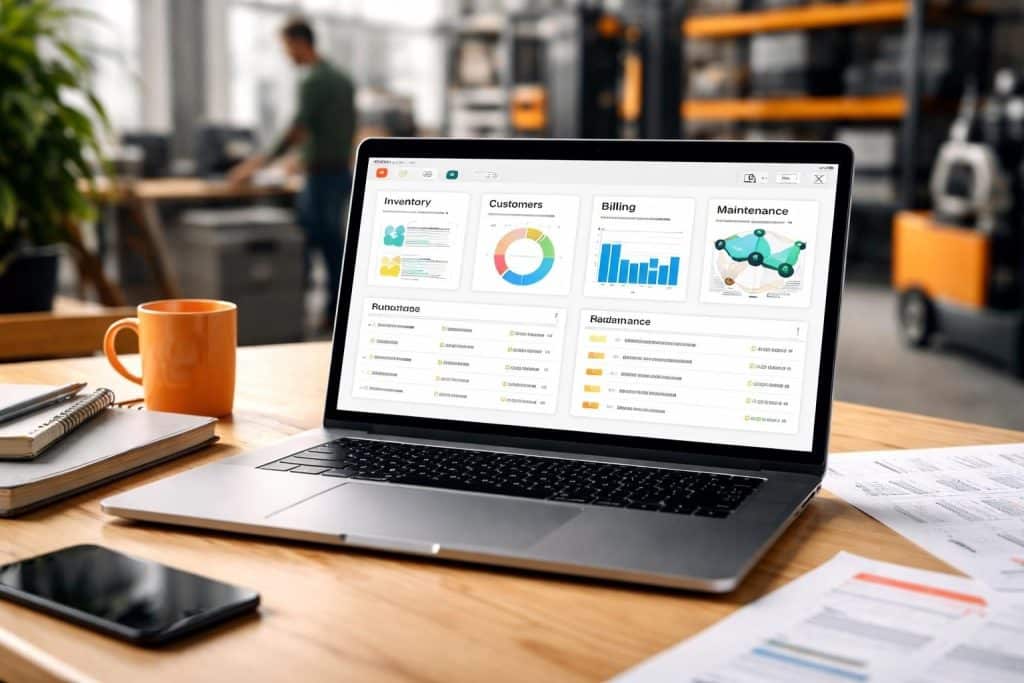
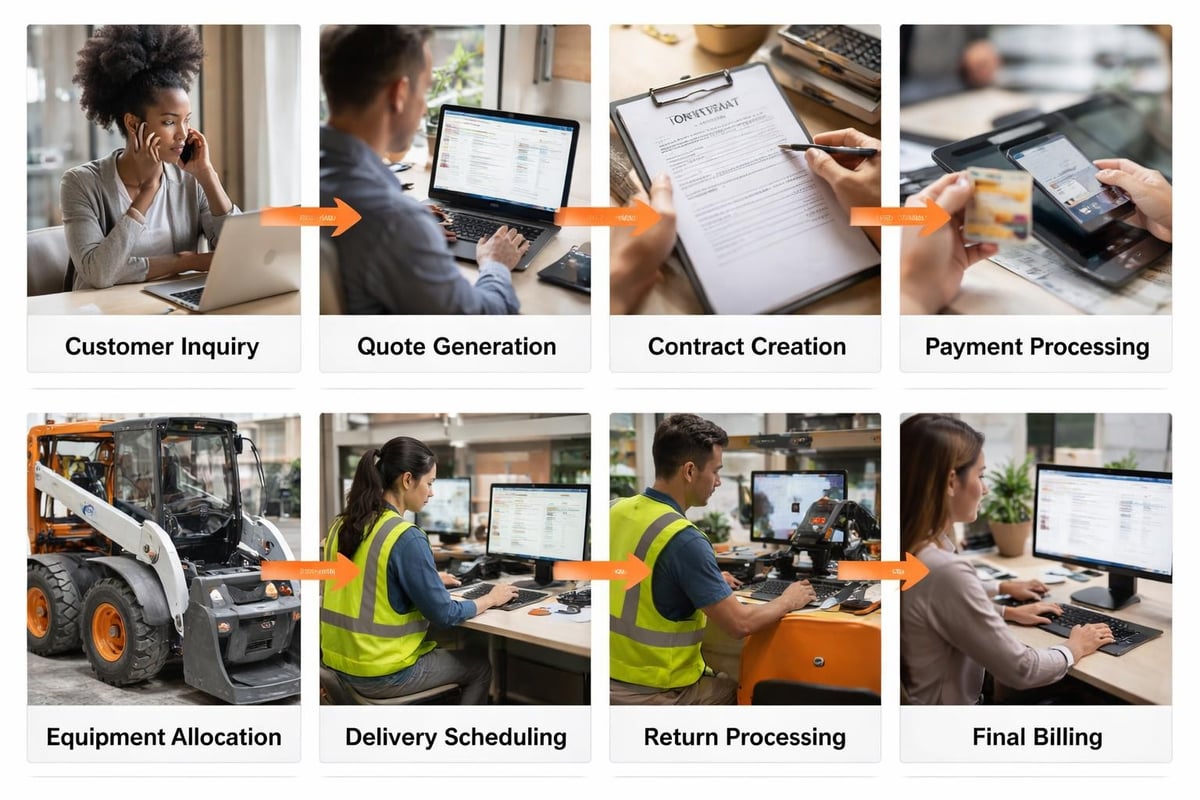
Rental software serves as the operational backbone for businesses that generate revenue through temporary asset allocation. These platforms manage the complete rental lifecycle, from initial customer inquiry through equipment return and final billing. The architecture typically includes modules for inventory management, reservation scheduling, customer relationship management, contract generation, billing automation, and analytics reporting.
The technology landscape has evolved significantly in recent years. According to the rental software market analysis, the industry continues experiencing substantial growth as businesses recognize the value of digital transformation. Cloud-based deployments have become the standard, offering accessibility, scalability, and reduced infrastructure costs compared to traditional on-premises installations.
Key Functional Components
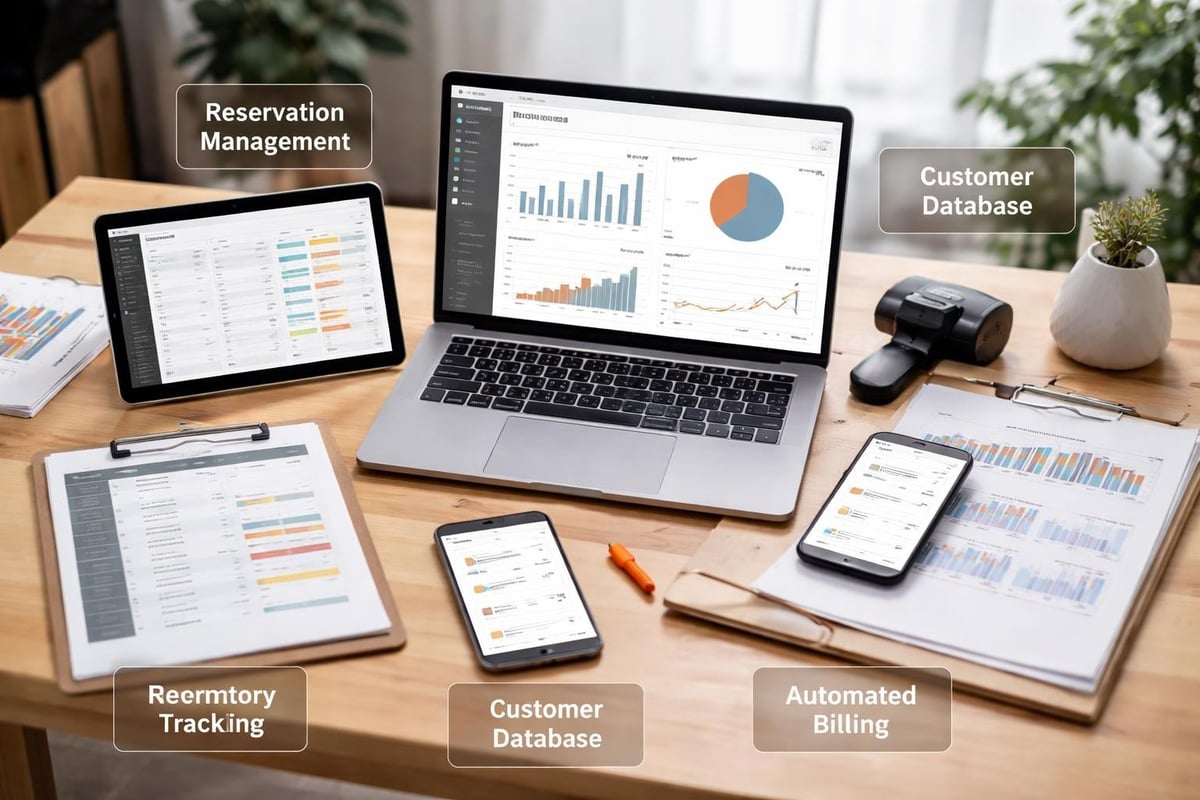
Modern platforms deliver functionality across several critical areas. 1. Inventory management tracks every asset with unique identifiers, maintenance histories, availability status, and location data. 2. Reservation systems handle bookings, prevent double-booking conflicts, and optimize asset utilization rates. 3. Customer management maintains detailed profiles, rental histories, preferences, and communication records. 4. Financial automation generates quotes, processes payments, manages deposits, handles late fees, and produces invoices. 5. Reporting capabilities provide insights into revenue trends, asset performance, customer behavior, and operational efficiency.
Integration capabilities distinguish enterprise-grade solutions from basic tools. The best rental software connects seamlessly with accounting systems, payment gateways, email marketing platforms, and industry-specific tools. For businesses requiring specialized functionality, custom development ensures the platform aligns perfectly with unique workflows and business rules.
Technology Trends Reshaping Rental Operations
The rental industry continues embracing technological innovations that enhance operational efficiency and customer satisfaction. Digital-first operations have become essential rather than optional, with customers expecting seamless online experiences comparable to retail e-commerce platforms.
Mobile accessibility represents a fundamental shift in how rental businesses operate. Field technicians use mobile applications to update equipment status, capture damage photos, collect digital signatures, and process on-site transactions. Customers benefit from mobile booking capabilities, real-time availability checks, and self-service account management through responsive web interfaces and dedicated apps.
Automation and Predictive Analytics
Artificial intelligence and machine learning algorithms now power predictive maintenance scheduling, dynamic pricing optimization, and demand forecasting. These capabilities help businesses reduce downtime, maximize revenue, and improve asset utilization. The equipment rental software trends demonstrate how AI-powered predictive analytics transform decision-making processes.
| Technology | Primary Benefit | Implementation Complexity |
|---|---|---|
| Cloud Computing | Accessibility and scalability | Low |
| Mobile Applications | Field operations efficiency | Medium |
| IoT Sensors | Real-time asset tracking | High |
| AI Analytics | Predictive insights | High |
| Automated Billing | Financial accuracy | Low |
Internet of Things (IoT) integration enables real-time tracking of rental equipment location, operational status, and usage patterns. Telematics systems provide valuable data on equipment performance, fuel consumption, and operator behavior. This information supports proactive maintenance, theft prevention, and more accurate billing based on actual usage rather than estimated time periods.
Selecting the Right Platform for Your Business
Choosing appropriate rental software requires careful evaluation of business requirements, growth projections, and technical capabilities. Organizations should assess their current pain points, desired outcomes, and budget constraints before evaluating vendors. The selection process becomes more manageable when broken into distinct evaluation phases.
First, document your essential requirements. Consider the types of assets you rent, volume of transactions, number of locations, staff size, and existing technology infrastructure. Identify must-have features versus nice-to-have capabilities. This clarity prevents feature bloat while ensuring the selected solution addresses critical needs.
Evaluation Criteria and Vendor Assessment
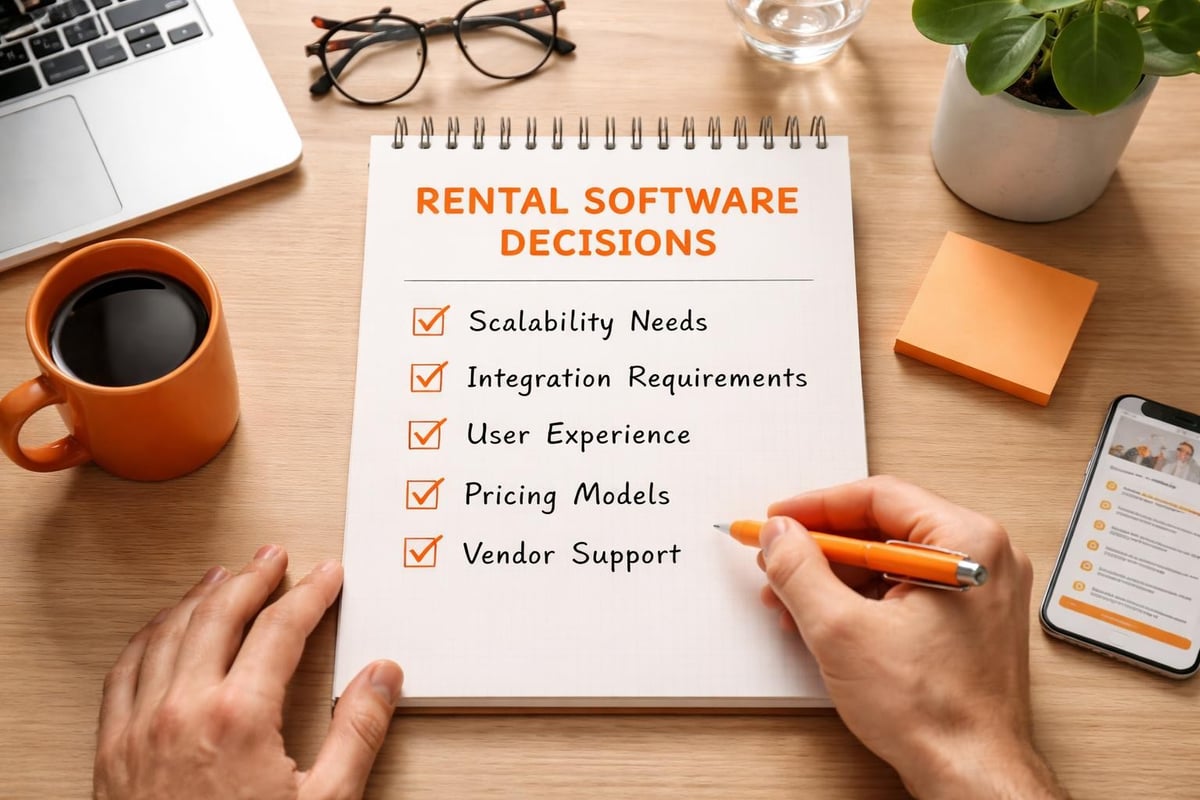
Compare platforms based on specific criteria relevant to your operations. 1. Scalability ensures the system accommodates growth without requiring complete replacements. 2. User experience impacts adoption rates and training requirements. 3. Integration capabilities determine how well the platform connects with existing tools. 4. Customization options allow adaptation to unique business processes. 5. Vendor stability and support quality affect long-term success. 6. Total cost of ownership includes licensing, implementation, training, and ongoing maintenance expenses.
Request demonstrations from shortlisted vendors, focusing on workflows specific to your industry. Test the platform with real scenarios rather than generic examples. Involve end-users who will interact with the system daily, gathering their feedback on usability and functionality. Reference checks with current customers provide insights into implementation experiences, support responsiveness, and overall satisfaction.
For businesses with highly specialized needs or unique competitive advantages tied to proprietary processes, custom software development offers distinct benefits. Organizations can work with experienced development teams to build tailored solutions that match exact requirements without compromise. The Brytend Service Module demonstrates how customized platforms can address specific industry needs, particularly for businesses managing equipment that requires regular maintenance tracking, service scheduling, and detailed documentation.
Implementation Best Practices
Successful rental software implementations require structured approaches that minimize disruption while maximizing adoption. Organizations should allocate sufficient time and resources to planning, data migration, testing, and training phases. Rushing implementation creates problems that persist long after go-live dates.
Data quality determines system effectiveness. Before migration, clean existing records by removing duplicates, standardizing formats, and correcting errors. Establish clear ownership for data accuracy moving forward. Poor data quality undermines even the most sophisticated platforms, leading to incorrect inventory counts, billing errors, and customer dissatisfaction.
Training and Change Management
User adoption represents the most critical success factor. Comprehensive training programs should address different user roles, proficiency levels, and learning preferences. Combine formal training sessions with documentation, video tutorials, and ongoing support resources. Designate internal champions who can provide peer support and encourage adoption among resistant users.
| Implementation Phase | Key Activities | Typical Duration |
|---|---|---|
| Planning | Requirements definition, vendor selection | 4-8 weeks |
| Configuration | System setup, customization, integration | 6-12 weeks |
| Data Migration | Cleansing, mapping, transfer, validation | 4-6 weeks |
| Testing | Workflow validation, user acceptance | 3-4 weeks |
| Training | Documentation, sessions, support materials | 2-4 weeks |
| Go-Live | Launch, monitoring, issue resolution | 1-2 weeks |
Change management strategies ease transitions from legacy processes to new workflows. Communicate the benefits clearly, addressing specific pain points the new system resolves. Acknowledge that learning curves exist while providing adequate support during adjustment periods. Monitor usage patterns and gather feedback to identify areas requiring additional training or process refinement.
Optimizing Asset Tracking and Management
Effective equipment tracking forms the foundation of successful rental operations. Understanding best practices for tracking rental equipment helps organizations maintain accurate inventory records, prevent loss, and maximize utilization rates.
Implement comprehensive tagging systems using barcodes, QR codes, or RFID technology based on asset values and tracking requirements. Each item should have unique identifiers linked to detailed records including purchase date, maintenance history, current location, and condition assessments. Regular physical audits verify system accuracy and identify discrepancies requiring investigation.
Maintenance scheduling capabilities within rental software prevent equipment failures and extend asset lifecycles. Automated reminders notify staff when preventive maintenance becomes due based on time intervals, usage hours, or rental cycles. Documenting all service activities creates comprehensive histories that support warranty claims, resale valuations, and replacement decisions.
Geographic and Multi-Location Capabilities
Businesses operating across multiple locations require visibility into inventory distribution and transfer management. Centralized platforms provide real-time dashboards showing asset availability at each site, facilitating efficient allocation and reducing redundant purchases. Automated transfer workflows track movements between locations, maintaining chain of custody and preventing loss.
Geographic tracking through GPS integration offers additional security and operational benefits. Fleet managers monitor equipment locations in real-time, verify proper usage areas, and receive alerts for unauthorized movements. This technology proves particularly valuable for high-value assets or operations in remote locations where theft risks increase.
Enhancing Customer Experience Through Technology
Modern customers expect digital convenience throughout their rental journey. Self-service portals allow browsing available inventory, checking real-time availability, comparing options, and completing reservations without staff intervention. These capabilities reduce workload on rental teams while providing customers with 24/7 access to your services.
Automated communications keep customers informed throughout the rental lifecycle. Confirmation emails, pickup reminders, return notifications, and post-rental surveys create professional touchpoints that build trust and encourage repeat business. Personalization based on rental history and preferences enhances relevance and strengthens customer relationships.
Companies like Pixilated Photo Booth demonstrate how specialized rental businesses leverage technology to deliver exceptional customer experiences. Their DIY photo booth rental model relies on comprehensive software systems that manage nationwide shipping logistics, provide customers with setup instructions and support resources, and ensure smooth equipment returns-all while maintaining high-quality service standards.
Payment Processing and Financial Management
Integrated payment processing simplifies transactions while improving cash flow. Customers appreciate multiple payment options including credit cards, ACH transfers, and digital wallets. Automated deposit collection, damage fee assessment, and late payment reminders reduce administrative burden while protecting revenue.
Financial reporting capabilities provide insights essential for business management. Track revenue by asset category, customer segment, location, and time period. Monitor key performance indicators including utilization rates, average rental values, and customer acquisition costs. These metrics inform pricing strategies, purchasing decisions, and marketing investments.
Industry-Specific Considerations
Different rental sectors have unique requirements that generic platforms may not address adequately. Equipment rental companies managing construction machinery face different challenges than event rental businesses providing party supplies or property management firms handling residential leases.
Construction and industrial equipment rental operations require robust maintenance tracking, operator certification management, and jobsite delivery coordination. The digitization trends transforming rental companies emphasize end-to-end automation and mobile accessibility as critical capabilities for this sector.
Event rental businesses benefit from features supporting complex package configurations, venue-specific requirements, setup and teardown scheduling, and tight delivery windows. Visual inventory catalogs help customers select items, while detailed checklists ensure nothing gets overlooked during preparation.
Property management requires tenant screening, lease agreement generation, automated rent collection, maintenance request tracking, and regulatory compliance documentation. The best practices for managing multiple rental properties highlight how specialized software streamlines these complex workflows.
Integration with Workflow Automation
Beyond core rental management, businesses increasingly seek platforms that connect with broader operational systems. Document automation tools, for example, can streamline contract generation, invoice processing, and compliance documentation. Solutions that enable automated file management and workflow orchestration reduce manual data entry while improving accuracy across business processes.
Security and Compliance Requirements
Rental software stores sensitive customer information, financial data, and proprietary business intelligence requiring robust protection measures. Evaluate security features including data encryption, access controls, audit logging, and backup procedures. Cloud-based platforms should maintain certifications demonstrating compliance with relevant standards.
Privacy regulations including GDPR, CCPA, and industry-specific requirements impose obligations on how businesses collect, store, and process personal information. Your rental software should facilitate compliance through features like consent management, data portability, and automated deletion capabilities. Vendor transparency about data handling practices and breach notification procedures provides additional assurance.
Regular security assessments identify vulnerabilities before they become exploitation targets. Keep software updated with vendor-provided patches addressing known security issues. Implement strong password policies, multi-factor authentication, and role-based access controls limiting system access based on legitimate business needs.
Measuring Success and Continuous Improvement
Post-implementation, establish metrics tracking system effectiveness and business impact. Compare performance before and after deployment across dimensions like processing time per transaction, inventory accuracy rates, customer satisfaction scores, and revenue per asset. These measurements justify initial investments while identifying improvement opportunities.
Gather ongoing feedback from users at all levels. Front-line staff interact with the system most frequently and identify usability issues or workflow inefficiencies. Managers evaluate reporting capabilities and decision-support features. Customers experience the external-facing components that shape their perceptions of your business.
| Success Metric | Measurement Method | Target Improvement |
|---|---|---|
| Booking Processing Time | Average minutes from inquiry to confirmation | 50% reduction |
| Inventory Accuracy | Physical count variance percentage | >98% accuracy |
| Asset Utilization Rate | Rental days divided by available days | 15-20% increase |
| Customer Satisfaction | Net Promoter Score surveys | >50 NPS |
| Revenue Per Asset | Total revenue divided by inventory items | 25% increase |
Schedule regular optimization sessions reviewing system configuration, workflows, and feature utilization. Many platforms offer capabilities that remain unused simply because users don’t know they exist. Ongoing training, newsletter updates about new features, and periodic reviews ensure you maximize value from your investment.
Future Outlook for Rental Technology
Emerging technologies continue reshaping what’s possible in rental operations. Augmented reality applications let customers visualize equipment in their spaces before committing to rentals. Virtual reality training programs prepare operators to use specialized machinery safely. Blockchain technology offers potential for transparent, tamper-proof rental histories and automated smart contracts.
Sustainability considerations increasingly influence software development priorities. Features tracking carbon footprints, optimizing delivery routes for fuel efficiency, and managing equipment refurbishment programs help rental businesses demonstrate environmental responsibility. Customers increasingly value these commitments when selecting rental partners.
The rental software market continues evolving rapidly as vendors respond to changing customer expectations and technological capabilities. Staying informed about industry trends, participating in user communities, and maintaining dialogue with your software vendor ensures your platform evolves alongside your business needs.
FAQ
What types of businesses benefit most from rental software?
Any organization generating revenue through temporary asset allocation benefits from rental software, including equipment rental companies, party and event supply businesses, construction equipment providers, property management firms, vehicle rental agencies, and specialized rental operations. The software scales to accommodate businesses ranging from small local operations to multinational enterprises. Even businesses with modest rental volumes gain efficiency through automation, while larger operations require these systems to manage complexity that would be impossible with manual processes.
How long does typical rental software implementation take?
Implementation timelines vary significantly based on business size, data migration complexity, customization requirements, and integration scope. Small businesses with straightforward needs might complete implementation in 8-12 weeks, while mid-sized companies typically require 3-6 months. Large enterprises with multiple locations, extensive inventories, and complex integrations should plan for 6-12 months or longer. Rushing implementation increases failure risk, so allocating adequate time for planning, testing, and training produces better outcomes than aggressive schedules.
What is the difference between cloud-based and on-premises rental software?
Cloud-based rental software runs on vendor-hosted servers accessed through internet connections, requiring minimal local infrastructure and offering automatic updates, built-in redundancy, and anywhere access. Costs follow subscription models with predictable monthly or annual fees. On-premises software installs on your own servers, providing greater control over data and customization but requiring substantial upfront investment, dedicated IT resources for maintenance, and responsibility for backups and security. Most modern businesses choose cloud deployments for flexibility and lower total cost of ownership.
Can rental software integrate with existing accounting systems?
Quality rental software platforms offer integration capabilities with popular accounting systems including QuickBooks, Xero, Sage, and enterprise solutions like NetSuite or Microsoft Dynamics. These integrations automate financial data synchronization, eliminating duplicate entry while ensuring accuracy across systems. Standard integrations typically connect through APIs with pre-built connectors, while custom integrations may require development work for proprietary or less common accounting platforms. Evaluating integration capabilities during vendor selection prevents compatibility issues after purchase.
How does rental software prevent double-booking conflicts?
Rental software maintains real-time inventory availability tracking that automatically updates when reservations are created, modified, or canceled. The system checks requested dates against existing bookings and scheduled maintenance periods before confirming new reservations. Advanced platforms handle complex scenarios like partial overlaps, buffer times between rentals, and asset substitution rules. Calendar visualization tools provide staff with clear views of availability patterns, while automated conflict alerts notify users of potential scheduling issues requiring resolution before customer confirmation.
What training resources do vendors typically provide?
Comprehensive vendors offer multi-format training including live instructor-led sessions, recorded video tutorials, written documentation, interactive guides, and ongoing webinar series. Initial implementation usually includes dedicated onboarding sessions for administrators and end-users, with role-specific training addressing different user needs. Quality vendors maintain knowledge bases with searchable articles, frequently asked questions, and troubleshooting guides. Ongoing support through help desks, chat channels, or dedicated account managers ensures users receive assistance when questions arise after initial training completion.
How do I calculate ROI for rental software investment?
Calculate return on investment by quantifying both hard and soft benefits against total costs. Hard benefits include reduced labor hours through automation, decreased equipment loss from better tracking, increased revenue through improved utilization, and faster payment collection reducing carrying costs. Soft benefits encompass enhanced customer satisfaction, improved decision-making from better data, and reduced staff frustration from streamlined workflows. Compare these annual benefits against total costs including licensing fees, implementation expenses, training investments, and ongoing support. Most businesses achieve positive ROI within 12-24 months of implementation.
Rental software represents a strategic investment that transforms operational efficiency while positioning businesses for sustainable growth. Organizations that embrace these platforms gain competitive advantages through enhanced customer experiences, data-driven decision-making, and automated workflows that reduce costs while improving service quality. Brytend specializes in developing custom software solutions tailored to unique business requirements, offering the expertise and ongoing support needed to create rental management systems that perfectly align with your operational goals and competitive strategy.