Managing a tool rental operation without dedicated software creates vulnerabilities that compound over time. Every manual reservation entry, every handwritten contract, and every spreadsheet update represents a potential failure point that threatens revenue, customer relationships, and regulatory compliance. The tool and equipment rental industry continues expanding as construction and maintenance sectors grow, yet many businesses still rely on outdated systems that were never designed for the complexity of modern rental operations.
The Revenue Leakage Problem Nobody Discusses
Financial losses in manual tool rental operations occur in ways that rarely appear on monthly reports. When staff members forget to charge for accessories, overlook damage fees, or miscalculate rental periods, these errors accumulate silently. A single equipment checkout might involve ten separate data points: customer identification, rental duration, rate tier, deposit amount, insurance selection, accessory additions, pickup location, return location, billing cycle, and payment method. Manual processing of these variables creates exponential opportunities for mistakes.
Tool rental software addresses this by automating calculations and enforcing business rules at every transaction. The system prevents staff from proceeding without capturing required information, applies the correct rate schedules based on customer type and rental duration, and flags discrepancies before they reach accounting. Unlike spreadsheets that allow unrestricted editing, proper rental platforms maintain audit trails showing exactly who made changes and when.
The timing of rental returns presents another revenue risk. When customers bring equipment back late and staff members waive fees inconsistently, the business loses both immediate income and the leverage to enforce policies in the future. Digital systems timestamp every transaction and automatically calculate fees according to predetermined rules, removing subjective decision-making from the equation. This consistency protects margins while treating all customers fairly.
Inventory Visibility Failures That Destroy Customer Trust
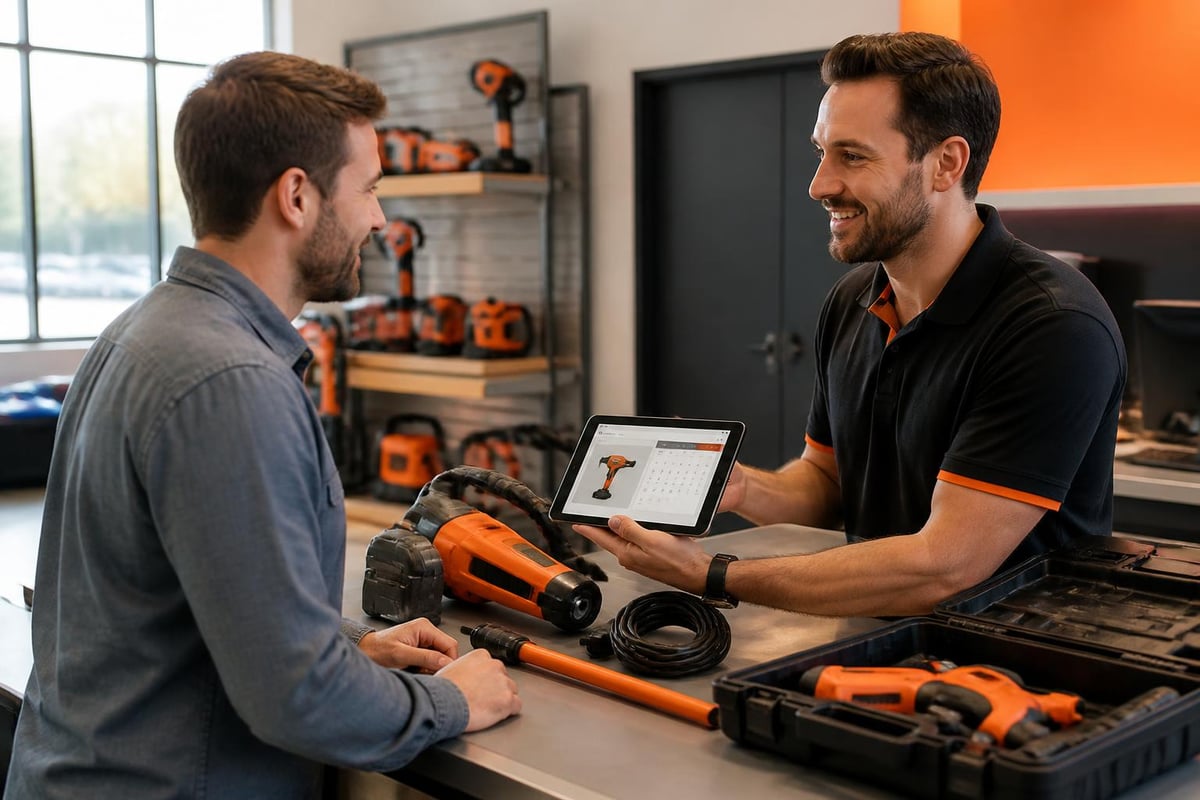
The inability to answer basic questions about equipment availability represents a critical operational failure. When customers call asking whether a specific tool is available next Tuesday, staff members who rely on paper logs or disconnected spreadsheets cannot provide confident answers. They must physically check the yard, call other locations, or make educated guesses based on outdated information. This uncertainty forces customers to seek alternatives from competitors who can commit immediately.
Tool rental software provides real-time visibility across all locations simultaneously. The system knows which equipment is currently rented, reserved for future dates, undergoing maintenance, or available for immediate checkout. When employees access this centralized database, they see exactly what customers will experience when they arrive, eliminating the frustration of driving to a location only to find promised equipment unavailable.
Maintenance scheduling failures compound inventory problems. Equipment that sits broken in the yard generates no revenue while still incurring depreciation and storage costs. Without automated tracking, tools slip through preventive maintenance schedules until catastrophic failures occur. The resulting downtime removes high-value assets from the rental pool during peak demand periods, forcing either lost sales or expensive rush repairs.
Many essential features that every equipment rental software should have focus specifically on preventing these inventory disasters. Automated maintenance reminders trigger based on usage hours or calendar intervals, ensuring equipment receives service before problems develop. The system tracks repair history, warranty information, and replacement parts, giving management complete visibility into asset performance and total cost of ownership.
Contract Documentation Risks and Compliance Exposure
Handwritten rental agreements create legal vulnerabilities that most businesses underestimate until disputes arise. When customers claim they returned equipment undamaged or challenge fees, illegible contracts with missing signatures provide inadequate protection. The lack of photographic documentation at checkout means no objective record exists to resolve conflicting accounts of equipment condition.
Digital contracts within tool rental software platforms capture electronic signatures, timestamp every document, and store complete transaction histories indefinitely. The system can require photographic documentation before completing checkouts or returns, creating irrefutable evidence of equipment condition. This documentation proves invaluable during insurance claims, customer disputes, or theft investigations.
Tax compliance represents another hidden risk in manual operations. Rental businesses must collect and remit sales tax according to complex rules that vary by jurisdiction, customer type, and equipment category. Spreadsheets cannot automatically apply these varying tax rates, forcing staff to interpret regulations manually. The inevitable errors expose businesses to audits, penalties, and back-tax assessments that dwarf the cost of proper software.
Modern platforms integrate directly with accounting systems and tax calculation services, ensuring accurate collection from the initial quote through final invoice. The software maintains detailed records showing exactly how it calculated each tax amount, providing the documentation necessary to survive regulatory scrutiny. This automation eliminates the need for staff members to become tax experts while protecting the business from costly compliance failures.

Customer Relationship Damage From Operational Inefficiency
The rental experience customers receive directly reflects backend operational capabilities. When checkout processes require extensive paperwork, manual data entry, and repeated questions about information already provided during reservation, customers perceive the business as outdated and inefficient. They compare this friction to consumer experiences with modern apps and digital platforms, finding rental operations lacking.
Tool rental software enables staff to complete transactions rapidly using information already captured during online reservations or previous rentals. The system recognizes returning customers, auto-populates their preferences and billing details, and suggests equipment based on rental history. This personalization creates positive experiences while reducing transaction time from fifteen minutes to under three.
Communication breakdowns damage relationships more severely than most operational issues. When customers expect equipment delivery Tuesday morning and nobody shows up because the scheduler forgot to assign the job, trust evaporates immediately. Manual coordination between sales, warehouse, and delivery teams relies on people remembering to update everyone about changes, creating constant opportunities for miscommunication.
Integrated platforms provide unified visibility where reservation updates automatically notify relevant team members and trigger workflow steps. Delivery drivers receive optimized routes with customer contact information, special instructions, and equipment manifests directly on mobile devices. Customers receive automated notifications confirming appointments, tracking delivery progress, and requesting feedback after completion. This orchestration happens without requiring staff to remember individual communication tasks.
The digital transformation driving growth in tool rental apps market reflects customer expectations for seamless digital experiences. Businesses that cannot provide online browsing, instant quotes, and self-service account management lose customers to competitors who can. The gap between customer expectations and operational capabilities widens each year that businesses delay modernization.
Multi-Location Coordination Nightmares
Operating multiple rental locations without centralized software creates impossible coordination challenges. Each location maintains separate inventory records, customer databases, and pricing schedules, functioning essentially as independent businesses under one brand. This fragmentation prevents the company from leveraging its full asset base and creates inconsistent customer experiences.
When a customer needs equipment unavailable at their preferred location, staff at decentralized operations cannot easily check other branches or arrange transfers. The equipment might sit idle across town while the business loses a rental opportunity and forces the customer toward competitors. Tool rental software enables instant visibility across the entire network, allowing staff to reserve equipment at any location and coordinate transfers efficiently.
Pricing inconsistency across locations damages profitability and customer trust. Without centralized rate management, each branch might charge different amounts for identical equipment. Customers who discover these discrepancies through online research or word-of-mouth question the fairness of pricing and suspect they're being overcharged. Corporate management lacks visibility into whether locations follow approved pricing strategies or whether excessive discounting erodes margins.
Centralized platforms enforce consistent pricing while allowing approved variations for competitive markets or special customer agreements. Management sets rate schedules, seasonal adjustments, and discount rules at the corporate level, ensuring all locations apply identical logic. The system tracks deviations, requires approval for custom pricing, and reports on discounting patterns that might indicate training needs or policy violations.
Fleet utilization analysis becomes impossible without consolidated data. Management cannot determine which equipment types generate the highest returns, which locations need additional inventory, or which assets sit idle consuming carrying costs. Strategic decisions about purchasing, transfers, and disposal rely on gut feelings rather than quantitative analysis. The comprehensive inventory tracking capabilities that modern platforms provide transform this guesswork into data-driven asset management.
The Serial Number Tracking Gap
Generic inventory management that treats tools as interchangeable commodities fails to capture critical information about individual assets. A company might know it owns twenty hammer drills but have no visibility into which specific units are rented, which need maintenance, and which consistently generate damage claims. This lack of granularity prevents identifying problem equipment, tracking warranty status, or managing recalls.
Tool rental software with serialized inventory tracking assigns unique identifiers to each asset, maintaining complete lifecycle histories. The system records every rental transaction, maintenance event, repair cost, and damage claim associated with individual tools. This granular data reveals which equipment units deliver reliable performance and which become maintenance burdens that should be retired early.
Theft prevention and recovery depend entirely on serial number documentation. When equipment disappears, businesses without detailed records cannot provide law enforcement with the specific information needed to identify stolen property. Insurance claims face scrutiny when companies cannot prove they owned the specific items claimed. Digital systems maintain serial numbers, purchase documentation, and photographic evidence that supports both criminal investigations and insurance recoveries.
Warranty management for large fleets becomes impractical without automated tracking. Equipment manufacturers provide warranties covering specific defects within defined periods, but claiming these benefits requires knowing exactly when each unit was purchased and whether the failure falls within coverage terms. Manual tracking through spreadsheets or paper files makes warranty claims too time-consuming to pursue, leaving thousands of dollars in valid claims unrecovered.
The Brytend Service Module provides exactly this level of detailed tracking by allowing businesses to register serialized inventory, add custom services, automate service reminders, and generate service certificates. This structured approach ensures equipment receives proper maintenance throughout its lifecycle while maintaining the documentation necessary for warranty claims, insurance coverage, and eventual resale.

Integration Failures That Create Information Silos
Operating rental software in isolation from accounting, customer relationship management, and business intelligence tools forces manual data transfer between systems. Staff members export rental transactions from one platform, reformat the data, and import it into accounting software for invoicing and financial reporting. This redundant data entry consumes hours of administrative time while introducing transcription errors that require investigation and correction.
Modern tool rental software platforms offer direct integrations with popular accounting systems, eliminating manual data transfer entirely. Completed rentals flow automatically into accounts receivable, payments update both systems simultaneously, and financial reports reflect real-time rental activity. This automation reduces month-end closing from days to hours while ensuring accounting records match operational data exactly.
Customer data fragmentation creates particularly damaging problems. When rental history lives in one system, marketing preferences in another, and support tickets in a third, staff members lack complete context about customer relationships. They cannot see that the person calling about a late fee is also a high-value account with perfect payment history who deserves special consideration. This ignorance leads to interactions that damage relationships with the business's best customers.
Integrated platforms maintain unified customer profiles accessible to everyone who interacts with clients. Sales representatives see rental history and preferences, support staff view outstanding issues and communication history, and accounting reviews payment patterns and credit limits. This comprehensive visibility enables personalized service and informed decision-making that strengthens customer relationships.
Business intelligence and reporting capabilities suffer most from data silos. Strategic questions about customer acquisition costs, equipment utilization rates, seasonal demand patterns, and location performance require combining information from multiple sources. Manual analysis involves exporting data, merging spreadsheets, and creating calculations that quickly become outdated. The real-time asset management and reporting features that unified platforms provide transform these analysis projects into on-demand dashboard views.
Mobile Access Limitations Crippling Field Operations
Rental businesses operate beyond office walls, with deliveries occurring at construction sites, maintenance happening in workshop bays, and customer interactions taking place in equipment yards. When field staff lack mobile access to rental systems, they cannot check inventory availability, look up customer details, or update transaction statuses without returning to a desk. This disconnection creates delays, forces redundant communication, and prevents real-time information updates.
Mobile-enabled tool rental software extends full system access to smartphones and tablets, allowing field personnel to operate independently. Delivery drivers confirm equipment handoffs with electronic signatures captured on mobile devices, warehouse staff process returns and damage inspections using tablets, and sales representatives create quotes and reservations during site visits. These mobile workflows eliminate the paper forms and delayed data entry that slow operations and create information gaps.
Offline functionality becomes critical when field locations lack reliable internet connectivity. Construction sites, remote facilities, and warehouse areas often have poor cellular coverage that prevents cloud-based systems from functioning. Software platforms with offline modes allow continued operations during connectivity lapses, synchronizing data automatically when connections restore. This reliability ensures field operations never halt due to technical limitations.
Photographic documentation captured through mobile devices provides accountability and evidence that paper processes cannot match. Field staff photograph equipment conditions before deliveries and after returns, creating timestamped visual records stored permanently with transaction histories. These images resolve disputes, support insurance claims, and identify damage patterns requiring equipment modifications or customer education.
The Scalability Crisis Nobody Anticipates
Businesses that start with simple manual processes often hit sudden scalability walls as operations grow. The spreadsheet that worked fine for fifty rental transactions monthly collapses under five hundred. The paper filing system that seemed adequate for one location becomes unmanageable when a second branch opens. These breaking points arrive unexpectedly, forcing rushed implementations of proper systems during periods when operations are already strained.
Tool rental software provides scalability from the beginning, accommodating growth without requiring platform changes. The same system that manages one location and small inventory scales to dozens of locations with thousands of assets. Cloud-based platforms eliminate the server capacity constraints and software upgrade projects that plague on-premise systems, allowing businesses to focus on growth rather than technical infrastructure.
Seasonal demand fluctuations in the rental industry create temporary scalability challenges that manual processes cannot handle. Summer construction booms might triple transaction volumes compared to winter months, overwhelming staff members who can barely keep pace with baseline activity. Automated systems process increased volumes without additional labor, using the same digital workflows whether handling twenty daily transactions or two hundred.
Acquisition integration represents another scalability test that reveals system limitations. When rental businesses acquire competitors or merge with similar companies, combining customer databases, inventory records, and transaction histories from incompatible systems creates nightmare scenarios. The flexibility and integration capabilities that proper platforms provide enable mergers and acquisitions that would be impractical with fragmented manual systems.
Frequently Asked Questions
What typically drives rental businesses to finally adopt dedicated software after years of manual operations?
The breaking point usually arrives when revenue losses from double-bookings, missed charges, and equipment downtime exceed the obvious cost of software implementation. Many businesses experience a specific crisis such as a major customer lost to a competitor with better systems, a failed audit revealing compliance gaps, or expansion plans that cannot proceed without operational improvements. The accumulated small inefficiencies suddenly become visible when viewed collectively rather than as isolated incidents.
How do rental software platforms handle complex pricing scenarios with seasonal rates, customer tiers, and promotional discounts?
Advanced tool rental software maintains hierarchical rate structures that apply rules in order of priority. The system checks for customer-specific contracted rates first, then customer tier rates, then promotional discounts, and finally default seasonal rates. This logic executes automatically during quote generation and reservation processing, ensuring consistent application of complex pricing rules that would be nearly impossible to enforce manually across multiple staff members and locations.
What happens to existing rental contracts and customer data when transitioning from manual systems to digital platforms?
Implementation processes typically include data migration services that convert spreadsheet information, digitize paper records, and import existing customer details into the new platform. This conversion requires data cleaning to standardize formats, eliminate duplicates, and correct errors that accumulated in manual systems. Most platforms maintain both systems parallel during transition periods, allowing staff to verify accuracy and build confidence before fully retiring legacy processes.
Can tool rental software prevent equipment theft and unauthorized usage by employees or customers?
Systems with serialized tracking and check-in/check-out workflows create accountability for every asset movement. RFID integration and GPS tracking on high-value equipment provide additional security layers that alert management to unauthorized location changes. While no software eliminates theft entirely, digital systems make stealing significantly more difficult and detection far more likely than manual operations where equipment simply disappears without clear accountability.
How do automated maintenance reminders account for varying usage intensity across different rental patterns?
Modern platforms track both calendar time and usage hours for each asset, triggering maintenance based on whichever threshold reaches first. Equipment rented intensively for commercial construction might require service every fifty operating hours, while tools seeing light residential use follow time-based schedules. The system maintains separate counters for each metric and schedules maintenance according to manufacturer specifications and operator-defined intervals that reflect actual usage patterns.
What security measures protect sensitive customer payment information and rental histories in cloud-based platforms?
Reputable tool rental software providers implement bank-level encryption for data transmission and storage, maintain PCI DSS compliance for payment processing, and use multi-factor authentication to prevent unauthorized access. Data centers employ physical security, redundant systems, and continuous monitoring that far exceed what individual rental businesses could implement independently. Regular security audits and penetration testing identify vulnerabilities before they can be exploited.
How does rental software handle the unique challenges of party and event rentals compared to construction tool rentals?
While the core functionality remains similar, event rental modules include features specific to that industry such as package pricing for coordinated items, setup and breakdown scheduling, detailed delivery instructions for venues, and integration with event planning workflows. The underlying inventory tracking, customer management, and billing logic applies universally, but the user interface and workflow steps adapt to industry-specific terminology and processes that party rental staff expect.
The compounding costs of manual tool rental operations eventually outweigh any perceived savings from delaying modernization, threatening both profitability and competitive position as customers increasingly expect digital convenience. Addressing these vulnerabilities requires purpose-built platforms that integrate inventory management, customer relationships, financial processes, and field operations into unified systems designed specifically for rental workflows. Brytend develops custom software solutions that address the unique operational challenges your rental business faces, building platforms tailored to your specific workflows, integration requirements, and growth objectives rather than forcing you to adapt processes to generic software limitations.