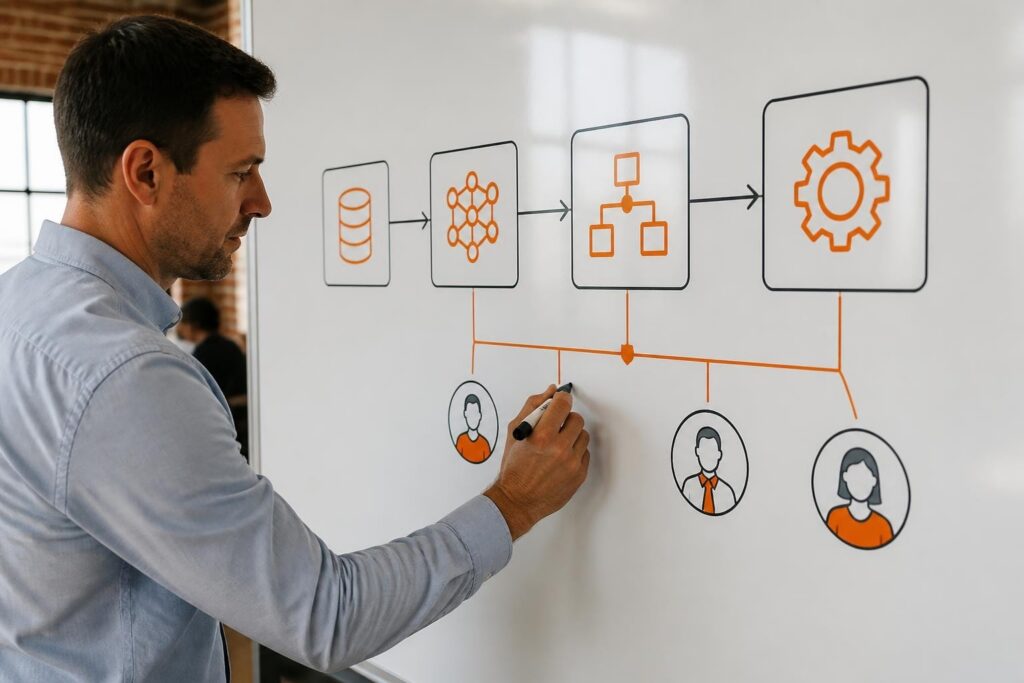
Compressor rental businesses operate in a complex environment where equipment availability, maintenance schedules, customer contracts, and regulatory compliance must align perfectly. Traditional spreadsheets and paper-based systems cannot scale with growing fleets, multiple locations, or increasing customer demands. Compressor rental software provides a centralized digital platform that automates workflows, tracks serialized equipment, manages service intervals, and generates accurate invoicing-eliminating manual errors and improving operational efficiency.
What is compressor rental software and how does it work
Compressor rental software is a specialized management system designed to handle the unique workflows of equipment rental companies focusing on air compressors, gas compressors, and related machinery. The software tracks individual units by serial number, monitors rental status, schedules preventive maintenance, manages customer contracts, and automates billing cycles.
The system operates through several core modules working together. An inventory management module maintains real-time visibility of all compressor units, including location, rental status, maintenance history, and technical specifications. A contract management module handles rental agreements, pricing tiers, insurance requirements, and delivery logistics. The maintenance scheduling module tracks service intervals based on runtime hours or calendar dates, ensuring compliance with manufacturer recommendations and safety regulations.
Core components of rental management platforms
Modern compressor rental software integrates multiple functional components into a unified platform:
- Serialized asset tracking that assigns unique identifiers to each compressor unit
- Customer relationship management for contact information, rental history, and payment terms
- Billing automation that calculates rental fees, damage charges, and late penalties
- Delivery and logistics scheduling for equipment pickup and return
- Reporting and analytics for utilization rates, revenue forecasting, and fleet optimization
- Mobile applications for field technicians to update equipment status and complete service tasks
The software typically connects with barcode scanners, GPS tracking devices, and telematics systems installed on compressor units. This integration enables automatic updates when equipment moves between locations, accumulates runtime hours, or requires maintenance intervention.
How does compressor rental software improve fleet utilization
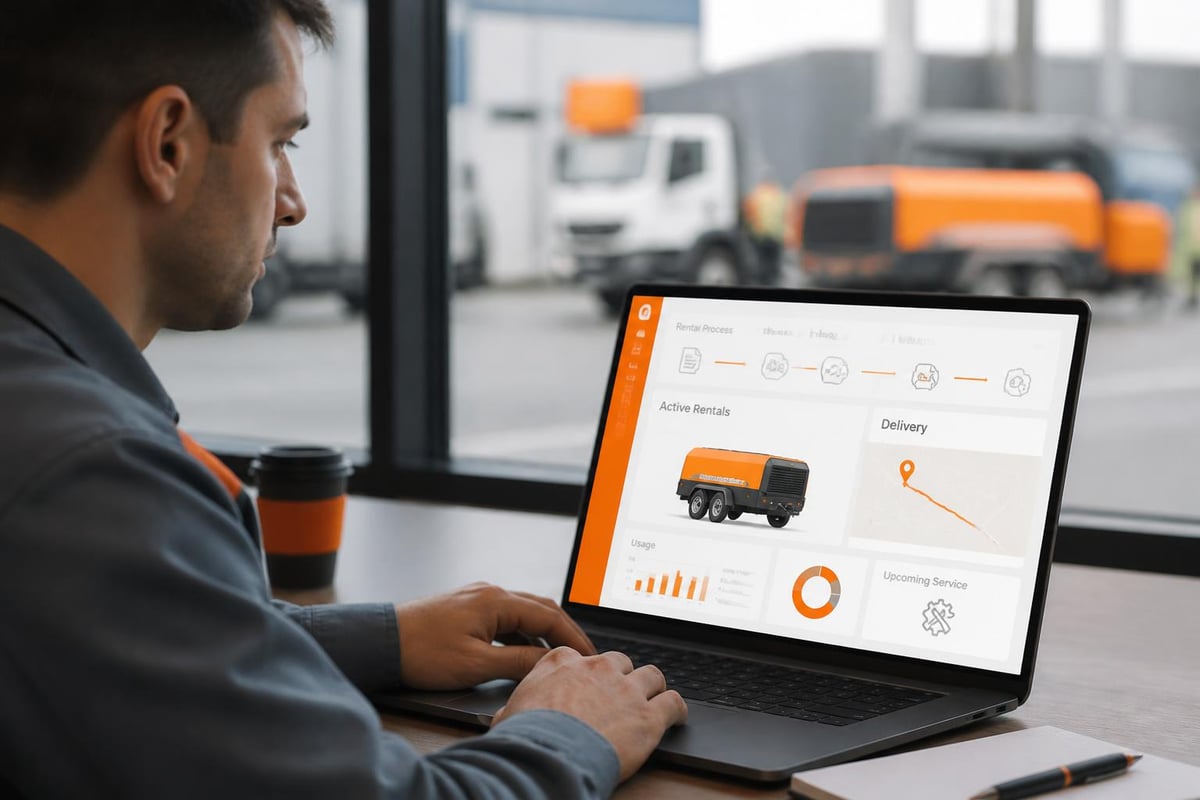
Compressor rental software increases equipment utilization by providing real-time visibility into fleet availability and location. Rental coordinators can instantly identify which units are available, which are under maintenance, and which are approaching the end of current rental periods-eliminating double-bookings and reducing idle time.
The system tracks utilization metrics for each compressor model, revealing patterns that inform purchasing decisions. If certain CFM (cubic feet per minute) ratings consistently show 90%+ utilization while others remain underused, management can adjust fleet composition accordingly. This data-driven approach prevents capital tied up in underperforming assets.
Real-time availability tracking mechanisms
The software updates equipment status through multiple channels. When a field technician marks a unit as “returned” via mobile app, the system immediately flags it for inspection and cleaning. After passing inspection, the status changes to “available,” and the unit appears in search results for new rental requests.
GPS-enabled tracking provides additional precision. If a compressor remains at a customer site beyond the contracted return date, the system generates alerts and can automatically apply late fees according to contract terms. This eliminates revenue leakage from unreturned equipment.
| Utilization Metric | Without Software | With Software | Improvement |
|---|---|---|---|
| Average rental days per unit/year | 180 days | 245 days | +36% |
| Double-booking incidents | 8-12 per month | 0-1 per month | -92% |
| Time to locate available unit | 25 minutes | 2 minutes | -92% |
| Equipment idle between rentals | 7 days average | 2 days average | -71% |
The compressor rental market increasingly relies on flexible rental models and advanced analytics to maximize asset performance and meet customer demands.
What maintenance challenges does rental software solve
Compressor rental software addresses the critical challenge of maintaining service schedules across distributed fleets operating under varying conditions. Each rental contract exposes equipment to different operating environments, runtime patterns, and application demands-making manual tracking of service intervals nearly impossible at scale.
The system automatically calculates next service dates based on manufacturer specifications, actual runtime hours, and calendar intervals. When a compressor approaches a 500-hour service interval, the software generates work orders, orders replacement parts, and blocks the unit from new rentals until maintenance is completed and documented.
Automated service interval tracking
Service scheduling within compressor rental software operates on multiple triggers:
- Hour-based intervals tracked through telematics or manual input at return
- Calendar-based intervals for time-sensitive maintenance regardless of usage
- Condition-based triggers when sensors detect abnormal pressure, temperature, or vibration
- Compliance-driven schedules mandated by safety regulations or insurance requirements
When a unit returns from rental, technicians log actual runtime hours via mobile interface. The system compares this against the last service date and remaining interval capacity, automatically routing units requiring attention to the maintenance bay rather than available inventory.
Brytend offers specialized solutions for managing complex service workflows through their Service Module, which enables rental companies to register serialized inventory, automate service reminders, and generate service certificates-ensuring every compressor meets safety and performance standards before deployment.
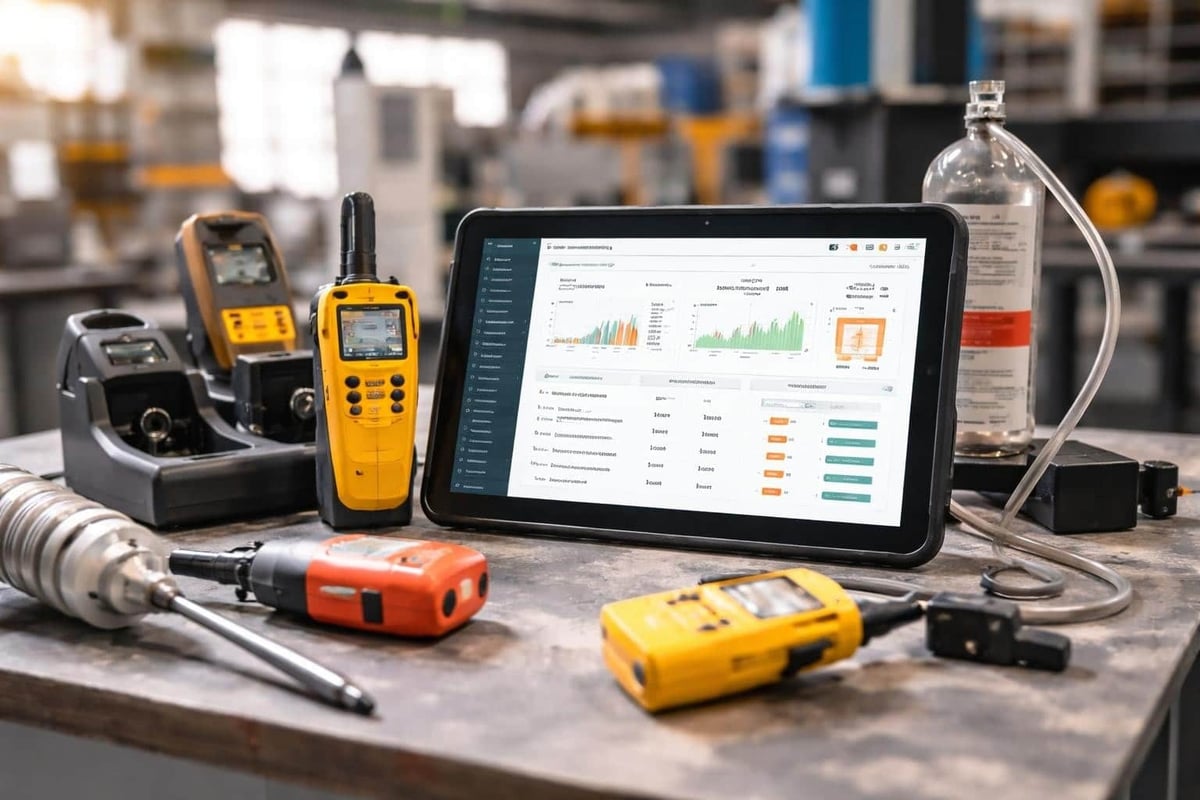
Preventive maintenance documentation becomes effortless. Technicians record completed tasks, replacement parts, and inspection findings directly in the system. This creates a permanent service history attached to each serial number, which proves invaluable for warranty claims, compliance audits, and resale value documentation.
Common mistakes in industrial air compressor rentals often stem from inadequate capacity planning and pressure specification mismatches, both preventable through proper software-guided equipment selection.
How does billing automation reduce revenue leakage
Compressor rental software eliminates billing errors and captures revenue that manual processes typically miss. The system automatically calculates rental charges based on agreed rates, actual usage periods, delivery fees, environmental charges, and ancillary equipment rentals-removing human error from invoice generation.
Revenue leakage occurs in traditional systems when returned equipment sits undocumented, damage charges go unbilled, or overtime usage isn’t tracked. Automated systems timestamp all equipment movements, photograph unit condition at delivery and return, and calculate exact rental duration down to the hour.
Dynamic pricing and contract enforcement
Modern compressor rental software supports sophisticated pricing structures:
- Tiered pricing based on rental duration (daily, weekly, monthly rates with automatic optimization)
- Seasonal rate adjustments that increase during peak construction periods
- Volume discounts applied automatically when customers rent multiple units
- Damage deposit management with photo documentation and itemized charge generation
- Late fee calculations that begin accruing according to contract terms
The system integrates with accounting platforms, pushing approved invoices directly to QuickBooks, Sage, or other financial management systems. This eliminates double-entry and ensures rental revenue appears in financial reports immediately upon equipment return and billing approval.
Automated damage assessment represents a significant revenue recovery mechanism. When technicians photograph compressor condition at return using the mobile app, the software stores images alongside the rental record. If damage exceeds normal wear, the system generates a damage charge invoice with photographic evidence, dramatically reducing disputes and write-offs.
| Billing Process | Manual Method | Automated Software | Time Savings |
|---|---|---|---|
| Invoice generation | 15-20 minutes | 30 seconds | -97% |
| Damage charge billing | 50% captured | 95% captured | +90% |
| Late fee application | Inconsistent | 100% consistent | – |
| Accounting system entry | Duplicate entry required | Automatic sync | -100% |
What integration capabilities should rental software include
Compressor rental software delivers maximum value when it connects with existing business systems and industrial devices. Integration capabilities determine whether the platform operates as an isolated data silo or the central hub of rental operations.
ERP system connectivity enables bidirectional data flow between rental operations and broader business functions. When a new customer gets added in the rental system, their information synchronizes with the company ERP for credit checks, payment processing, and consolidated reporting. Purchase orders for replacement parts flow from maintenance work orders directly to procurement modules.
Essential third-party connections
A comprehensive compressor rental software platform should integrate with:
- Telematics devices installed on compressor units for automatic runtime tracking, location monitoring, and operational data
- Accounting software (QuickBooks, Xero, Sage) for invoice syncing and financial reporting
- Payment processors to accept credit cards, ACH transfers, and automated recurring billing
- Email and SMS services for automated contract reminders, pickup notifications, and service alerts
- Document management systems for storing signed contracts, insurance certificates, and compliance records
- CRM platforms to maintain unified customer communication history and sales pipeline data
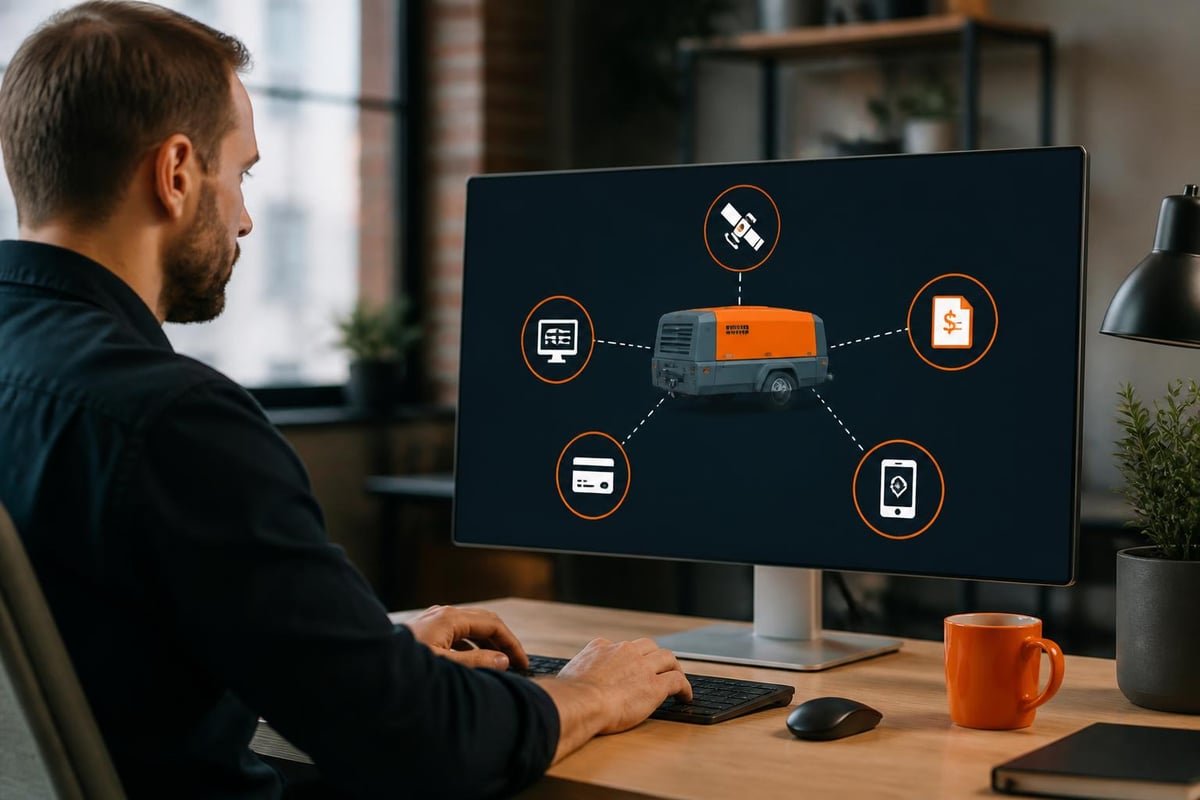
The competitive landscape of the compressor rental market shows that companies investing in integrated digital platforms gain significant advantages in operational efficiency and customer service quality.
API availability determines customization potential. Rental companies with unique workflows or proprietary equipment often need custom integrations. Software platforms offering RESTful APIs and webhook support enable development teams to build connections with specialized systems-from proprietary telemetry platforms to custom logistics optimization tools.
Mobile app quality directly impacts field operations effectiveness. Technicians need offline capability to record equipment condition, complete service checklists, and capture photos in locations without cellular coverage. When connectivity restores, the app should automatically sync all recorded data with the central system.
What security considerations matter for rental operations
Compressor rental software stores sensitive business data including customer payment information, proprietary pricing structures, equipment valuation details, and competitive market intelligence. Security vulnerabilities can result in data breaches, financial fraud, competitive disadvantage, and regulatory penalties.
Access control mechanisms must follow the principle of least privilege. Delivery drivers need equipment location and customer contact information but shouldn’t access financial data. Accounting staff require billing information but don’t need technical specifications for every compressor model. Role-based permissions ensure each user accesses only relevant data.
Data protection and compliance requirements
Security architecture for compressor rental software should include:
- Encryption in transit (TLS 1.3) for all data transmitted between mobile devices, web browsers, and servers
- Encryption at rest for stored customer payment information and contract documents
- Multi-factor authentication for administrative accounts and financial transaction approval
- Automated backup systems with geographically distributed storage and tested recovery procedures
- Audit logging that records all data access, modifications, and financial transactions with timestamps and user identification
- PCI DSS compliance when processing credit card payments directly through the platform
Research into Industrial Internet of Things security reveals significant vulnerabilities in commercial smart air compressors, emphasizing the need for robust cybersecurity measures in connected industrial equipment.
Industrial IoT considerations become critical when compressor units include telematics devices transmitting operational data. These devices create attack vectors if not properly secured. Software platforms should authenticate device connections, encrypt telemetry data streams, and implement anomaly detection to identify compromised equipment.
Customer data privacy regulations (GDPR, CCPA) impose additional requirements. The software must support data retention policies, enable customer data export upon request, and facilitate complete data deletion when customers exercise “right to be forgotten” provisions.
How does reporting enable data-driven decisions
Compressor rental software transforms operational data into actionable intelligence through comprehensive reporting and analytics capabilities. Decision-makers gain visibility into fleet performance, customer behavior, maintenance costs, and revenue trends-enabling strategic planning based on actual business metrics rather than intuition.
Utilization reports reveal which compressor models, CFM ratings, and pressure specifications experience highest demand. This intelligence guides fleet expansion decisions, ensuring capital investment targets equipment types with proven rental demand. Conversely, consistently underutilized models become candidates for resale or relocation to different markets.
Critical performance metrics and KPIs
Rental operations management requires monitoring specific key performance indicators:
| Metric Category | Specific KPI | Business Impact |
|---|---|---|
| Equipment Performance | Utilization rate by unit | Capital allocation optimization |
| Financial Health | Revenue per asset | Profitability assessment |
| Operational Efficiency | Average turnaround time | Customer satisfaction indicator |
| Maintenance Costs | Cost per rental day by model | Fleet composition decisions |
| Customer Metrics | Repeat rental percentage | Retention and relationship quality |
| Risk Management | Damage incident rate | Insurance and deposit policy |
Predictive analytics represents the next evolution. Advanced platforms apply machine learning to historical rental patterns, identifying seasonal trends, forecasting demand for specific equipment types, and recommending optimal pricing strategies. Some systems analyze time series data from compressor-based machines to predict maintenance requirements before failures occur.
Custom reporting capabilities matter because every rental business operates differently. Software should enable users to build reports combining specific data fields, filtering criteria, and visualization formats without requiring developer assistance. Export functionality to Excel, PDF, and CSV formats facilitates sharing insights with stakeholders who don’t access the platform directly.
Dashboard customization allows different roles to focus on relevant metrics. The operations manager monitors equipment availability and delivery schedules. The maintenance supervisor tracks upcoming service intervals and parts inventory. The CFO reviews revenue trends, accounts receivable aging, and profitability by customer segment-all from the same underlying data presented through role-appropriate interfaces.
What implementation process ensures successful adoption
Implementing compressor rental software requires structured planning, data migration, staff training, and phased rollout to minimize operational disruption. Successful deployments follow a systematic approach that addresses technical configuration, process adaptation, and change management.
Pre-implementation assessment identifies current workflows, pain points, integration requirements, and success criteria. The implementation team documents existing processes for equipment intake, rental contracts, delivery logistics, maintenance scheduling, and billing procedures. This baseline enables measuring improvement after deployment.
Implementation phases and timeline
A typical compressor rental software implementation follows this progression:
- Requirements gathering and system configuration (2-3 weeks): Define user roles, customize fields, configure pricing structures, establish approval workflows
- Data migration and validation (2-4 weeks): Transfer existing equipment records, customer information, active rental contracts, maintenance histories
- Integration setup (1-3 weeks): Connect accounting systems, payment processors, telematics devices, mobile applications
- User training (1-2 weeks): Conduct role-specific training sessions, create documentation, establish support procedures
- Parallel operation (2-4 weeks): Run new system alongside existing processes to verify accuracy and identify issues
- Full deployment (1 week): Transition completely to new platform, decommission legacy systems
- Post-implementation support (ongoing): Monitor performance, address user questions, optimize configurations
Data quality determines implementation success more than any other factor. Inaccurate serial numbers, incomplete maintenance records, or inconsistent customer information in legacy systems will transfer to the new platform, perpetuating existing problems. Cleaning data before migration prevents garbage-in-garbage-out scenarios.
Training must address different learning styles and technical proficiency levels. Hands-on workshops work well for field technicians comfortable with mobile devices. Administrative staff may prefer detailed written procedures with screenshots. Video tutorials provide on-demand reference materials for specific tasks.
The rental industry increasingly demands flexible rental models and advanced analytics, making proper software implementation essential for competitive positioning in growing markets.
Case study: Regional compressor rental company transformation
A regional compressor rental company operating 450 units across three locations faced increasing operational challenges as their business grew. Manual scheduling resulted in 8-12 double-bookings monthly, maintenance records existed in multiple spreadsheets, and billing errors caused customer disputes and delayed payments.
The company implemented specialized compressor rental software in Q2 2025, following a phased approach that minimized disruption. During data migration, the team discovered 23 units unaccounted for in existing records and identified $47,000 in unbilled rental charges from the previous six months.
Implementation results and measurable outcomes
After six months of operation with the new system:
Equipment utilization increased from 62% to 81% through better visibility and scheduling accuracy. The software identified that certain 185 CFM diesel compressors sat idle while customers waited for 175 CFM units-prompting staff to recommend the slightly larger units, which customers readily accepted.
Maintenance compliance improved dramatically. Previously, approximately 30% of units exceeded recommended service intervals. The automated scheduling system reduced overdue maintenance to less than 5%, decreasing emergency breakdowns and extending equipment lifespan.
Billing accuracy eliminated disputes related to rental duration calculations. Automated invoicing with timestamped delivery and return records provided indisputable documentation, reducing payment delays from an average of 47 days to 28 days.
Revenue capture improved through consistent application of damage charges, delivery fees, and late penalties. The company recovered an additional $8,300 monthly in previously missed charges.
The implementation team at Brytend specializes in creating custom software solutions tailored to equipment rental workflows, ensuring systems align with specific operational requirements rather than forcing businesses to adapt to generic platforms.
Frequently asked questions about compressor rental software
What differentiates compressor rental software from general equipment rental systems?
Compressor rental software includes specialized features for tracking runtime hours, monitoring maintenance intervals based on usage rather than just calendar dates, managing compressed air specifications (CFM, PSI, power requirements), and handling compressor-specific accessories like hoses, filters, and aftercoolers as linked rental items.
Can rental software handle both short-term emergency rentals and long-term contracts?
Yes, modern platforms support multiple rental types within the same system. Short-term emergency rentals can be created with simplified contracts and expedited approval workflows, while long-term contracts include detailed terms, scheduled rate reviews, and automatic renewal processing. The system tracks all contract types uniformly for reporting purposes.
How does the software prevent renting equipment that needs maintenance?
The platform maintains status flags for each unit (available, rented, maintenance required, in-service, retired). When a compressor approaches or exceeds service intervals, the system automatically changes its status to “maintenance required,” removing it from available inventory searches. Only after technicians complete and document required service does the unit return to rentable status.
What happens if internet connectivity fails at a remote rental location?
Quality compressor rental software includes mobile applications with offline functionality. Field technicians can record equipment delivery, photograph unit condition, complete inspection checklists, and collect customer signatures without connectivity. All data stores locally on the device and automatically synchronizes when internet access restores.
How does the system handle accessories and attachments rented with compressors?
Accessories are managed as separate inventory items that can be linked to primary equipment rentals. When a customer rents a 185 CFM compressor, the system can automatically suggest or require associated items (air hoses, filters, moisture separators) based on configurable rules. Each accessory tracks independently with its own rental charges, maintenance requirements, and availability status.
Can the software manage multiple pricing structures for different customer segments?
Advanced platforms support unlimited pricing tiers and customer-specific rate agreements. A construction company with a master service agreement might receive 15% below standard rates, while one-time customers pay list prices. Volume discounts, seasonal adjustments, and promotional rates can all coexist within the same system, applied automatically based on customer classification and rental parameters.
What reporting capabilities help identify the most profitable equipment?
Profitability reports combine rental revenue, maintenance costs, depreciation, and utilization rates for each compressor unit and model type. These analyses reveal true profitability beyond simple revenue numbers, showing which equipment generates highest return on investment and which models create disproportionate maintenance expenses that erode margins.
FAQs
What is compressor rental software and how does it work?
Compressor rental software is a centralized system that tracks equipment, contracts, maintenance, billing, and customer records. Each compressor receives serial-number tracking for location, rental status, service history, and specifications. Modules connect with GPS, telematics, barcode scanners, and mobile apps. Automated workflows reduce manual errors across inventory, deliveries, inspections, and invoicing.
How does compressor rental software improve fleet utilization?
Compressor rental software improves fleet utilization by showing real-time equipment availability, location, maintenance status, and rental schedules. Reported results include utilization rising from 62% to 81% after implementation. The system also reduced average idle time from 7 days to 2 days and lowered double-booking incidents by 92%.
How much does compressor rental software cost?
Compressor rental software pricing depends on fleet size, users, integrations, and customization; the source provides no fixed price. Implementation commonly requires 9–17 weeks of configuration, migration, integration, training, and rollout. Buyers should evaluate subscription fees, mobile access, telematics connections, support, data migration, and custom development before comparing proposals.
What is compressor rental software vs general equipment rental software?
Compressor rental software adds compressor-specific controls that general equipment rental software may not include. Specialized platforms track runtime hours, CFM, PSI, power requirements, and usage-based service intervals. They also link accessories such as hoses and aftercoolers. These features support maintenance decisions beyond calendar tracking, especially across fleets with 500-hour service intervals.
Can compressor rental software handle different rental contracts?
Yes, compressor rental software can handle short-term emergency rentals, long-term contracts, renewals, and customer-specific pricing. Emergency rentals can use simplified approval workflows, while long-term agreements support scheduled rate reviews and automatic renewals. Advanced platforms also apply volume discounts, seasonal rates, and customer agreements, including discounts such as 15%.
How long does compressor rental software implementation take?
Compressor rental software implementation typically takes 9–17 weeks for configuration, migration, integrations, training, parallel operation, and deployment. Requirements gathering usually takes 2–3 weeks, while data migration requires 2–4 weeks. Parallel testing adds another 2–4 weeks, followed by approximately 1 week for full deployment and ongoing support.
What security features should compressor rental software include?
Compressor rental software should include role-based access, TLS 1.3 encryption, encrypted storage, multi-factor authentication, backups, and audit logs. Payment processing should support PCI DSS compliance, while connected equipment needs authenticated device connections. Privacy features should support GDPR and CCPA requests, including data export, retention controls, and deletion.
Compressor rental software transforms equipment rental operations from reactive, manual processes into proactive, data-driven businesses that maximize fleet utilization, capture all revenue opportunities, and deliver superior customer service through operational efficiency. The specialized features, integration capabilities, and analytical tools these platforms provide have become essential for rental companies competing in demanding industrial markets. Brytend builds custom software solutions that address the unique operational challenges rental businesses face, creating systems that streamline workflows, eliminate manual errors, and scale with growing fleets-delivering measurable improvements in utilization rates, maintenance compliance, and profitability.