A digital rental platform is a software system that automates the entire rental lifecycle, from equipment reservation and contract generation to service tracking, invoicing, and customer relationship management. These platforms replace manual processes with centralized data management, enabling rental businesses to track serialized inventory, automate service reminders, and optimize asset utilization across multiple locations.
TL;DR:
- Digital rental platforms centralize equipment tracking, customer records, contracts, and billing in one system
- Core modules include inventory management with serialization, automated service scheduling, and integrated payment processing
- Implementation requires data migration, workflow mapping, staff training, and integration with existing ERP or accounting systems
- ROI typically appears within 6–12 months through reduced administrative overhead, improved asset utilization, and fewer missed service intervals
- Best practices include consistent equipment categorization, regular data audits, and mobile-enabled field access for technicians
What Is a Digital Rental Platform?
A digital rental platform is a software application designed to manage the complete rental business workflow from a single interface. The system maintains a real-time database of available equipment, customer histories, active contracts, upcoming service requirements, and financial transactions.
The platform assigns unique identifiers to each rental asset, enabling tracking of location, condition, service history, and utilization rates. When a customer requests equipment, the system checks availability, generates a contract, schedules delivery or pickup, and creates an invoice automatically.
Core Components of Rental Management Systems
Every functional digital rental platform includes five essential modules:
- Serialized inventory tracking that assigns unique IDs to each asset and records movement, condition, and maintenance history
- Customer relationship management storing contact details, rental history, credit status, and communication logs
- Contract and document generation producing rental agreements, terms of service, and liability waivers with digital signatures
- Service and maintenance scheduling automating inspection reminders, warranty tracking, and repair workflows
- Financial integration linking rental transactions to invoicing, payment processing, and accounting software
The inventory module serves as the foundation. Each piece of equipment receives a serial number or barcode that connects to maintenance records, current location, and rental status. This serialization enables accurate tracking across warehouses, job sites, and customer facilities.
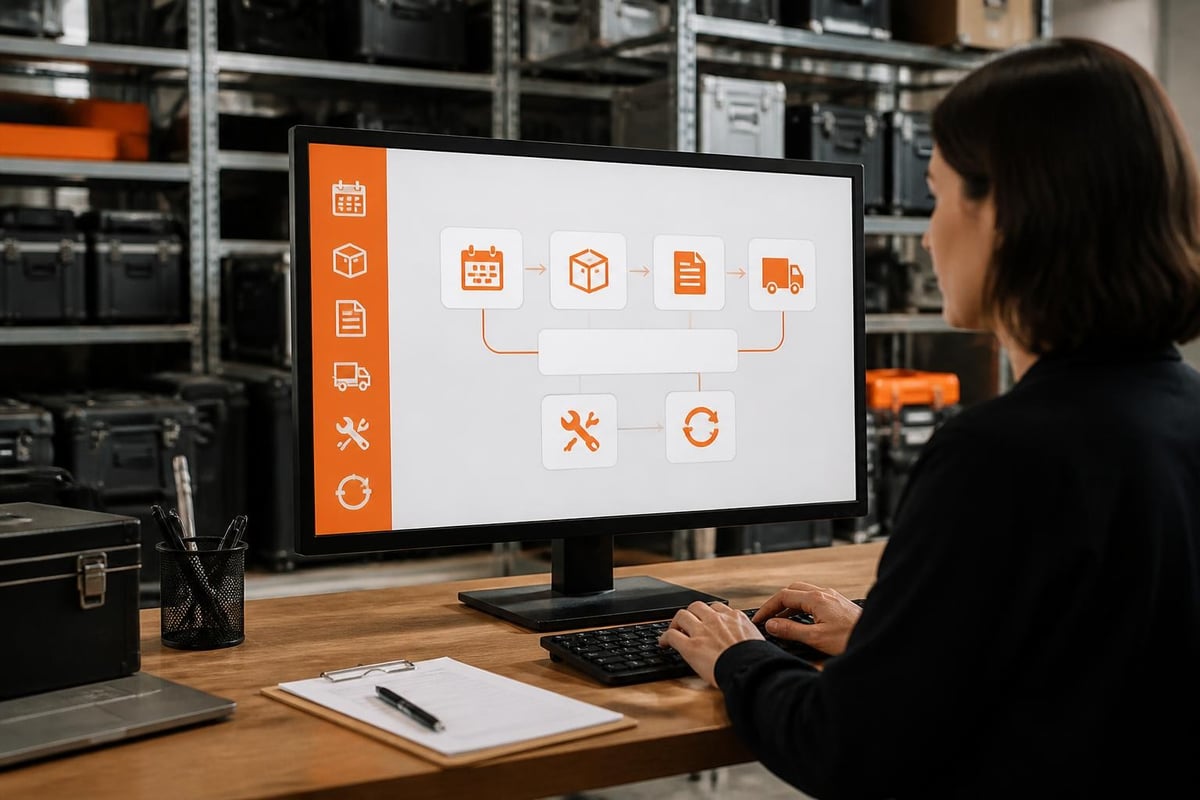
Service automation differentiates modern platforms from basic reservation systems. The software calculates service intervals based on usage hours, calendar days, or rental cycles. When a maintenance threshold approaches, the system generates work orders, notifies technicians, and flags equipment as unavailable until inspection completes.
How Does a Digital Rental Platform Improve Operations?
A digital rental platform eliminates manual data entry across multiple spreadsheets and paper forms. Staff access a unified database where equipment updates automatically reflect in availability calendars, service schedules, and financial reports.
The system enforces data consistency through structured fields and validation rules. Equipment categories, service types, and customer attributes follow predefined taxonomies, preventing duplicate entries and classification errors that plague spreadsheet-based workflows.
Automated Workflow Examples
Consider a construction equipment rental company managing 500 units across three locations. Before digitalization, staff manually checked availability sheets, called warehouses to confirm equipment status, printed contracts, and entered billing data into separate accounting software.
With a digital rental platform:
- Customer submits a reservation request through a web portal
- System checks real-time inventory across all locations and identifies available units
- Platform generates a rental contract with pre-filled equipment details, rates, and terms
- Customer signs electronically and payment processes automatically
- System updates inventory status and schedules delivery logistics
- Service module calculates next maintenance date based on projected usage hours
This workflow reduces reservation processing from 20–30 minutes to under 5 minutes. The platform also prevents double-booking by locking reserved equipment in real time, eliminating conflicts that occur when multiple staff access outdated spreadsheets.
| Process Step | Manual Method | Digital Platform |
|---|---|---|
| Availability check | 5–10 minutes (phone calls, spreadsheet review) | 15 seconds (real-time database query) |
| Contract generation | 10–15 minutes (template editing, printing) | 2 minutes (automated form population) |
| Payment processing | 5–10 minutes (manual invoice, separate payment system) | 1 minute (integrated payment gateway) |
| Service scheduling | 15–20 minutes (calendar review, manual entry) | Automatic (system-calculated based on rules) |
Integration with existing business systems amplifies these benefits. The platform exchanges data with ERP systems for procurement, accounting software for financial reporting, and telematics devices for equipment location tracking. Technology innovations are transforming renting by connecting previously isolated systems into coordinated workflows.
Why Do Rental Businesses Need Platform Digitalization?
Manual rental management creates four critical vulnerabilities that compound as inventory grows.
Data fragmentation occurs when equipment records, customer information, and financial data reside in separate systems. Staff waste time reconciling discrepancies between spreadsheets, paper files, and accounting software. A single rental transaction might require updates in five different locations, creating opportunities for errors and omissions.
Service neglect represents the costliest failure mode. Without automated tracking, equipment misses scheduled maintenance intervals, leading to premature failures, safety incidents, and warranty violations. A diesel generator skipping a required 500-hour service might experience catastrophic engine failure during a customer rental, resulting in liability claims and equipment replacement costs exceeding $50,000.
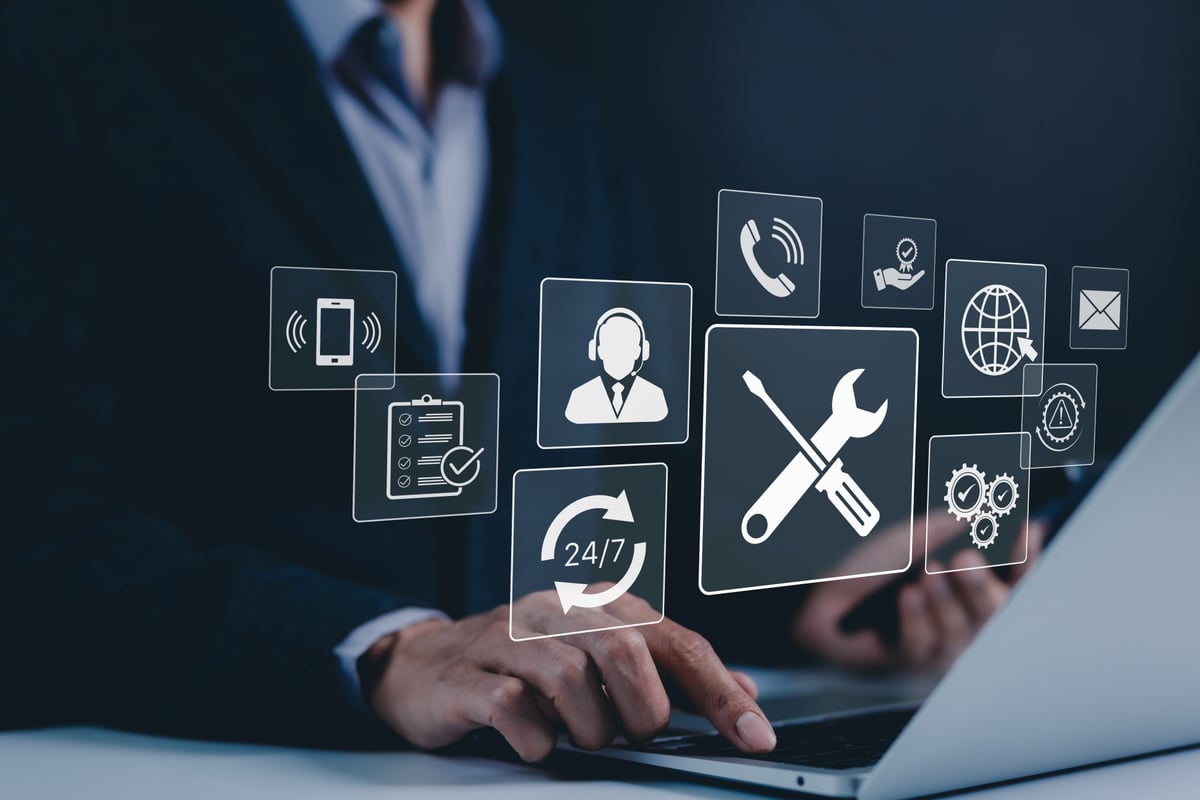
The Brytend Service Module addresses this challenge by registering serialized inventory, automating service reminders based on usage or time intervals, and generating service certificates for compliance documentation. The system tracks each asset's complete maintenance history, warranty status, and upcoming requirements, preventing costly neglect.
Utilization blindness prevents revenue optimization. Businesses without real-time tracking cannot identify underutilized assets that could relocate to higher-demand locations or overutilized equipment requiring replacement. A platform providing utilization analytics reveals that 30% of fleet capacity sits idle at one warehouse while another location turns away customers due to shortages.
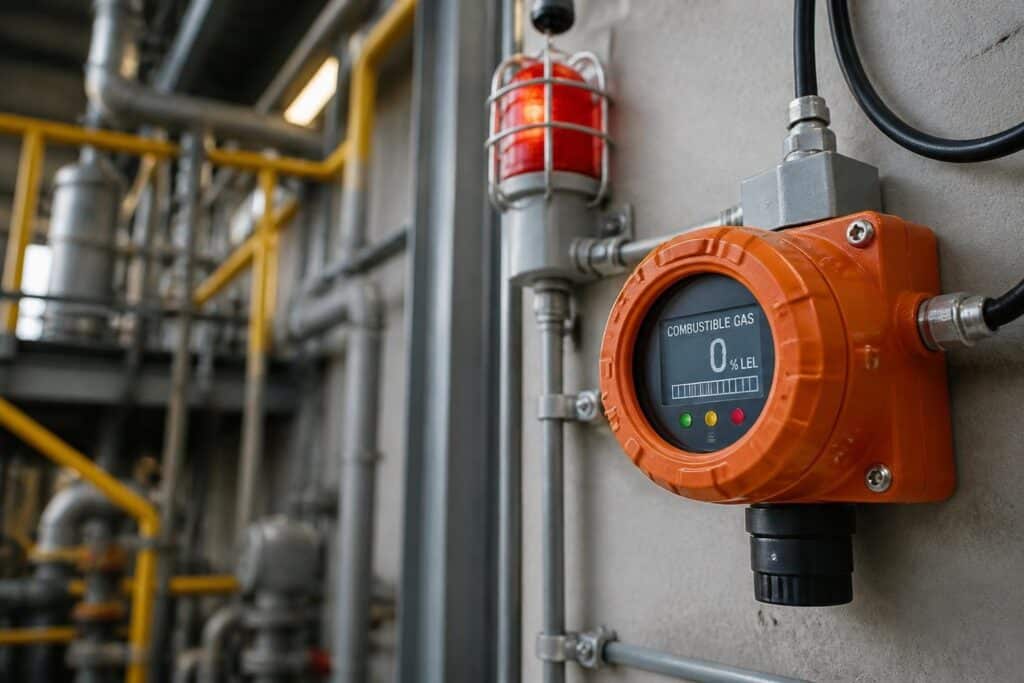
Compliance exposure affects businesses renting regulated equipment like gas detection devices, pressure vessels, or lifting equipment. Authorities require documented inspection histories, calibration certificates, and operator training records. Manual systems cannot reliably produce this documentation during audits, risking fines and operating license suspension.
What Are the Steps to Implement a Rental Platform?
Implementation follows a six-phase process requiring 8–16 weeks depending on inventory size and integration complexity.
Phase 1: Requirements Definition (1–2 weeks)
Document current workflows, pain points, and specific business requirements:
- List all equipment categories, rental rate structures, and service intervals
- Identify required integrations (accounting software, payment gateways, telematics)
- Define user roles and permission levels for staff access
- Specify reporting requirements for financial, operational, and compliance purposes
Map existing data sources including spreadsheets, paper records, and legacy software. Count total equipment units requiring migration and assess data quality.
Phase 2: Platform Selection and Configuration (2–3 weeks)
Evaluate platforms based on:
- Serialized inventory tracking with customizable asset attributes
- Service automation supporting time-based and usage-based intervals
- Mobile access for field technicians and delivery personnel
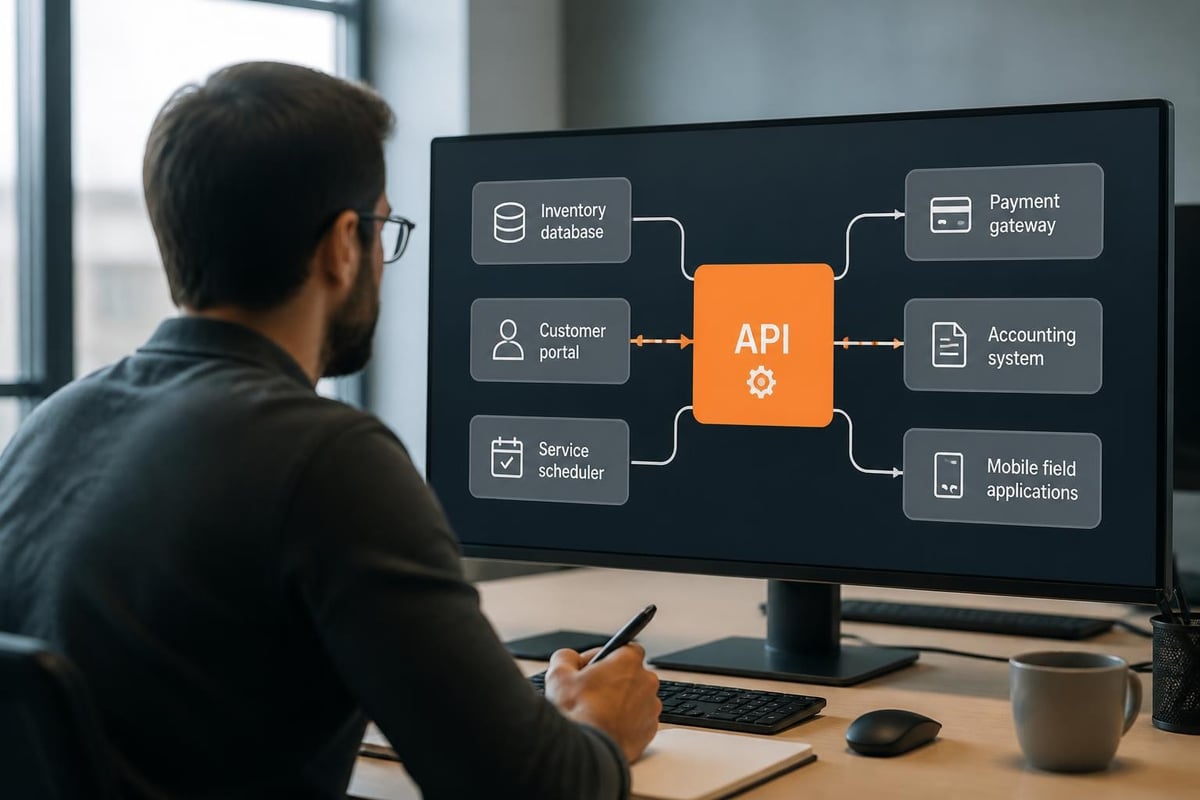
- API availability for ERP, accounting, and telematics integration
- Compliance features for regulated industries (inspection logs, certificates)
Configure the selected platform to match business workflows. Create equipment categories, define service types, establish pricing rules, and set up user accounts with appropriate permissions.
Phase 3: Data Migration (2–4 weeks)
Clean and standardize existing data before import:
- Assign unique serial numbers to all equipment lacking identifiers
- Standardize equipment names, categories, and specifications
- Verify customer contact information and consolidate duplicate records
- Document service history for each asset where records exist
- Import data in stages (equipment catalog, customers, active contracts)
- Validate accuracy through sample audits before proceeding
Poor data quality during migration creates permanent problems. A construction rental company discovered 40% of their equipment records contained duplicate entries with inconsistent naming, requiring three additional weeks of cleanup before migration could proceed.
Phase 4: Integration Development (2–4 weeks)
Connect the rental platform to existing business systems:
- Link accounting software to synchronize invoices, payments, and financial reporting
- Integrate payment gateways for credit card processing and automated billing
- Connect telematics devices to import equipment location and usage hours
- Establish API connections to ERP systems for procurement and inventory management
Test all integrations with sample transactions before activating production data flows. PropTech innovations drive smarter tenant experiences through similar integration approaches connecting previously isolated business functions.
Phase 5: Staff Training (1–2 weeks)
Conduct role-specific training sessions:
- Counter staff: reservation processing, contract generation, payment handling
- Warehouse personnel: equipment check-in/check-out, condition documentation, inventory updates
- Technicians: service task management, mobile app usage, certificate generation
- Managers: reporting, analytics, configuration adjustments
Provide hands-on practice with test data before transitioning to live operations. Create quick-reference guides for common tasks and designate platform champions within each department.
Phase 6: Parallel Operation and Transition (1–2 weeks)
Run the new platform alongside existing systems to verify accuracy:
- Process all transactions in both systems
- Compare outputs daily to identify discrepancies
- Resolve configuration issues and data errors
- Gradually shift primary responsibility to the digital platform
- Retire manual systems only after 100% confidence in platform accuracy
How Do You Optimize Platform Performance After Launch?
Post-implementation optimization focuses on data quality, workflow refinement, and advanced feature adoption.
Conduct monthly data audits reviewing equipment records for accuracy. Check that serial numbers, service histories, and condition assessments reflect reality. A medical equipment rental company discovered 15% of their equipment showed incorrect service dates due to technicians bypassing the mobile app during busy periods, requiring workflow adjustments and additional training.
Monitor key performance indicators through platform analytics:
- Equipment utilization rate (rental days ÷ available days)
- Service compliance percentage (completed on-time services ÷ total required services)
- Average reservation processing time from inquiry to confirmed booking
- Revenue per asset per month segmented by equipment category
- Customer acquisition cost and lifetime value trends
Low utilization rates might indicate pricing issues, poor marketing, or equipment mix misalignment with customer demand. Service compliance below 95% suggests workflow problems or insufficient technician capacity.
Expand automation progressively as staff become comfortable with core features:
- Enable automated email confirmations for reservations and contract milestones
- Activate SMS reminders for upcoming equipment pickups and returns
- Implement late fee automation for overdue equipment
- Deploy predictive maintenance alerts based on usage patterns and failure history
- Integrate customer portal for self-service reservations and account management
Standardize naming conventions across all equipment categories, service types, and customer attributes. Inconsistent terminology fragments reporting and prevents meaningful analytics. Establish a data governance policy requiring manager approval for new categories or custom fields.
What Challenges Affect Digital Platform Adoption?
Implementation failures typically stem from four preventable errors.
Insufficient data preparation causes migration problems that persist indefinitely. Importing uncleaned data with duplicate records, inconsistent naming, and incomplete histories creates a digital mess that replicates manual system problems. Allocate 30–40% of implementation time to data quality work before migration begins.
Inadequate staff buy-in results when management imposes a new system without addressing user concerns. Counter staff accustomed to paper workflows might resist digital processes they perceive as slower or more complex. Involve frontline users in platform selection, demonstrate time savings through pilot testing, and address usability complaints seriously.
Over-customization introduces unnecessary complexity and increases long-term maintenance costs. Businesses sometimes demand custom features replicating every detail of legacy workflows instead of adapting processes to platform best practices. Limit customization to genuinely unique requirements that provide competitive advantage.
Integration neglect leaves the rental platform isolated from accounting, ERP, and payment systems. Staff then manually transfer data between systems, negating efficiency gains. Prioritize integration development during implementation even if it extends the timeline. Blockchain oracles handling maintenance issues showcase how automated integration simplifies traditionally manual processes.
Common Mistakes and Corrections
| Mistake | Consequence | Correction |
|---|---|---|
| Skipping unique equipment identifiers | Cannot track service history or utilization accurately | Assign serial numbers or barcodes to every asset before migration |
| Migrating all data at once | Overwhelming errors that paralyze operations | Stage migration by equipment category, validate each batch |
| Generic user permissions | Security risks and accidental data changes | Define role-based access limiting modification rights |
| No mobile access for technicians | Service updates delayed until office return | Deploy mobile app for real-time field data entry |
| Ignoring utilization analytics | Miss revenue optimization opportunities | Review monthly reports and adjust inventory allocation |
How Does Platform Architecture Support Scalability?
Modern digital rental platforms employ cloud-based architectures separating data storage, business logic, and user interfaces into independent layers.
The database layer maintains all equipment records, customer information, transactions, and service histories in structured tables with defined relationships. Serialized equipment connects to service records through unique identifiers, while customer accounts link to rental contracts and payment histories.
The application layer enforces business rules, calculates service intervals, generates documents, and processes workflows. When a reservation request arrives, this layer queries inventory availability, applies pricing rules, checks customer credit status, and triggers contract generation without manual intervention.
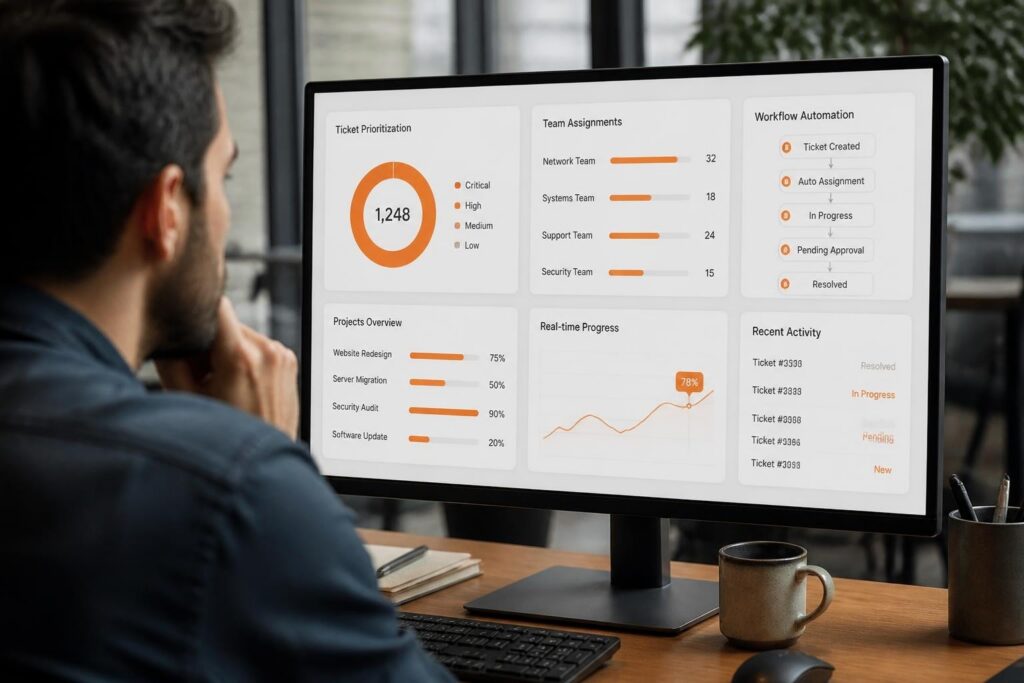
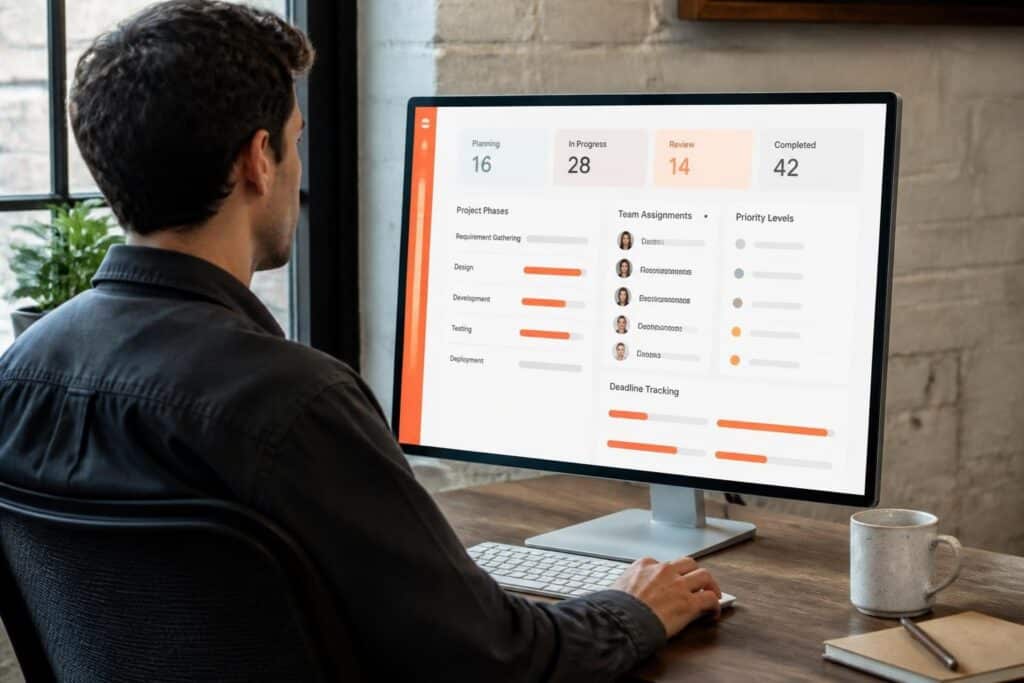
The presentation layer provides interfaces for different user types. Counter staff access full reservation and contract tools, customers see self-service portals with limited booking capabilities, technicians use mobile apps focused on service tasks, and managers view analytics dashboards.
This separation enables independent scaling of each layer. A seasonal rental surge increases database queries and transaction processing without requiring additional user interface capacity. The system adds computing resources dynamically to maintain performance during peak periods and reduces them during slow seasons, optimizing infrastructure costs.
Technical Requirements for Enterprise Deployments
Organizations managing 1,000+ rental units across multiple locations require:
- Multi-tenant architecture isolating data between business units or franchises while sharing core platform
- API-first design enabling integration with warehouse management systems, telematics providers, and financial platforms
- Role-based access control managing permissions for 50+ users across departments and locations
- Audit logging tracking all data modifications for compliance and error investigation
- Disaster recovery with automated backups and failover capabilities ensuring <1 hour recovery time
Research on rental housing platforms demonstrates how digital infrastructure transforms traditional industries by connecting isolated transactions into coordinated ecosystems.
What ROI Should Businesses Expect from Platform Investment?
Return on investment manifests through six measurable improvements appearing within the first 12 months.
Administrative labor reduction typically saves 15–25 hours per week in businesses managing 200+ rental units. Staff previously spending time checking spreadsheets, printing contracts, and reconciling invoices redirect effort toward customer service and sales activities. At an average administrative wage of $25/hour, this represents $19,500–$32,500 in annual savings.
Asset utilization improvement increases revenue per equipment unit by 8–15% through better availability visibility and demand matching. A platform revealing utilization patterns enables inventory rebalancing between locations, identifying retirement candidates, and informing new equipment purchases. A $2 million equipment fleet improving utilization by 10% generates $200,000 in additional annual revenue.
Service cost reduction prevents major failures through consistent maintenance compliance. Automated reminders ensure equipment receives scheduled service, extending lifespan and reducing catastrophic failures. An industrial rental company reduced annual repair costs by $85,000 after platform implementation eliminated missed maintenance intervals.
Payment acceleration shortens average collection periods by 8–12 days through automated invoicing and integrated payment processing. Faster cash conversion improves working capital and reduces financing costs.
Compliance risk mitigation prevents regulatory fines and liability exposure. Documented service histories, inspection certificates, and operator training records satisfy audit requirements that manual systems cannot reliably provide.
Customer satisfaction gains reduce churn and increase repeat business rates. Faster reservation processing, accurate availability information, and transparent service histories improve the rental experience, increasing customer lifetime value.
Real-World Implementation Case
A specialty equipment rental company operating three locations with 450 units across construction tools, aerial lifts, and power generation equipment implemented a digital rental platform in Q2 2025.
Before digitalization:
- Reservation processing averaged 22 minutes requiring phone calls between locations
- Service compliance rate measured 73% with frequent missed maintenance
- Equipment utilization averaged 61% with significant location imbalances
- Monthly accounting close required 4 days reconciling manual invoices and spreadsheets
After 6 months of platform operation:
- Reservation processing reduced to 4 minutes using real-time inventory visibility
- Service compliance improved to 96% through automated scheduling and mobile technician access
- Equipment utilization increased to 68% by rebalancing inventory based on location demand
- Monthly accounting close completed in 1.5 days using integrated financial data
The $45,000 platform investment (including implementation, training, and first-year subscription) generated $127,000 in measurable first-year benefits through labor savings, increased revenue, and reduced repair costs.
What Advanced Features Define Leading Platforms?
Next-generation digital rental platforms incorporate predictive analytics, IoT integration, and customer self-service capabilities.
Predictive maintenance analyzes equipment usage patterns, failure histories, and sensor data to forecast maintenance requirements before problems occur. A diesel generator platform monitoring fuel consumption, operating temperature, and vibration patterns can predict alternator bearing failure 72 hours in advance, scheduling proactive replacement instead of emergency breakdown repair.
IoT telemetry integration connects rental equipment to GPS tracking, usage monitoring, and condition sensing. The platform automatically imports operating hours, location coordinates, and performance metrics, eliminating manual readings and enabling usage-based billing. Construction equipment rental firms reduce theft losses by 60% through real-time location tracking integrated with digital platforms.
Customer portals enable self-service reservations, contract management, and payment processing. Customers view real-time availability, reserve equipment, sign contracts electronically, and process payments without staff intervention. This reduces counter workload during peak periods and accommodates after-hours reservations.
Dynamic pricing engines adjust rental rates based on demand patterns, seasonal factors, and competitive positioning. The platform automatically increases prices during high-demand periods and offers discounts during slow seasons, optimizing revenue per asset.
Mobile-first design prioritizes field workflows through native mobile applications. Technicians document service work, capture equipment condition photos, collect customer signatures, and update inventory status from job sites without returning to the office. Global technology trends shaping the rental market emphasize IoT integration and mobile accessibility as competitive differentiators.
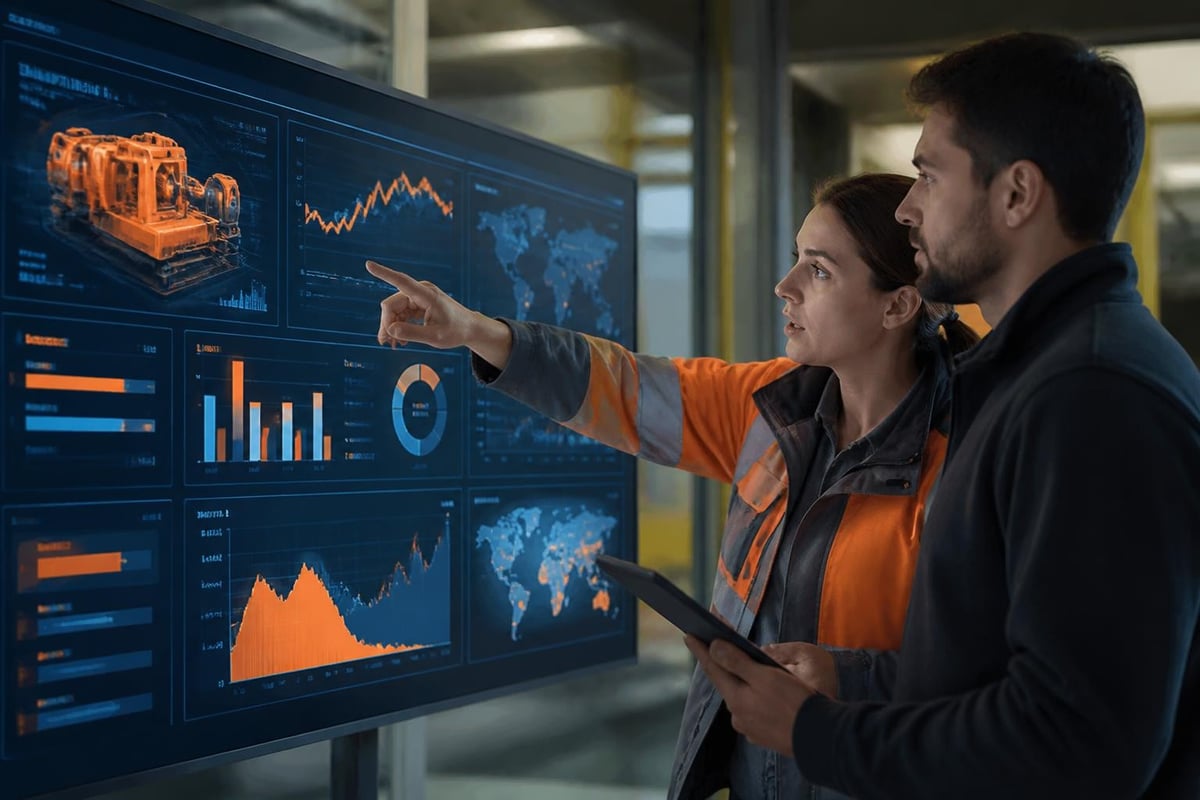
Multi-location inventory management coordinates equipment transfers between facilities based on demand forecasting. The platform identifies utilization imbalances and suggests inventory redistribution, automatically generating transfer orders and updating location records.
Platform Selection Criteria
Businesses evaluating digital rental platforms should prioritize:
- Serialized asset tracking with comprehensive service history and condition documentation
- Automated service scheduling supporting both time-based and usage-based intervals
- Mobile capabilities enabling field technicians to update data in real time
- Integration flexibility through documented APIs and pre-built connectors for common business systems
- Scalability architecture supporting growth without performance degradation or data migration
- Compliance features generating required documentation for regulated industries
- Analytics depth providing utilization, revenue, and operational performance insights
Platform vendors should demonstrate implementations in similar industries, provide customer references, and offer trial periods for workflow validation before full commitment.
Digital rental platforms transform operational efficiency by centralizing inventory tracking, automating service workflows, and integrating financial processes into unified systems that scale with business growth. Organizations implementing these platforms typically achieve ROI within 12 months through reduced administrative overhead, improved asset utilization, and enhanced service compliance. Whether you need serialized equipment tracking, automated maintenance scheduling, or integrated customer management, Brytend develops custom software solutions tailored to your rental business workflows and technical requirements. Contact Brytend today to discuss how custom platform development can optimize your rental operations.