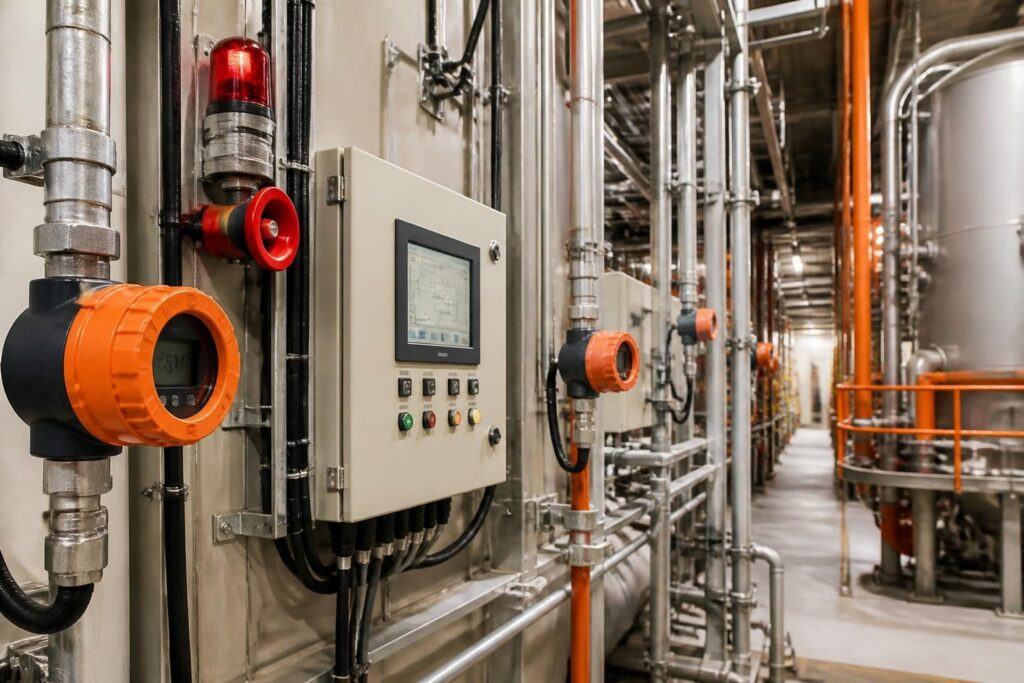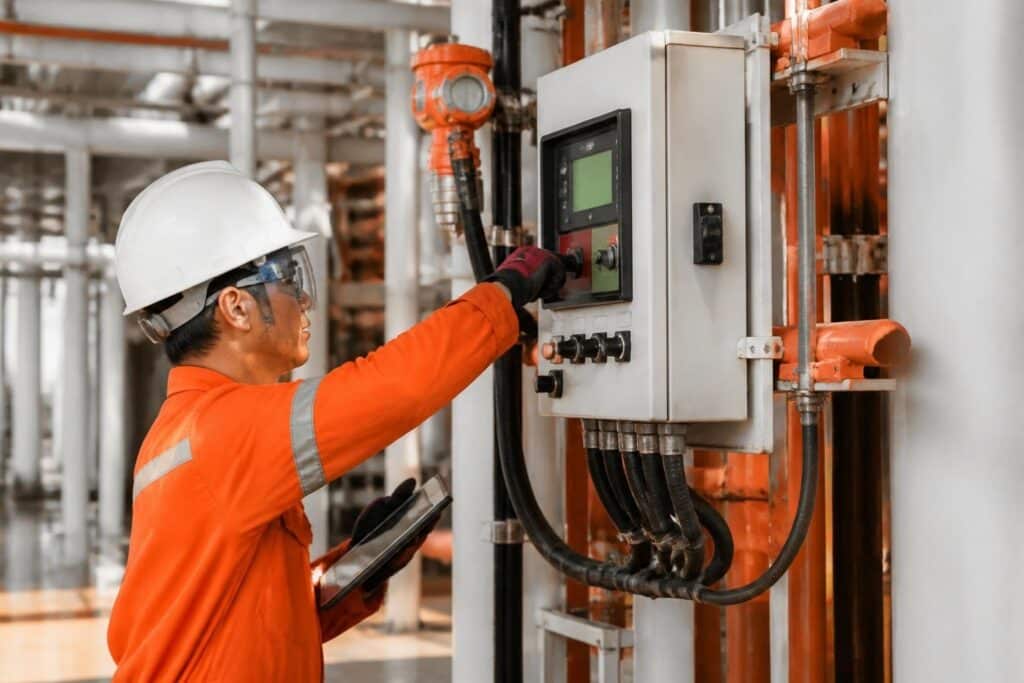
A fixed gas monitor is a stationary gas detection device permanently installed to continuously measure hazardous gas concentrations in industrial, commercial, or confined environments. Unlike portable detectors, fixed systems provide 24/7 monitoring at defined points, triggering alarms and automated responses when gas levels exceed preset thresholds.
TL;DR:
- A fixed gas monitor continuously detects combustible, toxic, or oxygen gas levels at a fixed location
- Installation requires analysis of gas density, leak sources, ventilation, and breathing zones
- Systems integrate with facility infrastructure for automated ventilation, shutdown, and alarm protocols
- Typical applications include oil and gas facilities, chemical plants, refineries, and manufacturing environments
- Regular calibration, sensor replacement, and maintenance ensure detection accuracy and compliance
What Is a Fixed Gas Monitor and How Does It Function
A fixed gas monitor detects and measures gas concentrations using electrochemical, catalytic bead, infrared, or photoionization sensors mounted at strategic points within a facility. The system consists of sensor modules, a central control panel, power supply, and alarm devices that work together to provide continuous environmental monitoring.
When hazardous gas reaches a sensor, the detection element generates an electrical signal proportional to gas concentration. The control panel processes this signal, compares it against programmed alarm thresholds (typically set at percentage of Lower Explosive Limit or parts per million), and activates visual and audible alarms. Many systems also trigger automated responses such as ventilation activation, equipment shutdown, or emergency notification.
Core Components of Fixed Gas Detection Systems
Every fixed gas monitor system includes specific components that enable continuous detection and response:
- Sensor heads: Detect specific gases using appropriate detection technology
- Controller or control panel: Processes signals, manages alarm thresholds, and displays readings
- Power supply: Provides uninterrupted operation, often with battery backup
- Alarm devices: Include horns, strobes, and digital displays for notification
- Relay outputs: Interface with facility systems for automated control actions
- Communication modules: Enable remote monitoring, data logging, and integration with SCADA systems
The choice between fixed and portable gas detectors depends on application requirements, monitoring duration, and the need for permanent coverage versus mobile inspection.
Where Should Fixed Gas Monitors Be Installed for Optimal Detection
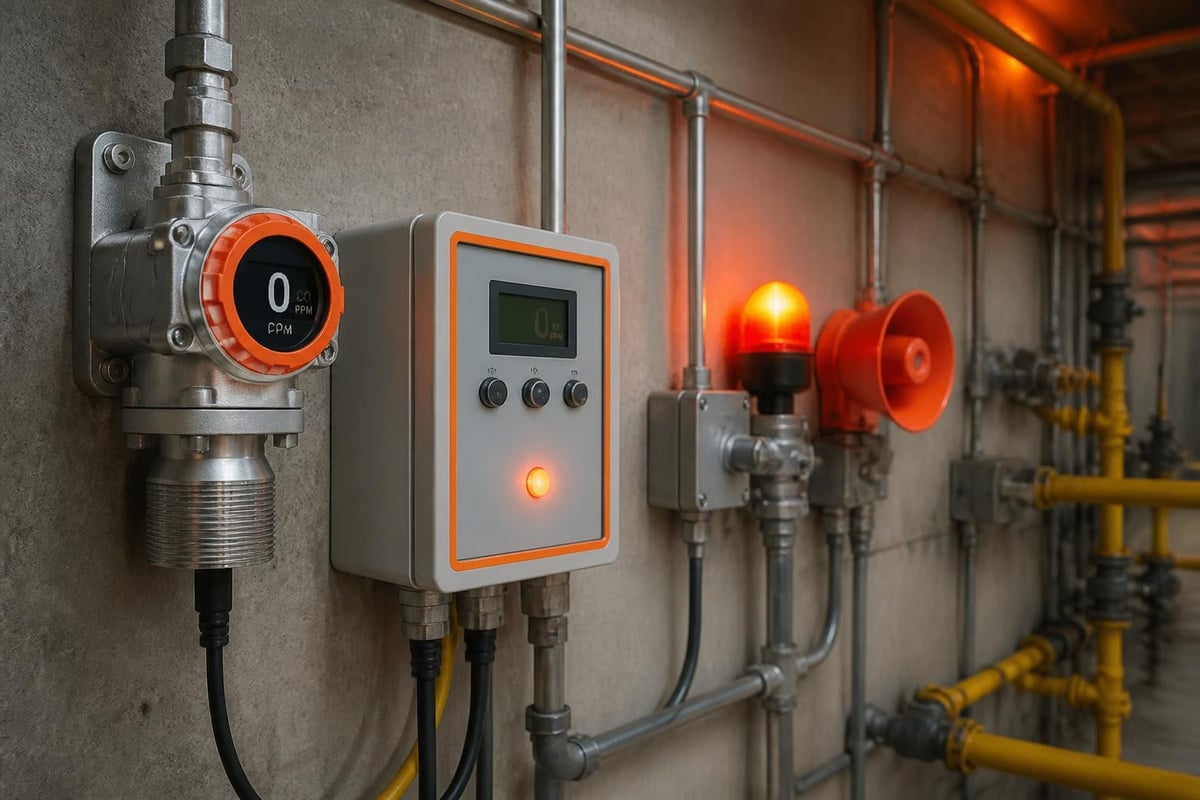
Sensor placement determines detection effectiveness. Install sensors based on gas density relative to air, potential leak sources, ventilation patterns, and worker exposure zones.
For gases lighter than air (methane, hydrogen), mount sensors near ceiling level, 12 to 18 inches below the highest point. For gases heavier than air (propane, hydrogen sulfide), position sensors 6 to 12 inches above floor level. For gases with density similar to air (carbon monoxide), install sensors at breathing zone height (4 to 6 feet).
Installation Location Criteria
Strategic sensor placement maximizes detection probability while minimizing false alarms:
| Gas Type | Mounting Height | Distance from Source | Additional Factors |
|---|---|---|---|
| Lighter than air | 12-18" below ceiling | Within 10-15 feet | Consider air currents |
| Heavier than air | 6-12" above floor | Within 10-15 feet | Check for low points |
| Similar density | Breathing zone (4-6 ft) | Near potential exposure | Monitor work areas |
| Refrigerants | Floor level | Equipment vicinity | Account for settling |
The optimal placement strategy accounts for potential leak points such as flanges, valves, pump seals, and pipe connections, as well as areas where gas may accumulate due to poor ventilation or physical barriers.
Position sensors upwind of predominant air flow when possible. Avoid locations with extreme temperatures, high humidity, or direct exposure to contaminants that may interfere with sensor function. Ensure mounting locations allow maintenance access for calibration and sensor replacement.
What Types of Fixed Gas Monitors Are Available for Different Applications
Fixed gas monitors are categorized by detection technology, with each type optimized for specific gas families and concentration ranges. Selection depends on target gases, environmental conditions, and required detection limits.
Catalytic bead sensors detect combustible gases through oxidation on a heated catalyst surface. These sensors measure concentrations from 0 to 100% Lower Explosive Limit (LEL) and work effectively for hydrocarbons, hydrogen, and other flammable vapors. Catalytic sensors require oxygen for operation and can be poisoned by silicones, sulfur compounds, or halogenated hydrocarbons.
Electrochemical sensors measure toxic gases such as hydrogen sulfide, carbon monoxide, nitrogen dioxide, and chlorine. These sensors generate current proportional to gas concentration and typically measure ranges from 0 to 100 parts per million (ppm) or higher. Electrochemical cells have finite lifespans (typically 2 to 3 years) and require periodic replacement.
Detection Technology Comparison
- Infrared sensors: Detect combustible gases without oxygen dependence; resistant to catalyst poisoning; higher initial cost
- Photoionization detectors (PID): Measure volatile organic compounds (VOCs) at ppb to ppm levels; broad spectrum detection
- Thermal conductivity: Detect high concentrations (percent by volume); used for inert gases and process monitoring
- Ultrasonic leak detection: Identify pressurized gas releases through acoustic signatures; non-chemical detection method
The stationary monitoring approach enables continuous coverage of critical areas, integration with facility alarm systems, and automated data logging for compliance documentation.
How Do You Configure Alarm Thresholds and Response Actions
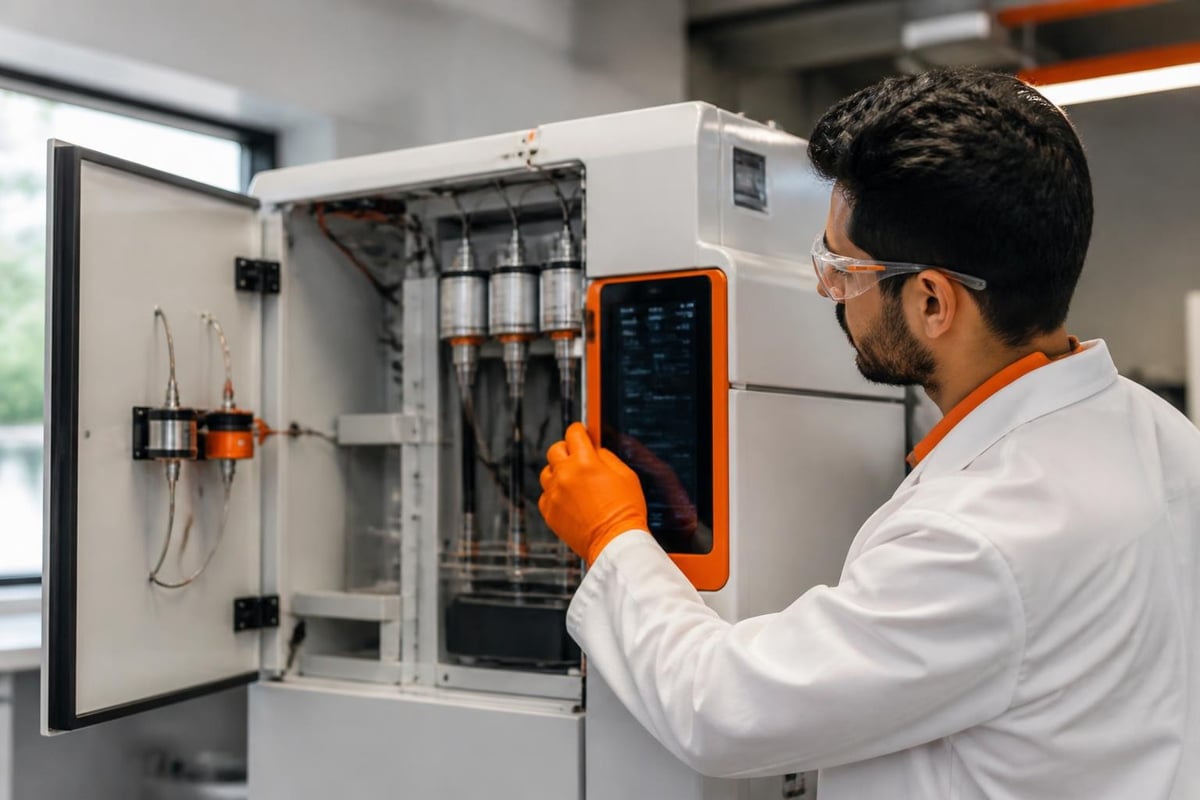
Alarm threshold configuration balances early warning against false alarm frequency. Most fixed gas monitor systems use two-stage or three-stage alarm structures with increasing urgency levels.
For combustible gases, typical threshold settings are:
- Low alarm: 10% to 25% LEL (early warning)
- High alarm: 50% LEL (immediate response required)
For toxic gases, thresholds align with exposure limits:
- Low alarm: Time-Weighted Average (TWA) or 50% of Short-Term Exposure Limit (STEL)
- High alarm: STEL or Immediately Dangerous to Life or Health (IDLH) values
Response Action Programming
Configure automated responses based on alarm level and operational requirements:
- Low alarm actions: Activate local visual/audible alarms, send notifications to control room, begin data logging
- High alarm actions: Trigger facility-wide alarms, activate ventilation systems, initiate equipment shutdown sequences
- Fault conditions: Alert maintenance personnel when sensors fail calibration, lose communication, or detect internal errors
Modern systems allow programming of time delays to prevent nuisance alarms from transient exposures while ensuring rapid response to sustained hazardous conditions. The system should log all alarm events, concentrations, and response actions for compliance review and incident investigation.
For organizations managing gas detection equipment across multiple sites, implementing service maintenance software helps track calibration schedules, document sensor performance, and ensure regulatory compliance through automated reminders and digital service records.
What Maintenance Requirements Ensure Fixed Gas Monitor Accuracy
Fixed gas monitor reliability requires scheduled maintenance, calibration verification, and component replacement. Neglecting maintenance leads to sensor drift, missed detections, and compliance violations.
Calibration frequency depends on sensor technology, manufacturer recommendations, and regulatory requirements. Most facilities calibrate monthly or quarterly using certified gas standards. Bump testing (brief gas exposure to verify alarm function) should occur before each use or weekly for continuously operating systems.
Maintenance Schedule Components
| Task | Frequency | Purpose |
|---|---|---|
| Bump test | Weekly or pre-use | Verify sensor response and alarm function |
| Full calibration | Monthly to quarterly | Adjust sensor output to known gas concentration |
| Sensor replacement | 2-3 years (electrochemical) | Maintain detection accuracy as sensors age |
| Filter replacement | Quarterly to annually | Prevent contaminant exposure to sensor |
| System functional test | Quarterly | Verify communications, relays, and integrations |
Common maintenance mistakes include using expired calibration gas, calibrating in improper environmental conditions (wrong temperature or humidity), failing to document calibration results, and continuing to use sensors beyond recommended replacement intervals.
Maintain detailed service records for each sensor location, including installation date, calibration history, alarm events, and component replacements. The Brytend Service Module provides a structured approach to managing serialized inventory, automating service reminders, and generating service certificates for each gas detection asset.

Why Is Integration with Facility Systems Critical for Safety
Fixed gas monitor systems must integrate with facility infrastructure to enable automated protective responses. Standalone alarms alert personnel but do not prevent escalation without integration.
Integration enables immediate automated actions when hazardous conditions occur. When a fixed gas monitor detects high concentrations, integrated systems can shut down ignition sources, activate ventilation equipment, close isolation valves, and initiate emergency procedures without requiring human intervention.
Communication protocols commonly used include 4-20mA analog signals, Modbus RTU/TCP, HART protocol, and proprietary digital buses. The control system receives real-time concentration data, alarm status, and fault conditions from each sensor point.
Integration Architecture Elements
Modern fixed gas detection systems connect to multiple facility systems:
- Building Management Systems (BMS): Coordinate HVAC responses and zone isolation
- Emergency Shutdown Systems (ESD): Trigger process shutdowns and safe state transitions
- SCADA platforms: Provide centralized monitoring across distributed operations
- Fire alarm panels: Coordinate detection and suppression systems
- Access control: Restrict entry to contaminated zones during alarm conditions
The integration of custom software solutions enables organizations to develop specialized workflows that connect gas detection data with maintenance systems, compliance reporting, and operational dashboards.
Remote monitoring capabilities allow safety personnel to observe gas levels across multiple facilities from central locations, receive instant notifications of alarm conditions, and analyze historical trends to identify recurring exposure risks or equipment problems.
How Do Fixed Gas Monitors Support Compliance and Documentation
Regulatory standards mandate fixed gas monitoring in facilities where flammable or toxic gases present exposure risks. Compliance requires proper system design, installation, maintenance, and documentation.
Key regulatory frameworks include OSHA regulations (29 CFR 1910.146 for permit-required confined spaces, 1910.119 for process safety management), NFPA standards (NFPA 820 for fire protection in wastewater facilities), and industry-specific codes such as API, ISA, and IEC standards.
Documentation requirements include system design basis, sensor location justification, calibration certificates, maintenance logs, alarm event records, and incident investigations. During inspections, regulators verify that installed systems match design specifications, calibration occurs at prescribed intervals, and alarm responses align with emergency procedures.
Compliance Documentation Checklist
- Design documentation: Gas hazard analysis, sensor placement rationale, alarm threshold justification
- Installation records: Sensor locations, wiring diagrams, integration points, commissioning test results
- Maintenance logs: Calibration dates, test gas lot numbers, technician identification, results
- Alarm history: Date, time, location, peak concentration, duration, response actions taken
- Training records: Personnel qualification for system operation, calibration procedures, emergency response
Organizations managing complex gas detection fleets benefit from asset tracking software that maintains complete lifecycle documentation for each sensor, automatically schedules compliance activities, and generates audit-ready reports demonstrating regulatory adherence.
What Are Common Challenges and Optimization Strategies
Fixed gas monitor performance challenges include sensor poisoning, environmental interference, coverage gaps, and maintenance burden across large facilities.
Sensor poisoning occurs when catalytic bead sensors encounter inhibiting substances (silicones, lead compounds, halogenated hydrocarbons) that permanently reduce sensitivity. Mitigation strategies include using poison-resistant sensors, installing protective filters, and implementing frequent verification testing in high-risk environments.
Environmental interference from temperature extremes, high humidity, or airborne particulates affects sensor accuracy and lifespan. Select sensor housings and technologies rated for environmental conditions at each installation point. In corrosive atmospheres, specify sensors with appropriate materials and coatings.
Manual vs. Automated Management
| Aspect | Manual Approach | Automated System |
|---|---|---|
| Calibration scheduling | Paper calendars, missed deadlines | Automated reminders, digital workflows |
| Record keeping | Filed calibration sheets, difficult retrieval | Searchable database, instant reporting |
| Multi-site coordination | Phone calls, spreadsheets | Centralized dashboard, real-time status |
| Compliance audits | Document gathering, manual compilation | One-click report generation |
| Sensor lifecycle tracking | Inconsistent replacement | Proactive replacement based on service hours |
Organizations operating distributed facilities face coordination challenges when managing hundreds of sensors across multiple locations. Implementing task management tools that integrate with gas detection asset data ensures calibration activities occur on schedule, technicians receive proper work instructions, and completed tasks update asset service histories automatically.
Optimization strategies for large-scale fixed gas detection include wireless sensor networks to reduce installation costs, predictive maintenance using sensor diagnostic data, and machine learning algorithms that distinguish true alarms from environmental nuisances.
For facilities with periodic equipment servicing requirements, quality control software for gas detection companies streamlines inspection workflows, captures service data digitally at point of work, and maintains comprehensive equipment histories that support warranty claims and performance analysis.
Case Example: Refinery Compressor Building Gas Detection
A petroleum refinery implemented fixed gas monitor coverage in a compressor building housing six natural gas compressors. The facility installed 12 catalytic bead sensors for combustible gas detection and 8 electrochemical sensors for hydrogen sulfide monitoring.
Sensor placement followed density-based mounting guidelines with combustible gas sensors mounted 18 inches below the 30-foot ceiling and H₂S sensors positioned at 5-foot breathing zone height. Additional sensors monitored potential leak points at compressor seals, valve manifolds, and pipe penetrations.
The system integrated with the facility's distributed control system (DCS) through Modbus TCP communication. At 25% LEL, the system activated increased ventilation. At 50% LEL, automated shutdown sequences stopped compressor operation and isolated gas supply valves.
Implementation included monthly calibration scheduling, quarterly sensor filter replacement, and 24-month electrochemical sensor replacement cycles. Over 18 months of operation, the system detected three significant leak events, triggering automated responses that prevented potential ignition scenarios and protected personnel from toxic gas exposure.
Best Practices for Fixed Gas Monitor Implementation
Successful fixed gas detection requires systematic planning, proper installation, and disciplined maintenance. Apply these practices to maximize system effectiveness.
Conduct thorough hazard analysis before sensor selection and placement. Identify all potential gas sources, model dispersion patterns under various ventilation scenarios, and account for process upsets that may release larger quantities than normal operation.
Select sensors appropriate for environmental conditions. Verify temperature range, humidity tolerance, pressure rating, and hazardous area classification match installation locations. Use explosion-proof housings in classified areas.
Design for maintainability by ensuring sensor access for calibration without requiring scaffolding or confined space entry. Position control panels in accessible locations with adequate lighting and workspace.
Implement structured calibration programs using certified gas standards with concentrations traceable to national standards. Rotate test gas cylinders before expiration dates and maintain calibration records that document as-found and as-left readings.
Train operators and maintenance personnel on system operation, alarm response procedures, calibration techniques, and troubleshooting methods. Ensure multiple qualified personnel can perform maintenance tasks to prevent dependency on single individuals.
Establish verification procedures for new installations and after maintenance activities. Perform functional tests of sensors, alarms, and automated responses before returning systems to service.
Monitor system health metrics including sensor response times, baseline drift trends, calibration adjustment magnitudes, and fault occurrence rates. Use this data to identify sensors requiring replacement before failure occurs.
For organizations developing comprehensive gas detection programs, partnering with experienced software development teams enables creation of custom management platforms that integrate detection hardware with maintenance workflows, compliance tracking, and operational dashboards tailored to specific organizational requirements.
Understanding where natural gas detectors should be mounted and the broader considerations for detector placement ensures installations achieve effective coverage while avoiding common placement errors that reduce detection reliability.
The comprehensive capabilities of fixed gas detection systems continue expanding with improved sensor technologies, wireless communication options, and advanced analytics that transform raw detection data into actionable safety intelligence.
Fixed gas monitor systems provide essential protection through continuous detection, automated responses, and comprehensive documentation that supports regulatory compliance. Organizations managing gas detection equipment across multiple facilities require structured systems for tracking service activities, maintaining calibration schedules, and documenting asset performance. Brytend develops custom software solutions that integrate with existing operations, automate maintenance workflows, and provide the visibility needed to manage complex safety-critical assets effectively across distributed operations.