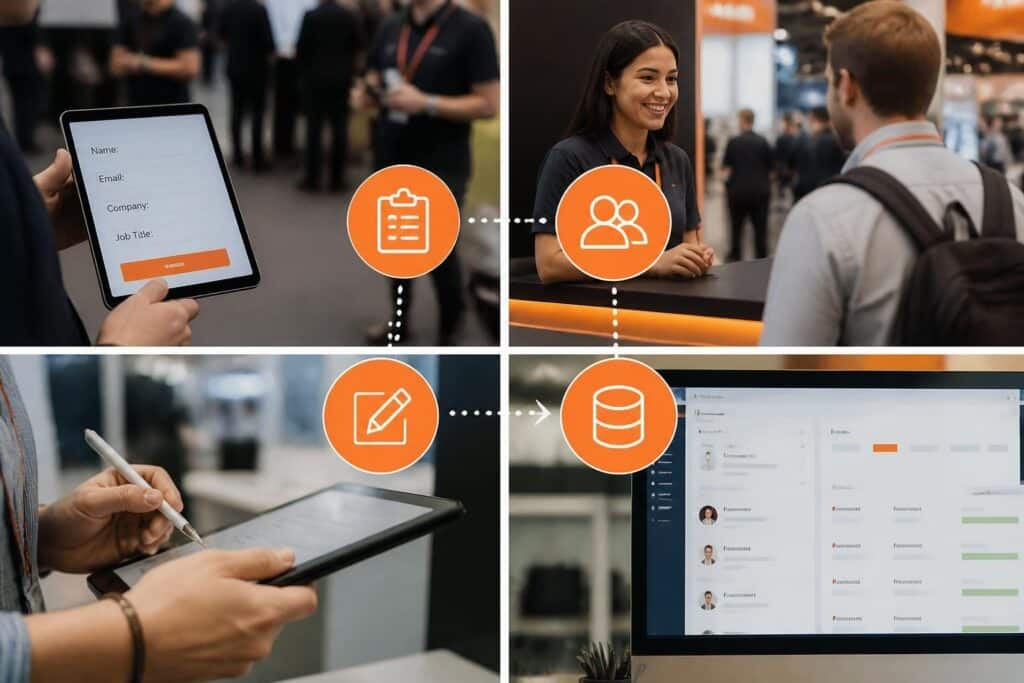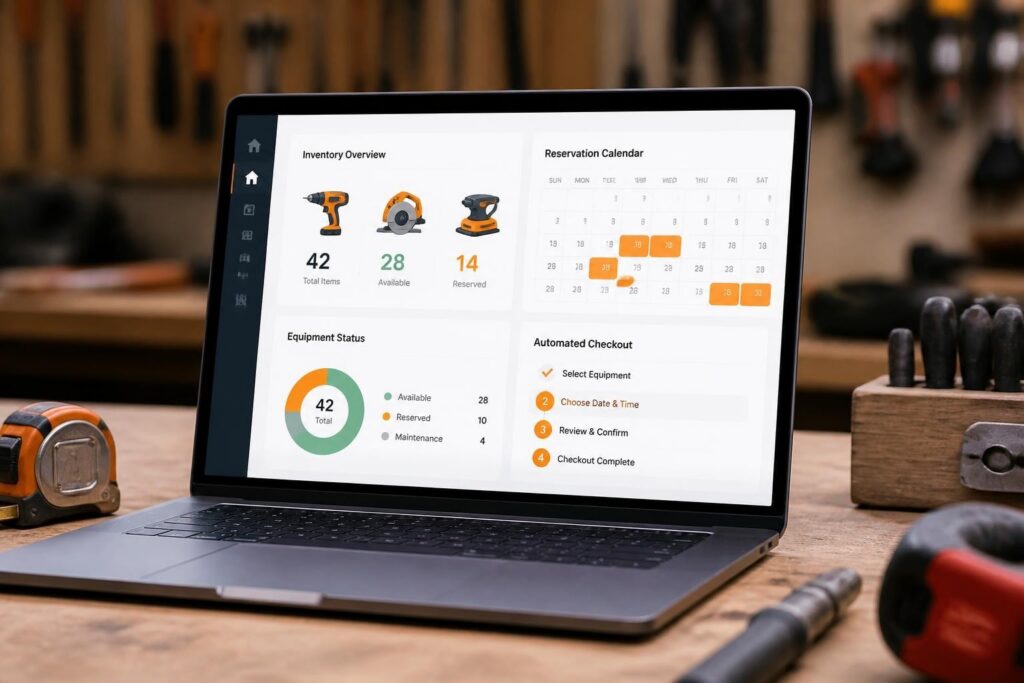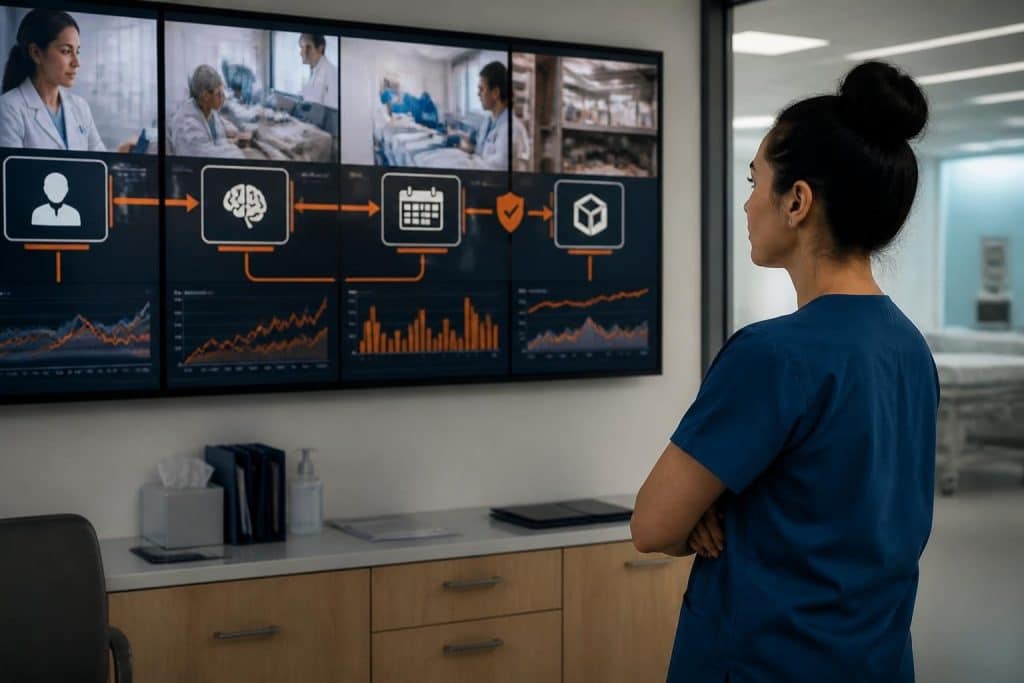
Customer maintenance is a systematic process of retaining, servicing, and nurturing existing client relationships through consistent communication, proactive support, and continuous value delivery. This framework extends beyond initial acquisition to build long-term partnerships that generate recurring revenue and reduce churn.
TL;DR:
- Customer maintenance encompasses retention strategies, support systems, account management, and relationship-building activities designed to preserve existing business relationships
- Effective customer maintenance reduces churn rates by 5-25% and increases customer lifetime value by up to 300% compared to acquisition-only strategies
- Core components include regular health checks, proactive communication, technical support infrastructure, feedback collection, and renewal management
- Modern customer maintenance requires integrated CRM systems, service tracking modules, automated workflows, and data-driven intervention protocols
- B2B software organizations achieve the highest ROI when customer maintenance activities are documented, measured, and continuously optimized
What Is Customer Maintenance and Why Does It Matter?
Customer maintenance is the ongoing process of managing, supporting, and strengthening relationships with existing clients to ensure continued satisfaction, prevent churn, and maximize lifetime value. This discipline encompasses technical support, account health monitoring, product updates, contract renewals, and strategic communication.
The business case for customer maintenance is straightforward. Acquiring new customers costs 5-25 times more than retaining existing ones, and increasing customer retention rates by just 5% can boost profits by 25-95%. For custom software development firms, where projects span months or years and client relationships determine referral pipelines, customer maintenance directly impacts revenue stability and growth potential.
Core Components of a Customer Maintenance System
A comprehensive customer maintenance framework includes multiple integrated functions:
- Account health monitoring: Regular assessments of usage patterns, support ticket frequency, payment history, and engagement metrics to identify at-risk accounts
- Proactive communication: Scheduled check-ins, product updates, release notes, and strategic planning sessions that maintain visibility and demonstrate ongoing value
- Technical support infrastructure: Help desk systems, knowledge bases, ticketing platforms, and escalation procedures that resolve issues efficiently
- Service delivery tracking: Documentation of all maintenance activities, bug fixes, feature requests, and customization work performed for each client
- Feedback collection and action: Structured processes for gathering client input through surveys, interviews, and usage analytics, then implementing improvements
- Renewal management: Systematic workflows for contract reviews, scope adjustments, pricing discussions, and renewal negotiations well before expiration dates
Organizations that track these components report 30-40% higher retention rates than those relying on reactive support alone.
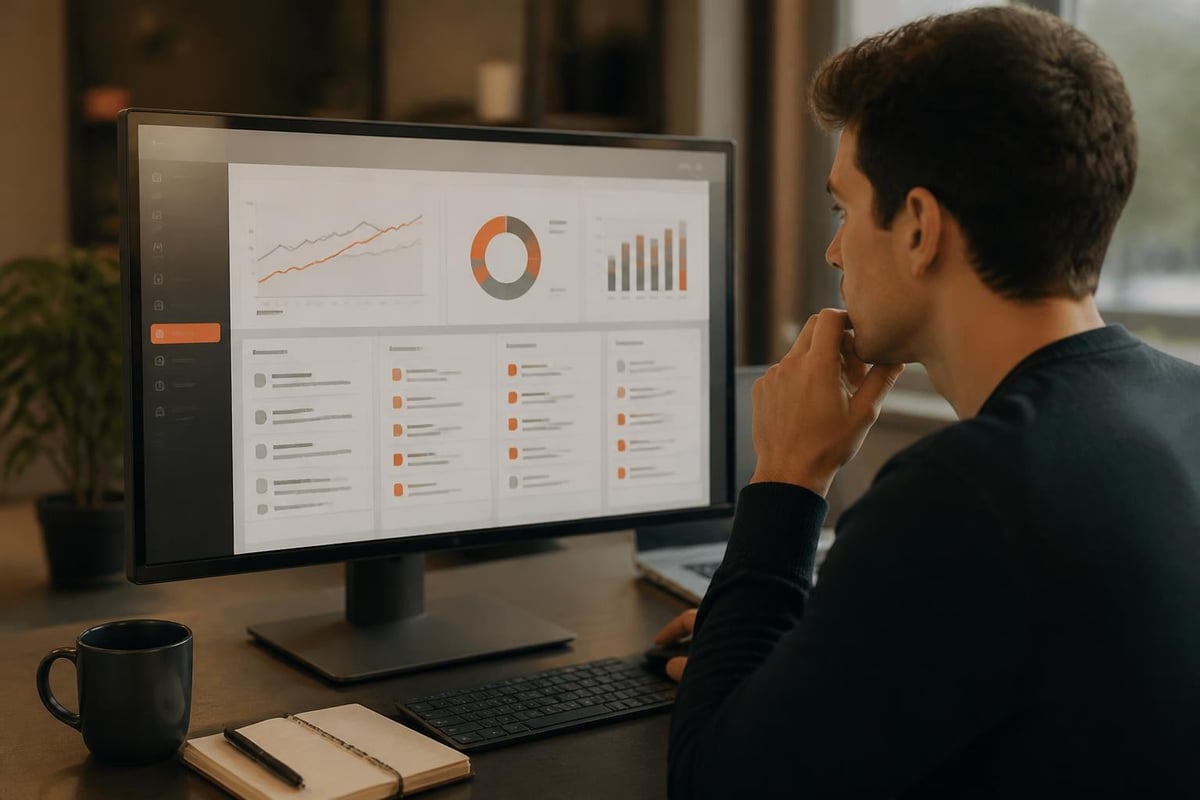
How Do You Build an Effective Customer Maintenance Process?
Building an effective customer maintenance process requires documented workflows, clear ownership, enabling technology, and measurable outcomes. The following framework establishes operational customer maintenance for B2B software clients.
Step 1: Segment Your Customer Base by Maintenance Needs
Different client profiles require different maintenance approaches. Segment customers by:
- Contract value: Enterprise clients ($100K+) require dedicated account managers and quarterly business reviews; mid-market clients ($25K-$100K) receive monthly check-ins; small accounts receive quarterly touchpoints
- Product complexity: Clients with custom integrations, multi-module deployments, or regulatory requirements need more frequent technical reviews than standard implementations
- Usage patterns: High-activity users may need optimization guidance; low-activity users may require re-engagement or training interventions
- Industry vertical: Healthcare, finance, and manufacturing clients often have specific compliance, security, or audit requirements that demand specialized maintenance protocols
This segmentation determines resource allocation, communication frequency, and service level agreements for each customer tier.
Step 2: Establish Regular Health Check Protocols
Customer health checks are scheduled assessments that identify problems before they escalate to cancellation. A typical B2B software health check includes:
- Usage analysis: Review login frequency, feature adoption rates, user counts, and activity trends over the past 30-90 days
- Support ticket review: Analyze ticket volume, severity, resolution time, and recurring issues to identify systemic problems
- Performance metrics: Evaluate system uptime, response times, error rates, and any performance degradations
- Stakeholder mapping: Confirm that key decision-makers remain engaged and that champion users are still active within the client organization
- Goal alignment: Verify that the software continues to address the client's original business objectives and document any evolving needs
Document findings in a standardized health score (0-100) that triggers specific intervention workflows when scores drop below defined thresholds.
Step 3: Implement Proactive Communication Cadences
Reactive support is insufficient for customer maintenance. Establish recurring touchpoints:
| Customer Tier | Frequency | Format | Participants | Agenda |
|---|---|---|---|---|
| Enterprise | Monthly | Video call + written summary | Account manager, technical lead, client stakeholders | Strategic review, roadmap alignment, issue resolution |
| Mid-Market | Quarterly | Video call or detailed email | Account manager, client primary contact | Usage review, feature updates, feedback collection |
| Small | Bi-annual | Email + optional call | Support team, client admin | Check-in, renewal reminder, resource sharing |
Between scheduled touchpoints, maintain visibility through:
- Release notes and product update emails within 48 hours of deployment
- Monthly newsletters highlighting new features, best practices, and client success stories
- Immediate notification of any service interruptions, security updates, or urgent maintenance windows
Consistency in communication prevents clients from feeling neglected between major project phases.
Step 4: Deploy Service Tracking and Documentation Systems
Every customer maintenance activity must be documented in a centralized system. For software development firms, this includes:
- All bug reports, feature requests, and enhancement suggestions with status tracking
- Customization work, integration updates, and configuration changes with timestamps and responsible developers
- Training sessions, knowledge transfer meetings, and documentation updates
- Infrastructure maintenance, security patches, and performance optimization activities
- Contract amendments, scope changes, and service level agreement modifications
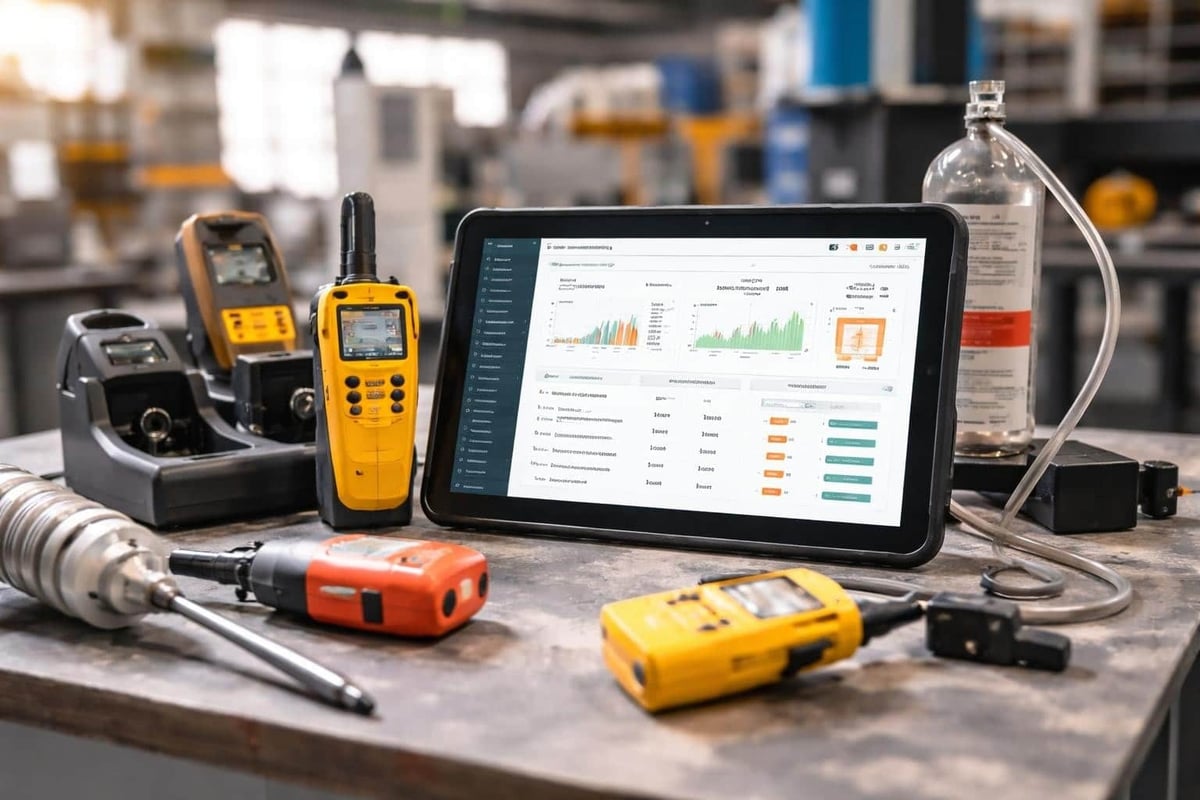
Brytend's specialized service delivery management approach ensures that all client-facing work is tracked with complete audit trails, making it possible to demonstrate value delivered and justify renewal pricing. A robust service tracking module connects each activity to specific client accounts, contracts, and business objectives, creating transparency that builds trust and reduces churn.

Step 5: Create Feedback Loops and Continuous Improvement Cycles
Customer maintenance is not static. Implement systematic feedback collection:
- Post-project surveys: After major deployments, upgrades, or customization work, collect structured feedback on satisfaction, communication quality, and technical outcomes
- Quarterly satisfaction assessments: Use standardized metrics (Net Promoter Score, Customer Satisfaction Score, Customer Effort Score) to track relationship health over time
- Annual strategic interviews: Conduct in-depth conversations with key stakeholders to understand evolving business challenges and software requirements
- Usage analytics: Monitor feature adoption, workflow patterns, and performance metrics to identify optimization opportunities or underutilized capabilities
Convert feedback into action items with defined owners and deadlines. Effective customer retention strategies emphasize closing the loop by demonstrating how client input influences product roadmaps and service improvements.
What Metrics Should You Track for Customer Maintenance?
Customer maintenance requires quantifiable metrics that predict retention and identify intervention opportunities. Track these essential KPIs:
Retention and Churn Metrics
- Customer retention rate: Percentage of customers retained over a specific period (monthly, quarterly, annually)
- Churn rate: Percentage of customers lost in a given timeframe, segmented by reason (price, product fit, service quality, competition)
- Revenue retention: Net revenue retained from existing customers, accounting for upsells, downgrades, and cancellations
- Time to churn: Average duration from first warning sign (reduced usage, support escalation) to actual cancellation
For custom software development, annual churn rates below 10% indicate strong customer maintenance programs.
Engagement and Health Metrics
- Product adoption rate: Percentage of contracted features or modules actively used by client teams
- Login frequency: Average user logins per week or month as a leading indicator of value realization
- Support ticket trends: Ticket volume, severity distribution, and resolution time trends that signal account health deterioration
- Customer health score: Composite score combining usage, support, payment, and engagement data (typically 0-100 scale)
Relationship Quality Metrics
These metrics measure the strength of customer relationships beyond product usage:
- Net Promoter Score (NPS): Client willingness to recommend your services, collected quarterly or bi-annually
- Customer Satisfaction Score (CSAT): Satisfaction with specific interactions, projects, or support experiences
- Response time: Average time to first response for support requests, with targets varying by severity
- Renewal rate: Percentage of contracts renewed at expiration, ideally measured 90 days before renewal date
- Expansion revenue: Additional revenue generated from existing customers through scope increases, additional modules, or new projects
According to research on customer retention measurement, organizations that track at least five retention metrics show 50% higher renewal rates than those tracking two or fewer.
What Are Common Customer Maintenance Challenges in Software Development?
Software development firms face specific customer maintenance challenges that differ from product companies or service providers. Understanding these obstacles enables proactive solutions.
Challenge 1: Documentation Gaps and Knowledge Transfer
Custom software projects generate substantial technical knowledge-architecture decisions, integration logic, customization rationale, and workaround solutions. When this knowledge remains undocumented or siloed with individual developers, customer maintenance becomes inefficient and error-prone.
Solution: Implement mandatory documentation standards for all custom work. Every feature, integration, and configuration change requires technical documentation, business justification, and maintenance notes stored in the client's account record. Schedule knowledge transfer sessions between delivery teams and maintenance teams before project handoffs.
Challenge 2: Scope Creep in Support Relationships
The line between standard maintenance (bug fixes, minor updates) and billable enhancement work often blurs. Clients may request "small changes" that accumulate into significant unbilled development work, while teams struggle to enforce scope boundaries without damaging relationships.
Solution: Define clear service level agreements that specify what qualifies as maintenance versus enhancement. Establish a change request process with effort estimation and approval workflows. Use a customer management platform to track all requests and their classifications, creating transparency around scope boundaries and billable work.
Challenge 3: Distributed Stakeholder Management
Software projects often involve multiple client stakeholders-IT teams, business users, executives, and external consultants. Maintenance suffers when key decision-makers leave, priorities shift, or new stakeholders lack context on the original implementation.
Solution: Maintain a stakeholder map for each client account that documents roles, responsibilities, decision authority, and contact information. Update this map quarterly. Schedule periodic executive briefings separate from technical maintenance discussions to ensure leadership remains engaged and aligned.
Challenge 4: Technical Debt Accumulation
Custom software requires ongoing refactoring, security updates, and infrastructure modernization to remain viable. Clients often resist maintenance investments until critical failures occur, at which point emergency interventions damage trust and profitability.
Solution: Conduct annual technical health assessments that document security vulnerabilities, deprecated dependencies, performance bottlenecks, and scalability limitations. Present findings as risk reports with prioritized remediation roadmaps. Bundle preventive maintenance into annual contracts rather than positioning it as optional add-on work.
Challenge 5: Measuring and Demonstrating Value
Unlike product software with clear usage analytics, custom solutions' value often manifests indirectly through process efficiency, compliance, or strategic capabilities. Clients may undervalue maintenance when results aren't visible or quantified.
Solution: Establish baseline metrics before implementation and track improvements quarterly. Document all maintenance activities with business impact descriptions. Create quarterly value reports showing uptime maintained, issues prevented, performance improvements, and feature enhancements delivered.
How Do Automated Systems Improve Customer Maintenance?
Manual customer maintenance processes scale poorly and introduce inconsistencies that damage retention. Automated systems enable proactive, data-driven maintenance at scale.
Comparison: Manual vs. Automated Customer Maintenance
| Dimension | Manual Approach | Automated Approach |
|---|---|---|
| Health monitoring | Ad-hoc reviews when problems surface | Continuous monitoring with automated alerts for threshold breaches |
| Communication | Sporadic outreach dependent on individual initiative | Scheduled touchpoints triggered by calendar, events, or data conditions |
| Service tracking | Spreadsheets or scattered documentation | Centralized service module with complete activity history and audit trails |
| Renewal management | Last-minute scrambles 2-4 weeks before expiration | Automated workflows beginning 90-120 days before renewal with staged tasks |
| Resource allocation | Reactive assignment based on immediate needs | Proactive workload balancing based on customer tier and health scores |
| Value reporting | Manual compilation of disparate data sources | Automated reporting dashboards with real-time metrics |
Automation doesn't eliminate human judgment-it enhances it by surfacing insights and enabling timely interventions.
Key Automation Capabilities for Software Firms
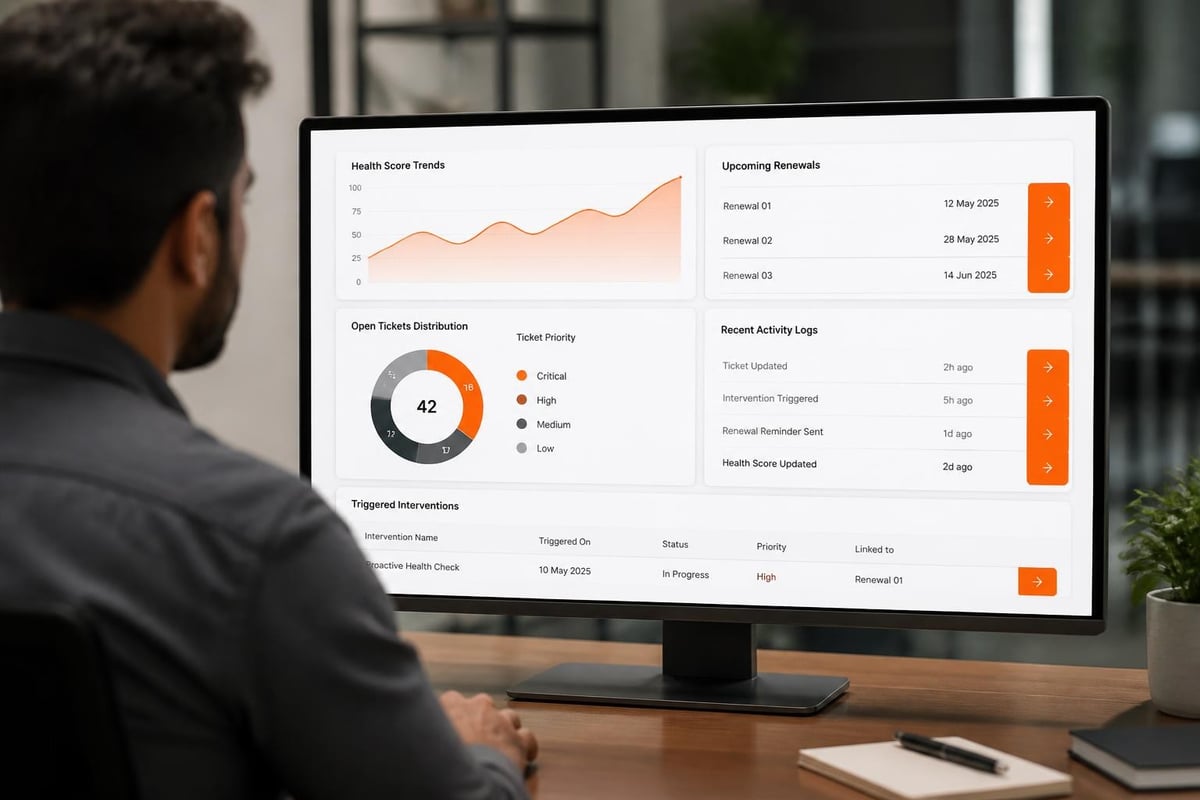
Usage monitoring and anomaly detection: Automated systems track login patterns, feature usage, and performance metrics, flagging deviations from established baselines. When a client's active user count drops 30% over two weeks, the system alerts account managers to investigate potential issues before they escalate.
Ticket trend analysis: Customer relationship management platforms analyze support ticket patterns to identify recurring problems, estimate risk scores, and trigger escalation workflows when ticket velocity or severity exceeds thresholds.
Renewal workflows: Automated renewal management initiates structured processes 90-120 days before contract expiration, assigning specific tasks (usage review, satisfaction survey, ROI calculation, pricing proposal) to responsible team members with deadline tracking.
Personalized communication: Systems segment customers by tier, industry, and product configuration, then deliver targeted communications-security bulletins to healthcare clients, feature announcements for specific modules, best practice guides for high-value accounts.
Service documentation automation: Modern service tracking modules auto-generate service histories, maintenance logs, and activity reports from ticketing systems, version control commits, and project management tools, eliminating manual compilation.
What Best Practices Drive Customer Maintenance Success?
Leading software development organizations implement specific practices that consistently deliver superior retention outcomes.
Practice 1: Assign Dedicated Maintenance Ownership
Customer maintenance fails when responsibility is diffuse. Assign named account owners for every active client, with clear accountability for health scores, renewal rates, and satisfaction metrics. For enterprise accounts, dedicate full-time account managers. For mid-market clients, assign account owners managing 15-25 accounts. Small clients can be grouped under maintenance coordinators responsible for 50-100 accounts.
Practice 2: Conduct Quarterly Business Reviews
Quarterly business reviews (QBRs) provide structured opportunities to demonstrate value, align on priorities, and identify expansion opportunities. Effective QBRs include:
- Usage analytics showing adoption trends and feature utilization
- Service delivery summary documenting all maintenance, support, and enhancement work completed
- Performance metrics demonstrating system reliability, uptime, and responsiveness
- Roadmap review highlighting planned features and client-requested enhancements
- Strategic discussion addressing evolving business needs and potential new requirements
Prepare QBR materials 7-10 days in advance. Share pre-read documents before meetings to maximize discussion time rather than presentation time.
Practice 3: Build Redundant Relationship Depth
Single-threaded customer relationships create vulnerability. If your sole contact leaves the client organization, you may lose critical context, advocacy, and renewal influence. Build relationships across multiple levels:
- Executive sponsor: C-level or VP who approved the original investment and tracks strategic value
- Business owner: Director or manager responsible for the business function the software supports
- Power users: Daily users who understand technical capabilities and drive adoption within their teams
- Technical contact: IT or operations staff responsible for infrastructure, integrations, and technical coordination
Document relationship strength with each contact. Invest in cultivating at least three strong relationships per enterprise account.
Practice 4: Implement Proactive Problem Resolution
The most effective customer maintenance prevents problems rather than reacting to them. Establish proactive monitoring for:
- Security vulnerabilities in third-party dependencies with automated patching schedules
- Performance degradation trends that indicate capacity planning needs before users experience slowdowns
- Integration failures between your software and client systems, detected through automated health checks
- Approaching resource limits (storage, API quotas, user seats) with expansion recommendations before constraints impact operations
- Upcoming compliance deadline changes affecting regulated industries like healthcare or finance
A case example: A gas detection equipment software provider implemented automated service reminder workflows that notify clients 30, 14, and 7 days before calibration deadlines. This proactive approach reduced overdue service events by 62% and increased renewal rates by 18% by demonstrating ongoing value and preventing compliance issues.
Practice 5: Create Customer Advisory Groups
Establish formal advisory groups comprising 8-15 representative clients who provide strategic input on product direction, pricing models, and service delivery. Advisory groups serve multiple customer maintenance functions:
- Early feedback on planned features and potential market fit issues
- Peer networking that increases switching costs and relationship stickiness
- Public recognition that strengthens engagement with participating client stakeholders
- Market intelligence about competitive offerings and client expectations
Hold advisory meetings quarterly (video or in-person), and provide participants with exclusive early access to new capabilities or preferential pricing considerations.
Practice 6: Document and Share Customer Wins
Systematically capture and share success stories, performance improvements, and business outcomes achieved through your software. When a client realizes measurable benefits-process time reduction, cost savings, compliance achievement, revenue growth-document the specifics with permission to share anonymously or publicly.
Use these success stories in:
- Renewal conversations to reinforce value delivered
- Marketing materials and case studies to demonstrate expertise
- Internal training to educate teams on real-world applications
- Product development prioritization to focus on high-impact capabilities
Success documentation also provides templates for helping other clients achieve similar outcomes, multiplying the value of individual client achievements.
How Do You Optimize Customer Maintenance for Different Client Segments?
Customer maintenance strategies must adapt to segment-specific needs, communication preferences, and value expectations. Generic approaches underserve high-value clients and over-invest in low-margin relationships.
Enterprise Client Maintenance (Annual Contract Value $100K+)
Enterprise clients require dedicated resources, strategic engagement, and comprehensive service delivery. Optimal maintenance includes:
- Named account executive and technical account manager with weekly internal coordination
- Monthly touchpoints alternating between strategic business reviews and technical check-ins
- Quarterly executive briefings with C-level stakeholders focusing on ROI and strategic alignment
- Dedicated Slack or Teams channels for immediate communication and collaboration
- Proactive capacity planning, security reviews, and performance optimization
- Annual technical roadmap sessions to align product evolution with client's 3-5 year technology strategy
Revenue retention targets for this segment should exceed 100% through expansion, upsells, and scope increases.
Mid-Market Client Maintenance (Annual Contract Value $25K-$100K)
Mid-market clients need consistent attention but can't justify dedicated full-time resources. Effective maintenance balances personalization with efficiency:
- Assigned account manager responsible for 15-25 mid-market accounts
- Quarterly business reviews conducted via video call (30-45 minutes)
- Monthly email updates with usage highlights, recent enhancements, and upcoming features
- Shared support channels with 4-hour first-response SLA for priority issues
- Semi-annual health check assessments with documented action plans for at-risk accounts
- Access to self-service knowledge bases, training materials, and community forums
Target net revenue retention of 95-105% for this segment.
Small Client Maintenance (Annual Contract Value Under $25K)
Small clients require scalable, automated maintenance supplemented with periodic human touchpoints:
- Pooled maintenance coordinator managing 50-100 small accounts
- Bi-annual check-in emails with usage summaries and renewal reminders
- Automated onboarding sequences, training email series, and feature announcement campaigns
- Shared support ticketing with 24-hour first-response SLA
- Self-service resources including documentation, video tutorials, and FAQs
- Annual satisfaction surveys with follow-up calls for detractors or at-risk accounts
Accept higher churn rates (15-25%) in this segment while maintaining acquisition cost discipline.
Industry-Specific Considerations
Certain industries impose unique customer maintenance requirements:
Healthcare: HIPAA compliance audits, security documentation, patient data handling procedures, and regulatory change notifications require specialized maintenance protocols and documentation standards. Healthcare solutions demand continuous compliance monitoring.
Manufacturing: Equipment integration dependencies, production schedule coordination, and uptime requirements necessitate proactive maintenance windows, detailed change management, and emergency response protocols.
Financial Services: SOC 2 compliance, penetration testing, incident response procedures, and audit trail documentation create additional maintenance overhead requiring specialized security expertise.
Segment maintenance strategies by industry vertical when these specialized requirements represent 20%+ of maintenance effort.
Customer maintenance transforms one-time transactions into durable partnerships that drive recurring revenue, reduce acquisition costs, and create competitive moats. Systematic approaches combining health monitoring, proactive communication, service documentation, and continuous improvement consistently outperform reactive support models. Brytend builds custom software solutions with integrated customer maintenance systems, enabling development teams to track service delivery, automate relationship workflows, and maximize client lifetime value through structured, measurable retention programs.