TLDR
- A software company is an organization that designs, develops, distributes, and maintains software products or services for commercial or enterprise use
- Software companies operate through structured development lifecycles, cross-functional teams, and continuous integration practices to deliver reliable solutions
- Revenue models include licensing, SaaS subscriptions, custom development contracts, and support services
- Success depends on technical expertise, market understanding, quality assurance processes, and customer relationship management
- Modern software companies must balance innovation speed with security, compliance, and maintainability requirements
A software company is a business entity that creates, markets, and supports software applications, platforms, or services as its primary commercial activity. The software industry encompasses organizations ranging from independent vendors delivering packaged applications to custom development firms building tailored solutions for specific client needs. According to the SaaS & Software Industry Report 2026, over 464,000 software companies now operate globally, representing diverse business models, technology stacks, and market segments.
What Does a Software Company Actually Do
A software company turns business requirements and user needs into working software through a structured development process. The core activities include requirements analysis, software design, coding, testing, deployment, and ongoing maintenance. These organizations employ software engineers, product managers, quality assurance specialists, and support teams to deliver complete solutions.
There is much more to it than writing code. Software companies conduct market research, manage intellectual property, handle customer onboarding, provide technical support, and continuously update products to address security vulnerabilities and changing requirements. SoftwareIQ provides comprehensive analytics showing how leading software companies allocate resources across these functions to maintain competitive advantages.
Primary Business Activities
Software companies engage in distinct operational categories that define their market positioning:
- Product development: Creating packaged applications for broad market distribution
- Custom software development: Building tailored solutions for specific client requirements and workflows
- Platform services: Providing infrastructure, frameworks, or development tools for other software builders
- Integration services: Connecting disparate systems and enabling data flow across enterprise environments
- Maintenance and support: Ensuring software reliability, performance optimization, and user assistance
The distribution of effort varies significantly based on business model. Product companies invest heavily in feature development and user experience design, while custom development firms prioritize client communication and solution architecture.

How Software Companies Structure Development Workflows
Software companies use structured methods to keep complexity under control and deliver on time. The Software Development Life Cycle (SDLC) provides the framework for moving from concept to production deployment.
Best practices for the SDLC emphasize clear requirements documentation, iterative development cycles, automated testing, and continuous feedback loops. Modern software companies typically follow agile or DevOps approaches rather than traditional waterfall methods.
Development Process Steps
- Requirements gathering: Document functional specifications, technical constraints, performance targets, and acceptance criteria through stakeholder interviews and market analysis
- Architecture design: Define system components, data models, API contracts, security frameworks, and infrastructure requirements
- Implementation: Write code following established standards, conduct peer reviews, and commit changes to version control systems
- Quality assurance: Execute automated tests, perform manual validation, conduct security scanning, and verify compliance requirements
- Deployment: Package applications, configure environments, execute release procedures, and monitor initial performance
- Maintenance: Address defects, optimize performance, apply security patches, and implement feature enhancements based on user feedback
The timeline for these phases varies dramatically. A custom inventory management system might require three months from requirements to deployment, while a mobile application update could move through the cycle in two weeks.
Technical Practices That Define Quality
| Practice | Purpose | Implementation Example |
|---|---|---|
| Code review | Ensure consistency, catch defects, share knowledge | Pull request approval requiring two engineer sign-offs |
| Automated testing | Validate functionality without manual intervention | Unit tests covering 80%+ of business logic |
| Continuous integration | Detect integration failures early | Automated builds triggered on every code commit |
| Version control | Track changes, enable collaboration, support rollback | Git-based workflow with feature branches |
| Documentation | Enable knowledge transfer and future maintenance | API specifications, architecture diagrams, deployment guides |
Atlassian’s DevOps best practices highlight how leading software companies integrate these technical practices into daily workflows, reducing deployment failures by 60% and accelerating feature delivery.
What Technologies Do Software Companies Specialize In
Software companies set themselves apart through the technologies they know best, chosen to match what their market and customers need. Technology selection impacts development speed, scalability potential, integration capabilities, and long-term maintenance costs.
Common specialization areas include web application frameworks (React, Angular, Vue.js), mobile platforms (iOS, Android, cross-platform tools), cloud infrastructure (AWS, Azure, Google Cloud), database systems (SQL, NoSQL, graph databases), and emerging technologies like artificial intelligence and machine learning.
Technology Stack Components
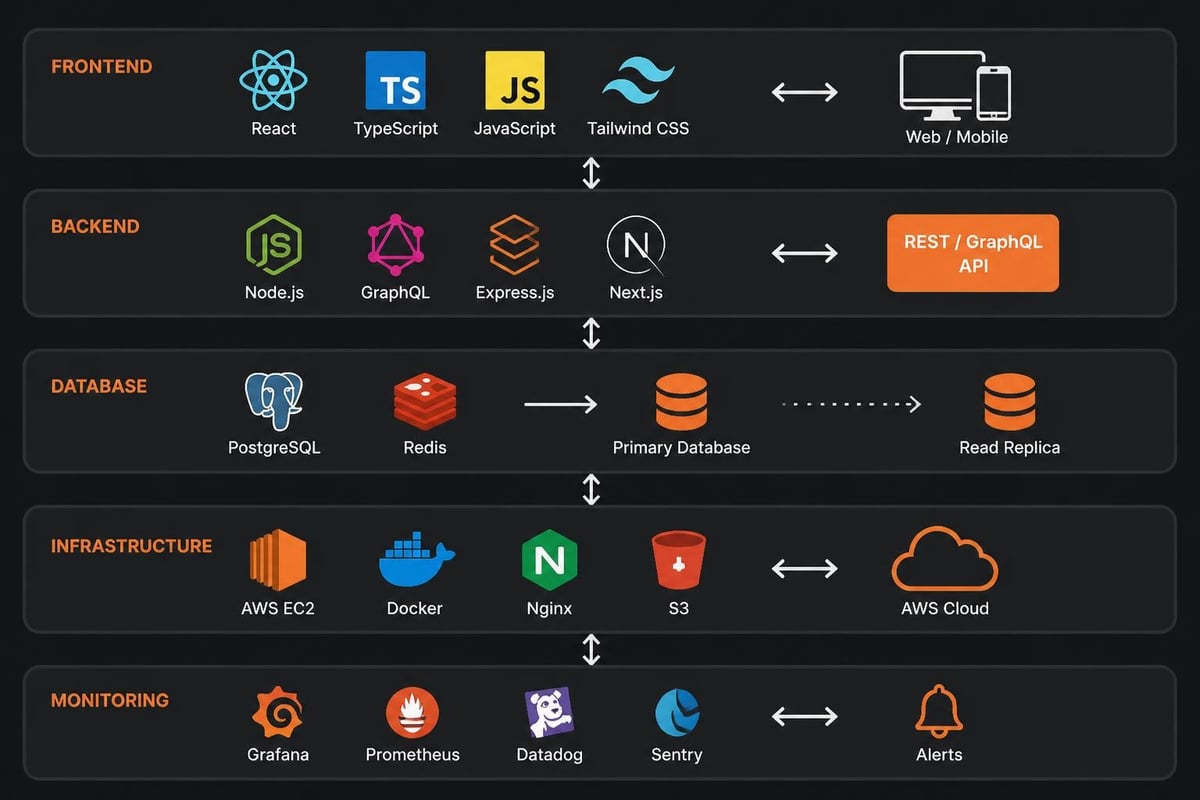
The technology stack defines the layers of tools and frameworks a software company uses:
- Frontend frameworks: User interface libraries controlling visual presentation and interaction patterns
- Backend languages: Server-side code managing business logic, data processing, and system integration
- Database systems: Structured storage for application data with query, transaction, and scaling capabilities
- Cloud platforms: Infrastructure services providing computing, storage, networking, and managed services
- Development tools: IDEs, testing frameworks, CI/CD pipelines, and monitoring solutions
A manufacturing software company might specialize in industrial IoT sensors integrated with cloud analytics platforms, while a financial services software company focuses on high-frequency transaction processing with regulatory compliance frameworks.
How Do Software Companies Acquire and Retain Customers
Customer acquisition strategies vary significantly between product and service-oriented software companies. Product companies invest in marketing campaigns, freemium models, and partner channels to reach broad audiences. Custom development firms rely on professional networks, case studies, and industry-specific expertise demonstrations.
The sales cycle length correlates directly with solution complexity and contract value. Simple SaaS tools might convert customers in days through self-service trials, while enterprise custom development projects require months of discovery, proposal development, and contract negotiation.
Customer Relationship Management Practices
Good software companies handle customer contact in a structured way:
- Initial contact: Capture lead information through web forms, event registrations, or referral introductions
- Qualification: Assess project fit based on technical requirements, budget alignment, and timeline expectations
- Discovery: Conduct detailed needs analysis through workshops, system audits, and stakeholder interviews
- Proposal: Document solution approach, technology recommendations, timeline estimates, and pricing structure
- Onboarding: Execute project kickoff, establish communication protocols, and configure development environments
- Delivery: Implement solution through iterative releases with regular client demonstrations and feedback incorporation
- Support: Provide issue resolution, feature enhancements, and system optimization as ongoing services
Many custom software companies use specialized CRM systems to manage these workflows. Brytend CRM offers software development firms AI-driven lead qualification and custom questionnaires that align with technical discovery processes, enabling teams to capture detailed requirements systematically before project initiation.

Retention Through Value Delivery
Customers stay when they keep getting value after the first delivery. Software companies achieve this through regular updates, proactive performance monitoring, security patching, and feature enhancements that address evolving business needs.
Support response times directly impact satisfaction. Enterprise software companies typically commit to specific service level agreements (SLAs) guaranteeing response within defined timeframes based on issue severity. A critical production defect might require 30-minute response, while minor enhancement requests accept 48-hour acknowledgment windows.
What Challenges Do Software Companies Face
Software companies face technical, operational, and market challenges that affect profit and growth. Knowing them helps with planning and deciding where to put resources.
Technical Complexity Management
Modern software systems integrate multiple technologies, third-party services, and legacy components. This complexity creates maintenance burden and increases defect probability. A healthcare software company managing patient records must integrate with hospital systems, insurance providers, laboratory equipment, and regulatory reporting platforms while maintaining HIPAA compliance.
Technical debt accumulates when companies prioritize speed over code quality. The software industry landscape analysis shows companies spend 30-40% of development capacity addressing technical debt rather than building new features.
Common Operational Obstacles
| Challenge | Impact | Mitigation Approach |
|---|---|---|
| Scope creep | Budget overruns, delayed delivery | Fixed requirements with change control process |
| Talent acquisition | Limited capacity, knowledge gaps | Competitive compensation, training programs |
| Quality assurance | Production defects, customer dissatisfaction | Automated testing, staged deployment |
| Security vulnerabilities | Data breaches, compliance violations | Regular scanning, penetration testing, patch management |
| Market competition | Price pressure, feature expectations | Specialization, superior service, innovative capabilities |
Resource constraints affect smaller software companies disproportionately. Research on software development in startups reveals that companies with fewer than 50 employees struggle to maintain specialized expertise across all technology domains, requiring strategic partnerships or focused specialization.
17 questions · 3 minutes
Is Brytend right for your business?
Answer 17 quick questions. See how Brytend solves each problem, and finish with your own Brytend plan.
Question 1 of 17 · Microsoft 365 and CRM
Want to keep Outlook for email, tasks, notes and calendar, without copying anything by hand?
Keep working the way you already do. Brytend does the filing for you.
Brytend solves this
Your Microsoft 365 tenant, synced into one CRM
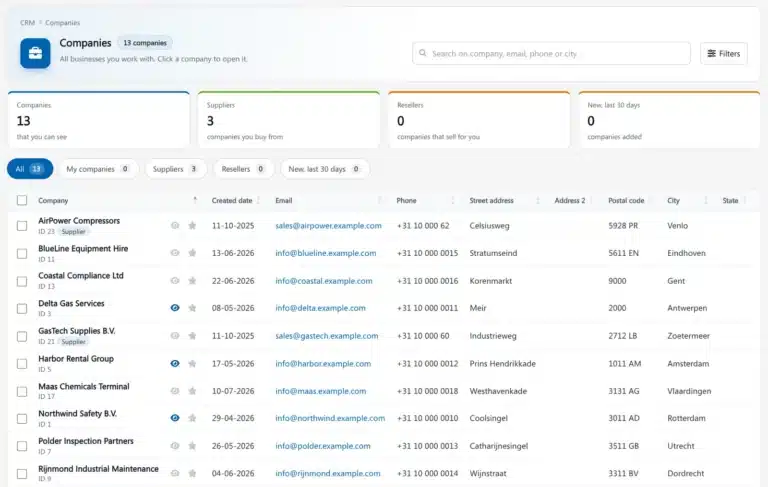
Brytend connects to your Office 365 tenant and syncs email, notes, calendar and SharePoint into the CRM, so every customer conversation sits in one place.
- Email, calendar, notes and SharePoint in one CRM
- Outlook add-in to file mail with one click
- Sales activity shows who talks to which customer
Modules
- Copy-pasting emails
- Calendars out of sync
- Files in five places
- Microsoft 365
- Outlook
- SharePoint
Question 2 of 17 · Quote to cash
Are you still typing quotes in Word and retyping them as invoices?
Every retype is another chance for a wrong price or a missed order.
Brytend solves this
From quote to cash in one flow
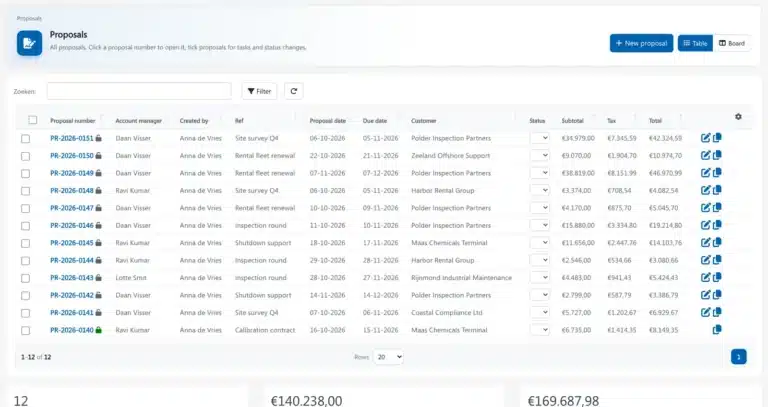
Build a quote from your price list, turn it into an order with one click and invoice it without retyping a thing. Finance shows what is open, overdue and paid.
- Quotes, orders and invoices from one record
- E-invoicing with Peppol and bank payments
- Open and overdue amounts at a glance
Modules
- Word templates
- Double data entry
- Invoices sent late
- Peppol e-invoicing
- Bank payments
Question 3 of 17 · Finance
Do you only see your cash position when the accountant sends the numbers?
By then it is too late to act on late payers or rising costs.
Brytend solves this
Live finance, linked to every invoice
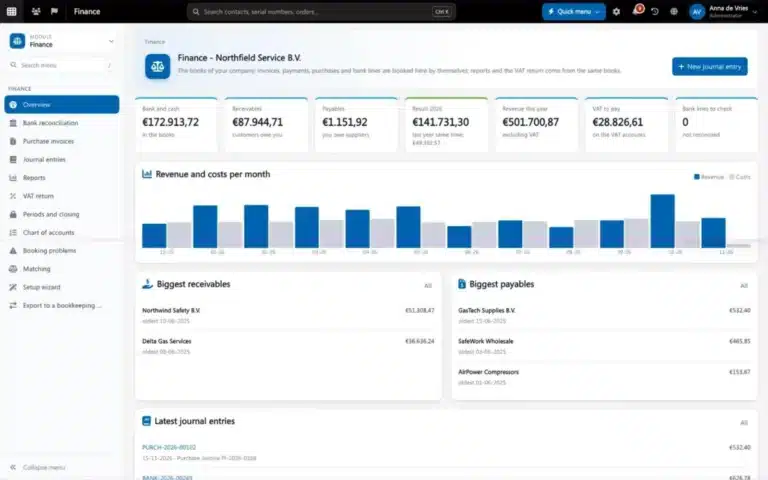
Finance shows cash, open items and results as they happen, with bank transactions and VAT next to the invoices they belong to.
- Cash, open and overdue items, live
- Bank transactions matched to invoices
- VAT overview ready for your return
Modules
- Numbers a month late
- Bank in another tool
- VAT stress
- Bank payments
- Peppol e-invoicing
Question 4 of 17 · Service and inspections
Do you still register customer devices in Excel or your own Access database?
Serial numbers, service dates and certificates deserve better than a spreadsheet.
Brytend solves this
Every customer device, its history and its next service date
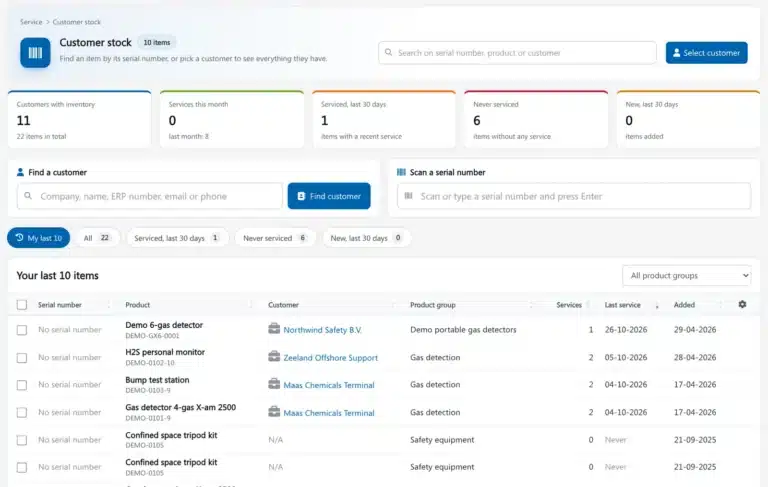
The Service module keeps the installed base per customer: serial numbers, inspections, calibrations and certificates. Plan visits, report on site and never miss a due date.
- Installed base per customer, with full history
- Inspections and certificates from the field
- Due dates planned automatically
Modules
- Excel sheets
- Home-made Access database
- Missed service dates
Question 5 of 17 · Gas testing and cylinders
Are gas test requests and clearances still done on paper or by phone?
A lost permit or an untested space is a safety risk you cannot afford.
Brytend solves this
Gas tests and cylinders, safe and on record
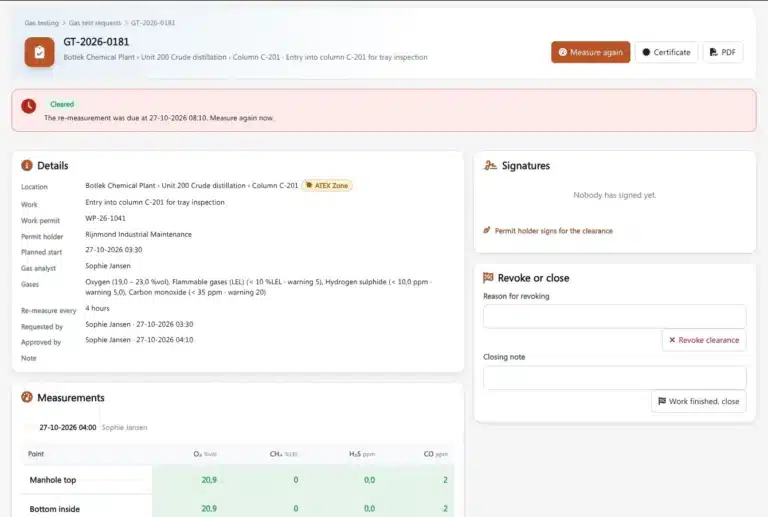
Request a gas test, let the tester record the readings on the phone and issue the clearance in one flow. Gas cylinder tracking shows where every cylinder is and when it is due.
- Test requests and clearances in one flow
- Readings recorded on the phone
- Every gas cylinder tracked by location
Modules
- Paper permits
- Requests by phone
- Cylinders gone missing
Question 6 of 17 · Rental
Do you plan rental equipment on a whiteboard and hope nothing is double-booked?
Double bookings and missed returns cost money and customers.
Brytend solves this
Rental planning that never double-books
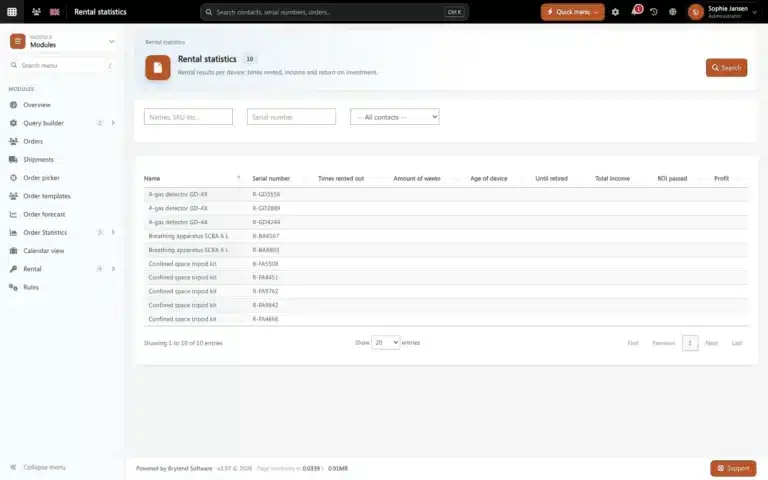
See which equipment is available, reserved or out, book it in a few clicks and invoice the rental period automatically.
- Availability per item at a glance
- Bookings, pick-up and returns
- Rental invoices without retyping
Modules
- Whiteboard planning
- Double bookings
- Late returns
Question 7 of 17 · Loan out
Do you lend demo units or replacement devices and lose track of who has them?
Loan units that never come back are pure loss.
Brytend solves this
A loan desk that knows where every unit is
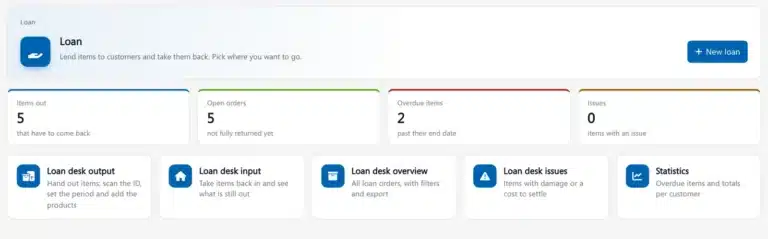
Lend out demo units, replacement devices and tools with a return date. The loan desk is part of the Rental and loans module: it reminds you before a loan is due and shows what is still out.
- Every loan with customer and return date
- Reminders before the due date
- Overview of everything that is still out
- Who has it?
- No return date
- Lost loan units
Question 8 of 17 · After sales
Do you only hear that a customer is unhappy when they leave?
Feedback after every job keeps customers coming back.
Brytend solves this
Feedback and follow-up after every job
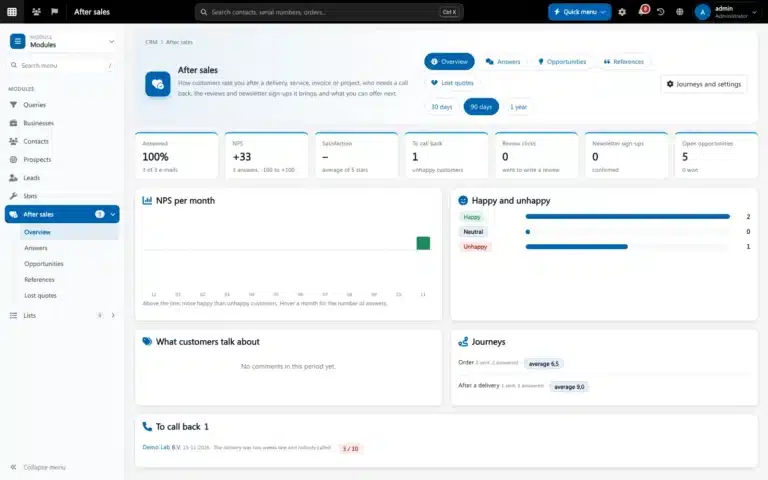
After sales sends a short survey after each delivery or service job, tracks NPS and turns follow-ups into tasks for your team.
- NPS and feedback after each job
- Follow-ups as tasks
- Spot unhappy customers early
Modules
- No feedback
- Silent churn
- Missed upsell
Question 9 of 17 · Stock and warehouse
Are you never quite sure what is on the shelf until someone counts it?
Stock-outs and surprise counts cost you sales and time.
Brytend solves this
Live stock across every warehouse
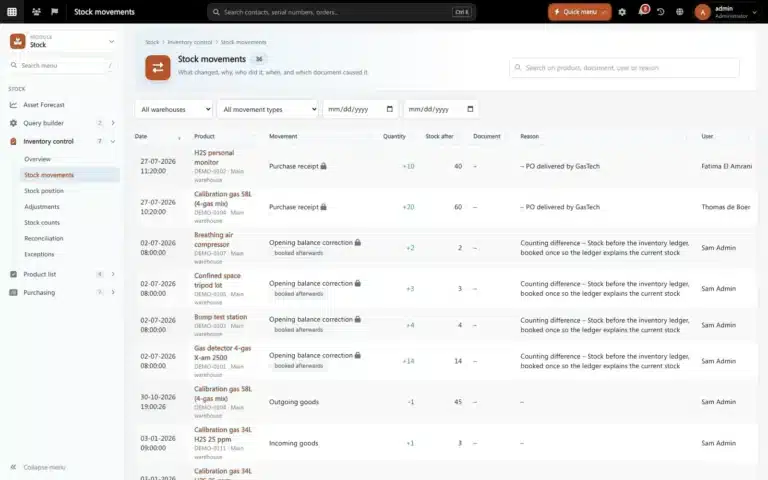
See stock, value and movements per warehouse in real time. Count with your phone and move stock between locations.
- Stock and value per warehouse, live
- Counts and stock movements on your phone
- Reorder before you run out
Modules
- Counting on paper
- Stock-outs
- Unknown stock value
Question 10 of 17 · Logistics
Are deliveries and shipments planned with spreadsheets and phone calls?
Every call to ask where something is costs time on both sides.
Brytend solves this
Operations and logistics in one control centre
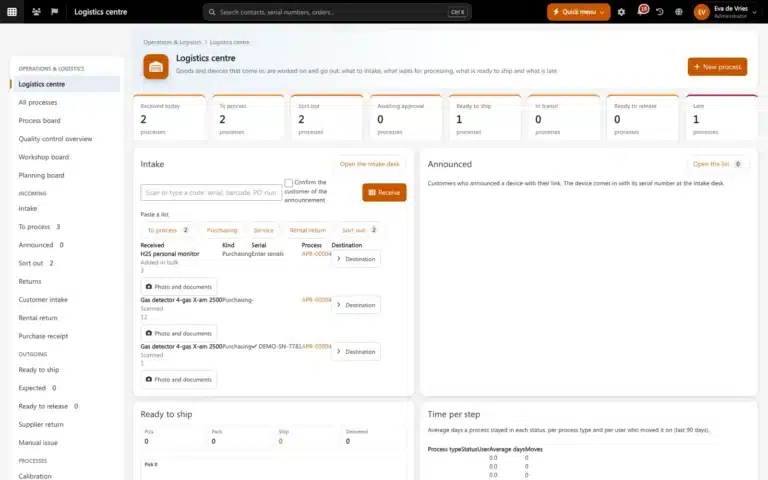
Plan intake, processing and shipments in one logistics centre, with carriers connected and status visible to your team.
- Intake, process and shipment steps
- Shipping carriers connected
- Live status for every order
Modules
- Spreadsheet planning
- Where is my order?
- Manual labels
Question 11 of 17 · Quality and compliance
Are your procedures spread over folders, and is every audit a scramble?
An old version in circulation is an auditor's favourite finding.
Brytend solves this
Controlled documents, ready for any audit
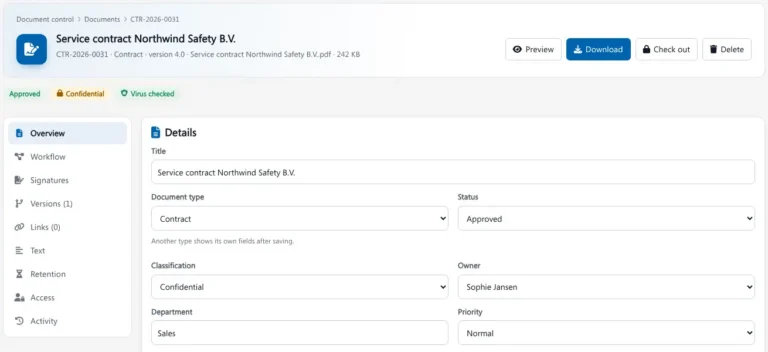
Document control gives every procedure one current version, an approval workflow and a full audit trail, with role-based access to who can see and sign what.
- Versions and approval workflows
- Full audit trail on every change
- Role-based access and two-factor sign-in
Modules
- Outdated versions
- Approvals by email
- Audit stress
Question 12 of 17 · Projects and tasks
Do your projects live in spreadsheets while to-dos get lost in email?
When nobody sees the whole plan, deadlines slip quietly.
Brytend solves this
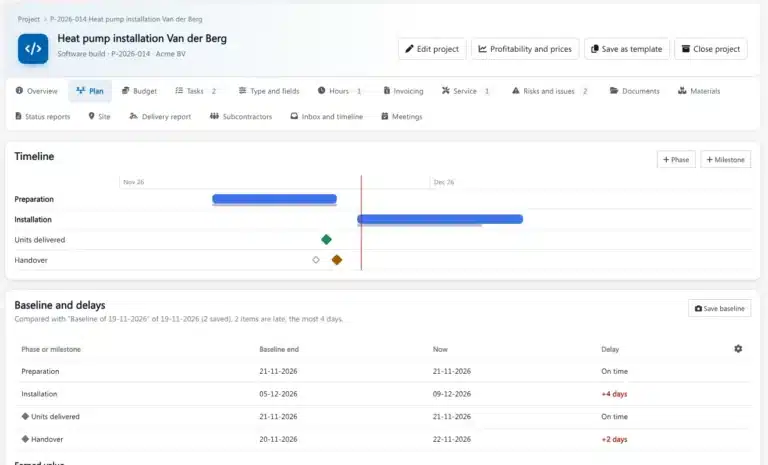
Plans, tasks and deadlines everyone can see
Plan projects on a timeline, assign tasks to people and see what is due today. Everything links back to the customer, quote or service job it belongs to.
- Project plans with milestones
- Tasks with owners and due dates
- Linked to customers, orders and jobs
Modules
- Spreadsheet plans
- Lost to-dos
- Missed deadlines
Question 13 of 17 · HR and intranet
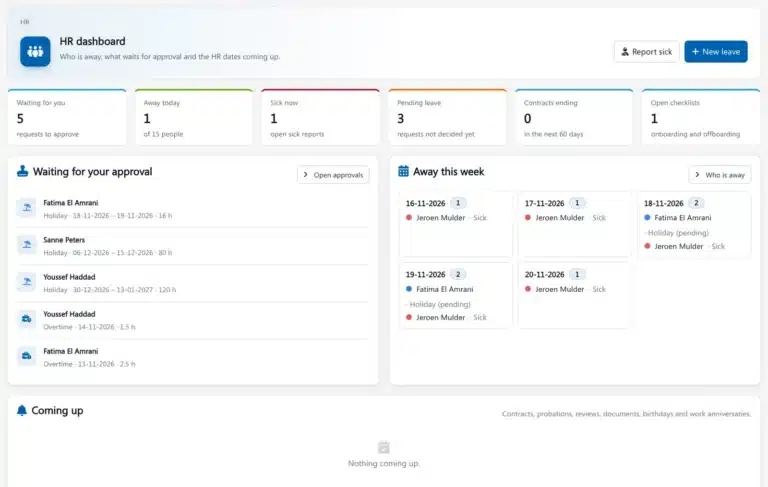
Are leave requests sent by email, and does company news get lost in the inbox?
HR admin should not eat up your week.
- Leave by email
- Absence in a spreadsheet
- News nobody reads
Question 14 of 17 · Academy
Do you track training and certificates in spreadsheets?
An expired certificate shows up at the worst moment: during an audit or on site.
Brytend solves this
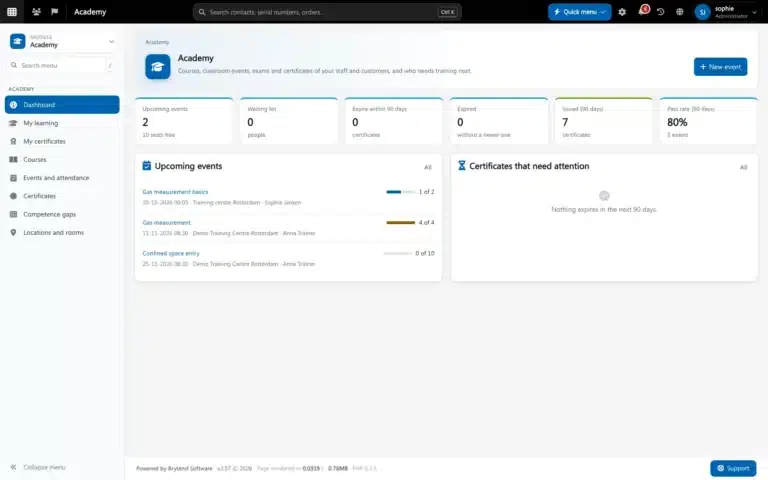
Courses, attendance and certificates in one Academy
Academy runs online and classroom courses, records attendance and issues certificates, with a reminder before one expires.
- Online and classroom courses
- Attendance and results recorded
- Certificates with expiry reminders
Modules
- Expired certificates
- Training by email
- No attendance record
Question 15 of 17 · Help desk and support
Do customer questions get lost in a shared inbox?
Slow answers are the fastest way to lose a customer.
Brytend solves this
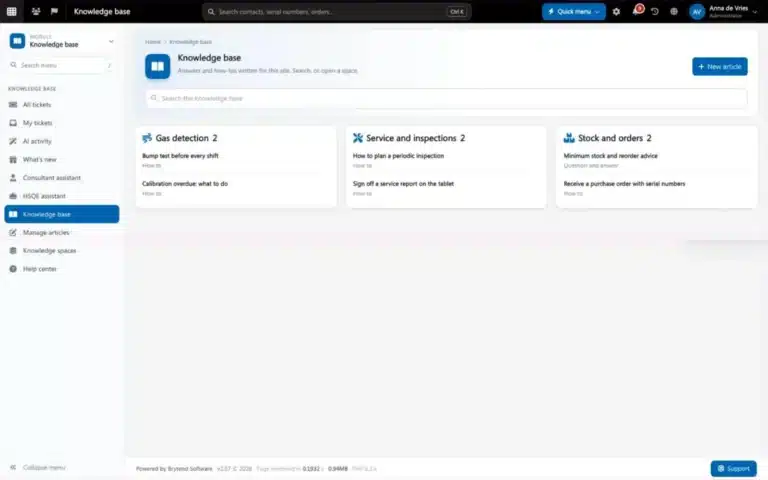
Every question answered, and answered once
Help desk turns emails into tickets with an owner and a deadline. Support intelligence builds a knowledge base from solved tickets, so your team finds the answer faster next time.
- Tickets with owners, priorities and history
- Knowledge base built from solved tickets
- Brytend AI helps find the right answer
Modules
- Shared inbox chaos
- No ticket history
- Same question, again
- Brytend AI
Question 16 of 17 · Platform
Looking for an online tool that is safe and always available on your phone, tablet and PC?
GDPR at the core, AI driven, with a native app, and an ISO certified SaaS solution.
Brytend solves this
One secure platform, on every screen
Brytend is an ISO 9001 and ISO 27001 certified SaaS platform with GDPR built in from day one. Work in the browser on any device or in the native mobile app, with Brytend AI in every module.
- ISO 9001 and ISO 27001 certified
- GDPR at the core, with two-factor sign-in
- Native app plus any browser, on any device
Modules

- Data stuck on one PC
- No access on the road
- GDPR worries
- GDPR
- iPhone & iPad
- Android
- Brytend AI
Question 17 of 17 · Growth
Do you want Brytend to start finding new customers for you?
Let the Growth module search, enrich and score prospects while you focus on selling.
Brytend solves this
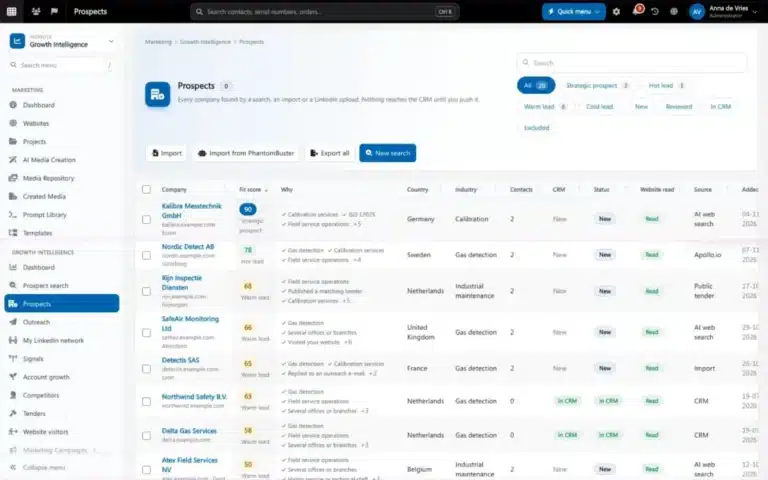
Growth Intelligence finds and warms up prospects
Connect LinkedIn, pull in leads from PhantomBuster and let Brytend AI enrich and score every company. Marketing then follows up with campaigns and surveys.
- Find contacts on LinkedIn from inside Brytend
- Import PhantomBuster leads straight into prospect lists
- AI scoring, campaigns and surveys to follow up
Modules
- Cold lists
- Searching LinkedIn by hand
- Leads without follow-up
- PhantomBuster
- Brytend AI
- MailerLite
Your Brytend
Brytend is a strong fit for you
One platform for everything you said yes to. Try it with your own data, or let us show you around in 30 minutes.
No credit card. Demo slots on weekdays 09:00-11:00 and 14:00-16:00.
 17 of 17 areas · 30 modules
- Microsoft 365 and CRM
- Quote to cash
- Finance
- Service and inspections
- Gas testing and cylinders
- Rental
- Loan out
- After sales
- Stock and warehouse
- Logistics
- Quality and compliance
- Projects and tasks
- HR and intranet
- Academy
- Help desk and support
- Platform
- Growth
How Can Software Companies Optimize Development Efficiency
Efficiency has a direct effect on profit and on how you compete. Software companies that deliver solutions faster while maintaining quality standards capture market share and improve margin performance.
The impact of AI on SaaS companies demonstrates how automation and intelligent tools reshape development productivity. Companies adopting AI-assisted coding report 25-35% faster implementation for routine functionality.
Process Improvement Strategies
- Standardize architecture patterns: Reusable components and established frameworks reduce design time for new projects
- Automate repetitive tasks: Code generation, test execution, and deployment procedures eliminate manual effort
- Implement continuous integration: Immediate feedback on code quality prevents defect accumulation
- Adopt infrastructure as code: Version-controlled environment configuration ensures consistency across development, testing, and production
- Establish coding standards: Consistent style and structure improve readability and reduce review time
Using internal tools before external release is one of the most effective efficiency habits. Software companies that deploy their own products internally identify usability issues, performance bottlenecks, and integration challenges before customer exposure, reducing post-release defect rates by 40-50%.
Measurement and Continuous Improvement
Effective software companies track specific metrics to identify improvement opportunities:
- Deployment frequency: How often code moves to production environments
- Lead time: Duration from feature request to production deployment
- Change failure rate: Percentage of deployments causing production incidents
- Mean time to recovery: Average duration to resolve production incidents
- Code coverage: Percentage of code exercised by automated tests
- Customer satisfaction: NPS scores, support ticket volume, renewal rates
A B2B software company serving manufacturing clients tracked these metrics over 18 months. By implementing automated testing and continuous deployment, they reduced lead time from 6 weeks to 10 days while decreasing change failure rate from 18% to 4%. Customer satisfaction scores improved 23 points as features reached production faster with fewer defects.
What Revenue Models Do Software Companies Use
The revenue model shapes how a software company operates, how it deals with customers, and how it grows. Different approaches require distinct sales motions, pricing strategies, and customer success investments.
Primary Revenue Approaches
Licensing models grant customers rights to use software for defined periods or perpetually. Enterprise software companies traditionally licensed applications per user, per device, or per installation. This approach generates significant upfront revenue but creates customer acquisition challenges due to high initial costs.
Subscription models charge recurring fees for continued access to software and services. The SaaS approach dominates modern software companies because it creates predictable revenue streams, lowers customer entry barriers, and aligns vendor success with customer value realization. Market analysis from Morningstar shows subscription models now represent 65% of software industry revenue, up from 38% in 2018.
Custom development contracts compensate software companies for building tailored solutions. Pricing typically follows time-and-materials structures (hourly rates) or fixed-price agreements (predetermined total based on defined scope). Custom development firms often combine initial build fees with ongoing maintenance retainers.
Support and maintenance agreements generate recurring revenue from existing customers through technical assistance, security updates, performance optimization, and feature enhancements. These agreements typically cost 15-25% of original licensing fees annually.
Pricing Strategy Considerations
| Factor | Impact on Pricing | Example |
|---|---|---|
| Development complexity | Higher technical difficulty justifies premium pricing | Real-time analytics platform costs more than static dashboard |
| Market competition | Crowded markets pressure pricing downward | CRM tools face intense competition limiting premium positioning |
| Customer segment | Enterprise buyers accept higher prices for support/security | SMB tools price 60-80% below enterprise equivalents |
| Value delivered | Measurable ROI supports value-based pricing | Inventory optimization software priced at 20% of annual savings |
Software companies serving industrial sectors often adopt value-based pricing tied to operational improvements. A predictive maintenance platform might charge based on equipment uptime increases or maintenance cost reductions rather than simple per-user fees.

What Compliance and Security Requirements Apply
Software companies face increasing regulatory obligations based on industry sectors served, geographic markets, and data types processed. Compliance failures result in financial penalties, customer contract violations, and reputational damage.
Industry-Specific Regulations
Healthcare software companies must comply with HIPAA (Health Insurance Portability and Accountability Act) protecting patient information, requiring encryption, access controls, audit logging, and breach notification procedures. Financial services software follows PCI DSS (Payment Card Industry Data Security Standard) for payment processing or SOC 2 for broader financial data handling.
Manufacturing and industrial software companies increasingly address sector-specific standards. Safety-critical systems require IEC 61508 functional safety compliance, while quality management systems follow ISO 9001 frameworks. Gas detection monitoring software must meet regional explosion-proof certifications and calibration documentation requirements.
Security Implementation Requirements
- Data encryption: Protect information in transit (TLS/SSL) and at rest (AES-256 or equivalent)
- Access control: Implement role-based permissions, multi-factor authentication, and session management
- Audit logging: Record user actions, system changes, and security events for compliance verification
- Vulnerability management: Conduct regular scanning, penetration testing, and timely patching
- Disaster recovery: Maintain backup systems, recovery procedures, and business continuity plans
- Third-party risk: Assess and monitor security posture of integrated services and vendors
A software company building pharmaceutical manufacturing execution systems must validate software according to FDA 21 CFR Part 11 requirements, documenting development processes, testing results, and change controls. This validation documentation can exceed the actual codebase volume by 3-4 times.
How Do Software Companies Scale Operations
Growing means expanding technical capacity, processes, and the organization in a planned way. Software companies that scale successfully maintain quality standards while increasing customer volume and revenue.
Scaling Technical Architecture
Architecture can make growth easy or hold it back. Monolithic applications limit scaling flexibility, requiring complete system duplication to handle increased load. Microservices architectures allow independent scaling of specific components based on demand patterns.
Cloud infrastructure provides elastic scaling capabilities, automatically provisioning computing resources during demand spikes and reducing capacity during quiet periods. A B2B collaboration platform might scale from 50 concurrent users to 5,000 during peak business hours without manual intervention.
Operational Scaling Approaches
- Process documentation: Capture procedures, standards, and best practices enabling knowledge transfer to new team members
- Team specialization: Create focused groups for frontend, backend, DevOps, security, and quality assurance functions
- Automation investment: Build tools for deployment, testing, monitoring, and customer provisioning
- Partner ecosystem: Develop integration partners, resellers, and implementation consultants extending market reach
- Customer self-service: Provide documentation, training materials, and automated support reducing manual assistance requirements
Software companies typically hire additional development staff as annual recurring revenue reaches specific thresholds. Industry benchmarks suggest one additional engineer per $200,000-$300,000 in new ARR for custom development firms, though ratios vary based on solution complexity and customer support intensity.
What Determines Software Company Valuation
Investors and acquirers evaluate software companies based on financial performance, market positioning, technology assets, and growth potential. Knowing what drives valuation helps a company make decisions that raise its value.
Financial Metrics
Revenue growth rate represents the primary valuation driver. Software companies growing 40%+ annually receive premium multiples, while companies below 20% growth face discounted valuations. Industry analysis shows median SaaS companies trade at 6.2x annual recurring revenue in 2026, with high-growth leaders commanding 12-15x multiples.
Profitability and unit economics indicate business sustainability. Investors examine gross margin (typically 70-80% for software), customer acquisition cost (CAC), lifetime value (LTV), and the LTV:CAC ratio (healthy companies exceed 3:1).
Revenue predictability through recurring contracts increases valuation. Monthly recurring revenue (MRR) and annual recurring revenue (ARR) provide visibility into future performance, while one-time project revenue creates uncertainty.
Strategic Value Factors
- Market position: Leading companies in growing markets command premium valuations
- Customer concentration: Diversified customer bases reduce risk versus concentration in few large accounts
- Technology differentiation: Proprietary capabilities or unique approaches create competitive moats
- Scalability potential: Architecture supporting efficient growth without proportional cost increases
- Team expertise: Experienced leadership and specialized technical talent retain strategic value
A specialized software company serving chemical manufacturing with proprietary process optimization algorithms might receive valuation premiums despite modest revenue due to deep domain expertise, established customer relationships, and defensible intellectual property.
Software companies succeed when strong engineering meets well-run business operations, from a structured development lifecycle to good customer management. The industry keeps changing through automation, AI, and specialization in vertical markets. Brytend delivers custom software solutions built specifically for your operational requirements, technology environment, and business objectives, providing ongoing support to ensure your systems perform reliably as your organization grows.
FAQs
What is a software company and what do they do?
A software company designs, develops, and maintains software products or services for commercial use. Their activities include requirements analysis, coding, testing, and ongoing support.
How do software companies structure their development workflows?
Software companies use structured methodologies like the Software Development Life Cycle (SDLC) to manage complexity. Best practices include requirements gathering, architecture design, implementation, quality assurance, deployment, and maintenance.
What revenue models do software companies commonly use?
Software companies typically use licensing, subscription, custom development contracts, and support services as revenue models. Subscription models now represent 65% of the software industry revenue as of 2026.
Can software companies scale their operations effectively?
Yes, software companies can scale operations by expanding technical capacity, automating processes, and creating specialized teams. Cloud infrastructure enables flexible scaling based on demand.
How do software companies acquire and retain customers?
Software companies acquire customers through marketing campaigns, professional networks, and case studies. Retention relies on ongoing support, regular updates, and demonstrating continuous value.
What challenges do software companies face in the industry?
Software companies face challenges like technical complexity, talent acquisition, market competition, and security vulnerabilities. Addressing these challenges requires strategic planning and resource allocation.
How long does the software development process typically take?
The timeline for software development varies; a custom inventory management system may take three months, while a mobile app update can be completed in two weeks.