Autoclave maintenance keeps a steam sterilizer safe and makes sure every cycle really sterilizes. It combines daily checks (door gasket, chamber, drain, water and a Bowie-Dick test on vacuum sterilizers), weekly cleaning and biological indicator tests, monthly cleaning of the reservoir and filters, and a yearly service with calibration and requalification by a qualified technician. Every check is recorded in an autoclave maintenance log.
TL;DR:
- Daily: inspect and wipe the door gasket, check the chamber and drain strainer, water level and cycle records
- Pre-vacuum sterilizers: Bowie-Dick (air removal) test before the first load of the day
- Weekly: clean the chamber and trays, run a biological indicator (spore) test
- Monthly: drain and clean the water reservoir, clean or replace filters
- Yearly: service, calibration of sensors, safety valve check and requalification
Why Does Autoclave Maintenance Matter?
An autoclave that looks fine can still fail to sterilize. A worn door gasket lets air in, a blocked drain leaves condensate in the chamber, scale on the sensors gives wrong temperature readings, and a small vacuum leak stops steam from reaching every surface. Regular maintenance and routine tests find these problems before an unsterile instrument reaches a patient.
Sterile services departments (CSSD), operating theatres, dental practices, clinics and laboratories all rely on autoclaves. Guidance such as the CDC’s guideline for disinfection and sterilization and standards such as EN ISO 17665 describe how steam sterilization must be validated, monitored and maintained.
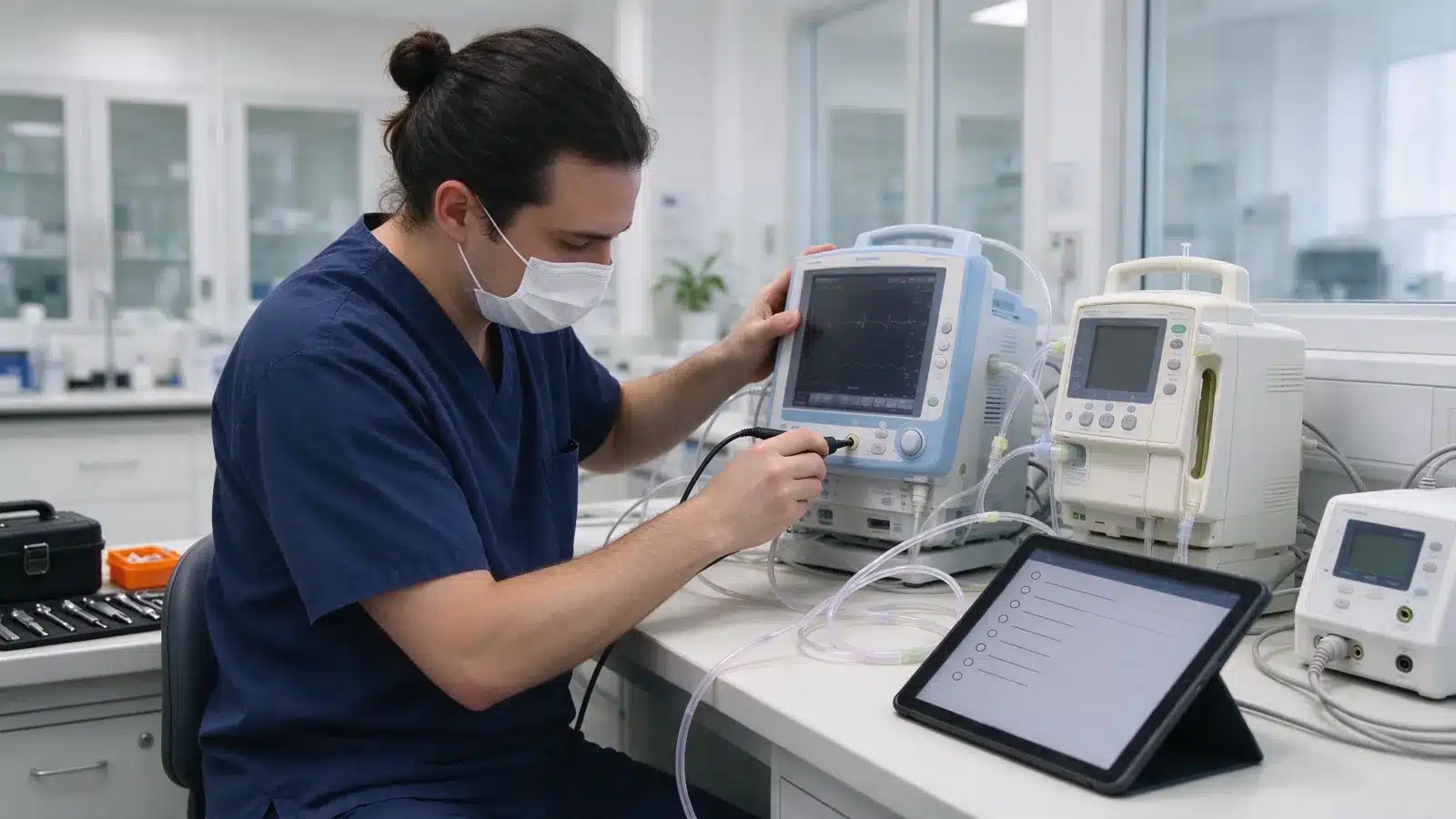
Autoclave Maintenance Checklist
Daily
- Inspect the door gasket for cracks, flat spots or debris and wipe it clean
- Check the chamber and the drain strainer, remove debris
- Check the water reservoir level and use the water quality the manufacturer specifies (often distilled or demineralised)
- Pre-vacuum sterilizers: run a Bowie-Dick or air removal test in an empty chamber before the first load
- Check that each cycle printout or data record shows the correct time, temperature and pressure
- Use a chemical indicator in or on every pack
Weekly
- Clean the chamber, trays and racks with the cleaner the manufacturer recommends
- Run a biological indicator (spore) test, or more often if your policy requires it
- Check door locking and the door safety interlock
Monthly
- Drain, rinse and refill the water reservoir
- Clean or replace the air and water filters
- Run the manufacturer’s cleaning cycle if the model has one
- Check for leaks, corrosion and scale
Yearly (or per manufacturer)
- Preventive maintenance by a qualified service technician
- Calibrate temperature and pressure sensors
- Test the safety valve and pressure vessel as local rules require
- Replace the door gasket and wear parts on schedule
- Requalify or revalidate the sterilizer where required
Autoclave Maintenance Schedule at a Glance
| Interval | Task | Who |
|---|---|---|
| Every load | Chemical indicators, check cycle record | Operator |
| Daily | Gasket, chamber, drain, water, Bowie-Dick test (vacuum types) | Operator |
| Weekly | Clean chamber and trays, biological indicator test | Operator |
| Monthly | Reservoir, filters, cleaning cycle, leak check | Operator or technician |
| Yearly | Service, calibration, safety valve, requalification | Qualified technician |
Always follow the manufacturer’s manual first. Intervals in hospitals are often stricter than in small practices, and national guidance (for example HTM 01-01 in the UK) sets its own daily, weekly, quarterly and yearly tests.
What Should an Autoclave Maintenance Log Include?
An autoclave maintenance log proves that the sterilizer was checked and worked. Inspectors and auditors ask for it. A good log records:
- Sterilizer ID, model, serial number and location
- Date, time and the person who did the check
- Results of daily, weekly and monthly checks
- Bowie-Dick and biological indicator results, with lot numbers
- Faults, repairs, parts replaced and who did the work
- Next due dates for service, calibration and requalification
Many practices still use a printable log sheet. That works for one autoclave. With several sterilizers or several sites, paper logs get lost and due dates are missed, so most teams move the log to a digital system.
What Happens When an Autoclave Test Fails?
- Stop using the sterilizer and label it out of service
- Repeat the test to rule out a handling error
- If a biological indicator fails, recall and reprocess the loads since the last good test, following your policy
- Have a qualified technician find and fix the cause (gasket, vacuum leak, sensor, steam quality)
- Retest before the sterilizer goes back into use and record everything
How Do Service Companies Manage Autoclave Maintenance?
Medical and dental equipment service companies look after autoclaves at many customer sites. Each sterilizer has its own service interval, calibration date, gasket replacement date and requalification date. Brytend keeps these in one place.
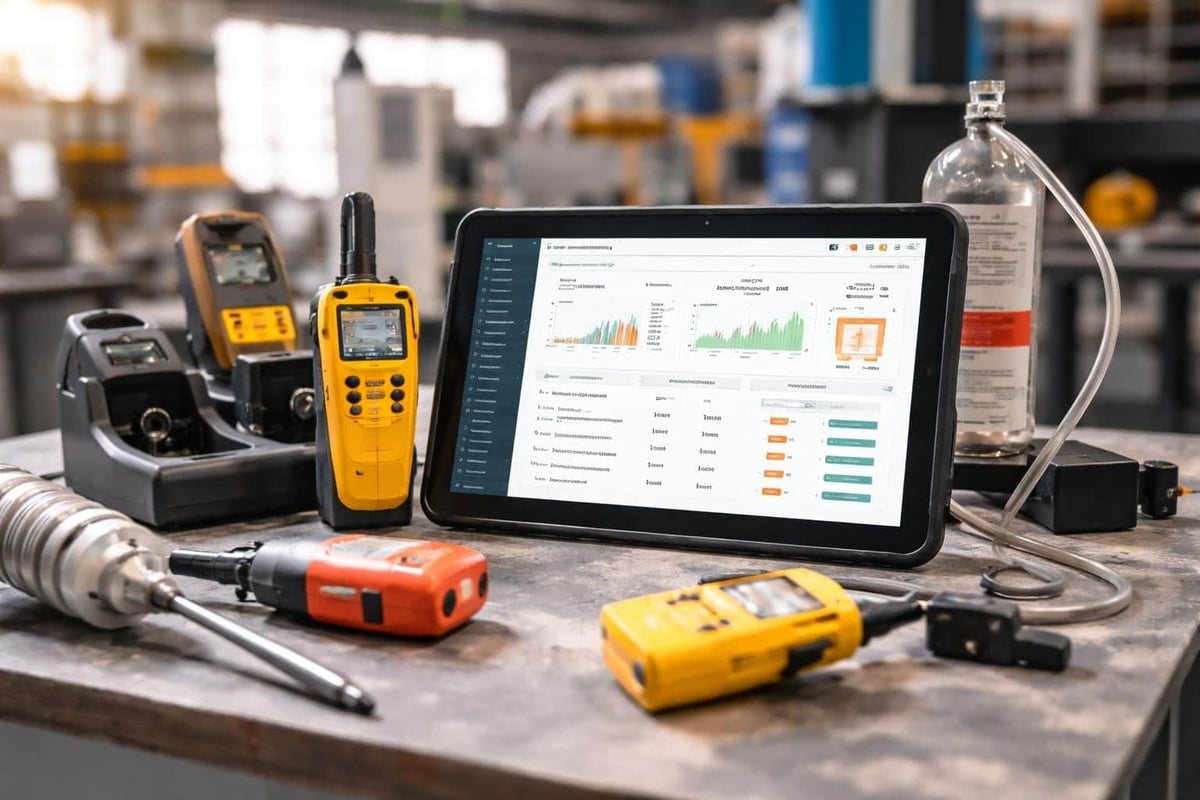
In Brytend, every autoclave is registered per customer with its serial number, location and full history in the Service and Inspections module. Planned service and calibration become work orders, technicians fill in the checklist and test results on the mobile app, and gaskets and filters come from stock. Read more on our page for medical equipment service companies, or see how a hospital clinical engineering department plans its work.
What Are Common Autoclave Maintenance Mistakes?
- Using tap water: minerals build up scale on heaters and sensors
- Skipping the Bowie-Dick test: air removal problems go unnoticed
- Overloading the chamber: steam cannot reach every instrument
- Ignoring a worn door gasket: leaks cause failed cycles and wet packs
- Logs on paper only: results and due dates are hard to prove during an inspection
Frequently Asked Questions About Autoclave Maintenance
How often should an autoclave be maintained?
Daily checks of the door gasket, chamber, drain and water, weekly cleaning and a biological indicator test, monthly cleaning of the reservoir and filters, and a yearly service with calibration by a qualified technician. Always follow the manufacturer’s manual, which may set stricter intervals.
What is a Bowie-Dick test?
A Bowie-Dick test checks that a pre-vacuum steam sterilizer removes air from the chamber and lets steam penetrate. It is run in an empty chamber, usually daily before the first load. A uniform colour change on the test sheet means air removal works.
How often should you do a spore test on an autoclave?
Many guidelines recommend a biological indicator (spore) test at least weekly, and with every load that contains implants. Hospitals often test more often. Follow your national guidance and your own infection control policy.
What should be in an autoclave maintenance log?
The sterilizer ID and location, the date and person for each check, daily, weekly and monthly results, Bowie-Dick and spore test results with lot numbers, repairs and parts, and the next due dates for service, calibration and requalification.
Why use distilled water in an autoclave?
Tap water contains minerals that leave scale on heating elements, sensors and valves. Scale causes wrong readings and faults. Most manufacturers specify distilled or demineralised water for tabletop autoclaves.
How often should an autoclave door gasket be replaced?
Inspect and clean the gasket daily and replace it when it is cracked, flattened or leaking, or at the interval the manufacturer gives, often about once a year depending on use.
Can autoclave maintenance be tracked digitally?
Yes. Service software registers every autoclave with its history, plans service and calibration, records checklists and test results on a phone or tablet, and sends reminders before the next due date.
Autoclave maintenance is a short daily routine plus planned service, but it decides whether instruments are really sterile. Check the gasket, chamber and water, run the tests, clean on schedule and record everything. If you service sterilizers and other medical equipment and want every device, test and due date in one place, Brytend lets you try it free for 90 days.