A medical gas system supplies oxygen, medical air, nitrous oxide, carbon dioxide, nitrogen and vacuum through pipelines to outlets at the bedside and in theatres. Inspection and maintenance cover the source equipment (cylinder manifolds, bulk oxygen, compressors and vacuum pumps), the pipeline, zone valves, alarms and every outlet. In the US the main reference is NFPA 99; in the UK it is HTM 02-01. Both expect planned checks, tests by competent people and complete records.
TL;DR:
- A medical gas pipeline system has sources, pipelines, valves, alarms and outlets
- New or changed systems need full verification before use
- In use: planned maintenance of sources, alarm tests, outlet checks and leak checks
- NFPA 99 (US) and HTM 02-01 (UK) set the requirements
- Every inspection, test and repair must be recorded per component
What Is a Medical Gas System?
A medical gas pipeline system (MGPS) delivers gases and vacuum from a central source to the point of use. Patients depend on it directly: a failure of oxygen or vacuum in an intensive care unit is an emergency. A typical system includes:
| Component | Examples |
|---|---|
| Sources | Cylinder manifolds, bulk liquid oxygen tanks, oxygen concentrators, medical air compressors, vacuum pumps, anaesthetic gas scavenging (WAGD) |
| Distribution | Copper pipelines, line pressure regulators, isolation and zone valves |
| Monitoring | Master alarms, area alarms, pressure sensors |
| Point of use | Wall and ceiling outlets (terminal units), pendants, flow meters |

Which Rules Apply to Medical Gas Inspection?
- United States: NFPA 99, Health Care Facilities Code covers installation, testing, inspection and maintenance of medical gas and vacuum systems. Verification of new and modified systems is done by a qualified medical gas verifier, and accreditation bodies such as the Joint Commission check that the hospital inspects, tests and maintains these systems.
- United Kingdom: HTM 02-01 sets roles such as the Authorised Person (MGPS) and Competent Person, a permit-to-work system and planned maintenance.
- Other countries: ISO 7396-1 covers pipeline systems for compressed medical gases and vacuum, and national rules add requirements for operation and maintenance.
Always check the edition that applies to your facility and your local authority.
Medical Gas System Inspection Checklist
Sources
- Cylinder manifolds: correct gas, cylinders connected, changeover works, reserve full, cylinders secured and stored correctly
- Bulk oxygen: contents, pressure, vaporiser icing, area clear and signed
- Medical air compressors: run hours, dew point, carbon monoxide and quality checks, filters, dryers
- Vacuum pumps and WAGD: run hours, filters, exhaust, oil and duty changeover
Pipeline and valves
- Zone valve boxes labelled with gas and area served, accessible, not blocked
- No signs of leaks, damage or corrosion
- Line pressures within limits
Alarms
- Master and area alarm panels test function and show correct status
- Alarms reach the places that must be notified
Outlets
- Outlets labelled, undamaged and correctly gas-specific
- Flow and pressure tested at the intervals your program sets
- Faulty outlets tagged out of use and repaired
How Often Should Medical Gas Systems Be Inspected?
| Item | Typical interval |
|---|---|
| Source equipment visual check, alarm status | Daily or per shift |
| Cylinder manifold and reserve check | Daily to weekly |
| Compressor and vacuum pump maintenance | Per manufacturer, often quarterly with yearly service |
| Medical air quality tests | Per code and your risk assessment |
| Alarm tests | Periodically, often at least yearly |
| Outlet inspection and flow test | Per program, often yearly, more often in critical areas |
| Full verification | After installation, extension or modification |
The right intervals come from the code, the manufacturer and your own risk assessment. Write them down in a maintenance program so everyone uses the same schedule.
What Records Should You Keep?
- A register of every source, valve, alarm panel and outlet, with location and ID
- Planned maintenance and test results per component, with date and name
- Verification and certification reports
- Permits to work and shutdowns
- Faults, repairs and parts replaced
- Cylinder deliveries, stock and returns
How Can Software Help With Medical Gas Maintenance?
Hospitals have hundreds of outlets and several sources. Facilities teams and contractors need to know what is due, what failed and what was fixed. Brytend registers every component with its location and history, turns planned tests into work orders and lets engineers record results on a phone.
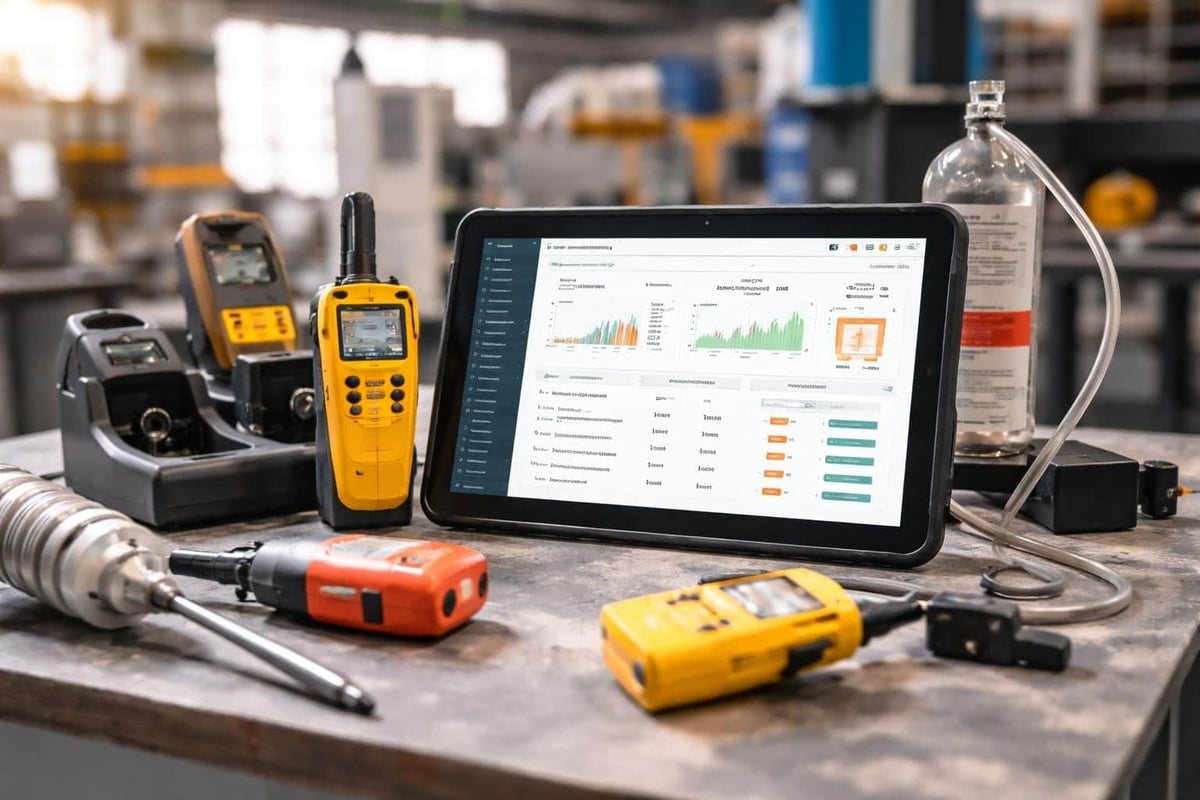
With the Service and Inspections module, outlets, alarm panels and plant are inspected from a checklist on the mobile app, with a QR code per item. The Gas Cylinder Tracking module follows cylinders in and out by serial number, so you always know which cylinders are full, connected or ready to return. See also our pages for facility management and for hospital clinical engineering, and our autoclave maintenance checklist for sterile services.
What Are Common Medical Gas Maintenance Mistakes?
- Blocked zone valve boxes: beds or equipment in front of the valves that must be closed in an emergency
- Unlabelled valves and outlets: staff cannot tell which area a valve serves
- Alarms never tested: a failed alarm is found only during an incident
- Work without a permit: pipeline work done without isolation, testing and sign-off
- No cylinder overview: reserve cylinders are empty when the manifold changes over
Doing this for your customers? See how Brytend works for medical equipment service companies: every asset, inspection, certificate and service visit in one place.
Frequently Asked Questions About Medical Gas System Inspection
What is a medical gas system?
A medical gas system, or medical gas pipeline system, supplies gases such as oxygen, medical air and nitrous oxide, and vacuum, from central sources through pipelines to outlets where patients are treated. It includes the sources, pipelines, valves, alarms and outlets.
What does NFPA 99 require for medical gas systems?
NFPA 99, the Health Care Facilities Code, sets requirements for installing, testing, inspecting and maintaining medical gas and vacuum systems in the US, including verification of new and modified systems. Check the edition your authority uses for the exact requirements.
What is HTM 02-01?
HTM 02-01 is the UK Health Technical Memorandum for medical gas pipeline systems. It covers design, installation, validation and operational management, including roles such as the Authorised Person (MGPS) and a permit-to-work system.
How often should medical gas outlets be tested?
Intervals come from the code, the manufacturer and the facility’s risk assessment. Many facilities inspect and flow-test outlets yearly, and critical care areas more often. Outlets are always tested after repair or modification.
Who can inspect and verify a medical gas system?
Verification of new or modified systems is done by qualified, certified people, such as an ASSE 6030 medical gas verifier in the US or an Authorised and Competent Person in the UK. Routine checks can be done by trained facilities staff.
What are medical gas alarms?
Master alarms monitor sources and main lines, and area alarms monitor the supply to a ward or theatre. They warn when pressure is too high or too low or when a source changes over, so staff can act before patients are affected.
How do you track medical gas maintenance?
Register every source, valve, alarm and outlet with a location and ID, plan inspections and tests as work orders, record results on a mobile device and keep the history per component. Software also tracks medical gas cylinders by serial number.
A medical gas system keeps patients alive, so inspection and maintenance must be planned, done by competent people and recorded. Register every component, test alarms and outlets on schedule and keep cylinders under control. If your team maintains hospital systems and equipment and wants every inspection in one place, Brytend lets you try it free for 90 days.