Healthcare organizations face mounting pressure to demonstrate quality through patient feedback, yet many hospitals approach the hospital patient satisfaction survey process with fundamental flaws that compromise data integrity, expose compliance vulnerabilities, and miss opportunities for meaningful improvement. The stakes extend beyond reputation management into regulatory compliance, reimbursement structures, and clinical outcomes. When organizations rely on outdated manual processes or fragmented survey systems, they risk collecting misleading data that drives misguided decisions, wastes resources on ineffective interventions, and fails to identify critical gaps in care delivery. Understanding these risks represents the first step toward transforming patient feedback from a compliance checkbox into a strategic asset.
The Hidden Costs of Fragmented Survey Infrastructure
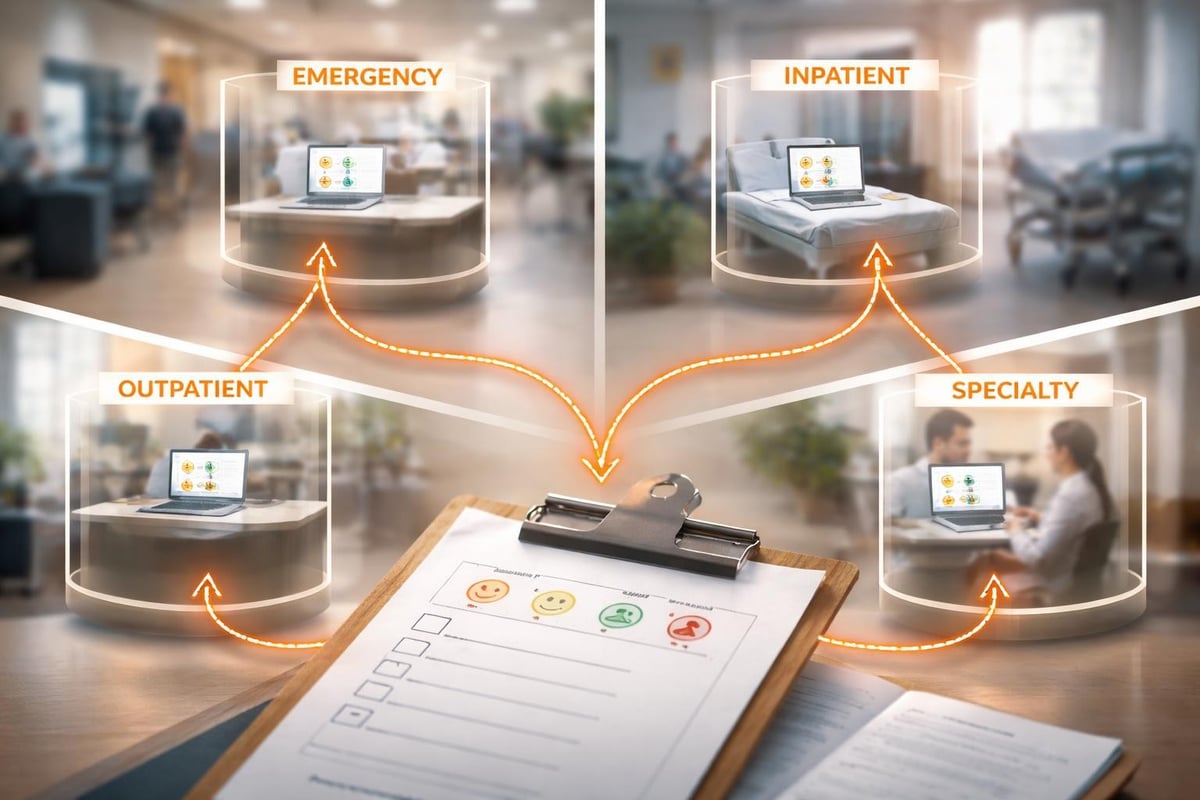
Most hospitals operate multiple disconnected survey systems across departments, creating data silos that prevent comprehensive analysis. Emergency departments run separate satisfaction tools from inpatient units, outpatient clinics deploy different platforms than surgical services, and specialty departments often create ad hoc questionnaires without standardization. This fragmentation generates several costly problems that compound over time.
Administrative staff spend excessive hours manually consolidating responses from disparate systems, introducing transcription errors and delays that render feedback stale by the time leadership reviews it. The lack of unified data architecture prevents trending analysis across service lines, making it impossible to identify systemic issues versus isolated incidents. When a patient experiences care across multiple departments, their journey appears disconnected in survey results, obscuring the true experience and masking coordination failures.
The financial burden extends beyond labor costs. Hospitals maintain redundant software licenses, train staff on multiple platforms, and struggle to demonstrate return on investment when improvement initiatives cannot link back to specific feedback patterns. Research examining survey response patterns across healthcare systems reveals that fragmented approaches consistently produce lower response rates and less actionable data compared to integrated systems.
Response Rate Fallacies and Selection Bias Risks
Many healthcare administrators celebrate when hospital patient satisfaction survey response rates reach fifteen or twenty percent, unaware they're making decisions based on statistically skewed samples. The patients who respond to traditional mail or email surveys represent a specific subset: those with extreme experiences (either exceptionally positive or negative), those with time availability, and those with specific demographic characteristics that correlate with survey participation.
Low response rates create invisible blind spots. The quietest patients, those juggling multiple jobs without time to complete surveys, non-native speakers intimidated by language barriers, and individuals with limited digital literacy disappear from feedback entirely. Their experiences never inform improvement decisions, yet these populations often encounter the greatest care access challenges and quality gaps. Leadership teams unknowingly optimize services for vocal minorities while neglecting silent majorities.
Timing bias compounds selection problems. Surveys distributed weeks after discharge suffer from recall degradation, where patients forget specific interactions or conflate experiences across multiple healthcare encounters. The emotional intensity of their health crisis fades, smoothing over both exceptional care moments and troubling failures. Delayed feedback also prevents rapid intervention when service failures occur, allowing problems to persist and affect subsequent patients.
The cost of these biases manifests in misdirected improvement investments. Hospitals allocate resources to address issues prominent in skewed survey samples while genuine systemic problems affecting underrepresented populations continue unabated. Compliance risks escalate when regulatory bodies or payer organizations audit care quality for specific demographic groups, revealing disparities that internal surveys completely missed.
Manual Data Processing and Analysis Bottlenecks
Even hospitals that collect comprehensive feedback often strangle its value through manual processing workflows. Staff transcribe handwritten comments into spreadsheets, manually categorize open-ended responses, and create presentation decks summarizing findings weeks or months after surveys close. By the time insights reach decision-makers, the context has shifted and opportunities for timely intervention have evaporated.
Manual processes introduce systematic errors that corrupt data integrity. Fatigue-induced transcription mistakes, inconsistent categorization of qualitative feedback, and subjective interpretation of ambiguous responses transform raw patient input into unreliable information. When different team members process surveys using personal judgment, the same patient comment might be classified as a "communication issue" by one analyst and a "clinical competence concern" by another, destroying trend validity.
The opportunity cost proves particularly damaging. Quality improvement teams wait for quarterly or annual survey summaries instead of responding to emerging patterns in real-time. A surge in complaints about wait times in a specific unit goes unnoticed for months, during which patient volumes shift, staff turnover occurs, and the original cause becomes impossible to identify. Leaders cannot test improvement hypotheses rapidly because feedback loops stretch across quarters rather than days.
Resource drain compounds these inefficiencies. Organizations employ dedicated staff for survey administration and analysis, yet still struggle to generate timely, actionable insights. The manual burden prevents deeper investigation into root causes, as teams lack capacity to cross-reference survey data with clinical outcomes, staffing patterns, or operational metrics. Studies examining patient satisfaction determinants highlight how trust, insurance status, and perceived quality interconnect, yet manual analysis rarely surfaces these relationships.

Compliance Vulnerabilities and Regulatory Exposure
The Centers for Medicare and Medicaid Services tie hospital reimbursement to patient satisfaction performance through value-based purchasing programs, making survey accuracy a financial imperative. Hospitals using inadequate survey methodologies risk scoring discrepancies that trigger payment penalties or regulatory scrutiny. Manual processes that cannot demonstrate audit trails, consistent administration protocols, or validated sampling methods create documentation gaps that compliance auditors exploit.
When organizations lack standardized survey distribution protocols, variation creeps in that invalidates comparisons. One unit might distribute surveys immediately at discharge, another waits three days, and a third uses inconsistent timing based on staffing availability. These inconsistencies violate the methodological rigor required for valid measurement, exposing the organization to challenges regarding data integrity and reported performance metrics.
Data security represents another compliance dimension frequently overlooked in manual survey systems. Paper surveys containing patient identifiers move through internal mail, sit in unsecured collection boxes, and accumulate in staff offices without proper handling protocols. Even electronic surveys distributed through non-encrypted consumer email services or stored in personal file drives violate HIPAA requirements, creating breach risks with substantial financial and reputational consequences.
The regulatory landscape continues evolving with increasing emphasis on health equity and disparate outcome reporting. Hospitals must demonstrate not only overall patient satisfaction but also equitable experiences across demographic groups. Manual systems that cannot stratify data by race, ethnicity, language preference, insurance status, or social determinants of health leave organizations unable to identify or address systematic disparities, inviting civil rights investigations and enforcement actions.
The False Economy of Generic Survey Tools
Many hospitals select hospital patient satisfaction survey platforms based on lowest initial cost, deploying generic tools that lack healthcare-specific functionality. These platforms missing clinical terminology, standard patient journey touchpoints, or integration capabilities with electronic health records seem economical initially but generate hidden costs that vastly exceed premium alternatives.
Generic tools require extensive customization that creates ongoing maintenance burdens. Each time the organization revises question libraries, adds new service lines, or updates regulatory compliance requirements, staff must manually reconfigure surveys, test deployments, and train users. These recurring configuration costs accumulate quickly while introducing version control problems where different departments inadvertently use outdated survey templates.
Integration gaps force duplicate data entry and prevent connecting satisfaction metrics with operational and clinical data. Quality teams cannot easily correlate satisfaction scores with length of stay, readmission rates, clinical outcomes, or staffing models because survey data lives in isolated systems. This analytical limitation prevents sophisticated insights that link patient experience to measurable quality indicators, undermining evidence-based improvement.
The reporting limitations of generic tools prove especially costly. Pre-built dashboards lack the dimensionality healthcare leaders need, forcing analysts to export raw data and build custom reports manually. Real-time alerting for concerning trends doesn't exist, advanced statistical analysis requires separate tools, and benchmarking against peer institutions becomes impossible without standardized metrics. Organizations invest in business intelligence platforms or hire analytics consultants to compensate for survey tool shortcomings, multiplying total cost of ownership.
Organizations seeking more sophisticated feedback collection should consider implementing systems designed specifically for form customization and data collection workflows. A robust survey module enables healthcare teams to design questionnaires aligned with clinical pathways, automate distribution based on patient encounters, and integrate responses with operational systems for comprehensive analysis.

Question Design Failures That Corrupt Insights
Even well-intentioned hospital patient satisfaction survey programs often employ poorly constructed questions that generate unreliable data. Leading questions that suggest desired answers, double-barreled items that address multiple issues simultaneously, and ambiguous language subject to varied interpretation transform surveys into measurement instruments of questionable validity. The resulting data appears statistically robust but lacks the precision needed for targeted improvement.
Consider a common question: "Were you satisfied with your nurse's professionalism and responsiveness?" This single item conflates two distinct attributes. A patient might find their nurse highly professional but slow to respond, or exceptionally responsive but occasionally unprofessional. The combined rating obscures which dimension needs improvement, preventing focused intervention. Similarly, vague terms like "satisfied," "adequate," or "timely" mean different things to different patients, introducing noise that drowns signal.
Scale design mistakes compound these problems. Many surveys use satisfaction scales ranging from "very dissatisfied" to "very satisfied," but research demonstrates these produce ceiling effects where responses cluster at the positive end, reducing discriminatory power. The difference between "satisfied" and "very satisfied" becomes statistically unreliable, yet leadership treats small score variations as meaningful trends demanding resource allocation.
The absence of context-specific branching logic represents another design flaw. Generic surveys present identical questions to patients regardless of their care pathway, missing opportunities to gather targeted feedback about procedure-specific experiences, department-unique processes, or condition-relevant care elements. A maternity patient receives questions about pain management without distinguishing labor analgesia from post-cesarean pain control, while cardiac patients answer generic medication counseling questions that miss anticoagulation education specifics.
Free-text comment fields, when poorly implemented, generate enormous qualitative data volumes that organizations lack capacity to analyze systematically. Without structured prompts or categorization frameworks, comments range from specific improvement suggestions to general complaints to expressions of gratitude, all mixed together in an unstructured mass. Manual review captures only superficial themes while missing deeper patterns that natural language processing could surface.
Response Collection Method Blind Spots
The mechanism through which hospitals collect hospital patient satisfaction survey responses dramatically influences both response rates and sample representativeness, yet many organizations default to outdated methods that systematically exclude large patient segments. Traditional paper surveys mailed weeks after discharge achieve dismal response rates while incurring printing, postage, and processing costs. Email surveys reach only patients with recorded email addresses, excluding elderly populations, socioeconomically disadvantaged groups, and those wary of electronic communication.
Phone surveys seem to promise better engagement but introduce interviewer bias and timing challenges. Patients feel pressured to provide positive responses to live callers, especially when they perceive the interviewer as affiliated with the hospital. Reaching patients requires multiple call attempts at varying times, generating labor costs that make comprehensive sampling financially prohibitive. Organizations resort to convenience sampling of easily reached patients, skewing results toward those with scheduling flexibility.
Point-of-care tablet surveys administered at discharge capture feedback while experiences remain fresh, but encounter operational obstacles. Busy discharge processes leave little time for survey completion, fatigued patients eager to leave decline participation, and clinical staff forget to offer tablets during hectic shifts. Without dedicated personnel managing the process, compliance degrades and response rates fluctuate wildly based on unit workload and individual staff diligence.
Best practices from organizations successfully implementing patient satisfaction surveys emphasize multi-channel approaches that offer patients choice while maintaining methodological consistency. However, managing multiple collection methods manually creates administrative complexity that overwhelms many hospital quality teams, leading to abandoned initiatives and wasted investment.

Missed Opportunities in Closed-Loop Follow-Up
Perhaps the most damaging failure in hospital patient satisfaction survey programs involves the gap between collecting feedback and acting on it. Most hospitals gather patient input but lack systematic processes for responding to individual concerns, closing improvement loops, or demonstrating to patients that their feedback drives change. This missed opportunity costs more than immediate patient recovery; it erodes community trust and future engagement.
When patients report specific service failures or concerning care experiences through surveys, delayed or absent follow-up sends a clear message that feedback doesn't matter. The patient who described medication confusion receives no clarifying call from pharmacy, the individual who reported pain management inadequacy gets no outreach from the care team, and the family that detailed communication failures hears nothing in response. These silent responses to vulnerable disclosures damage relationships and discourage future participation.
The lack of closed-loop processes also represents a quality and safety risk. Patients sometimes describe near-misses, potential adverse events, or ongoing complications through satisfaction surveys. When these signals disappear into quarterly reporting cycles without immediate clinical review, opportunities for intervention vanish. A patient mentioning persistent symptoms after discharge might need readmission, while another describing medication side effects requires dosage adjustment. Delayed recognition turns manageable issues into preventable harm.
Beyond individual response, hospitals miss opportunities to demonstrate systematic improvement driven by aggregate feedback. Patients who contributed to surveys never learn how their input influenced waiting room redesigns, prompted communication training, or justified staffing increases. Without visible evidence that participation matters, survey fatigue sets in and response rates decline further, creating a vicious cycle of diminishing engagement and deteriorating data quality.
Organizations exemplifying effective survey utilization for practice improvement invest in infrastructure that connects feedback to action, assigns accountability for response, and communicates changes back to patient communities. Yet implementing these practices manually requires coordination across departments, tracking systems for follow-up accountability, and communication workflows that most hospitals cannot sustain without dedicated technological support.
The Performance Measurement Paradox
Healthcare leaders increasingly recognize that patient satisfaction correlates with clinical quality indicators, yet struggle to leverage this relationship strategically. Research demonstrates that hospitals performing well on patient satisfaction surveys also achieve better surgical outcomes, suggesting satisfaction metrics serve as leading indicators of broader quality performance. However, most organizations treat patient experience and clinical quality as separate domains, missing opportunities to use satisfaction data for predictive quality monitoring.
This siloed approach prevents early identification of emerging quality problems. Declining satisfaction scores in specific units might signal staffing challenges, process breakdowns, or safety culture erosion before these issues manifest in clinical outcome metrics. By the time adverse event rates increase or infection surveillance detects problems, substantial patient harm has already occurred. Integrated analysis could provide earlier warning signals enabling preventive intervention.
The measurement paradox extends to improvement prioritization. Hospitals typically rank improvement projects based on clinical severity, resource availability, or regulatory requirements without considering patient-reported importance. Staff assume they understand patient priorities, yet formal survey data often reveals misalignments. Organizations invest heavily in amenities patients rank low while neglecting communication improvements or discharge process changes that feedback identifies as critical concerns.
Benchmarking complications compound measurement challenges. Comparing hospital patient satisfaction survey results across institutions requires standardized methodologies, validated instruments, and risk adjustment for patient population differences. Most organizations lack the analytical sophistication to conduct meaningful peer comparisons, instead relying on crude score rankings that ignore contextual factors. This leads to inappropriate conclusions about relative performance and misdirected competitive strategies.
Longitudinal Tracking Failures and Trend Blindness
Short-term survey snapshots miss the longitudinal patterns that reveal true performance trajectories. A hospital might celebrate improved scores one quarter without recognizing the improvement merely recovered from an unusual previous decline, or conversely, panic over a slight decrease that represents normal variation rather than systematic deterioration. Without proper statistical process control methods, organizations chase random noise instead of addressing genuine trends.
Historical data retention presents another common failure. Many hospitals archive survey results in disconnected annual reports or outdated file systems, making retrospective analysis nearly impossible. When leadership wants to understand how recent changes impacted patient experience, they cannot access comparable historical data to establish baselines or measure change magnitude. Improvement initiatives launch without clear measurement frameworks, and their effectiveness remains perpetually uncertain.
The inability to track individual patient journeys across multiple encounters obscures cumulative experience patterns. A patient visiting the emergency department, undergoing inpatient admission, receiving outpatient surgery, and attending follow-up appointments experiences these as one continuous care episode, yet survey systems treat each as an isolated event. The fragmented view prevents understanding how touchpoints interconnect and how earlier experiences influence later satisfaction.
Seasonal variations and external factors further complicate trend interpretation. Winter flu seasons strain emergency departments and reduce satisfaction scores predictably, yet manual analysis rarely accounts for these cyclical patterns. Similarly, local events like natural disasters, major employers closing, or insurance coverage changes affect patient populations and satisfaction levels in ways that crude comparisons miss. Organizations need sophisticated analytical frameworks that separate signal from noise, yet most lack the tools or expertise to implement them.
Staff Survey Fatigue and Data Quality Degradation
Healthcare workers tasked with distributing hospital patient satisfaction survey materials while managing clinical responsibilities often view surveys as administrative burdens competing with patient care. This perspective manifests in inconsistent distribution practices, minimal patient encouragement to participate, and sometimes subtle discouragement when staff fear negative feedback might reflect poorly on them. The resulting survey administration quality variability corrupts data integrity in ways leadership rarely recognizes.
When survey distribution becomes just another box to check during hectic discharge processes, staff take shortcuts that introduce systematic bias. They might preferentially offer surveys to patients they perceive as satisfied while "forgetting" to provide them to individuals who expressed concerns during their stay. Some departments maintain perfect distribution records while others ignore protocols entirely, creating comparison invalidity across units.
Training gaps compound these problems. New staff receive minimal instruction on survey importance, proper distribution protocols, or how to address patient questions about survey purpose and confidentiality. Without understanding how feedback drives improvement, frontline workers cannot articulate value to patients, undermining participation motivation. The transactional approach to survey distribution eliminates the personal connection that encourages thoughtful response.
Staff also lack feedback loops showing how survey results inform decisions affecting their work. When employees never see improvements resulting from patient input they helped collect, cynicism develops about the entire process. This disengagement transmits to patients through body language and tone, subtly discouraging participation. The cycle reinforces itself: poor response rates lead to less useful data, which generates fewer visible improvements, further eroding staff investment in the process.
Integration Gaps With Electronic Health Records
Modern healthcare generates enormous data volumes through electronic health record systems, yet most organizations fail to connect hospital patient satisfaction survey responses with clinical data residing in these systems. This integration failure prevents the most powerful analyses: correlating satisfaction with clinical outcomes, identifying which care processes drive experience, and understanding how patient characteristics influence perception.
Without integration, quality teams manually match survey responses to medical records when investigating specific cases, a time-consuming process that limits analysis to small samples. They cannot routinely examine whether patients reporting excellent pain management achieved better pain control scores in clinical documentation, or whether those complaining about communication delays actually experienced longer response times. The inability to validate subjective feedback against objective data leaves organizations uncertain whether satisfaction scores reflect actual care quality or merely perception management.
Predictive analytics becomes impossible without data integration. Machine learning models could identify patients at high risk for poor satisfaction based on clinical, demographic, and operational factors, enabling proactive intervention. Integrated systems could alert care teams when a patient exhibiting risk factors for dissatisfaction enters the hospital, prompting enhanced communication or specialized attention. Instead, organizations react to poor survey scores weeks after discharge when intervention opportunities have passed.
The integration gap also prevents closing the loop between improvement interventions and outcomes. A hospital might implement new pain management protocols but cannot definitively link protocol adoption to satisfaction improvements without connecting survey timing to clinical care periods. Leaders make decisions based on temporal correlation rather than causal evidence, investing in changes that may or may not actually drive the outcomes they seek.
FAQ
How frequently should hospitals administer patient satisfaction surveys to balance response burden with timely feedback?
Optimal survey frequency depends on patient population and care setting characteristics. Inpatient facilities typically survey every discharge or use statistically valid sampling that ensures monthly minimum responses per unit. Emergency departments benefit from daily sampling given high volumes and rapid turnover. However, the same patient experiencing multiple encounters within short timeframes should not receive redundant surveys. Sophisticated systems track individual patients across visits and apply intelligent logic that requests feedback at meaningful intervals without creating survey fatigue. Organizations must balance statistical power requirements, regulatory compliance needs, and patient burden, often requiring 30 or more responses monthly per measured unit to achieve reliable trending while avoiding oversurveying high-utilization patients.
What response rate threshold indicates a hospital patient satisfaction survey program generates representative data rather than biased samples?
Response rates below 30 percent raise serious concerns about sample representativeness, as research consistently demonstrates that early responders differ systematically from late or non-responders across demographic, clinical, and experiential dimensions. Programs achieving 50 percent or higher response rates generally capture more balanced perspectives, though even these require demographic validation against the full patient population. Rather than focusing solely on overall response rates, sophisticated programs analyze response patterns by patient age, race, ethnicity, insurance type, service line, and admission source to identify participation gaps. When specific subgroups consistently underrespond, targeted outreach strategies or alternative collection methods become necessary. The relationship between satisfaction scores and response rates also warrants monitoring, as unusually high satisfaction coupled with low response rates often signals that only extremely satisfied patients participated.
How can healthcare organizations validate that patient satisfaction survey results correlate with actual clinical quality rather than just perception?
Validation requires integrating survey data with objective quality metrics including clinical outcomes, safety indicators, and process measures. Organizations should routinely examine correlations between satisfaction dimensions and corresponding clinical data points. For instance, patients reporting excellent pain management should demonstrate better documented pain scores in medical records, while those praising communication should have fewer documented miscommunications or medication errors. Hospitals can analyze whether units with high satisfaction also achieve better infection rates, lower readmissions, and fewer adverse events. Multivariate analysis controlling for patient acuity and demographic factors helps isolate true quality signals from confounding variables. Additionally, comparing patient-reported experiences with observational audits of care processes validates whether satisfaction reflects actual practice or merely effective interpersonal skills masking process deficiencies.
What strategies address the systematic underrepresentation of non-English speakers and low-literacy populations in patient satisfaction data?
Linguistic and literacy barriers require multifaceted approaches beyond simple translation. Effective programs offer surveys in all languages representing more than five percent of the patient population, using professional medical translation rather than generic services to ensure clinical terminology accuracy. However, translated written surveys still exclude low-literacy individuals who cannot read in any language. Alternative collection methods including telephone surveys with live interpreters, in-person interviews using language-concordant staff, and video-based surveys with visual elements and audio narration reach these populations more effectively. Training culturally competent survey administrators who understand how different cultural groups express satisfaction or dissatisfaction prevents misinterpretation of responses. Organizations should analyze response patterns by preferred language and literacy proxies, then implement targeted outreach when gaps appear.
How should hospitals handle negative patient satisfaction survey feedback that contradicts clinical documentation or staff accounts of events?
Apparent contradictions between patient perceptions and clinical records require careful investigation rather than dismissal. Patient experience represents their subjective reality, which may differ from documented care for legitimate reasons including communication failures, unrealistic expectations, or emotional distress affecting memory and interpretation. Effective processes involve care team review of concerning feedback alongside medical records to understand divergence sources. Sometimes review reveals documentation gaps where care occurred but wasn't recorded, while other cases identify genuine misunderstandings requiring follow-up patient education. Rather than determining who was "right," organizations should ask what system factors enabled perception-reality gaps and how communication or documentation practices might prevent future discrepancies. Even when patient recollections prove factually inaccurate, the feedback highlights opportunities to improve clarity, set expectations, or enhance teaching.
What data security and privacy measures must hospital patient satisfaction survey systems incorporate to ensure HIPAA compliance?
HIPAA compliance requires protecting survey responses as protected health information through comprehensive technical, physical, and administrative safeguards. Electronic survey platforms must employ encryption for data transmission and storage, enforce strong authentication and access controls limiting data viewing to authorized personnel, and maintain detailed audit logs documenting all system access. Business associate agreements with third-party survey vendors must specify their HIPAA obligations and security responsibilities. Physical survey materials require locked storage, controlled access during distribution and collection, and secure destruction protocols for completed forms after data entry. Organizations must implement policies governing data retention, de-identification for research use, and breach notification procedures. Staff training ensures everyone handling survey data understands privacy requirements and proper handling protocols. Regular security risk assessments identify vulnerabilities requiring remediation before breaches occur.
How can healthcare organizations demonstrate return on investment for advanced patient satisfaction survey systems beyond basic compliance requirements?
ROI demonstration requires connecting survey data to measurable outcomes including patient retention, market share growth, payer performance bonuses, and operational efficiency gains. Organizations should track whether satisfaction improvements correlate with increased patient loyalty, measured through return visits for subsequent care needs and positive referrals to family and friends. Many value-based contracts tie reimbursement to satisfaction scores, creating direct financial returns from score improvements. Additionally, advanced survey systems reduce administrative costs by automating manual processes, eliminating redundant software licenses, and enabling smaller quality teams to accomplish more analysis. Early identification of service failures through real-time feedback prevents minor issues from escalating into costly complaints, grievances, or litigation. Organizations can quantify staff time savings from automated reporting, calculate revenue impact of retained patients, and measure improvement project success rates when guided by granular feedback data rather than assumptions.
Transforming hospital patient satisfaction survey programs from compliance obligations into strategic quality assets requires addressing the fundamental infrastructure, methodology, and cultural gaps that plague most organizations. The hidden costs of fragmented systems, manual processes, and inadequate analysis compound over time while obscuring opportunities to enhance both patient experience and clinical outcomes. Healthcare leaders seeking to build sophisticated feedback capabilities should partner with technology specialists who understand the unique requirements of medical settings and can design integrated solutions connecting patient voices to measurable improvement. Brytend develops custom software that transforms how healthcare organizations collect, analyze, and act on patient feedback through systems tailored to specific workflows, integrated with existing platforms, and designed for sustainable long-term value.