
TL;DR
- A fixed gas detection system is a permanently installed network of sensors that continuously monitors air quality for flammable, toxic, or oxygen-depleting gases in industrial environments.
- These systems integrate sensors, controllers, alarm mechanisms, and communication protocols to detect hazardous gas concentrations and trigger automated safety responses.
- Proper sensor placement, calibration intervals, and integration with ventilation or shutdown systems are critical for effective hazard mitigation.
- Compliance with standards such as IEC 61508 and OSHA regulations ensures functional safety and legal accountability.
- Software-driven calibration tracking, maintenance scheduling, and documentation significantly reduce false alarms and extend system reliability.
A fixed gas detection system is a permanently installed safety infrastructure that uses distributed sensors to continuously monitor atmospheric conditions for the presence of hazardous gases in industrial, commercial, or maritime environments. Unlike portable detectors carried by individual workers, a fixed gas detection system provides 24/7 area monitoring with automated alarm and response capabilities. These systems are essential in refineries, chemical plants, offshore platforms, semiconductor fabrication facilities, wastewater treatment plants, and other locations where gas leaks pose explosion, toxicity, or asphyxiation risks.
What Is a Fixed Gas Detection System and How Does It Function
A fixed gas detection system consists of four primary components: sensors, transmitters, controllers, and output devices. Sensors detect specific gases using catalytic bead, electrochemical, infrared, or semiconductor technologies. Transmitters convert sensor signals into standardized electrical outputs such as 4-20 mA analog signals or digital protocols like Modbus or HART. Controllers receive these signals, compare concentrations against preset alarm thresholds, and activate output devices including audible alarms, visual beacons, ventilation systems, or automated shutdown valves.
Core System Architecture
Each sensor installation requires careful consideration of target gas properties, environmental conditions, and detection range requirements. Catalytic bead sensors detect combustible gases through oxidation reactions and require oxygen-rich environments. Electrochemical sensors measure toxic gases like hydrogen sulfide or carbon monoxide with high specificity and low cross-sensitivity. Infrared sensors monitor hydrocarbons and carbon dioxide without oxygen dependency, making them suitable for inert atmospheres.
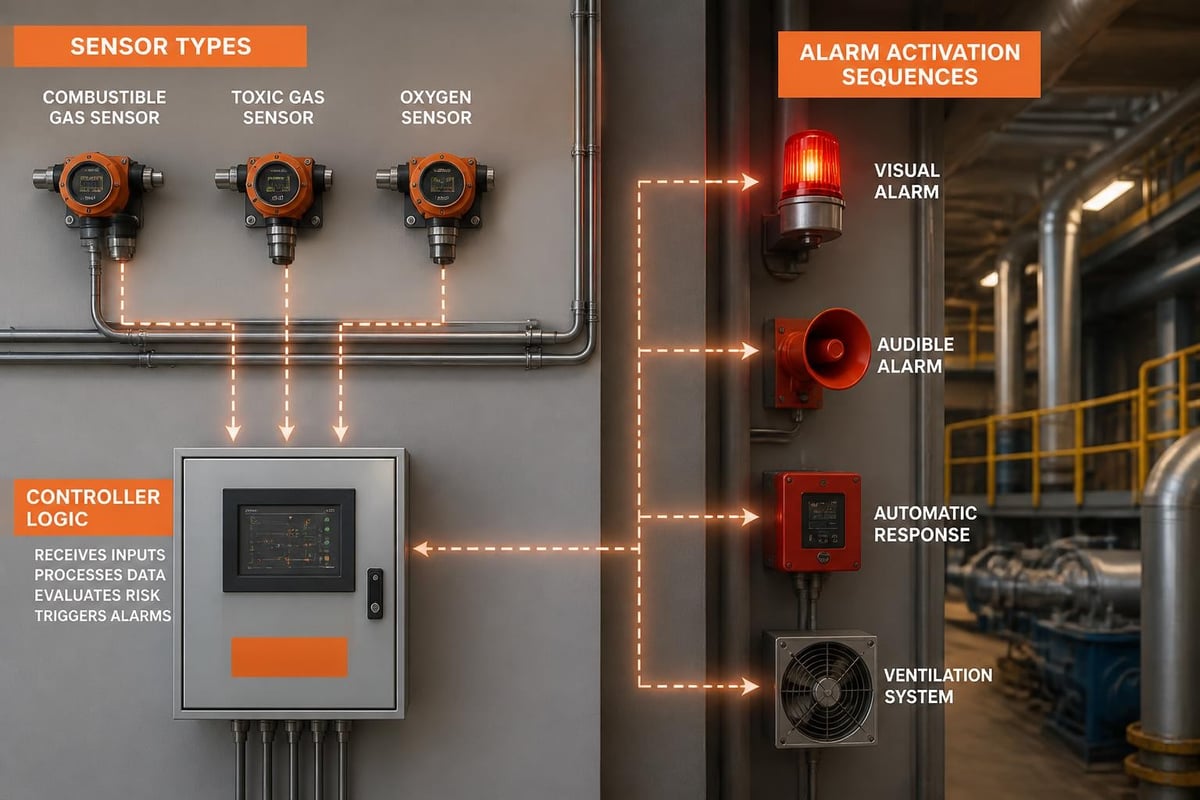
Controllers execute programmable logic that defines alarm levels, time delays, and response actions. A two-stage alarm structure is standard: a warning level at 25% of the Lower Explosive Limit (LEL) for flammable gases or 50% of the Threshold Limit Value (TLV) for toxic gases, and a danger level at 50% LEL or 100% TLV. Advanced controllers log event data, support remote monitoring via Ethernet or wireless protocols, and interface with distributed control systems (DCS) or supervisory control and data acquisition (SCADA) platforms.
The U.S. Coast Guard regulations for flammable gas detection systems specify installation requirements for marine vessels, including sensor placement near potential leak sources, sampling intervals, and fail-safe alarm states.
Why Organizations Deploy Fixed Gas Detection Systems
Organizations deploy fixed gas detection systems to protect personnel, prevent explosions and fires, ensure regulatory compliance, and minimize operational downtime. Continuous monitoring enables early leak detection before concentrations reach hazardous levels, allowing evacuation or corrective action. Automated responses such as ventilation activation or process shutdown reduce reliance on human intervention during emergencies.
Regulatory and Insurance Requirements
Most jurisdictions mandate fixed gas detection in environments where flammable or toxic gases are stored, processed, or transported. OSHA 1910.119 Process Safety Management requires hazard detection systems for facilities handling threshold quantities of highly hazardous chemicals. The IEC 61508 standard for functional safety provides design guidance for systems integrated into Safety Instrumented Systems (SIS), specifying Safety Integrity Level (SIL) ratings based on risk assessment.
Insurance providers often require certified detection systems and documented maintenance records as conditions for coverage. Non-compliance can void policies or increase premiums. Third-party certification by organizations such as UL, FM Approvals, or ATEX ensures equipment meets performance and safety standards for specific hazardous area classifications.
| Regulatory Driver | Requirement Type | Common Standards |
|---|---|---|
| OSHA Process Safety Management | Hazard detection and alarm | OSHA 1910.119 |
| IEC Functional Safety | SIL-rated systems | IEC 61508, IEC 61511 |
| NFPA Fire Code | Combustible gas monitoring | NFPA 72, NFPA 853 |
| EPA Air Quality | Emission monitoring | 40 CFR Part 60 |
| Maritime Safety | Vessel gas detection | 46 CFR 154.1350 |
Software development companies increasingly support these compliance requirements by building integrated platforms that automate calibration scheduling, maintenance documentation, and regulatory reporting.
How to Design and Install a Fixed Gas Detection System
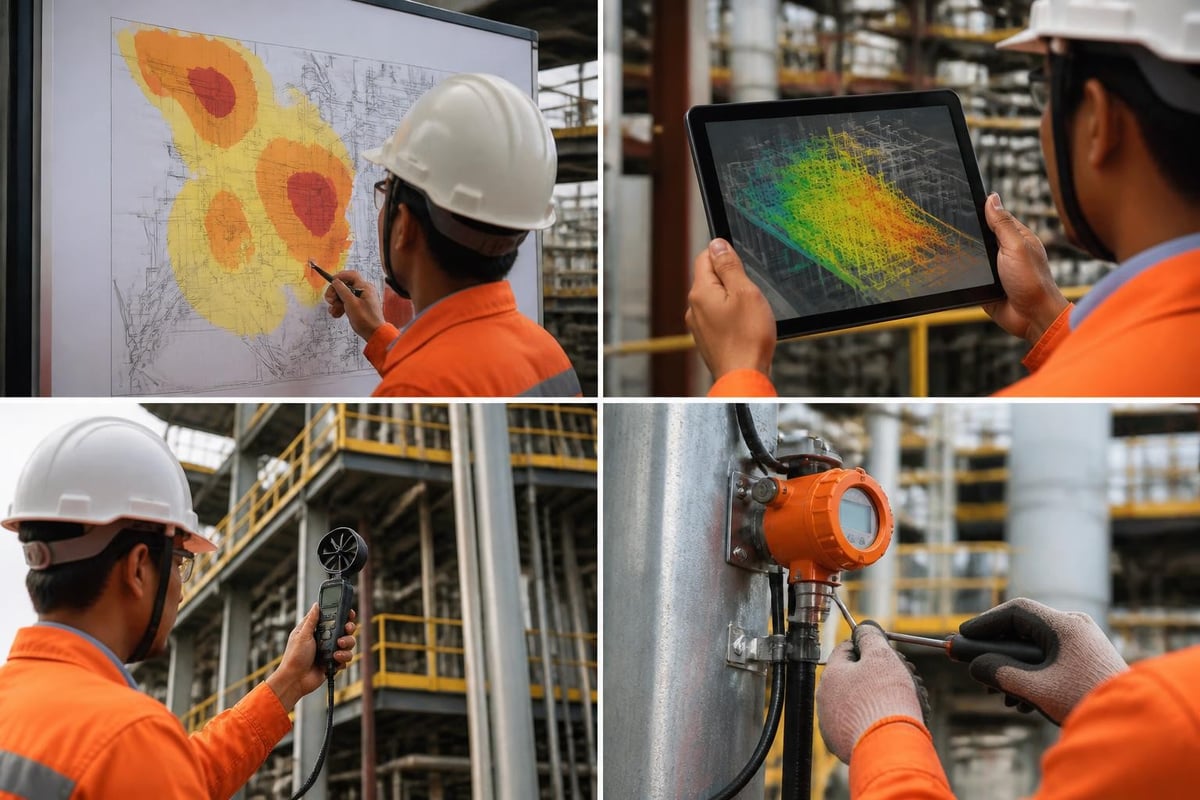
Designing a fixed gas detection system begins with comprehensive hazard assessment. Identify all gases present, their physical properties (density, flammability, toxicity), potential release points, and environmental factors such as temperature, humidity, and airflow patterns. Gas density determines sensor height: lighter-than-air gases like methane require ceiling-mounted sensors, while heavier gases like propane require low-level placement.
Sensor Placement Strategy
Calculate the number and location of sensors using facility layout, ventilation modeling, and detection range specifications. Position sensors within 1 meter of potential leak sources such as valve stems, flanges, pump seals, and storage tank vents. In open areas, space sensors according to manufacturer specifications, typically 5-10 meters for point detectors or along a path for open-path infrared systems. Consider wind direction, air currents from HVAC systems, and dead zones where gas may accumulate.
Installation best practices include:
- Mounting sensors at representative breathing zone heights (1.5-2 meters) for toxic gas detection
- Using explosion-proof enclosures in classified hazardous areas (Class I, Division 1 or Zone 0)
- Protecting sensors from physical damage, water ingress, and direct sunlight
- Installing sensor test/calibration ports accessible without confined space entry
- Running separate signal cables from power cables to minimize electrical interference
- Grounding all metallic components to prevent static discharge
Controllers should be located in non-hazardous areas with environmental controls to ensure stable operation. Provide uninterruptible power supplies (UPS) for critical systems to maintain monitoring during power failures. Integrate alarm outputs with facility-wide notification systems, emergency lighting, and evacuation protocols.
The Emerson Rosemount 625IR Fixed Gas Detector exemplifies modern detector design with advanced optical absorption technology that reduces false alarms while maintaining rapid response times.
What Calibration and Maintenance Protocols Ensure System Reliability
A fixed gas detection system requires regular calibration and functional testing to maintain accuracy and compliance. Calibration involves exposing sensors to known gas concentrations and adjusting output signals to match expected values. Most regulatory frameworks require calibration every 6-12 months, though some sensor technologies or harsh environments necessitate quarterly intervals.
Calibration Procedures
Standard calibration workflow:
- Document pre-calibration sensor readings and alarm setpoints
- Apply zero gas (nitrogen or clean air) and adjust zero offset
- Apply span gas at 50-60% of full-scale range and adjust sensitivity
- Verify alarm activation at warning and danger thresholds
- Record post-calibration data including gas concentrations, dates, and technician identity
- Update calibration certificates and equipment service history
Proper calibration and maintenance of fixed gas detection systems directly impacts measurement accuracy and prevents dangerous concentration miscalculations. Drift in sensor response over time can result from contamination, aging, or environmental exposure. Electrochemical sensors typically have 1-3 year service lives, while infrared sensors can operate 5+ years with proper care.
Managing serialized inventory for sensors, calibration gases, and maintenance parts presents significant administrative burden. Asset tracking software solutions can automate maintenance scheduling, track calibration due dates, and generate compliance documentation. The Brytend Service Module helps organizations register serialized equipment, create custom service protocols, automate reminder notifications, and produce service certificates that satisfy auditor requirements.

Functional Testing and Documentation
Beyond calibration, functional testing verifies end-to-end system operation. Test alarm activation by applying gas to sensors and confirming controller response, alarm device operation, and integration with shutdown or ventilation systems. Conduct bump tests monthly by briefly exposing sensors to target gas and verifying readings exceed alarm thresholds.
Maintenance records must include:
- Sensor serial numbers and installation locations
- Calibration dates, technician names, and gas lot numbers
- Functional test results and corrective actions
- Component replacements and firmware updates
- Alarm event logs with timestamps and concentration values
Digital maintenance platforms replace paper logbooks, enable mobile technician access, and provide audit trails. Task management tools integrated with equipment databases ensure calibration tasks are assigned, tracked, and completed on schedule.
What Common Challenges Impact Fixed Gas Detection System Performance
False alarms represent the most frequent operational challenge. Causes include sensor contamination from dust or chemical exposure, environmental fluctuations in temperature or humidity, improper calibration, and cross-sensitivity to non-target gases. False alarms create alert fatigue, reduce operator confidence, and may lead to disabled sensors or ignored warnings.
Addressing False Alarm Sources
Implement multi-sensor voting logic where alarm activation requires confirmation from multiple detectors in the same zone. Use time delays (typically 15-30 seconds) to filter transient signals while maintaining rapid response to genuine leaks. Select sensor technologies with high selectivity for target gases and minimal cross-interference. For example, infrared sensors detect methane without responding to alcohol vapors that may trigger catalytic sensors.
Environmental compensation algorithms adjust sensor readings for temperature and pressure variations. Modern transmitters include these functions, but require accurate environmental baselines during commissioning. Regularly inspect sensors for physical contamination such as dust buildup on optical windows or corrosion on electrochemical cell contacts.
Common installation mistakes include:
- Placing sensors in dead air zones with poor gas circulation
- Mounting sensors too far from leak sources, exceeding effective detection range
- Using incompatible sensor types for specific gas/environment combinations
- Neglecting to establish site-specific alarm setpoints based on actual hazard assessment
- Failing to test alarm integration with shutdown systems during commissioning
Integration complexity increases when connecting detection systems to existing facility controls. Protocol mismatches between modern digital sensors and legacy analog controllers require signal converters or system upgrades. Wireless sensor networks reduce installation costs but introduce communication reliability concerns in metal structures or electromagnetically noisy environments.
How to Optimize Fixed Gas Detection System Integration with Safety Protocols
Optimizing a fixed gas detection system requires integration with broader facility safety management. Connect detection systems to emergency shutdown (ESD) systems so that alarm conditions automatically initiate process isolation, depressurization, or inert gas purging. Link with ventilation controls to increase exhaust rates when gases are detected, diluting concentrations and directing vapors away from ignition sources.
Safety Instrumented System Integration
When fixed gas detection serves as part of a Safety Instrumented Function (SIF), the system must achieve a specified SIL rating based on risk reduction requirements. The guidance on integration with Safety Instrumented Systems details compliance with IEC 61511, including requirements for redundancy, diagnostic coverage, and proof testing intervals.
A SIL 2 implementation might use 1oo2 (one out of two) sensor voting, where either sensor detecting a hazardous condition triggers the safety action. This provides fault tolerance if one sensor fails while maintaining detection capability. Higher SIL levels require 2oo3 (two out of three) voting or more complex architectures.
Integration best practices:
- Define clear safety functions with specified response times
- Document all alarm setpoints and their technical justification
- Establish proof testing procedures to verify SIF performance
- Implement bypass management protocols that require authorization and time limits
- Conduct periodic SIL verification calculations accounting for actual failure rate data
Communication with facility operations teams ensures detection system status is visible. Display gas concentration readings on operator consoles, provide trend analysis showing concentration changes over time, and generate predictive alerts when readings approach alarm thresholds. Mobile notifications allow off-site personnel to monitor critical alarms and respond remotely.
What Technologies Are Advancing Fixed Gas Detection Capabilities
Wireless sensor networks eliminate expensive conduit and cabling installation in retrofit applications or hazardous areas where running wires is impractical. Battery-powered sensors with 2-5 year operational lives communicate via mesh networks using protocols like WirelessHART or ISA100. Gateway devices bridge wireless networks to wired control systems, enabling integration with existing infrastructure.
Artificial Intelligence and Predictive Analytics
Machine learning algorithms analyze historical sensor data to establish normal operating patterns and identify anomalies that may indicate developing leaks, sensor drift, or system faults. Predictive maintenance models forecast calibration due dates and sensor replacement timing based on actual performance degradation rather than fixed schedules. This optimization reduces unnecessary maintenance while preventing unexpected failures.
Cloud-based monitoring platforms aggregate data from multiple facilities, enabling corporate-level visibility and benchmarking. Centralized dashboards display system health metrics, compliance status, and incident statistics. Automated reporting generates regulatory submissions and audit documentation without manual data compilation.
| Technology | Primary Benefit | Implementation Consideration |
|---|---|---|
| Wireless Sensors | Reduced installation cost | Battery life and network reliability |
| AI Anomaly Detection | Early fault identification | Requires historical baseline data |
| Cloud Monitoring | Multi-site visibility | Data security and latency requirements |
| Open-Path IR | Large area coverage | Alignment sensitivity and beam obstruction |
| Ultrasonic Leak Detection | Gas-agnostic detection | Requires pressurized leak sources |
The comparison between fixed and portable gas detectors highlights complementary roles: fixed systems provide continuous area monitoring while portable detectors protect individual workers in variable work locations.
How Software Systems Improve Fixed Gas Detection Management
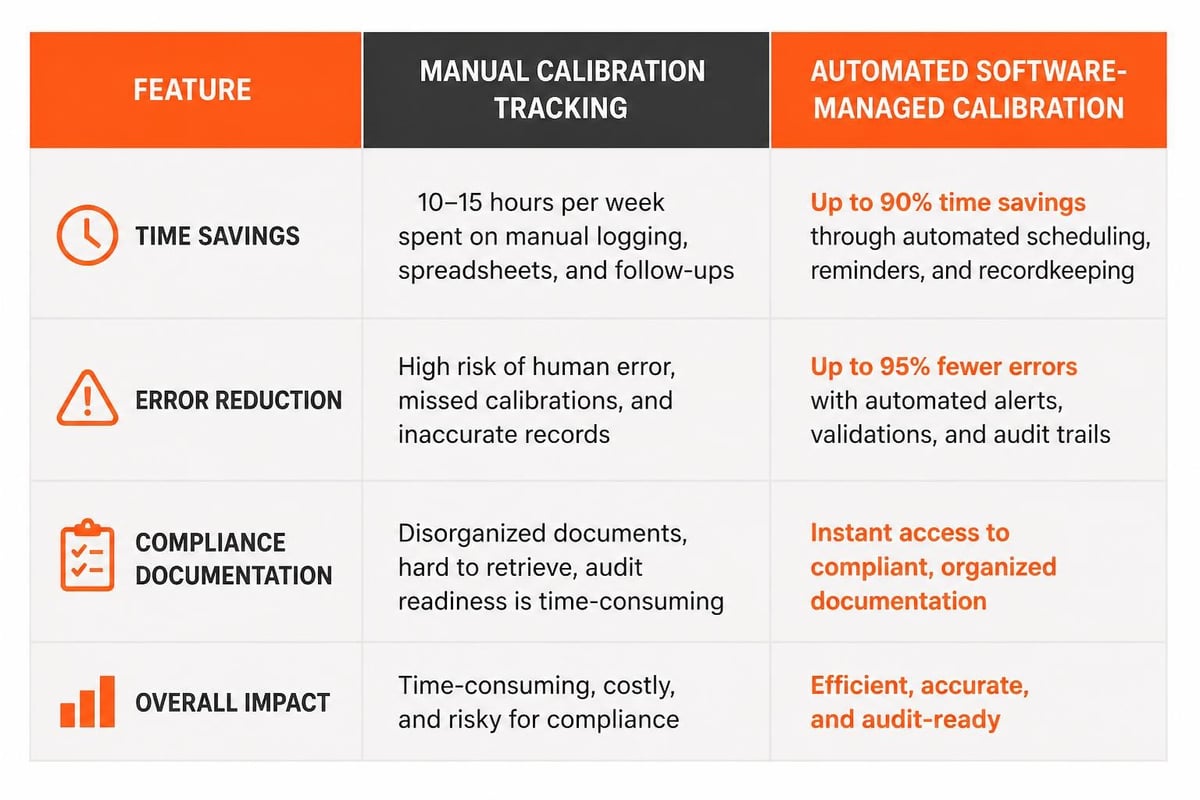
Software platforms purpose-built for gas detection service management streamline administrative workflows that consume significant technician time. These systems track equipment inventory, schedule maintenance tasks, manage calibration records, and generate service documentation. Integration with mobile applications allows field technicians to access equipment history, record test results, and capture digital signatures on-site.
Digital Workflow Automation
A typical service visit involves multiple documentation steps: equipment identification, pre-service inspection, calibration execution, functional testing, and certificate generation. Manual processes using paper forms and spreadsheets create data entry redundancy, transcription errors, and delayed record availability. Digital workflows capture data once at the point of activity and automatically populate service certificates, work orders, and compliance reports.
Gas detection service software for distributors addresses these challenges by providing end-to-end service lifecycle management. Features include automated service reminders based on equipment-specific intervals, mobile calibration data entry with barcode scanning, and customizable service certificate templates that meet regulatory requirements.
Case example: A petrochemical facility operates 200 fixed sensors across multiple process units. Manual calibration tracking required 8 hours monthly to compile due dates, assign technicians, and file certificates. After implementing automated service management software, the administrative burden decreased to 1 hour monthly. The system generated automated reminders 30 days before due dates, technicians completed calibrations using mobile tablets that synchronized data in real-time, and certificates were automatically distributed to operations and EHS departments. The facility reduced missed calibrations from 5% to 0% and improved auditor confidence through consistent documentation quality.
Quality Control and Compliance Verification
Software systems enforce quality control protocols by requiring specific data fields before closing work orders. Mandatory entries might include span gas lot numbers, measured concentrations at each calibration point, and photographic evidence of sensor condition. Supervisory review workflows enable calibration data validation before certificates are issued, catching errors or questionable results before they become compliance issues.
Quality control processes for gas detection companies benefit from structured digital workflows that standardize procedures across technician teams. Built-in checklists ensure all test steps are completed, while centralized data storage provides corporate visibility into service quality metrics across multiple customer sites.
Fixed gas detection systems protect lives and assets through continuous monitoring of hazardous atmospheres, but their effectiveness depends on proper design, installation, calibration, and documentation practices. Organizations managing complex sensor networks across multiple facilities face significant administrative challenges in maintaining compliance and system reliability. Brytend develops custom software solutions that automate equipment tracking, service scheduling, and compliance reporting, allowing safety teams to focus on hazard mitigation rather than paperwork. Contact us to discuss how tailored software can streamline your gas detection management workflows and enhance operational safety.