
Gas detection represents a critical safety infrastructure investment for industrial facilities, where invisible threats can rapidly escalate into catastrophic events. Modern gas detection systems combine sensor technology, data analytics, and automated response protocols to identify hazardous atmospheric conditions before they endanger personnel or operations. For B2B organizations managing complex industrial environments-from chemical plants to pharmaceutical manufacturing-effective gas detection strategies directly impact regulatory compliance, insurance costs, and operational continuity.
What Are the Core Components of Industrial Gas Detection Systems?
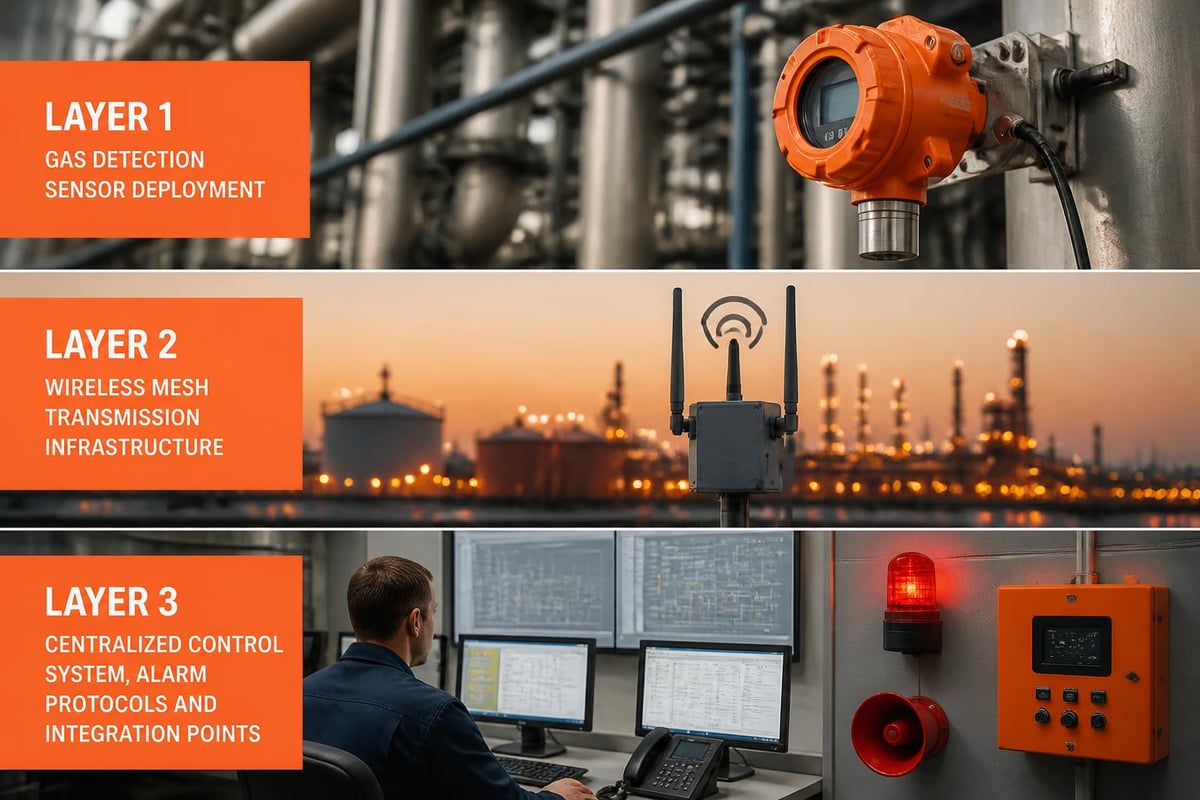
Industrial gas detection systems consist of three fundamental layers: sensors that measure atmospheric composition, transmission infrastructure that relays data to monitoring stations, and control systems that interpret readings and trigger responses.
Sensor technology forms the foundation of any gas detection deployment. Electrochemical sensors detect toxic gases like hydrogen sulfide or carbon monoxide through chemical reactions that generate measurable electrical signals. Catalytic bead sensors identify combustible gases by measuring heat from oxidation reactions. Infrared sensors use light absorption patterns to detect hydrocarbons and carbon dioxide without chemical contact, offering longer operational lifespans in harsh environments.
The transmission layer connects distributed sensors to centralized monitoring systems. Wired installations provide reliable data transmission in permanent facilities, while wireless mesh networks enable flexible deployment in temporary work sites or areas where cabling is impractical. Modern systems increasingly incorporate edge computing capabilities, allowing sensors to perform preliminary analysis and reduce bandwidth requirements.
Control and Response Architecture
Control systems receive sensor data, apply analytical algorithms, and execute predefined response protocols. These systems typically feature:
- Multi-level alarm thresholds (warning, evacuation, emergency shutdown)
- Correlation logic that distinguishes genuine threats from sensor drift or environmental interference
- Integration points with ventilation systems, emergency lighting, and communication networks
- Data logging capabilities for compliance documentation and incident investigation
- Remote monitoring dashboards accessible to safety managers and emergency responders
Advanced platforms incorporate pattern recognition methods for chemiresistive gas sensor arrays that address cross-sensitivity challenges, improving accuracy when multiple gas types are present simultaneously.
Which Gas Detection Technologies Best Suit Different Industrial Applications?
Selecting appropriate detection technology requires matching sensor characteristics to specific operational hazards, environmental conditions, and regulatory requirements.
| Application Type | Recommended Technology | Primary Gases Monitored | Key Considerations |
|---|---|---|---|
| Confined Space Entry | Portable multi-gas detectors | O₂, LEL, H₂S, CO | Battery life, calibration frequency, durability |
| Chemical Processing | Fixed electrochemical arrays | Cl₂, NH₃, HCl, SO₂ | Chemical compatibility, maintenance access |
| Oil & Gas Facilities | Infrared point detectors | Methane, propane, butane | Explosion-proof ratings, SIL certification |
| Cold Storage | Refrigerant-specific sensors | NH₃, R-134a, CO₂ | Low-temperature operation, humidity resistance |
| Wastewater Treatment | Continuous monitoring systems | H₂S, CH₄, Cl₂ | Corrosion resistance, outdoor weatherproofing |
Electrochemical sensors excel in detecting toxic gases at parts-per-million concentrations. They provide precise measurements for hydrogen sulfide, chlorine, ammonia, and similar compounds. However, they require regular calibration (typically every 90-180 days) and have limited operational lifespans of 2-3 years in demanding environments.
Catalytic sensors remain the industry standard for combustible gas detection because of their reliability and relatively low cost. They measure concentrations as percentages of Lower Explosive Limit (LEL), providing critical early warning before flammable atmospheres develop. These sensors can be poisoned by silicones, sulfur compounds, and certain other chemicals, requiring careful site assessment before deployment.
Advanced Detection Methods for Complex Environments
Infrared absorption technology offers significant advantages in hydrocarbon-rich environments. These sensors require minimal maintenance, resist chemical poisoning, and function reliably for 5-10 years. They cost more initially than electrochemical or catalytic alternatives, but total cost of ownership often proves lower over extended deployment periods.
Photoionization detectors (PIDs) measure volatile organic compounds (VOCs) across a broad spectrum, making them valuable for general air quality monitoring and leak detection during maintenance activities. PIDs respond to hundreds of compounds but lack gas-specific identification, requiring supplementary testing when precise contaminant identification matters.
Recent developments in multimodal AI-based sensor fusion demonstrate how combining multiple sensor types with machine learning algorithms can dramatically improve detection accuracy and reduce false alarms in complex industrial settings.
How Should Organizations Structure Gas Detection System Deployment?
Effective deployment begins with comprehensive hazard assessment that maps potential gas release points, evaluates exposure scenarios, and identifies critical protection zones.
Step 1: Conduct Detailed Hazard Analysis
Document all processes involving hazardous gases, including normal operations, maintenance procedures, and reasonably foreseeable failure modes. This assessment should identify:
- Chemical inventory with quantities and concentration levels
- Process equipment that could release gases (valves, flanges, pumps, storage vessels)
- Ventilation patterns and their impact on gas dispersion
- Personnel work areas requiring continuous protection
- Environmental factors (temperature extremes, humidity, vibration)
Step 2: Define Detection Objectives and Coverage Requirements
Establish specific protection goals for each identified hazard zone. Consider whether objectives focus on personnel protection, asset protection, environmental compliance, or combinations thereof. Regulatory frameworks often dictate minimum requirements-for instance, federal regulations for fire and gas-detection systems specify detailed requirements for production processing areas in certain industries.
Step 3: Engineer Sensor Placement Strategy
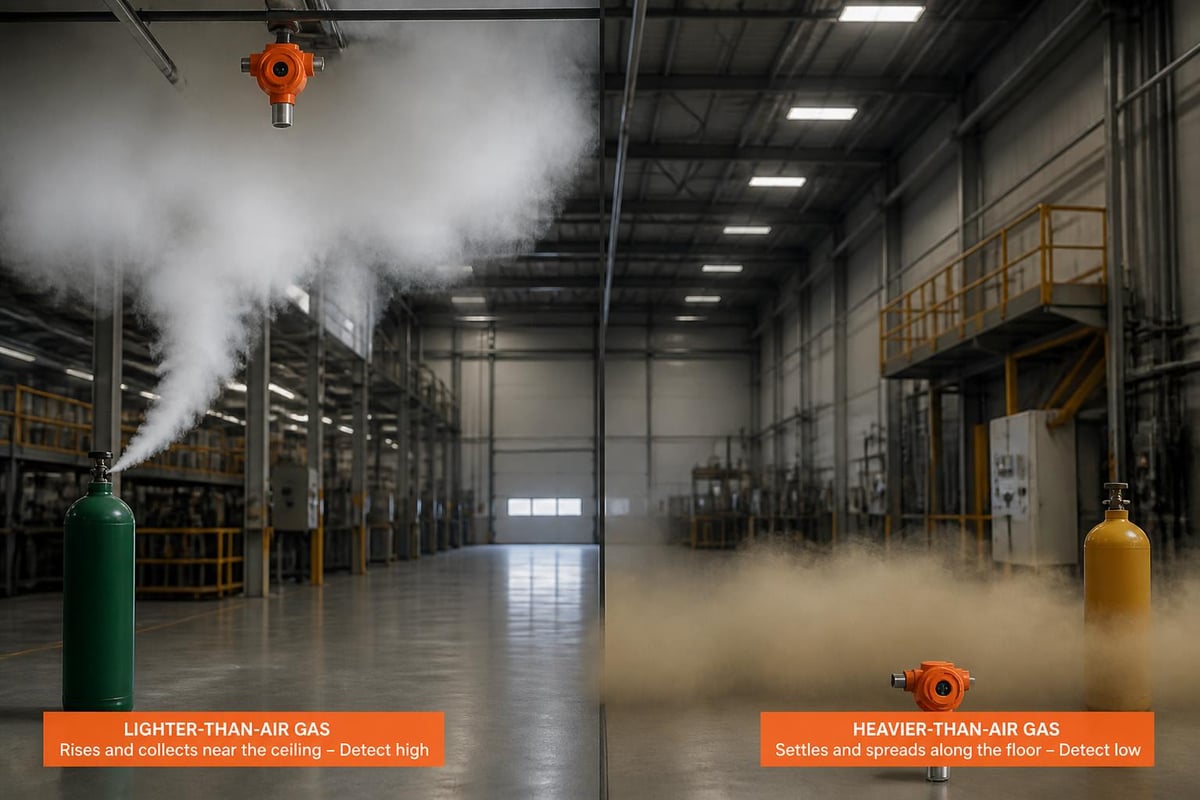
Position sensors based on gas-specific behavior and environmental factors. Lighter-than-air gases (methane, hydrogen, ammonia) require high-mounted sensors near ceiling levels, while heavier-than-air gases (propane, hydrogen sulfide, chlorine) demand low-level placement. Consider:
- Gas dispersion modeling for each release scenario
- Prevailing airflow patterns from ventilation systems
- Obstructions that create dead zones or channeling effects
- Accessibility for routine maintenance and calibration
- Protection from physical damage and environmental interference
Step 4: Implement Calibration and Maintenance Protocols
Establish documented procedures covering:
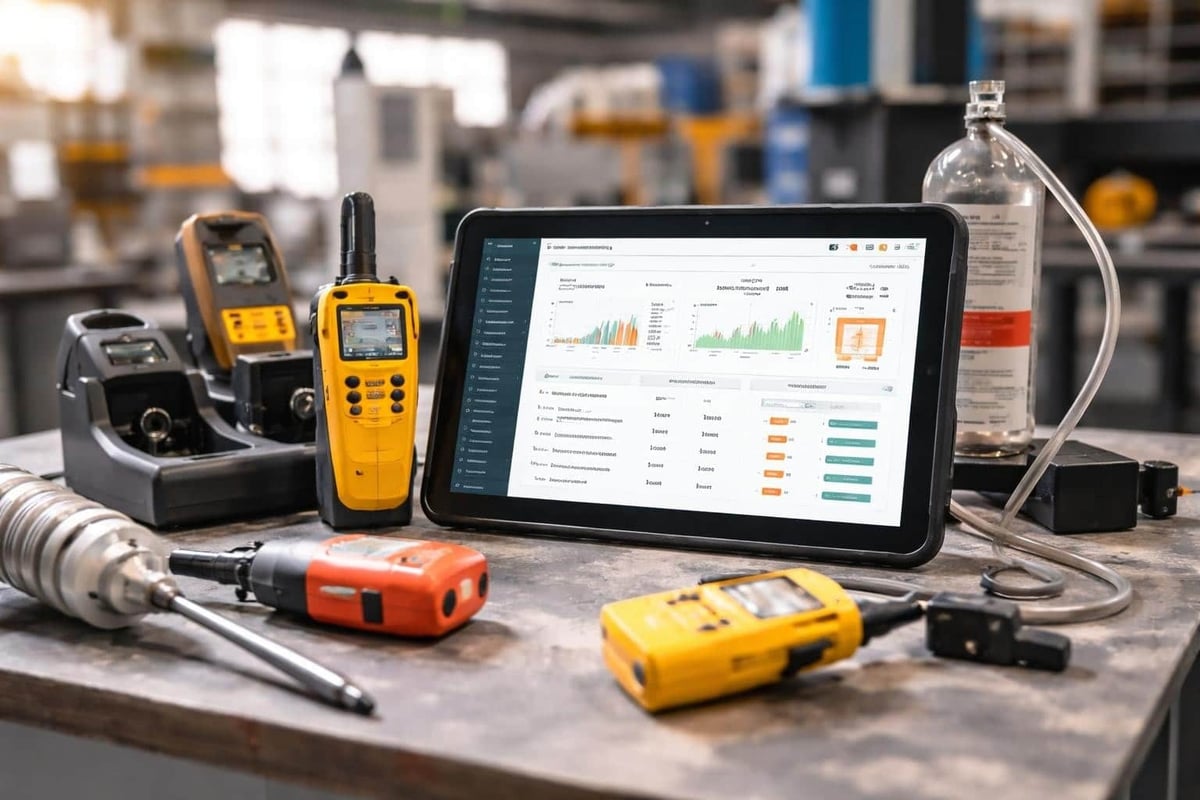
- Bump testing (daily or pre-shift verification that sensors respond to gas exposure)
- Full calibration (periodic adjustment using certified gas standards)
- Filter replacement for particulate protection
- Battery maintenance for portable units
- Sensor replacement at manufacturer-specified intervals
Organizations managing multiple facilities or complex detector fleets benefit significantly from digitizing these workflows. The Brytend Service Module enables teams to register each detector as serialized inventory, automate calibration reminders based on manufacturer specifications, and generate compliance certificates documenting all maintenance activities. This systematic approach prevents coverage gaps from expired sensors while providing auditable records for regulatory inspections.
What Compliance Requirements Govern Industrial Gas Detection?
Gas detection compliance involves navigating intersecting regulatory frameworks from occupational safety agencies, environmental protection authorities, fire codes, and industry-specific standards.
OSHA and Workplace Safety Regulations
The Occupational Safety and Health Administration establishes permissible exposure limits (PELs) for hundreds of airborne contaminants. Industries using gases covered by OSHA Process Safety Management (PSM) standards face additional requirements for detection system design, installation, and maintenance documentation.
PSM facilities must demonstrate:
- Detection system coverage adequate for identified hazards
- Regular testing and calibration following written procedures
- Employee training on alarm response protocols
- Integration with emergency shutdown systems where appropriate
- Management of change procedures when modifying detection infrastructure
Environmental permits frequently mandate continuous emissions monitoring for regulated substances. Detection systems in these applications must meet specific performance standards and undergo regular performance audits by certified third parties.
Industry-Specific Standards and Codes
Different sectors follow specialized guidance documents:
- ISA 12.13.01 provides performance requirements for combustible gas detectors in classified areas
- ISA 92.00.01 covers performance requirements for toxic gas detectors
- NFPA 72 addresses fire alarm and signaling systems, including gas detection integrated with fire protection
- API RP 500/505 guide area classification and detector selection for petroleum facilities
- IEC 61508 establishes functional safety requirements for safety instrumented systems
Companies like WatchGas specialize in helping organizations navigate these complex compliance landscapes, ensuring detection systems meet both regulatory requirements and operational safety objectives.
How Can Organizations Integrate Gas Detection with Broader Safety Systems?
Modern gas detection systems function as nodes within comprehensive safety ecosystems, exchanging data with building management systems, emergency response platforms, and maintenance management software.
Building Management System (BMS) integration enables coordinated responses to detected gas conditions. When sensors identify hazardous concentrations, the BMS can automatically:
- Increase ventilation in affected zones to dilute contaminants
- Isolate compromised areas by closing fire dampers and HVAC zones
- Activate emergency exhaust systems
- Trigger emergency lighting and egress systems
- Send notifications to security and facilities management
Data Integration for Predictive Maintenance
Continuous monitoring generates valuable operational intelligence beyond immediate alarm functions. Trending analysis reveals patterns that indicate:
- Sensors approaching end-of-life based on response time degradation
- Process equipment developing leaks before reaching alarm thresholds
- Environmental factors affecting sensor performance
- Areas where detection coverage may need enhancement
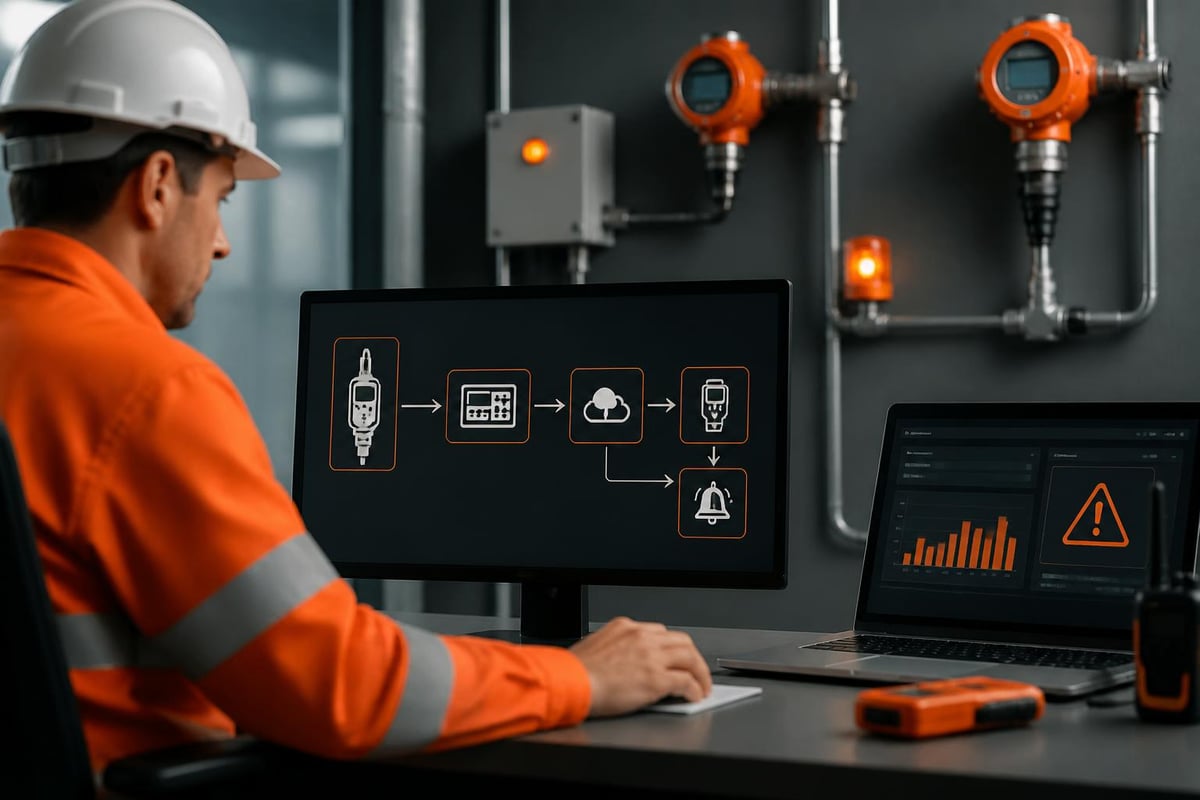
Organizations deploying gas detection across multiple sites benefit from centralized data platforms that aggregate readings, maintenance records, and incident histories. Custom software solutions can correlate gas detection events with production schedules, maintenance activities, and environmental conditions to identify systemic issues rather than isolated incidents.
Real-world scenario: A chemical manufacturer noticed recurring low-level hydrogen sulfide readings in a reactor building, always occurring during specific batch processes. Historical data analysis revealed that the pattern coincided with particular raw material lots from one supplier. Investigation showed those materials contained trace sulfur impurities that generated H₂S under reaction conditions. The manufacturer worked with the supplier to modify specifications, eliminating the issue at its source rather than simply managing symptoms.
What Common Mistakes Undermine Gas Detection Effectiveness?
Even well-designed systems fail when organizations overlook critical implementation and operational factors.
Insufficient Coverage Based on Inadequate Hazard Assessment
Many facilities deploy detectors based on generic industry guidance without conducting site-specific dispersion modeling. This approach creates dangerous gaps in protection. Gas behavior varies significantly based on release characteristics, ventilation patterns, and environmental conditions. A detector appropriately positioned for slow leaks from flanges may completely miss rapid releases from catastrophic equipment failures.
Best practice: Commission computational fluid dynamics (CFD) modeling for complex facilities or high-consequence scenarios. These analyses simulate gas dispersion under various release scenarios and environmental conditions, identifying optimal detector locations that generic spacing guidelines might miss. Recent research on computationally predicting gas sensor array performance offers methodologies for optimizing coverage while minimizing unnecessary sensor deployment.
Neglecting Cross-Sensitivity and Interferent Effects
Most gas sensors respond to multiple substances beyond their target analytes. Electrochemical hydrogen sulfide sensors may trigger from sulfur dioxide exposure. Catalytic sensors designed for methane also respond to other hydrocarbons. These cross-sensitivities create false alarms that erode trust in detection systems, leading personnel to ignore or override alarms.
Organizations must:
- Evaluate potential interferents during sensor selection based on actual site chemistry
- Test detector response to likely interferent gases before deployment
- Implement correlation logic that requires multiple sensors to alarm before triggering emergency responses
- Train personnel on interferent effects so they understand alarm context
Calibration Shortcuts and Deferred Maintenance
Sensor calibration represents the most commonly deferred maintenance activity, yet also the most critical for reliable performance. Sensors drift over time due to environmental exposure, chemical reactions, and component aging. Uncalibrated sensors may fail to alarm at dangerous concentrations or trigger nuisance alarms at safe levels.
Common shortcuts that compromise safety:
- Using “close enough” calibration gases instead of certified standards matched to actual hazards
- Extending calibration intervals beyond manufacturer recommendations to reduce costs
- Assigning calibration to untrained personnel who lack proper procedures
- Failing to document calibration activities for compliance verification
- Continuing to use sensors beyond rated operational lifespans
Establishing digital tracking systems that automatically schedule calibrations, document completion, and flag overdue maintenance prevents these gaps from developing.
How Do Emerging Technologies Transform Gas Detection Capabilities?
The gas detection industry is experiencing rapid technological advancement driven by developments in sensor materials, wireless communications, artificial intelligence, and computer vision.
Miniaturization and Wireless Mesh Networks
Microelectromechanical systems (MEMS) enable dramatically smaller sensor packages that consume less power and cost less to manufacture. These compact sensors facilitate:
- Dense detection arrays providing higher spatial resolution
- Wearable personal monitors that don’t burden workers
- Temporary installations for maintenance activities or investigations
- Integration into equipment and processes previously difficult to monitor
Wireless mesh networks eliminate cabling costs while providing redundant communication paths that maintain functionality even when individual nodes fail. Battery-powered wireless sensors can operate for years on single charges, making them practical for remote locations or mobile equipment.
Artificial Intelligence and Machine Learning
AI algorithms analyze patterns across multiple sensors to distinguish genuine threats from environmental noise, reducing false alarms while improving detection sensitivity. Machine learning models trained on historical data recognize precursor patterns that indicate developing hazards before conventional threshold-based alarms trigger.
Advanced implementations use multimodal sensor fusion combining gas detection with thermal imaging, acoustic monitoring, and vibration analysis to provide comprehensive situational awareness. These systems identify not just that a gas release occurred, but where it originated and how it’s propagating through the facility.
Computer Vision for Invisible Gas Detection
Emerging techniques apply specialized cameras and image processing to detect gas plumes invisible to human eyes. Recent developments in RGB-Thermal Cross Attention Networks demonstrate how thermal imaging combined with AI can identify gas leaks remotely without requiring sensors at the leak location. This technology enables:
- Rapid facility surveys from safe distances
- Detection of intermittent leaks that might occur between sensor locations
- Quantification of leak rates for regulatory reporting
- Continuous monitoring of large outdoor areas impractical for point sensors
What Key Performance Metrics Should Organizations Track?
Effective gas detection programs require systematic measurement to verify protection adequacy and drive continuous improvement.
System Availability and Uptime
Definition: The percentage of time detection systems remain operational and capable of detecting target gases at specified concentrations.
Track availability separately for critical zones where detection failures create immediate personnel hazards versus general area monitoring. Industry best practice targets 99.5% availability for life safety applications, requiring redundant sensors or backup systems in critical locations.
Calculation: (Total operational hours – Downtime hours) / Total operational hours × 100
Mean Time Between Failures (MTBF)
Definition: The average operational time between system failures requiring repair or sensor replacement.
This metric identifies problematic sensor locations, manufacturers with reliability issues, or environmental conditions that accelerate component degradation. Compare MTBF across different technologies, manufacturers, and installation locations to optimize sensor selection and placement.
Calibration Compliance Rate
Definition: The percentage of scheduled calibrations completed within specified time windows.
Target: 100% compliance with no overdue calibrations
Track both:
- On-time completion rate (calibrations completed before due date)
- Maximum overdue duration when missed calibrations occur
This metric directly correlates with detection reliability. Even brief gaps in calibration schedules can allow dangerous drift to accumulate.
False Alarm Frequency
Definition: The number of alarm events per sensor per year that investigation determines were not caused by actual hazardous gas concentrations.
False alarms create operational disruptions and alarm fatigue that degrades response effectiveness. However, reducing alarms by desensitizing systems or extending response times compromises safety. The goal is understanding root causes:
| False Alarm Source | Percentage of Total | Mitigation Strategy |
|---|---|---|
| Sensor drift/malfunction | 35% | Improve calibration frequency, replace aging sensors |
| Environmental interferents | 30% | Select sensors with better selectivity, install filters |
| Process upsets | 20% | Adjust alarm setpoints, improve process control |
| Maintenance activities | 10% | Implement permit procedures that bypass detectors during work |
| Other causes | 5% | Case-by-case investigation |
Response Verification Testing
Definition: Percentage of sensors that demonstrate proper response during bump tests or functional verification.
Daily or shift-start bump testing exposes sensors to target gases to verify they alarm appropriately. Sensors that fail bump tests require immediate calibration or replacement before returning equipment to service. Track:
- Initial pass rate (sensors passing without adjustment)
- Failure modes (no response, delayed response, incorrect reading)
- Time from failure identification to corrective action completion
Frequently Asked Questions About Industrial Gas Detection
What concentration levels trigger gas detection alarms?
Alarm setpoints depend on the specific gas hazard and regulatory requirements. Toxic gas detectors typically alarm at 50% of the Permissible Exposure Limit (PEL) for warning levels and at the PEL for evacuation alarms. Combustible gas detectors generally alarm at 20% LEL (Lower Explosive Limit) for warning and 40-60% LEL for danger. Oxygen deficiency alarms activate at 19.5% oxygen concentratio
How often do gas detection sensors require calibration?
Calibration frequency varies by sensor technology and manufacturer specifications. Electrochemical sensors typically require calibration every 90-180 days, while catalytic sensors often need calibration every 6-12 months. Infrared sensors may operate 12-24 months between calibrations. However, harsh environments, frequent alarm events, or regulatory requirements may mandate more frequent calibration. Many organizations implement monthly calibration schedules for critical safety applications regardless of manufacturer recommendations. Always perform bump tests before calibration to verify sensors respond to gas exposure.
Can single sensors detect multiple gas types simultaneously?
Standard sensors are typically optimized for specific gases or gas families. However, multi-gas monitors combine several sensors in one instrument package, commonly detecting oxygen, combustible gases, carbon monoxide, and hydrogen sulfide in a single unit. Some advanced platforms use sensor arrays with pattern recognition algorithms to identify multiple specific gases, though these cost significantly more than single-gas detectors. For applications requiring detection of numerous gases, networked systems with specialized sensors for each target gas generally provide better performance than multi-gas compromises.
What factors affect gas detector sensor lifespan?
Environmental conditions dramatically impact operational life. Temperature extremes accelerate chemical degradation in electrochemical sensors. High humidity can damage electronics and corrode components. Chemical exposure-even to non-target gases-causes gradual performance deterioration. Physical factors like vibration, dust, and impact shorten sensor life. Electrochemical sensors typically last 2-3 years, catalytic sensors 3-5 years, and infrared sensors 5-10 years under normal conditions. However, harsh industrial environments may reduce these timeframes by 30-50%. Regular calibration data trending helps identify sensors approaching end-of-life before they fail.
How do organizations maintain gas detection systems during equipment shutdowns?
Planned shutdowns present unique challenges because normal process conditions don’t exist, but maintenance activities often increase gas exposure risks. Best practices include: maintaining detection on all permanently installed systems throughout shutdowns; deploying additional portable monitors in work areas; establishing gas-free certificates before permitting entry to confined spaces or hazardous areas; implementing permit systems that document detector placement and functionality verification; and designating competent persons responsible for monitoring atmospheric conditions throughout work activities. Many organizations enhance detection coverage during shutdowns beyond normal operating requirements.
What documentation do regulators expect for gas detection compliance?
Comprehensive documentation demonstrates due diligence and supports regulatory compliance. Essential records include: design basis documents explaining hazard assessment and detector selection rationale; installation drawings showing sensor locations and system architecture; calibration records with dates, personnel, gas standards used, and as-found/as-left readings; maintenance logs documenting inspections, repairs, and component replacements; alarm event histories with investigation findings; training records for personnel operating and maintaining systems; and management of change documentation when modifying detection infrastructure. Retention periods typically range from 3-7 years depending on specific regulatory frameworks. Digital platforms that automatically capture and organize these records significantly reduce compliance burden.
How should organizations respond when gas detectors alarm?
Response protocols should be clearly documented in emergency procedures and regularly practiced through drills. Immediate responses include: evacuating personnel from affected areas following established routes; notifying emergency response teams and facility management; securing the area to prevent unauthorized entry; identifying and controlling the gas source if safe to do so; verifying alarm validity by checking additional sensors or visual inspection; and activating emergency ventilation or suppression systems as appropriate. Personnel should never re-enter affected areas until atmospheric testing by qualified individuals confirms safe conditions. All alarm events require investigation to determine root causes and implement corrective actions preventing recurrence.


