
Data management determines how organizations collect, store, protect, and utilize information across systems and teams. Effective practices prevent data loss, ensure regulatory compliance, improve decision-making, and enable operational efficiency. Businesses that manage data systematically gain competitive advantages through faster insights, reduced risk exposure, and better resource allocation.
TL;DR
- Data management is a structured approach to collecting, storing, securing, and governing information assets throughout their lifecycle
- Effective practices require clear governance frameworks, defined roles, standardized processes, and continuous quality monitoring
- Organizations must balance accessibility with security, implementing role-based controls and encryption protocols
- Regular audits, documentation standards, and automated backups prevent data loss and ensure compliance
- Integration tools and centralized platforms reduce silos and improve cross-functional data sharing
What Is Data Management?
Data management is a set of policies, procedures, and technologies that control how an organization collects, stores, secures, and uses information assets. It encompasses data governance, quality control, integration, backup, and lifecycle management.
The practice covers both structured data in databases and unstructured information in documents, emails, and media files. Organizations implement data management to maintain accuracy, ensure availability, meet regulatory requirements, and support business operations.
Core Components
Data governance establishes ownership, accountability, and decision-making authority. Organizations define who can access, modify, or delete specific datasets and under what conditions.
Data quality ensures accuracy, completeness, consistency, and timeliness. Quality controls include validation rules, duplicate detection, and standardization protocols.
Data security protects information from unauthorized access, breaches, and loss through encryption, access controls, and monitoring systems.
Data integration connects disparate sources, enabling unified views across departments and systems. Integration eliminates silos and improves data sharing.
Why Do Organizations Need to Manage Data?
Organizations manage data to reduce operational risk, comply with regulations, improve decision quality, and maintain customer trust. Poor data practices lead to breaches, compliance violations, duplicated efforts, and inaccurate reporting.
Data governance frameworks provide the structure needed to control critical information assets systematically. Without governance, organizations face inconsistent data definitions, conflicting reports, and accountability gaps.
Business Impact
- Regulatory compliance: GDPR, HIPAA, SOX, and industry-specific regulations require documented data handling procedures
- Cost reduction: Eliminating duplicate data and storage inefficiencies lowers infrastructure expenses
- Decision accuracy: Clean, accessible data improves forecasting, planning, and strategic initiatives
- Customer satisfaction: Accurate customer records enable personalized service and faster issue resolution
- Security posture: Controlled access and monitoring reduce breach risk and insider threats
Organizations that fail to manage data systematically experience higher incident rates, longer recovery times, and more frequent audit findings.

How to Manage Data Effectively in 2026
Effective data management requires a systematic approach combining technology, processes, and organizational commitment. Start with assessment, then implement governance, establish quality standards, and monitor continuously.
Step 1: Assess Current State
Inventory all data sources, storage locations, and access points across the organization. Document formats, volumes, ownership, and usage patterns for each dataset.
Identify gaps in security, quality, documentation, and compliance. Map data flows between systems to understand dependencies and integration points.
Step 2: Define Governance Framework
Establish a governance committee with representatives from IT, legal, compliance, and business units. Assign data stewards for each critical dataset to maintain quality and resolve issues.
Create policies covering data classification, retention, access control, and acceptable use. Best practices frameworks help organizations define roles and accountability structures.
Document standards for naming conventions, metadata requirements, and data definitions to ensure consistency.
Step 3: Implement Quality Controls
Set validation rules at data entry points to prevent errors. Common validations include format checks, range limits, required fields, and cross-field dependencies.
Schedule regular quality audits to identify duplicates, inconsistencies, and outdated records. Automated tools can flag anomalies and trigger review workflows.
| Quality Dimension | Control Method | Frequency |
|---|---|---|
| Accuracy | Source validation, cross-reference checks | Real-time |
| Completeness | Required field enforcement, fill-rate monitoring | Daily |
| Consistency | Standardization rules, lookup tables | Real-time |
| Timeliness | Refresh schedules, age monitoring | Hourly/Daily |
| Uniqueness | Duplicate detection, merge workflows | Weekly |
Step 4: Secure Data Assets
Apply encryption to data at rest and in transit. Use TLS 1.3 or higher for network communications and AES-256 for stored data.
Implement role-based access control (RBAC) limiting users to only the data required for their job functions. Review permissions quarterly and revoke access immediately when roles change.
Enable audit logging for all data access, modifications, and deletions. Retain logs according to compliance requirements and monitor for suspicious patterns.
Step 5: Integrate and Centralize
Remove data silos by implementing integration platforms that connect disparate systems. APIs, ETL pipelines, and data warehouses enable unified data views.
For businesses managing customer relationships and service operations, centralized platforms like Brytend CRM provide integrated data management across sales, support, and service workflows. This integration ensures customer data remains consistent and accessible across all touchpoints.
Establish master data management (MDM) for critical entities like customers, products, and locations. MDM systems maintain single authoritative records and synchronize changes across connected systems.
Step 6: Automate Backup and Recovery
Configure automated backups following the 3-2-1 rule: three copies, two different media types, one offsite location. Test recovery procedures quarterly to verify backup integrity.
Define recovery time objectives (RTO) and recovery point objectives (RPO) for each system. Critical systems may require continuous replication with RTOs under one hour.
Set retention policies based on regulatory requirements and business needs. Archive historical data to lower-cost storage while maintaining accessibility.
What Are Common Data Management Challenges?
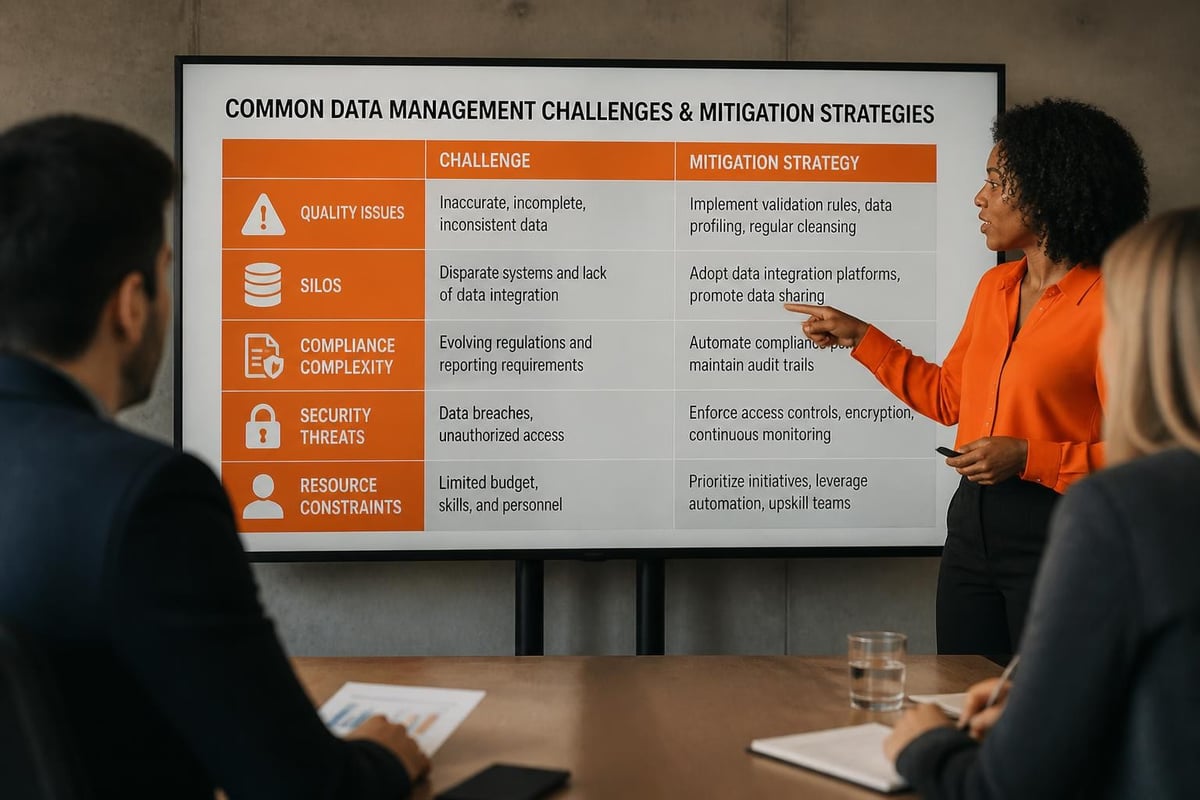
Organizations encounter predictable obstacles when implementing data management practices. Recognition enables proactive mitigation strategies.
Data Quality Issues
Inconsistent entry standards create duplicate records, misspellings, and formatting variations. Legacy systems often lack validation controls, allowing poor-quality data to accumulate over years.
Solution: Implement data quality rules at source systems and run cleansing projects to address historical issues. Assign data stewards to monitor quality metrics and address deterioration.
Organizational Resistance
Departments resist sharing data due to perceived loss of control or concerns about data misuse. Cultural barriers often exceed technical challenges.
Solution: Demonstrate value through pilot projects showing how data sharing improves outcomes. Establish clear governance rules protecting data owners while enabling appropriate access.
Technology Complexity
Multiple platforms, formats, and protocols create integration difficulties. Point-to-point connections become unmaintainable as system counts grow.
Solution: Adopt integration platforms and standardized APIs. Enterprise data governance frameworks provide structured approaches to managing technical complexity.
Compliance Requirements
Regulations impose data residency, retention, privacy, and security obligations that vary by jurisdiction and industry. Tracking requirements across multiple frameworks strains compliance teams.
Solution: Maintain a compliance matrix mapping requirements to controls. Automate retention and deletion workflows to ensure consistent application.
Resource Constraints
Data management requires dedicated staff, tools, and infrastructure. Organizations underestimate ongoing operational demands beyond initial implementation.
Solution: Prioritize high-value datasets and critical compliance requirements. Phase implementation to spread costs and demonstrate ROI before expanding scope.
How to Optimize Data Management Operations
Optimization improves efficiency, reduces costs, and enhances data value over time. Focus on automation, standardization, and continuous improvement.
Automation Opportunities
Automated processes reduce manual effort and improve consistency. Key automation targets include:
- Data quality monitoring: Scheduled scans detecting anomalies, duplicates, and standard violations
- Access provisioning: Workflow-based approvals granting appropriate permissions based on job roles
- Backup verification: Automated restore tests confirming backup integrity without manual intervention
- Compliance reporting: Scheduled reports documenting data handling activities for audit purposes
- Data lifecycle management: Automatic archival and deletion based on retention policies
Standardization Benefits
Consistent approaches across departments reduce complexity and training requirements. Standardize metadata schemas, naming conventions, data models, and integration patterns.
Data management best practices emphasize aligning initiatives with organizational objectives and maintaining consistent terminology.
| Approach | Implementation Time | Maintenance Effort | Data Quality | Scalability |
|---|---|---|---|---|
| Manual processes | Low | High | Variable | Limited |
| Departmental tools | Medium | Medium | Inconsistent | Moderate |
| Enterprise platform | High | Low | High | Excellent |
Performance Monitoring
Track key performance indicators measuring data management effectiveness:
- Data quality score: Percentage of records meeting completeness, accuracy, and consistency standards
- Time to access: Average duration from request to data availability
- Storage efficiency: Ratio of unique data to total storage consumed
- Compliance rate: Percentage of datasets meeting regulatory requirements
- Incident frequency: Count of data breaches, losses, or quality failures per quarter
Review metrics monthly and adjust processes based on trends. Declining quality scores or rising incident rates signal process breakdowns requiring intervention.
What Tools Support Data Management?
Technology platforms provide capabilities that manual processes cannot match at scale. Tool selection depends on organizational size, technical maturity, and specific requirements.
Database Management Systems
Relational databases (PostgreSQL, MySQL, Oracle) store structured data with ACID guarantees. NoSQL databases (MongoDB, Cassandra) handle unstructured data and scale horizontally.
Modern platforms include built-in encryption, access controls, and audit logging. Cloud-managed services reduce operational overhead while maintaining security.
Data Integration Platforms
ETL (Extract, Transform, Load) tools move data between systems, applying transformations and quality rules. Modern ELT approaches leverage cloud data warehouses for transformation processing.
API management platforms enable real-time integration through standardized interfaces. Integration platforms as a service (iPaaS) provide pre-built connectors for common applications.
Master Data Management
MDM systems maintain golden records for critical entities, resolving conflicts and synchronizing changes. Capabilities include duplicate detection, matching algorithms, and hierarchy management.
Data Catalogs
Catalogs provide searchable inventories of datasets with metadata, ownership, quality metrics, and usage statistics. They enable self-service data discovery and improve governance visibility.
Governance Platforms
Specialized tools automate policy enforcement, access requests, compliance tracking, and reporting. Data governance frameworks define structures that these platforms operationalize.
How Do Regulations Affect Data Management?
Regulatory compliance drives data management requirements across industries and jurisdictions. Organizations must understand applicable regulations and implement corresponding controls.
Key Regulatory Frameworks
GDPR (General Data Protection Regulation) applies to organizations processing personal data of EU residents. Requirements include consent management, right to erasure, breach notification, and data protection impact assessments.
HIPAA (Health Insurance Portability and Accountability Act) governs healthcare data in the United States. Covered entities must implement physical, technical, and administrative safeguards protecting patient information.
SOX (Sarbanes-Oxley Act) requires publicly traded companies to maintain financial data integrity. Controls ensure accuracy, prevent unauthorized changes, and provide audit trails.
CCPA (California Consumer Privacy Act) grants California residents rights to access, delete, and opt out of personal data sales. Organizations must implement processes handling these requests within specified timeframes.
Compliance Implementation
Map regulatory requirements to technical controls and operational procedures. Document how each requirement is met through policies, system configurations, and workflows.
Maintain evidence of compliance through logs, reports, and records retention. Regular audits verify control effectiveness and identify gaps before regulatory examinations.
Train staff on data handling obligations and acceptable use policies. Research data management best practices emphasize documentation and quality assurance throughout the data lifecycle.
Case Example: Manufacturing Service Tracking
A precision equipment manufacturer implemented data management practices to comply with ISO 9001 quality requirements. Previously, service records existed across spreadsheets, email, and paper forms without consistent structure.
The company established a centralized system tracking serialized inventory, service history, certifications, and maintenance schedules. Each asset received a unique identifier linking all service events, parts replacements, and inspection results.
Data governance policies defined retention periods, access controls, and documentation standards. Automated reminders triggered preventive maintenance based on usage hours and calendar intervals.
Results included 40% reduction in compliance audit findings, 25% decrease in equipment downtime, and complete traceability from manufacturing through service lifecycle. The structured approach enabled rapid responses to quality inquiries and regulatory inspections.

How to Build a Data Management Strategy
Strategic approaches align data initiatives with business objectives and ensure sustainable practices. Strategy development requires executive sponsorship, cross-functional participation, and realistic timelines.
Assessment Phase
Conduct a maturity assessment evaluating current capabilities across governance, quality, security, integration, and compliance dimensions. Identify gaps between current state and target state.
Survey stakeholders to understand data pain points, requirements, and priorities. Business needs should drive technical decisions rather than technology determining capabilities.
Vision and Objectives
Define clear goals specifying what the organization aims to achieve through improved data management. Examples include:
- Reduce data-related incidents by 50% within 12 months
- Achieve 95% data quality score for customer master data
- Decrease time-to-insight for business intelligence by 60%
- Maintain zero compliance violations in regulatory audits
Align objectives with broader organizational strategies around digital transformation, customer experience, or operational excellence.
Roadmap Development
Prioritize initiatives based on value, risk reduction, and feasibility. Quick wins demonstrate progress and build momentum for longer-term efforts.
Phase implementation to manage change and resource constraints. Typical sequences start with critical data domains, expand to additional datasets, then optimize and scale.
Define success metrics for each initiative with baseline measurements and targets. Track progress monthly and adjust plans based on results.
Governance Structure
Establish a data governance council with executive sponsorship and decision-making authority. Define escalation paths for policy exceptions and data disputes.
Assign data stewards with clear responsibilities for specific domains. Stewards monitor quality, resolve issues, and serve as subject matter experts.
Create working groups addressing specific topics like data quality, security, or integration. Working groups develop detailed standards and procedures within governance frameworks.
Technology Selection
Evaluate tools based on requirements, existing infrastructure, and organizational capabilities. Consider total cost of ownership including licensing, implementation, training, and ongoing maintenance.
Prefer platforms over point solutions to reduce integration complexity. Cloud-based services often provide faster deployment and lower operational overhead than on-premises alternatives.
Plan for data migration, integration, and system retirement as new capabilities come online. Migration projects require extensive testing and validation to prevent data loss or corruption.
What Are Data Management Best Practices for 2026?
Leading organizations follow proven practices that deliver consistent results across industries and use cases. Adaptation to specific contexts is necessary, but core principles remain constant.
Document Everything
Maintain comprehensive documentation covering data definitions, lineage, quality rules, access controls, and retention policies. Documentation enables consistent application and knowledge transfer as staff changes.
Update documentation when processes or systems change. Outdated documentation creates confusion and undermines governance effectiveness.
Start Small, Scale Gradually
Pilot data management practices on limited datasets before organization-wide rollout. Pilots reveal implementation challenges and enable refinement before larger investments.
Demonstrate value through measurable improvements in quality, efficiency, or risk reduction. Success stories overcome resistance and secure resources for expansion.
Assign Clear Ownership
Every dataset requires an identified owner accountable for quality, access decisions, and lifecycle management. Ownership prevents abandonment and ensures someone addresses issues when they arise.
Ownership differs from stewardship. Owners make decisions while stewards execute operational tasks and monitor ongoing performance.
Embed Quality at Source
Implement validation rules where data enters systems rather than cleansing after collection. Prevention costs less than correction and maintains higher accuracy.
Design data entry interfaces with dropdowns, lookups, and format constraints reducing error opportunities. User training reinforces proper data handling practices.
Monitor Continuously
Regular monitoring detects issues before they impact operations or compliance. Automated alerts notify responsible parties when metrics exceed thresholds.
Review trends to identify systematic problems requiring process changes. One-time fixes address symptoms while root cause analysis prevents recurrence.
Balance Security and Accessibility
Overly restrictive controls reduce data value while inadequate security creates risk. Risk-based approaches apply stronger controls to sensitive data and lighter controls to public information.
Data classification schemes categorize information by sensitivity, enabling proportionate security measures. Regular access reviews ensure permissions remain appropriate as roles evolve.
Invest in Training
Staff capabilities determine data management success more than technology features. Regular training ensures users understand policies, tools, and their responsibilities.
Role-specific training addresses different needs across data entry, analysis, stewardship, and governance functions. Refresher courses maintain proficiency as systems and requirements change.
Plan for Growth
Design systems and processes accommodating future volume increases and new data types. Scalability prevents costly replacements as organizations expand.
Cloud platforms provide elastic capacity scaling with demand. Architectural decisions should consider long-term trajectories, not just current requirements.
Organizations that manage data systematically gain competitive advantages through better decisions, reduced risk, and improved operational efficiency. Effective practices require governance frameworks, quality controls, security measures, and continuous monitoring aligned with business objectives. Brytend develops custom software solutions that help organizations implement robust data management capabilities tailored to their specific workflows, compliance requirements, and integration needs, providing ongoing support to ensure systems evolve with changing demands.


