
Organizations today face mounting pressure to deliver exceptional customer experiences while managing complex support operations across multiple channels. A customer service management system serves as the foundation for delivering consistent, high-quality support that builds loyalty and drives business growth. These platforms transform how businesses track, manage, and resolve customer inquiries by centralizing all service activities into one cohesive environment. For companies developing custom software solutions, understanding the architecture and capabilities of modern service management platforms is essential for creating tools that truly meet client needs.
Understanding the Core Components
A customer service management system encompasses several interconnected elements that work together to create a seamless support environment. At its foundation, the system requires robust ticketing capabilities that capture every customer interaction, regardless of the channel through which it arrives.
The ticketing engine serves as the central nervous system, converting emails, phone calls, chat messages, and social media inquiries into trackable service requests. Each ticket contains essential metadata including priority level, category, assignment status, and complete interaction history. This structure ensures nothing falls through the cracks while providing service teams with the context needed to resolve issues efficiently.
Knowledge management capabilities form another critical component. Self-service portals empower customers to find answers independently, reducing ticket volume while improving satisfaction. These portals house articles, FAQs, video tutorials, and troubleshooting guides that address common questions and issues. The most effective systems use search algorithms and categorization to help users quickly locate relevant information.
Automation workflows represent the intelligence layer that drives efficiency. Rule-based triggers can automatically route tickets to appropriate team members, escalate urgent issues, send acknowledgment messages, and update customers on progress. This automation reduces manual workload while ensuring consistent service delivery.

Building Blocks of Effective Service Operations
-
Omnichannel Integration: Modern customers expect support through their preferred communication channels, whether email, live chat, phone, social media, or messaging apps. Omnichannel platforms integrate these touchpoints into a unified interface, giving agents complete visibility into customer conversations regardless of where they occur. This integration prevents customers from repeating information when switching channels and ensures consistent messaging across all platforms.
-
Analytics and Reporting: Data-driven insights separate high-performing service operations from those that struggle. Comprehensive reporting tracks metrics including first response time, resolution time, customer satisfaction scores, ticket volume trends, and agent performance. These analytics reveal bottlenecks in workflows, highlight training opportunities, and demonstrate the business impact of service improvements.
-
Collaboration Tools: Complex issues often require input from multiple team members or departments. Built-in collaboration features enable agents to consult colleagues, tag subject matter experts, and share notes without leaving the platform. This internal communication happens behind the scenes, preventing customers from experiencing the confusion of being transferred repeatedly.
-
SLA Management: Service Level Agreements define the expected response and resolution times for different issue types. The system should monitor these commitments automatically, alerting managers when tickets risk breaching SLA terms. Designing effective SLAs requires understanding customer expectations and balancing them against operational capacity.
-
Customer Portal Design: Self-service capabilities extend the reach of support teams while providing customers with 24/7 access to assistance. Effective portal design includes intuitive navigation, prominent search functionality, and clear branding that reassures customers they're in the right place.
Implementing Strategic Service Workflows
Organizations that extract maximum value from their customer service management system design workflows that align with business objectives while addressing customer needs. This requires mapping the customer journey to identify key touchpoints where support interactions typically occur.
The intake process establishes how requests enter the system. Multiple submission methods accommodate different customer preferences while standardized forms ensure agents receive necessary information upfront. Smart forms can ask conditional questions based on previous answers, gathering detailed context without overwhelming users.
Routing logic determines which team member receives each ticket. Sophisticated systems consider factors beyond simple round-robin distribution, including agent expertise, current workload, customer value, and issue complexity. Priority queues ensure urgent matters receive immediate attention while routine requests flow through standard channels.
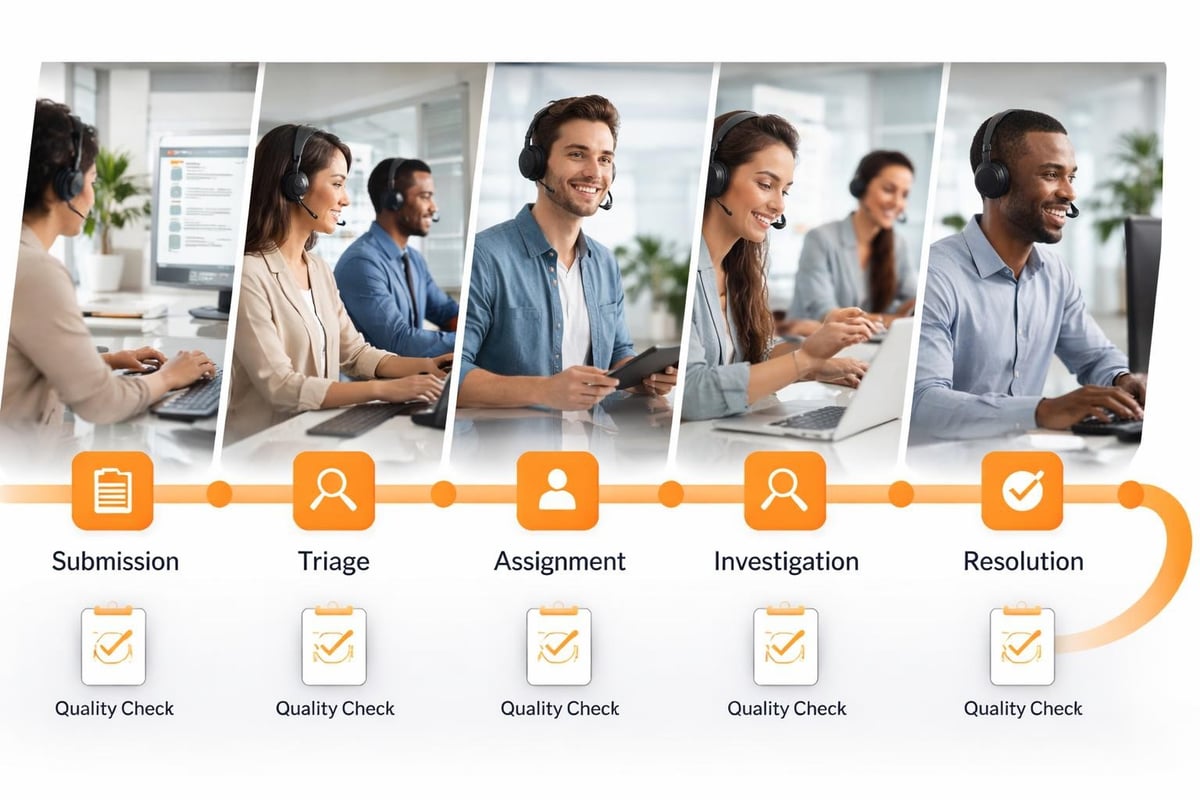
Resolution workflows guide agents through proven troubleshooting steps and solution paths. Templates for common issues maintain consistency while allowing customization for unique situations. Escalation procedures activate automatically when tickets remain unresolved beyond defined timeframes or when customers request supervisory involvement.
Post-resolution processes close the loop with customers through satisfaction surveys and feedback collection. Managing customer feedback effectively turns individual interactions into opportunities for continuous improvement. This data informs product development, identifies recurring issues, and highlights training needs.
Technology Architecture Considerations
Building or selecting a customer service management system requires careful evaluation of technical requirements and infrastructure needs. Cloud-based platforms offer scalability and accessibility advantages, allowing support teams to work from anywhere while accommodating fluctuating ticket volumes without capacity planning headaches.
Integration capabilities determine how well the service platform connects with existing business systems. APIs enable bidirectional data flow between the customer service management system and CRM platforms, billing systems, product databases, and communication tools. These integrations eliminate duplicate data entry while giving agents access to complete customer information.
Security and compliance features protect sensitive customer data while meeting regulatory requirements. Role-based access controls limit information visibility to appropriate personnel, audit trails track all system actions, and encryption safeguards data both in transit and at rest. For organizations in regulated industries, these security measures are non-negotiable.
Mobile optimization ensures agents can handle requests from smartphones and tablets when away from their desks. Responsive design adapts interfaces to smaller screens while native mobile apps can leverage device features like push notifications and offline access. This mobility becomes increasingly important as remote and hybrid work models become standard.
Performance Optimization Strategies
Organizations achieve superior service outcomes by continuously refining their customer service management system configuration and usage patterns. Regular performance reviews examine key metrics to identify improvement opportunities and validate the effectiveness of recent changes.
| Metric Category | Key Indicators | Target Benchmarks |
|---|---|---|
| Response Speed | First response time, time to assignment | Under 1 hour for standard issues |
| Resolution Efficiency | Average handling time, first contact resolution | 70%+ resolved on first contact |
| Customer Satisfaction | CSAT scores, Net Promoter Score | 85%+ satisfaction rating |
| Agent Performance | Tickets per agent, reopened tickets | Less than 10% ticket reopening rate |
Agent training programs ensure team members fully utilize available system features. Many organizations underperform simply because staff members underperform simply because staff members don't know how to leverage automation, collaboration tools, or knowledge base resources effectively. Ongoing education addresses this gap while keeping teams current as new capabilities roll out.
Capacity planning aligns staffing levels with demand patterns. Historical ticket data reveals seasonal fluctuations, weekly trends, and daily peak periods. This intelligence informs scheduling decisions, ensuring adequate coverage during busy times without overstaffing during slower periods.
Quality assurance processes maintain service standards through systematic ticket reviews. Random sampling or targeted audits evaluate whether agents follow established procedures, communicate professionally, and resolve issues thoroughly. Coaching opportunities emerge from these reviews, driving individual and team improvement.
Customization for Business Requirements
Every organization has unique service needs shaped by industry, customer base, products, and company culture. A customer service management system must accommodate these differences through extensive customization options.
Custom fields capture business-specific information not included in standard ticket structures. A software development firm might track product version, environment details, and error logs, while a retail company records order numbers, product SKUs, and return authorization codes. These custom fields make tickets more useful while enabling specialized reporting.
Workflow customization adapts the system to existing business processes rather than forcing teams to change how they work. Conditional logic creates different paths based on ticket attributes, customer segments, or issue types. This flexibility ensures the system supports actual operations rather than imposing generic workflows.
Branding and interface customization create customer-facing experiences that align with company identity. Custom portals featuring company colors, logos, and messaging reassure customers while maintaining brand consistency. Administrative interfaces can be tailored to different user roles, presenting relevant features prominently while hiding unnecessary complexity.
The Brytend CRM platform demonstrates how customer service capabilities can integrate seamlessly with broader customer relationship management functions. By connecting service interactions with sales history, marketing touchpoints, and account details, organizations gain complete visibility into customer relationships, enabling more personalized and effective support.

Integration With Broader Business Systems
A customer service management system delivers maximum value when it functions as part of an integrated technology ecosystem rather than as an isolated tool. Strategic integrations connect service operations with other business functions, creating data flows that enhance decision-making and operational efficiency.
CRM integration ensures service agents access complete customer histories including past purchases, communication preferences, account status, and previous support interactions. This context enables personalized service and helps agents understand customer value when making judgment calls about resolutions.
Product and inventory system connections give agents real-time visibility into stock levels, product specifications, and fulfillment status. When customers inquire about orders or product availability, agents provide accurate information without switching systems or placing customers on hold.
Communication platform integration enables agents to handle phone calls, emails, and chat sessions directly within the service interface. Screen pops automatically display relevant customer information when calls arrive, while click-to-call functionality initiates outbound calls without manual dialing. These integrations save time while reducing errors.
Business intelligence tools pull data from the customer service management system for inclusion in executive dashboards and cross-functional reports. Service metrics contribute to broader performance analyses, revealing relationships between support quality and outcomes like customer retention, repeat purchase rates, and referral generation.
Managing Incident Response Protocols
Organizations handling technical support, IT services, or mission-critical systems require robust incident management capabilities within their customer service management system. Effective incident management demands clearly defined processes that activate automatically when specific trigger conditions occur.
Incident categorization separates routine service requests from urgent system outages or security events requiring immediate attention. Automated detection monitors connected systems for anomalies, creating high-priority incidents when thresholds are exceeded. This proactive approach addresses problems before customers report them.
Incident response workflows coordinate activities across multiple teams during major events. Automated notifications alert relevant stakeholders, collaboration spaces centralize communication, and status pages keep customers informed about resolution progress. Clear accountability structures designate incident commanders who drive resolution efforts and make critical decisions.
Post-incident reviews analyze response effectiveness and identify improvement opportunities. Documentation captures timeline details, resolution steps, and lessons learned. This institutional knowledge improves future incident handling while demonstrating accountability to customers and stakeholders.
Measuring Long-Term Service Excellence
Beyond operational metrics that track daily performance, organizations must evaluate whether their customer service management system contributes to strategic business objectives. This requires connecting service outcomes to broader measures of business health.
Customer lifetime value analysis reveals whether service quality influences long-term customer relationships. Cohort comparisons can demonstrate whether customers who receive excellent support spend more, remain loyal longer, or refer more new business than those with mediocre service experiences.
Cost-to-serve calculations determine the financial efficiency of service operations. While total service costs are easily measured, understanding cost per ticket, cost per customer, or cost as a percentage of revenue provides actionable insights. Efficiency improvements reduce these costs while maintaining or improving service quality.
Employee satisfaction metrics recognize that service quality depends on engaged, capable team members. Regular surveys assess whether agents have necessary tools, feel supported by management, and find their work meaningful. High turnover in service roles signals problems that no system can solve without addressing underlying cultural or operational issues.
Market differentiation analysis examines whether service excellence creates competitive advantages. Customer research, win/loss analyses, and competitive benchmarking reveal whether service quality influences purchase decisions and vendor selection. For many organizations, superior service becomes a primary differentiator when products and pricing are similar across competitors.
Frequently Asked Questions
What's the difference between a customer service management system and a help desk?
A help desk typically focuses on internal IT support, handling technical issues for employees within an organization. A customer service management system encompasses broader external customer support across all interaction types, including product questions, billing inquiries, and general assistance. While help desks prioritize incident resolution and asset management, customer service platforms emphasize relationship building, multi-channel communication, and customer experience optimization.
How long does it take to implement a customer service management system?
Implementation timelines vary based on system complexity, customization requirements, and organizational size. Basic deployments with minimal customization can launch within 4-6 weeks, while enterprise implementations involving extensive integrations, custom workflows, and multiple departments may require 3-6 months. The critical success factor is thorough planning before technical implementation begins, ensuring all stakeholders align on requirements and processes.
Can small businesses benefit from customer service management systems?
Absolutely. Small businesses often gain disproportionate advantages from service management platforms because they lack the staff to manually track all customer interactions. Even basic systems prevent inquiries from being lost, ensure timely follow-up, and create professional customer experiences that compete with larger competitors. Many vendors offer scaled pricing that makes these tools accessible to organizations of all sizes.
What training do agents need to use these systems effectively?
Effective training combines technical system operation with service best practices. Agents need to understand navigation, ticket creation and updating, knowledge base usage, and communication tools. Beyond mechanics, training should cover company service standards, escalation procedures, and problem-solving approaches. Most organizations require 1-2 days of initial training followed by ongoing coaching and periodic refresher sessions as new features deploy.
How do these systems handle customer data privacy?
Modern customer service management systems include comprehensive privacy controls that support GDPR, CCPA, and other regulatory frameworks. Features include data encryption, access controls, audit logging, data retention policies, and customer data portability. Organizations can configure systems to automatically redact sensitive information, obtain consent before collecting certain data types, and honor deletion requests. Privacy compliance requires proper system configuration combined with organizational policies and staff training.
What happens if the system experiences downtime?
Reputable cloud-based platforms maintain 99.9% uptime through redundant infrastructure, automatic failover, and distributed data centers. During rare outages, most systems provide status pages that communicate incident details and estimated restoration times. Organizations should maintain backup communication methods for critical situations, such as temporary email addresses or phone trees. Best practices for help desk operations include documenting contingency procedures that activate during system unavailability.
How often should we review and update our service management workflows?
Quarterly reviews provide good balance between maintaining stability and continuous improvement. These sessions should examine performance metrics, customer feedback, agent input, and business changes that might require workflow adjustments. Minor refinements can happen more frequently as issues arise, while major overhauls typically align with broader business transformations like new product launches, market expansions, or organizational restructures. The key is treating workflows as living documents rather than one-time configurations.
Implementing an effective customer service management system requires strategic planning, technical expertise, and ongoing optimization to deliver exceptional customer experiences while maximizing operational efficiency. The right platform transforms support from a cost center into a competitive advantage that drives customer loyalty and business growth. Brytend specializes in developing custom software solutions that address unique business requirements, creating service management platforms tailored to your specific workflows, integration needs, and customer expectations.


