Managing rental properties demands juggling multiple responsibilities: tracking tenant inquiries, coordinating maintenance requests, monitoring lease renewals, and ensuring timely payments. A rental CRM transforms this complexity into streamlined workflows that centralize every interaction, automate routine tasks, and provide actionable insights. Whether you’re managing ten units or a thousand, the right rental CRM system becomes the operational backbone that drives efficiency and profitability.
Understanding Rental CRM Systems
A rental CRM (Customer Relationship Management) system is specialized software designed to manage every aspect of tenant and property owner relationships within the rental industry. Unlike generic CRM platforms, these systems address the unique challenges property managers face daily.
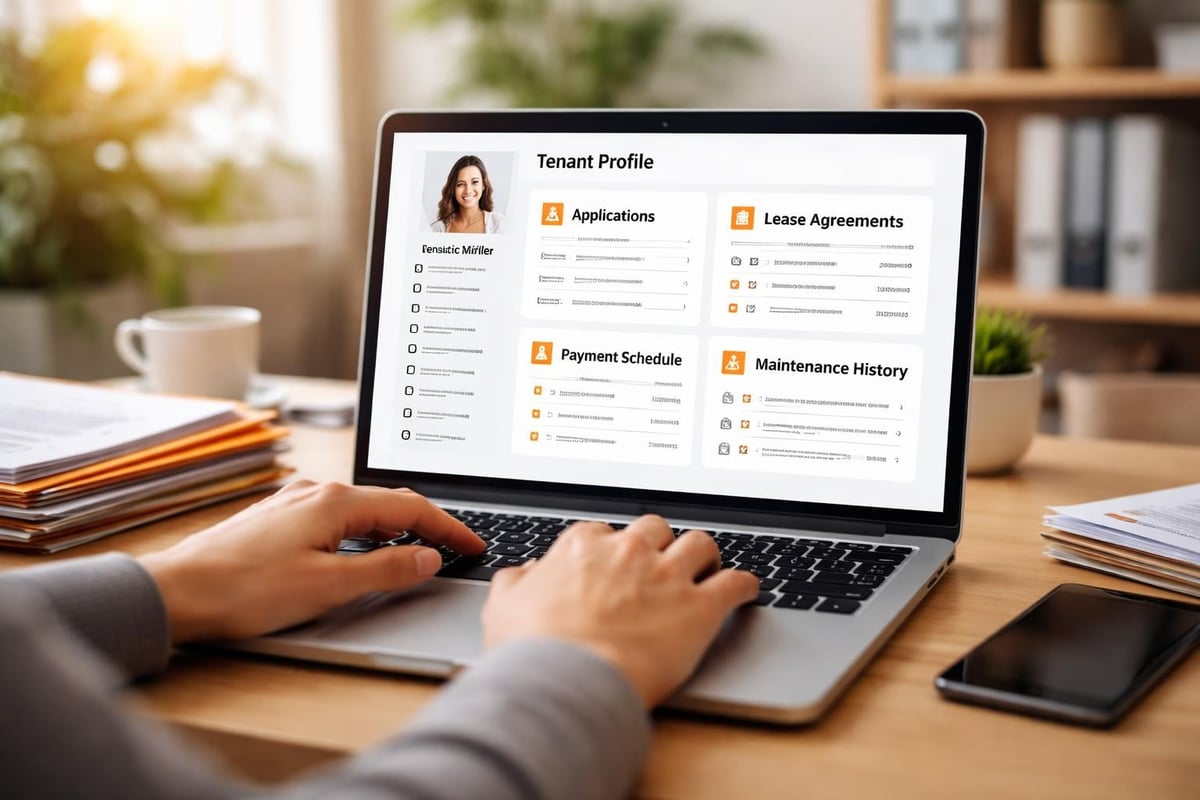
The core function centers on creating a single source of truth for all rental-related data. Every tenant conversation, maintenance ticket, lease document, and payment history lives in one accessible location. This centralization eliminates the chaos of scattered spreadsheets, email threads, and paper files that plague traditional property management approaches.
Key Components That Define Rental CRM
Modern rental CRM platforms integrate several essential modules that work together seamlessly:
- Contact Management: Stores detailed profiles for current tenants, prospective renters, property owners, vendors, and contractors with complete interaction histories
- Property Database: Maintains comprehensive records of each unit including specifications, amenities, photos, occupancy status, and associated documentation
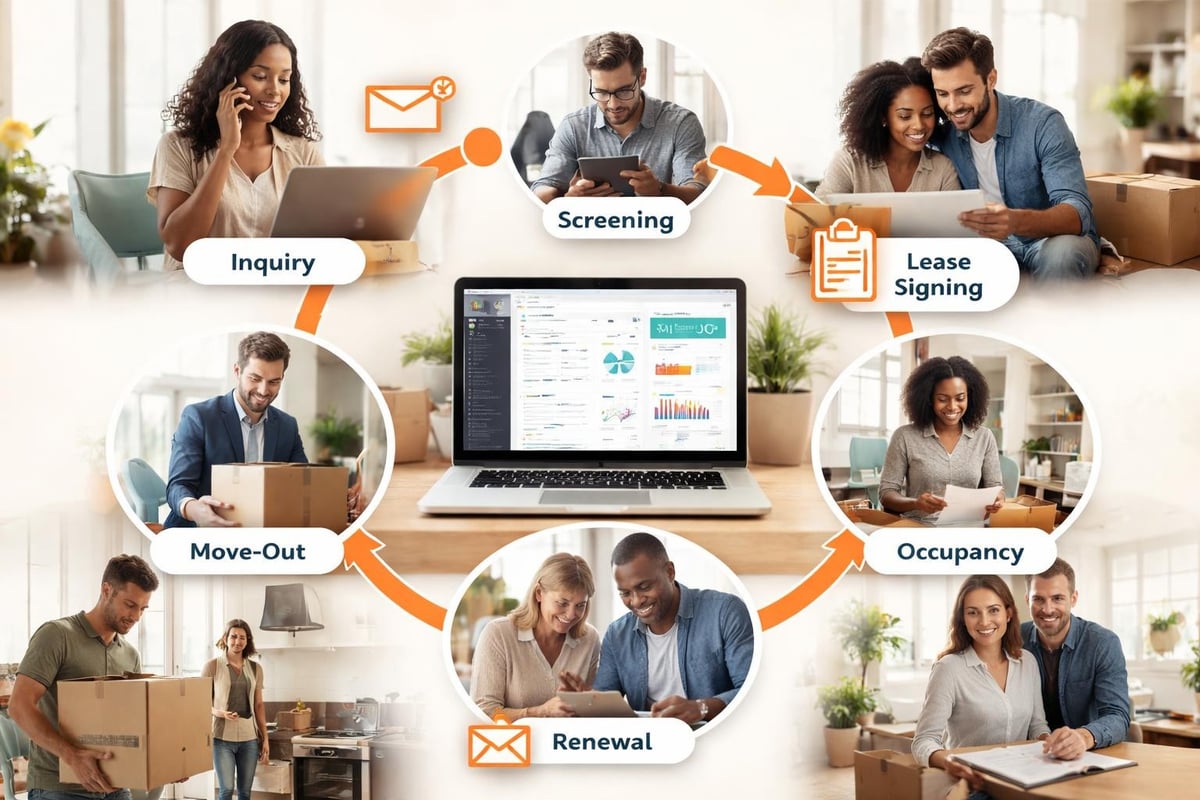
- Lead Tracking: Captures and nurtures rental inquiries from initial contact through application, screening, and lease signing
- Communication Hub: Centralizes all emails, calls, texts, and messages with automated responses and scheduled follow-ups
- Document Management: Organizes lease agreements, inspection reports, insurance certificates, and compliance documents with version control
- Financial Tracking: Records rent payments, deposits, late fees, and expenses while generating financial reports
- Maintenance Coordination: Manages service requests from submission through completion with vendor assignment and tenant updates
- Analytics Dashboard: Visualizes occupancy rates, revenue trends, maintenance costs, and tenant satisfaction metrics
The best CRM tools for real estate professionals demonstrate how specialized features address industry-specific needs that generic business software cannot adequately support.
Why Rental Businesses Need Specialized CRM Solutions
Property management involves constant communication across multiple stakeholders. Traditional methods create information silos where critical details get lost between phone calls, email accounts, and physical file cabinets. A rental CRM solves this fundamental problem by creating transparency and accountability.
Consider tenant turnover. When a resident gives notice, the CRM automatically triggers a sequence: schedule move-out inspection, advertise the vacancy, screen applicants, prepare lease documents, and coordinate move-in. Without automation, property managers manually juggle these steps, increasing the likelihood of missed deadlines and revenue gaps.
Operational Efficiency Gains
The time savings compound quickly when you examine daily workflows. Responding to maintenance requests that previously required multiple phone calls and emails now happens through automated ticket routing. The system assigns requests to appropriate vendors based on issue type, property location, and vendor availability.
Financial reconciliation becomes straightforward when payment tracking integrates directly with tenant profiles. Late payment reminders send automatically, and the system flags patterns that might indicate upcoming vacancies or collection issues. This proactive approach prevents small problems from becoming major financial losses.
| Challenge | Traditional Method | Rental CRM Solution |
|---|---|---|
| Tenant inquiry response | Manual email replies, hours delay | Automated responses, instant engagement |
| Maintenance tracking | Spreadsheets, phone calls | Centralized ticketing with status updates |
| Lease renewal | Calendar reminders, manual outreach | Automated workflows 90 days before expiration |
| Vacancy marketing | Multiple platform logins | Integrated listing distribution |
| Payment collection | Manual invoicing and follow-up | Automated billing and reminder sequences |
The best practices in rental property management emphasize systematic approaches that rental CRM systems make achievable for businesses of any size.
Essential Features for Rental CRM Success
Not all rental CRM platforms deliver equal value. The most effective systems share specific capabilities that directly impact daily operations and long-term growth.
Comprehensive Tenant Lifecycle Management
From the moment someone inquires about a property through their eventual move-out, the rental CRM should track every interaction and milestone. This complete view enables personalized service that improves tenant satisfaction and retention rates.
Application processing demonstrates this value clearly. The system can automatically verify employment, check credit reports, contact previous landlords, and score applicants against your criteria. What traditionally took days of back-and-forth communication now happens in hours with minimal manual intervention.
Advanced Communication Tools
- Multi-channel integration: Connect email, SMS, phone, and portal messages in unified conversation threads
- Template library: Store and customize communication templates for common scenarios like lease renewals, payment reminders, and maintenance updates
- Automated campaigns: Schedule drip sequences for prospect nurturing, tenant onboarding, and renewal conversations
- Mass communication: Send property-wide announcements while maintaining individual conversation context
- Response tracking: Monitor which messages generate engagement and optimize communication strategies accordingly
The CRM features that simplify property management highlight how centralized communication reduces response times and improves tenant satisfaction scores.
Financial Management Integration
Rental CRM systems should connect seamlessly with accounting platforms or include robust financial tools directly. This integration ensures that every payment, deposit, and fee appears in both the tenant’s profile and your financial reports.
Automated rent collection through ACH transfers or credit card processing reduces late payments significantly. When payments fail, the system immediately sends reminders and can even initiate late fee calculations based on your lease terms. This consistency eliminates awkward conversations and maintains professional boundaries.
Implementing Rental CRM for Maximum Impact
Successful rental CRM adoption requires more than purchasing software. The implementation process determines whether the system becomes an invaluable asset or an expensive digital filing cabinet that nobody uses consistently.
Data Migration and System Setup
Begin by auditing your current data sources. Tenant information might exist in spreadsheets, previous software, email contacts, and paper files. Consolidating this information into a clean, standardized format before importing ensures your rental CRM starts with accurate foundational data.
- Standardize property listings: Create consistent naming conventions, address formats, and unit designations
- Clean contact records: Remove duplicates, verify current contact information, and enrich profiles with complete details
- Digitize documents: Scan and categorize physical files, ensuring proper association with relevant properties and tenants
- Configure workflows: Map your current processes into the CRM’s automation engine, starting with high-frequency tasks
- Set permissions: Define user roles and access levels to protect sensitive information while enabling collaboration
- Customize fields: Add property-specific data points that matter to your business operations and reporting needs
Understanding CRM best practices for real estate teams provides valuable insights into configuration decisions that affect long-term usability and adoption rates.
Training and Adoption Strategies
The most sophisticated rental CRM delivers zero value if your team doesn’t use it consistently. Investment in training pays dividends through faster adoption and better data quality.
Start with champions-team members who understand technology and influence others. Train them thoroughly and empower them to assist colleagues during the transition period. Their peer support often proves more effective than formal training sessions alone.
Create simple reference guides for common tasks: adding new tenants, logging maintenance requests, generating reports, and sending communications. Quick-reference cards at workstations reduce friction when staff encounter unfamiliar scenarios.
Customization for Rental Business Workflows
Generic CRM platforms force businesses to adapt their processes to software limitations. Purpose-built rental CRM systems offer flexibility to match how your specific business operates. For property managers seeking deeper customization capabilities, Brytend CRM provides tailored solutions that align with unique operational requirements while maintaining the core benefits of centralized tenant and property management.

Workflow Automation Examples
Consider the lease renewal process. Three months before expiration, the rental CRM automatically sends an initial renewal notice to tenants. Based on their response (or lack thereof), different paths activate:
- Tenant confirms renewal: Generate new lease documents, schedule signing appointment, process deposit or fee adjustments
- Tenant declines: Trigger move-out checklist, activate vacancy marketing campaign, begin applicant screening for replacement tenant
- No response: Send reminder notices at defined intervals, escalate to property manager after final deadline
This automation ensures consistent handling across your entire portfolio regardless of which team member manages specific properties.
Custom Reporting Capabilities
Standard reports provide basic insights, but custom reporting unlocks strategic advantages. Build dashboards that display:
| Report Type | Business Value | Update Frequency |
|---|---|---|
| Occupancy trends by property type | Identify highest-performing properties | Weekly |
| Average days to lease | Optimize marketing and screening processes | Monthly |
| Maintenance cost per unit | Budget accurately and identify problem properties | Quarterly |
| Tenant satisfaction scores | Improve retention through service enhancements | Ongoing |
| Lease expiration forecast | Plan renewal campaigns and manage turnover | Real-time |
| Revenue per property manager | Evaluate team performance objectively | Monthly |
These insights transform reactive property management into proactive business optimization. The rental CRM software benefits extend beyond efficiency gains to strategic decision-making capabilities that drive competitive advantages.
Integration with Property Management Ecosystems
No rental CRM operates in isolation. The most valuable implementations connect with complementary systems that handle specialized functions while sharing data seamlessly.
Critical Integration Points
- Accounting platforms: Sync financial transactions, eliminate duplicate data entry, and maintain accurate books
- Listing services: Automatically publish vacancies to multiple rental marketplaces from a single source
- Background check providers: Streamline tenant screening with one-click verification requests and automatic result imports
- Payment processors: Enable online rent collection and automatically update tenant payment histories
- Maintenance management: Create service tickets that track work orders through completion with vendor coordination
- Communication platforms: Route phone calls, SMS messages, and emails into the rental CRM conversation history
- Document signing services: Generate leases and addendums that tenants can review and sign electronically
API connectivity determines integration flexibility. Modern rental CRM platforms offer robust APIs that enable custom connections to niche tools your business depends on for specialized needs.
Mobile Accessibility Requirements
Property managers spend significant time away from desks-conducting inspections, showing properties, and meeting with tenants. Mobile access to your rental CRM transforms smartphones into powerful business tools.
Effective mobile apps provide full functionality, not just read-only access. Property managers should be able to add new leads after meeting prospects at properties, update maintenance tickets while on-site, and access lease documents during tenant conversations.

Measuring Rental CRM Return on Investment
Implementation requires investment in software, training, and process adaptation. Measuring returns justifies this expense and guides optimization efforts that maximize value over time.
Quantifiable Metrics
Calculate time savings by comparing pre-CRM and post-CRM completion times for standard tasks. If responding to tenant inquiries previously averaged 45 minutes and now takes 15 minutes, multiply that 30-minute savings by the number of monthly inquiries. The hours recovered translate directly to cost savings or capacity for managing additional properties.
Vacancy reduction represents another significant financial impact. When automated workflows accelerate the turnover process, units generate revenue faster. Reducing average vacancy from 21 days to 14 days means an additional week of rent per turnover-substantial revenue when multiplied across your portfolio.
- Lead conversion rates: Track the percentage of inquiries that become signed leases before and after CRM implementation
- Tenant retention: Monitor renewal rates and identify whether improved service reduces turnover
- Collection efficiency: Measure days sales outstanding and late payment frequency changes
- Maintenance response times: Compare average time from request to resolution
- Staff productivity: Calculate properties managed per employee to assess capacity improvements
- Owner satisfaction: Survey property owners on communication quality and financial reporting
The success stories from rental property managers demonstrate measurable improvements across these dimensions when implementing appropriate rental CRM solutions.
Qualitative Benefits
Not all rental CRM value appears in spreadsheets. Improved tenant satisfaction leads to positive reviews that attract higher-quality applicants. Better communication with property owners strengthens relationships that result in additional management contracts.
Staff satisfaction increases when technology eliminates frustrating manual processes. Team members spend less time on administrative drudgery and more time on activities that require human judgment and relationship skills. This shift improves job satisfaction and reduces turnover in an industry known for high employee churn.
Frequently Asked Questions
What is the primary difference between rental CRM and general CRM software?
Rental CRM systems are specifically designed for property management workflows including lease tracking, maintenance coordination, and occupancy management. General CRM platforms focus on sales pipelines and customer service without the specialized features rental businesses require like unit-level tracking, automated lease renewals, and tenant screening integrations.
How long does it typically take to implement a rental CRM system?
Implementation timelines vary based on portfolio size and data quality. Small operations with clean data can complete basic setup in two to four weeks. Larger portfolios with complex processes and legacy data requiring cleanup may need two to three months for full implementation including staff training and workflow optimization.
Can rental CRM systems handle both residential and commercial properties?
Most robust rental CRM platforms support multiple property types with customizable fields and workflows that accommodate the different requirements. Commercial leases typically involve longer terms, more complex agreements, and different renewal processes that flexible rental CRM systems can manage alongside residential properties within the same platform.
What security measures should rental CRM systems include?
Essential security features include data encryption during transmission and storage, role-based access controls, audit trails tracking all data changes, regular automated backups, and compliance with data protection regulations. Look for platforms that offer two-factor authentication and maintain SOC 2 or ISO 27001 certifications demonstrating commitment to security standards.
How does rental CRM improve tenant retention rates?
Rental CRM enables proactive communication through automated reminders, faster response to maintenance requests, and personalized service based on complete interaction histories. These improvements increase tenant satisfaction, which directly correlates with renewal likelihood. The system also identifies at-risk tenants early through engagement pattern analysis, allowing intervention before they decide to leave.
What happens to our data if we decide to switch rental CRM providers?
Reputable rental CRM vendors provide data export capabilities in standard formats like CSV or Excel that allow migration to alternative platforms. Before committing to any system, verify the export options available and review the contract terms regarding data ownership and portability to ensure you maintain full control of your business information.
Is rental CRM software suitable for individual landlords or only larger property management companies?
Modern rental CRM solutions serve businesses of all sizes with tiered pricing models and scalable features. Individual landlords managing just a few properties benefit from centralized tenant communication and automated rent reminders, while enterprise-level platforms offer advanced features for companies managing thousands of units across multiple markets.
Implementing the right rental CRM transforms property management from reactive problem-solving into strategic business growth. The centralized data, automated workflows, and actionable insights position rental businesses to scale efficiently while maintaining service quality that keeps tenants satisfied and owners confident. Brytend specializes in developing custom CRM solutions tailored to the unique requirements of rental property businesses, ensuring your system aligns perfectly with your operational workflows and growth objectives.


