
Choosing the right partner among CRM software development companies can transform how your business manages customer relationships, streamlines sales processes, and drives revenue growth. The market offers countless options, from enterprise-level platforms to custom-built solutions designed for specific industry needs. Understanding what distinguishes exceptional development firms from average providers helps businesses make informed decisions that align with their long-term strategic goals. This comprehensive guide explores the essential factors to consider when evaluating CRM software development companies, from technical capabilities to post-launch support structures.
Understanding the Role of CRM Software Development Companies
CRM software development companies specialize in creating platforms that centralize customer data, automate workflows, and provide actionable insights for sales and marketing teams. These firms combine technical expertise with industry knowledge to build solutions that address specific business challenges.
The best development companies don't simply code features based on a specification document. They act as strategic partners who analyze your current processes, identify bottlenecks, and recommend solutions that deliver measurable improvements. This consultative approach ensures the final product aligns with both immediate needs and future growth plans.
Custom Development Versus Off-the-Shelf Solutions
Businesses face a fundamental choice when selecting CRM software: implementing an existing platform like Salesforce or investing in custom development. Off-the-shelf solutions offer faster deployment and lower initial costs but may require workflow adjustments to fit the software's structure.
Custom CRM development provides maximum flexibility and competitive advantage. Your chosen development partner builds features specifically for your business model, industry regulations, and customer engagement strategies. This approach eliminates unnecessary functionality while ensuring complete alignment with your operational requirements.
| Approach | Time to Market | Initial Cost | Flexibility | Competitive Edge |
|---|---|---|---|---|
| Off-the-Shelf | 2-8 weeks | Lower | Limited | Moderate |
| Custom Development | 3-9 months | Higher | Complete | Significant |
| Hybrid Model | 2-4 months | Moderate | Moderate-High | Good |

Essential Capabilities of Top CRM Software Development Companies
When evaluating potential development partners, certain capabilities separate industry leaders from companies that simply write code. Technical proficiency forms the foundation, but the best firms bring additional value through strategic thinking and user-centered design.
Technical Stack and Architecture Expertise
-
Modern programming languages and frameworks: Leading CRM software development companies maintain expertise in current technologies including Python, Java, Node.js, and React. They select frameworks based on performance requirements, scalability needs, and long-term maintainability.
-
Cloud infrastructure knowledge: Understanding AWS, Azure, and Google Cloud platforms ensures your CRM can scale efficiently as your customer base grows. Cloud-native architecture provides flexibility and reduces infrastructure management overhead.
-
Database design proficiency: CRM systems handle vast amounts of relational data. Expert developers structure databases for optimal query performance while maintaining data integrity and supporting complex reporting requirements.
-
API integration capabilities: Your CRM must connect with email platforms, marketing automation tools, accounting software, and other business systems. Development companies should demonstrate experience building robust APIs and third-party integrations.
-
Security implementation: Customer data protection requires encryption, access controls, audit trails, and compliance with regulations like GDPR and CCPA. Security cannot be an afterthought in CRM development.
Industry-Specific Experience
CRM software development companies with vertical expertise understand the unique challenges facing your sector. Healthcare providers need HIPAA compliance and patient journey tracking. Financial services require audit trails and regulatory reporting. Manufacturing companies benefit from CRMs that integrate with ERP systems and supply chain management platforms.
Development firms that have built solutions for your industry bring valuable insights about common pain points, essential features, and best practices. They anticipate requirements you might not articulate in initial discussions, reducing the risk of costly mid-project changes.
Evaluating Development Methodologies and Project Management
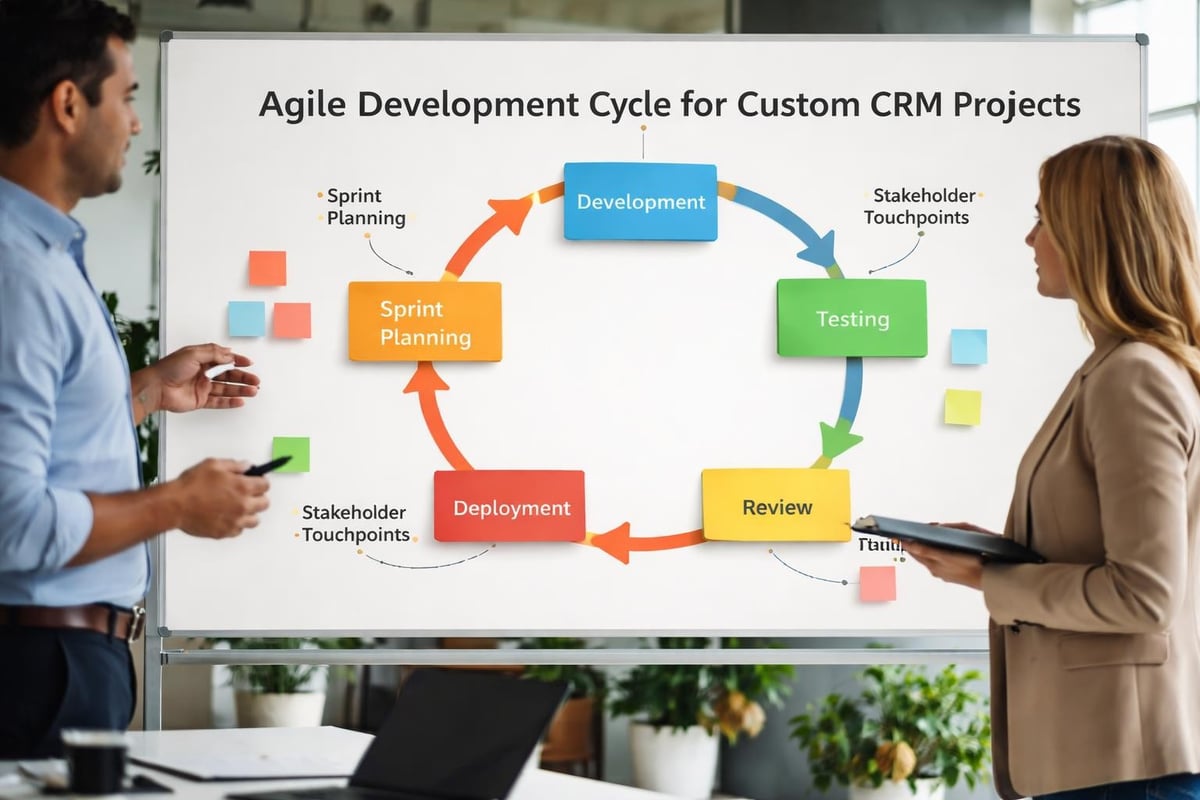
The methodology CRM software development companies use directly impacts project success, timeline accuracy, and final product quality. Understanding these approaches helps set realistic expectations and ensures alignment with your organization's working style.
Agile Development Practices
-
Sprint-based iterations: Quality development companies work in two-week sprints, delivering functional features regularly for your review and feedback. This approach allows course corrections before investing significant resources in the wrong direction.
-
Continuous stakeholder involvement: Agile methodology requires regular participation from your team. While this demands more time investment, it ensures the final product matches your vision and actual user needs.
-
Adaptive planning: Requirements evolve as you see working software and understand what's possible. Agile development accommodates these changes without derailing the entire project timeline.
-
Quality assurance integration: Testing happens throughout development rather than only at the end. This continuous validation catches issues early when they're less expensive to fix.
-
Transparent progress tracking: Reputable firms provide access to project management tools showing completed work, current sprint progress, and upcoming priorities. This transparency builds trust and enables informed decision-making.
Pricing Models and Budget Considerations
Understanding how CRM software development companies structure pricing helps you budget appropriately and compare proposals effectively. Different models suit different project types and risk tolerances.
Common Pricing Structures
Fixed-price contracts work well for projects with clearly defined requirements and minimal expected changes. You know the total cost upfront, which simplifies budgeting. However, this model offers less flexibility if you discover needed features during development.
Time and materials pricing charges based on actual hours worked at agreed hourly rates. This approach accommodates evolving requirements and exploration of optimal solutions. Budget predictability requires careful scope management and regular progress reviews.
Dedicated team models assign specific developers to your project for a defined period. You pay a monthly fee for their dedicated time, gaining consistent attention and deep product knowledge. This structure suits ongoing development relationships beyond the initial build.
| Pricing Model | Budget Predictability | Flexibility | Best For | Risk Level |
|---|---|---|---|---|
| Fixed Price | High | Low | Well-defined projects | Client: Low, Vendor: High |
| Time & Materials | Moderate | High | Evolving requirements | Shared |
| Dedicated Team | Moderate-High | Moderate | Long-term partnerships | Balanced |
| Milestone-Based | Moderate | Moderate | Phased implementations | Shared |
Hidden Costs to Consider
Beyond the development contract, budget for hosting infrastructure, third-party API fees, SSL certificates, and security tools. Many businesses underestimate ongoing maintenance and support costs, which typically range from 15-20% of the initial development investment annually.
Training costs also deserve consideration. Your team needs to understand the new system's capabilities and workflows. Quality CRM software development companies often include training sessions, but budget extra time for internal knowledge transfer and documentation creation.
Implementation Strategy and Change Management
Even perfectly coded CRM software fails without proper implementation planning and user adoption strategies. The transition from current processes to your new system requires careful coordination and change management.
Phased Rollout Approach
-
Pilot program with select users: Start with a small group who tests functionality, identifies issues, and becomes internal champions. Their feedback refines processes before company-wide deployment.
-
Data migration planning: Moving customer information from spreadsheets, legacy systems, or existing CRMs requires careful mapping and validation. Development companies should provide migration tools and assistance, but data quality responsibility ultimately rests with your team.
-
Integration sequencing: Rather than connecting all systems simultaneously, prioritize integrations based on business impact. Connect email first, then calendar tools, followed by marketing automation and other platforms.
-
Training and documentation: Comprehensive user guides, video tutorials, and hands-on training sessions ensure your team can leverage the CRM's full capabilities. Documentation should cover common tasks, troubleshooting, and advanced features.
-
Feedback loops and iteration: Collect user feedback systematically during the first months. The development company should remain engaged to address usability issues and refine workflows based on real-world usage patterns.
Companies exploring sophisticated CRM solutions can enhance their capabilities through specialized modules. Brytend CRM provides comprehensive features designed to manage customer interactions and streamline processes effectively, offering businesses a robust foundation for relationship management that can be customized to specific operational requirements.

Integration Capabilities and Ecosystem Compatibility
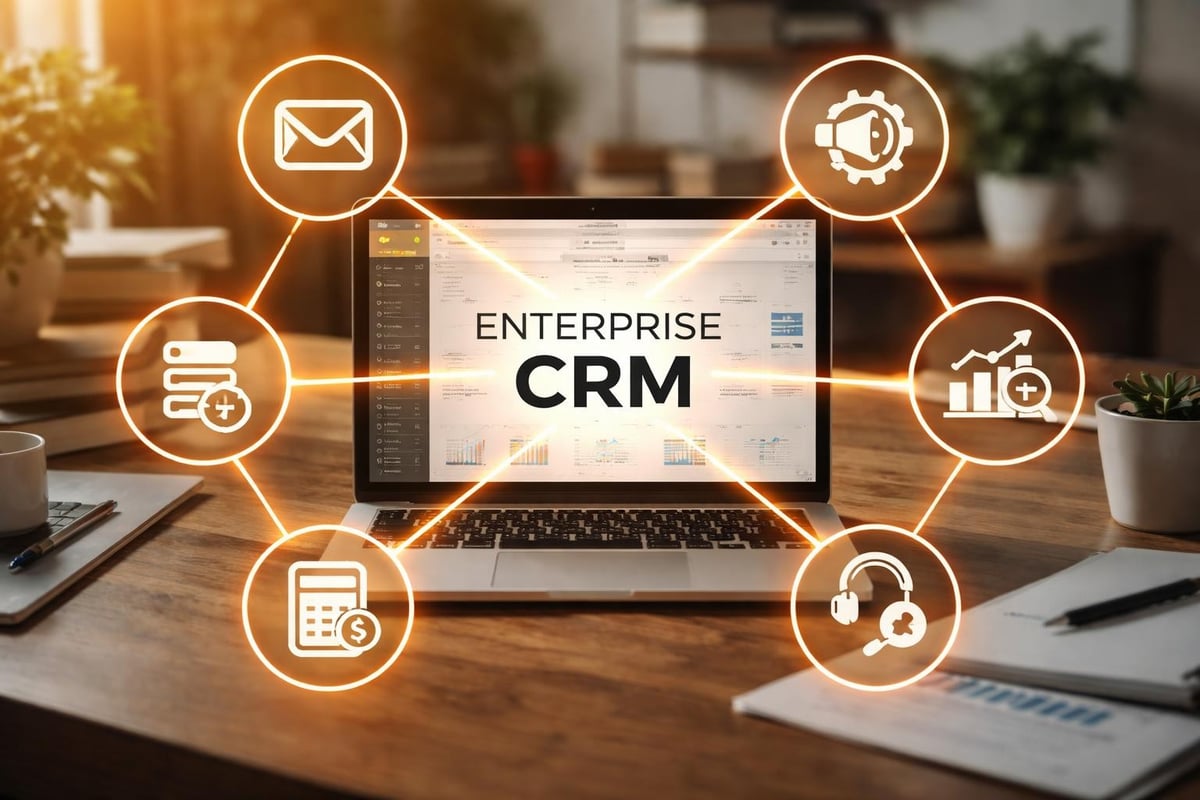
Modern CRM systems function as central hubs connecting various business tools and data sources. The ability to integrate seamlessly with existing software determines how effectively your CRM serves as a single source of truth for customer information.
Critical Integration Points
Email platforms represent the most fundamental integration requirement. Your CRM should capture correspondence automatically, associate emails with correct customer records, and enable communication tracking without manual data entry. Native integration with Microsoft 365, Google Workspace, and other providers eliminates friction.
Marketing automation platforms require bidirectional data flow. Lead scoring, campaign responses, and engagement metrics from tools like HubSpot or Marketo should populate your CRM automatically. Conversely, the CRM should push updated contact information and segmentation data back to marketing systems.
Accounting and invoicing software integration ensures sales activities connect to financial outcomes. When opportunities close, relevant data should flow to your accounting platform, creating invoices or updating revenue forecasts without duplicate data entry.
For businesses evaluating best CRM platforms, integration capability often proves more important than native features. A CRM with robust API architecture and pre-built connectors delivers better long-term value than one with extensive built-in functionality but limited integration options.
User Experience and Interface Design Considerations
Even the most powerful CRM fails if users find it confusing or cumbersome. Interface design directly impacts adoption rates, data quality, and overall system value. CRM software development companies must balance functionality with intuitive navigation and clean visual design.
Design Principles for CRM Success
-
Role-based dashboards: Sales representatives, managers, and executives need different information. Customizable dashboards presenting relevant metrics and quick-access tools improve efficiency and reduce cognitive load.
-
Mobile responsiveness: Field sales teams, remote workers, and executives traveling for business require full CRM functionality on smartphones and tablets. Responsive design ensures consistent experiences across devices without requiring separate mobile app development.
-
Minimal data entry requirements: Auto-population, dropdown menus, and intelligent defaults reduce the time required to create records or log activities. Every eliminated field and click improves user satisfaction and data completeness.
-
Search and filtering power: Users must locate customer records, opportunities, and historical interactions quickly. Advanced search functionality with filters, tags, and custom views prevents frustration and wasted time.
-
Visual hierarchy and information architecture: Important information should stand out through size, color, and placement. Related data should be grouped logically, and navigation structures should match how users think about their work.
Support, Maintenance, and Long-Term Partnership
The relationship with CRM software development companies extends far beyond initial deployment. Ongoing support, feature enhancements, and system maintenance ensure your investment continues delivering value as business needs evolve.
Post-Launch Support Models
Warranty periods typically cover bug fixes and issues resulting from development errors for 30-90 days after launch. This protection ensures you're not paying to fix problems that should have been caught during testing.
Maintenance agreements provide ongoing technical support, security updates, and minor adjustments. These contracts typically include response time guarantees for different severity levels-critical bugs addressed within hours, minor issues within days.
Retainer arrangements reserve development capacity for feature additions, integration expansions, and process refinements. As your business grows and changes, retainer relationships provide flexibility without the overhead of full-time technical staff.
For businesses considering open-source CRM options, support arrangements become even more critical. While open-source platforms offer flexibility and cost savings, they require technical expertise for customization, troubleshooting, and updates that commercial platforms handle automatically.
Security, Compliance, and Data Protection
CRM systems store your most valuable business asset: customer information. Evaluating how CRM software development companies approach security, privacy regulations, and data protection should be a primary selection criterion.
Security Implementation Essentials
-
Encryption standards: Data should be encrypted both in transit (using TLS/SSL) and at rest. Development companies should implement industry-standard encryption protocols and maintain updated security certificates.
-
Access control frameworks: Role-based permissions ensure users only access appropriate information. Field-level security provides granular control over sensitive data like financial details or personal information.
-
Audit trails and activity logging: Comprehensive logs tracking who accessed what information when enable security investigations and regulatory compliance. These logs should be immutable and retained according to your industry requirements.
-
Regular security assessments: Reputable development companies conduct penetration testing, vulnerability scans, and code reviews to identify potential weaknesses before attackers exploit them.
-
Compliance certifications: Depending on your industry, you may require SOC 2, ISO 27001, or other certifications demonstrating security commitment. Development companies should understand relevant regulations and build compliance into the system architecture.
Performance Optimization and Scalability Planning
A CRM that performs well with 100 customer records may struggle with 100,000. CRM software development companies must architect systems that maintain responsiveness as data volumes grow and user counts increase.
Scalability Architecture Approaches
Database optimization includes proper indexing, query optimization, and data archiving strategies. Well-designed database schemas prevent performance degradation as transaction volumes increase.
Caching strategies reduce database load by storing frequently accessed data in memory. Redis, Memcached, and other caching technologies dramatically improve response times for common queries.
Load balancing distributes user requests across multiple servers, preventing any single machine from becoming a bottleneck. This approach also provides redundancy-if one server fails, others continue serving requests.
Microservices architecture breaks the CRM into independent components that scale separately. If reporting functions require more resources than data entry, you can add capacity only where needed rather than scaling the entire application.
Businesses seeking effective client management software should prioritize platforms built on scalable architectures that accommodate growth without performance penalties or costly rebuilds.
Frequently Asked Questions
What is the typical timeline for custom CRM development?
Custom CRM development typically requires 3-9 months depending on complexity, feature requirements, and integration needs. Simple systems with basic contact management and sales tracking can launch in 12-16 weeks. Enterprise solutions with advanced automation, multiple integrations, and custom reporting may require 9-12 months. The timeline includes requirements gathering, design, development, testing, and deployment phases. Working with experienced CRM software development companies that follow agile methodologies allows for phased releases, delivering core functionality earlier while building advanced features in subsequent iterations.
How much does custom CRM software development cost?
Custom CRM development costs range from $50,000 for basic systems to $500,000+ for enterprise platforms with extensive customization and integrations. Small business CRMs with standard features typically cost $75,000-$150,000. Mid-market solutions with workflow automation and reporting run $150,000-$300,000. Factors affecting cost include number of users, integration complexity, custom features, mobile applications, and design requirements. Ongoing maintenance typically adds 15-20% of initial development costs annually. CRM software development companies should provide detailed estimates based on specific requirements rather than generic pricing.
What technologies do CRM software development companies typically use?
Leading CRM software development companies utilize modern technology stacks including React, Angular, or Vue.js for front-end interfaces, Node.js, Python (Django/Flask), or Java for back-end services, and PostgreSQL, MySQL, or MongoDB for databases. Cloud platforms like AWS, Azure, or Google Cloud provide hosting infrastructure. API development uses REST or GraphQL protocols. Mobile applications may use React Native or Flutter for cross-platform development. The specific technology selection depends on performance requirements, scalability needs, integration demands, and the development team's expertise. Technology choices should prioritize long-term maintainability over trendy frameworks.
Should we choose cloud-based or on-premise CRM deployment?
Cloud-based deployment offers superior flexibility, lower upfront costs, automatic updates, and better disaster recovery compared to on-premise solutions. Cloud CRMs scale easily as your business grows without hardware investments. Most CRM software development companies recommend cloud deployment unless regulatory requirements mandate on-premise hosting or your organization has significant existing infrastructure investments. Hybrid approaches store sensitive data on-premise while utilizing cloud resources for processing and analytics. Security concerns about cloud deployment are largely outdated-major cloud providers offer enterprise-grade security exceeding what most organizations can implement internally. Cloud deployment also enables remote work and mobile access more effectively.
How do we ensure our team will actually use the new CRM?
User adoption requires involving team members early in development, designing intuitive interfaces, providing comprehensive training, and demonstrating clear benefits. CRM software development companies should conduct user research and usability testing with your actual employees. Start with a pilot group who provides feedback before full rollout. Make the CRM easier than current processes-if data entry takes longer than spreadsheets, adoption will fail. Integrate the CRM with tools employees already use daily like email and calendars. Executive sponsorship and accountability measures also drive adoption. Consider gamification elements that reward consistent usage. Regular feedback collection and rapid improvements based on user input maintain engagement.
What integrations are most important for CRM systems?
Email integration ranks as the most critical connection, capturing correspondence automatically and enabling communication tracking. Calendar integration helps schedule meetings and follow-ups without switching applications. Marketing automation platform connections ensure lead data flows bidirectionally between systems. Accounting software integration connects sales activities to financial outcomes. Customer support tools should share interaction history with the CRM. Analytics platforms enable advanced reporting and business intelligence. Document management systems provide centralized file storage linked to customer records. The specific integrations needed depend on your technology stack, but CRM software development companies should prioritize connections that eliminate duplicate data entry and provide unified customer views.
How do we evaluate CRM software development companies effectively?
Evaluate CRM software development companies by reviewing their portfolio of completed projects, particularly those in your industry or with similar complexity. Request and check client references, asking about communication quality, timeline adherence, and post-launch support. Assess their technical capabilities through discussions about architecture approaches, security implementations, and scalability strategies. Review their development methodology and project management practices. Understand their team structure and who will work on your project specifically. Compare pricing models and total cost projections including post-launch support. Evaluate cultural fit and communication style-you'll work closely with this team for months. Request a detailed proposal that demonstrates they understand your requirements and can articulate a clear implementation approach.
Selecting the right partner among CRM software development companies requires careful evaluation of technical capabilities, industry expertise, development methodologies, and long-term support commitment. The investment in custom CRM development delivers significant competitive advantages when executed with strategic planning and user-centered design. Brytend specializes in creating custom software solutions tailored to specific business needs, offering expertise in web and mobile development alongside ongoing support to ensure your CRM continues delivering value as your organization grows and evolves.


