TL;DR:
- Tool hire software is a digital system that manages rental inventory, customer bookings, billing, and equipment maintenance in a centralized platform.
- Automates availability checks, contract generation, invoicing, and return processing to eliminate manual errors and double-bookings.
- Tracks serialized assets with unique identifiers, maintenance history, and utilization rates for compliance and cost optimization.
- Integrates with barcode scanners, GPS tracking, and accounting systems for real-time data synchronization across operations.
- Reduces administrative overhead by 40-60% while improving equipment turnover and customer satisfaction metrics.
Tool hire software is a specialized rental management system that automates equipment tracking, customer contracts, availability scheduling, billing, and maintenance workflows for businesses that rent tools and machinery. The tool and equipment rental industry in the U.S. generates billions in annual revenue, and operators increasingly rely on digital systems to manage complex inventory and customer demands. Manual processes using spreadsheets or paper records create operational bottlenecks, inventory errors, and lost revenue opportunities. Modern tool hire software addresses these challenges by centralizing data, automating routine tasks, and providing real-time visibility across rental operations.
What is Tool Hire Software and How Does It Function?
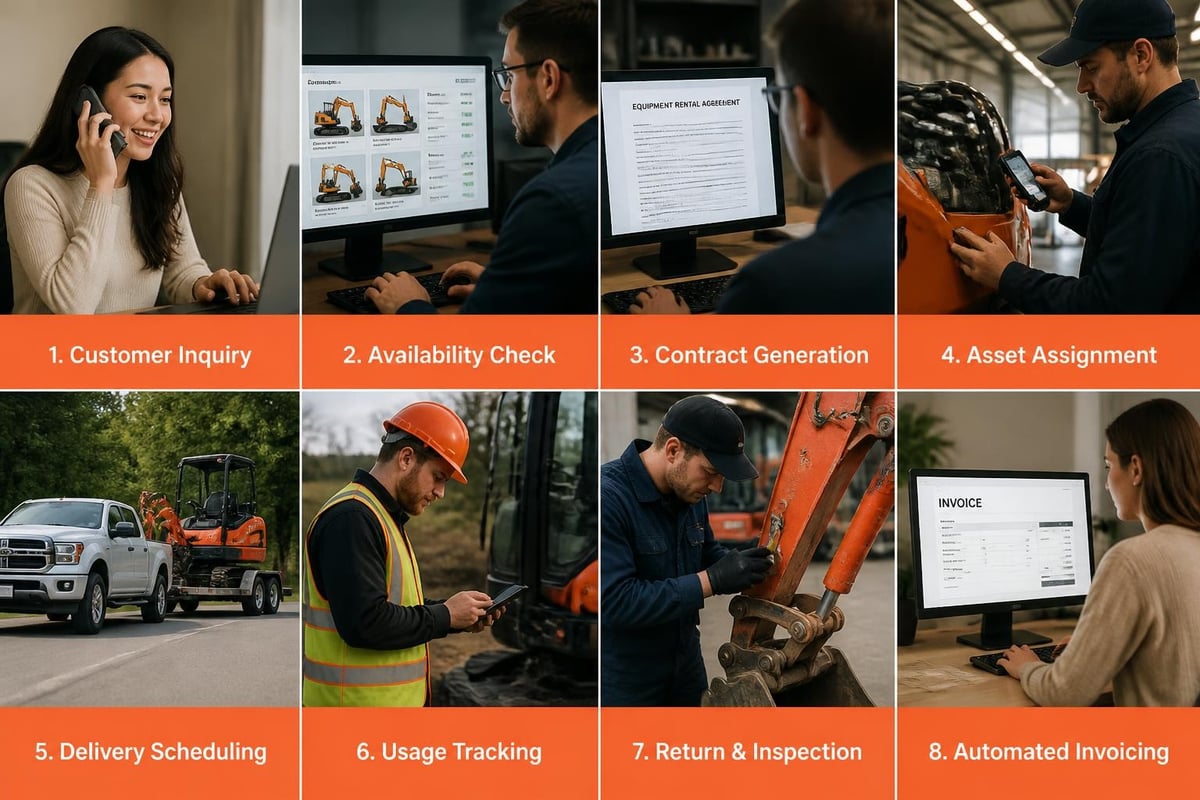
Tool hire software functions as a central database that tracks every piece of rental equipment through its lifecycle, from acquisition to retirement. The system assigns unique identifiers to each asset, recording specifications, purchase date, depreciation schedule, maintenance history, and current status (available, rented, in service, or decommissioned). When a customer requests equipment, the software checks real-time availability across all locations, generates rental contracts with terms and rates, and updates inventory status instantly.
Core modules include inventory management, customer relationship management (CRM), booking and scheduling, billing and invoicing, and maintenance tracking. Advanced platforms integrate barcode or RFID scanning for check-out and return verification, GPS tracking for high-value assets, and mobile applications for field technicians.
Essential Components of Tool Hire Systems
Serialized Inventory Management:
Each tool receives a unique serial number or barcode linked to detailed records including manufacturer, model number, purchase price, current condition, warranty status, and service intervals. This granular tracking enables businesses to monitor individual asset performance and identify underutilizing equipment.
Reservation and Availability Engine:
The software maintains a real-time calendar showing which equipment is available, reserved, on-rent, or undergoing maintenance. When booking conflicts arise, the system alerts operators and suggests alternative equipment or delivery dates.
Contract and Documentation Automation:
Digital templates generate rental agreements, delivery notes, inspection checklists, and return certificates automatically. Electronic signatures reduce paperwork and speed up transaction processing.
Billing and Payment Processing:
Automated invoicing calculates rental charges based on duration, late fees, damage assessments, and delivery costs. Integration with accounting systems ensures financial data flows directly into general ledgers without manual entry.
How Does Tool Hire Software Improve Operational Efficiency?
Tool hire software improves operational efficiency by eliminating manual data entry, reducing booking errors, and accelerating transaction cycles. A single operator can process multiple rentals simultaneously because the system handles availability verification, pricing calculations, and document generation automatically. According to MCS rental software documentation, businesses report up to 50% faster booking processes after implementation.
Measurable Efficiency Gains
| Metric | Manual Process | With Tool Hire Software | Improvement |
|---|---|---|---|
| Booking time per rental | 15-20 minutes | 3-5 minutes | 70-80% faster |
| Inventory accuracy | 85-90% | 98-99% | Reduced errors |
| Double-booking incidents | 5-10% of bookings | <1% of bookings | 90% reduction |
| Invoice generation time | 10 minutes per contract | Automated (instant) | 100% time saved |
The system automatically flags equipment due for service based on usage hours, calendar intervals, or manufacturer specifications. This proactive approach prevents breakdowns during rental periods and reduces emergency repair costs. Maintenance records attached to each serialized asset provide complete service history for warranty claims and compliance audits.
Real-time inventory visibility across multiple depot locations enables better asset allocation. If one location runs low on specific equipment, the software identifies available units at other sites and facilitates inter-branch transfers. This optimization increases overall fleet utilization rates by 15-25%.
What Features Should Tool Hire Software Include?
Effective tool hire software must include comprehensive inventory management with serialized asset tracking, customer database with rental history, availability calendar with conflict detection, automated billing and invoicing, maintenance scheduling, and reporting dashboards. These features form the operational foundation for rental businesses of all sizes.
Critical Functionality Requirements
Multi-location inventory management:
Track equipment across warehouses, retail locations, and customer sites simultaneously. View consolidated or location-specific inventory reports.
Rate management and pricing rules:
Define daily, weekly, and monthly rates for each equipment category. Apply discounts for long-term rentals, corporate accounts, or bulk bookings automatically.
Delivery and logistics coordination:
Schedule pickups and deliveries with route optimization. Assign drivers, track vehicle capacity, and generate delivery manifests.
Damage assessment and deposit handling:
Document equipment condition at check-out and return with photos, notes, and inspector signatures. Calculate charges for damage, loss, or excessive wear. Manage security deposits and refund processing.
Customer portal and self-service booking:
Allow customers to check availability, request quotes, submit rental applications, and track active rentals through a branded web interface.
The Brytend Service Module provides a framework for managing serialized inventory and automated service reminders that rental businesses can adapt for their specific workflow requirements.
Integration Capabilities
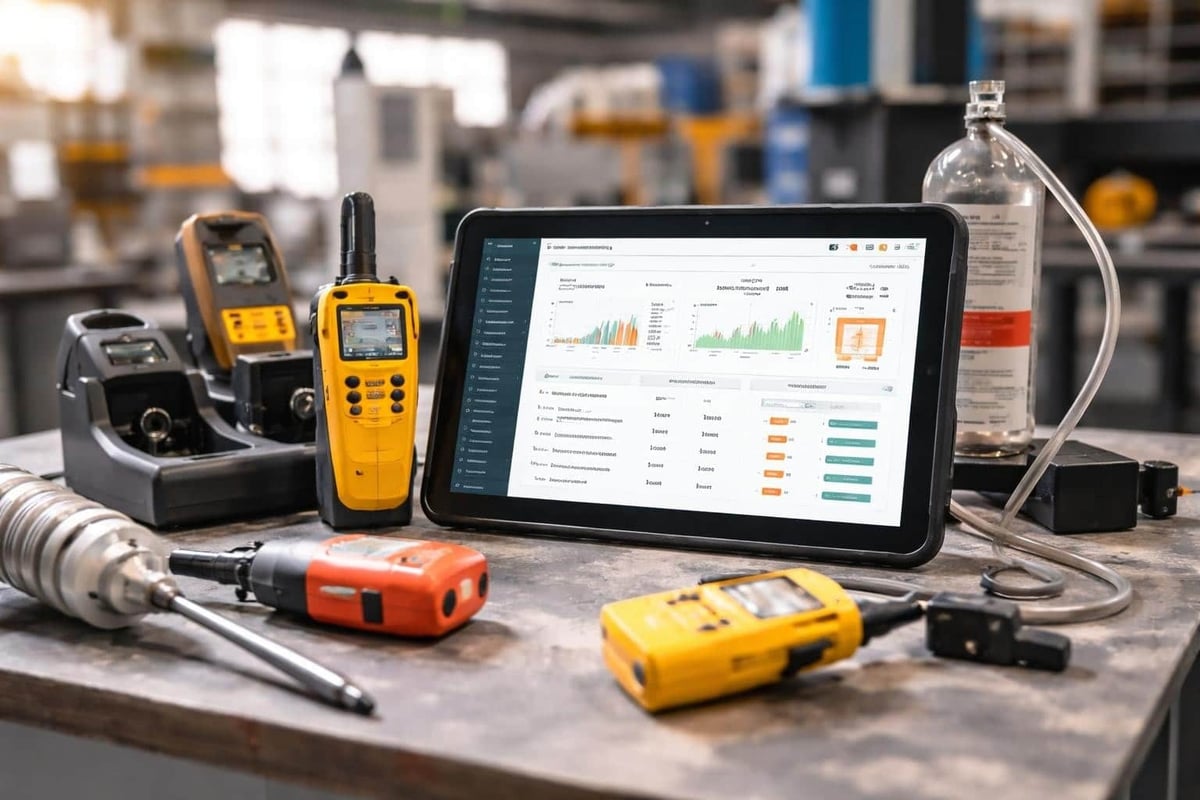
Modern tool hire software connects with accounting platforms (QuickBooks, Xero, Sage), payment processors (Stripe, Square, PayPal), barcode scanners, RFID readers, GPS tracking devices, and e-signature services. API availability enables custom integrations with existing business systems and third-party applications.
How to Implement Tool Hire Software Successfully?
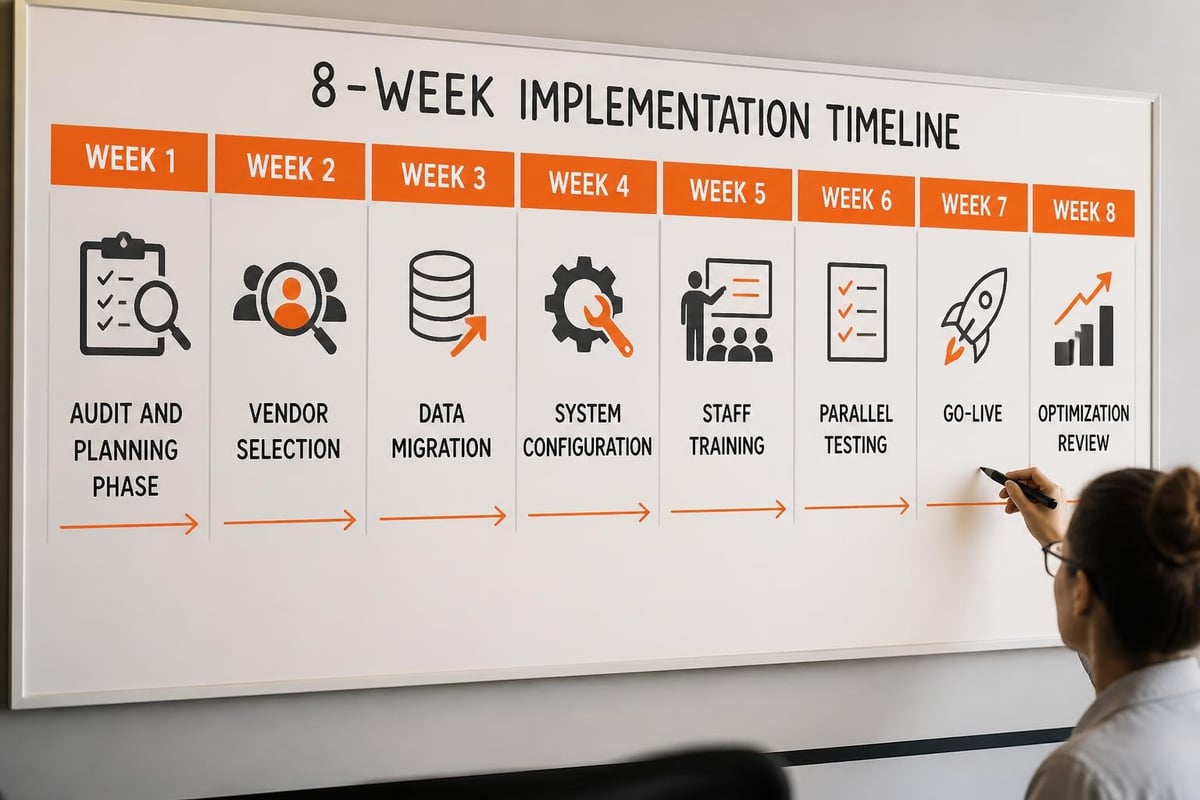
Implementing tool hire software successfully requires structured planning, clean data migration, comprehensive staff training, and phased rollout across business locations. Rushing implementation without proper preparation leads to data quality issues and user resistance.
Step-by-Step Implementation Process
-
Audit existing inventory and processes: Document current equipment list with serial numbers, purchase dates, and condition assessments. Map existing rental workflows including booking, delivery, returns, and billing procedures.
-
Define system requirements and select software: List must-have features, integration needs, user count, and budget constraints. Evaluate vendors based on functionality, industry experience, support quality, and total cost of ownership.
-
Clean and prepare data for migration: Standardize equipment naming conventions, verify serial numbers, update customer contact information, and resolve duplicate records. Poor data quality undermines system effectiveness.
-
Configure system settings and workflows: Set up locations, user permissions, equipment categories, rate cards, rental terms, and automated notifications. Customize contract templates and invoice formats to match brand standards.
-
Import historical data and validate accuracy: Load equipment inventory, customer records, active rental contracts, and maintenance schedules. Cross-check imported data against source systems to ensure completeness.
-
Train staff on core functions and best practices: Conduct hands-on sessions covering daily operations (booking, check-out, returns, invoicing). Create user guides and quick-reference cards for common tasks.
-
Run parallel operations during transition period: Process new rentals in both old and new systems for two weeks to verify accuracy and build user confidence. Compare outputs to identify discrepancies.
-
Go live and monitor performance metrics: Switch fully to new system with support team available for immediate issue resolution. Track key performance indicators (booking speed, error rates, user adoption).
What Challenges Does Tool Hire Software Address?
Tool hire software addresses critical operational challenges including equipment location uncertainty, booking conflicts, billing inaccuracies, missed maintenance schedules, and inability to track asset performance. These issues directly impact revenue, customer satisfaction, and regulatory compliance.
Common Operational Problems Solved
Double-booking and availability errors:
Manual systems using phone reservations or paper calendars frequently result in promising equipment already committed to another customer. Real-time inventory visibility eliminates this problem by updating availability instantly when bookings are confirmed.
Equipment loss and misplacement:
Without serialized tracking, tools disappear between locations or remain unreturned after rentals end. GPS-enabled tracking and barcode scanning create accountability and reduce shrinkage rates by 60-80%.
Inconsistent pricing and billing disputes:
Manual rate calculations introduce errors that lead to undercharging (lost revenue) or overcharging (customer complaints). Automated pricing engines apply correct rates consistently based on duration, equipment type, and customer agreements.
Reactive maintenance and unexpected downtime:
Spreadsheet-based service tracking fails to trigger timely maintenance, causing equipment failures during rental periods. Automated service scheduling based on usage hours or calendar intervals prevents breakdowns and extends asset lifespan.
Limited business intelligence and forecasting:
Paper records provide no analytical capability to identify high-demand equipment, seasonal trends, or underperforming assets. Software dashboards deliver actionable insights for purchasing decisions and fleet optimization.
How Does Tool Hire Software Optimize Equipment Utilization?
Tool hire software optimizes equipment utilization through demand forecasting, utilization rate tracking, dynamic pricing, and data-driven purchasing decisions. These capabilities transform rental operations from reactive asset management to strategic fleet optimization.
Utilization Analytics and Reporting
The system calculates utilization rates by dividing actual rental days by total available days for each asset. Equipment consistently showing utilization below 40% indicates oversupply, while rates above 80% suggest opportunities for additional purchases. Monthly utilization reports identify seasonal patterns and guide inventory adjustments.
Demand forecasting analyzes historical booking data to predict future equipment needs. If concrete mixers show 95% utilization every spring, the software recommends acquiring additional units before peak season. This proactive approach maximizes revenue opportunities while minimizing idle inventory costs.
Dynamic pricing strategies increase rates during high-demand periods and offer discounts during slow seasons to maintain steady utilization. The software can automatically adjust pricing based on availability thresholds (raise rates when fleet is 80% booked).
| Equipment Category | Average Utilization (Manual) | Average Utilization (Software) | Revenue Impact |
|---|---|---|---|
| Power tools | 45% | 68% | +51% revenue per asset |
| Heavy machinery | 52% | 71% | +37% revenue per asset |
| Specialty equipment | 38% | 61% | +61% revenue per asset |
Cross-Selling and Upselling Opportunities
Customer rental history enables targeted recommendations. When a contractor books scaffolding, the system prompts operators to suggest related items like safety harnesses, ladders, or material hoists. Automated suggestions increase average transaction value by 15-30%.
What Security and Compliance Features Are Essential?
Essential security features include role-based access controls, audit trails, data encryption, automated backups, and compliance documentation. Rental businesses handle sensitive customer information and valuable equipment data requiring protection from unauthorized access and loss.
Data Protection and Access Management
Role-based permissions restrict system access based on job functions. Counter staff see booking and inventory modules but cannot access financial reports or system configuration. Managers receive full visibility while field technicians access only mobile check-out and return functions.
Audit trails record every system action including who created, modified, or deleted records and when changes occurred. This accountability prevents data manipulation and supports dispute resolution. Complete transaction histories demonstrate compliance during regulatory audits.
Encrypted data transmission protects customer payment information, personal details, and business intelligence during internet communication. Compliance with PCI-DSS standards is mandatory for businesses processing credit card payments directly.
Automated backup procedures create redundant copies of database information hourly or daily depending on transaction volume. Cloud-based systems offer geographic redundancy where data replicates across multiple data centers automatically.
Regulatory Compliance Documentation
Tool hire businesses face various compliance requirements depending on equipment types and jurisdictions. Software generates compliance reports for:
- Tax documentation (sales tax collection, rental revenue reporting)
- Safety certifications for regulated equipment (pressure vessels, lifting gear)
- Environmental tracking for hazardous materials or emissions-controlled machinery
- Insurance reporting for claims, valuations, and risk assessments
Platforms like StayOnHire emphasize digital document automation and maintenance tracking as core compliance capabilities.
What Integration Options Connect Tool Hire Software to Business Systems?
Tool hire software integrates with accounting systems, payment processors, e-commerce platforms, GPS tracking services, and communication tools through APIs, webhooks, and pre-built connectors. Integration eliminates duplicate data entry and ensures information consistency across business applications.
Accounting and Financial System Integration
Automated synchronization sends rental transactions, invoices, payments, and customer balances from tool hire software directly into accounting platforms like QuickBooks or Xero. Chart of accounts mapping ensures revenue posts to correct general ledger accounts. This real-time financial data flow eliminates month-end reconciliation work and improves cash flow visibility.
Payment processor connections enable customers to pay deposits and rental fees through integrated gateways. When payments process successfully, the software automatically updates account balances and releases equipment reservations without manual intervention.
E-commerce and Customer Portal Integration
Online booking portals connect directly to tool hire software inventory databases, displaying real-time availability to website visitors. Customers configure rental dates, select equipment, receive instant price quotes, and submit reservations that flow into the main system automatically. Integration with e-signature services like DocuSign enables paperless contract execution.
Mobile application synchronization allows field technicians to access job assignments, customer information, and equipment details offline. When connectivity restores, the app uploads delivery confirmations, condition photos, and electronic signatures to the central database.
The Brytend CRM demonstrates how customer relationship management integrates with operational workflows to create unified business processes.
Telematics and Asset Tracking Integration
GPS tracking devices installed on high-value equipment transmit location data to tool hire software continuously. The system displays asset positions on maps, generates geofence alerts when equipment leaves authorized areas, and calculates accurate usage hours for maintenance scheduling. Integration with telematics providers requires API credentials and device provisioning during implementation.
How Do Cloud-Based and On-Premise Tool Hire Solutions Differ?
Cloud-based tool hire software runs on vendor-managed servers accessed through web browsers, while on-premise solutions install on company-owned hardware within business facilities. Each deployment model offers distinct advantages for operational flexibility, cost structure, and data control.
Cloud-Based Solution Characteristics
Subscription pricing spreads costs across monthly or annual fees based on user count or transaction volume. Initial investment remains low (typically first month plus setup fees), making cloud platforms accessible to smaller rental operations. Total cost of ownership includes subscription fees, internet connectivity, and minimal IT support.
Automatic updates deploy new features and security patches without requiring business intervention. Vendors manage server maintenance, database optimization, and disaster recovery procedures as part of subscription service.
Remote access enables staff to manage operations from any internet-connected device. Multi-location businesses benefit from centralized data accessible across geographically dispersed sites. Mobile technicians access full system functionality from customer locations.
Scalability accommodates business growth by adjusting subscription tiers. Adding users, locations, or equipment records requires configuration changes rather than hardware purchases.
On-Premise Solution Characteristics
Capital expenditure model requires purchasing software licenses, server hardware, database software, and networking infrastructure upfront. Ongoing costs include IT staff salaries, hardware replacements, and vendor support contracts.
Complete data control keeps all business information within company facilities. Organizations with strict data sovereignty requirements or regulatory constraints prefer this approach.
Customization flexibility allows deep modifications to source code, database structures, and business logic when vendor provides access. Custom integrations face fewer limitations than cloud API restrictions.
Performance control depends on hardware specifications and network bandwidth provisioned by the business. Processing speed for large equipment inventories or complex reports remains consistent regardless of internet service quality.
| Feature | Cloud-Based | On-Premise |
|---|---|---|
| Initial cost | Low (subscription) | High (licenses + hardware) |
| Setup time | Days to weeks | Weeks to months |
| Automatic updates | Yes | Manual installation required |
| Remote access | Standard | Requires VPN setup |
| IT maintenance | Vendor responsibility | Internal staff required |
| Data location | Vendor data centers | Company facilities |
What ROI Can Businesses Expect from Tool Hire Software?
Businesses implementing tool hire software typically achieve positive ROI within 6-18 months through reduced labor costs, decreased equipment losses, improved utilization rates, and faster billing cycles. Quantifiable benefits include 40-60% reduction in administrative time, 15-25% increase in fleet utilization, and 90% reduction in booking errors.
Financial Impact Analysis
Labor cost savings:
Automating contract generation, availability checks, and invoicing reduces staff hours required per transaction. A rental operation processing 200 transactions monthly saves approximately 120 labor hours when booking time decreases from 15 minutes to 3 minutes per rental. At $25/hour loaded labor cost, monthly savings reach $3,000 or $36,000 annually.
Equipment loss prevention:
Serialized tracking and automated return reminders reduce unreturned equipment incidents by 70-85%. For a business with $500,000 in rental inventory experiencing 3% annual loss ($15,000), implementing tracking systems saves approximately $11,000 yearly.
Improved utilization revenue:
Increasing average fleet utilization from 50% to 65% generates substantial revenue gains. A $1 million equipment fleet generating $500,000 annual revenue at 50% utilization produces $650,000 at 65% utilization-a $150,000 increase without additional capital investment.
Faster billing and collection:
Automated invoicing immediately after returns accelerates payment cycles by 5-10 days on average. Improved cash flow reduces reliance on credit lines and associated interest costs.

Case Example: Mid-Size Tool Rental Operation
A regional tool rental company with 1,500 equipment items, three locations, and $2.5 million annual revenue implemented cloud-based hire software in January 2025. After twelve months of operation, they measured:
- Administrative labor hours reduced by 52% (from 160 to 77 hours weekly)
- Equipment utilization increased from 48% to 63%
- Inventory shrinkage decreased from 2.8% to 0.6%
- Average days to payment dropped from 32 to 24 days
- Total annual benefit: $287,000 against implementation cost of $45,000 (software, training, data migration)
The 537% first-year ROI validated the investment and funded expansion to two additional locations in 2026.
What Common Mistakes Should Businesses Avoid When Selecting Tool Hire Software?
Common mistakes include choosing platforms based solely on price, neglecting integration requirements, underestimating data migration complexity, skipping vendor reference checks, and failing to plan adequate training. These errors lead to implementation failures, abandoned systems, and wasted investment.
Selection Process Errors
Feature overload versus functionality gaps:
Purchasing enterprise-level systems with advanced capabilities that small operations never use wastes resources. Conversely, selecting basic platforms lacking essential features like serialized tracking or multi-location support forces workarounds that undermine efficiency gains. Match software complexity to actual business requirements.
Ignoring user experience and adoption factors:
Complex interfaces with steep learning curves reduce staff adoption rates. Demonstrations should involve actual end-users (counter staff, technicians, managers) evaluating day-to-day usability rather than only IT personnel assessing technical specifications.
Overlooking mobile functionality:
Field operations require mobile access for equipment delivery, condition documentation, and on-site rentals. Solutions lacking native mobile applications or functional mobile-responsive interfaces create operational gaps. According to Renttix, mobile capabilities are essential for modern hire desk operations.
Insufficient scalability planning:
Businesses experiencing growth quickly outgrow systems with hard user limits, location caps, or inventory maximums. Evaluate vendor roadmaps, scalability options, and upgrade paths before commitment.
Implementation Planning Failures
Underestimating data quality requirements:
Migrating inaccurate, incomplete, or duplicated data creates persistent system problems. Allocate time for data cleanup before migration begins. Garbage in, garbage out applies equally to sophisticated software.
Inadequate training investment:
Brief overview sessions fail to build user competency. Effective training includes hands-on practice with realistic scenarios, written documentation, ongoing support availability, and refresher sessions. Budget 8-12 hours of training per user for comprehensive platforms.
Lack of change management:
Imposing new systems without explaining benefits or involving staff in selection generates resistance. Communicate reasons for change, demonstrate improvements to daily workflows, and address concerns proactively. According to ApetureCodex, successful technology adoption requires structured change management and stakeholder engagement throughout implementation.
How Will Tool Hire Software Evolve in 2026 and Beyond?
Tool hire software evolution focuses on artificial intelligence for demand forecasting, IoT integration for predictive maintenance, blockchain for equipment provenance tracking, and enhanced automation across rental workflows. These advancements further reduce manual intervention while improving decision-making accuracy.
Emerging Technology Integration
AI-powered demand prediction:
Machine learning algorithms analyze historical rental patterns, seasonal trends, weather data, construction permits, and economic indicators to forecast equipment demand with 85-90% accuracy. Systems like FORCEY already incorporate AI-driven forecasting for rental operations. Accurate predictions optimize purchasing decisions and prevent stockouts during peak periods.
Predictive maintenance through IoT sensors:
Equipment-embedded sensors monitor operating hours, vibration patterns, temperature fluctuations, and performance metrics in real-time. Software analyzes sensor data to predict component failures before breakdowns occur, scheduling preventive maintenance automatically. This approach reduces unplanned downtime by 70% and extends asset lifespan.
Blockchain asset tracking:
Distributed ledger technology creates immutable equipment ownership and service records. When tools transfer between rental companies, repair facilities, or customers, blockchain entries document each transaction with timestamps and participant verification. This transparency supports warranty claims, theft recovery, and regulatory compliance.
Robotic process automation (RPA):
Software bots handle repetitive tasks including invoice reconciliation, overdue payment reminders, renewal notifications, and routine data entry. RPA frees human staff for customer service, complex problem-solving, and business development activities.
Customer Experience Enhancements
Virtual equipment demonstrations:
Augmented reality applications allow customers to visualize tools at job sites before rental commitment. QR codes on rental counters launch AR experiences showing equipment dimensions, operation videos, and safety procedures on customer smartphones.
Chatbot customer service:
AI-powered conversational interfaces answer common questions about availability, pricing, rental terms, and equipment specifications 24/7. Complex inquiries route to human staff automatically. Chatbots reduce counter wait times and improve after-hours customer engagement.
Subscription-based rental models:
Software platforms enable monthly equipment subscriptions for contractors requiring consistent access to specific tools. Automated billing, rolling inventory management, and simplified returns create predictable revenue streams for rental businesses while offering contractor convenience.
The intersection of custom software development expertise and rental industry knowledge creates opportunities for businesses to build competitive advantages through technology. When evaluating vendors, consider their ability to adapt solutions to evolving market requirements.
Tool hire software transforms rental operations by automating manual processes, eliminating booking errors, and providing data-driven insights for strategic decision-making. Businesses implementing these systems achieve measurable improvements in efficiency, utilization, and profitability while positioning themselves for future growth. If your organization needs custom software solutions tailored to specific operational requirements, Brytend offers experienced development teams specializing in building scalable platforms that integrate seamlessly with existing business systems and support long-term digital transformation goals.


