
Software as a Service has transformed how businesses deliver value to customers, replacing traditional desktop applications with cloud-based platforms accessible from anywhere. Building a successful SaaS platform requires careful planning, robust architecture, and a deep understanding of both technical requirements and business objectives. As organizations increasingly shift toward subscription-based models, saas platform development has become a critical competency for companies looking to stay competitive in the digital economy. This comprehensive guide explores the essential elements of creating scalable, secure, and maintainable SaaS solutions.
Understanding SaaS Architecture Fundamentals
The foundation of any successful SaaS platform lies in its architectural design. Unlike traditional software deployed on individual machines, SaaS applications must serve multiple customers simultaneously while maintaining data isolation and performance standards.
Multi-Tenancy Models
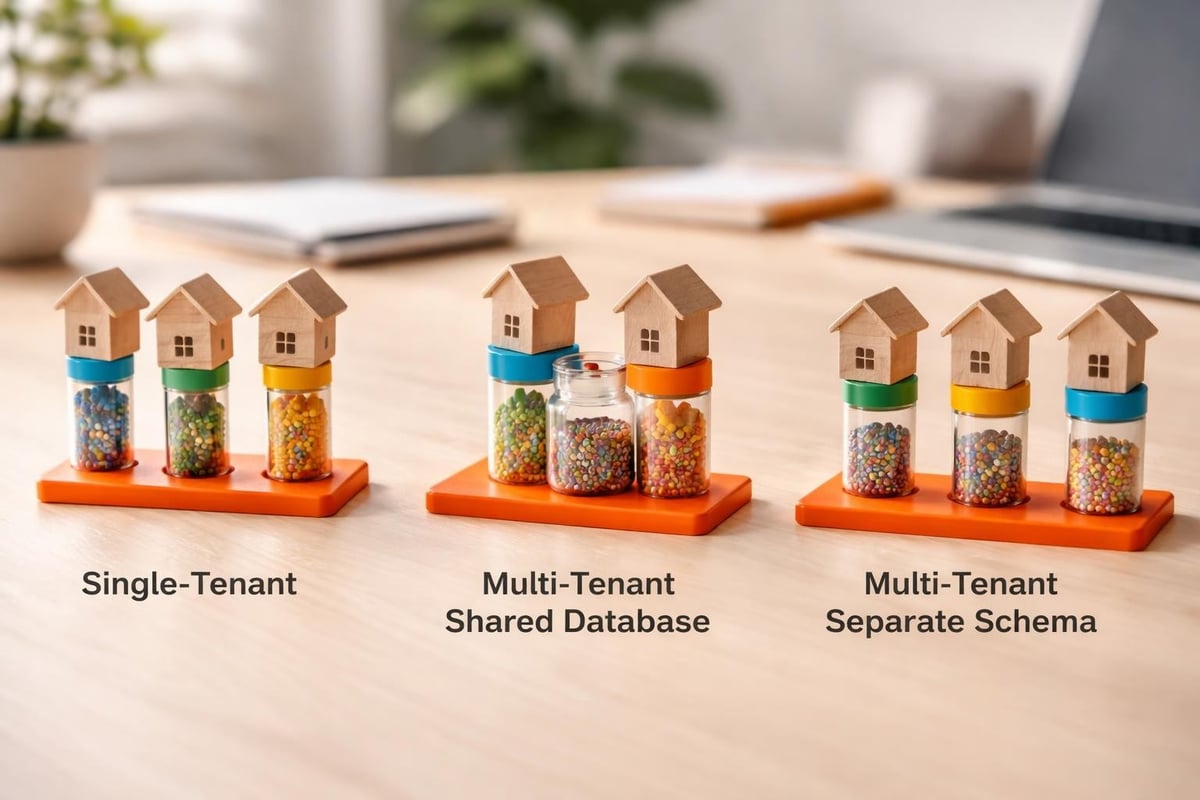
Multi-tenancy represents one of the most critical architectural decisions in saas platform development. This approach allows a single application instance to serve multiple customers, known as tenants, while keeping their data completely separate.
- Single-tenant architecture provides each customer with a dedicated instance, offering maximum isolation but higher operational costs
- Multi-tenant with shared database uses a single database with tenant identifiers, maximizing resource efficiency but requiring careful security planning
- Multi-tenant with separate schemas balances isolation and efficiency by giving each tenant their own database schema
- Hybrid approaches combine elements of different models based on customer tier or data sensitivity
The architecture patterns you choose will significantly impact your platform's scalability, maintenance requirements, and cost structure. Each model presents distinct tradeoffs between operational complexity and resource optimization.
Microservices vs Monolithic Design
Modern saas platform development increasingly favors microservices architecture, where applications are decomposed into smaller, independent services that communicate through well-defined APIs. This approach offers several advantages for SaaS platforms.
Microservices enable teams to develop, deploy, and scale individual components independently. When your authentication service experiences high load, you can scale only that service rather than the entire application. This granular control reduces infrastructure costs and improves resource utilization.
However, microservices introduce complexity in service orchestration, data consistency, and distributed system debugging. For early-stage SaaS platforms, starting with a well-structured monolithic architecture and transitioning to microservices as needs evolve often proves more practical than premature optimization.
| Architecture Type | Best For | Primary Challenge |
|---|---|---|
| Monolithic | MVP development, small teams | Scaling individual components |
| Microservices | Complex systems, large teams | Service coordination |
| Hybrid | Growing platforms | Managing transition complexity |
Security Considerations for SaaS Platforms
Security remains paramount in saas platform development, as platforms handle sensitive customer data and must maintain trust across their entire user base. A single security breach can compromise multiple customers and destroy years of reputation building.
Authentication and Authorization
Implementing robust identity management systems forms the first line of defense for any Saaas platform. Modern platforms should support multiple authentication methods while maintaining security standards.
- Multi-factor authentication adds critical protection beyond password-based access
- Single sign-on integration enables enterprise customers to maintain centralized identity management
- Role-based access control ensures users can only access resources appropriate to their permissions
- API key management secures programmatic access to platform features
- Session management prevents unauthorized access through expired or stolen tokens
Understanding SaaS security fundamentals helps development teams build platforms that protect customer data from both external threats and internal vulnerabilities. Security cannot be an afterthought; it must be integrated throughout the development lifecycle.
Data Protection and Encryption
Customer data represents the lifeblood of any SaaS platform, making comprehensive protection strategies essential. Encryption should protect data both in transit and at rest, using industry-standard protocols and regularly updated certificates.
Beyond basic encryption, consider implementing field-level encryption for particularly sensitive data like payment information or personal health records. This approach ensures that even if unauthorized access occurs, the exposed data remains unreadable without proper decryption keys.
Regular security audits, penetration testing, and vulnerability assessments should become standard practice. SaaS security best practices emphasize continuous monitoring and rapid response to emerging threats, not just periodic compliance checks.

Building for Scale from Day One
Scalability challenges can make or break SaaS platforms as they grow. What works for one hundred users often fails catastrophically at ten thousand. Saas platform development requires anticipating growth and building systems that can expand efficiently.
Database Design and Optimization
Database architecture choices ripple throughout your entire platform. Poor database design creates bottlenecks that become exponentially more difficult to fix as data volume increases.
- Normalization strategies reduce data redundancy while maintaining referential integrity
- Indexing approaches dramatically improve query performance for common access patterns
- Caching layers reduce database load by storing frequently accessed data in memory
- Read replicas distribute query load across multiple database instances
- Sharding strategies partition data across multiple databases when single-instance limits are reached
The development lifecycle for SaaS applications emphasizes iterative improvements to database performance based on real-world usage patterns rather than premature optimization of theoretical problems.
API Design and Rate Limiting
Well-designed APIs serve as the backbone of modern SaaS platforms, enabling integrations, mobile applications, and programmatic access. API architecture decisions made during initial saas platform development influence platform flexibility for years to come.
RESTful APIs remain the standard for most SaaS platforms, offering simplicity and broad compatibility. However, GraphQL provides advantages for complex data relationships by allowing clients to request exactly the data they need. The choice depends on your platform's specific requirements and developer ecosystem.
Rate limiting protects your platform from abuse while ensuring fair resource allocation among customers. Implement tiered rate limits based on subscription levels, and provide clear error messages when limits are exceeded. This approach balances platform protection with customer experience.
| API Design Consideration | Impact | Implementation Priority |
|---|---|---|
| Versioning strategy | Long-term compatibility | High |
| Documentation quality | Developer adoption | High |
| Error handling | Debugging experience | Medium |
| Pagination | Performance at scale | High |
| Webhooks | Real-time integrations | Medium |
Performance Optimization Strategies
Performance directly impacts user satisfaction, conversion rates, and customer retention. Slow platforms frustrate users and damage your brand, regardless of feature completeness. Saas platform development must prioritize performance throughout the stack.
Frontend Performance
User-perceived performance often matters more than backend response times. A server that responds in 100 milliseconds means little if the browser takes five seconds to render the result.
- Code splitting loads only necessary JavaScript for each page view
- Lazy loading defers loading of below-the-fold images and components
- CDN distribution serves static assets from geographically distributed servers
- Compression reduces payload sizes for faster transmission
- Browser caching prevents redundant downloads of unchanged resources
Modern frameworks offer built-in performance optimizations, but understanding the underlying principles enables teams to make informed tradeoffs between functionality and speed.
Backend Optimization
Performance testing practices should begin early in development and continue throughout the platform lifecycle. Identifying performance bottlenecks before they impact production users saves significant remediation costs.
Query optimization often provides the highest return on optimization investment. Analyzing slow query logs reveals opportunities to add indexes, restructure queries, or denormalize data for improved performance. Database query performance typically degrades non-linearly as data volume increases, making early optimization particularly valuable.
Caching strategies at multiple layers reduce load on backend systems. Application-level caches store computed results, database query caches prevent redundant queries, and HTTP caches minimize server requests entirely. Implementing appropriate cache invalidation strategies ensures users see updated data while maintaining performance benefits.
Infrastructure and Deployment
Modern saas platform development leverages cloud infrastructure to achieve flexibility, reliability, and global reach that would be prohibitively expensive with traditional hosting approaches.
Cloud Provider Selection
Choosing between major cloud providers involves evaluating services, pricing models, geographic coverage, and ecosystem maturity. While migrations remain possible, switching providers after significant development incurs substantial costs in time and engineering effort.
Amazon Web Services offers the broadest service catalog and most mature ecosystem, making it suitable for complex platforms requiring specialized services. Microsoft Azure integrates seamlessly with Microsoft's enterprise tools, providing advantages for platforms targeting enterprise customers with existing Microsoft investments. Google Cloud Platform excels in data analytics and machine learning capabilities.
Multi-cloud strategies offer redundancy and negotiating leverage but introduce significant complexity in deployment, monitoring, and cost management. For most SaaS platforms, committing to a single provider and using their services deeply provides better results than maintaining provider-agnostic infrastructure.
Continuous Integration and Deployment
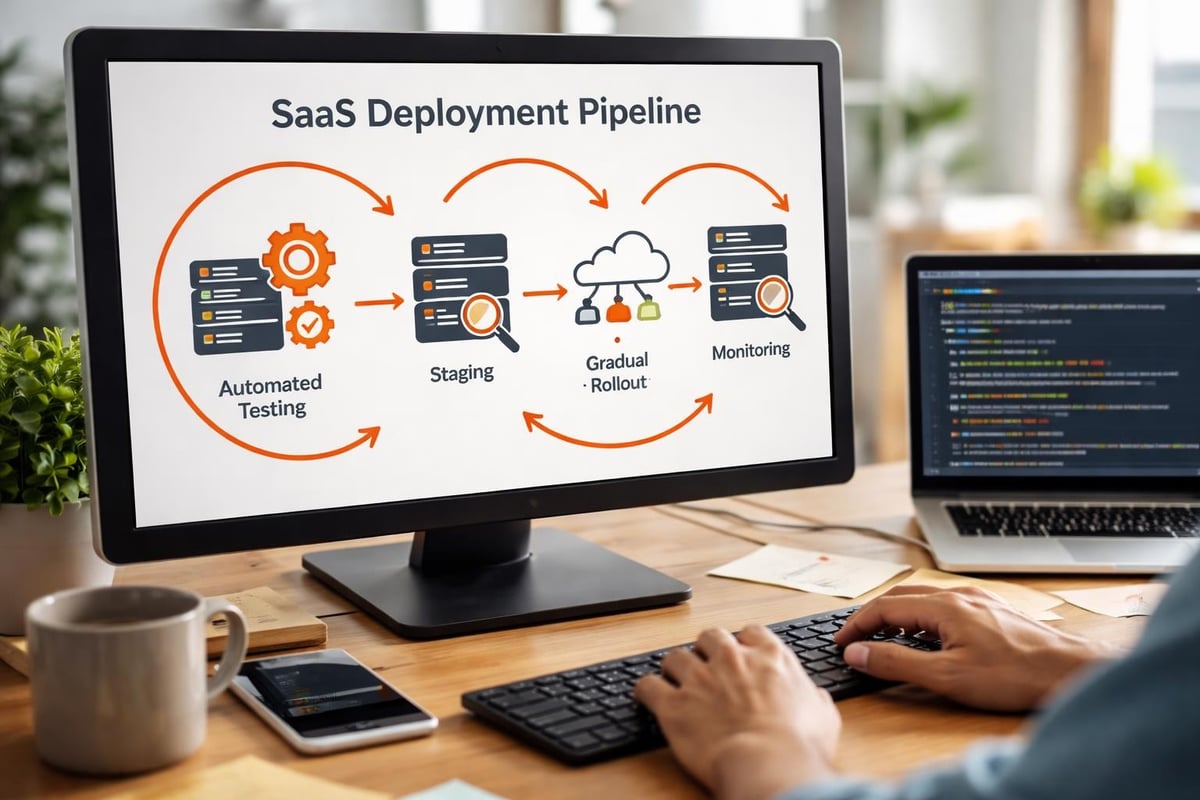
Automated deployment pipelines enable rapid iteration while maintaining quality standards. Saas platform development teams should implement CI/CD practices from the project's inception rather than retrofitting automation later.
- Automated testing catches regressions before they reach production environments
- Staging environments provide production-like testing without customer impact
- Blue-green deployments enable zero-downtime updates by maintaining parallel environments
- Feature flags allow gradual rollout of new functionality to subsets of users
- Rollback procedures minimize downtime when issues arise in production
The investment in automation infrastructure pays dividends through faster release cycles, reduced manual errors, and improved developer productivity.
Customer Management and Billing
Technical excellence alone does not guarantee SaaS success. Platforms must effectively manage customer relationships, subscriptions, and revenue collection to sustain business operations.
Subscription Management
Flexible subscription models accommodate different customer segments while maintaining predictable revenue streams. Saas platform development should include robust subscription management capabilities from the outset.
Tiered pricing models allow customers to start with basic features and upgrade as needs grow. Usage-based pricing aligns costs with value received, particularly for platforms with variable resource consumption. Hybrid models combine base subscriptions with usage overages, providing revenue predictability while accommodating growth.
Brytend's experience in custom software development extends to building comprehensive subscription management systems that handle complex pricing scenarios. Brytend CRM can be customized to manage customer subscriptions, track usage metrics, and automate billing workflows, ensuring your SaaS platform has the customer management capabilities needed for sustainable growth.
Payment Processing Integration
Reliable payment processing forms the foundation of SaaS business models. Integrating with established payment processors like Stripe, PayPal, or Braintree provides security, compliance, and global payment method support without building complex financial infrastructure.
Consider supporting multiple payment methods to accommodate international customers and regional preferences. While credit cards dominate in North America, direct debit, mobile payments, and local payment methods are essential in other markets.
Failed payment recovery workflows significantly impact revenue retention. Automated retry logic, dunning management, and customer communication workflows help recover failed payments before forcing subscription cancellations.
Monitoring and Observability
Understanding how your platform performs in production requires comprehensive monitoring and observability tools. Saas platform development teams must implement instrumentation that provides visibility into system behavior, user experience, and business metrics.
Application Performance Monitoring
APM tools track request flows through your application, identifying slow database queries, inefficient code paths, and external service dependencies that impact performance. This visibility enables proactive optimization before users experience problems.
Key metrics to monitor include response times, error rates, throughput, and resource utilization. Establishing baselines for normal operation helps teams quickly identify anomalous behavior that may indicate problems.
Scalable SaaS architectures incorporate monitoring from initial development, making it a first-class concern rather than an operational afterthought. Distributed tracing becomes essential as platforms grow into microservices architectures, providing visibility across service boundaries.
User Analytics and Behavior Tracking
Understanding how users interact with your platform informs product development priorities and identifies friction points in user experience. Analytics should track feature usage, user flows, conversion funnels, and engagement metrics.
- Feature adoption rates reveal which capabilities deliver value to users
- User session recordings provide qualitative insights into user experience challenges
- Conversion tracking identifies optimization opportunities in onboarding and upgrade flows
- Retention cohorts measure how effectively the platform retains customers over time
- Custom event tracking captures platform-specific behaviors relevant to business objectives
Privacy regulations like GDPR and CCPA require careful consideration of what data is collected, how it's stored, and how users can control their information. Implementing privacy by design from the beginning avoids costly retrofitting for compliance.
Frequently Asked Questions
What is the typical timeline for SaaS platform development?
A minimum viable product for a SaaS platform typically requires 3-6 months of development with a dedicated team, depending on complexity and feature scope. Enterprise-grade platforms with extensive integrations and compliance requirements often need 9-12 months or more before initial launch. The SaaS development lifecycle continues beyond launch with ongoing feature development, optimization, and scaling efforts that extend indefinitely.
How much does it cost to develop a SaaS platform?
Development costs vary dramatically based on feature complexity, team composition, and geographic location. A basic SaaS platform might cost between $50,000 and $150,000, while enterprise platforms with advanced features and integrations can exceed $500,000. Ongoing operational costs for infrastructure, maintenance, and feature development typically range from 20-40% of initial development costs annually. Working with experienced development partners like Brytend can help optimize both development costs and time to market.
Should I build a SaaS platform in-house or outsource development?
The decision depends on your technical expertise, time constraints, and long-term strategy. In-house development provides maximum control and domain knowledge retention but requires significant hiring and management overhead. Outsourcing accelerates development and provides access to specialized expertise but requires careful partner selection and clear communication. Many successful SaaS companies use hybrid approaches, outsourcing initial development while building internal teams for ongoing maintenance and feature development.
What programming languages are best for SaaS development?
Popular choices include JavaScript/Node.js for full-stack development, Python for data-intensive applications, Ruby for rapid development, and Java or C# for enterprise platforms. The "best" language depends on team expertise, ecosystem maturity for your use case, and performance requirements. Modern saas platform development prioritizes developer productivity and ecosystem strength over raw language performance, as infrastructure scaling typically addresses performance concerns more cost-effectively than language-level optimization.
How do I ensure my SaaS platform complies with data privacy regulations?
Compliance requires understanding applicable regulations (GDPR, CCPA, HIPAA, etc.), implementing technical controls (encryption, access logging, data retention policies), and establishing operational procedures (data processing agreements, breach notification, user rights management). Consult legal experts familiar with your target markets and industry verticals. SaaS security frameworks provide starting points for technical implementation, but legal compliance extends beyond technical measures to include policies, documentation, and ongoing governance.
What are the most important metrics to track for a SaaS platform?
Key performance indicators include Monthly Recurring Revenue (MRR), Customer Acquisition Cost (CAC), Lifetime Value (LTV), churn rate, and net revenue retention. Technical metrics like uptime, response time, and error rates directly impact customer satisfaction. Product metrics such as daily active users, feature adoption, and time to value help guide development priorities. The specific metrics that matter most depend on your business model, growth stage, and strategic objectives.
How can I make my SaaS platform stand out in a competitive market?
Differentiation comes from solving specific customer problems better than alternatives, not just adding features. Focus on exceptional user experience, reliable performance, responsive customer support, and deep integration with complementary tools. Specializing in particular industries or use cases often proves more effective than building generic platforms. SaaS development best practices emphasize understanding customer needs deeply and iterating based on feedback rather than building features in isolation.
Building a successful SaaS platform requires balancing technical excellence with business pragmatism, implementing security and scalability from the foundation while remaining flexible enough to adapt to market feedback. The strategies outlined here provide a roadmap for creating platforms that serve customers reliably while supporting sustainable business growth. If you're ready to transform your SaaS vision into reality, Brytend brings deep expertise in custom software development, cloud computing, and ongoing platform support to help you build a solution perfectly tailored to your specific goals and market requirements.


